|
Autographs, Covers, Letters & Postcards ͏ ͏ ͏ ͏ ͏ ͏ ͏ ͏ ͏ ͏ ͏ ͏ ͏ ͏ ͏ ͏ ͏ ͏ ͏ ͏ ͏ ͏ ͏ ͏ ͏ ͏ ͏ ͏ ͏ ͏ ͏ ͏ ͏ ͏ ͏ ͏ ͏ ͏ ͏ ͏ ͏ ͏ ͏ ͏ ͏ ͏ ͏ ͏ ͏ ͏ ͏ ͏ ͏ ͏ ͏ ͏ ͏ ͏ ͏ ͏ ͏ ͏ ͏ ͏ ͏ ͏ ͏ ͏ ͏ ͏ ͏ ͏ ͏ ͏ ͏ ͏ ͏ ͏ ͏ ͏ ͏ ͏ ͏ ͏ ͏ ͏ ͏ ͏ ͏ ͏ ͏ ͏ ͏ ͏ ͏ ͏ ͏ ͏ ͏ ͏ ͏ ͏ ͏ ͏ ͏ ͏ ͏ ͏ ͏ ͏ ͏ ͏ ͏ ͏ ͏ ͏ ͏ ͏ ͏ ͏ ͏ ͏ ͏ ͏ ͏ ͏ ͏ ͏ ͏ ͏ ͏ ͏ ͏ ͏ ͏ ͏ ͏ ͏ ͏ ͏ ͏ ͏ ͏ ͏ ͏ ͏ ͏ ͏ ͏ ͏ ͏ ͏ ͏ ͏ ͏ ͏ ͏ ͏ ͏ ͏ ͏ ͏ ͏ ͏ ͏ ͏ ͏ ͏ ͏ ͏ ͏ ͏ ͏ ͏ ͏ ͏ ͏ ͏ ͏ ͏ ͏ ͏ ͏ ͏ ͏ ͏ ͏ ͏ ͏ ͏ ͏ ͏ ͏ ͏ ͏ ͏ ͏ ͏ ͏ ͏ ͏ ͏ ͏ ͏ ͏ ͏ ͏ ͏ ͏ ͏ ͏ ͏ ͏ ͏ ͏ ͏ ͏ ͏ ͏ ͏ ͏ ͏ ͏ ͏ ͏ ͏ ͏ ͏ ͏ ͏ ͏ ͏ ͏ ͏ ͏ ͏ ͏ ͏ ͏ ͏ ͏ ͏ ͏ ͏ ͏ ͏ ͏ ͏ ͏ ͏ ͏ ͏ ͏ ͏ ͏
|
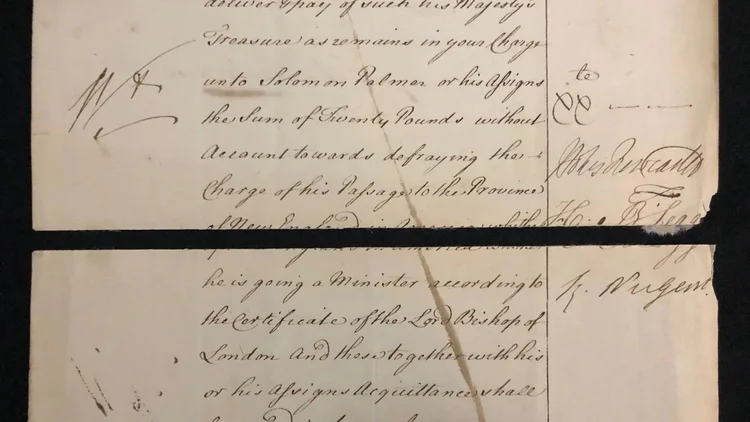
"King’s Bounty," a standard grant of £20 given to Solomon Palmer, an Anglican clergyman traveling to the Americas in 1754
R5,000
A mid-18th-century financial warrant or treasury order dated October 31, 1754, authorizing a payment to Anglican clergyman Solomon Palmer to cover the costs of his travel to North America for missionary work. Palmer served as a missionary for the Society for the Propagation of the Gospel (SPG) in Connecticut. Connecticut was a British colony in New England. It was one of the four original New England colonies which operated under a royal charter granted in 1662.
For more details and images, go to the website: https://jamesfindlaycollectablebooks.com/religion/kings-bounty-1754 See more on Religion on the website.
|
|
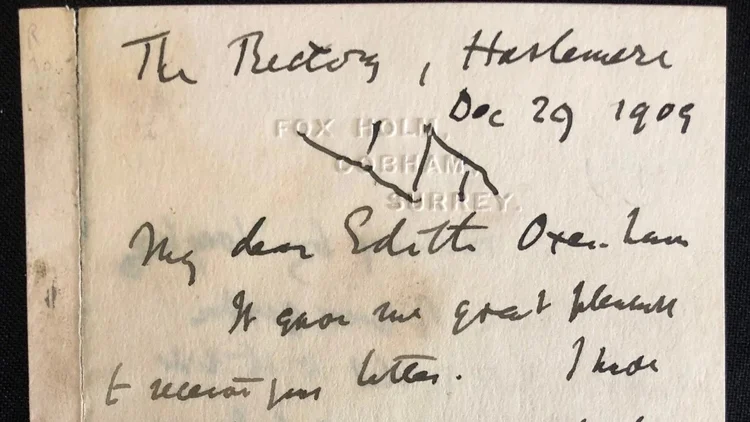
Manuscript Letter: Sir Francis Galton (1909)
R3,000
Galton was a member of the elite intellectual aristocracy of Great Britain—he was the half-cousin of Charles Darwin. Inspired by Darwin’s On the Origin of Species, Galton dedicated his later life to studying human heredity. While his work yielded foundational breakthroughs that we rely on today, his legacy is deeply double-edged: The Good: He revolutionized forensic science by creating the first workable system for classifying fingerprints (proving they are unique and permanent). He also pioneered modern statistics, inventing the concepts of correlation and regression toward the mean. The Dark: His obsession with measuring human traits led him to coin the term "Eugenics" in 1883. He advocated for selective human breeding to improve the genetic stock of society, a philosophy that would later be twisted into devastating 20th-century social engineering programs. For more details and images, go to the website: https://jamesfindlaycollectablebooks.com/science-maths/sir-francis-galton-1909 See more Science & Maths on the website
|
|
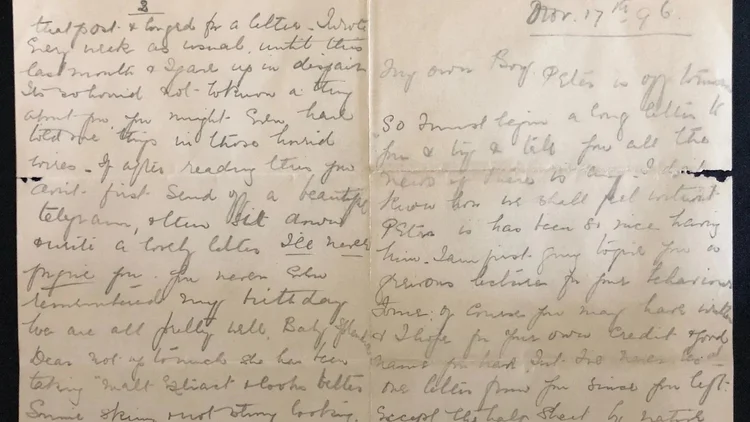
Letter: The Karkloof Polo Club vs. Dargle Polo Club (1896)
R2,500
The Karkloof Polo Club (founded in 1892) and the neighboring Dargle Polo Club are among the oldest polo clubs in South Africa. In the late 19th century, the Natal Midlands became the epicenter of the sport in the country, largely introduced by British garrison officers and enthusiastically adopted by local farming families. A score of "5 to love" captured in a personal letter provides a rare, informal record of these early inter-club matches that standard sports archives often miss.
For more details and images, go to the website: https://jamesfindlaycollectablebooks.com/kwazulu-natal/karkloof-polo-club-vs-dargle-polo-club
See more on KwaZulu-Natal on the website
|
|
Manuscript letter linking landed gentry of Lancashire to the colonial administration of the Cape of Good Hope (1829)
R2,500 In 1829, obtaining a desirable military or administrative posting in the British Empire wasn't just a matter of applying; it required the influence of the landed gentry. This letter showcases how that network operated. Colonel John Plumbe-Tempest (of Tong Hall and Beaumont Hall) was an incredibly powerful figure in the north of England. By directly lobbying the Home Department (which at the time handled domestic and certain overlapping colonial colonial clearances), Tempest was bypassing standard military bureaucracy to secure a smooth journey for the young officer heading out to South Africa. For more details and images, go to the website:
https://jamesfindlaycollectablebooks.com/the-cape/letter-to-the-colonial-administration-1829
See more on The Cape on the website
|
|
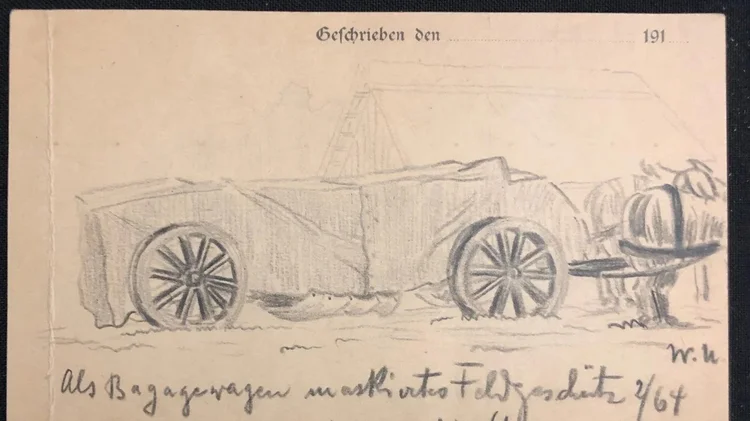
"Field Gun Camouflaged as a Baggage Wagon”. Otavifontein (Njansa), 7 June 1915. First World War: the South West Africa Campaign (1914–1915)
R2,000 The Unused Feldpostkarte: A Captured or Abandoned Souvenir? The back of the card is a standard, un-mailed Imperial German military postcard format (Feldpostkarte), printed around December 1914 (as indicated by the tiny printer's code "12.14" in the bottom right corner). Because the card was sketched on June 7th, but never filled out with an address, stamped, or processed through the military postal system, it tells its own story of the chaotic retreat. German soldiers in the north were entirely cut off from Germany; there were no ships or mail runs leaving the territory. This card was likely drawn by a soldier or officer (initials W.U.) as a personal visual diary of the clever tricks they were using in the field. When the surrender occurred a month later, many of these personal effects were either kept as souvenirs by the prisoners of war or acquired by South African soldiers.
For more info and images, go to the website:
https://jamesfindlaycollectablebooks.com/namibia-swa/field-gun-camouflaged-as-a-baggage-wagon-1915 See more on Namibia & South West Africa on the website (New)
|
|
Manuscript Letter by Victorian polymath, Austen Henry Layard (1867)
R1,500
The letter is written and signed by Austen Henry Layard (1817–1894). Layard was a true Victorian polymath—most famous to history as the pioneering archaeologist who discovered the ancient Assyrian ruins of Nineveh and Nimrud, sending their magnificent winged-bull sculptures to the British Museum. By the time he wrote this letter on April 6, 1867, he was a prominent Liberal Member of Parliament (MP) in the House of Commons and a major authority on the international art scene.
For more details and images, go to the website: https://jamesfindlaycollectablebooks.com/autographs/austen-henry-layard-1867
See more Autographs & Letters on the website.
|
|
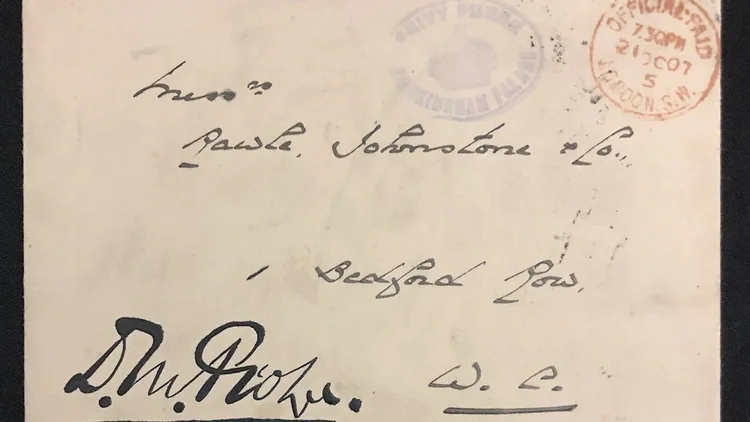
Envelope signed by V.C. Recipient: General Sir Dighton Probyn (1907)
R1,000 Sir Dighton Probyn was a legendary figure of the Victorian and Edwardian eras. A fearless cavalry officer during the Indian Rebellion of 1857, he was awarded the Victoria Cross (Britain’s highest military honor for gallantry). Later in life, he became an incredibly close, fiercely loyal courtier to Edward VII (both as Prince of Wales and King), managing the monarch's notoriously complex personal finances with absolute discretion. For more details and images, go to the website: https://jamesfindlaycollectablebooks.com/militaria/general-sir-dighton-probyn-1907 See more Militaria on the website
|
|
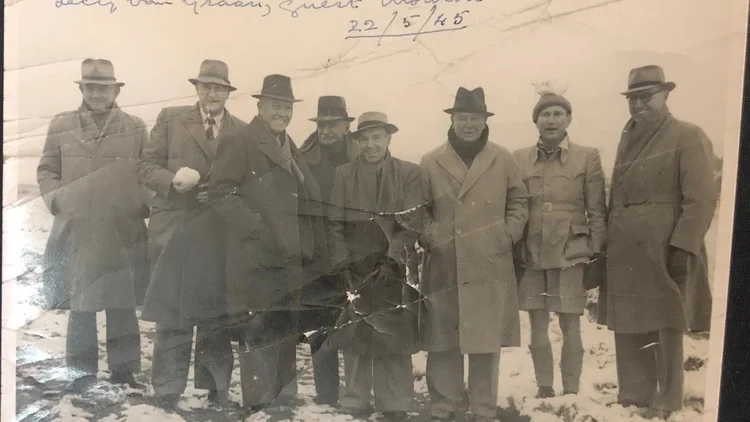
Kalahari Gemsbok National Park & Members of the South African National Parks Board (6) 1945
R1,000 This collection of 6 photographs documents early administrative inspection tours of the Kalahari Gemsbok National Park (proclaimed in 1931) and key figures from the early history of the South African National Parks Board. For more details and images, go to the website: https://jamesfindlaycollectablebooks.com/natural-history/kalahari-gemsbok-national-park See more Natural History on the website
|
|
Post Office Savings Book - “Native” Bernard Mokabe - member of the Native Military Corps (NMC) 1946
R1,000 This is a pre-apartheid artefact of mid-20th-century South African social and military history. This is a Union of South Africa Post Office Savings Bank book belonging to a man named Bernard Mokabe, dating from the World War II era and its immediate aftermath (1944–1946). For more details and images, go to the website:
https://jamesfindlaycollectablebooks.com/politics/post-office-savings-book-bernard-mokabe See more on Politics on the website
|
|
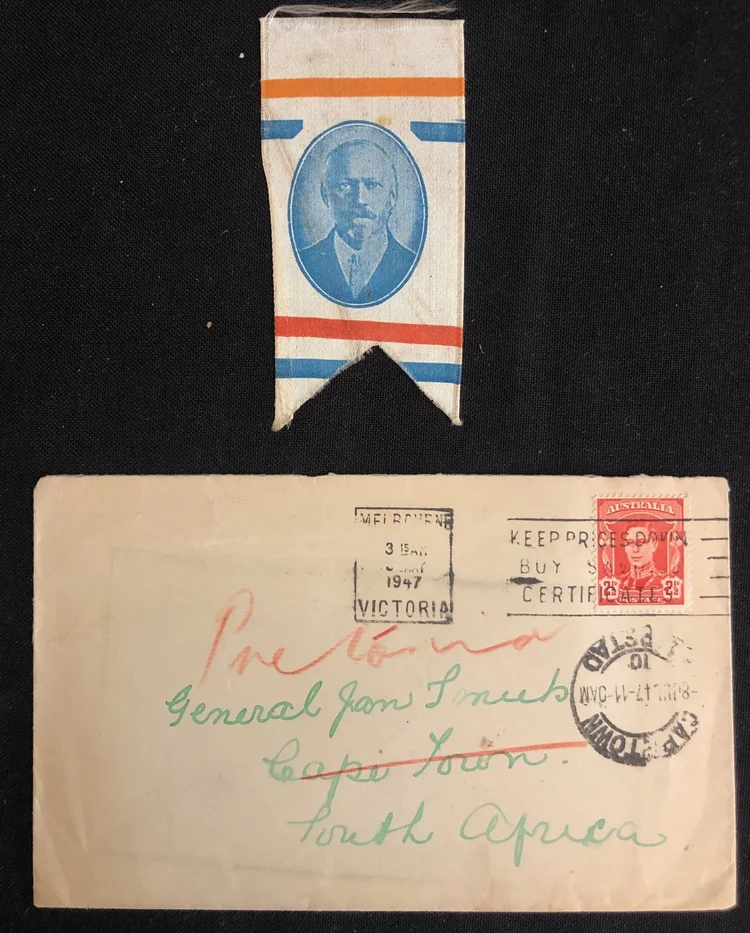
Envelope from Australia addressed to "General Jan Smuts, South Africa." Together with an election ribbon (2) 1947
R1,000 The envelope is addressed simply to "General Jan Smuts, South Africa." The fact that an international letter could be posted from Melbourne, Australia, with such a minimal address speaks volumes about Smuts' immense global prominence at the time. By 1947, Field Marshal Jan Smuts was not just the Prime Minister of South Africa; he was an internationally revered Commonwealth statesman, a military leader from both World Wars, and a key architect of both the League of Nations and the United Nations. For more details and images, go to the website:
https://jamesfindlaycollectablebooks.com/philately/envelope-addressed-to-general-jan-smuts See more Philately on the website
|
|
Tea Time Talk: Fake News & Banned Books Sunday, September 6, 2026
10h00 to 11h30
Rawdons Hotel & Brewery Join James as he entertains us with tales about fake books; smuggled books; books banned by the Nats; a con-man cartographer and a poster that was not banned. Please note this is the same talk James gave on Thursday 16 July at Rawdons. Booking essential, tickets R120 through Quicket.
|
|
For more information contact
James Findlay
+27 (0) 79 779 4574
jamesfindlaycollectablebooks@gmail.com New Categories are being added to the website:
https://jamesfindlaycollectablebooks.com/categories
Join our Whatsapp Group for quick links to the monthly mailers.
|
|
|
|