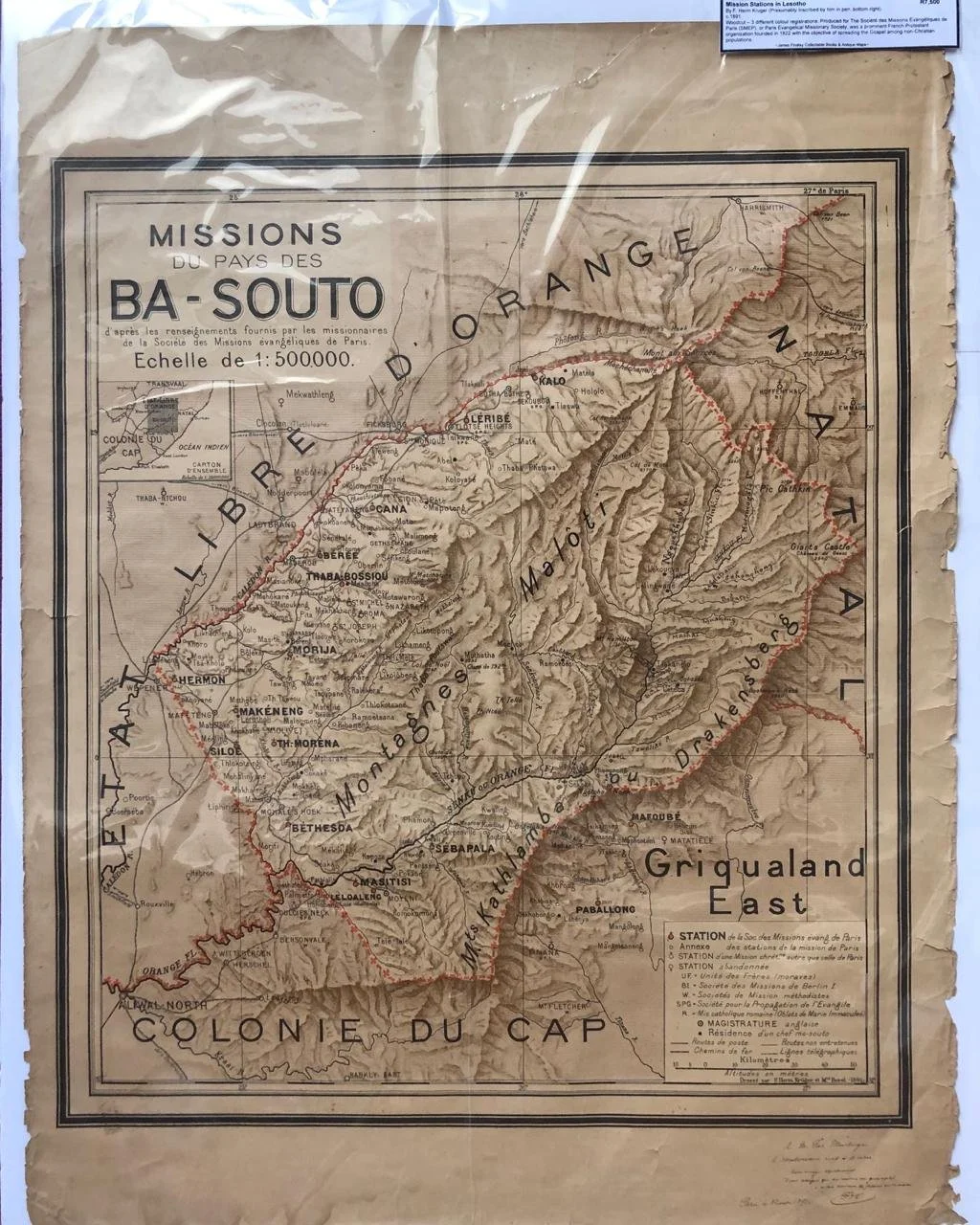
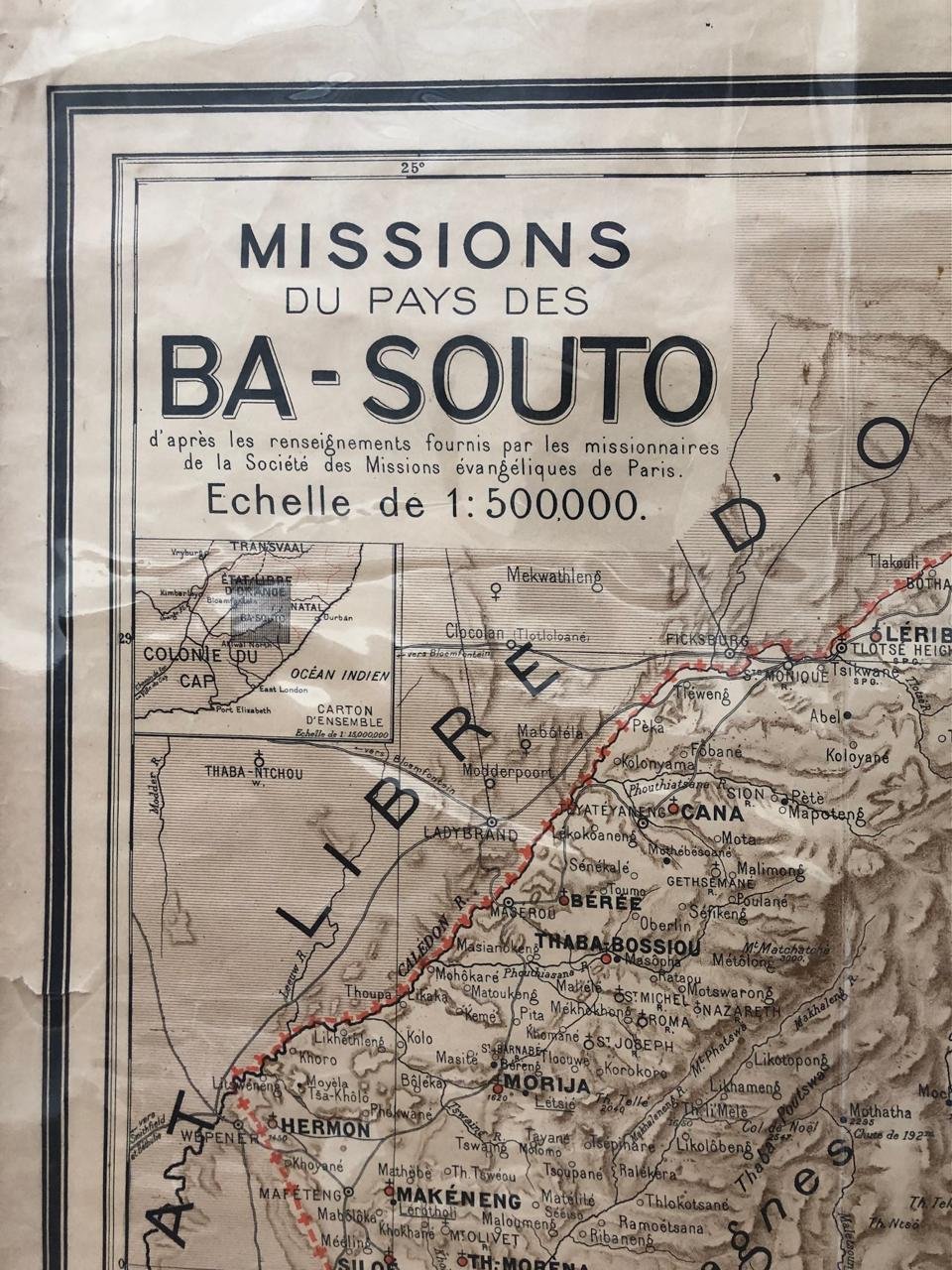
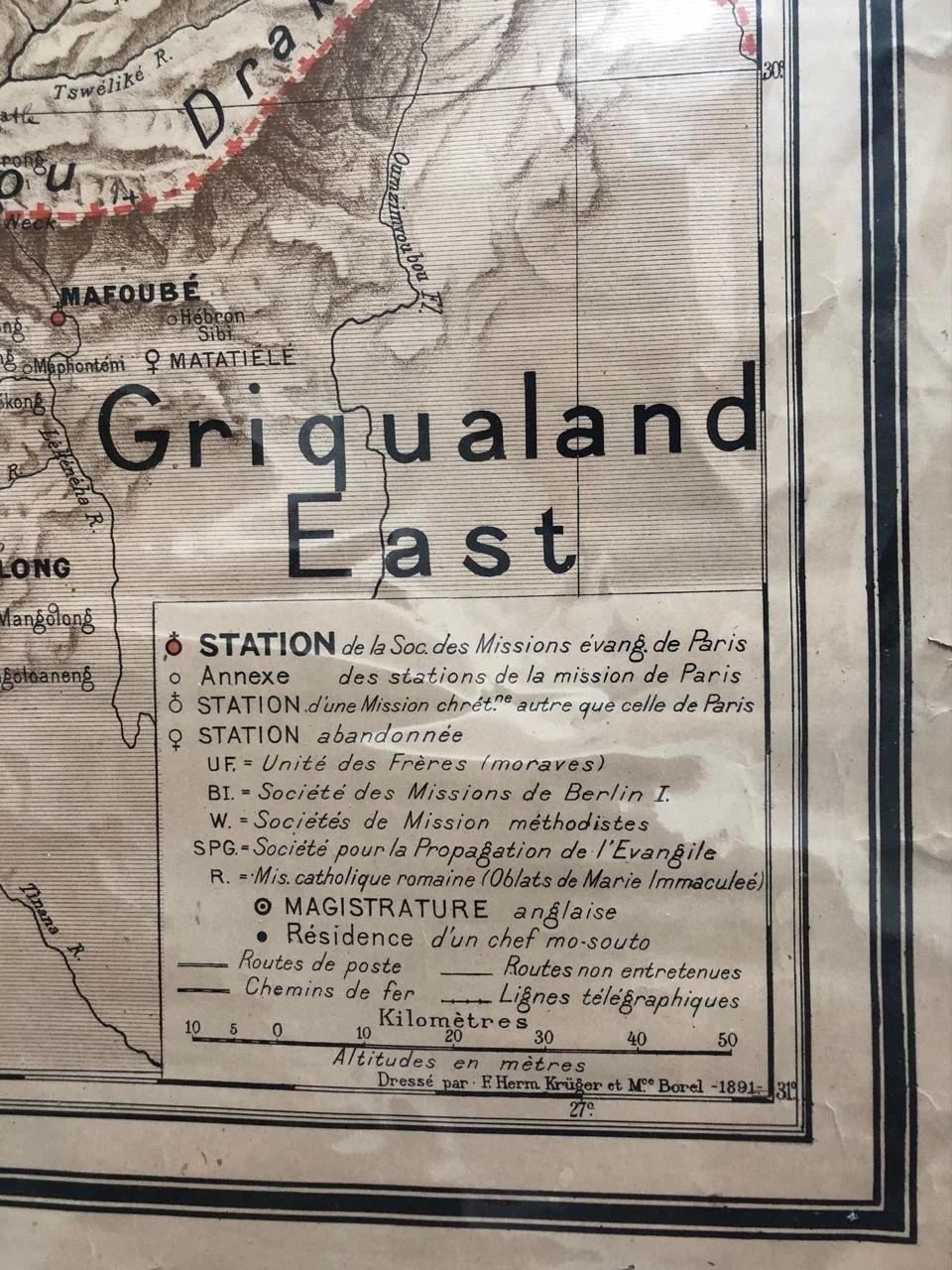
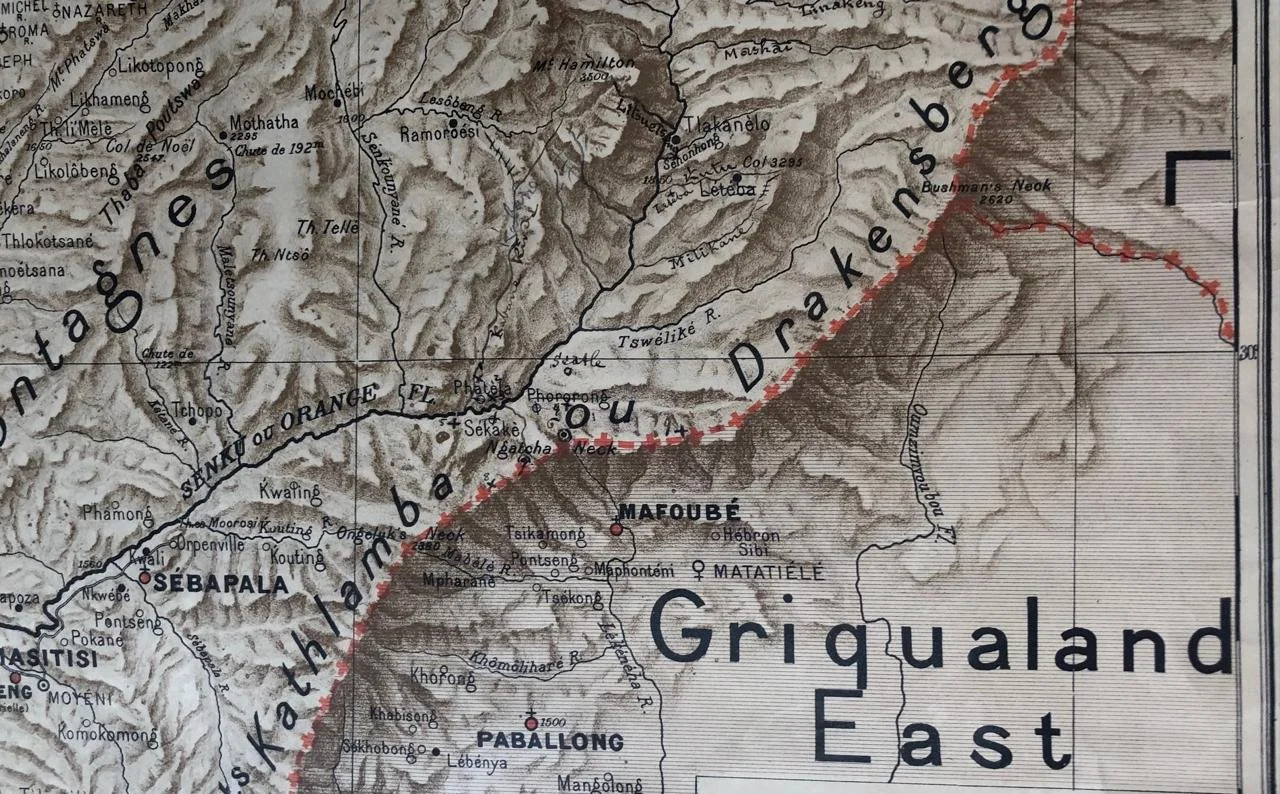
Mission Stations in Lesotho
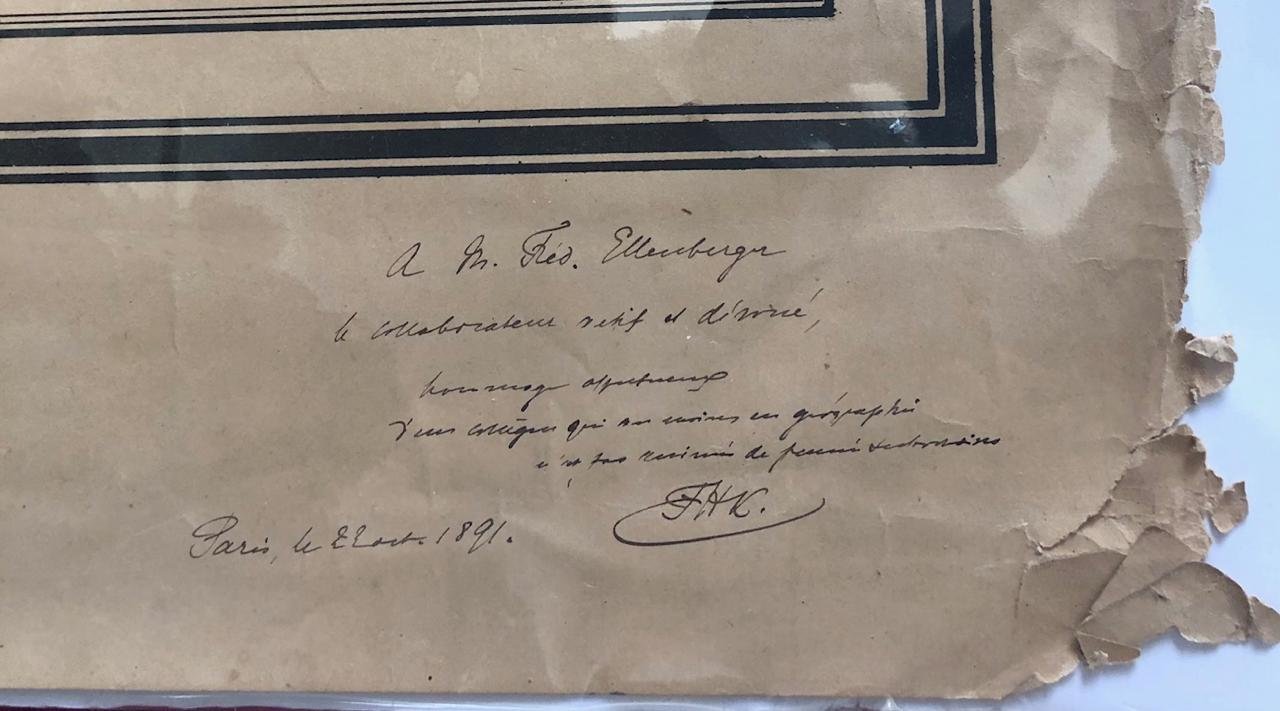
By F. Herm Kruger (Presumably inscribed by him in pen, bottom right).
c. 1891.
Woodcut with three different colour registrations.
Produced for The Société des Missions Évangéliques de Paris (SMEP), or Paris Evangelical Missionary Society, was a prominent French Protestant organization founded in 1822 with the objective of spreading the Gospel among non-Christian populations. The society expanded its influence quickly in Africa and, for a time, in France itself. It was particularly active in regions such as Lesotho, Senegal, Madagascar, and the Zambezi region.
The Société des Missions Évangéliques de Paris (Paris Evangelical Missionary Society, PEMS) played a foundational role in the history of Lesotho (then Basutoland) and in the establishment of the Lesotho Evangelical Church in Southern Africa.
Key Aspects of the PEMS in Lesotho:
Establishment (1833): The mission was established in 1833 by three French missionaries-Eugène Casalis, Thomas Arbousset, and Constant Gossellin—at the invitation of King Moshoeshoe I.
Significance: It is one of the oldest Protestant churches in Africa.
Key Location (Morija): The missionaries established their main station at Morija, which became a centre for education, printing, and theological training.
Bible Translation: The missionaries were instrumental in translating the Bible into Sesotho.
Education and Development: They introduced Western education, printing, and agriculture.
Political Influence: They acted as advisors to King Moshoeshoe I, helping him navigate relationships with Boer settlers and the British colonial government.
625mm x 820mm
R7,500