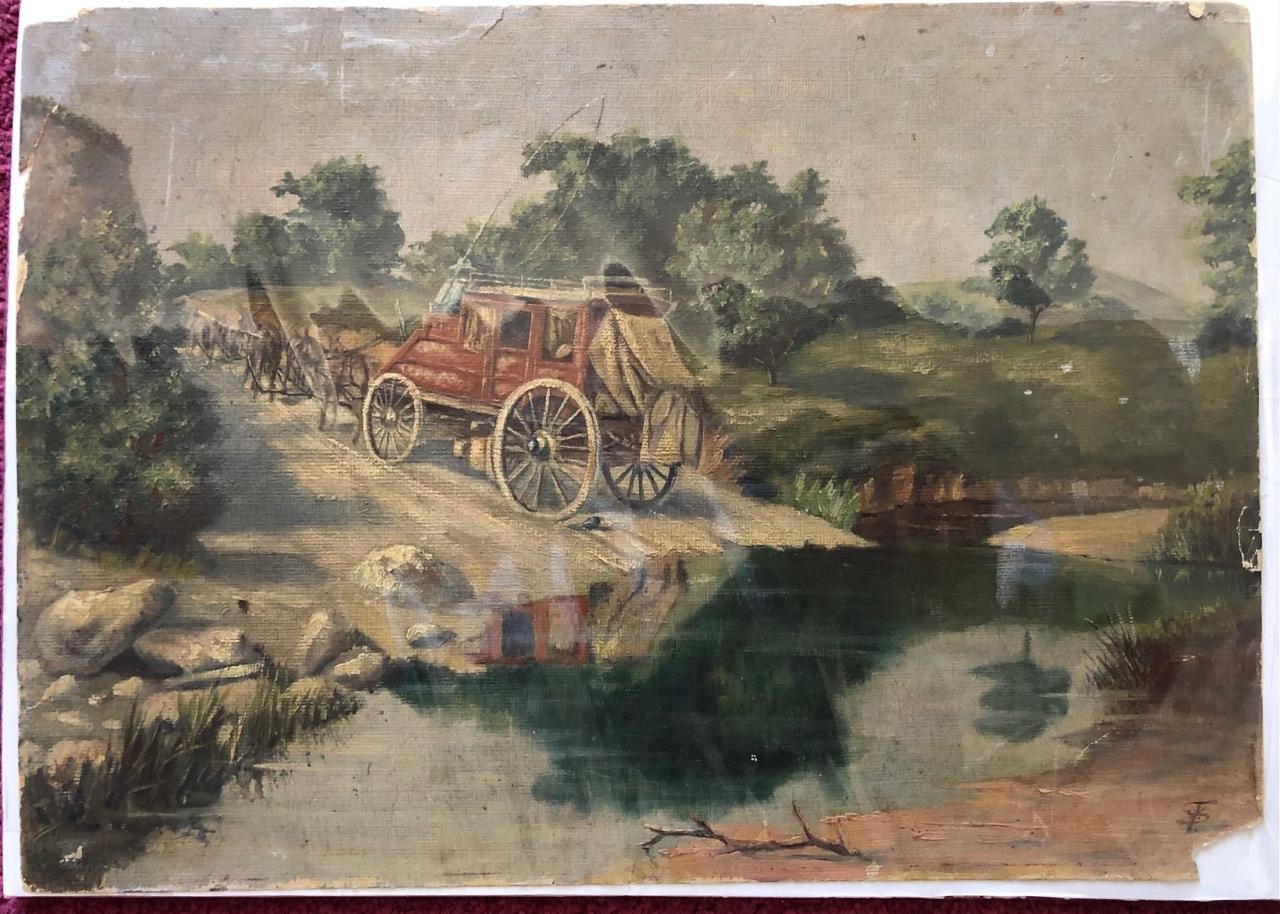
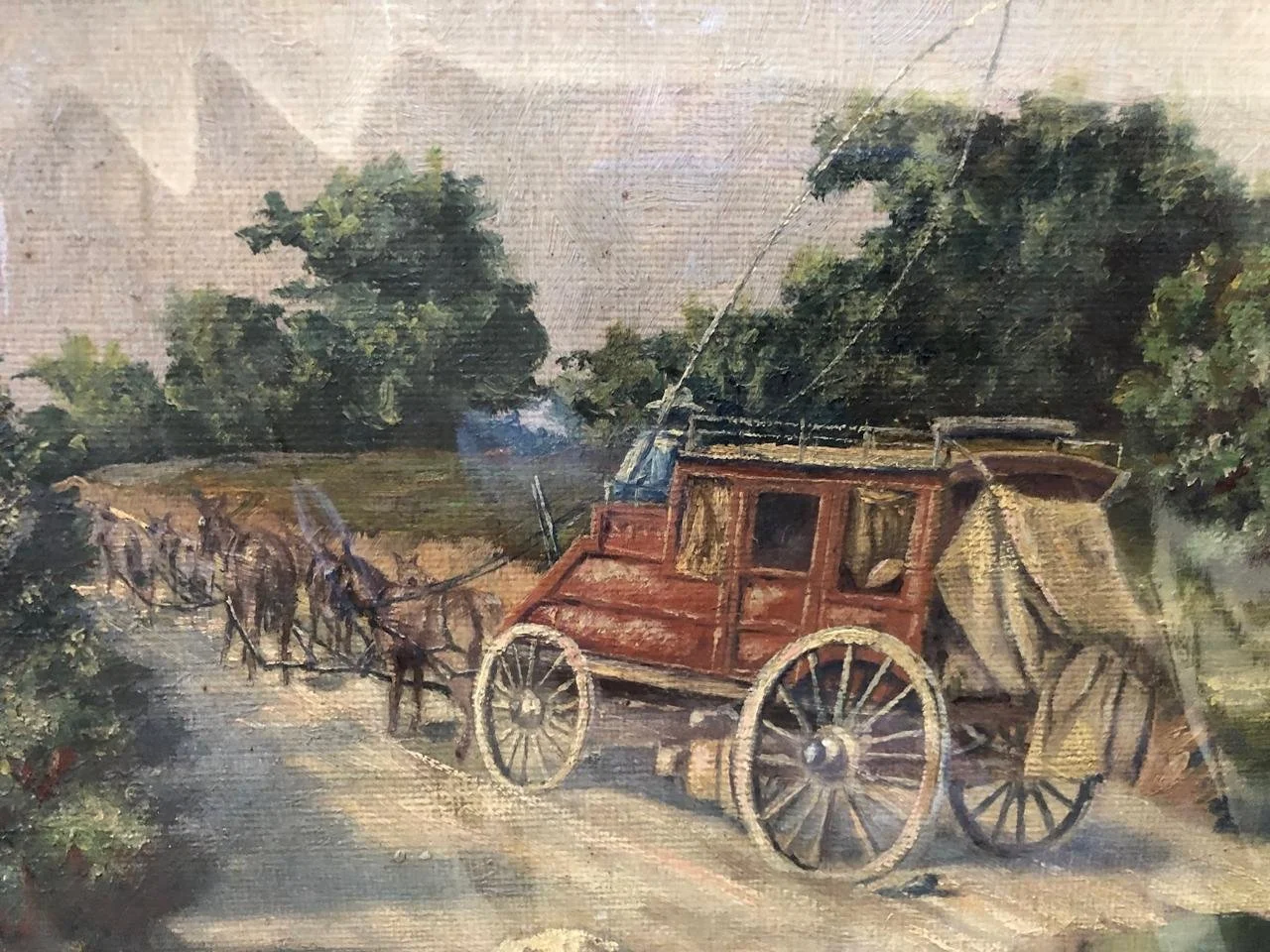
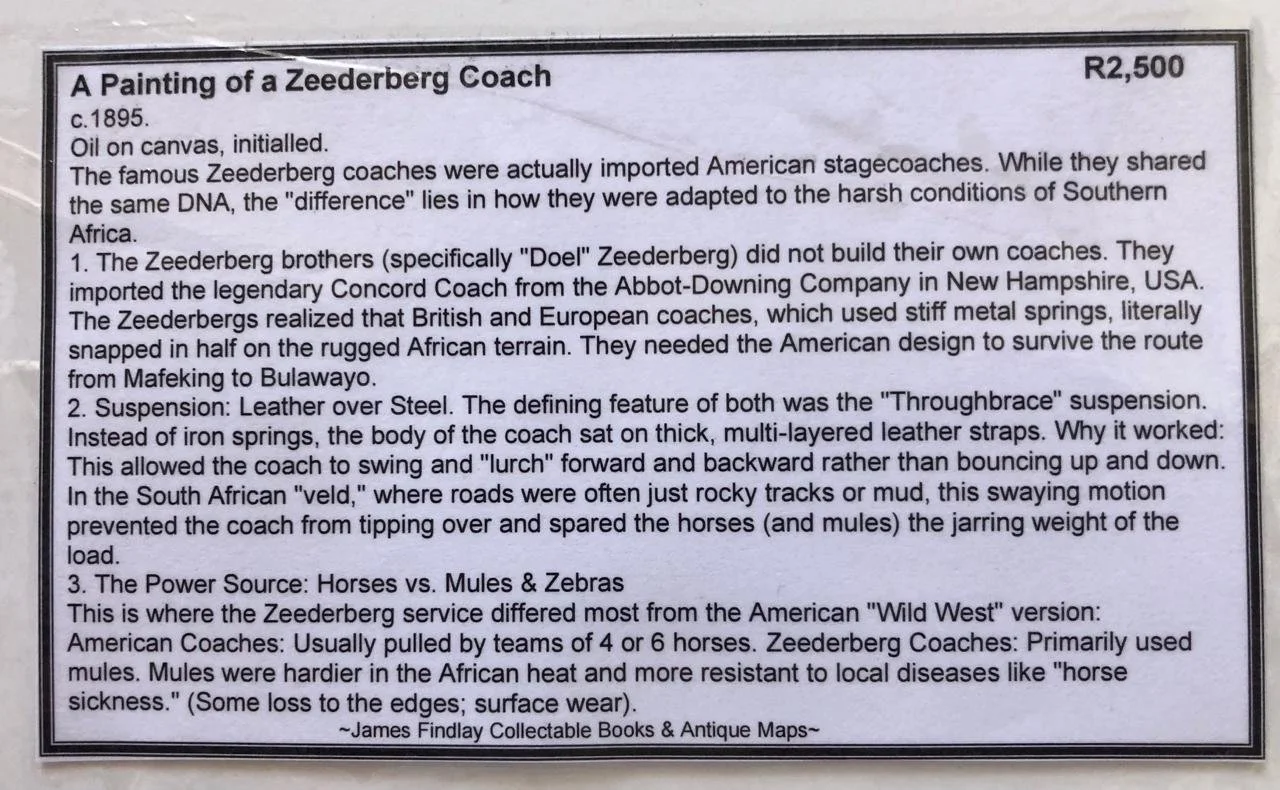
A Painting of a Zeederberg Coach c.1895
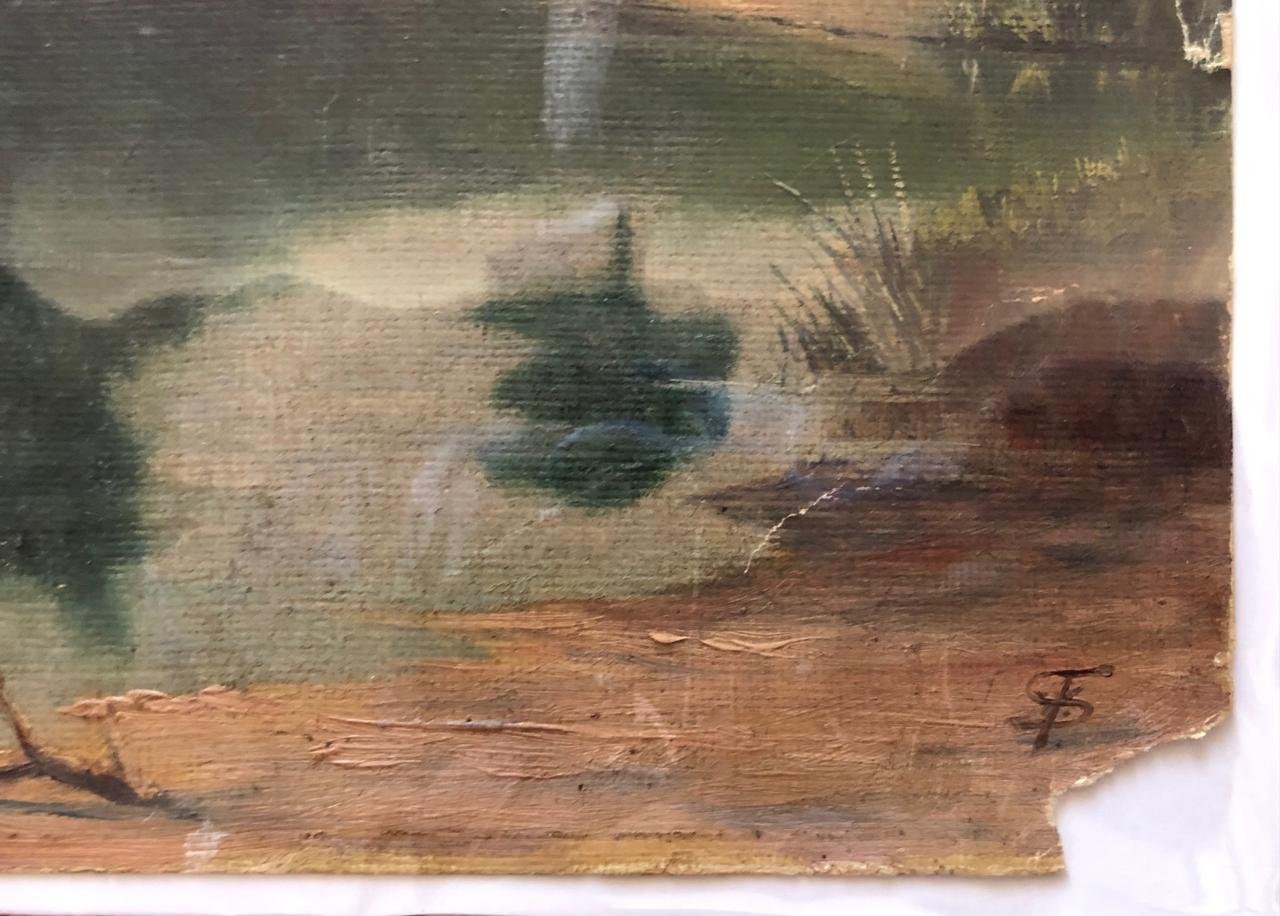
Oil on canvas, initialled.
The famous Zeederberg coaches were actually imported American stagecoaches. While they shared the same DNA, the "difference" lies in how they were adapted to the harsh conditions of Southern Africa.
1. The Zeederberg brothers (specifically "Doel" Zeederberg) did not build their own coaches. They imported the legendary Concord Coach from the Abbot-Downing Company in New Hampshire, USA.
The Zeederbergs realized that British and European coaches, which used stiff metal spring, literally snapped in half on the rugged African terrain. They needed the American design to survive the route from Mafeking to Bulawayo.
2. Suspension: Leather over Steel. The defining feature of both was the "Throughbrace" suspension.
Instead of iron springs, the body of the coach sat on thick, multi-layered leather straps. Why it worked:
This allowed the coach to swing and "lurch" forward and backward rather than bouncing up and down.
In the South African "veld," where roads were often just rocky tracks or mud, this swaying motion prevented the coach from tipping over and spared the horses (and mules) the jarring weight of the load.
3. The Power Source: Horses vs. Mules & Zebras
This is where the Zeederberg service differed most from the American "Wild West" version:
American Coaches: Usually pulled by teams of 4 or 6 horses. Zeederberg Coaches: Primarily used mules. Mules were hardier in the African heat and more resistant to local diseases like "horse sickness." (Some loss to the edges; surface wear).
Some loss to the edges, surface wear.
354mm x 255mm
Sold Feb '26