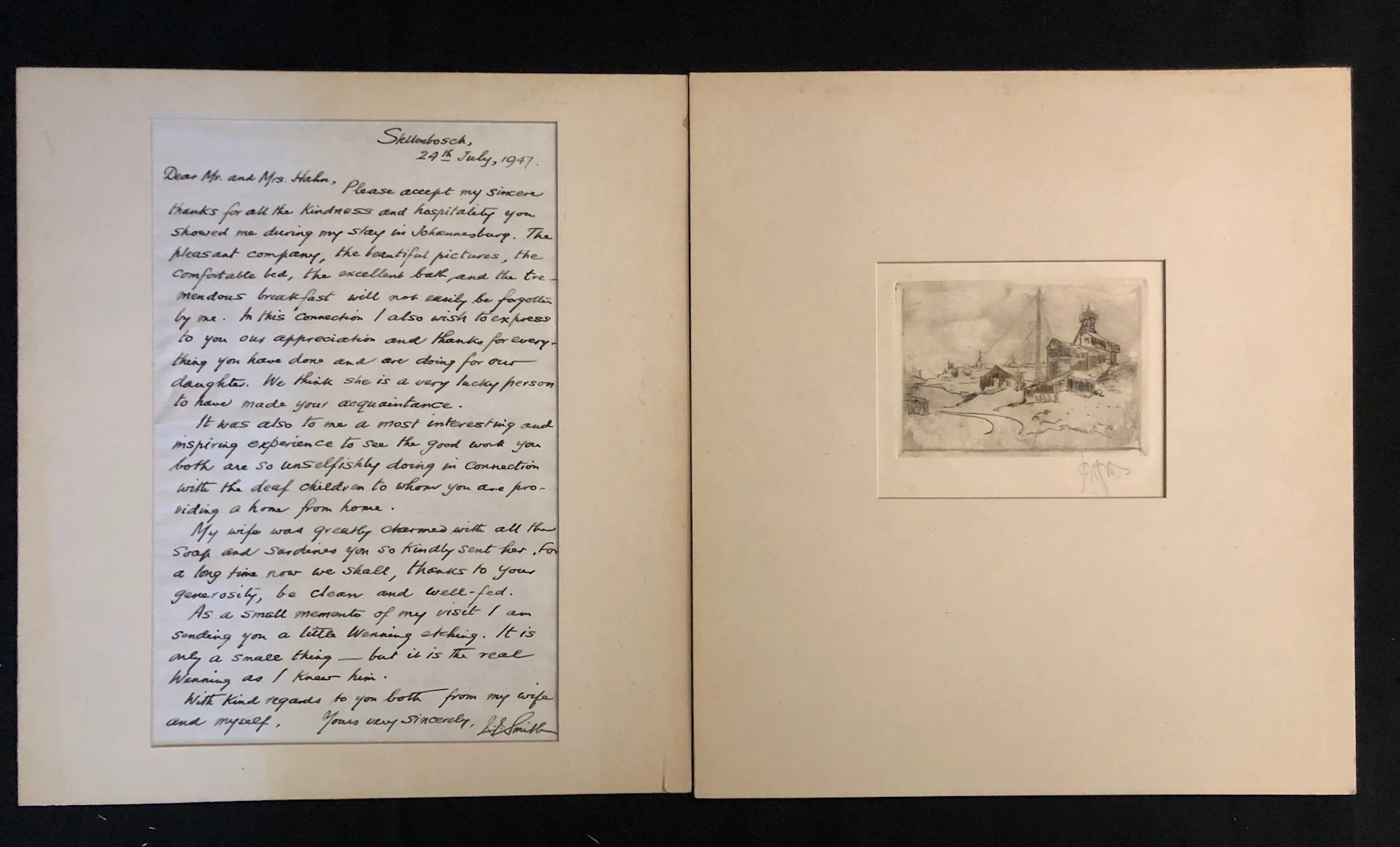
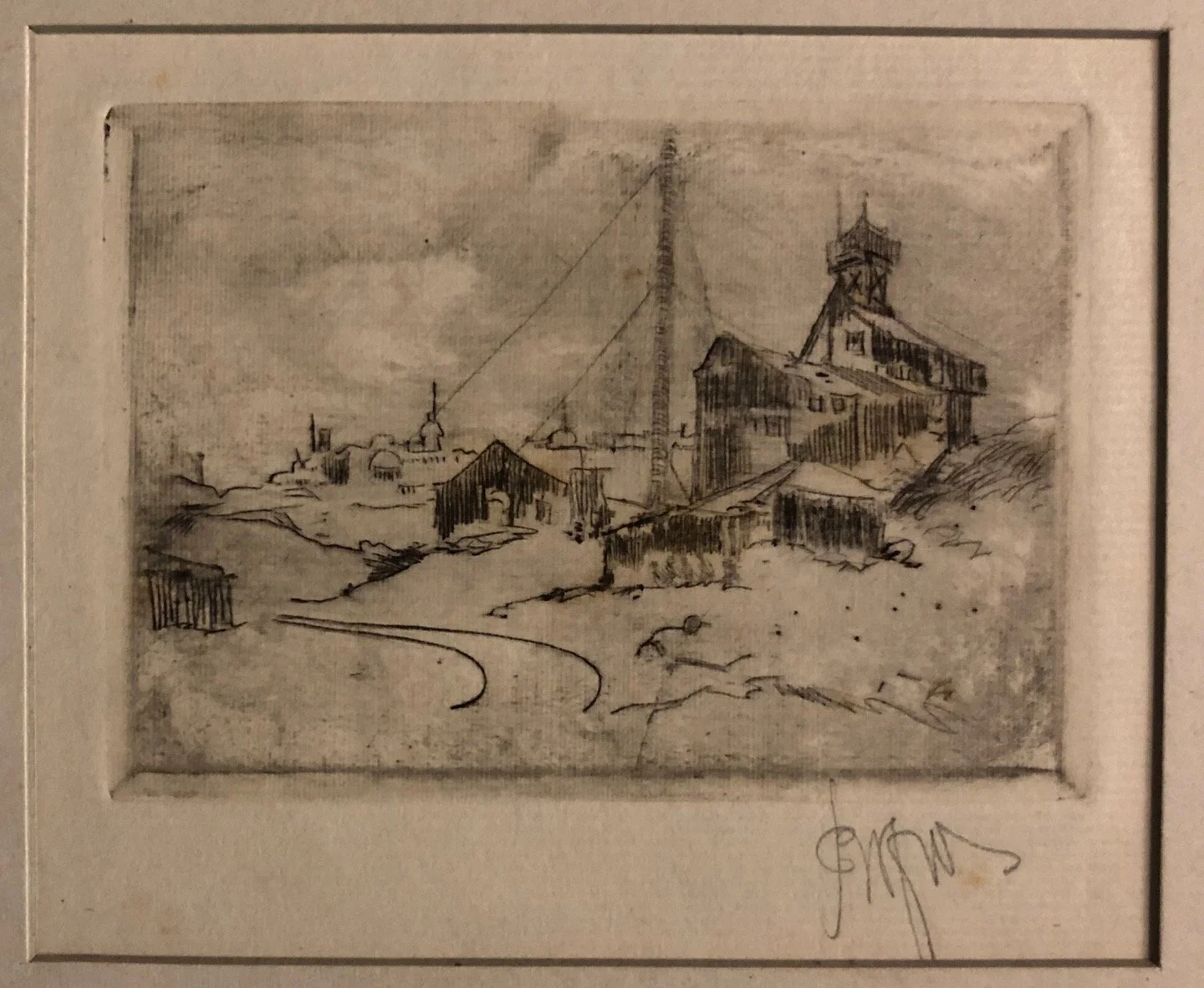
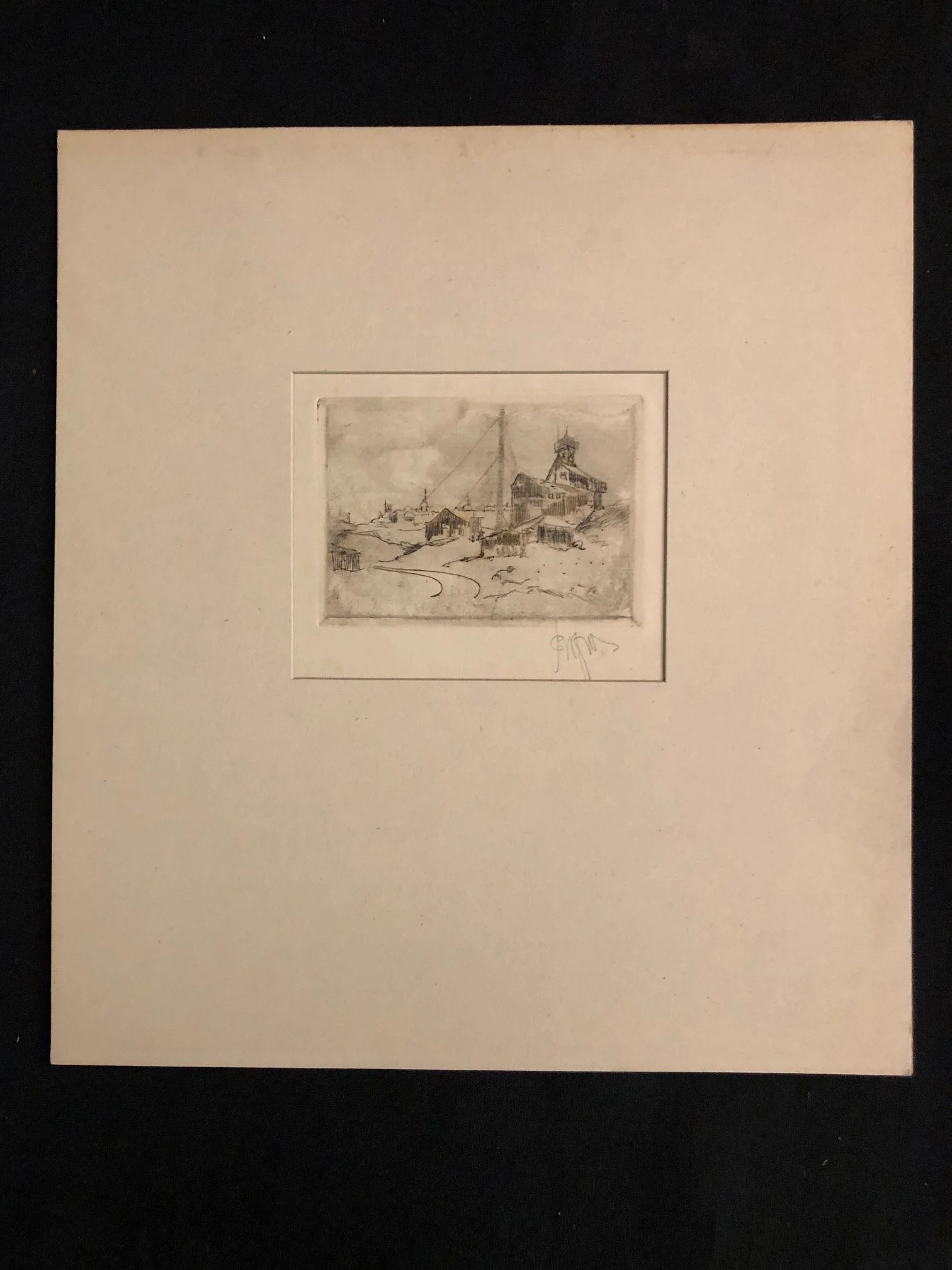
Etching of Johannesburg mine dump by Pieter Wenning with letter from Prof. Johannes Jacobus Smith (1947)
This diptych brings together three major figures in 20th-century South African cultural, linguistic, and art history, tied together by a personal gift and a remarkable provenance trail.
The Artist: Pieter Wenning (1873–1921)
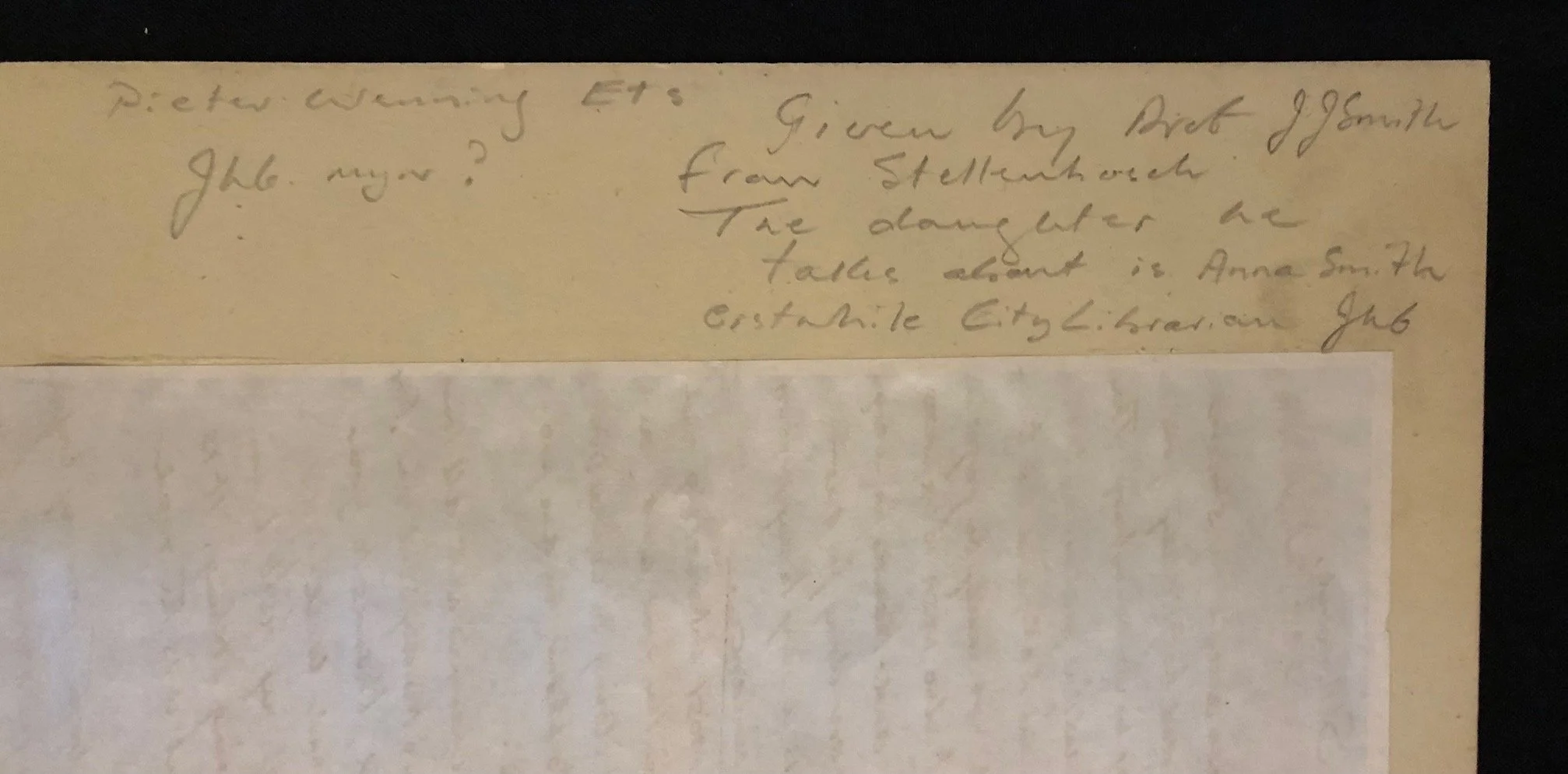
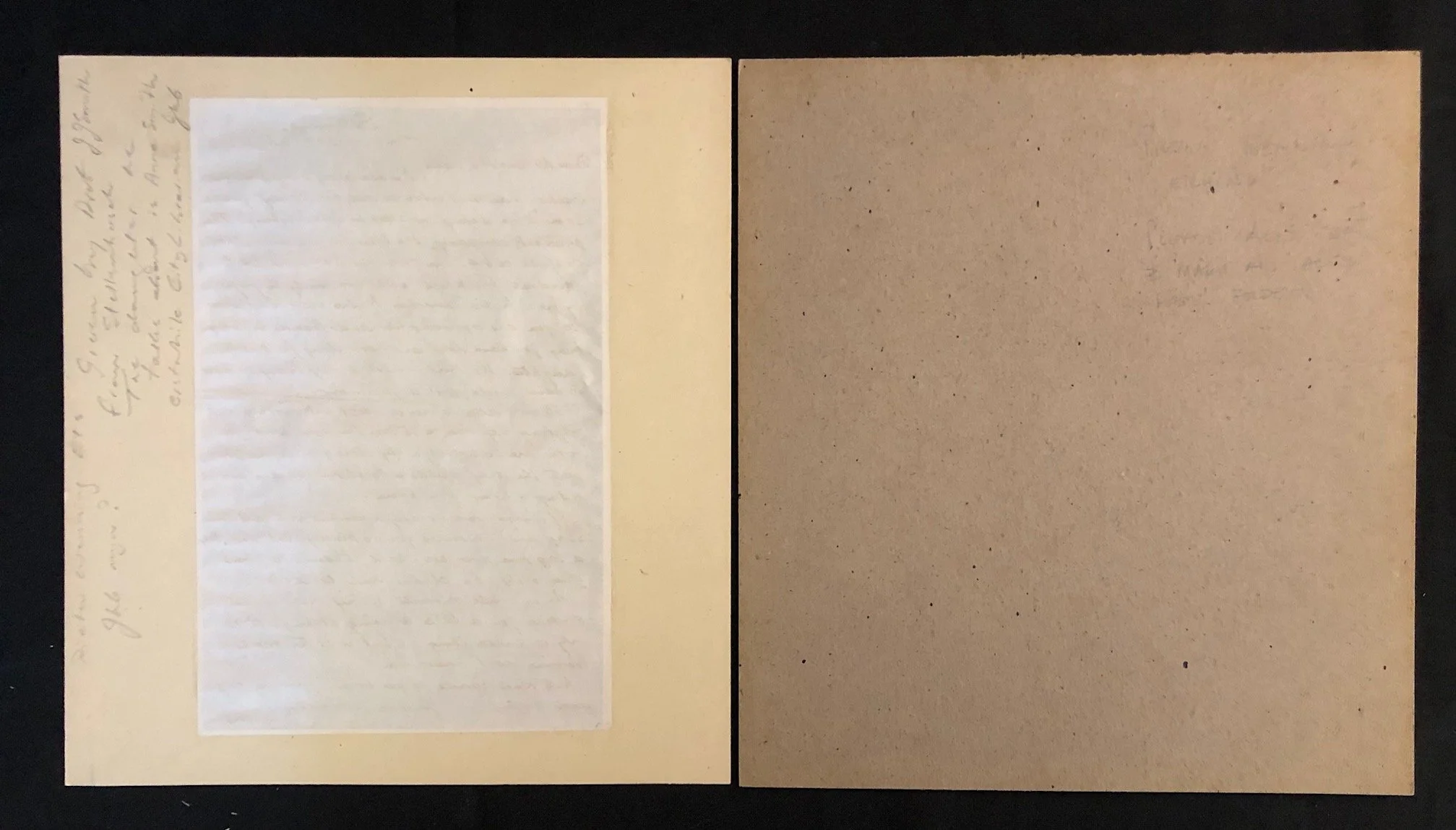
The etching on the right, depicting a Johannesburg mine dump and headgear, as suggested by the pencil annotation "Jhb. myn?" on the reverse—is by Pieter Wenning, one of the fathers of South African Impressionism. Wenning’s closest friend and greatest champion during his lifetime was D.C. Boonzaier, and his circle in the late 1910s included the intellectual and artistic elite of Cape Town and Stellenbosch.
While Wenning is most famous for his atmospheric Cape landscapes in oil, he began his career working in bookshops (notably J.H. de Bussy in Pretoria) and initially gained recognition as a printmaker. Because he died relatively young at 47 and had a small output, original signed etchings by Wenning are scarce, especially those capturing the industrial landscape of the Witwatersrand rather than the Cape.
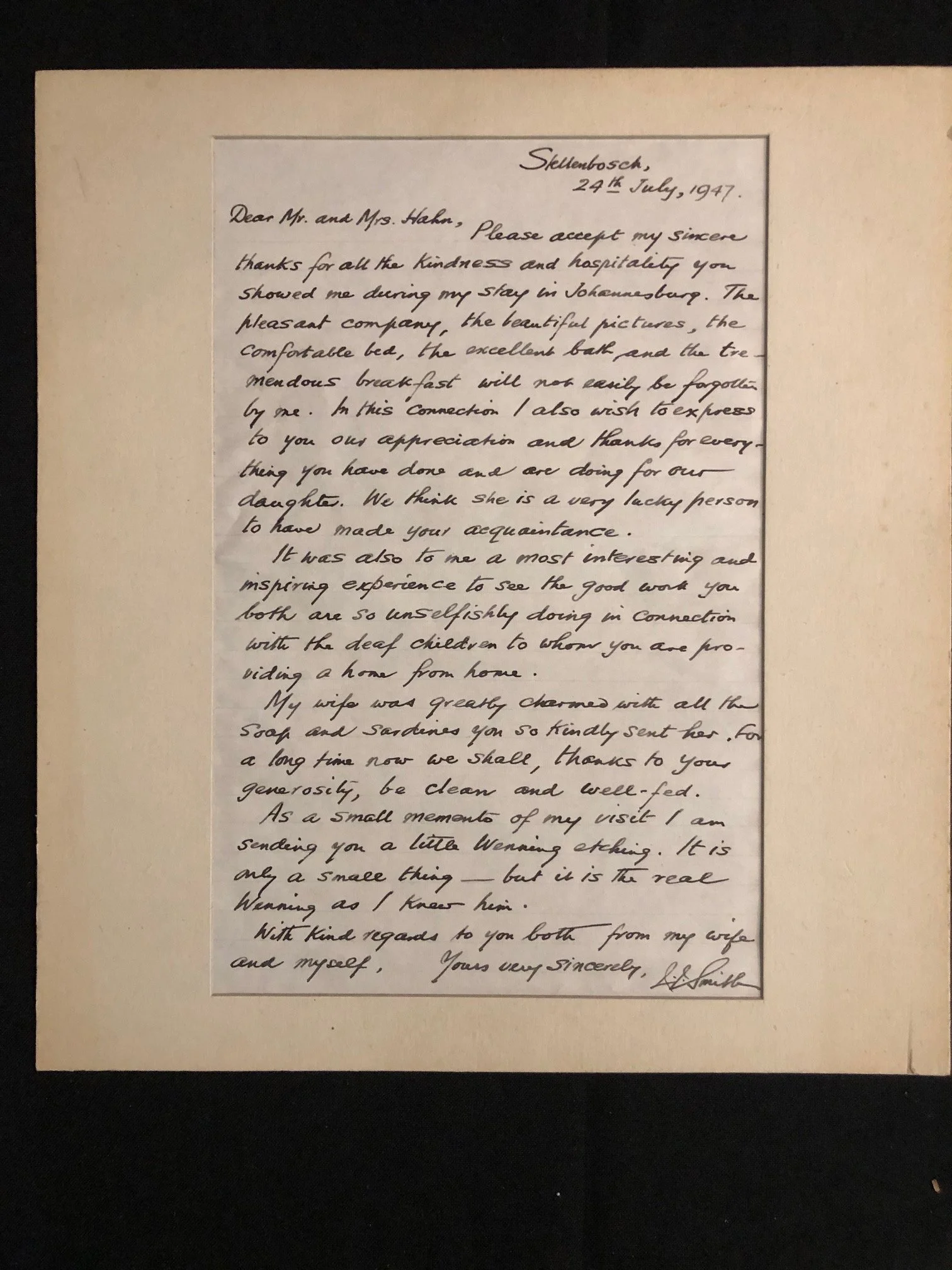
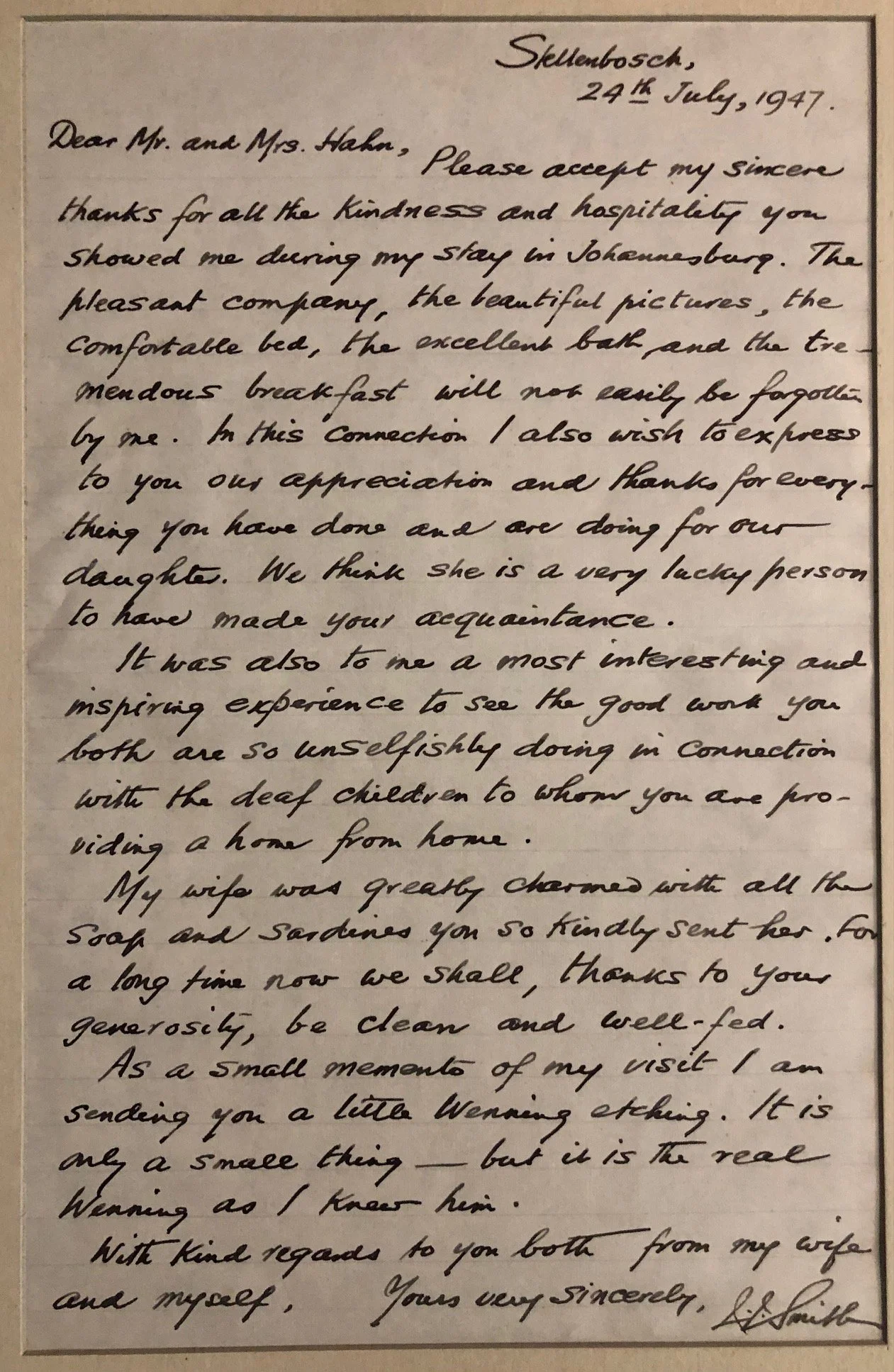
The etching was a gift accompanying a thank you letter from Prof. J.J. Smith to Mr and Mrs Hahn of Johannesburg. In the accompanying letter, the sender writes, "As a small memento of my visit I am sending you a little Wenning etching. It is only a small thing— but it is the real Wenning as I knew him.."
The Sender: Prof. J.J. Smith (1883–1949)
The handwritten letter is dated 24 July 1947 from Stellenbosch and is signed by Johannes Jacobus Smith.
Prof. J.J. Smith was a towering figure in South African linguistics. He was the first professor of Afrikaans at Stellenbosch University (appointed in 1919) and served as the foundational editor-in-chief of the Woordeboek van die Afrikaanse Taal (WAT), the comprehensive, multi-volume dictionary of the Afrikaans language.
A charming historical detail in the letter is Smith thanking his hosts for sending his wife "Soap and sardines", adding, "For a long time now we shall, thanks to your generosity, be clean and well-fed." Even in July 1947, two years after the end of World War II, post-war supply shortages and rationing still affected basic household goods and imported tinned foods in South Africa, making such a care package a genuinely prized gift.
The Daughter: Anna Hester Smith (1912–1995)
In the letter, Prof. Smith warmly thanks "Mr. and Mrs. Hahn" for everything they have done for "our daughter. We think she is a very lucky person to have made your acquaintance." The pencil note on the back confirms this daughter was Anna Smith, "erstwhile City Librarian Jhb".
Anna Smith became one of South Africa's most formidable librarians, bibliographers, and museum curators. She joined the Johannesburg Public Library in 1938 and went on to serve as City Librarian of Johannesburg and Director of the Africana Museum (now MuseuMAfricA) from 1960 to 1975.
She authored standard reference works on South African numismatics, place names, and historical prints, and was instrumental in building one of the finest collections of Africana books, maps, and historical art in the world.
Summary of the Provenance
What makes this piece exceptional is that it isn't merely a Pieter Wenning etching; it is a self-contained provenance document. It links a master South African artist, the founding lexicographer of Afrikaans, and the legendary director of the Johannesburg Africana Museum—all preserved together with a warm slice of 1947 social history.
265mm x 290mm (the size of the boards).
115mm x 95mm (the size of the window of the etching).
The edges of the letter are glued onto the board. There’s very slight discolouration of the letter and etching. The etching isn’t inspected outside of the card mount. I will have to damage the card in order to inspect if it’s laid down or not. I do recommend that whoever buys this etching and letter has them placed in between acid free boards.
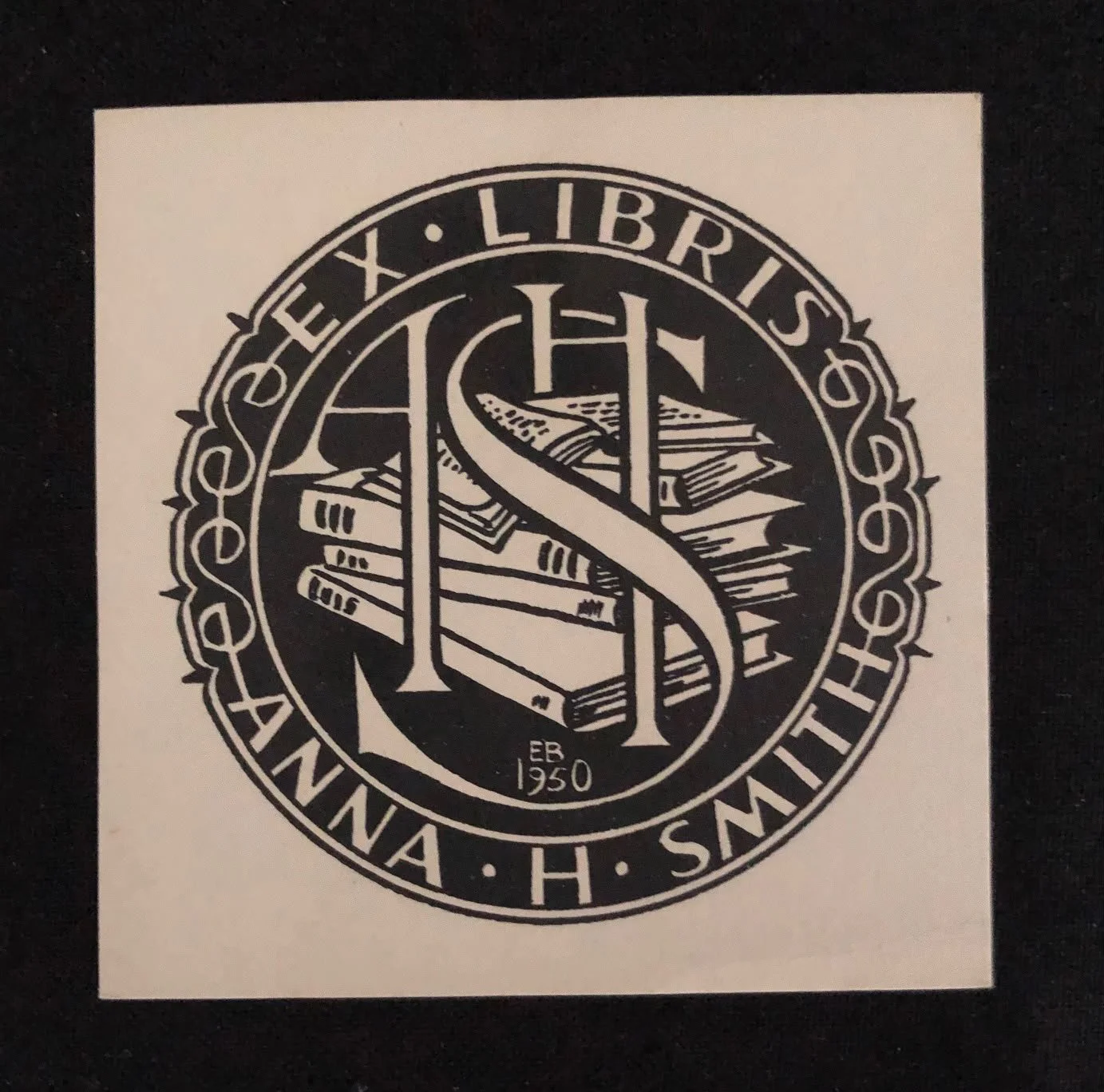
Included with the letter and etching is Anna Smith’s bookplate.
See also Johannesburg Street Names by Anna H Smith (1971)
R10,000