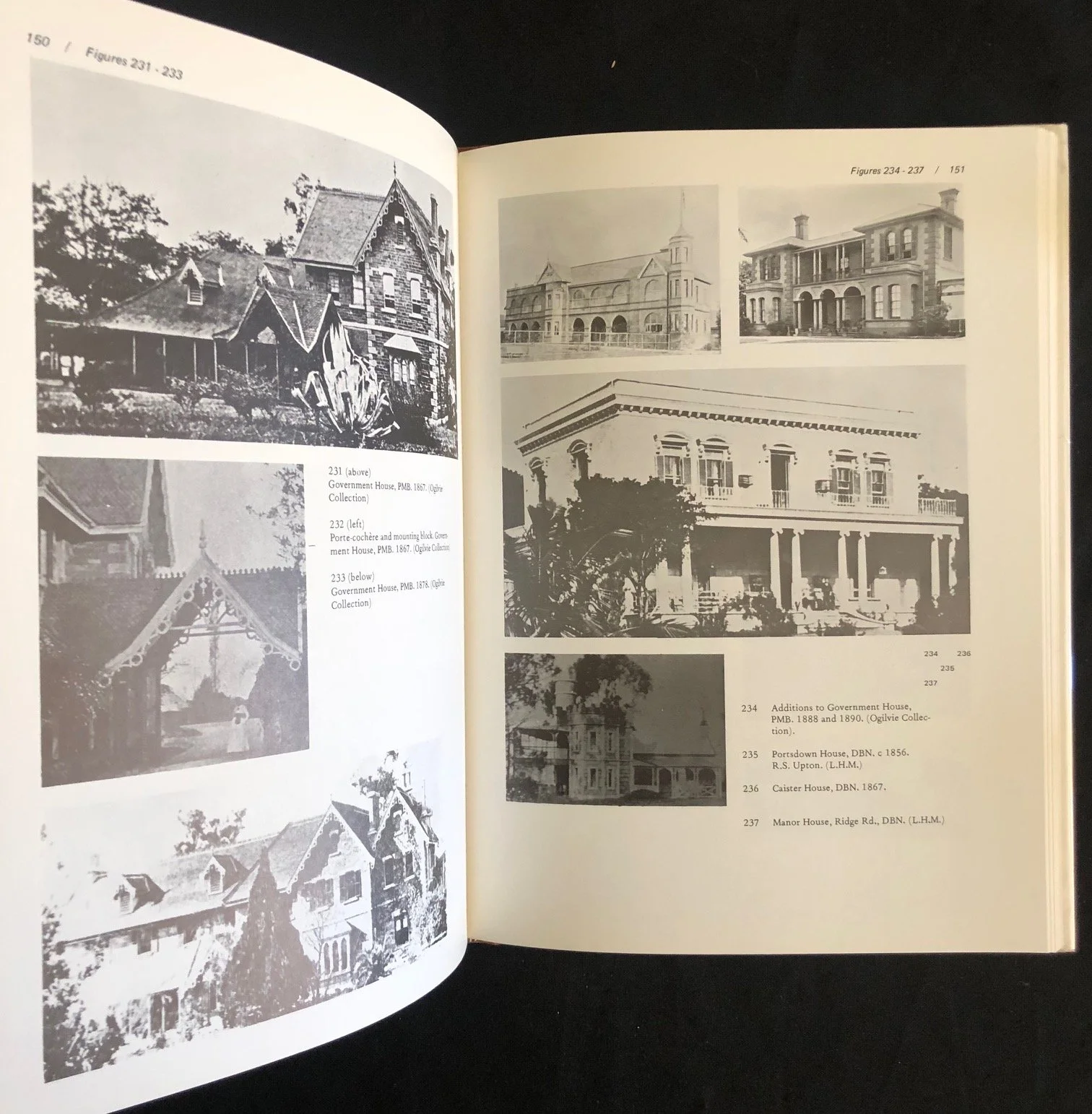
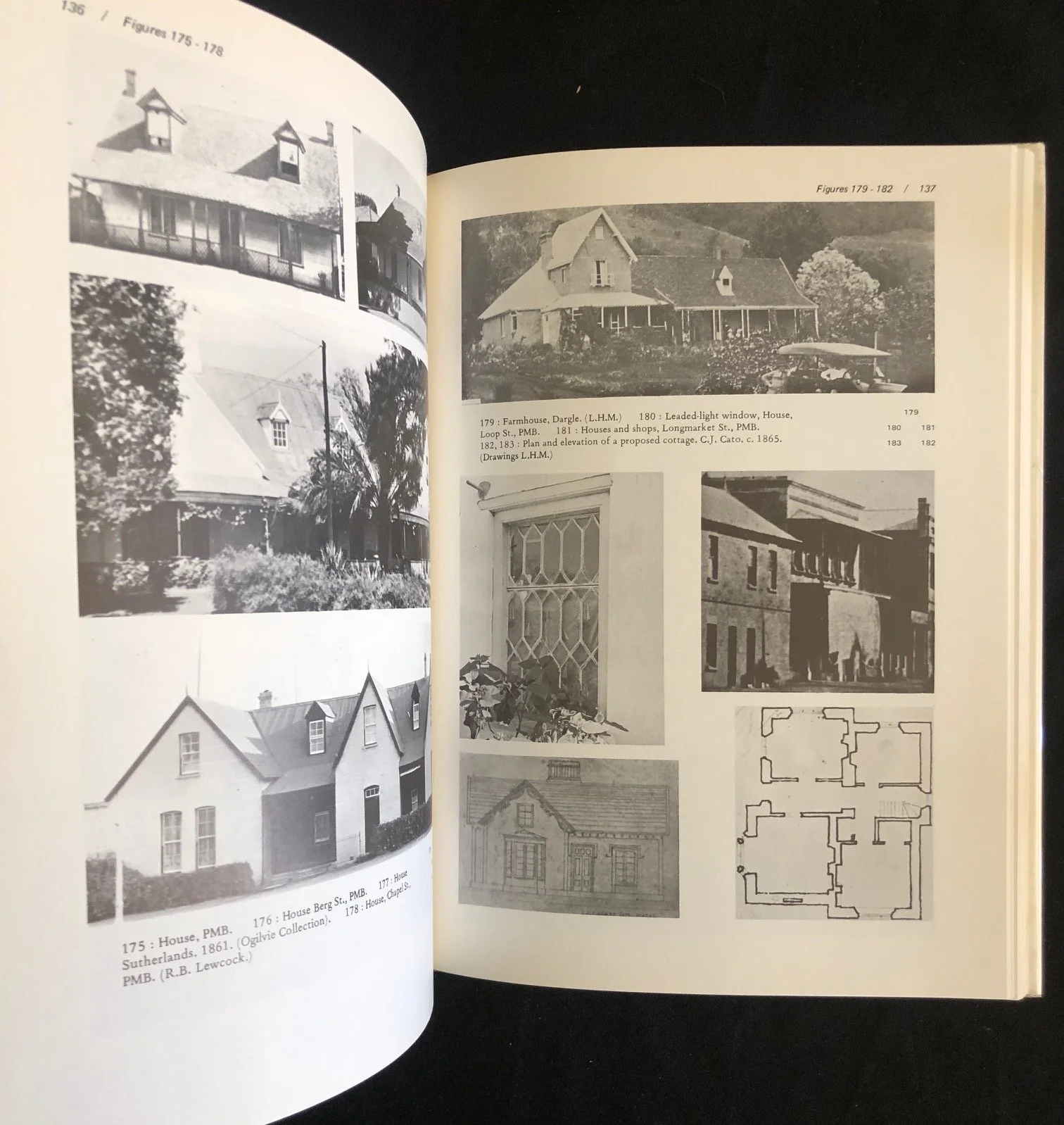
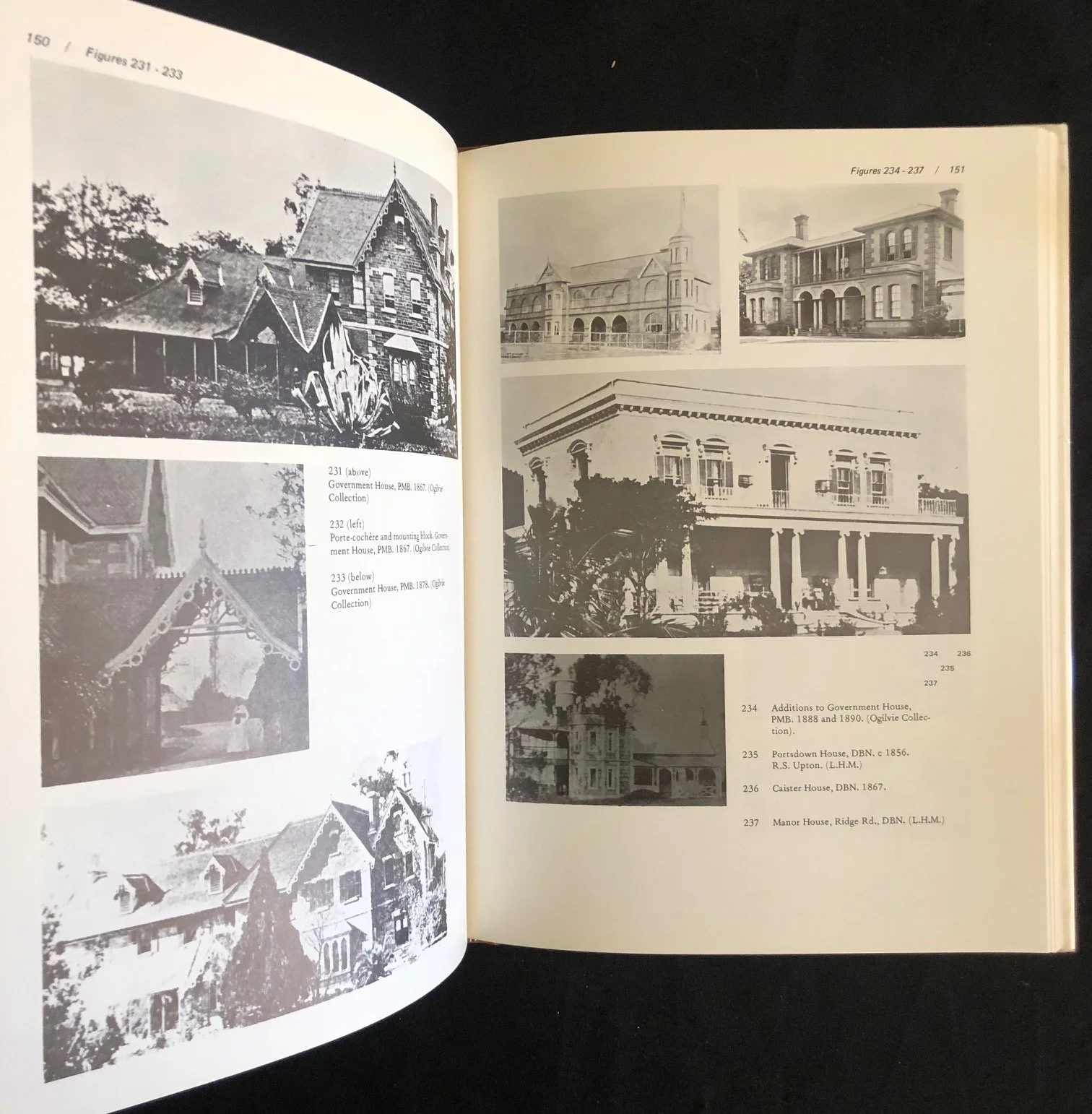
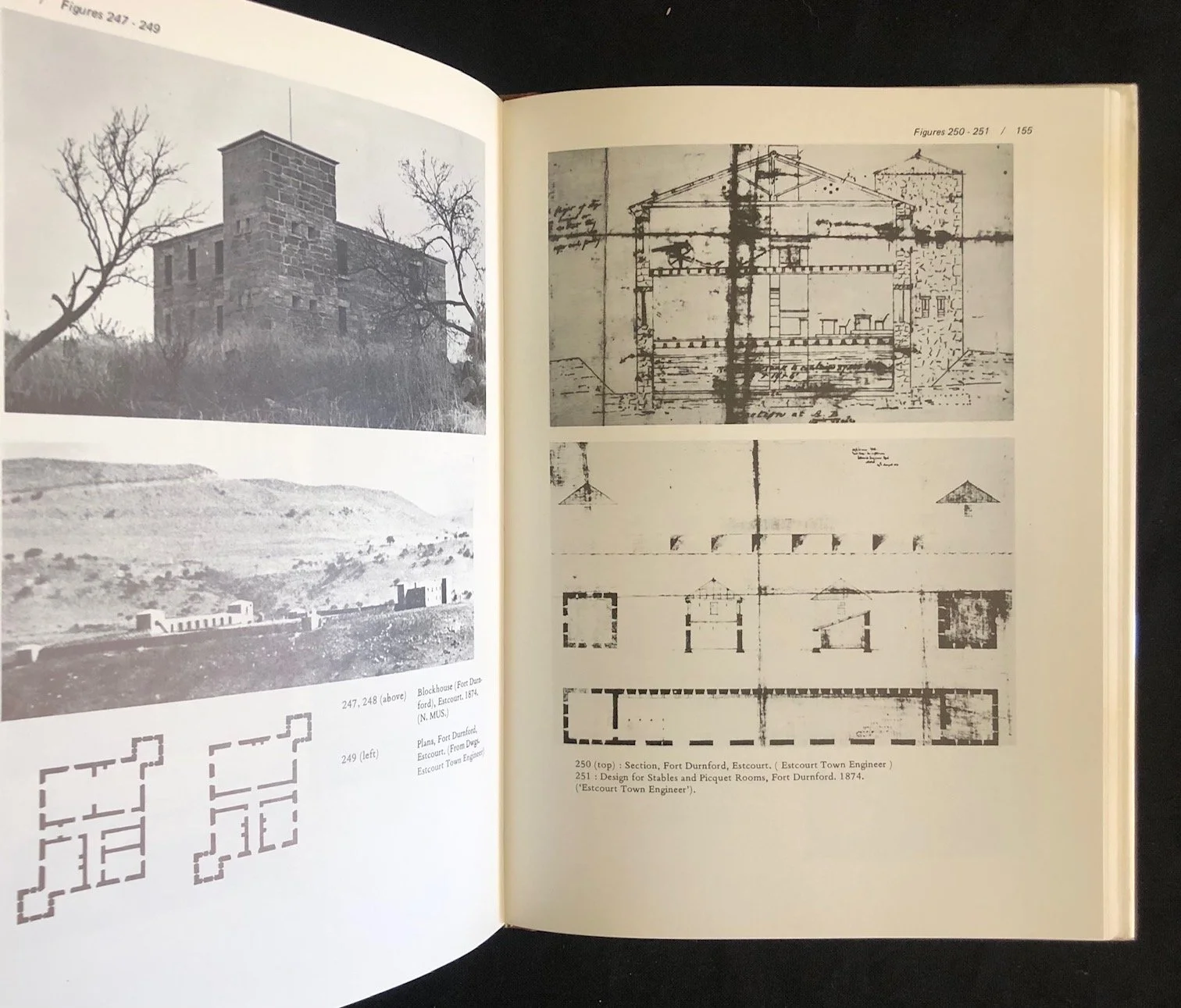
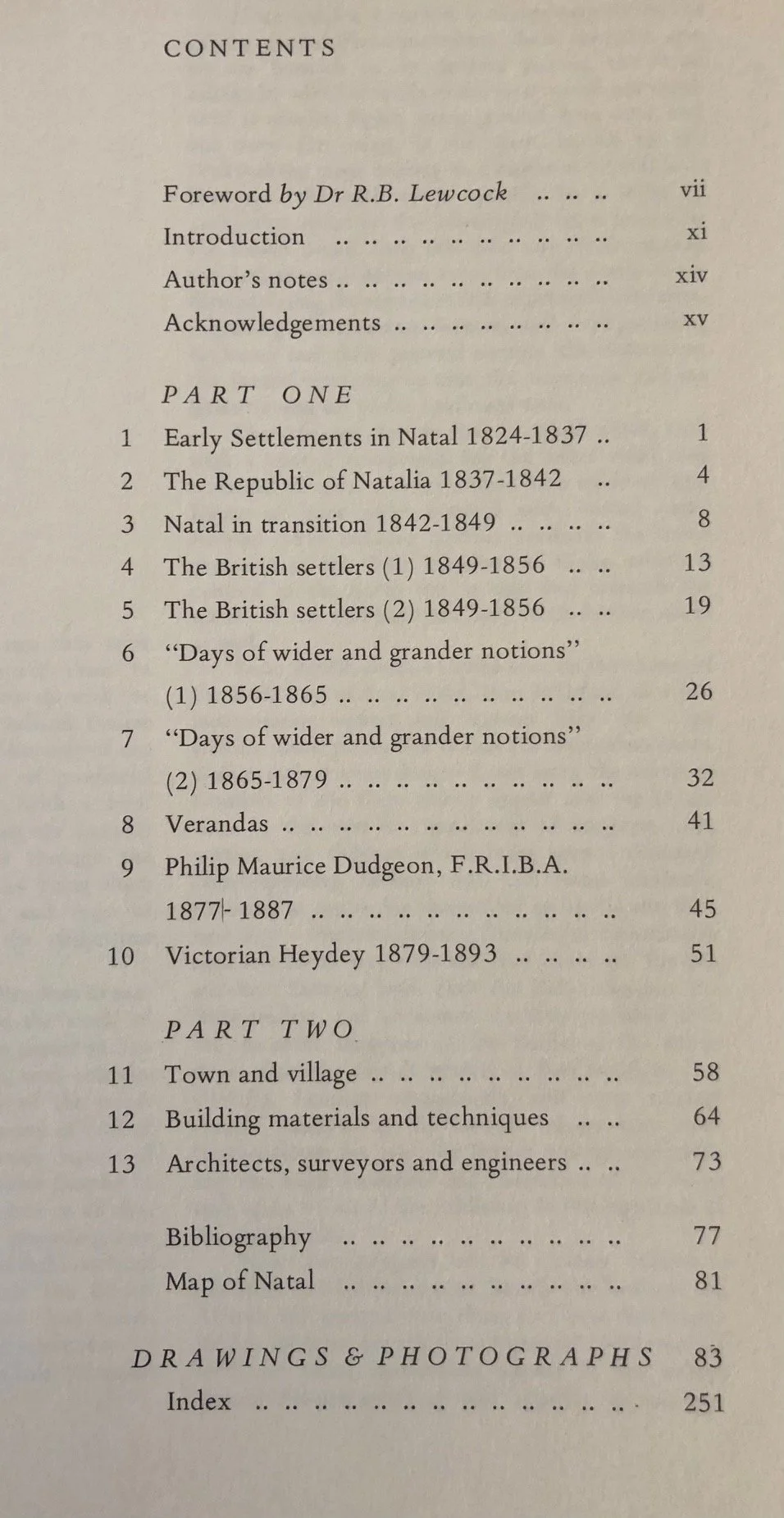
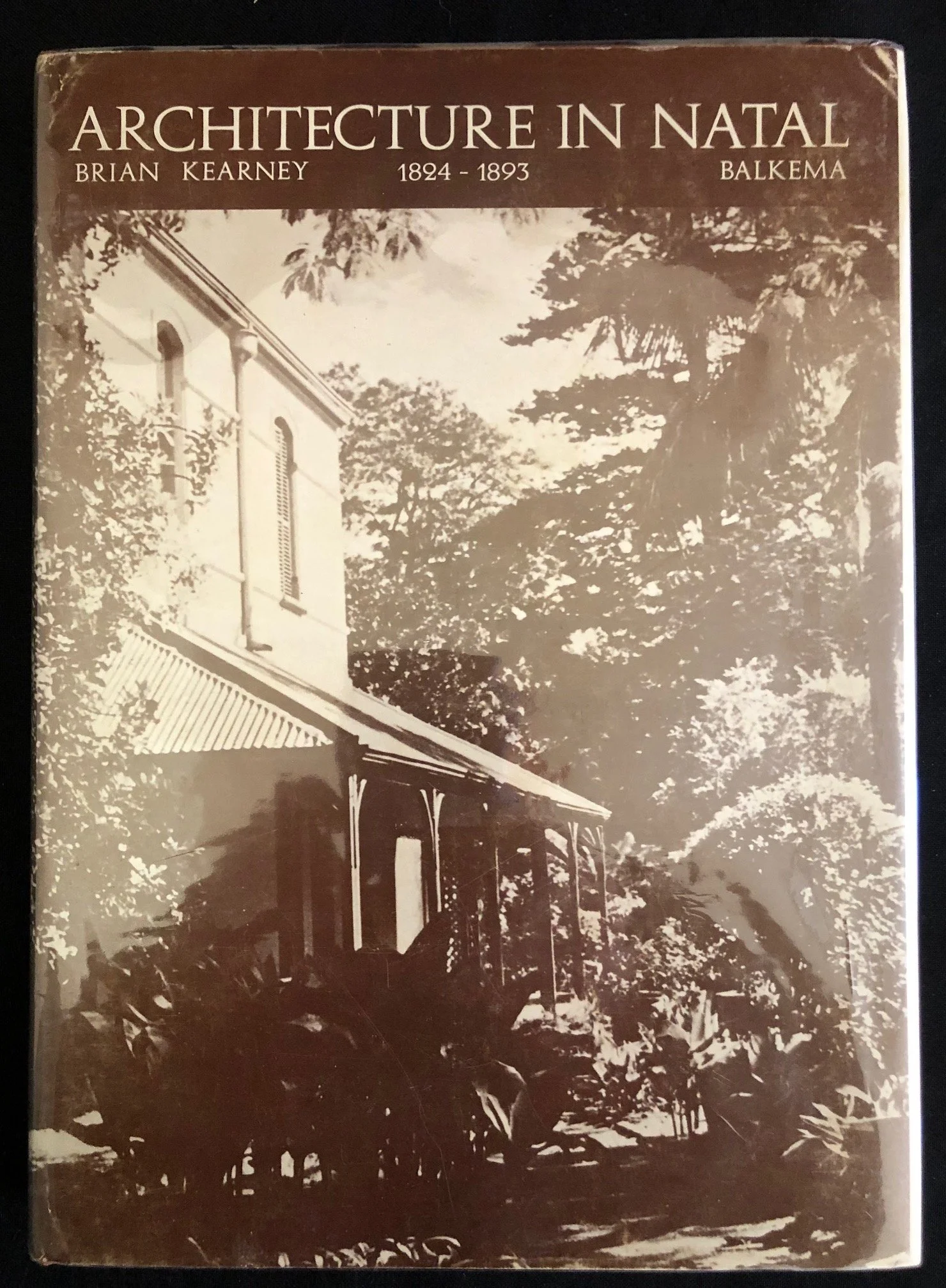
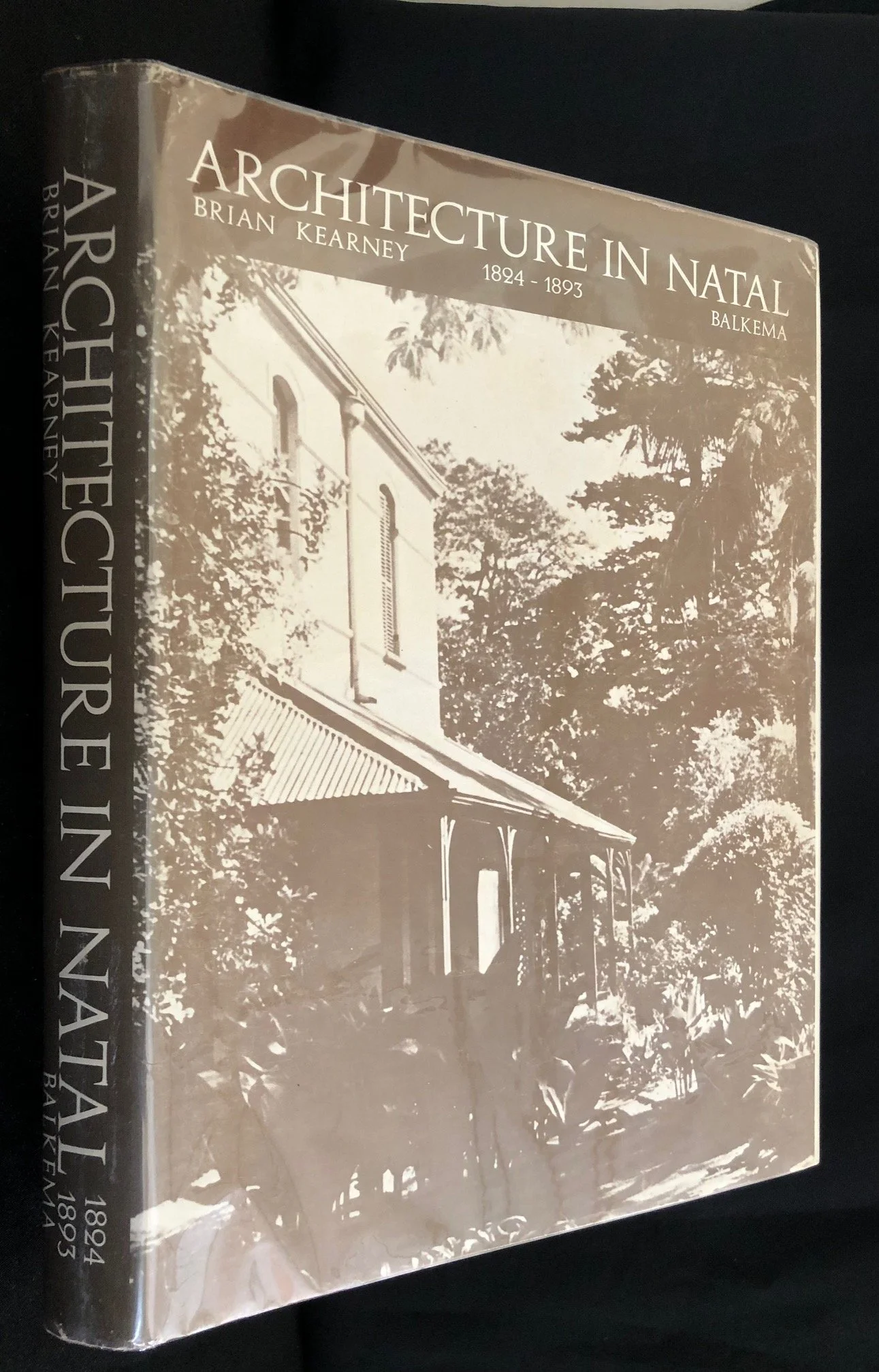
Architecture in Natal from 1824 to 1893 by Brian Kearney (1973)
Architecture in Natal from 1824 to 1893 by Brian Kearney is widely regarded as one of the most significant and foundational works on South African colonial architecture.
The book, its author, and its publisher carry historical and bibliographic value:
The Definitive Record of the "Verandah House"
Brian Kearney’s study serves as the definitive documentation of how European building styles adapted to the sub-tropical climate of KwaZulu-Natal.
The Transition: Kearney famously noted that the sudden introduction and rapid evolution of the verandah marked the definitive transition from traditional Dutch architecture to a distinct English colonial tradition.
A Distinct Regional Style: The book captures how local architects grappled with creating a distinct, provincial identity. Kearney quotes early architect Wallace Paton to highlight this local obsession: "...the people want verandas, and they will have them... The problem our architects have to solve is the problem of the veranda, and its final evolution... will mean that we have at last a distinctive style."
Vanishing History: Featuring over 500 photographs, blueprints, maps, and illustrations, the book serves as a vital archival rescue mission, capturing many historical buildings, wattle-and-daub structures, and early municipal offices that have since been altered, neglected, or entirely demolished.
The Legacy of the Publisher: A.A. Balkema
The publisher's imprint at the bottom—A.A. Balkema—signals a high watermark in South African book production.
The Resistance Roots: August Aimé "Guus" Balkema was a Dutch bookseller who ran a shop in Amsterdam during World War II. Under the German occupation, he ran a clandestine, illegal press (De Vijf Ponden Pers), subverting strict paper rationing and Nazi bans by secretly publishing prohibited French and English literature and avant-garde poetry.
Elevating South African Design: Moving to South Africa after the war, Balkema revolutionized the local publishing landscape. Frustrated by the poor aesthetic standards of commercial publishers, he championed meticulous layout design, elegant typography, and non-justified text.
Championing Non-Fiction: Balkema specialized in publishing landmark academic and cultural non-fiction that commercial houses turned down. His commissions fundamentally established the published South African architectural and natural history oeuvre, making original 1950s–1970s Balkema editions highly sought after by collectors today.
Brian Kearney's Enduring Influence
The author, Professor Brian Kearney, was a towering figure in architectural education and heritage conservation in KwaZulu-Natal.
This 1973 book was a milestone early publication in a career dedicated to mapping and preserving the region's diverse design history.
Kearney didn't just limit his research to colonial structures; he went on to write extensively about traditional Zulu architecture, the historic Edwardian and Victorian brickwork of Pietermaritzburg, and the unique cultural synthesis of Durban’s early Indian-designed commercial buildings.
210mm x 285mm
Dust jacket creased, minor tears.
R1,000