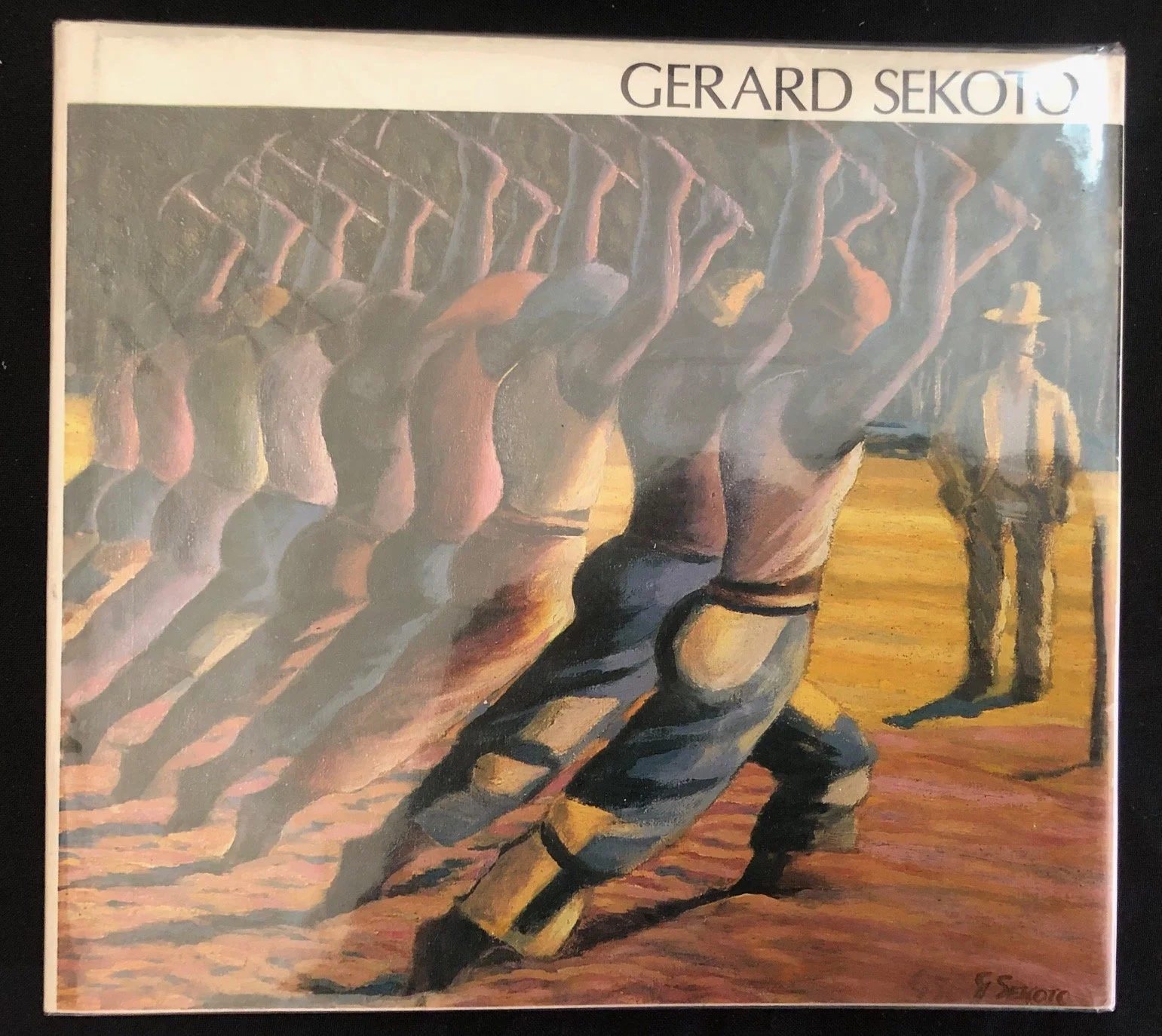
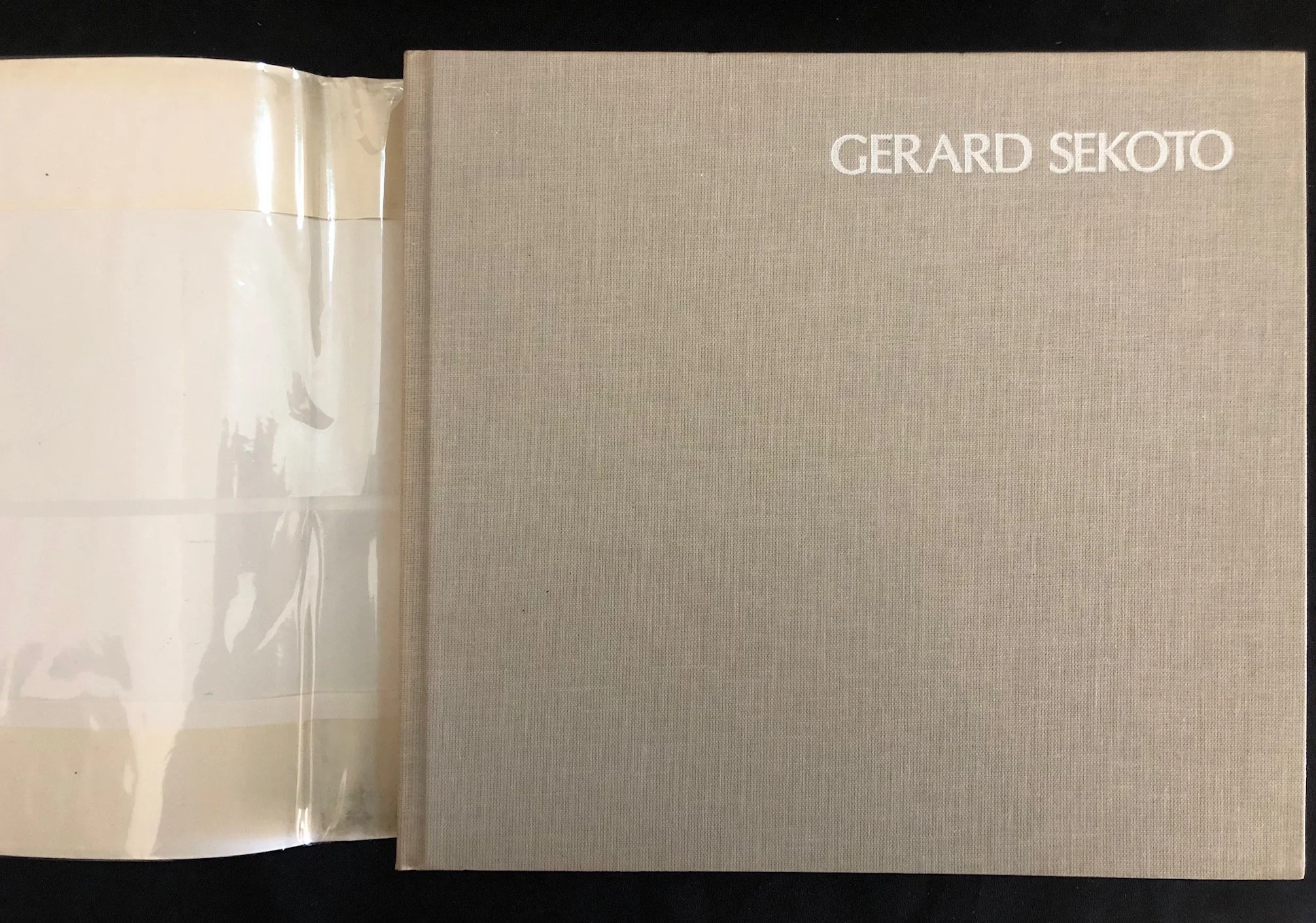
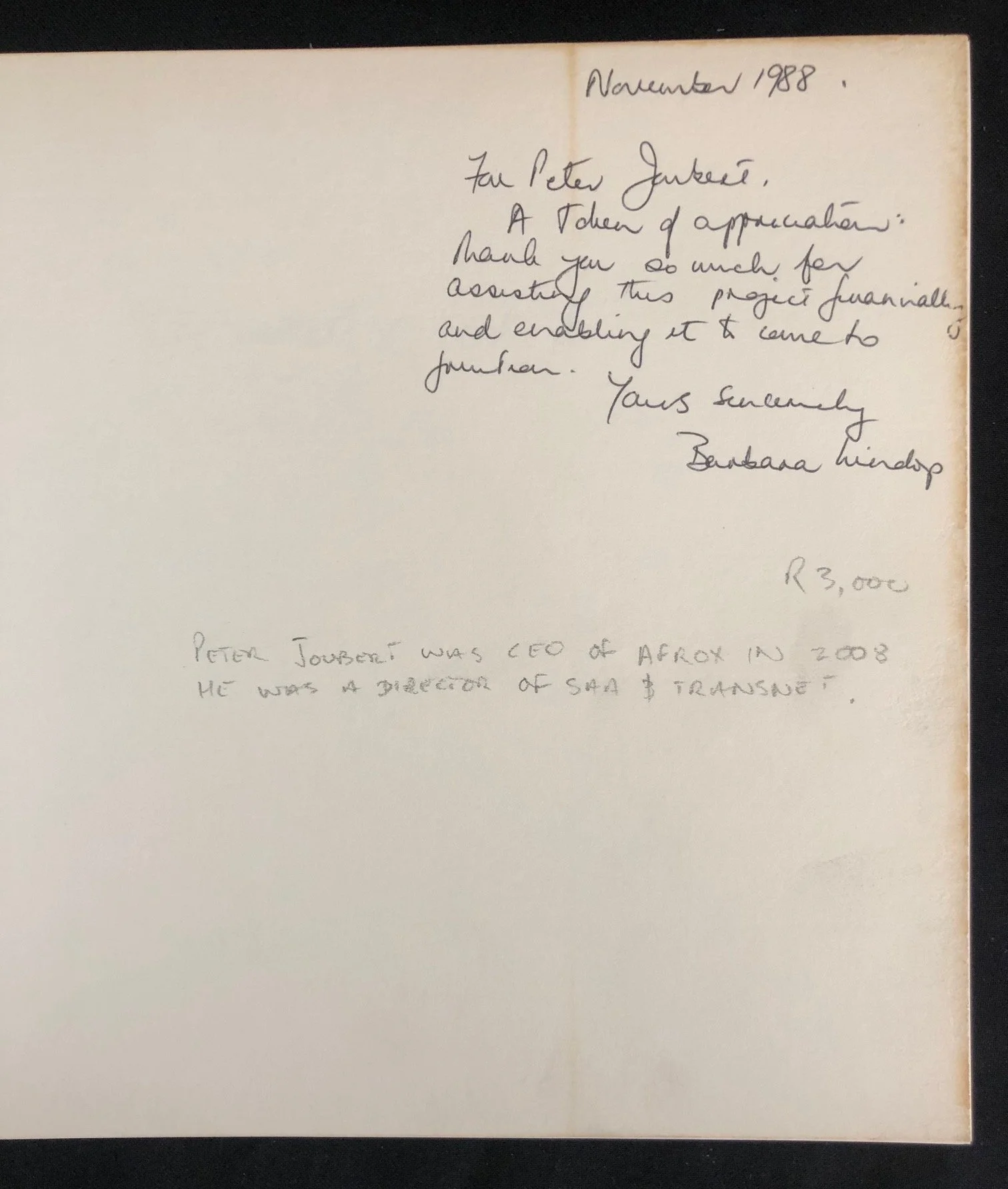
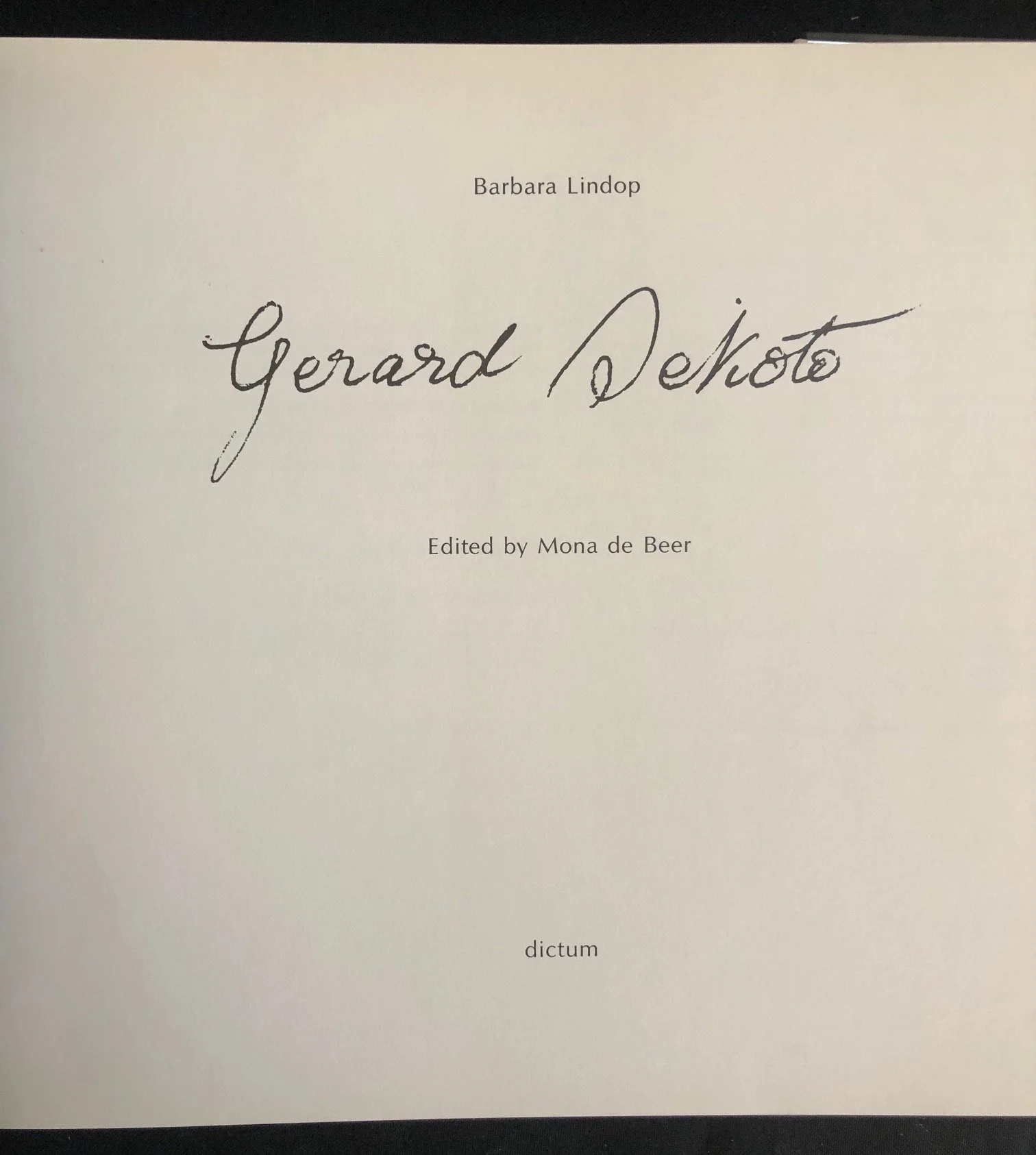
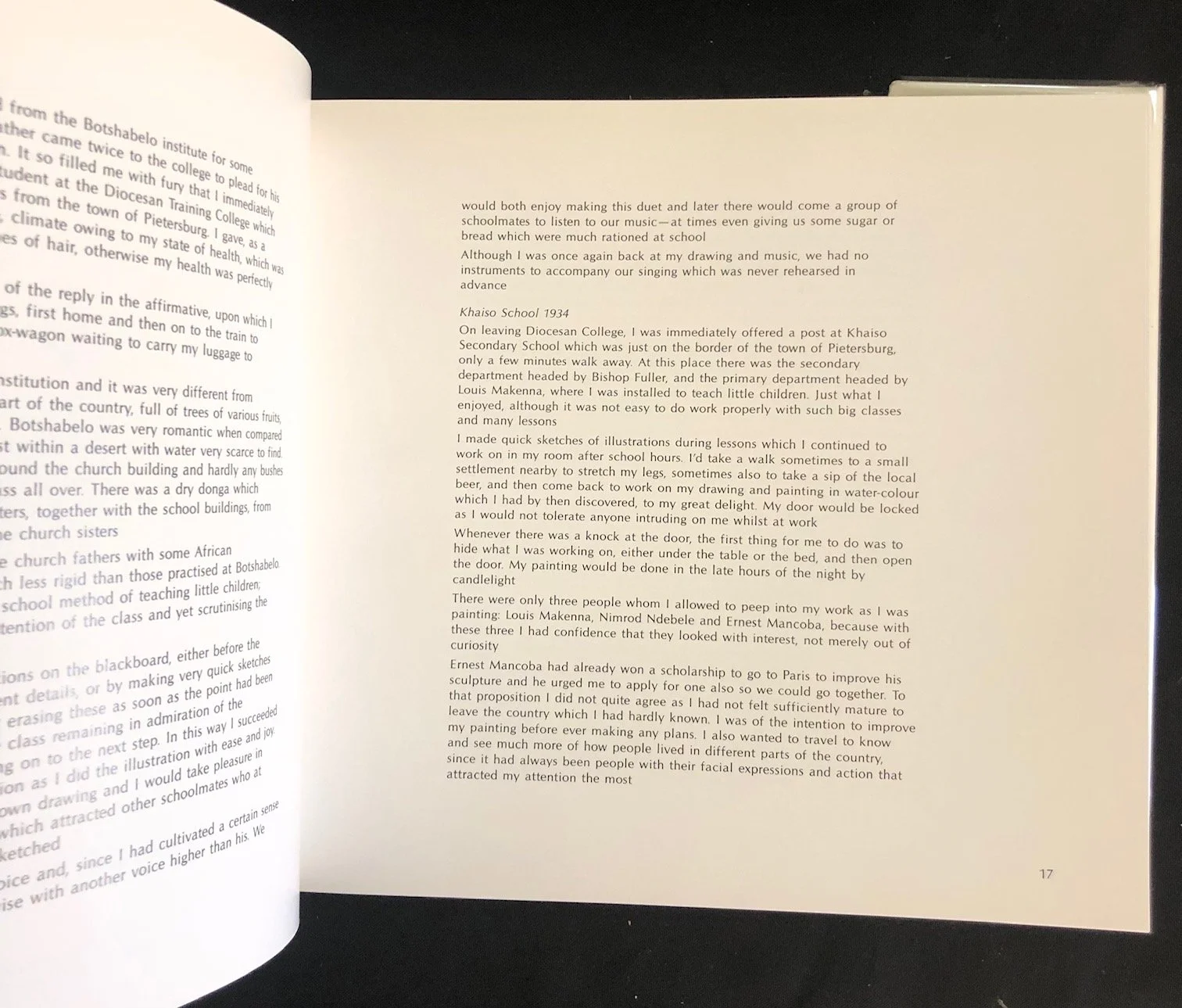
Barbara Lindop’s Gerard Sekoto, inscribed (1988)
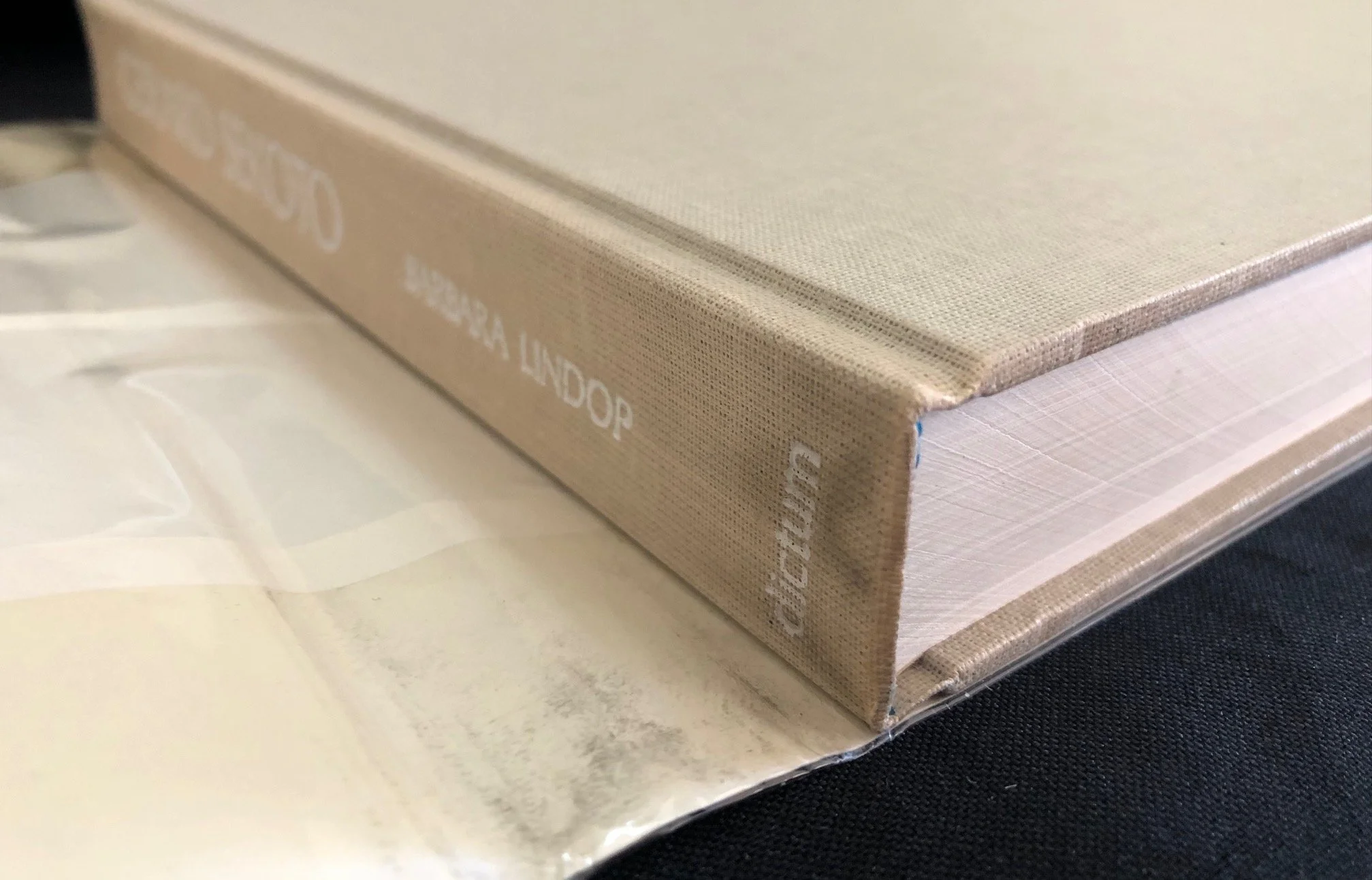
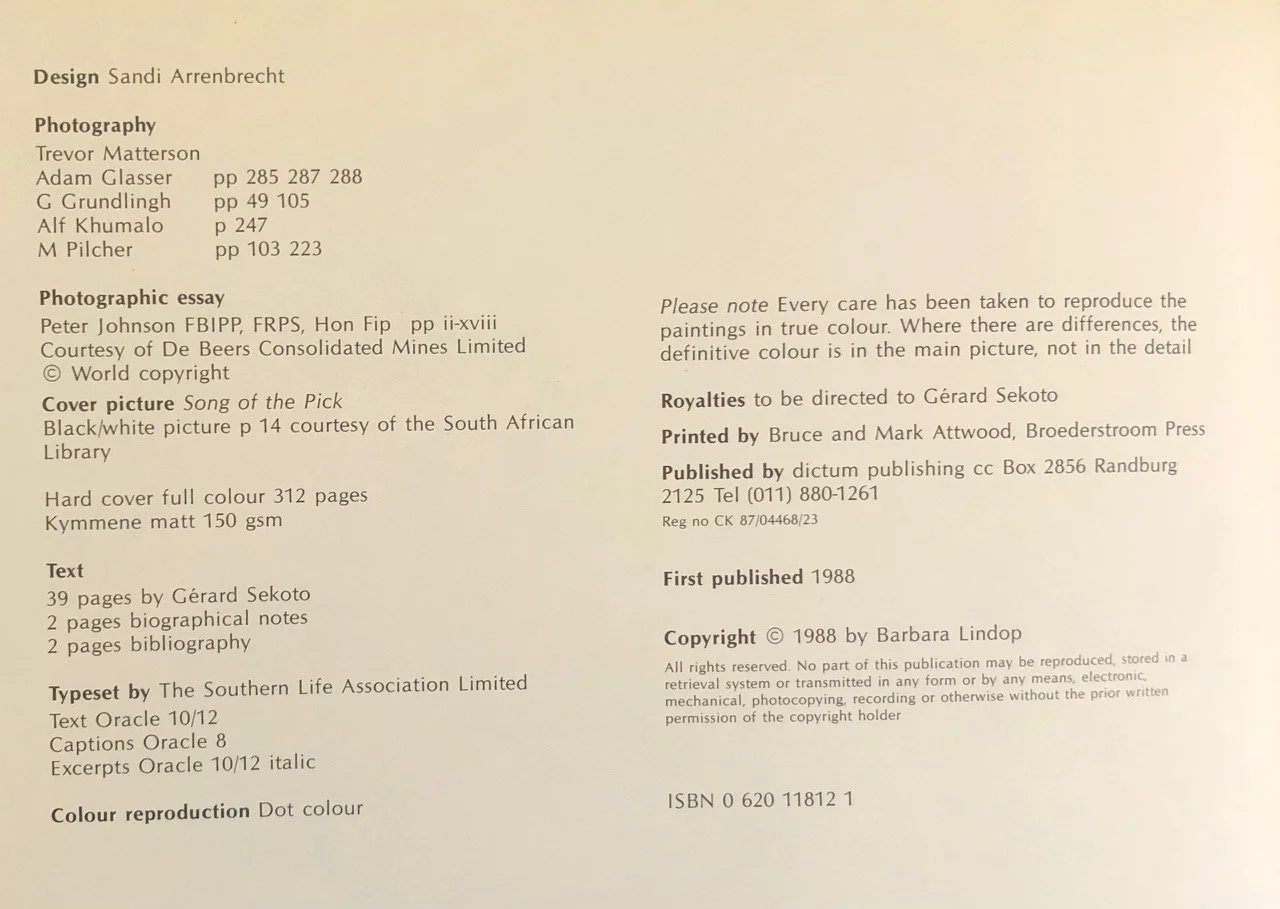
Edited by Mona de Beer and published by Dictum in 1988.
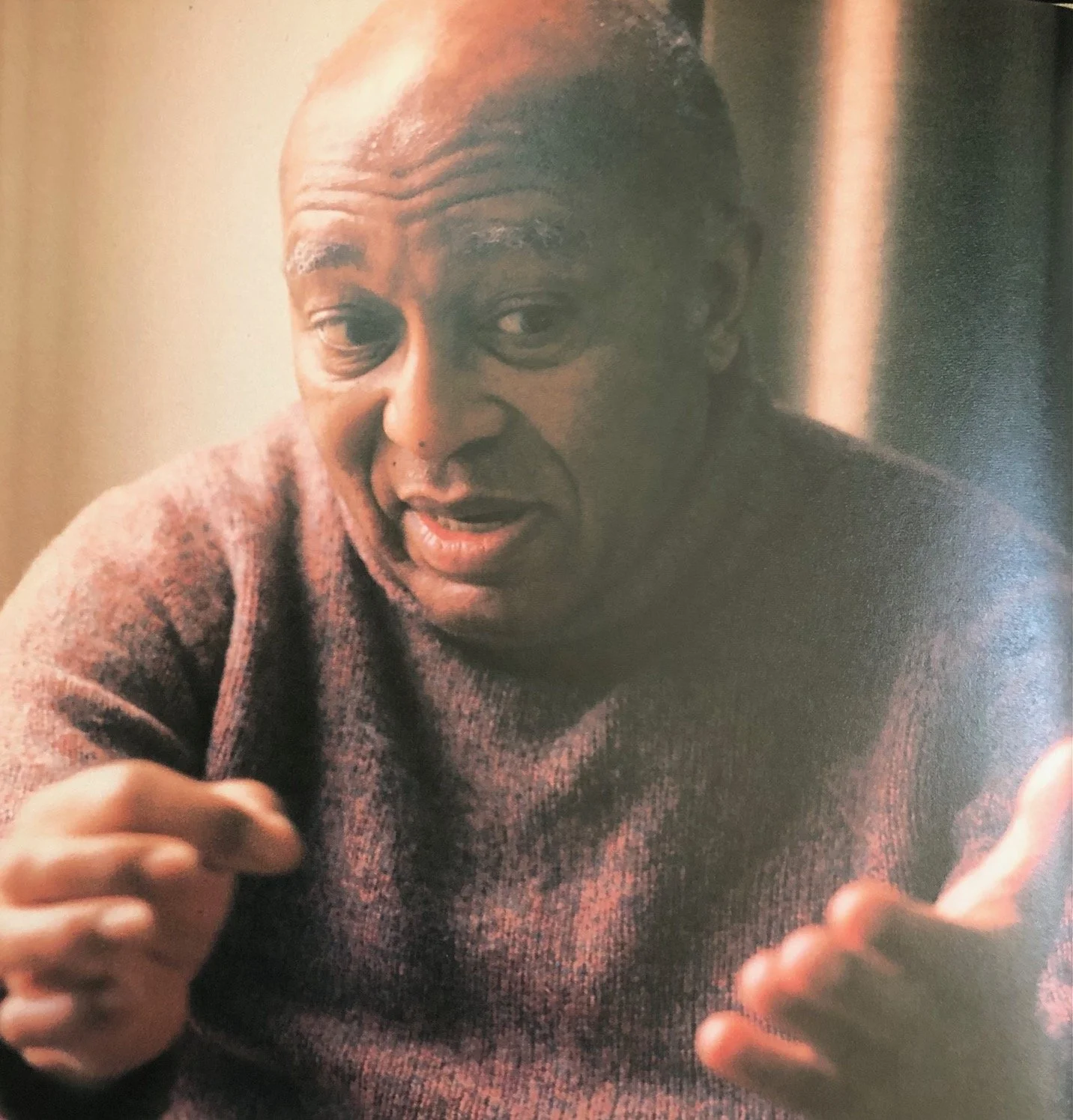
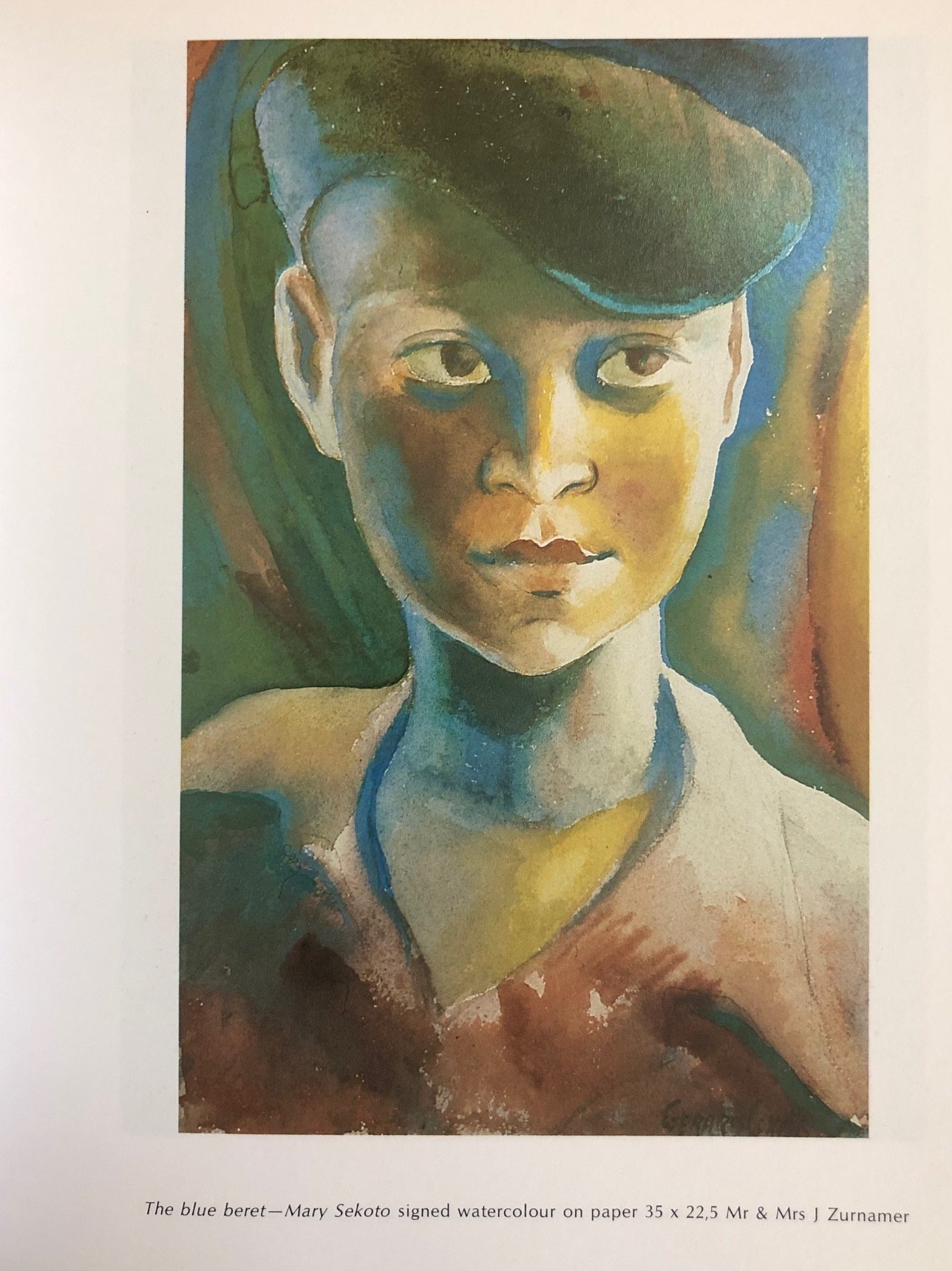
Gerard Sekoto (9 December 1913 – 20 March 1993), was a South African artist and musician. He is recognised as a pioneer of urban black art and social realism. His work was exhibited in Paris, Stockholm, Venice, Washington, and Senegal, as well as in South Africa.
Sekoto held his first solo exhibition in 1939. In 1940 the Johannesburg Art Gallery purchased one of his pictures; it was to be the first picture painted by a black artist to enter a museum collection. In 1942 he moved to District Six in Cape Town, where he lived with the Manuel family. Here he apparently met George Pemba (1912–2001), (qv.) who was visiting from Port Elizabeth. In 1945 he moved to Eastwood, Pretoria. During this time, Sekoto lived with his mother, stepfather, and brother. It has been said that some of Sekoto's most beloved work is from this time, and has been deemed "the golden years of his art", the reason being that this was the last body of work he completed in South Africa, before going to Paris
When this book was being compiled in the mid-to-late 1980s, Gerard Sekoto had been living in self-imposed exile in France since 1947. Over the decades, he had largely slipped from the consciousness of the mainstream South African art world, and he was living in relative obscurity and financial hardship outside Paris. Barbara Lindop’s extensive research to track down his scattered, seemingly "lost" paintings—combined with her intense correspondence with Sekoto himself—effectively rescued his early legacy from being entirely forgotten. The publication of this Dictum edition in 1988 played a role in restoring his status as a pioneer of South African social realism and modern African art.
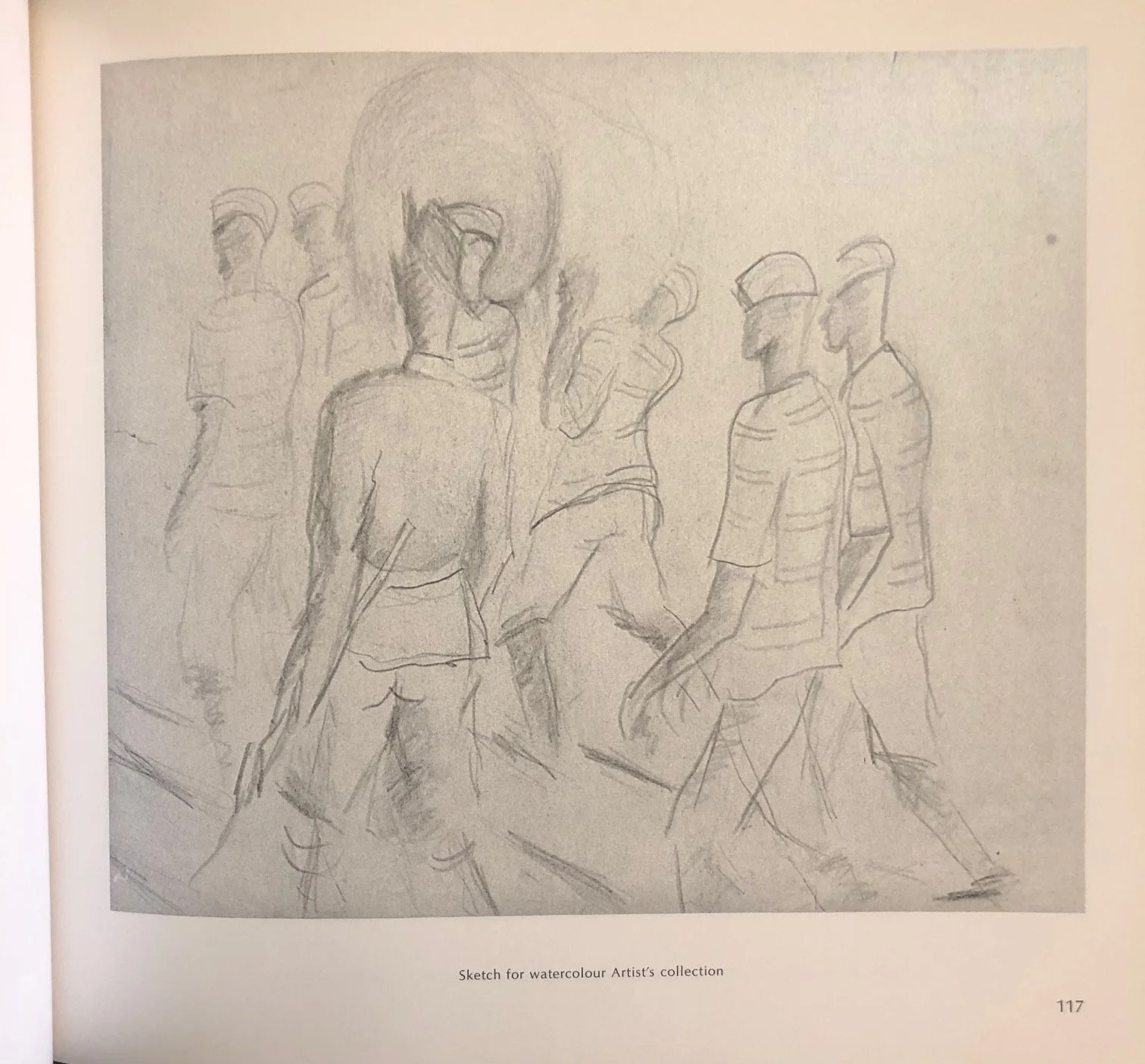
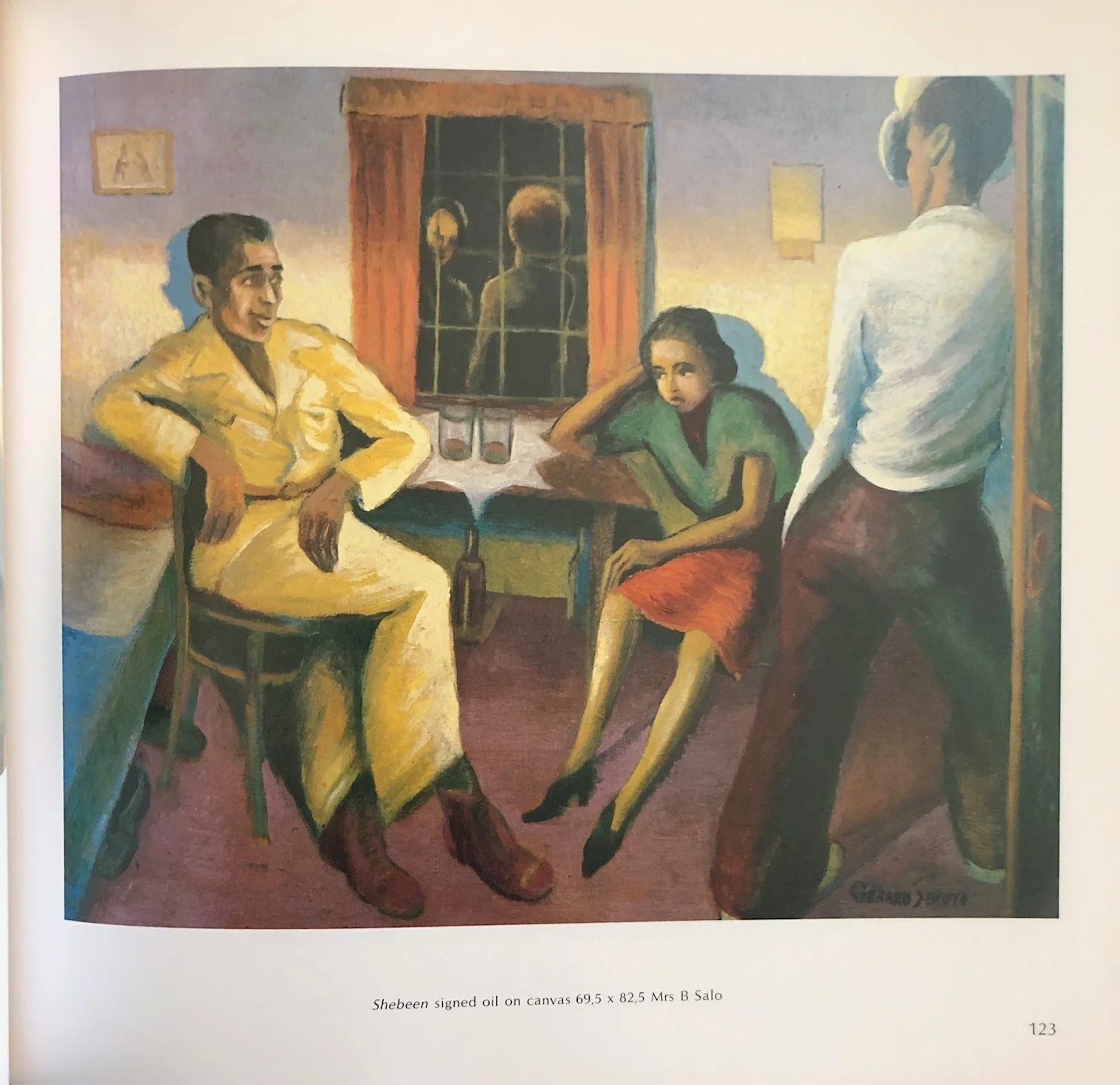
Published during the tense final years of the Apartheid regime, a comprehensive monograph dedicated to a Black South African artist was a radical act of cultural preservation. The book meticulously documented Sekoto's vivid, empathetic depictions of daily life in multicultural urban enclaves like Sophiatown in Johannesburg and District Six in Cape Town before they were physically destroyed by the regime’s forced removal policies. By capturing these vanished worlds, the book became a vital piece of resistance art history.
Minor wear to the dust jacket; stain on the bottom of the spine.
250mm x 230mm
R3,000