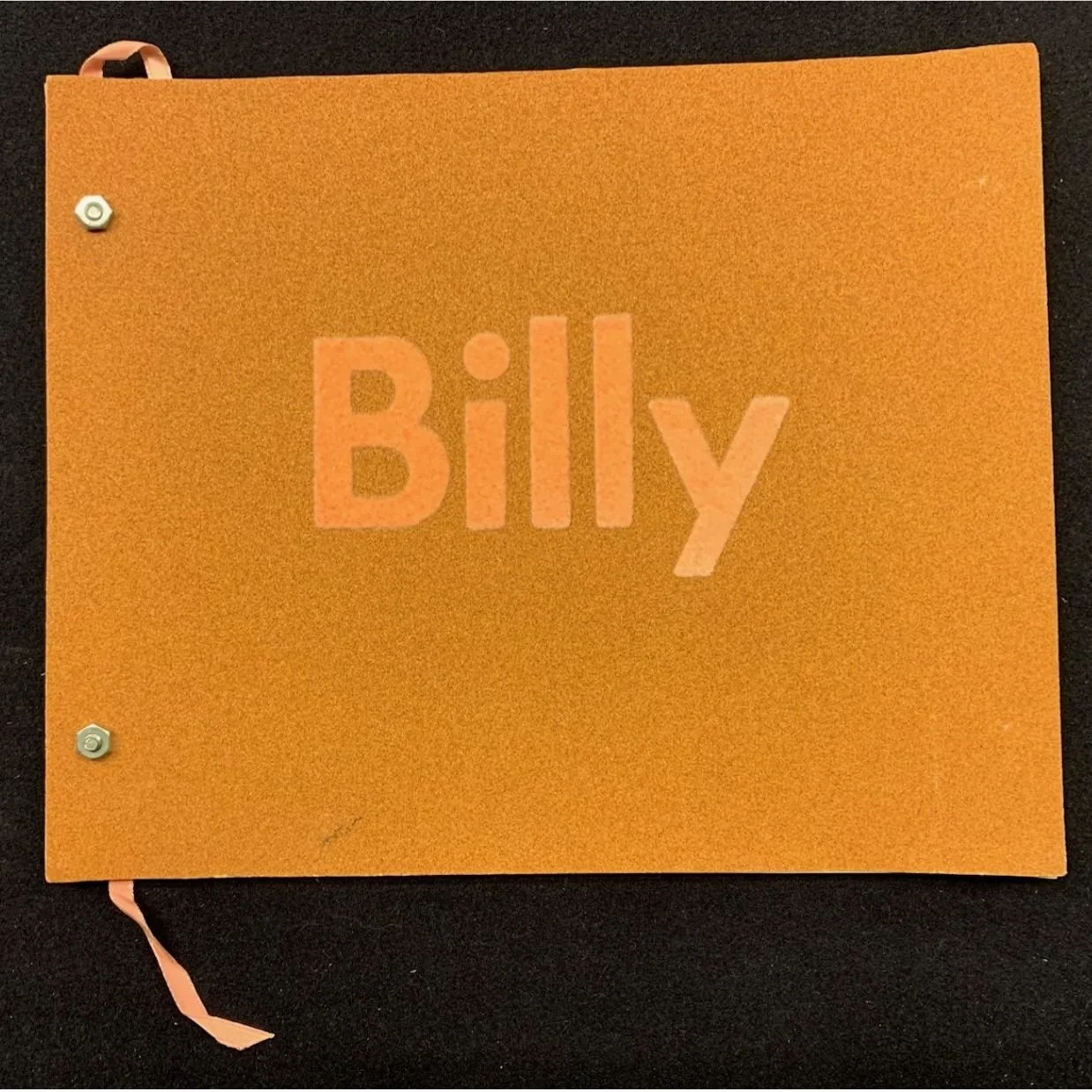
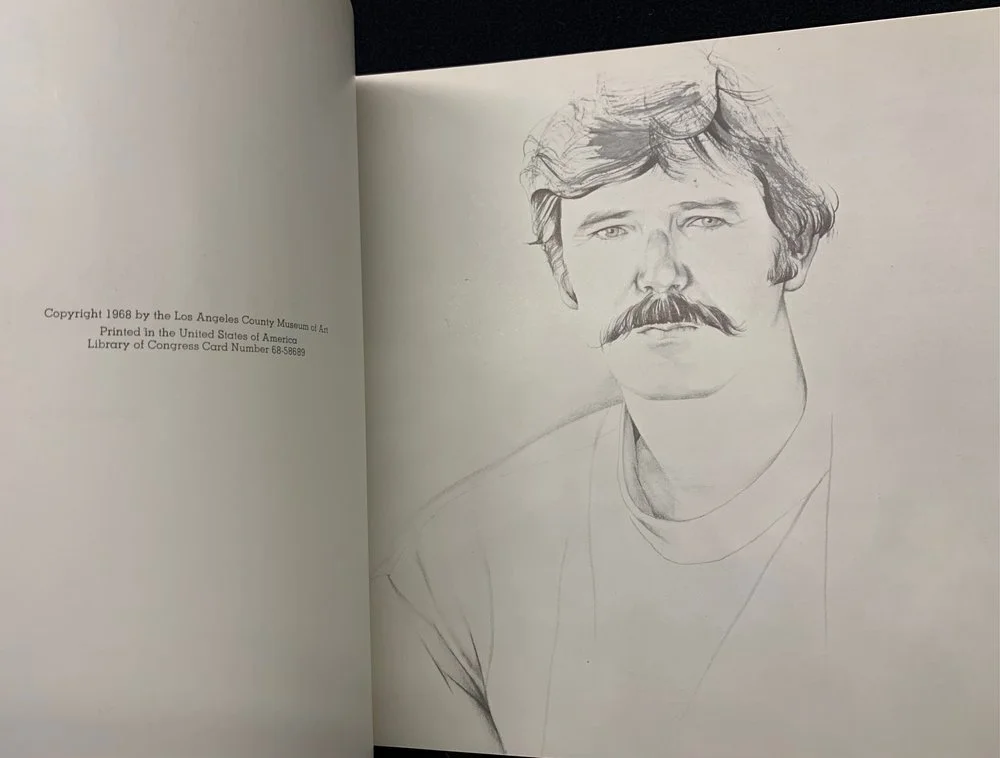
Billy Al Bengston Exhibition Catalogue 1968
First Edition
Sandpaper wrappers
280mm x 230mm
According to Grace Glueck of The New York Times, Bengston "was among the first to ditch traditional oil paint on canvas, opting instead for sprayed layers of automobile lacquer on aluminum in soft colors, achieving a highly reflective, translucent surface."
Bengston encouraged viewers in the early 1960s to associate his art with motorcycle subculture; on the cover of a 1961 catalogue for a Ferus show, he was seen straddling a motorcycle. (He also competed in motocross competitions.)
https://en.wikipedia.org/wiki/Billy_Al_Bengston
Installation design for this exhibition at the Los Angeles County Museum of Art by Architect Frank Gehry
R4,000
This landmark publication is Billy, the exhibition catalog designed by Ed Ruscha for artist Billy Al Bengston’s retrospective at the Los Angeles County Museum of Art (LACMA) in 1968.
1. A Powerhouse Triad of L.A. Modernism
The project brought together three titans of Southern California contemporary culture at early turning points in their careers:
Billy Al Bengston: The subject of the exhibition, famous for introducing car culture aesthetics (lacquer paints, spray finishes, and dented metal) into Pop and Finish Fetish art.
Ed Ruscha: Designed the catalog. By 1968, Ruscha was pioneering conceptual artist's books (like Twentysix Gasoline Stations) and brought his radical approach to book object design.
Frank Gehry: Before he became a global architectural legend, a young Frank Gehry was hired to design the exhibition's spatial installation at LACMA.
2. Radical Tactical Materials
Instead of standard catalog binding, Ruscha turned the book itself into an industrial, tactile sculpture:
Sandpaper Covers: The outer covers are made from real commercial sandpaper sheets supplied by the Behr-Manning Division of Norton (50-D grit paper visible on the rear inside cover).
Pink Flocked Title: The title "Billy" on the front cover is applied using orange-pink fuzzy flocked lettering by O'Kay Embroidery.
Hardware Store Binding: Rather than traditional glue or stitching, the spine is bound using functional steel machine screws, washers, and hex nuts supplied by the Keystone Bolt & Supply Co..
Satin Ribbon: A delicate satin ribbon bookmark peeks out from between the abrasive sandpaper covers.
3. Destruction in the Stacks (The Sandpaper Hazard)
Because both the front and back covers were constructed with genuine coarse sandpaper, the book created a logistical nightmare for institutional libraries and private collectors:
When placed snugly on a bookshelf alongside other volumes, pulling or inserting Billy would instantly scratch, scrape, and damage the bindings of neighboring books.
As a result, many original copies survived only because librarians and collectors stored them wrapped in plastic, placed them inside custom slipcases, or isolated them on shelf ends.
4. Printed locally in a Small Print Run
The catalog colophon reveals the local Los Angeles network that produced it:
Printer: Toyo Press, Los Angeles.
Edition Size: Printed in a limited edition of 2,500 copies.
5. A Pinnacle of the West Coast Artist's Book Movement
Billy is celebrated today by book historians and art institutions as a premier example of 1960s West Coast conceptual bookmaking. Rather than acting as a passive record of an exhibition, Ruscha turned the catalog into an extension of Bengston's industrial art aesthetic, bridging Pop art, car culture, and fine press design.