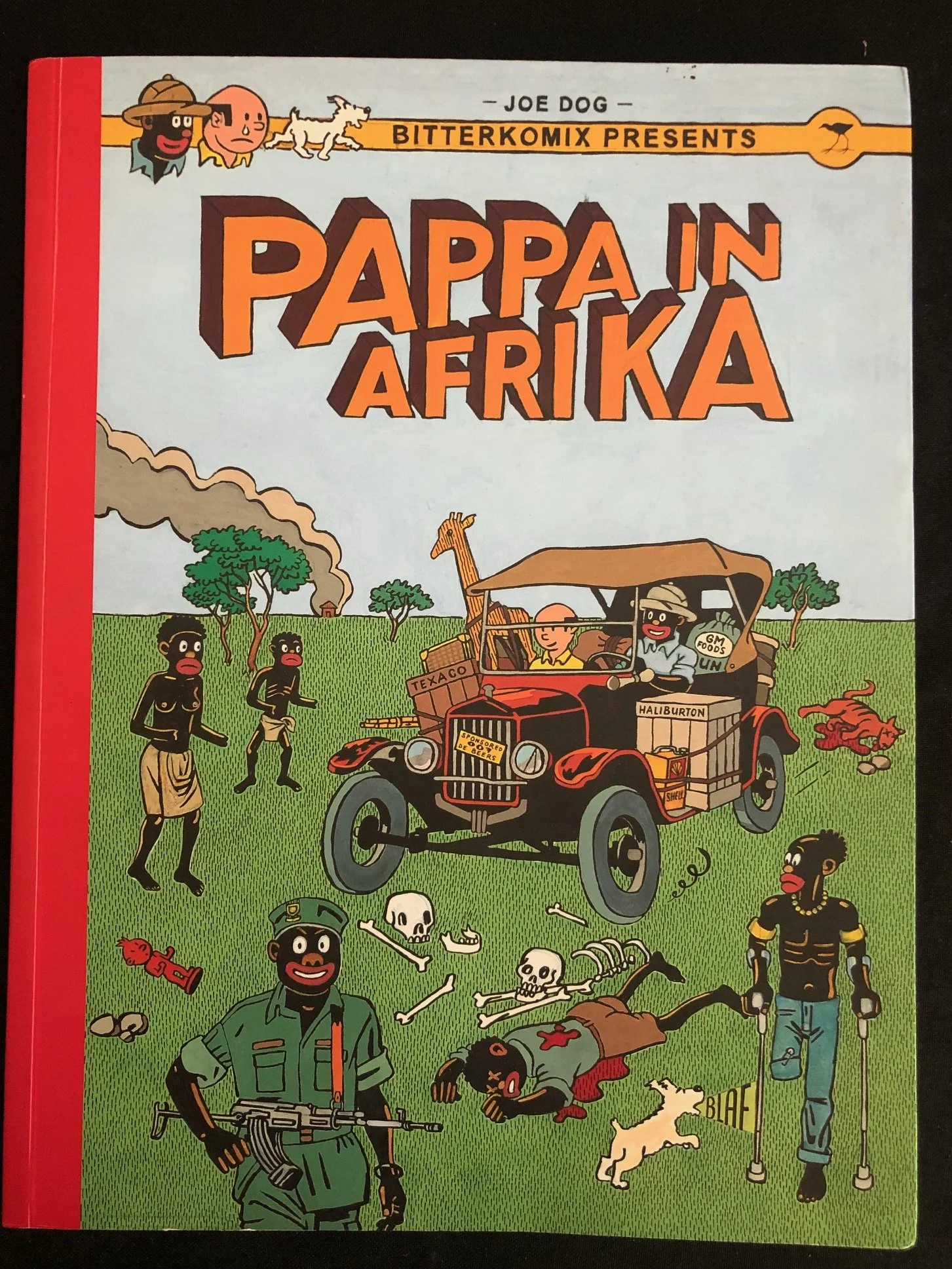
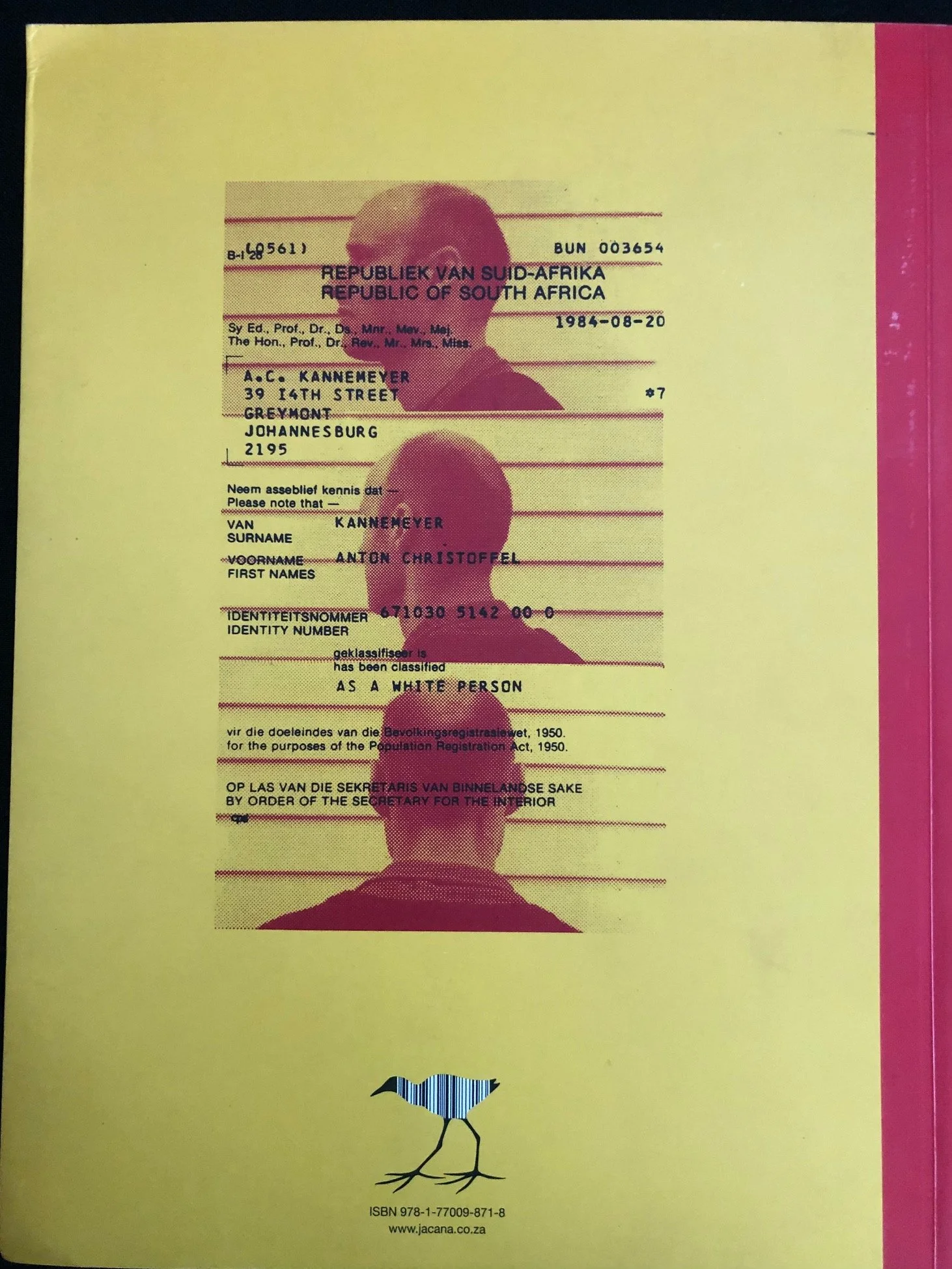
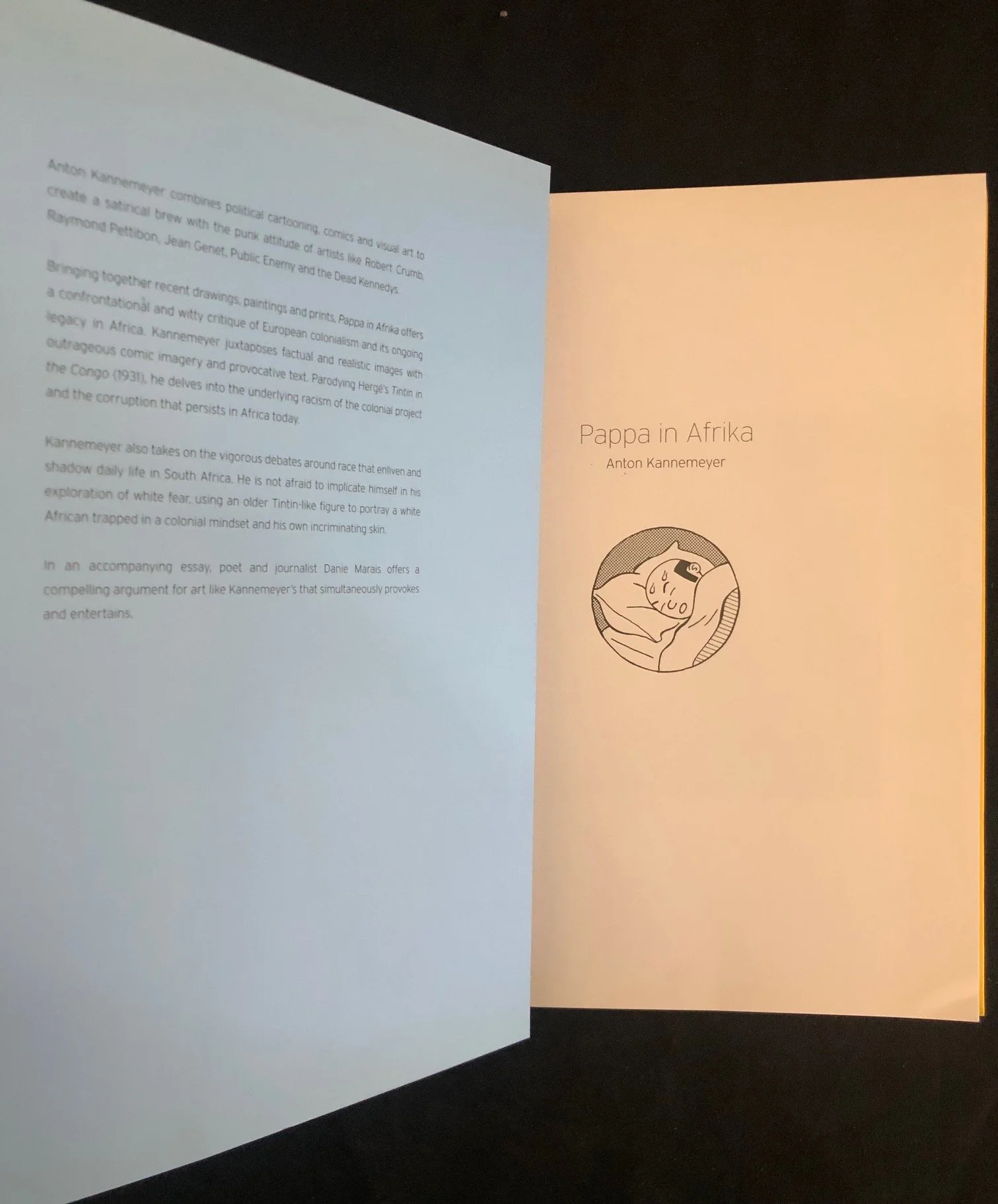
Pappa in Afrika by Anton Kannemeyer (first edition) 2010.
Pappa in Afrika (first published in 2010), holds a highly significant and controversial place in post-apartheid South African art and social commentary.
Subversion of Hergé's Tintin in the Congo
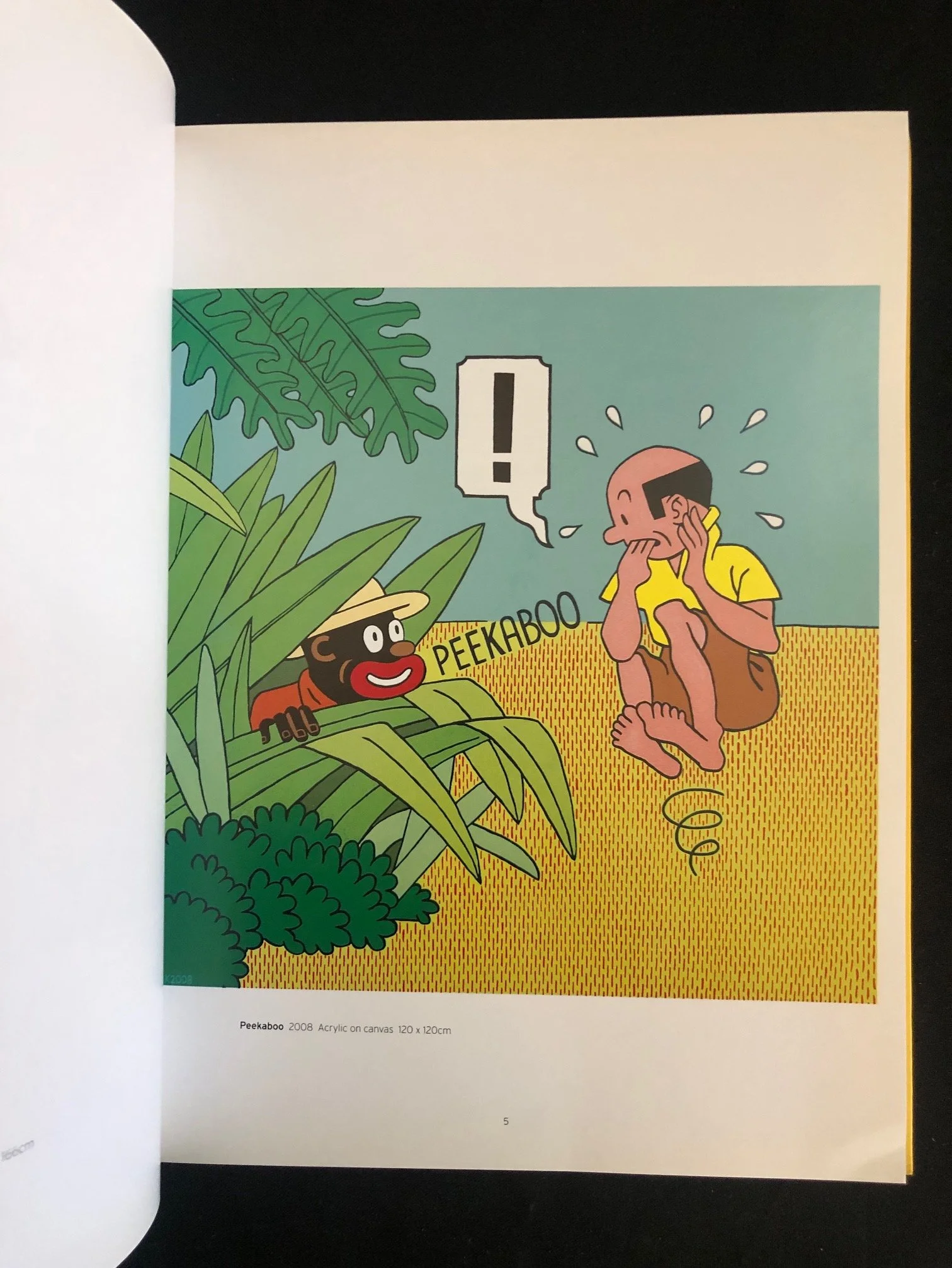
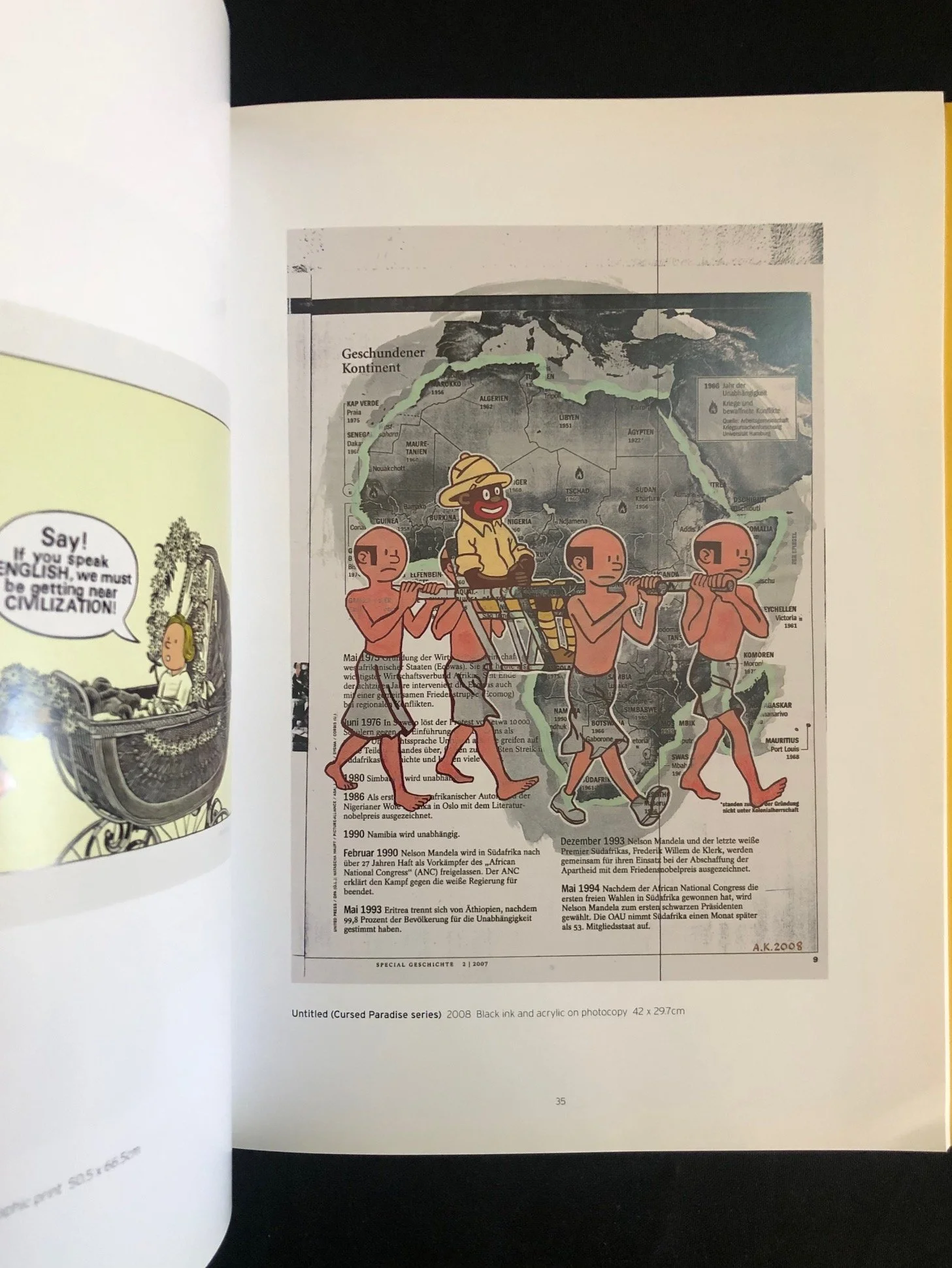
The cover and the core motifs of the book are a direct, deliberate parody of Hergé's highly controversial 1931 comic Tintin in the Congo. The author utilizes the clean, distinct "clear line" (ligne claire) drawing style of early European comics to subvert it entirely. Instead of a wholesome adventure, the imagery uses the archetypal white settler—styled after Tintin—to directly interrogate the paternalism, violence, and underlying racism of the colonial project.
The Persona of "Joe Dog" and Bitterkomix
The book is authored by "Joe Dog," the pseudonym of Anton Kannemeyer. Along with Conrad Botes, Kannemeyer co-founded Bitterkomix in 1992. Emerging in the final years of apartheid, Bitterkomix was an underground, iconoclastic comic magazine that used crude slang, dark humor, and sexually explicit imagery to aggressively deconstruct and rebel against the oppressive, conservative patriarchal structures of white Afrikaner culture.
A Critique of Post-Apartheid Realities
While Kannemeyer’s earlier work was primarily a weapon against the old apartheid regime, Pappa in Afrika acts as a double-edged sword for the democratic era. On one hand, it exposes the lingering, deep-seated anxieties and hypocrisies of white liberals who use "rainbow nation" rhetoric to mask older prejudices. On the other hand, it targets the greed, corruption, and failures of Africa's post-colonial political elite.
The Anatomy of "Outrage Art"
The book remains a lightning rod for intense academic and cultural debate regarding what is known as "outrage art." By packing the pages with deliberately offensive stereotypes—such as the jarring "gollywog" style depiction of Black figures juxtaposed with symbols of modern conflict (like the AK-47, landmine crutches, and UN/Haliburton aid crates visible on the cover)—Kannemeyer forces the viewer into an uncomfortable space. It continuously sparks fierce debate over whether these images successfully satirize white fear and historical atrocities, or simply reproduce the very racism they claim to critique.
It is a fascinatingly polarizing piece of South African visual satire that blurs the boundaries between underground cartooning and high-end gallery art.
215mm x 290mm
First edition. Very slight edge wear.
R1,250