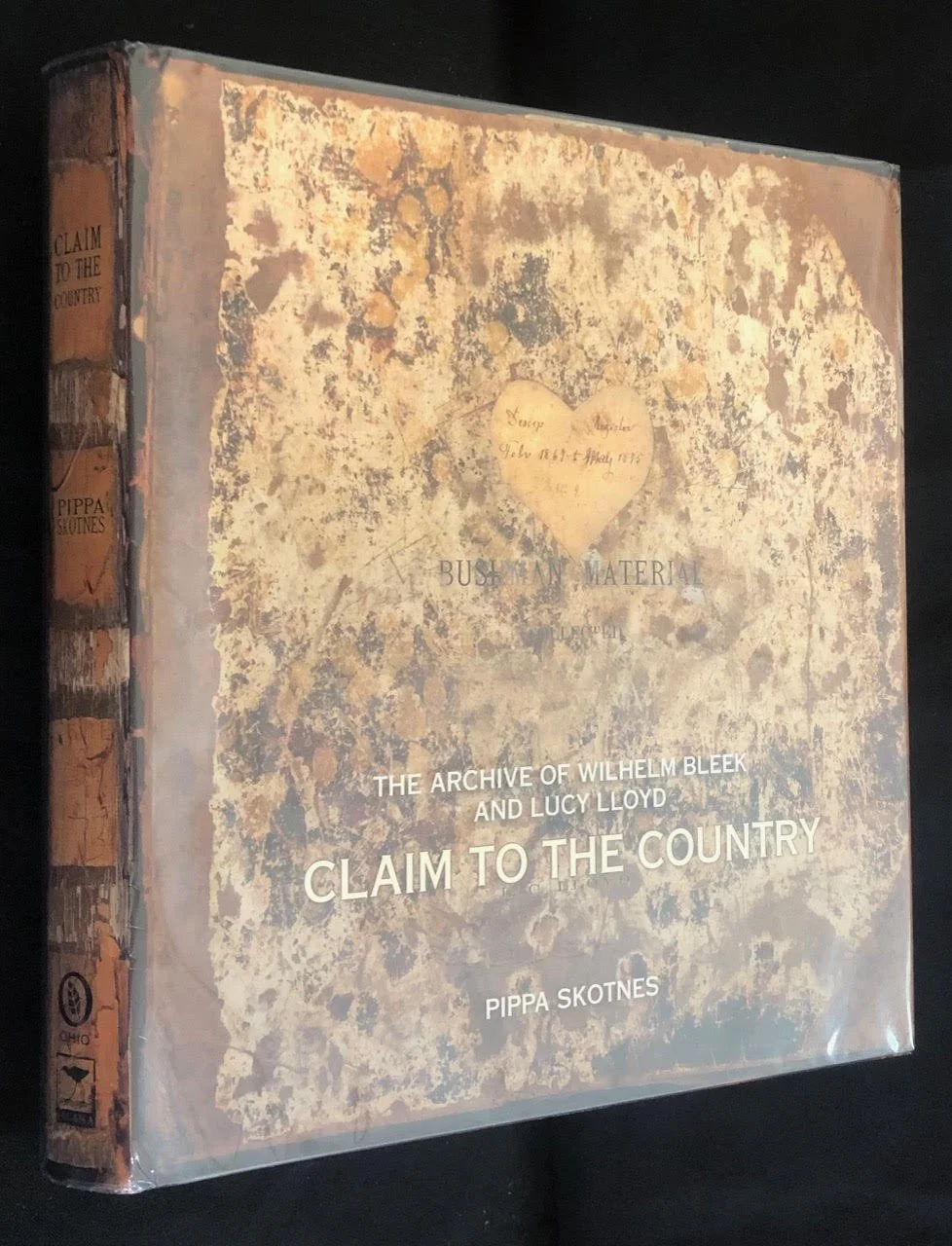
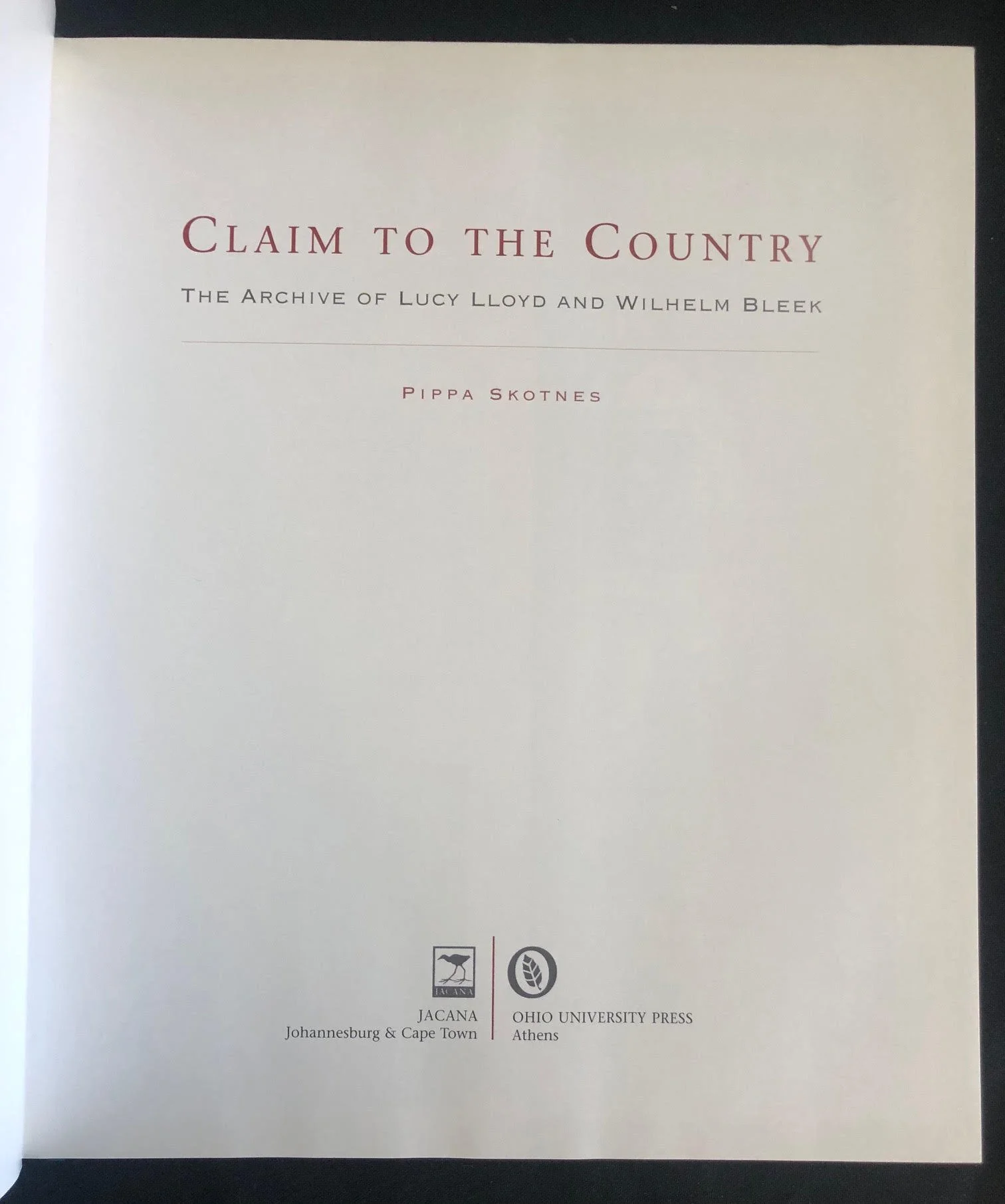
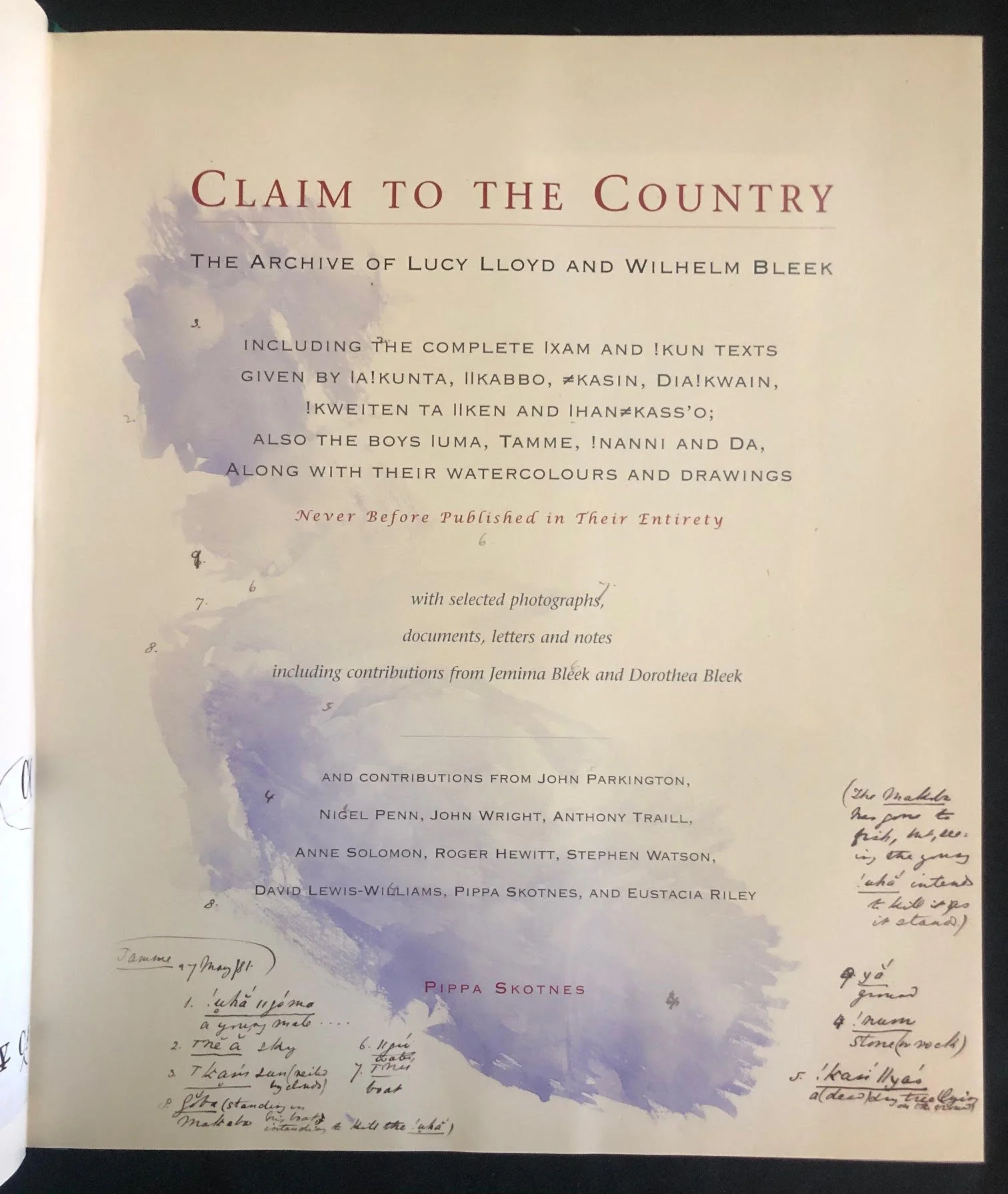
Rock Art: Claim to the Country: The Archive of Lucy Lloyd and Wilhelm Bleek by Pippa Skotnes (2007)
In Claim to the country, Skotnes proverbially looks over Lloyd’s shoulder and into the material she amassed. She does not do it single-handedly, but with the scholarly back up of several well known practitioners in the related fields that manifest empathy for San culture.
The "Rosetta Stone" of Southern African Rock Art
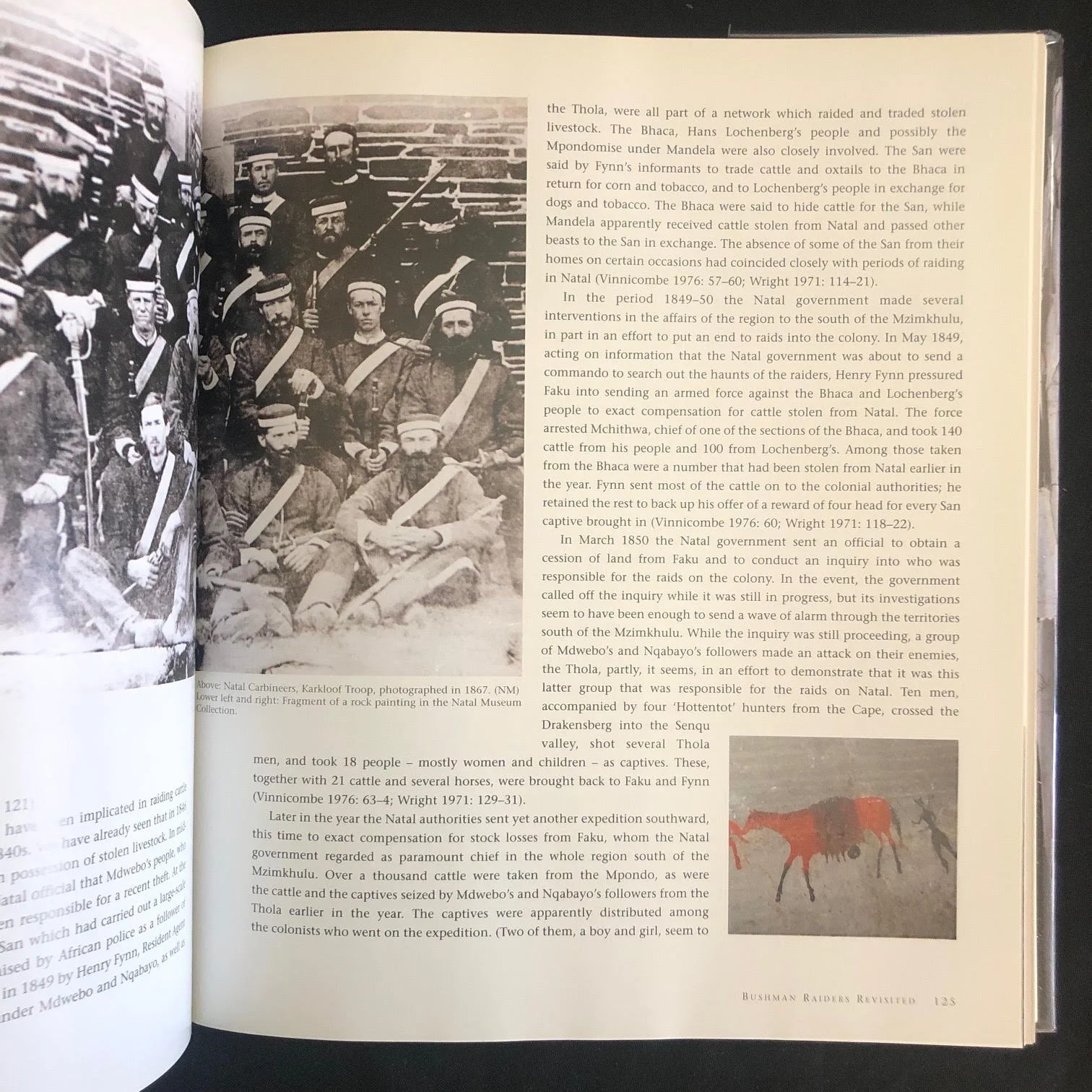
For nearly a century, the vast rock paintings scattered across southern Africa's caves and shelters remained a mystery to Western archaeologists, who often dismissed them as mere decorative or primitive drawings. In the 1970s and 1980s, researchers began cross-referencing the imagery with the literal text of the Bleek-Lloyd archive. The detailed records of San cosmology, beliefs, and rainmaking rituals acted as a "Rosetta Stone," completely transforming rock art studies by revealing that the paintings were deeply spiritual, complex records of shamanistic journeys and indigenous consciousness.
A Sanctuary Born from a Prison
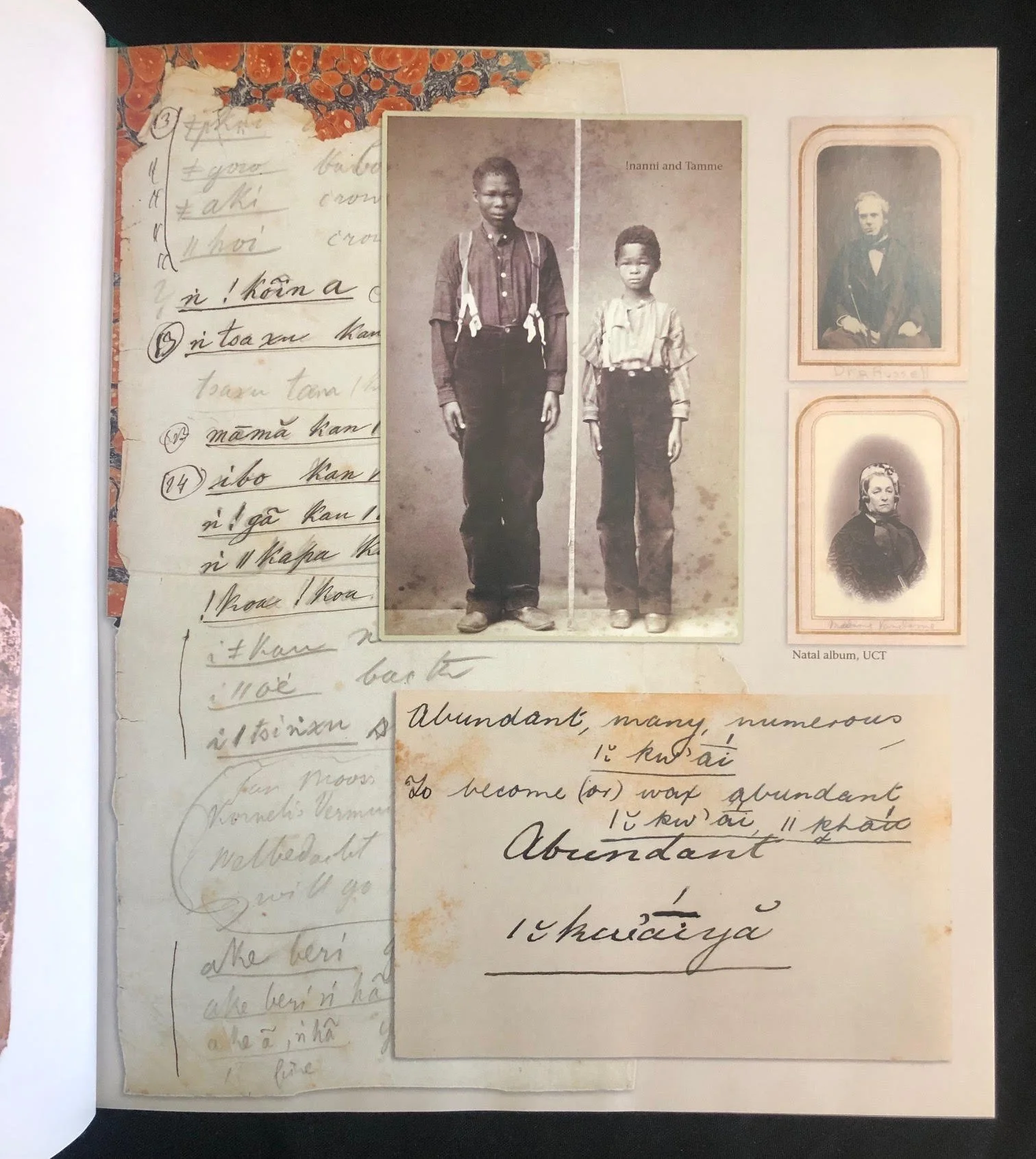
The archive's creation began under extraordinary circumstances in the 1870s. Wilhelm Bleek, a Prussian philologist, discovered that dozens of San men were being held at the Breakwater Prison in Cape Town for hard labour (often for minor offenses resulting from colonial dispossession). Recognizing that their language and culture were facing imminent erasure, Bleek arranged to have several of these prisoners, including prominent storytellers like $||$Kabbo, Diä!kwain, and kass’o, released into his custody. They moved into his family home in Mowbray, Cape Town, where they lived not as subjects or prisoners, but as paid teachers and respected collaborators.
Lucy Lloyd’s Hyperlinked Legacy
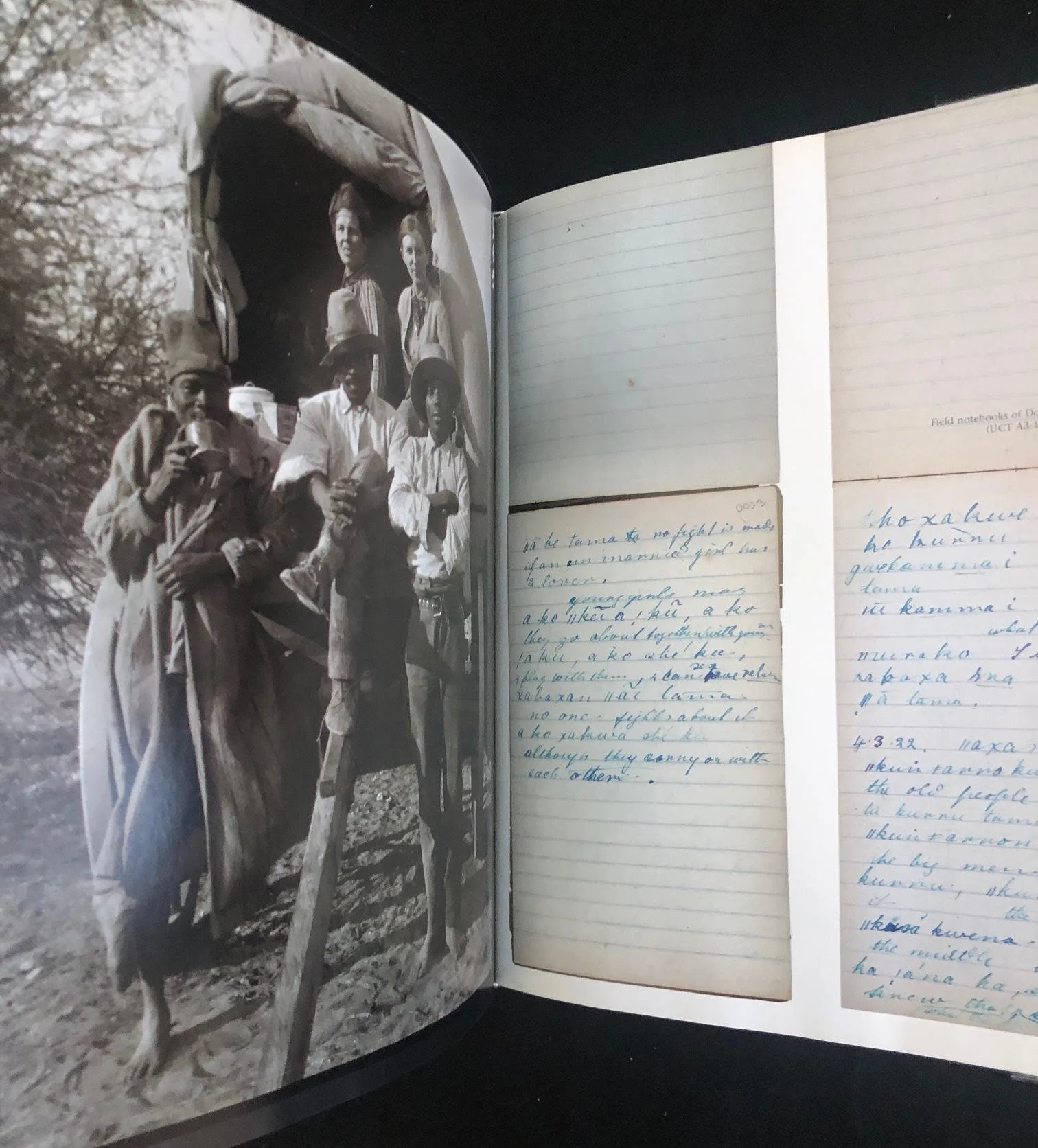
Following Bleek's death in 1875, his sister-in-law, Lucy Lloyd, took over the monumental task of convening the archive. Working under immense societal pressure as a woman in the 19th-century colonial scientific community, she compiled the majority of the collection. Fascinatingly, Lloyd devised a pioneering, meticulous cross-referencing system within the 13,000 notebook pages. She designed a layout where right-hand pages were split into two columns for phonetic dictation and English translation, while the left-hand sheets were left open for glosses, corrections, and contextual thoughts. Scholars today note that her manual system functionally mirrored modern digital hyperlinks, allowing ideas to transcend the physical limitations of the page.
Recognition by UNESCO
Because the semi-nomadic $|$Xam language has since become extinct, this archive, which includes maps drawn by the informants, detailed descriptions of the stars, and the folklore of the first people, stands as the primary enduring monument to their intellectual tradition. Recognizing its universal significance, UNESCO officially inducted the Bleek-Lloyd collection into the Memory of the World Register, celebrating it as an unparalleled, authentic glimpse into the consciousness of a hunter-gatherer society recorded right at the tragic moment of its colonial disintegration.
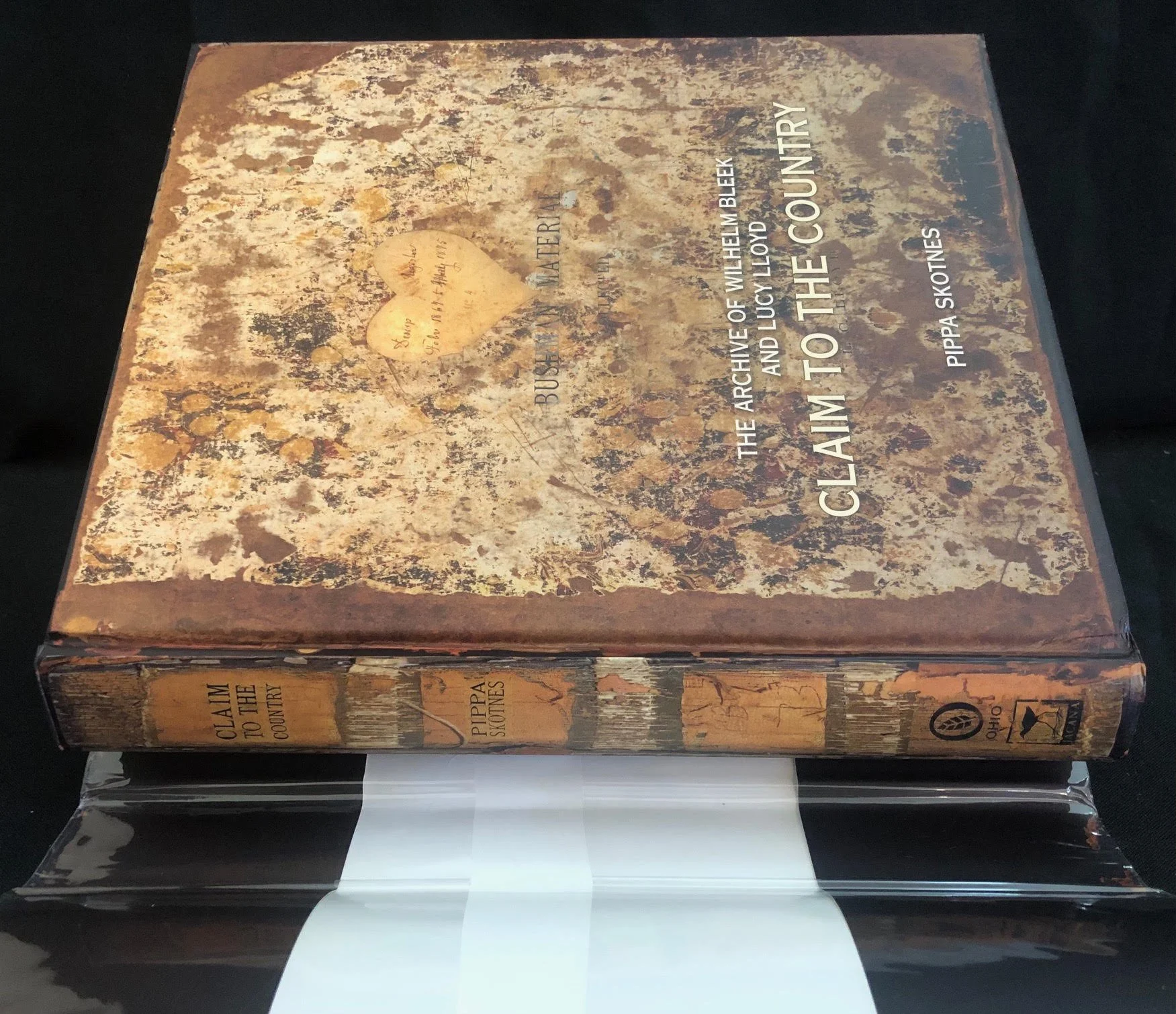
250mm x 285mm x 25mm
Very good condition.
R1,000