The Revival of Chiaroscuro Woodcuts by John Skippe (1781)
This volume represents a historically significant effort to revive a nearly forgotten Renaissance art form in 18th-century England.
The Revival of Chiaroscuro Woodcuts
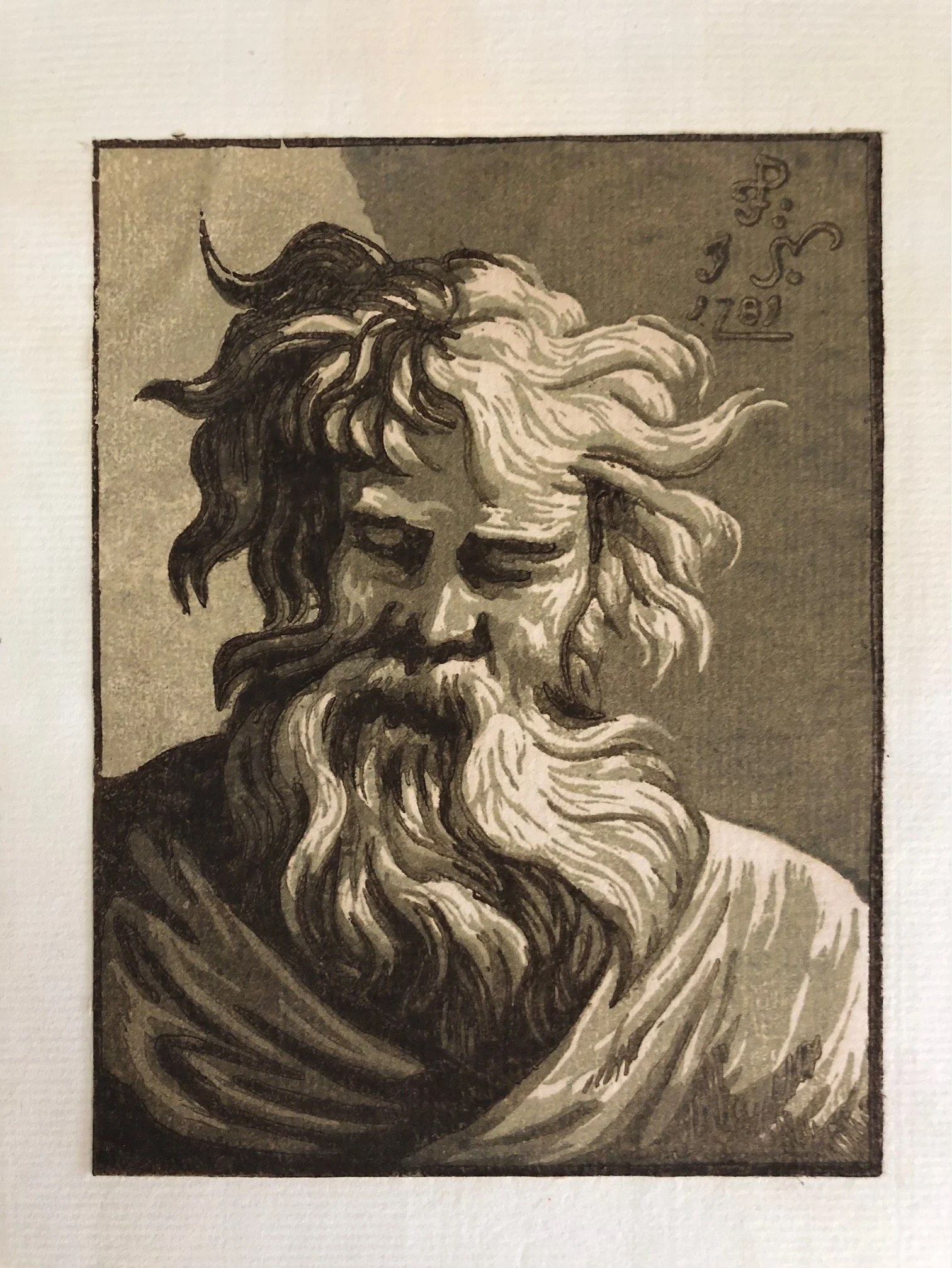
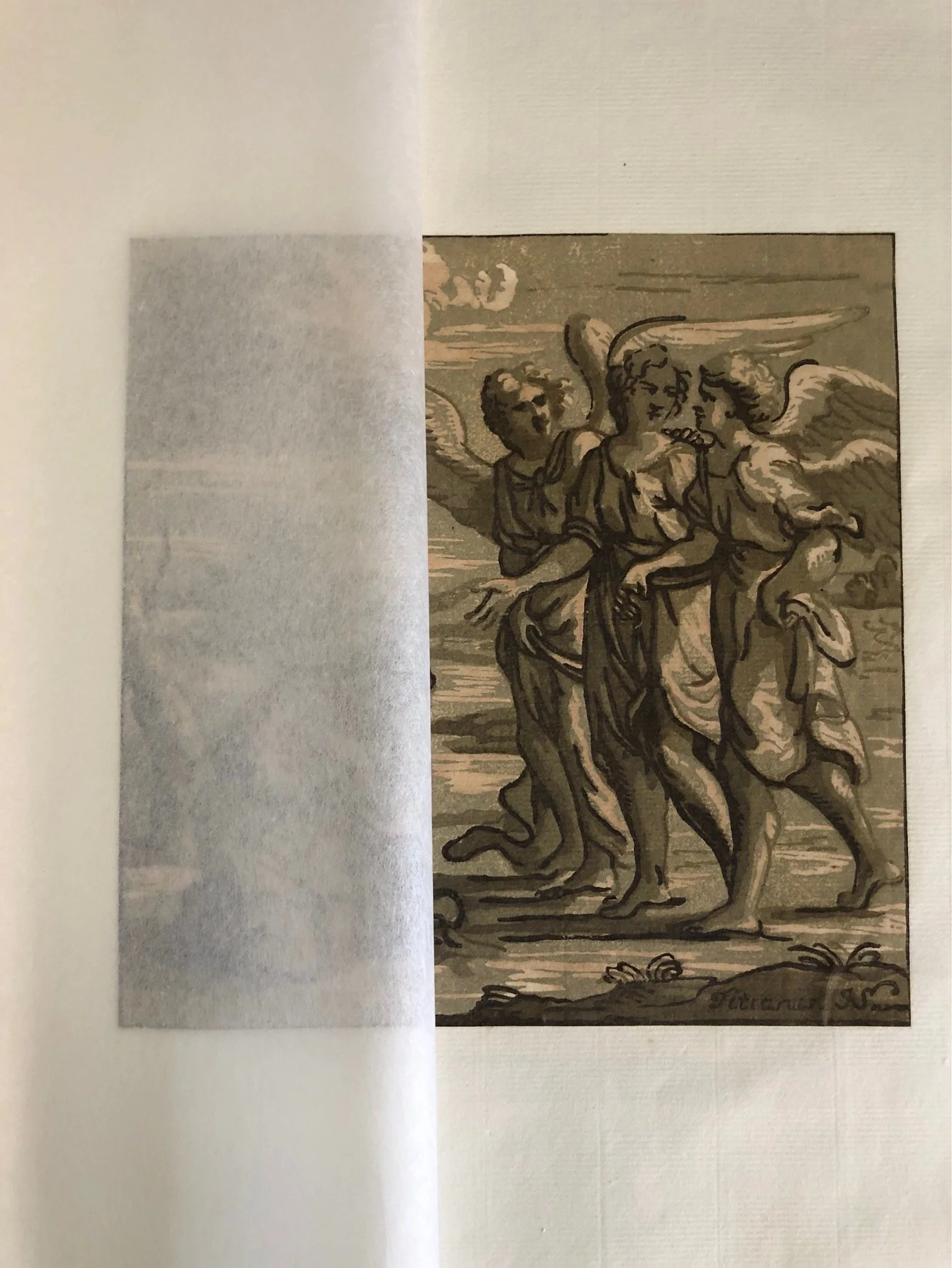
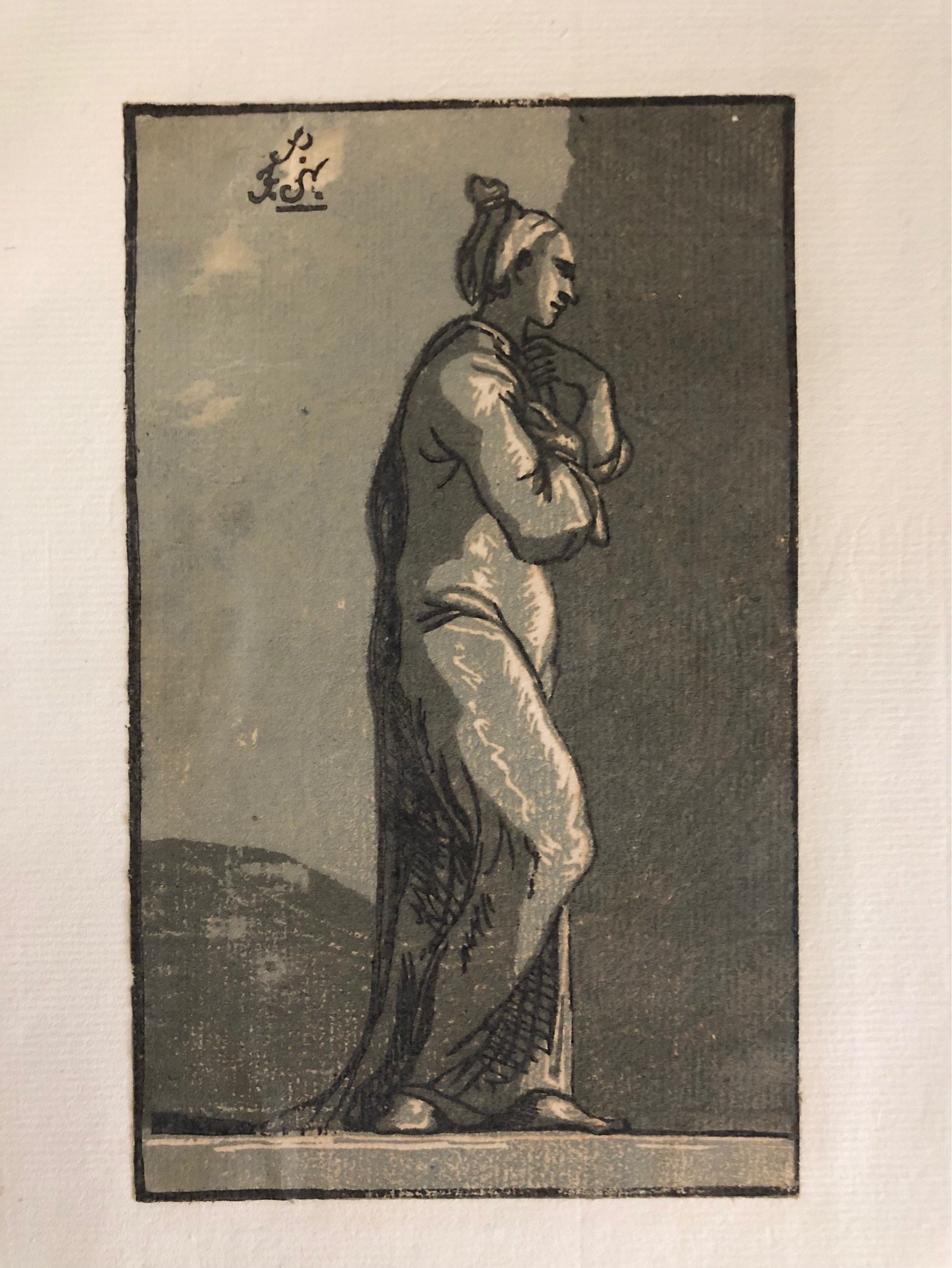
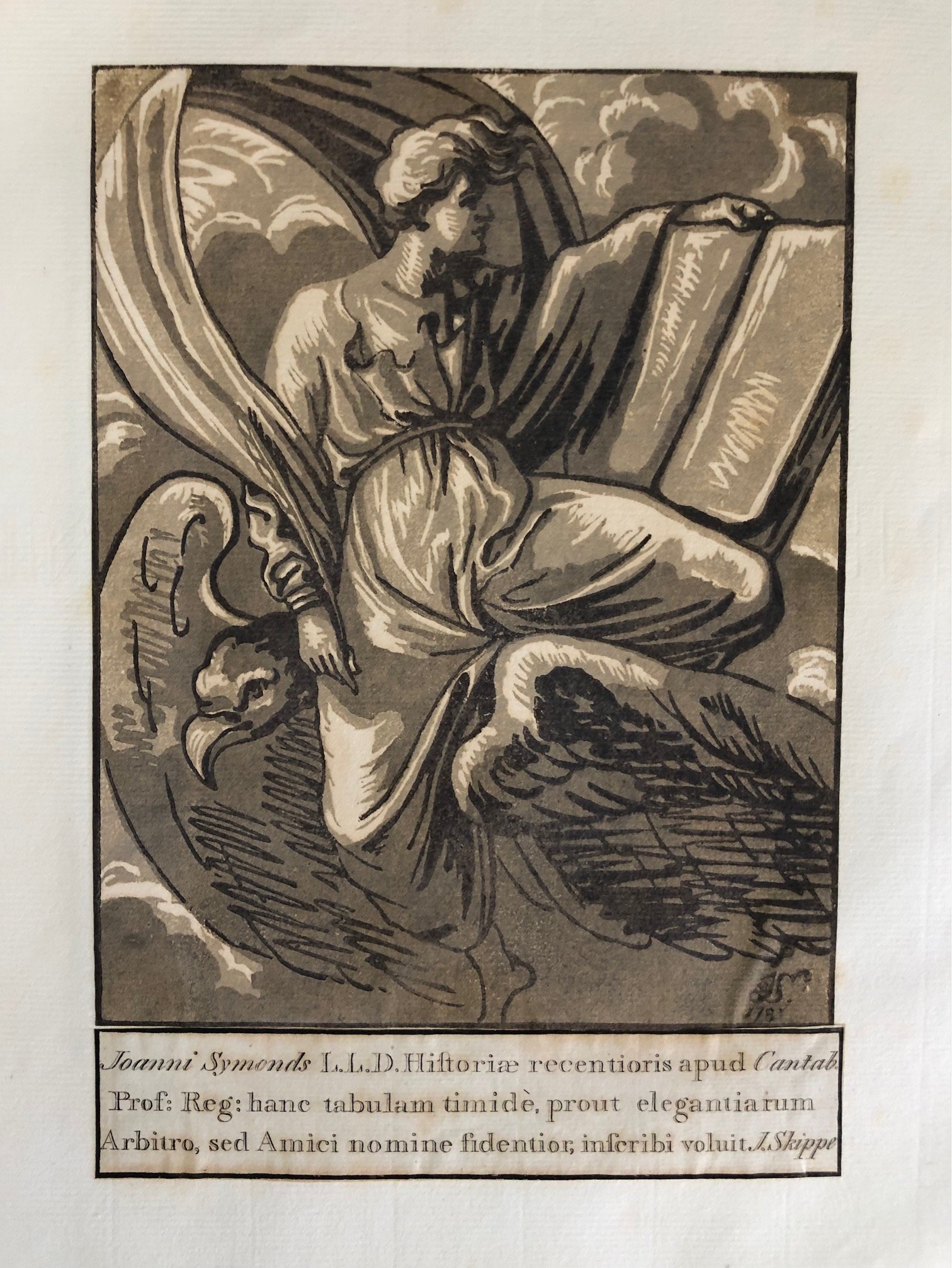
The prints contained in this folio are chiaroscuro woodcuts, a multi-block colour printing technique originally invented in the early 16th century by Italian masters like Ugo da Carpi. By the late 1700s, the technique had largely fallen out of practice. The creator of this collection, John Skippe (latinized as Johannes Skippe), was an English gentleman, affluent traveler, and amateur artist who dedicated himself to reviving the medium.
The Latin Dedication
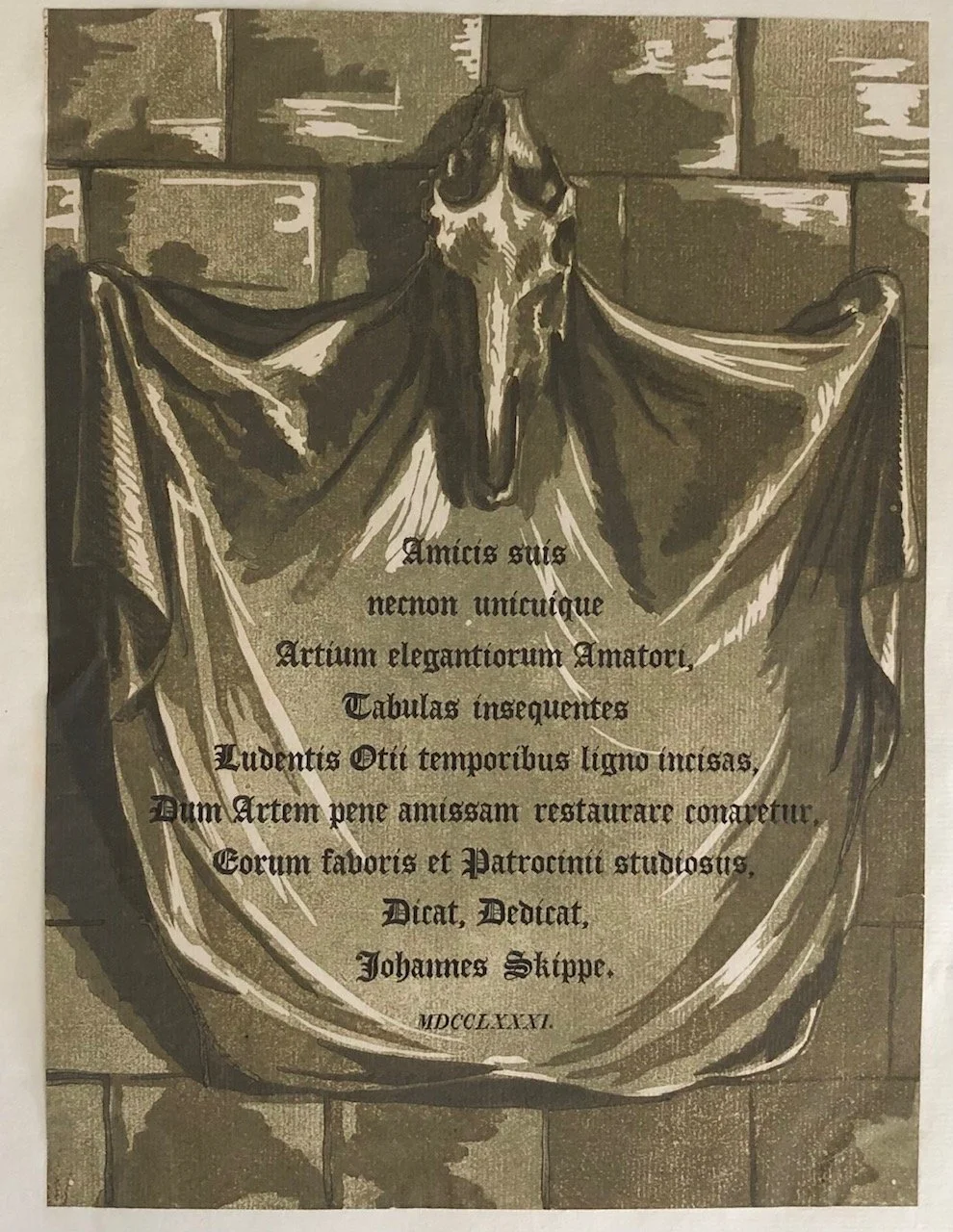
The title page features an explicit declaration of Skippe's artistic mission. The Latin text translates to:
"To his friends and to every lover of the more elegant arts, John Skippe dedicates these remaining plates, cut in wood during times of playful leisure, while he attempted to restore an art that was almost lost. 1781."
Translating Old Masters to Print
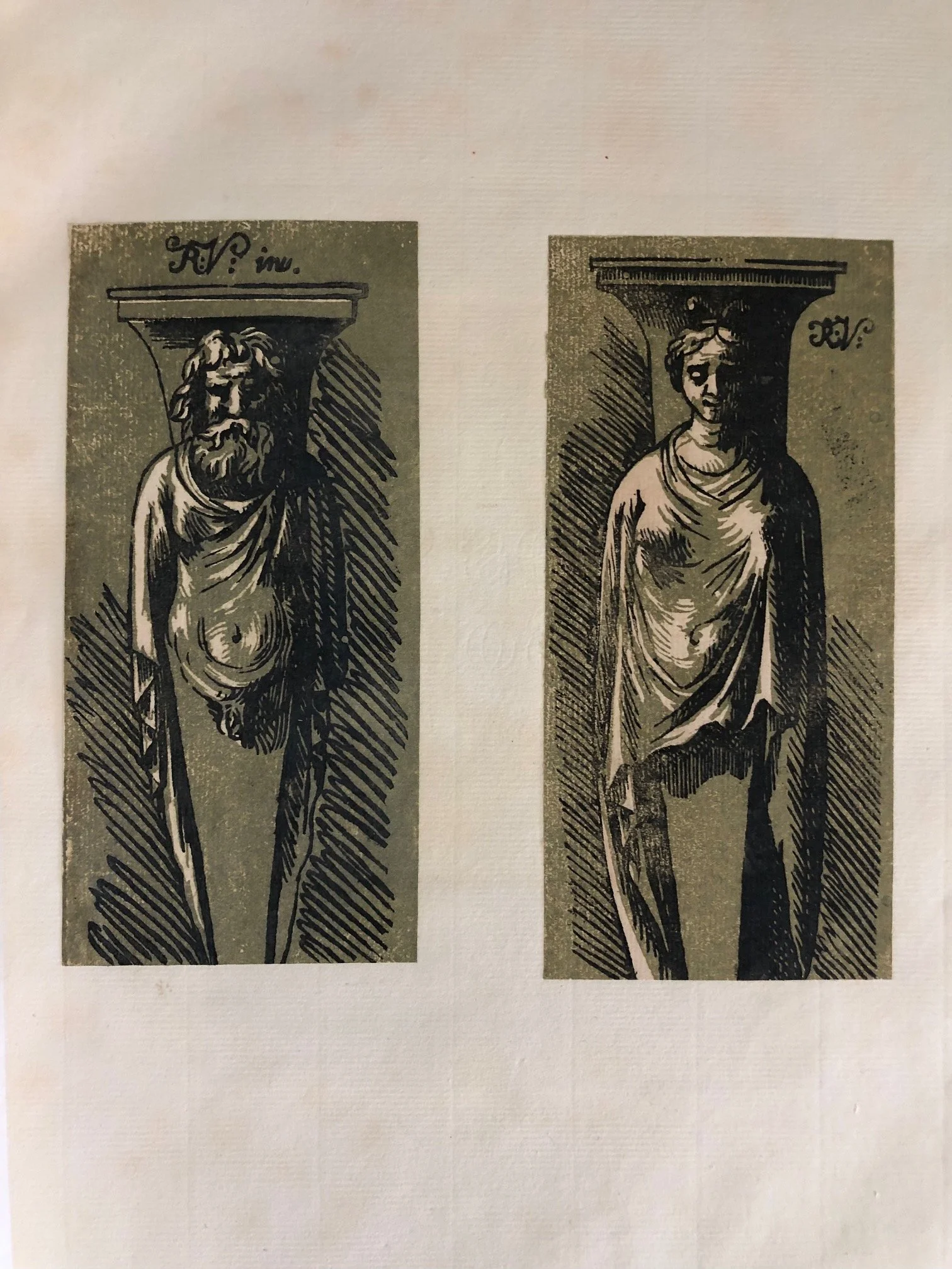
Skippe traveled extensively throughout Italy during the 1770s, amassing a world-class collection of original Renaissance drawings. Upon returning to England, he carved these multi-toned woodblocks himself to replicate the fluid ink washes and chalk highlights of masters like Raphael (indicated by the monogram "RV inv." for Raphael Urbinas invenit on the column capitals), Parmigianino, and Rubens.
Provenance and Collectability
Because Skippe was a wealthy amateur, he did not print these for commercial mass production. Instead, he distributed a very limited number of sets privately to friends, fellow connoisseurs, and patrons of the arts.
There are differences in the number of woodcuts in other volumes on the internet. This copy has 38 woodcuts and is considered complete as is.
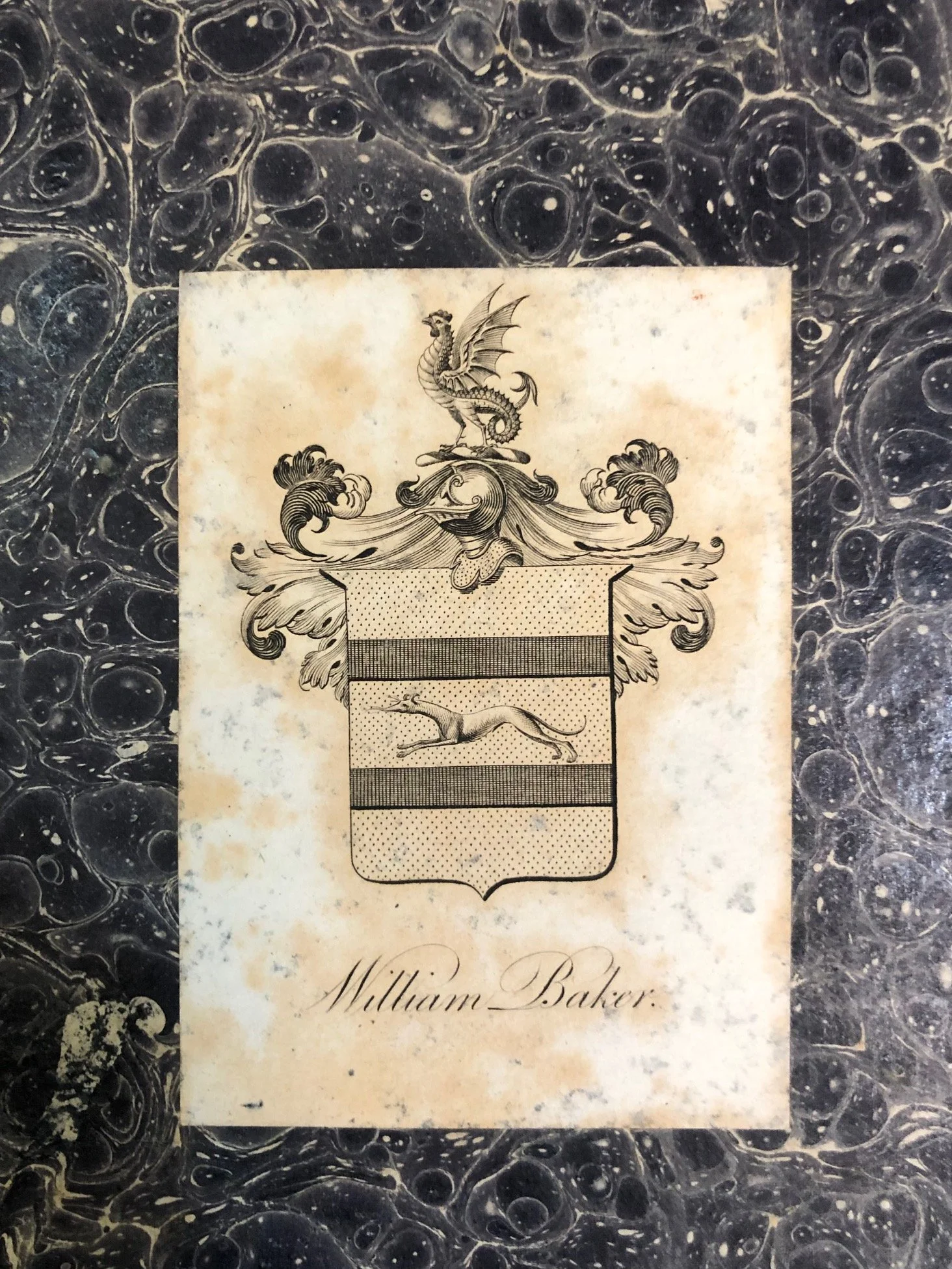
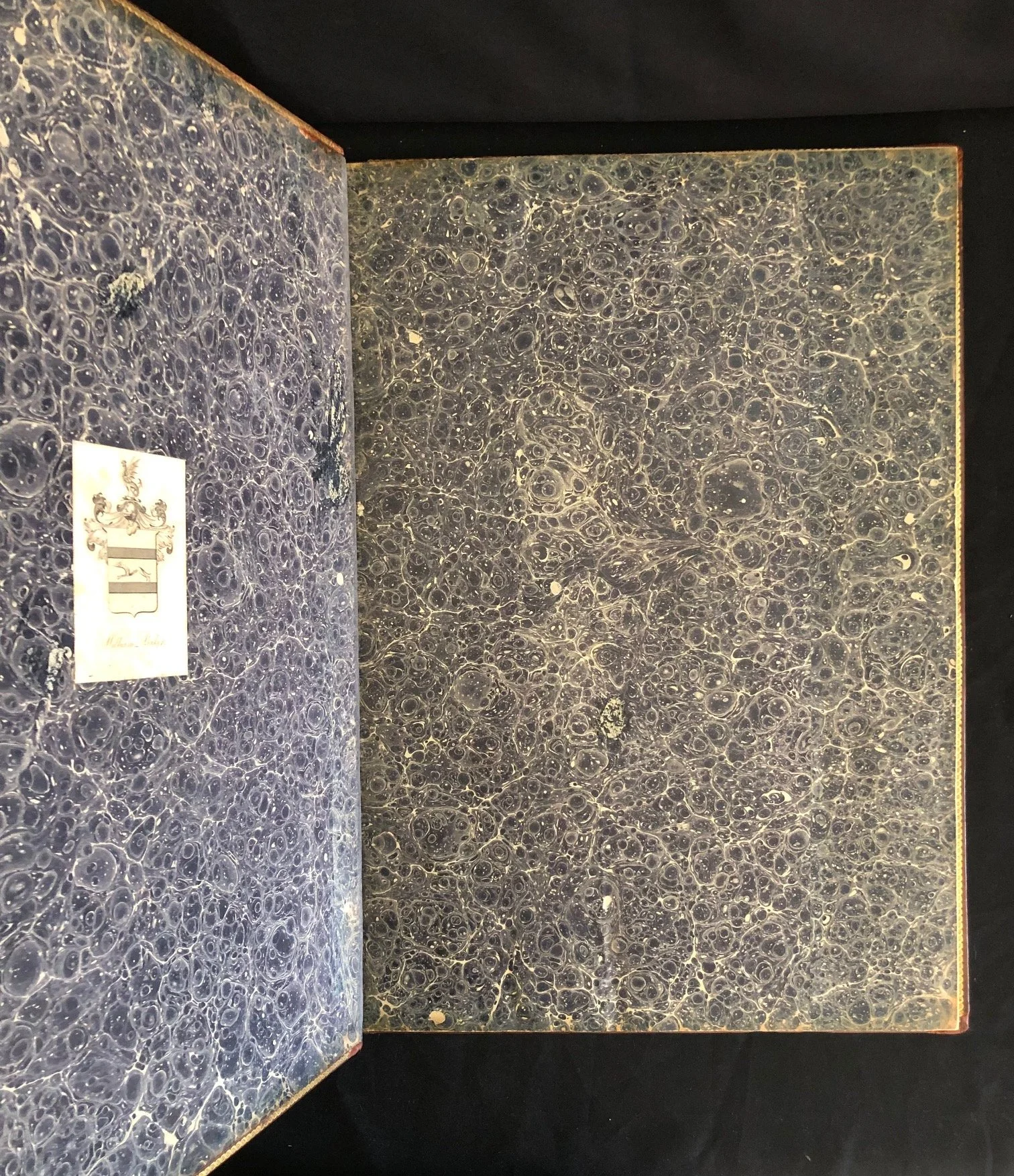
The prominent bookplate belongs to William Baker, indicating this specific copy belonged to a contemporary collector of high-standing English heritage.
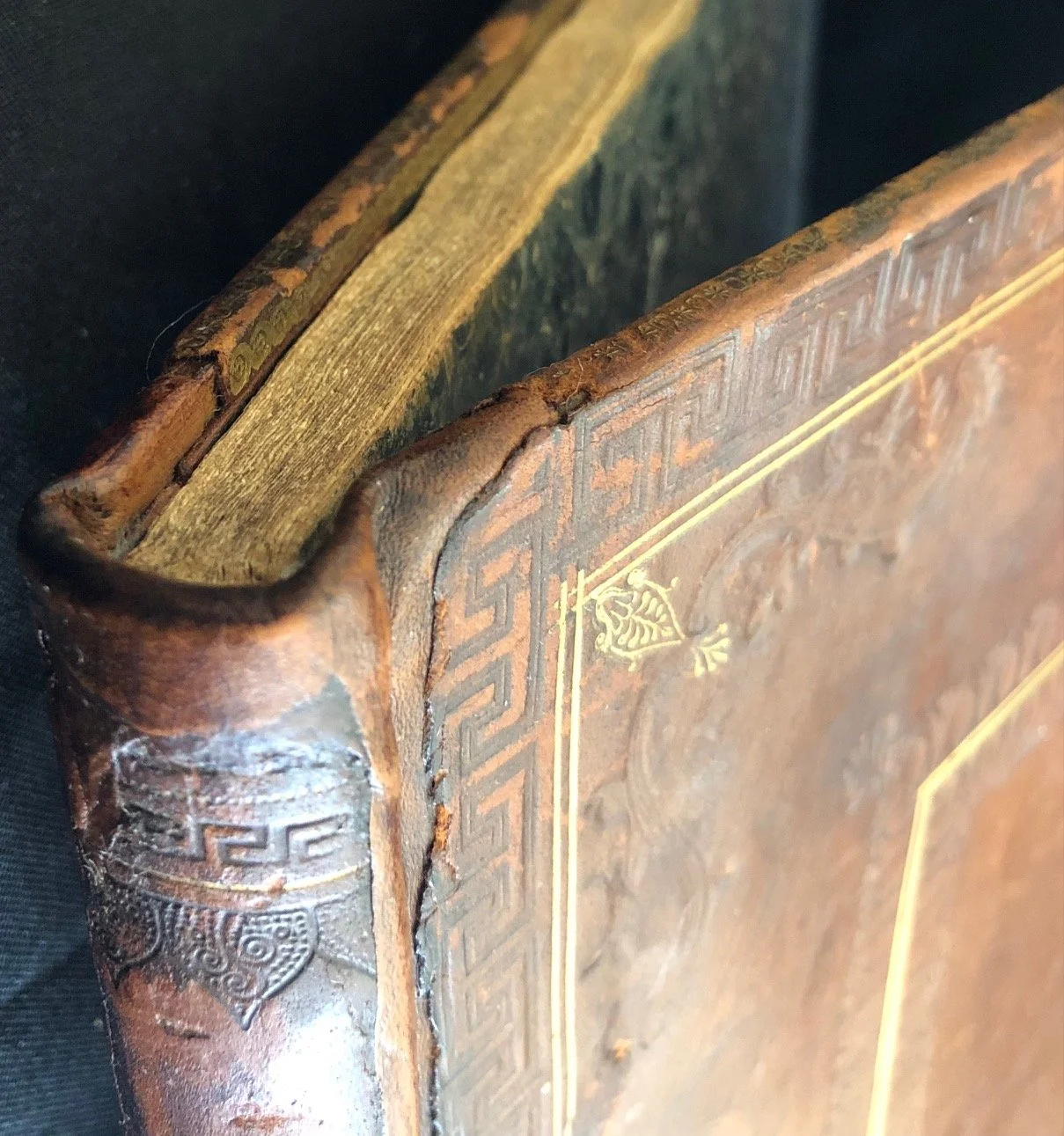
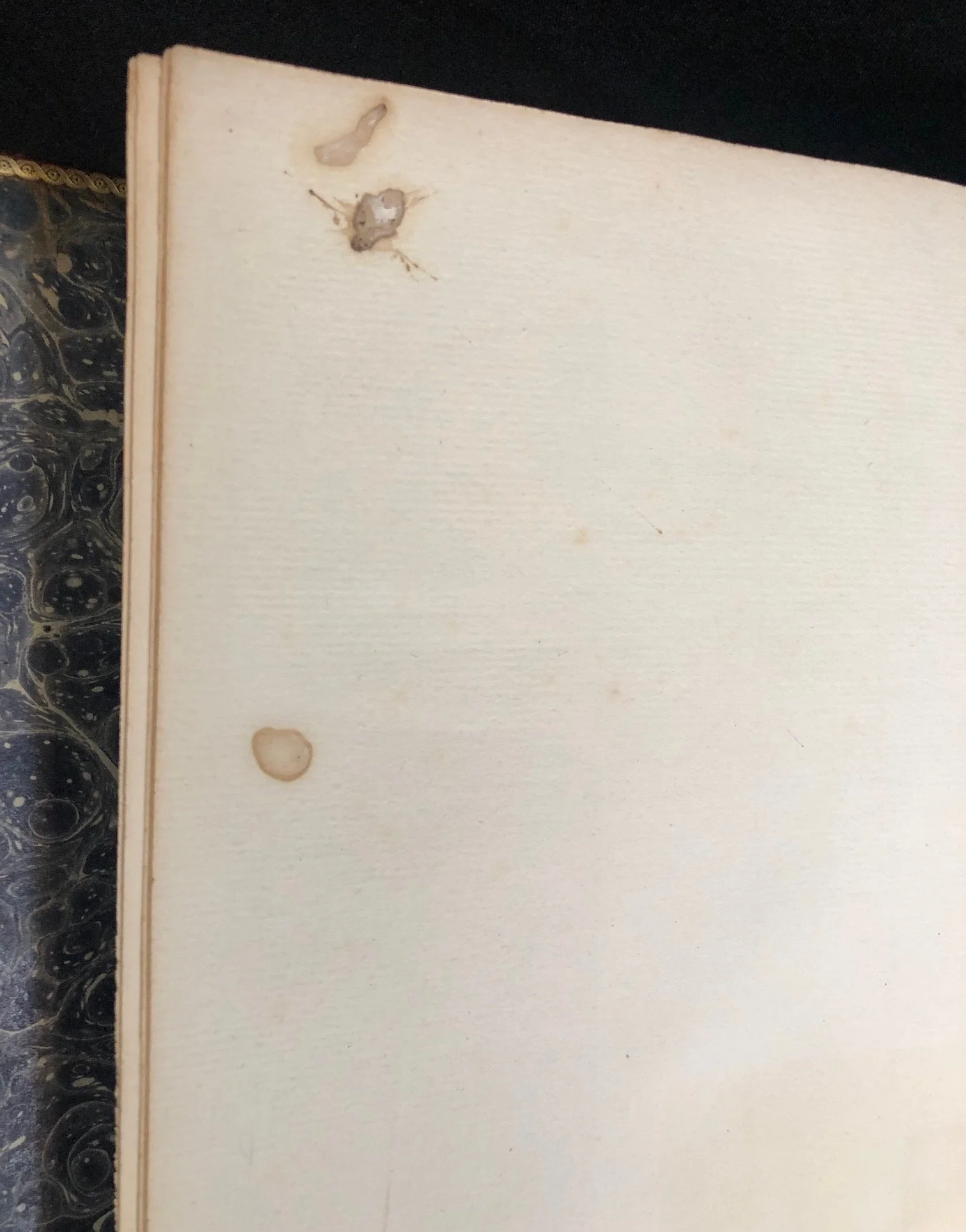
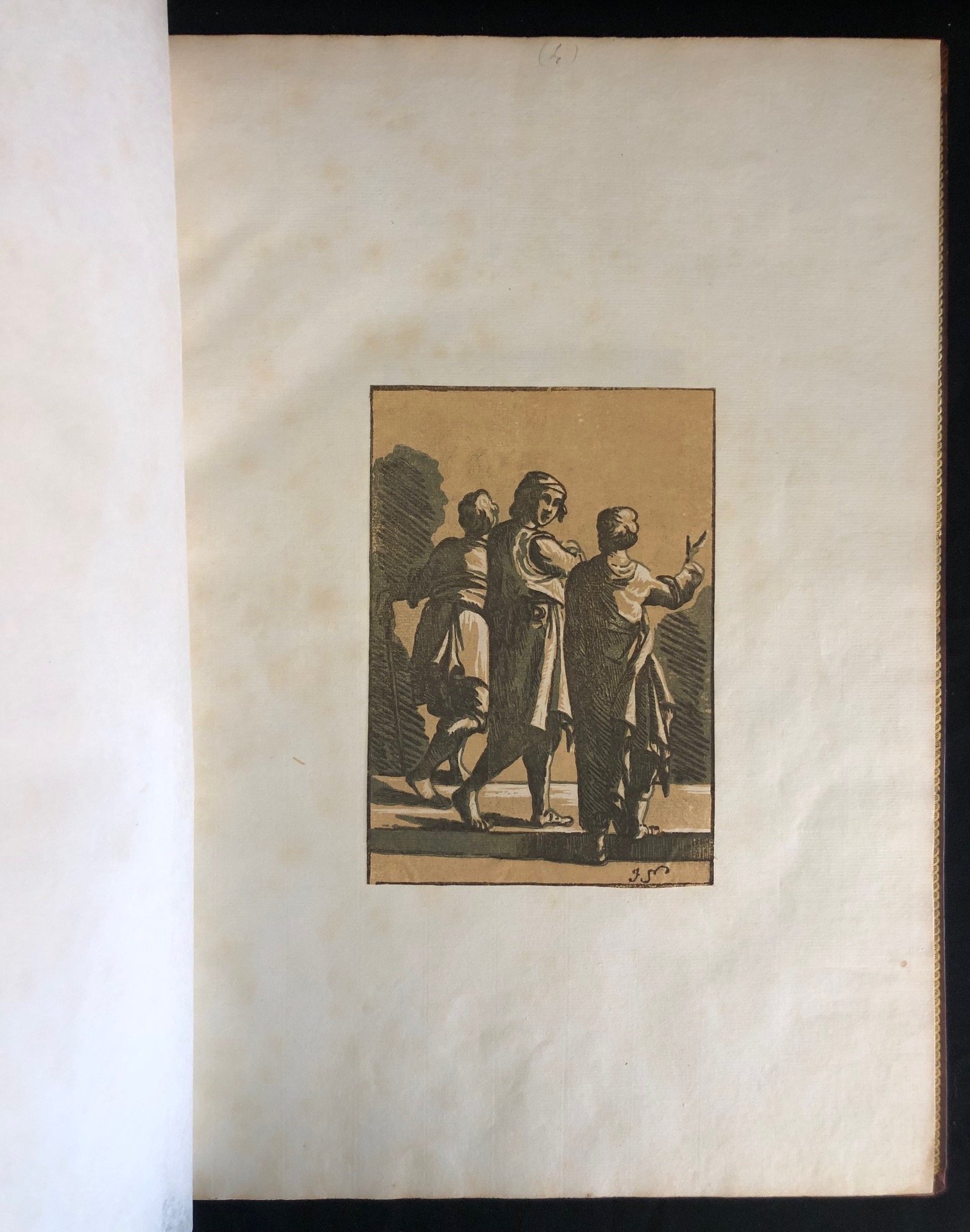
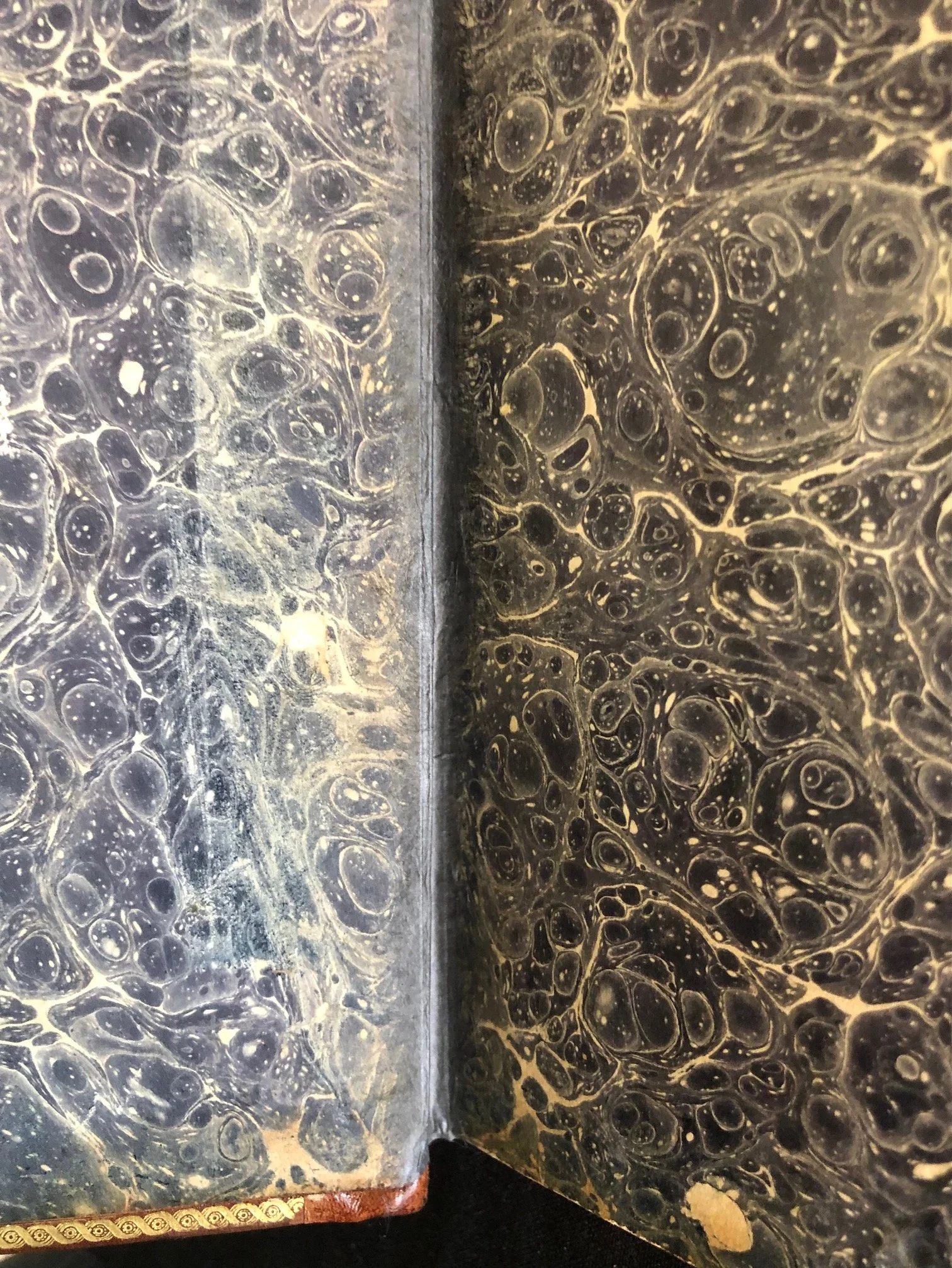
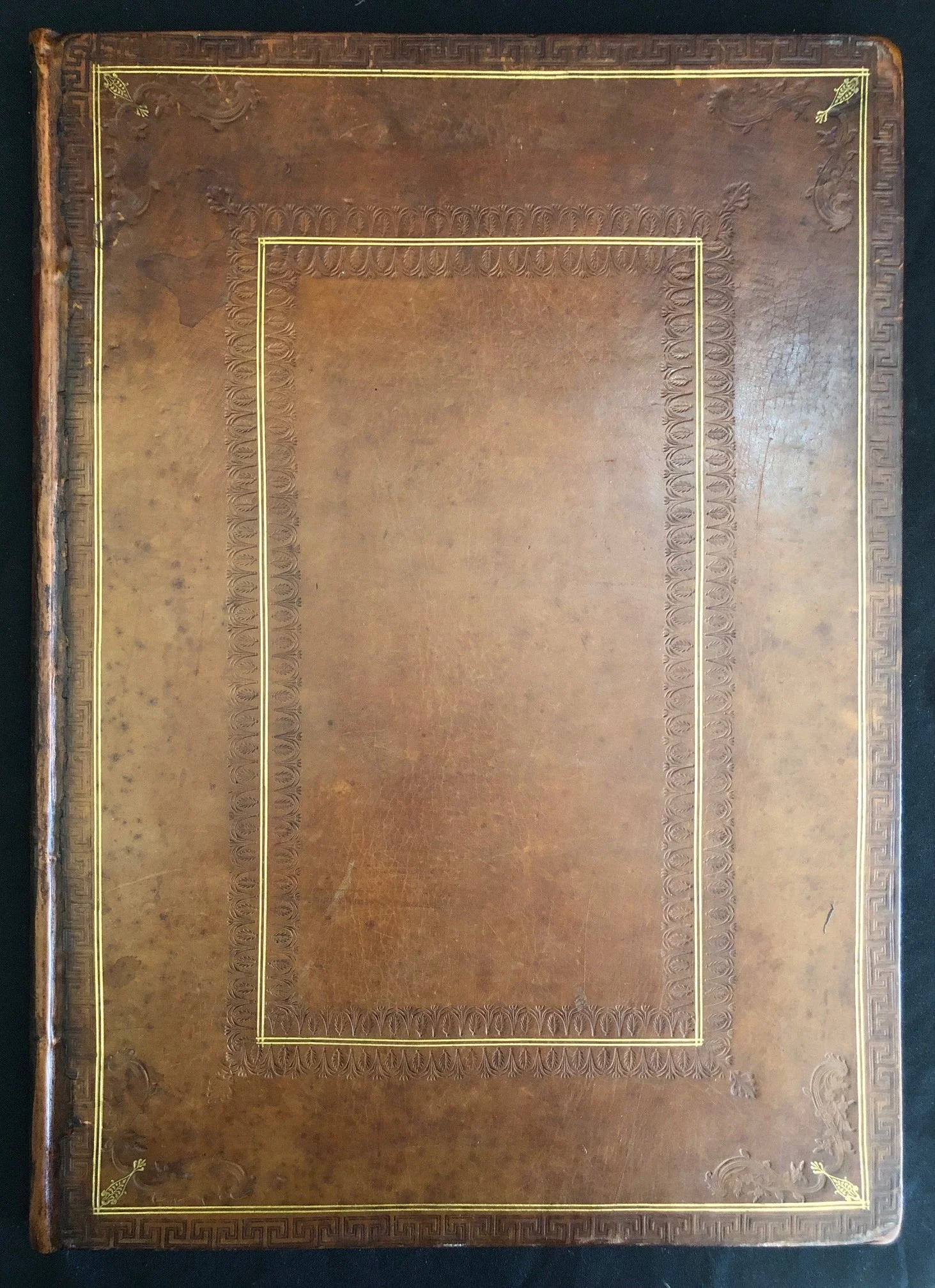
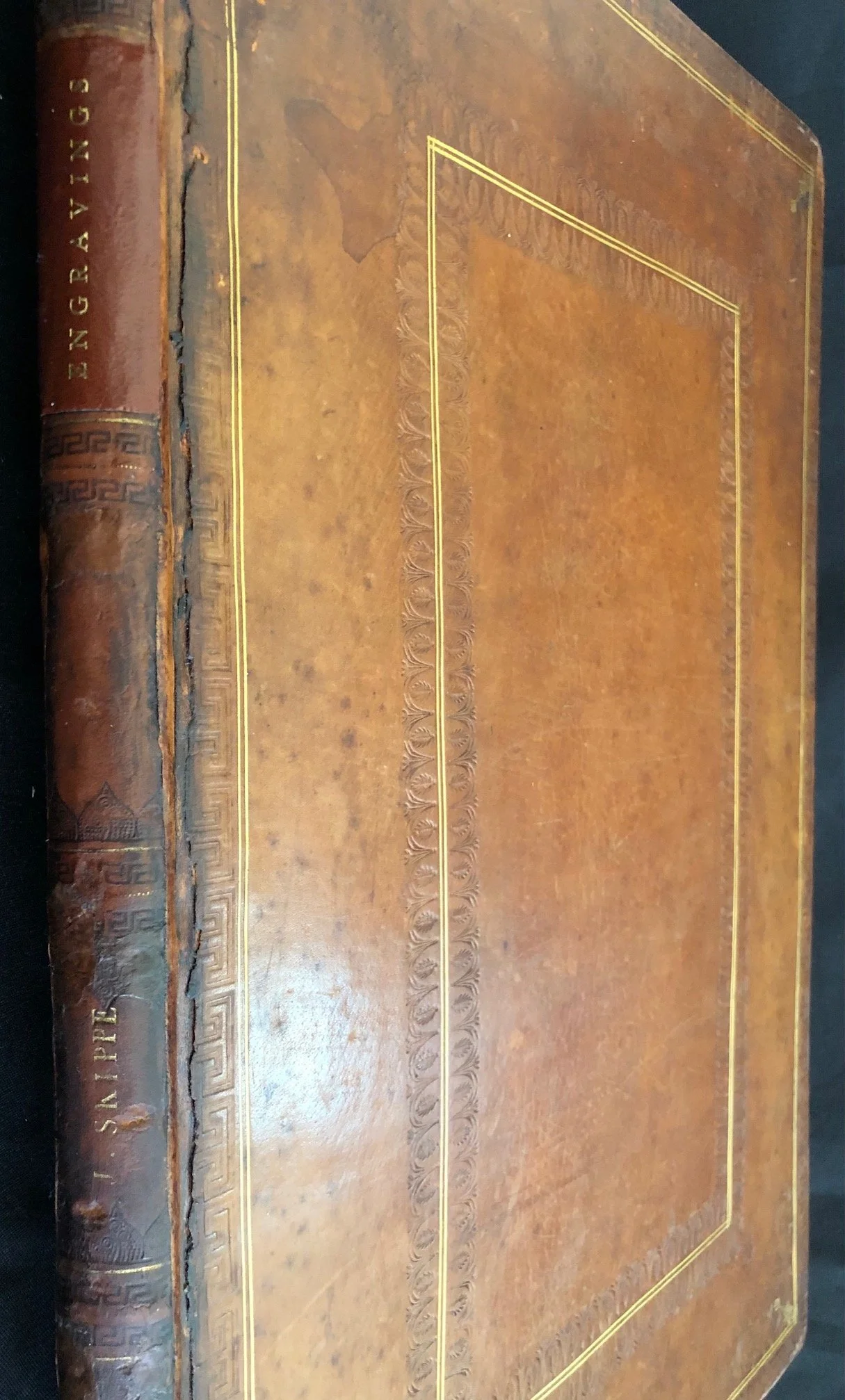
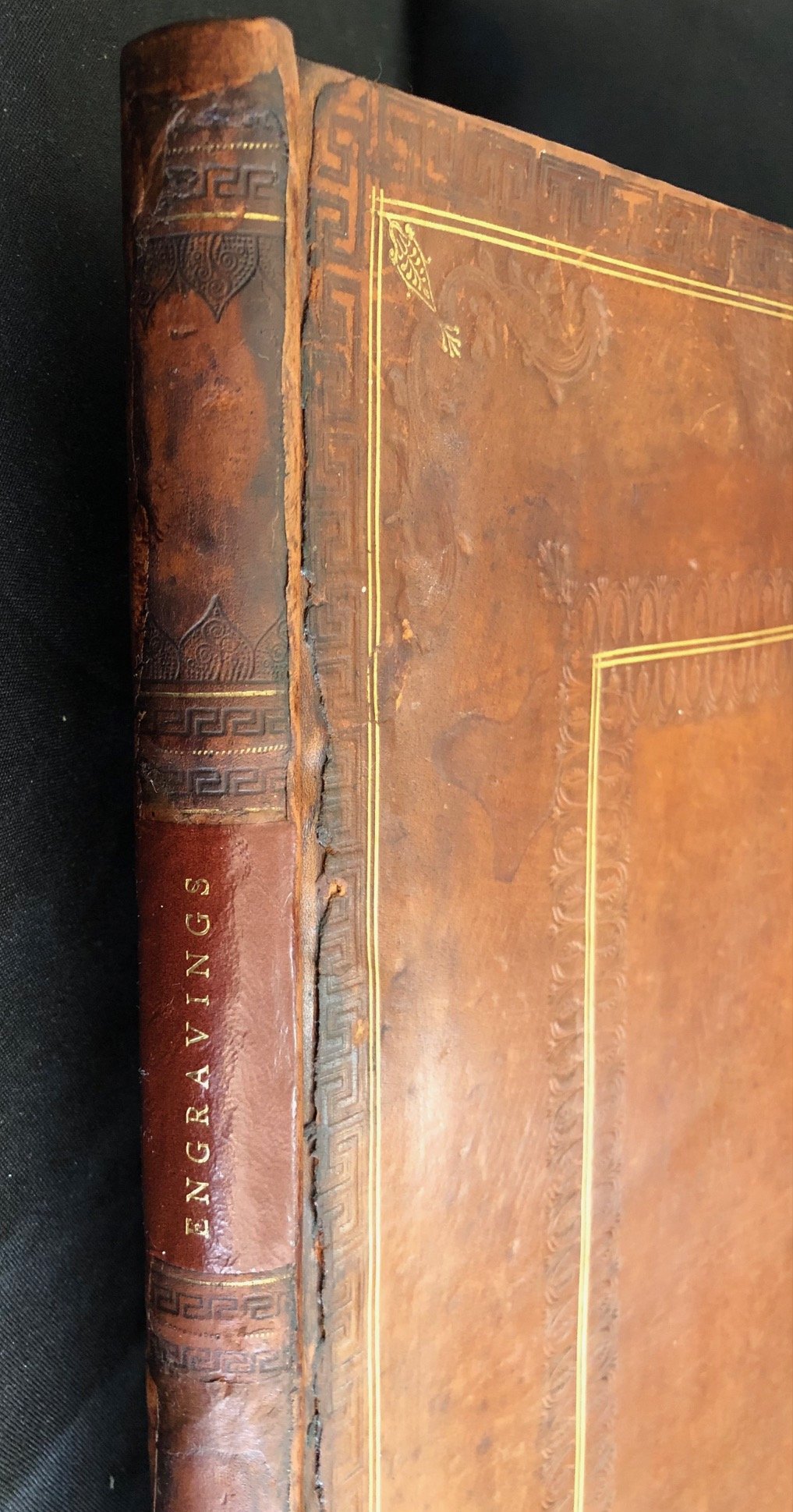
Original 18th century binding; restored; new spine label; gutter of end papers repaired; new acid free Japanese tissue guards for all woodcuts; some spotting throughout; generally the pages are clean; some offsetting to opposite page of each plate.
350mm x 580mm x 10mm
R275,000
In the history of printmaking, the relationship between Raphael (Raffaello Sanzio, 1483–1520) and John Skippe (1742–1811) bridges the High Renaissance and the late-18th-century British antiquarian revival. Skippe’s landmark 1781 suite of chiaroscuro woodcuts was both a technical resurrection of a nearly extinct 16th-century medium and a direct tribute to Raphael’s pivotal role in its original golden age.
1. Raphael’s Original Role in Chiaroscuro Woodcuts
During the Italian Renaissance, Raphael was unusually progressive in recognizing printmaking not merely as a way to copy finished paintings, but as an independent art form capable of spreading his disegno (design and draftsmanship) across Europe.
Collaboration with Ugo da Carpi: Around 1516–1518, the Italian printmaker Ugo da Carpi petitioned the Venetian Senate for a patent on a technique he called chiaro e scuro (light and dark)—printing from multiple woodblocks inked in graduating tones to mimic wash drawings heightened with white. Ugo moved to Rome and worked directly with Raphael, translating Raphael’s preparatory sketches and modelli (such as The Miraculous Draught of Fishes, The Death of Ananias, and Diogenes) into multi-block tonal woodcuts.
Preserving the "Hand" of the Master: Unlike copperplate engraving, which translated drawings into rigid networks of cross-hatched lines, chiaroscuro woodcuts preserved the fluid, painterly spontaneity of Raphael’s pen-and-wash sketches. Because many of Raphael's original workshop drawings were later lost or damaged, these 16th-century chiaroscuro prints became vital historical records of his creative process.
2. John Skippe and the 1781 Revival
By the late 18th century, chiaroscuro woodcutting had largely fallen out of fashion, overshadowed by intaglio techniques like mezzotint, stipple engraving, and aquatint. John Skippe—an Oxford-educated gentleman scholar, collector, and amateur artist from Worcestershire—single-handedly revived the pure Renaissance woodblock method in England.
The Grand Tour and Old Master Drawings: During an extensive Grand Tour of Italy in the 1770s, Skippe studied Renaissance printmaking firsthand (reportedly taking lessons in Venice from Jean-Baptiste Jackson’s circle or local woodblock cutters) and amassed an extraordinary private collection of Old Master drawings, including works attributed to Raphael, Parmigianino, Giulio Romano, and Andrea Mantegna.
The 1781 Publication: Returning to England, Skippe personally cut the pearwood blocks and printed a series of chiaroscuro woodcuts after drawings in his own collection. In 1781, he issued the first installment under a Latin dedication to his friends and lovers of the fine arts (Amicis suis necnon unicuique Artium elegantiorum Amatori...), with an English title page describing "Ten Prints Engraved in Chiaro oscuro, after Original Drawings of the following masters: in the Collection of John Skippe, Esq: Parmegiano, Rafael, Andrea..." (followed by additional plates through 1783 and a later collected edition around 1809–1811).
3. Raphael’s Legacy Inside Skippe’s Suite
For Skippe, Raphael was the ultimate benchmark of classical grace and compositional authority. Including designs after Raphael (and his immediate Roman school, such as Giulio Romano and Polidoro da Caravaggio) served several specific purposes in Skippe's project:
Authenticating the Technique: By pairing his revived multi-block woodcut method with Raphael’s designs—such as A Term (Caryatid) after Raphael (1781–83) and Joseph Sold into Slavery (1783)—Skippe consciously aligned himself with Ugo da Carpi’s original 16th-century Roman workshop.
Reproducing the Tactile Quality of Drawings: Eighteenth-century British connoisseurs prized the "sublime" and spontaneous sketch over overly polished academic engravings. Using two to four tonal blocks in warm sepias, ochres, and olive-browns, Skippe replicated the exact texture of Raphael’s reed-pen lines and bistre washes on toned paper, effectively democratizing access to the prized drawings in his cabinet.
A Bridge to 19th-Century Printmaking: Though Skippe produced his prints privately for fellow connoisseurs rather than commercial mass-market sale, his 1781 suite demonstrated that traditional woodblock printing could achieve high-art tonal sophistication. His work directly influenced later British printmakers, including William Savage (whose 1822 Practical Hints on Decorative Printing explicitly praised Skippe) and the 19th-century color woodblock revival.