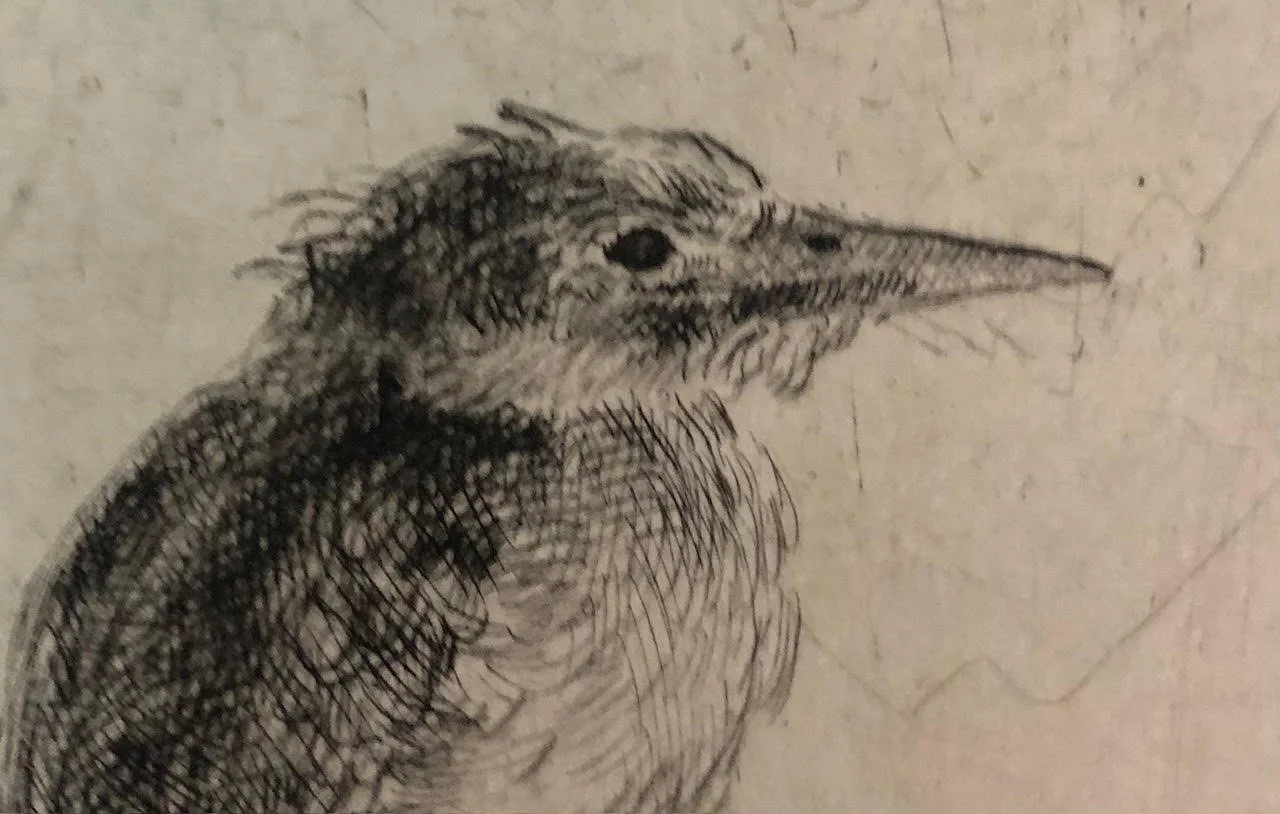
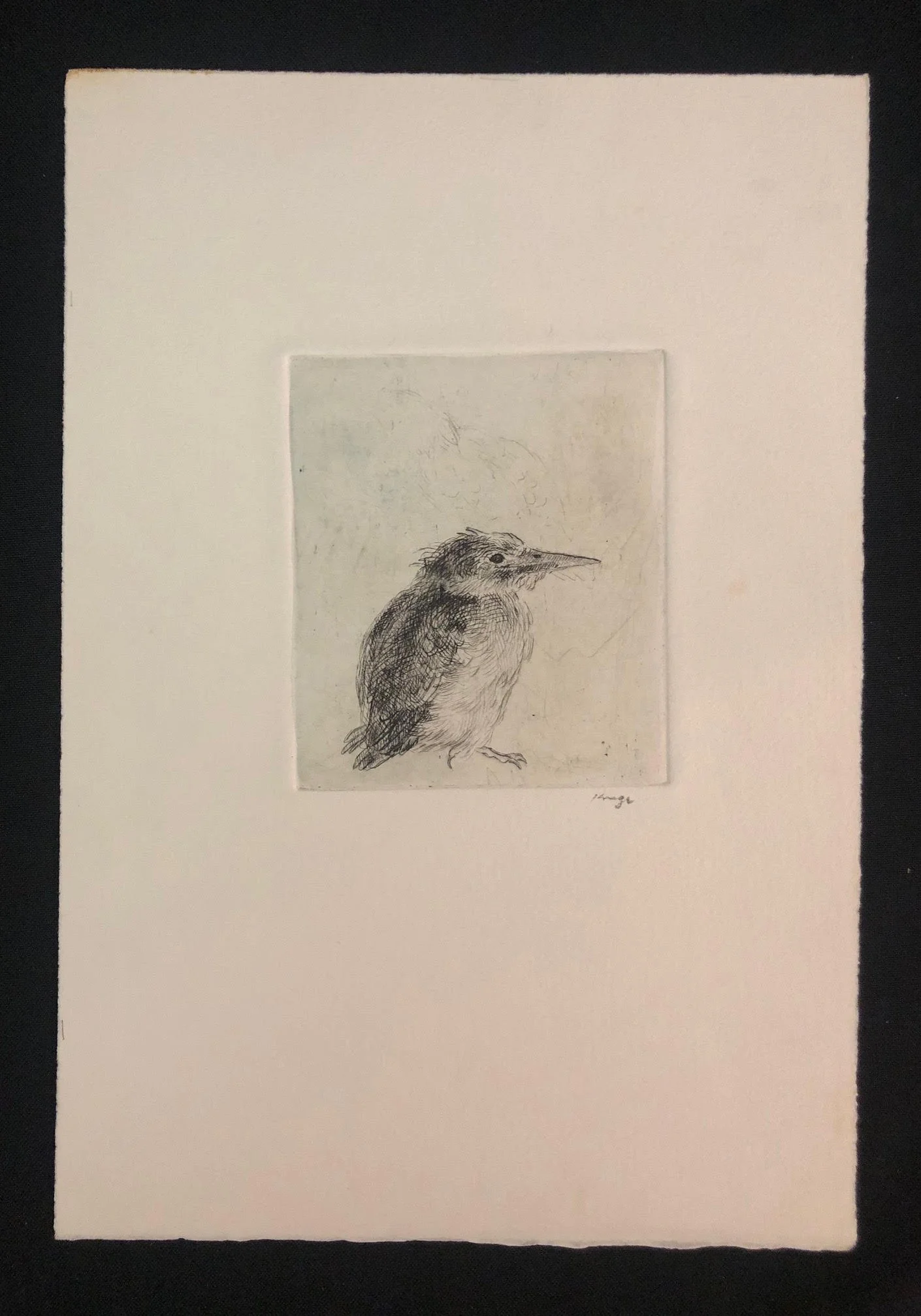
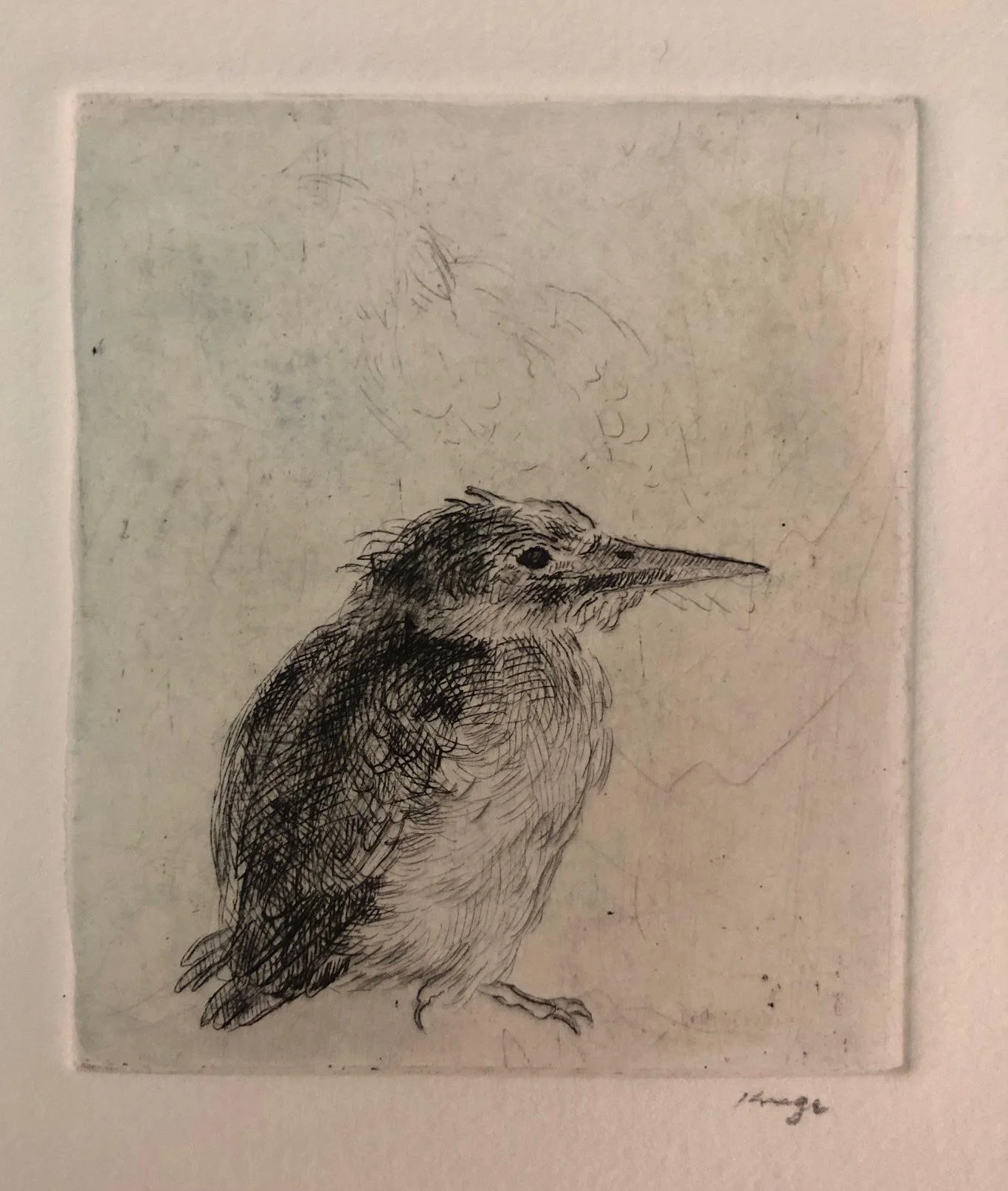
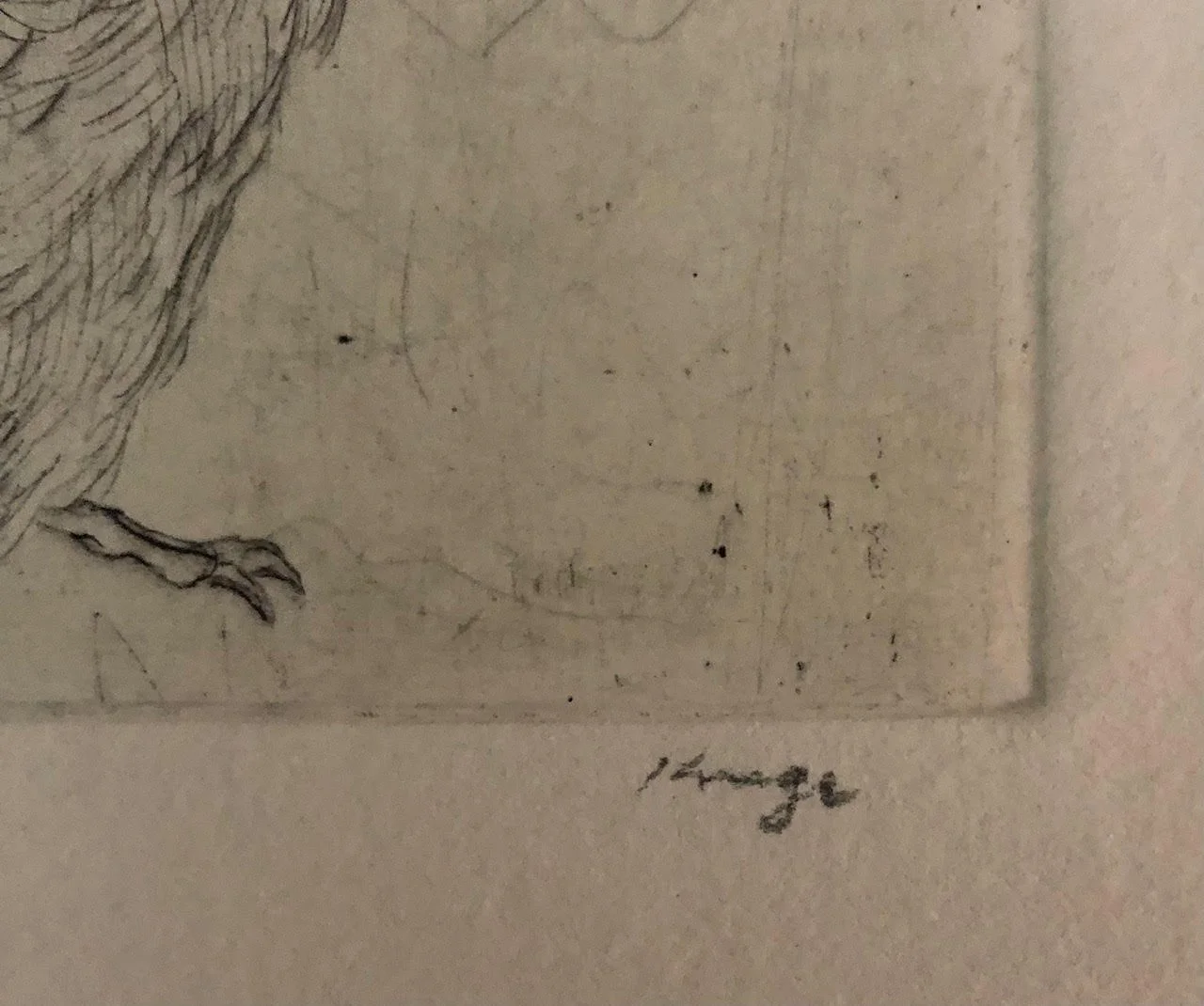
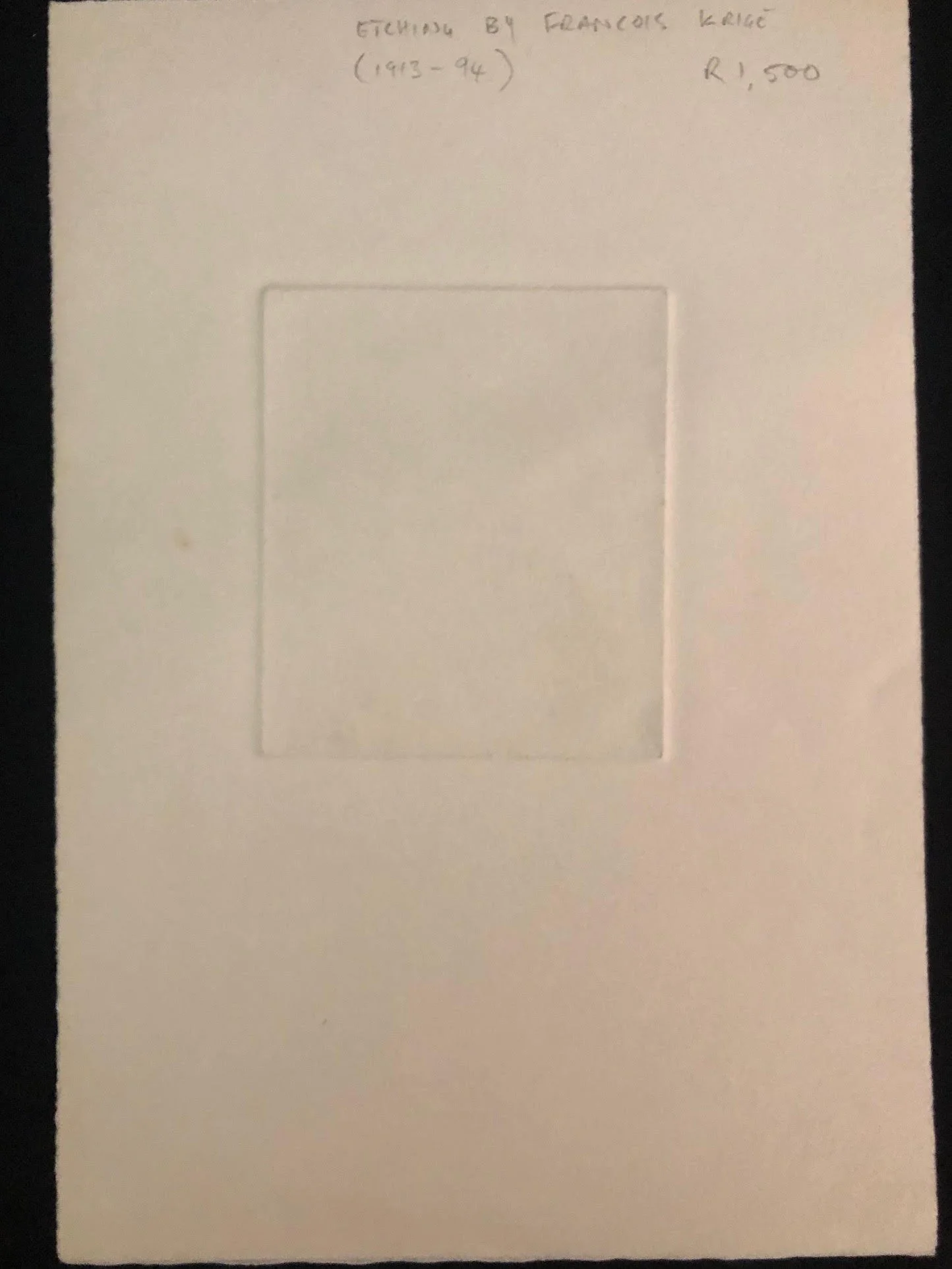
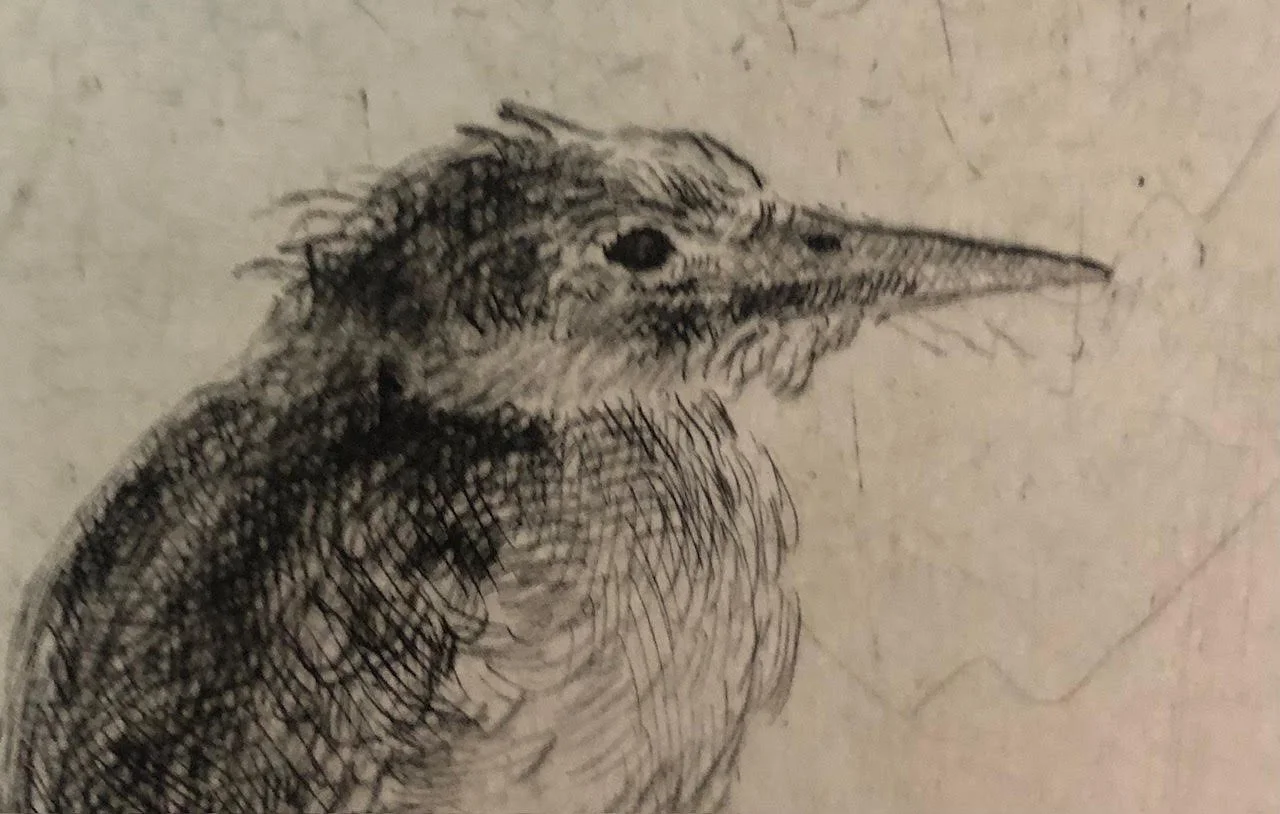
Drypoint etching of a Kingfisher by Francois Krige.
François Krige (1913–1994)—younger brother of the poet Uys Krige and one of South Africa’s most celebrated figurative draughtsmen and printmakers:
Mastery of Intaglio & the "Sensitive Line": While Krige is widely celebrated for his oil paintings, watercolours, and expressive charcoal and reed-pen drawings, his etchings and drypoints hold a special place in 20th-century South African printmaking. He approached the copper or zinc plate much like a sketchbook page, treating the drypoint needle as an extension of his famously fluid, rapid drawing hand—capturing the ruffled, vulnerable posture of a fledgling kingfisher in just a few decisive strokes.
The Cape Town Printmaking Circle: Krige worked closely within the influential Cape artistic milieu alongside contemporaries like Gregoire Boonzaier, Terence McCaw, and Lippy Lipshitz (a founding circle of the New Group in 1938, which rebelled against conservative academic art in South Africa). During the mid-20th century, facilities and presses for fine-art intaglio printmaking in South Africa were relatively scarce, meaning original signed drypoints like this were pulled in very small, intimate batches, often printed by the artists themselves or at specialized Cape studios.
Connection to the Natural World & Montagu: After years of studying in Antwerp and Florence, serving as an official South African war artist in North Africa and Italy during World War II, and travelling extensively in Spain, Krige eventually settled in Montagu in the Klein Karoo. There, surrounded by mountain fynbos, orchards, and riverbeds, he devoted immense attention to intimate studies of local flora, insects, and birds—treating a scruffy juvenile kingfisher with the same quiet dignity and psychological presence he brought to his human portraits.
Recycled Plates in Post-War South Africa: Those faint "ghost" lines visible in the upper background—are possibly remnants of a previous sketch scraped and burnished down so the metal plate could be reused—reflect both a classic printmaker's habit and the practical realities of sourcing imported copper and zinc plates in South Africa during the mid-20th century.
92mm x 107mm (Size of the etching).
193mm x 282mm (Size of the page).
Very good condition.
R1,500