Letter from Sir Rutherford Alcock, the first British Minister to Japan (1865)
This letter is a fascinating relic from the birth of modern British diplomacy in East Asia, capturing the literal "hand-off" of diplomatic paperwork during the turbulent closing months of the Tokugawa Shogunate.
The document shown is an autograph letter written by Sir Rutherford Alcock (1809–1897), the pioneering first British Minister to Japan. It was written from the port of Point de Galle, Ceylon (now Sri Lanka) on January 30, 1865, while Alcock was en route back to Great Britain. He is writing to Francis Alston, the powerful Chief Clerk of the Foreign Office in London.
The Transcription
(The front of the letter):
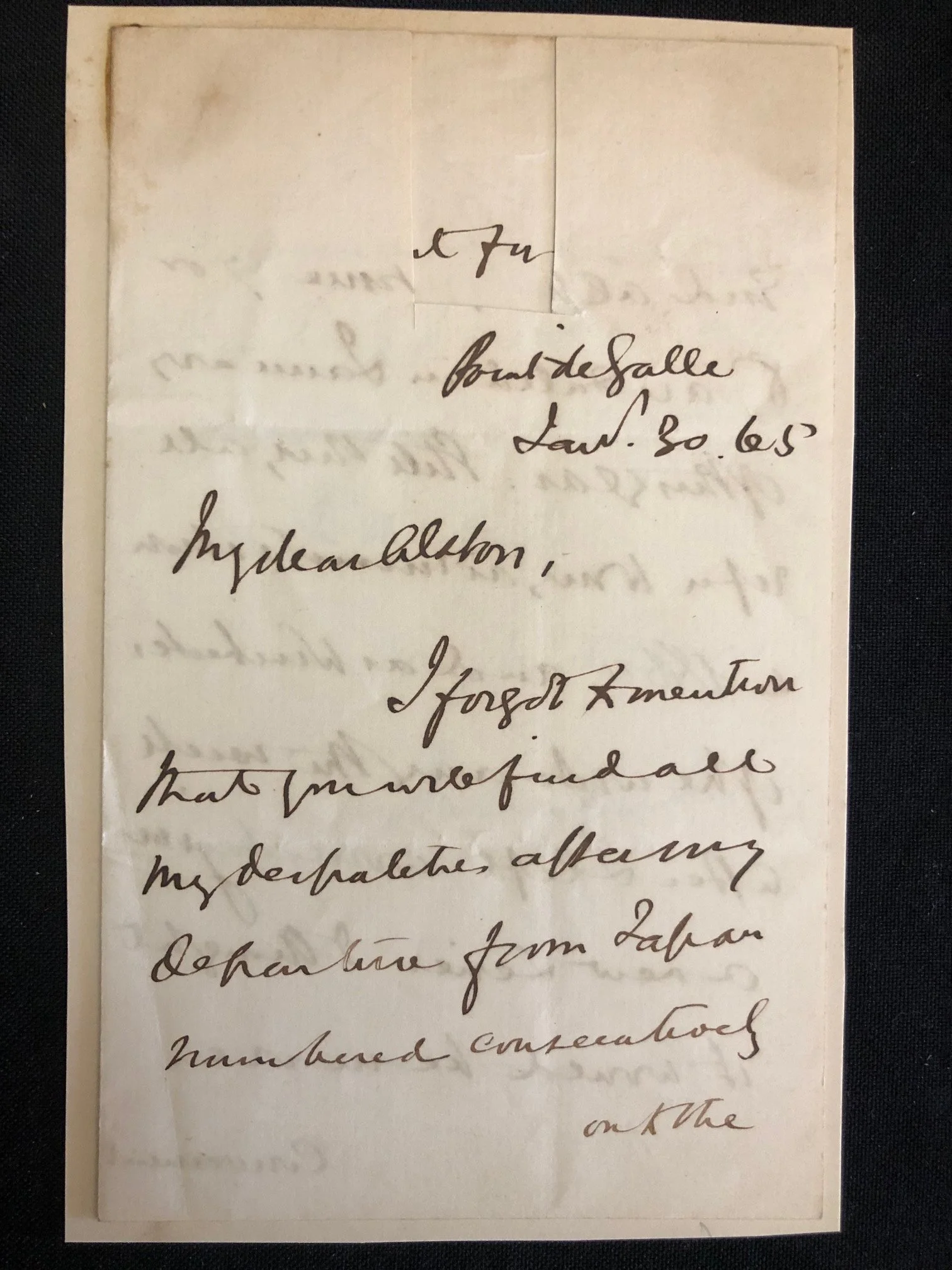
& Fn [Foreign Office]
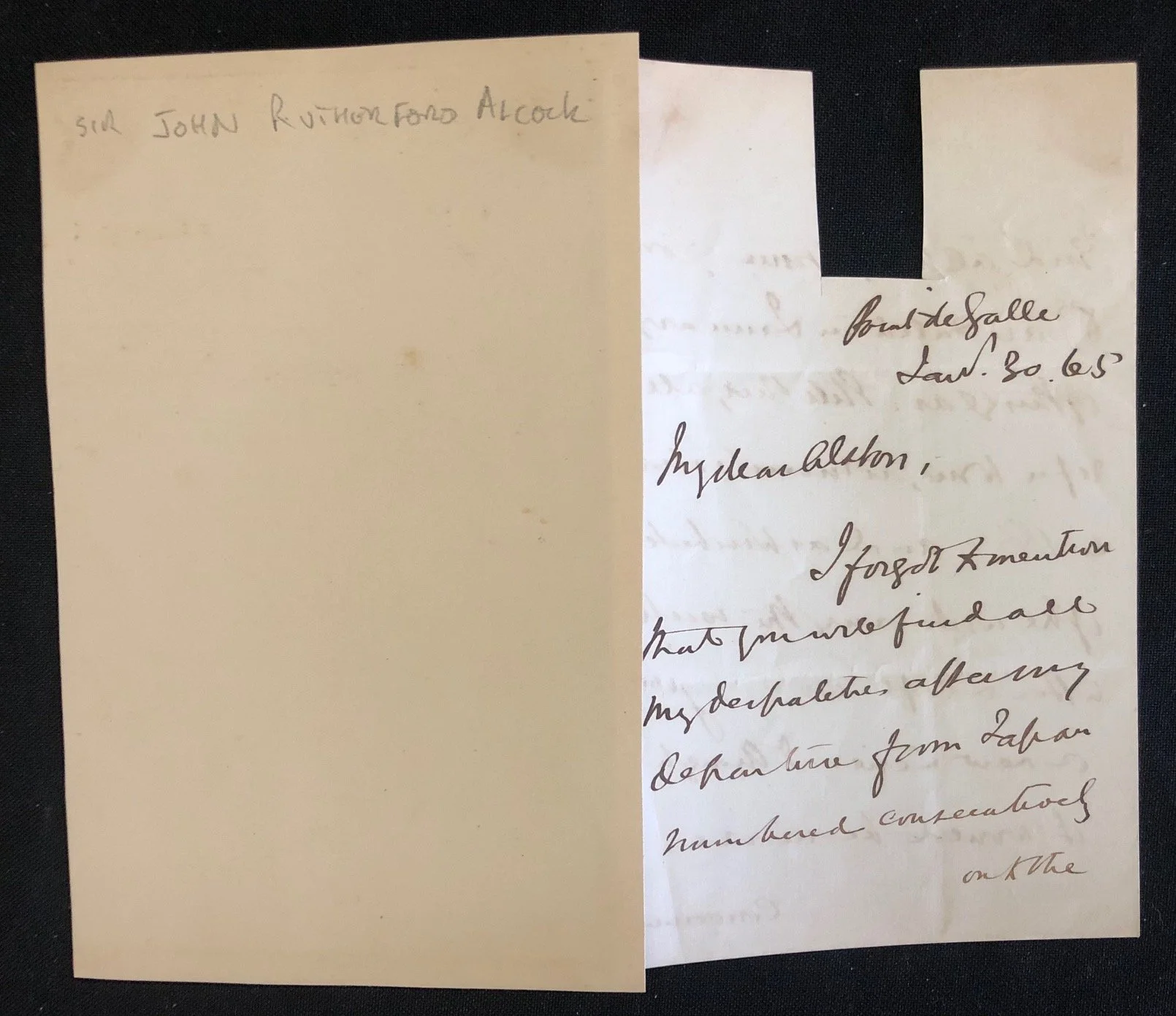
Point de Galle
Jan. 30. 65
My dear Alston,
I forgot to mention that you will find all my despatches after my departure from Japan numbered consecutively on to the
(The interior of the letter):
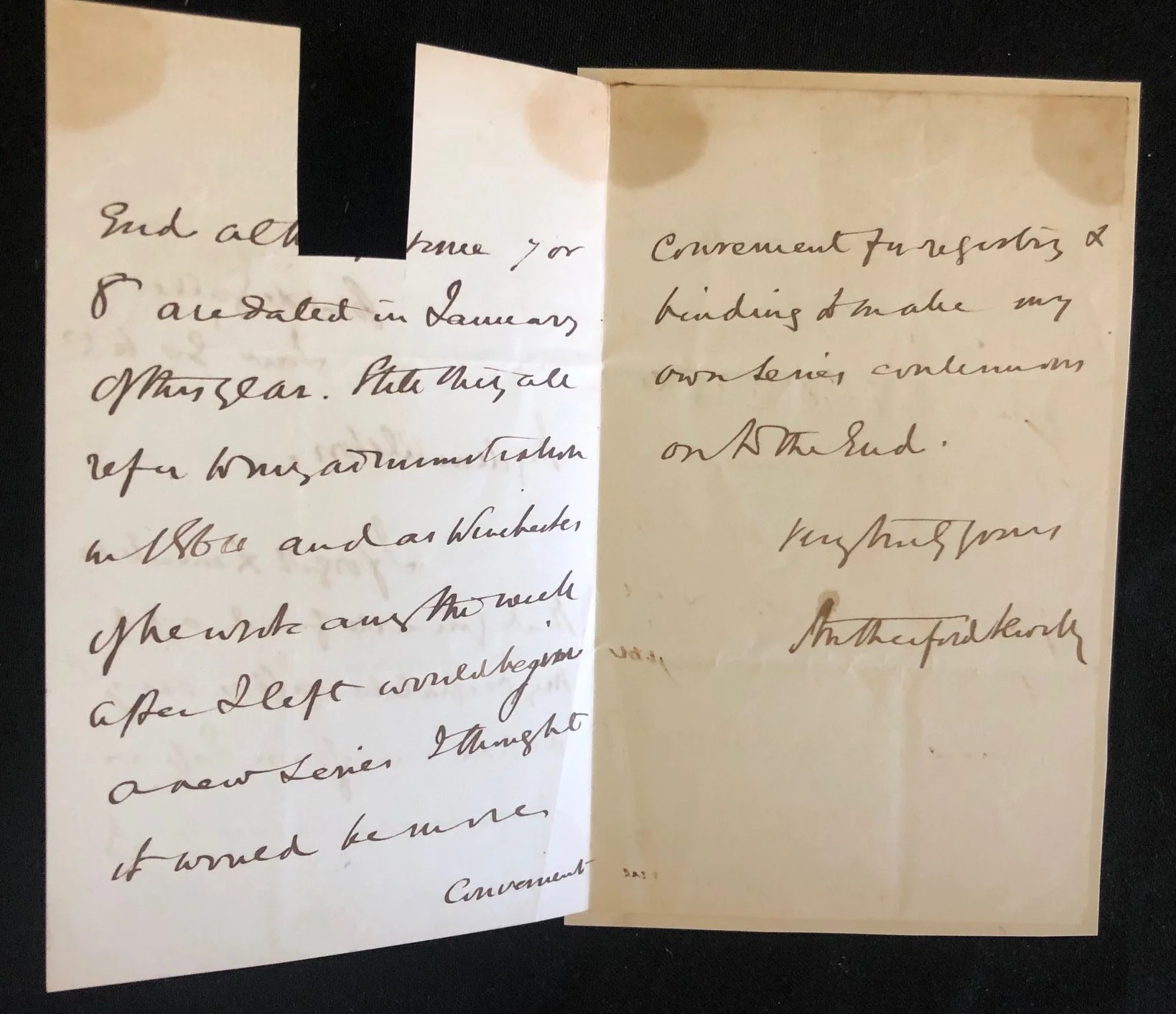
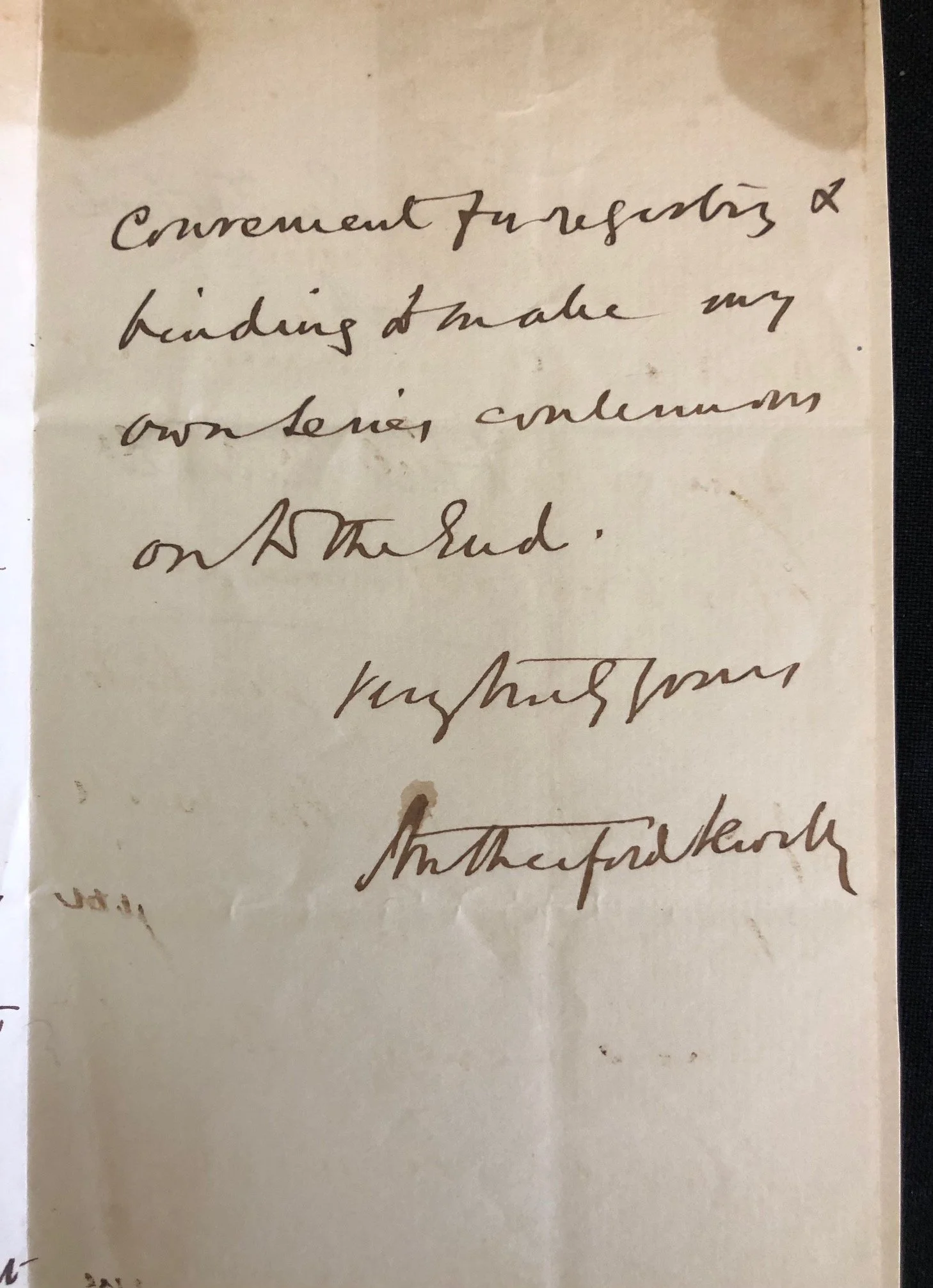
End although some 7 or 8 are dated in January of this year. Still they all refer to my administration in 1864 and as Winchester[’s] if he wrote any the week after I left would begin a new series I thought it would be more convenient for registering & binding to make my own series continuous on to the End.
Very truly yours,
Rutherford Alcock
The Historical Context: The Bakumatsu Crisis
To understand why Alcock was so fastidious about his dispatch numbers, one must look at the immense geopolitical crisis unfolding in Japan when he left.
The Shimonoseki Bombardment and Alcock's Recall
By 1864, Japan was in the violent throes of the Bakumatsu period (the final years of the Shogunate). Xenophobic samurai factions under the Sonnō Jōi ("Revere the Emperor, Expel the Barbarian") movement were attacking foreign vessels. In response, Alcock—without explicit authorization from London—organized a massive, 17-warship allied fleet to bomb the shore batteries of the Chōshū clan at the Straits of Shimonoseki.
While the military action was a decisive success that forced Japan to open the straits, the British Foreign Secretary, Lord Russell, was furious that Alcock had risked a major war on his own authority. Russell promptly ordered Alcock to return to London to explain his actions. Alcock boarded a ship and left Japan in late December 1864.
The Mid-Ocean Paperwork Dilemma
Because Alcock left in a hurry at the turn of the year, a classic bureaucratic problem arose. He was still writing official administrative reports regarding his actions in Japan while sitting aboard a steamship in the Indian Ocean in January 1865.
As he notes, he consciously chose to backdate or sequence his mid-voyage January 1865 reports into his 1864 ledger series. He did this so they wouldn't get tangled up with the official dispatches of Charles Winchester, the British Consul at Kanagawa who had just stepped in as the temporary Chargé d'Affaires in Japan the moment Alcock departed. Alcock knew the Foreign Office clerks in London (managed by Alston) would have an archival nightmare trying to bind and register the volume chronologically if two different men were generating "Series 1, No. 1" for 1865 simultaneously.
The Stopover at Point de Galle
The location heading—Point de Galle—is historically perfect. In 1865, this fortified harbor on the southern tip of Ceylon was the indispensable coaling station and mail hub for the Peninsular and Oriental (P&O) steamships traveling between Europe and the Far East. It was also the terminus of the undersea telegraph cable network in Asia. It was the exact spot where travelers coming from China and Japan paused, stretching their legs while their mail packets were transferred to home-bound ships.
Ultimately, when Alcock arrived in London, his "unauthorized" gunboat diplomacy was recognized as having actually stabilized western relations with Japan. Instead of being punished, he was vindicated and promoted to become the British Minister to Beijing later that same year.
105mm x 160mm
Laid down; some glue staining; the embossed letterhead has been removed.
R2,000