Letter From High Court Judge, Sir Arthur Moseley Channell 1914. (WW l July Crisis)
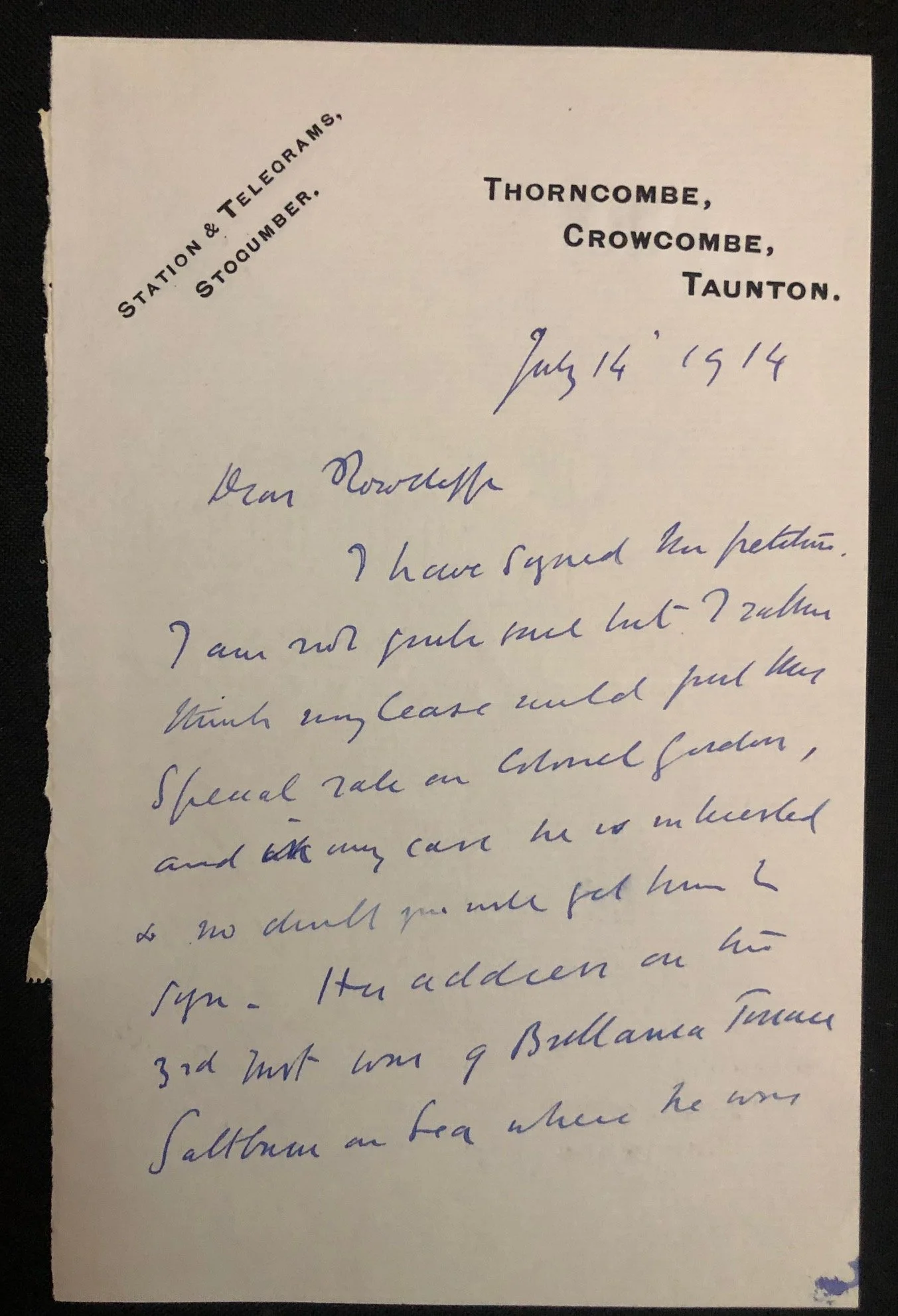
This two-page letter, captures a fascinating moment of quiet provincial life caught on the absolute precipice of global catastrophe.
The Writer: A Distinguished High Court Judge
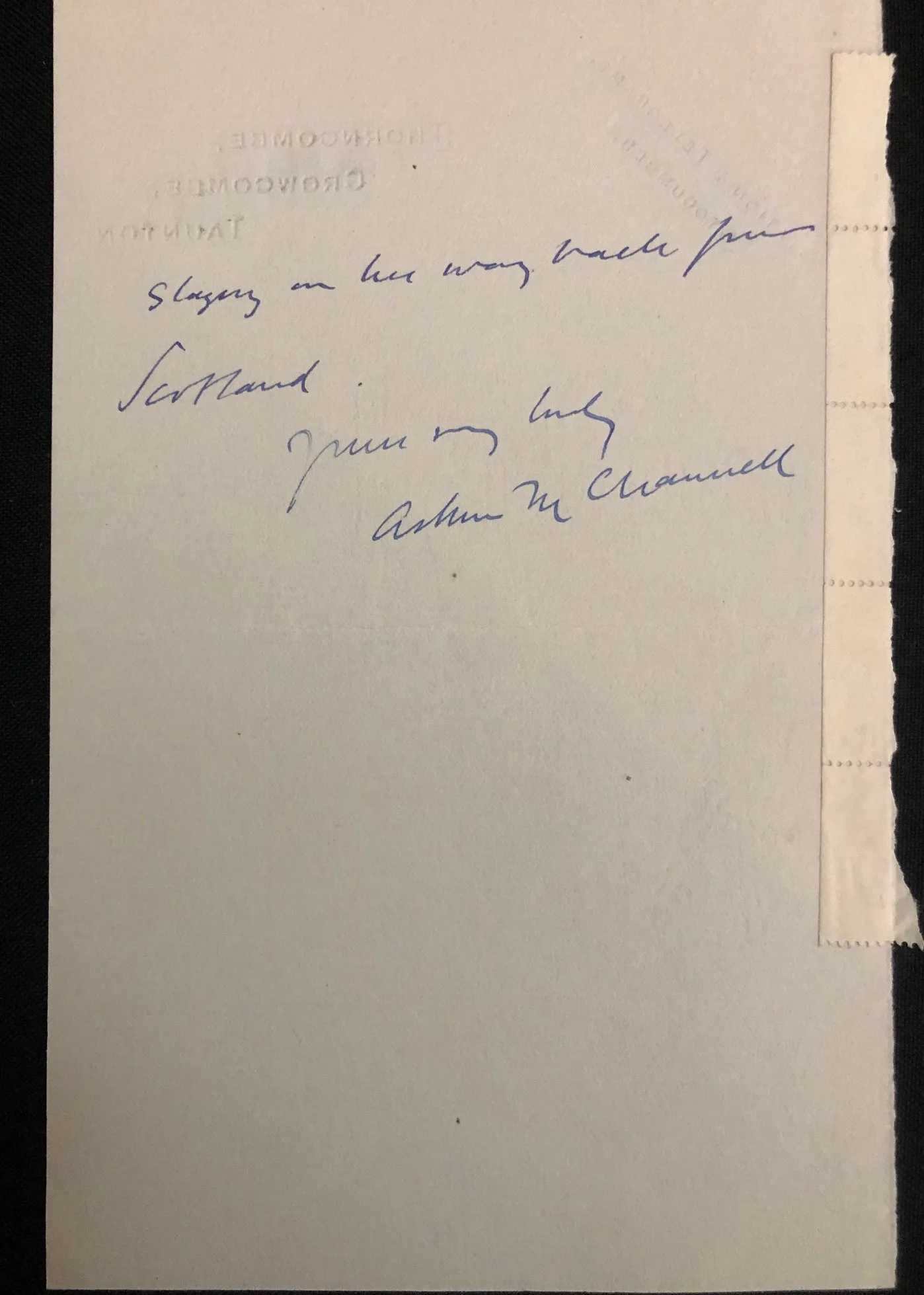
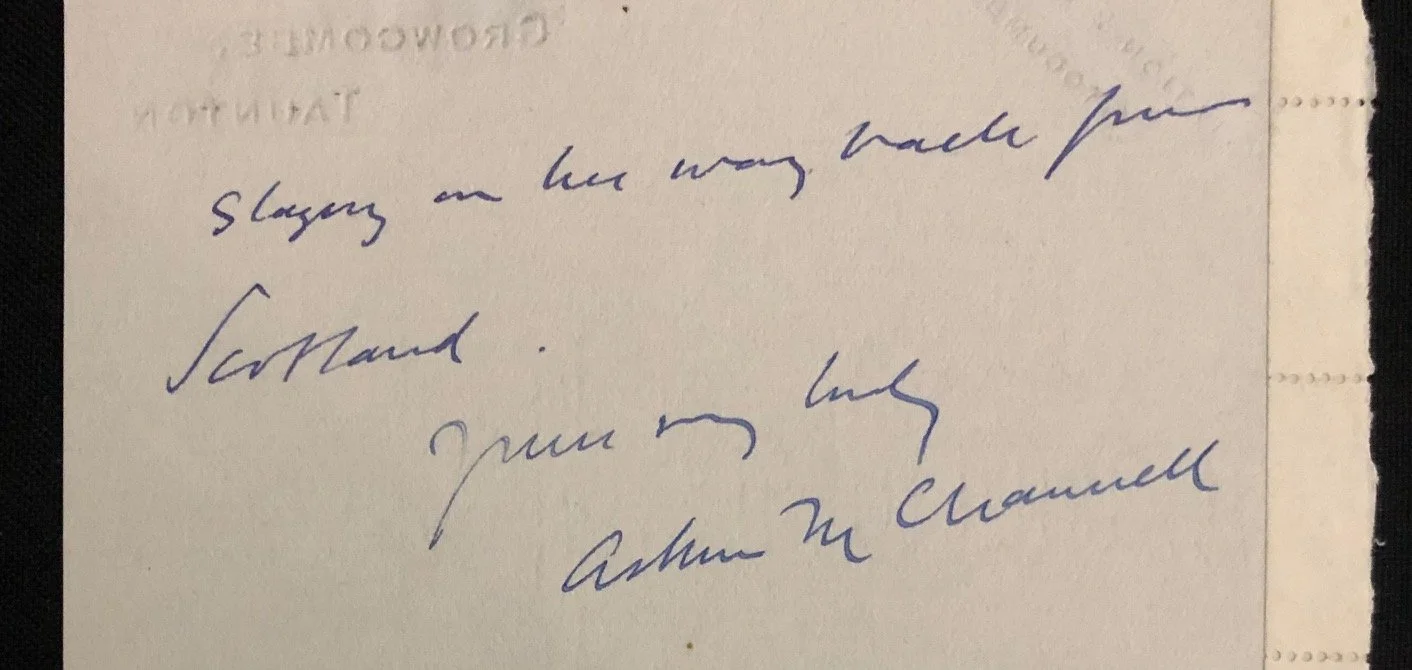
The letter is signed by Sir Arthur Moseley Channell (1838–1928). Channell was a highly respected English judge of the High Court of Justice (King’s Bench Division) from 1897 until his retirement in April 1914—just three months before he penned this note. Outside the courtroom, Channell was famous in Victorian and Edwardian society as a champion sportsman; he was a brilliant competitive oarsman at Cambridge (winning the Colquhoun Sculls) and a highly regarded yachtsman.
The Date: The Ultimate "Calm Before the Storm"
The date is July 14, 1914. This places the letter precisely during the infamous July Crisis.
Archduke Franz Ferdinand had been assassinated in Sarajevo just over two weeks prior (June 28), and behind the scenes, Europe’s empires were rapidly mobilizing for war. Yet, this letter perfectly illustrates how oblivious the British public and its ruling elite were to the impending disaster. Instead of geopolitical tension, a newly retired High Court Judge is spending his Tuesday coordinating a local property petition regarding a "special rate" and tracking down a "Colonel Gordon" who is vacationing at a seaside resort in Yorkshire ("9 Britannia Terrace, Saltburn-on-Sea") on his way back from Scotland. Exactly three weeks after this letter was written, Great Britain would declare war on Germany, shattering this Edwardian world forever.
The Anatomy of an Edwardian Country House
The letterhead offers a wonderful glimpse into the logistics of early 20th-century rural estate management:
"Station & Telegrams, Stogumber. / Thorncombe, Crowcombe, Taunton."
Thorncombe was Channell's country estate in Somerset. Because the telephone was not yet universally utilized for formal correspondence in rural areas, letterheads explicitly instructed the recipient on how to reach the sender via the Victorian infrastructure network: by sending a telegram to the nearest railway station (Stogumber on the Great Western Railway), where a station boy or courier would carry the message by hand to the house.
115mm x 175mm
Single page, written on both sides; stamp borders pasted onto the edge.
R800