1899 Letters: A Snapshot of the Boer Advance on Newcastle (Peter Digby provenance).
A remarkable collection of primary source documents. Together, these letters weave an intimate family narrative spanning more than eighty years, backdropped by major chapters in South African history, specifically the volatile opening weeks of the Anglo-Boer War (Second Anglo-Boer War) in Northern Natal and the twilight of the British colonial presence in Southern Rhodesia.
The 1899 Letter: A Snapshot of the Boer Advance on Newcastle
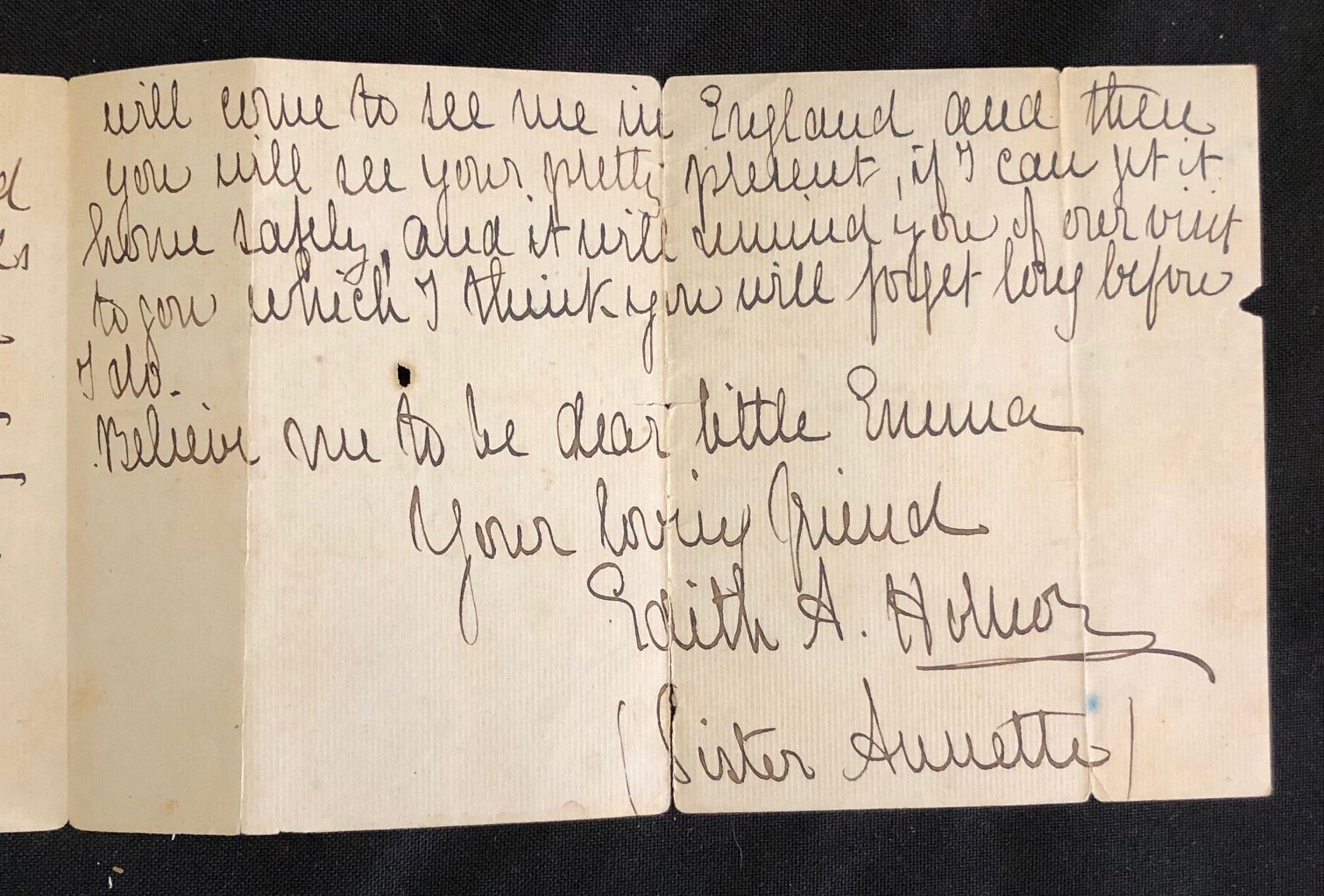
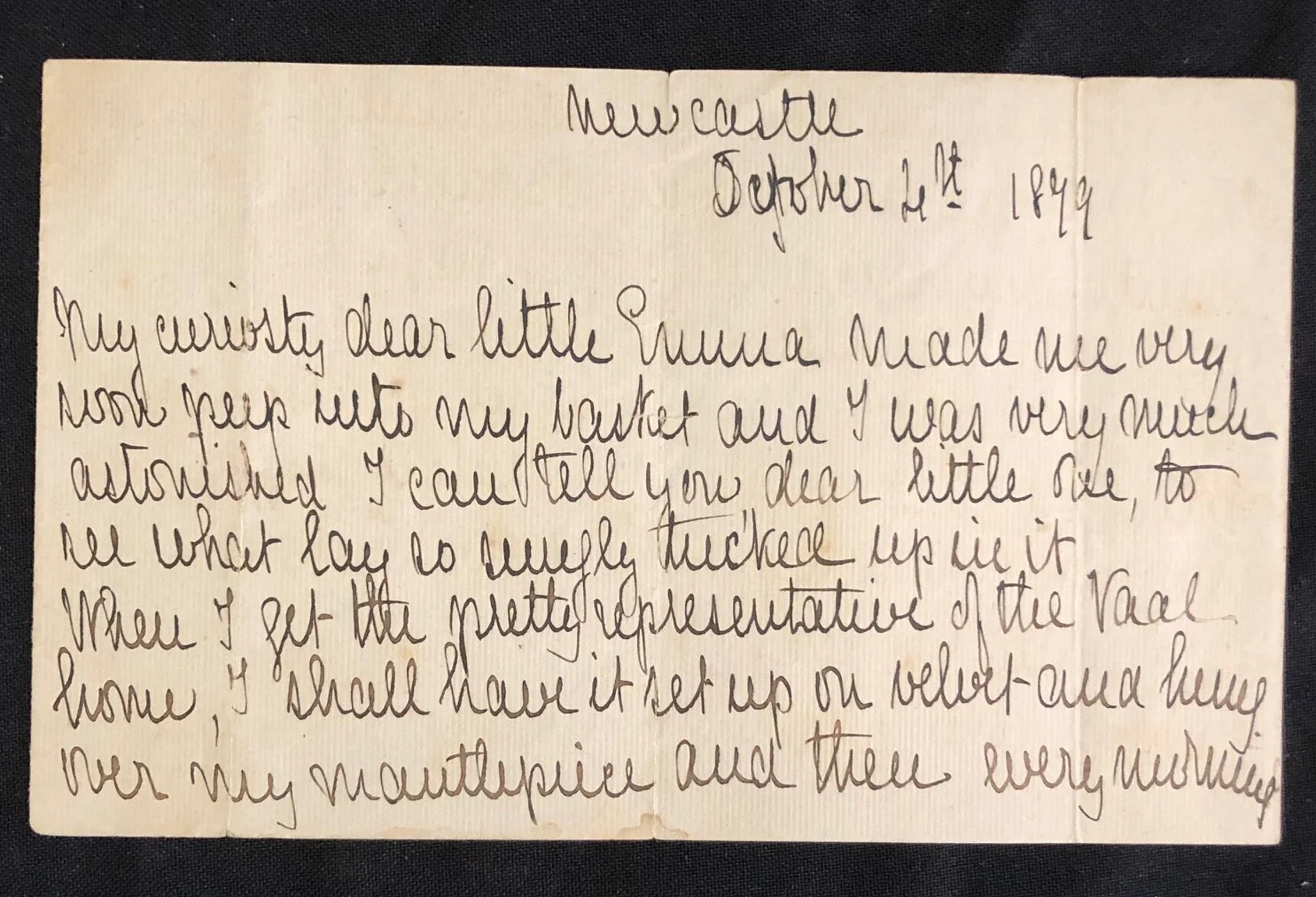
The centrepiece of the collection is the handwritten letter dated October 24th, 1899, written from Newcastle, just two weeks after the outbreak of the Anglo-Boer War (which began on October 11, 1899).
The Geopolitical Context: Caught in No-Man's-Land
In October 1899, the Boers launched a massive offensive into the British Colony of Natal. Recognizing that Newcastle was exposed and indefensible, the British military evacuated the town on October 11th. General Joubert’s Boer forces entered Newcastle unopposed on October 15th, renaming it Viljoensdorp (though locals and the writer clearly retained its original name).
The writer, signing off as Edith A. Morrow (Sister Annette), is writing during this occupation. The note adds a layer of confusion, claiming the letter was written during the Zulu War (1879). However, the date written by Edith’s own hand—1899—unmistakably places it at the start of the Anglo-Boer War.
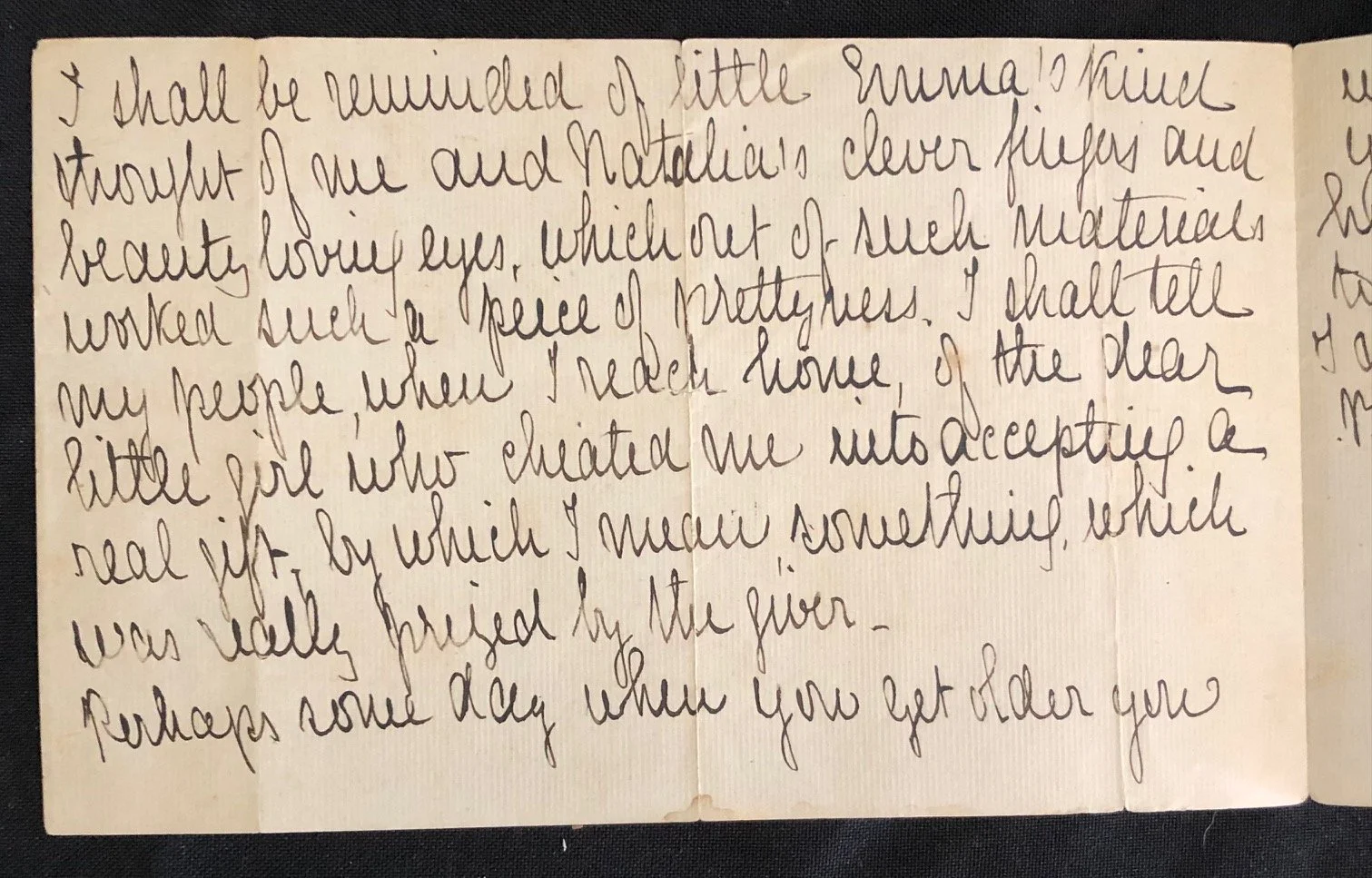
"The Pretty Representative of the Vaal"
Sister Annette mentions discovering a hidden gift in her basket: a "pretty representative of the Vaal." Given that the Vaal River was the geographic border between the Orange Free State and the South African Republic (Transvaal), this could refer to a few things:
A specific geological curiosity, such as a beautifully polished Vaal River diamond or a distinctive semi-precious stone/agate common to the riverbed.
A piece of cultural ephemera or a specimen unique to the region.
Her desire to "have it set up on velvet and hung over my mantelpiece" when she returns home to England points to a treasured, physical keepsake of her time on the South African frontier.
The Schwikkard Family and Natal Settlement
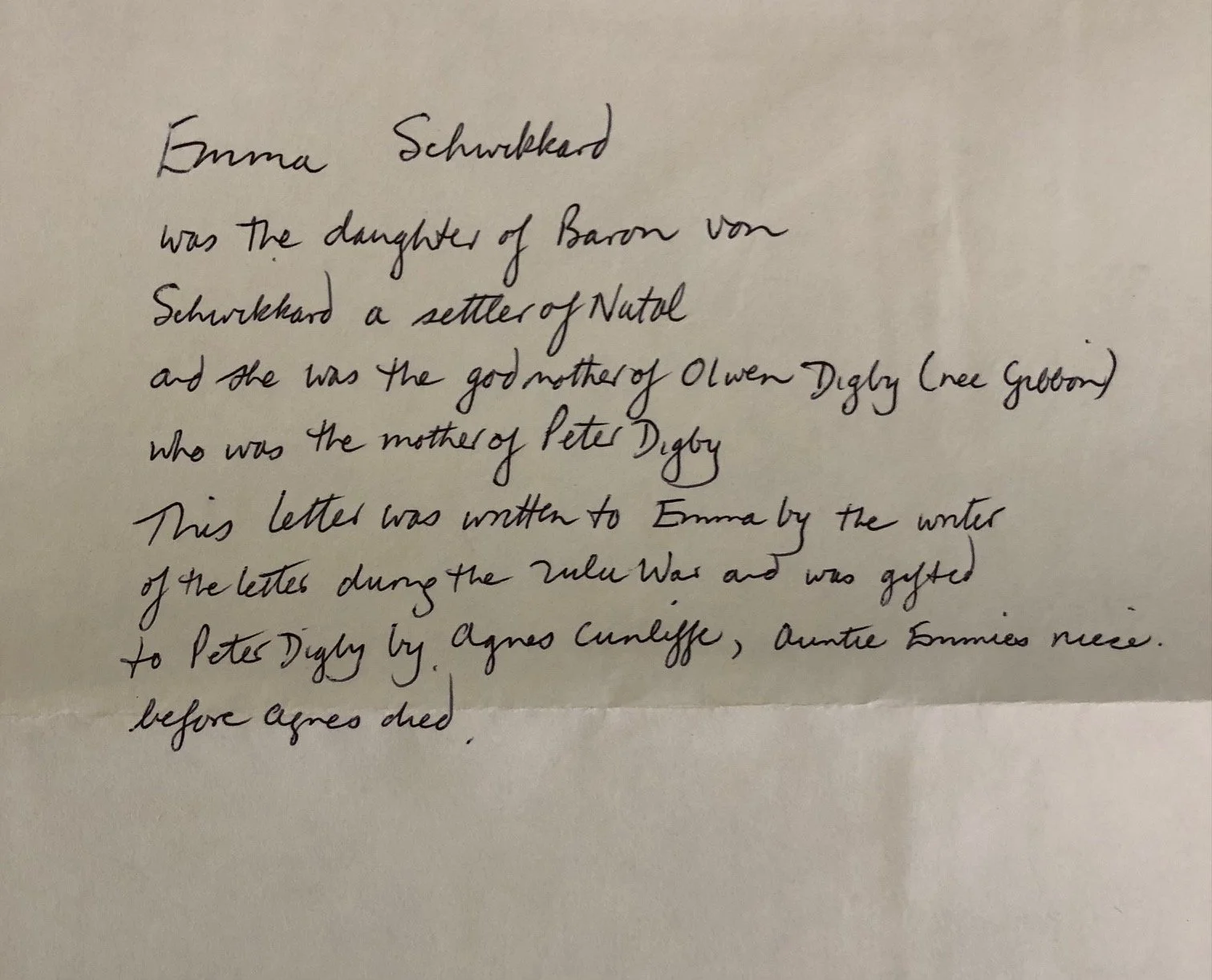
The explanatory note connects the letter's recipient, "little Emma," to one of Northern Natal's prominent colonial families:
"Emma Schwikkard was the daughter of Baron von Schwikkard a settler of Natal..."
The Schwikkards of Newcastle and Ingogo
The Schwikkards were prominent landowners and farmers in the Newcastle/Ingogo district of northern Natal. Historical records show the family operated heavily in transport riding and farming; notably, Otto S. Schwikkard owned Borobello estate near the Ingogo Station just north of Newcastle. During the Anglo-Boer War, the family found themselves in an incredibly precarious position as Natal-based settlers of German/Dutch extraction living under sudden Boer occupation. Otto Schwikkard famously served as a colonial scout for the British, highlighting the complex divided loyalties of the region.
The 1961 Letter: The Family, Decades Later
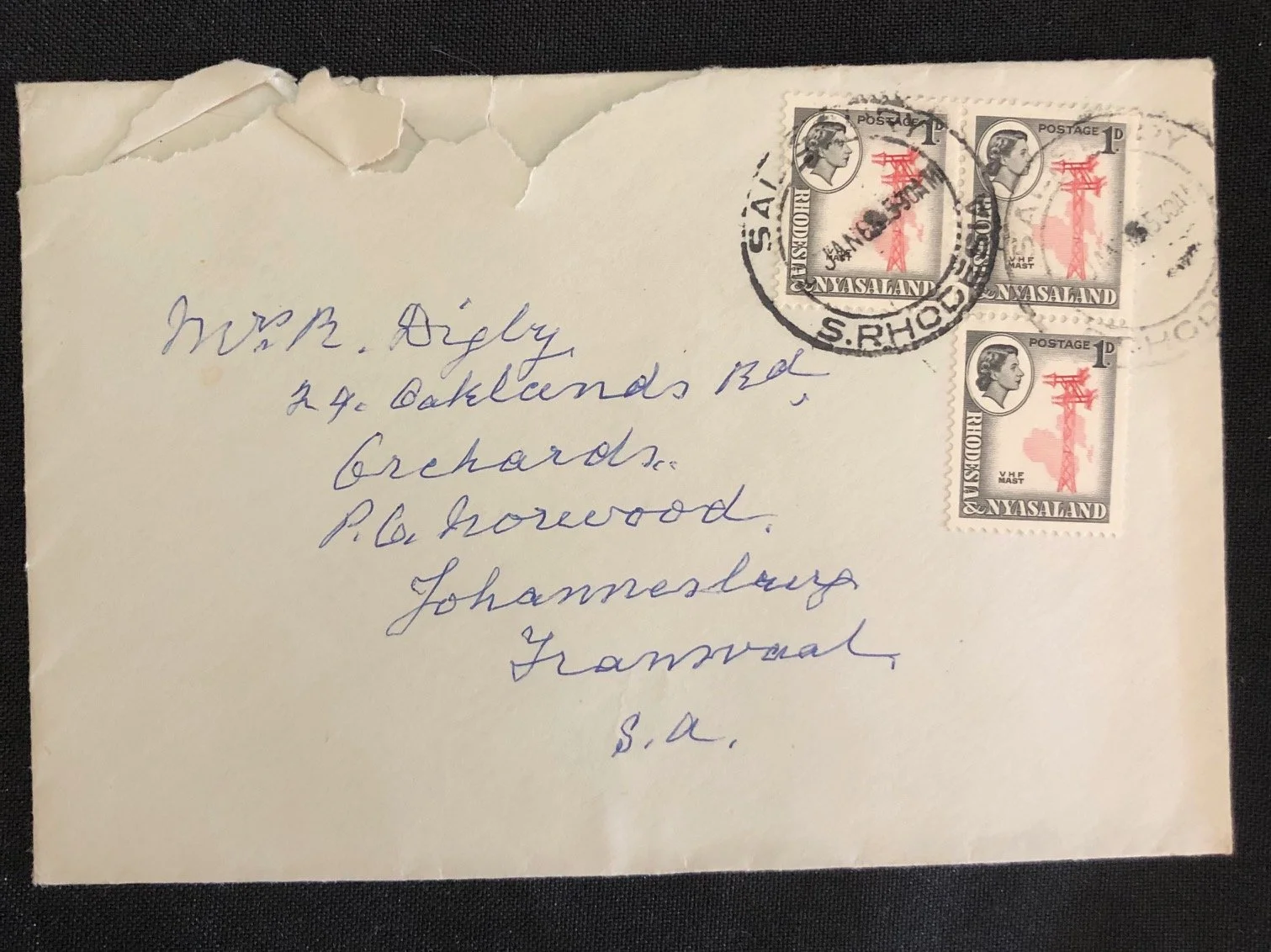
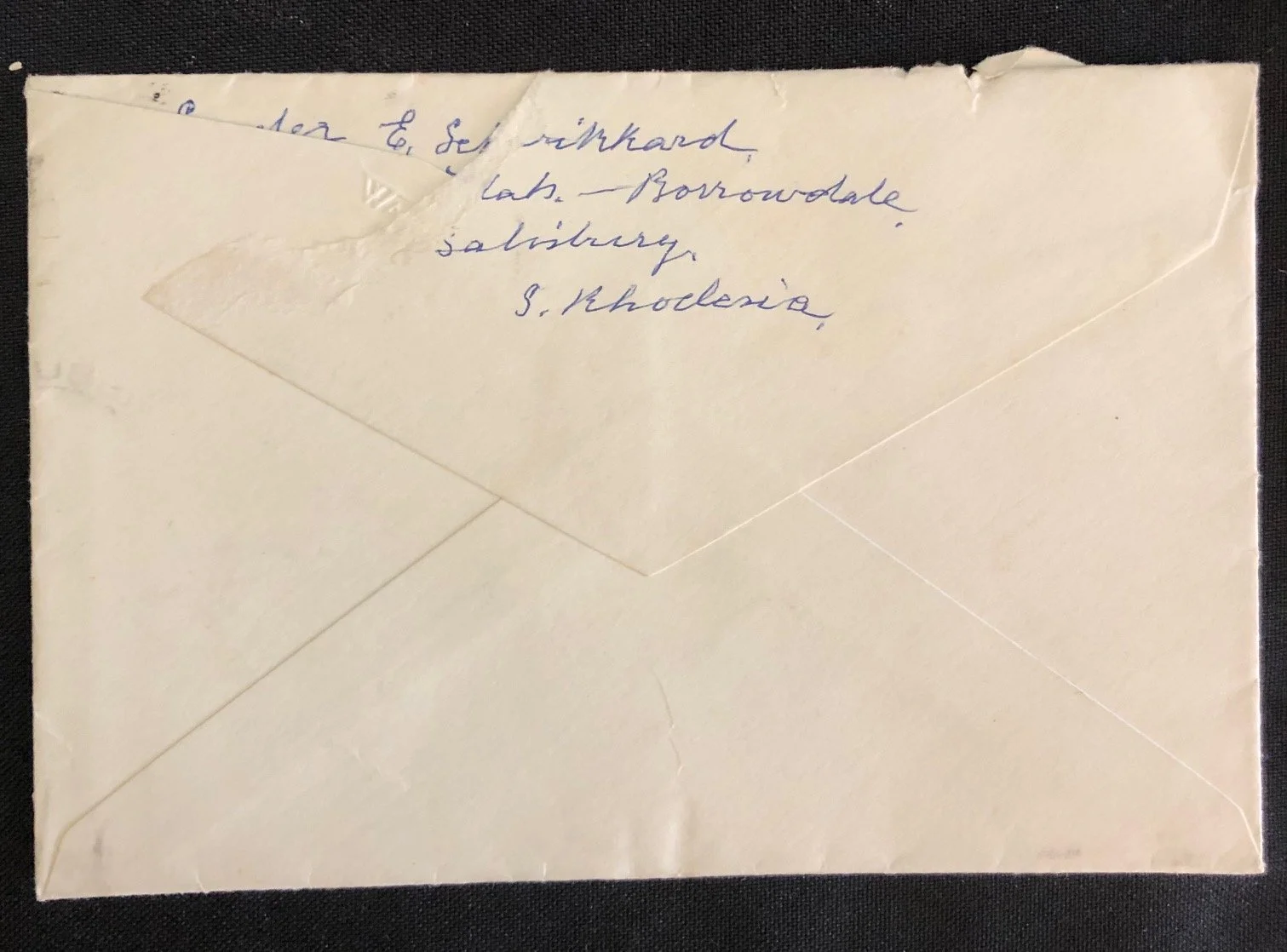
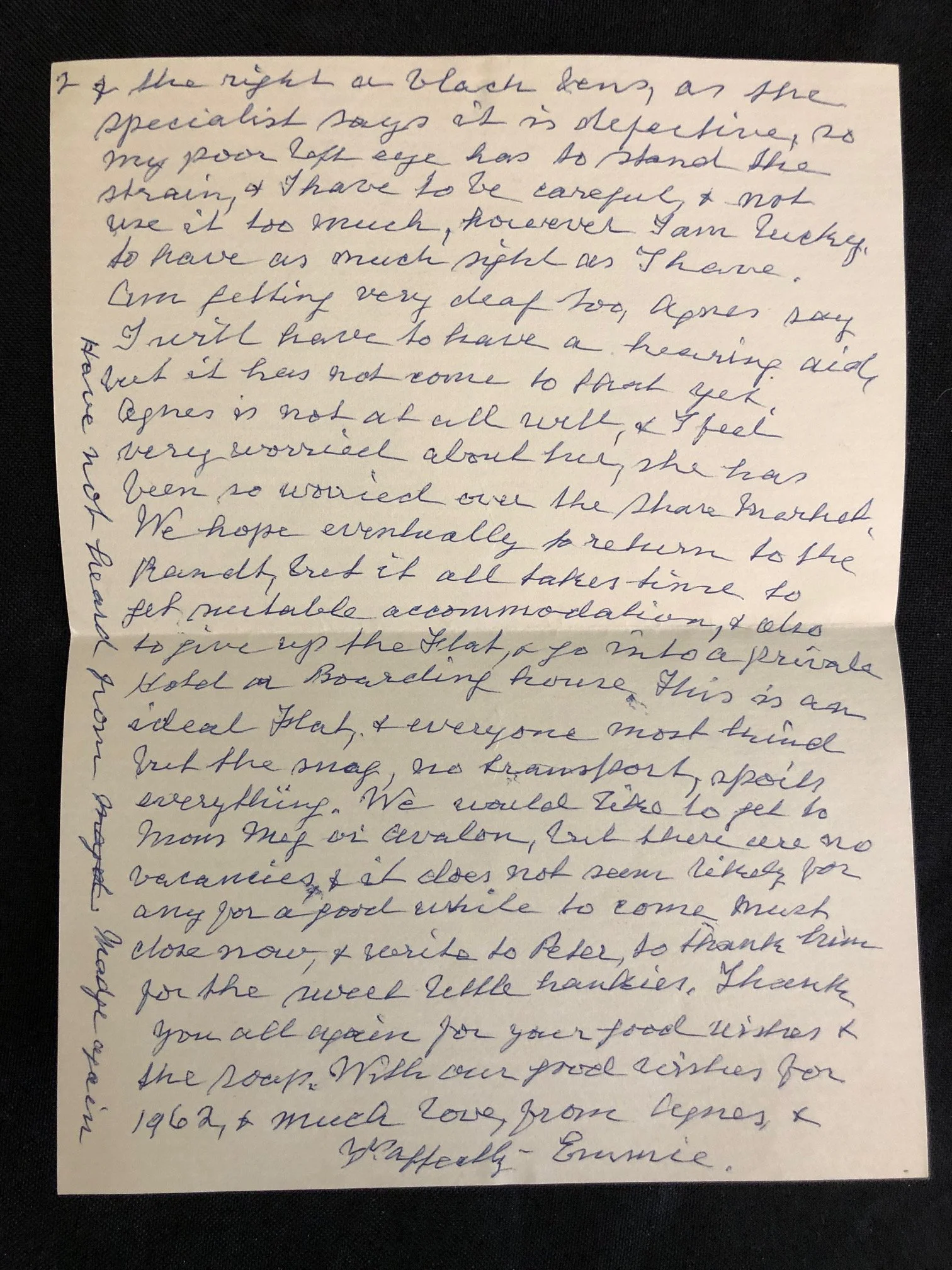
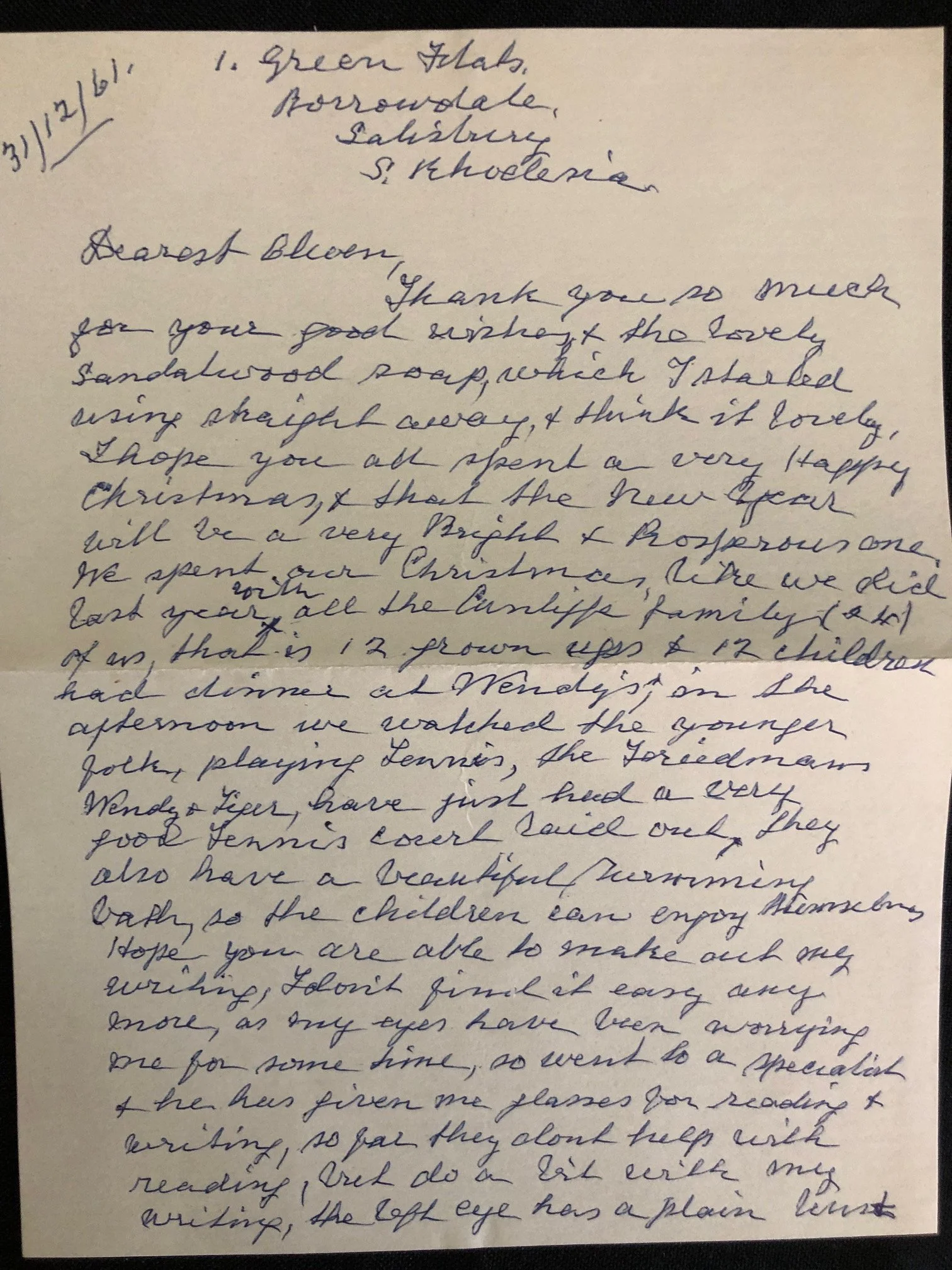
The final two letters jump forward over sixty years to December 31, 1961, written from Borrowdale, Salisbury, Southern Rhodesia (now Harare, Zimbabwe).
Passing the Torch: The Digby & Cunliffe Connection
The letter is signed off by "Emmie"—who is almost certainly the grown-up "little Emma Schwikkard" from the 1899 letter, now an elderly woman in her twilight years.
The accompanying note ties these generations together: Emma became the godmother of Olwen Digby (née Gibbon), who was the mother of Peter Digby. The letter was preserved and eventually gifted to Peter Digby by Agnes Cunliffe (Auntie Emmie's niece) before her death.
Daily Life in 1961 Rhodesia
The 1961 letter is deeply personal and poignant, reflecting the vulnerabilities of old age against a backdrop of post-war colonial life:
The Christmas Gathering: She details a large family gathering of the Cunliffes—"12 grown ups & 12 children"—having dinner at "Wendy's" and watching the youth play tennis on a "very good tennis court" and enjoy a swimming bath.
Health and Aging: Emmie laments her failing eyesight ("the left eye has a plain lens & the right a black lens, as the specialist says it is defective") and her encroaching deafness.
Anxiety over the Markets: She notes that her niece Agnes is unwell and "has been so worried over the Share Market," a reflection of the economic anxieties in the Federation of Rhodesia and Nyasaland during the decolonization era of the early 1960s.
A Desire to Return to the Rand: Emmie mentions their hope to "eventually return to the Rand [Johannesburg]," but notes the difficulty of finding suitable accommodation or moving into a private hotel or boarding house like "Morningside or Avalon."
Summary of Historical Significance
For an archivist, historian, or collector, this correspondence is a wonderful microcosm of white settlement patterns in Southern Africa:
Military History: It captures the lived experience of non-combatants in Newcastle immediately following the town's capture by Boer forces in October 1899.
Social History: It charts the migration patterns of colonial families moving from the farms of northern Natal up to the gold-rich Witwatersrand ("the Rand"), and further north into the suburbs of Salisbury, Rhodesia, before tracing the lineage back down via family gifts.
It is a beautiful, self-contained provenance trail that turns an anonymous 19th-century letter into a rich, multigenerational family saga.
A collection of letters, various sizes.
R1,500