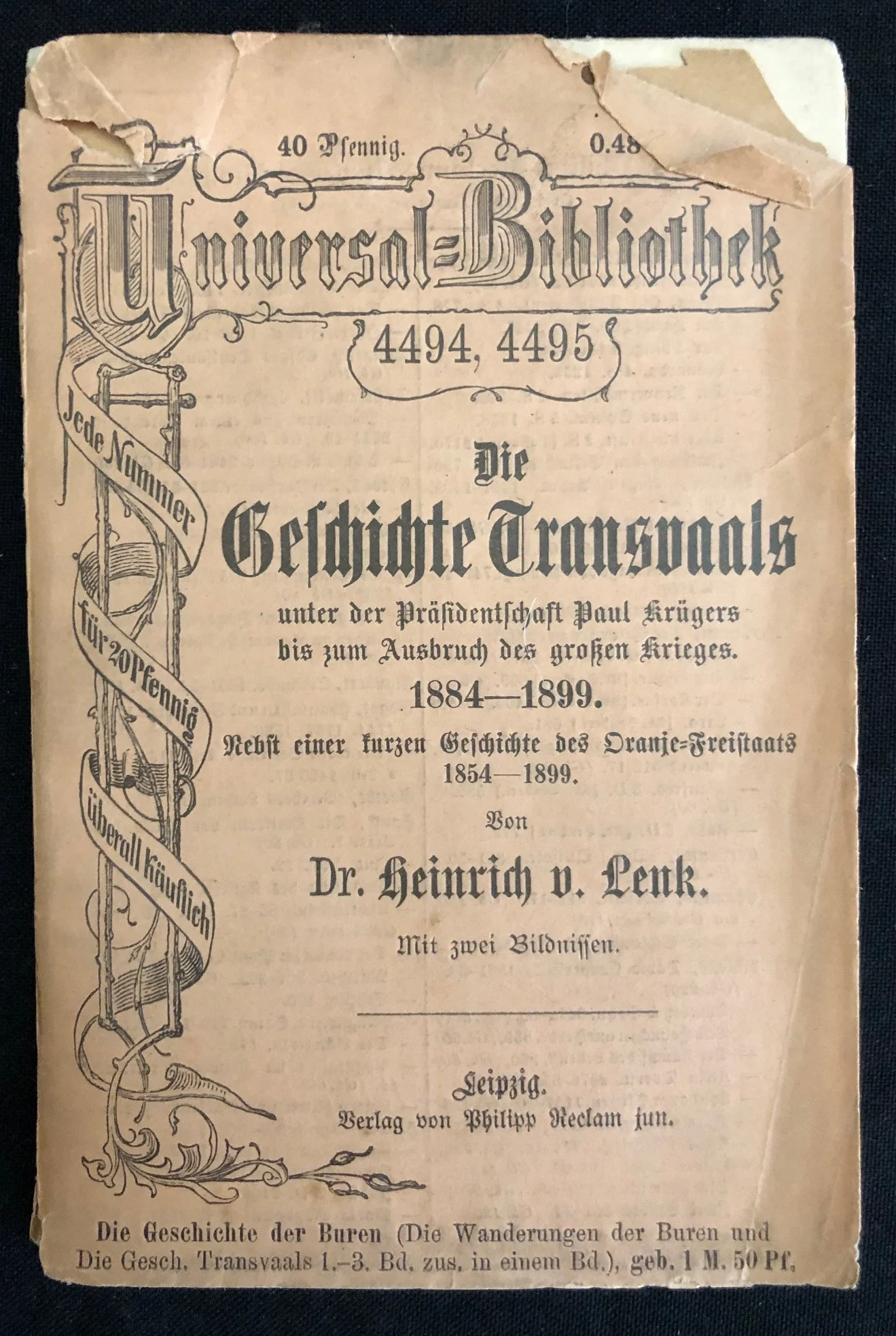
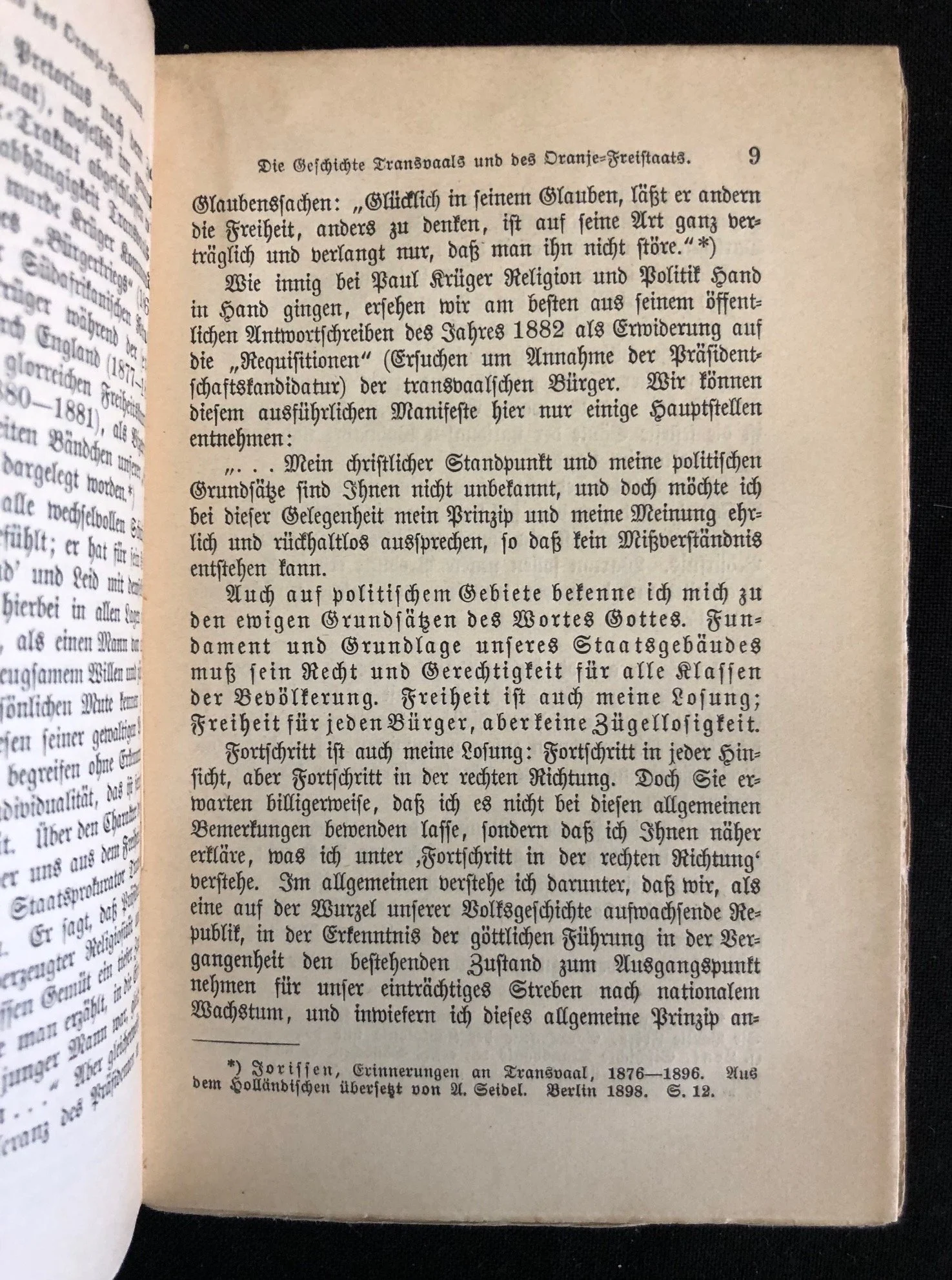
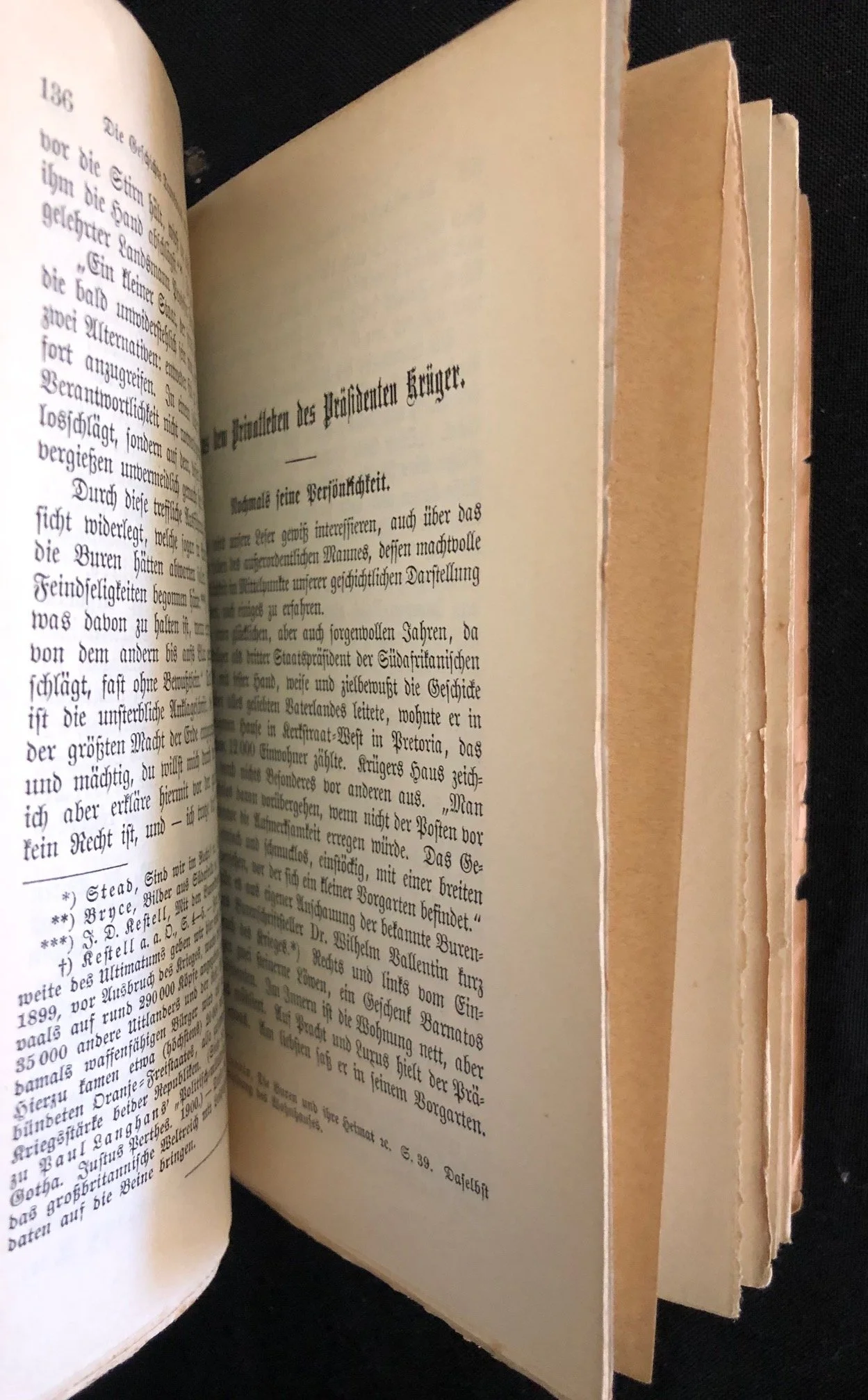
Die Geschichte Transvaals ("The History of the Transvaal") by
Dr. Heinrich von Lenk (c.1902)
This book holds a fascinating place in early 20th-century history, reflecting a period of intense global geopolitical tension, media warfare, and a revolution in publishing.
Public Sentiment and the Second Boer War
The book, Die Geschichte Transvaals ("The History of the Transvaal"), was published around 1901–1902 by the German author Dr. Heinrich von Lenk. This was the exact height of the Second Boer War (1899–1902) fought between the British Empire and the two independent Boer republics (the South African Republic/Transvaal and the Orange Free State).
At the time, the German public and media were overwhelmingly pro-Boer and fiercely anti-British. The British empire was widely viewed in Germany as a greedy aggressor seeking to crush a small farmer nation to seize the world's largest gold fields (discovered in the Witwatersrand in 1886). Books like this were rapidly produced to satisfy a massive public appetite for information about the conflict.
Paul "Oom Paul" Kruger as a Folk Hero
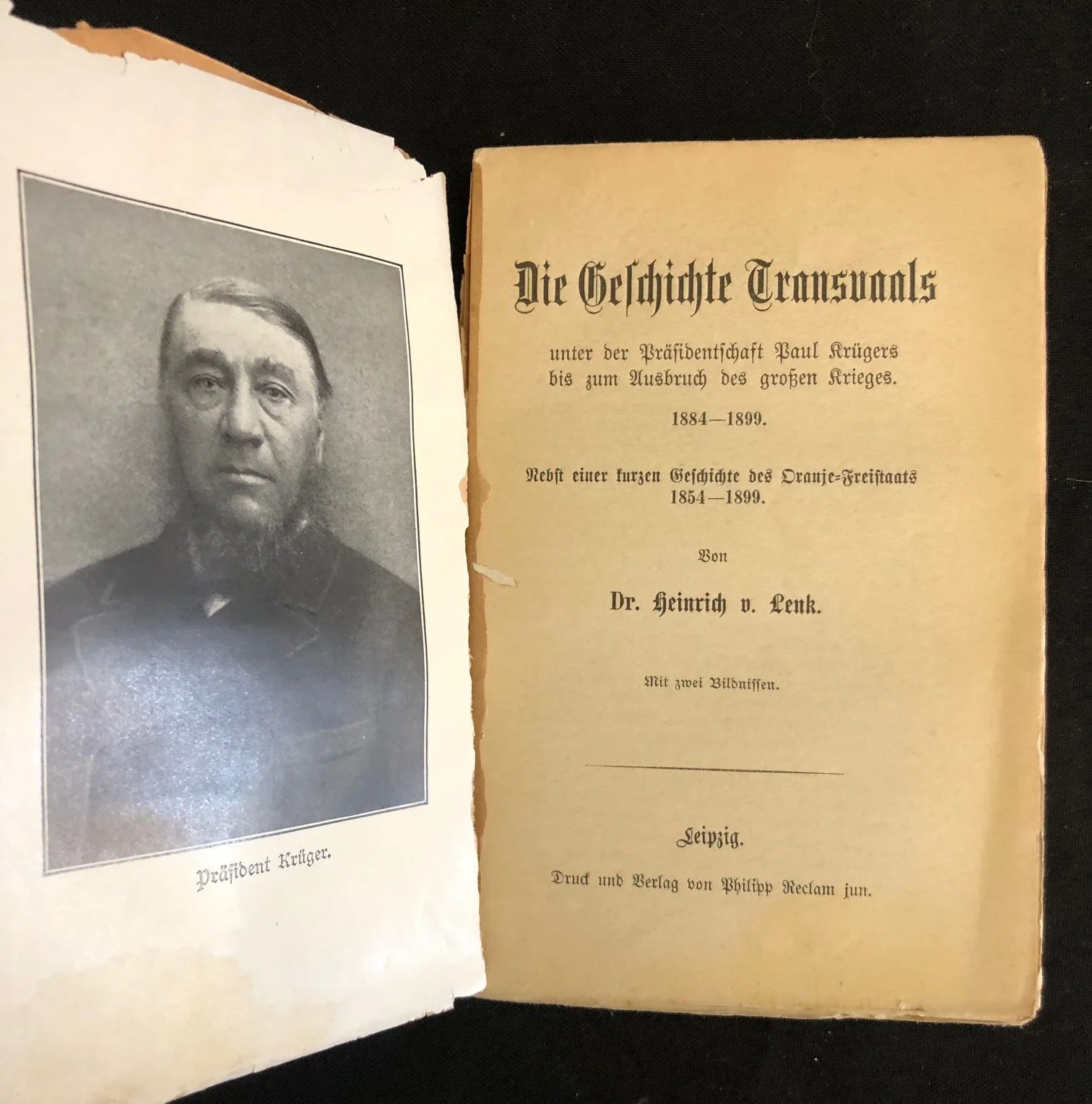
The portrait, frontispiece depicts Paul Kruger, the President of the South African Republic from 1883 to 1900. In Germany and across continental Europe, Kruger attained the status of a legendary folk hero. When he traveled to Europe in late 1900 to seek foreign intervention and support against the British, he was greeted by ecstatic, cheering crowds in France and Germany (though Kaiser Wilhelm II ultimately refused to meet with him to avoid a diplomatic crisis with Great Britain).
The Reclam Revolution
The publisher, Philipp Reclam jun. of Leipzig, is legendary in the history of printing. Reclam created the Universal-Bibliothek (Universal Library) in 1867, which pioneered the concept of the modern, ultra-affordable pocket paperback.
By utilizing cheap paper and a standardized small format, Reclam made literature and contemporary political history accessible to the working and middle classes for just a few pennies. This specific book was designed to be a cheap, portable informational tract that ordinary citizens could buy at train stations or local kiosks to keep up with international current events. Thus, unusual to survive.
950mm x 420mm
Fragile; paper wrappers chipped and creased.
R1,000