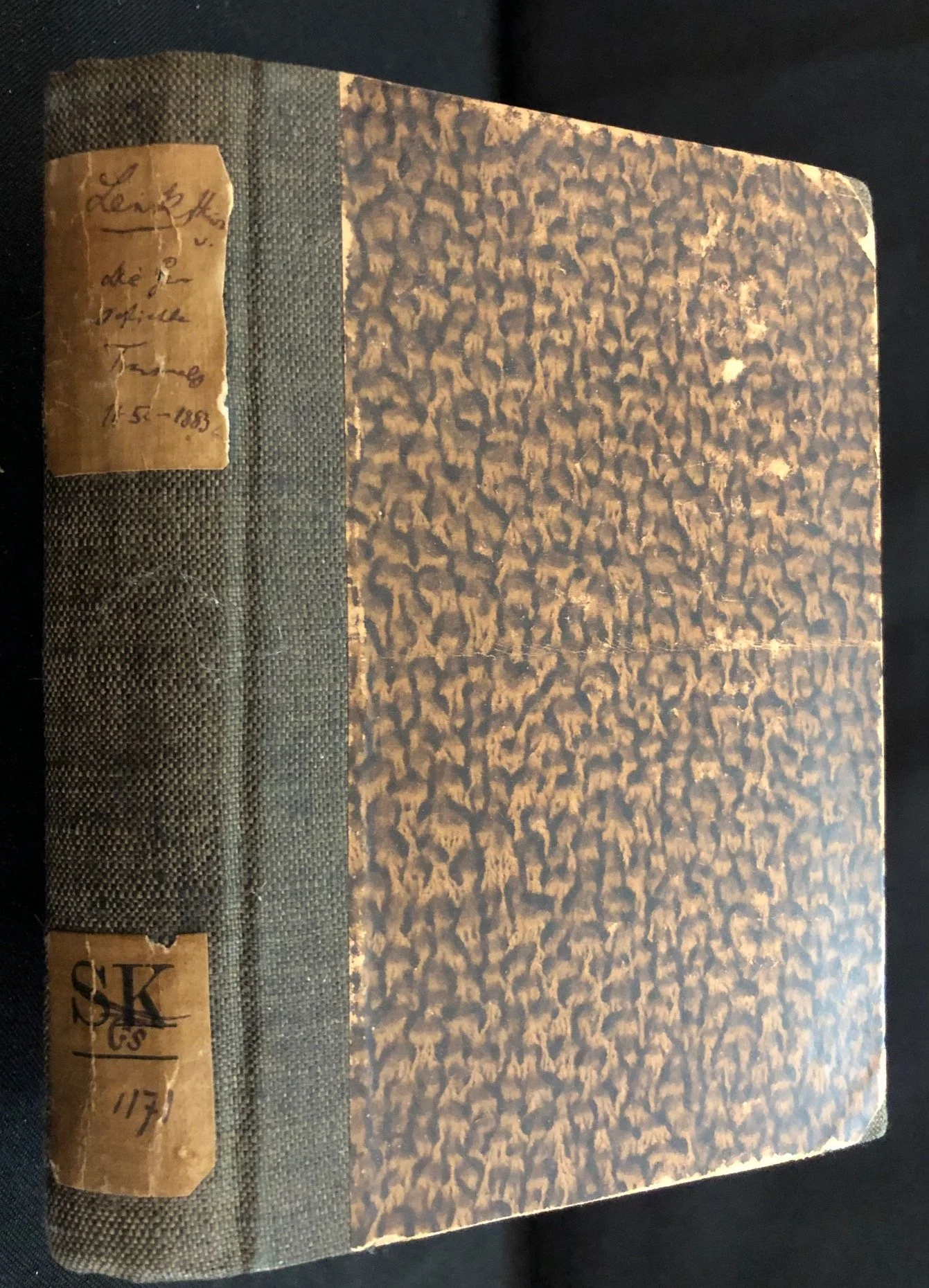
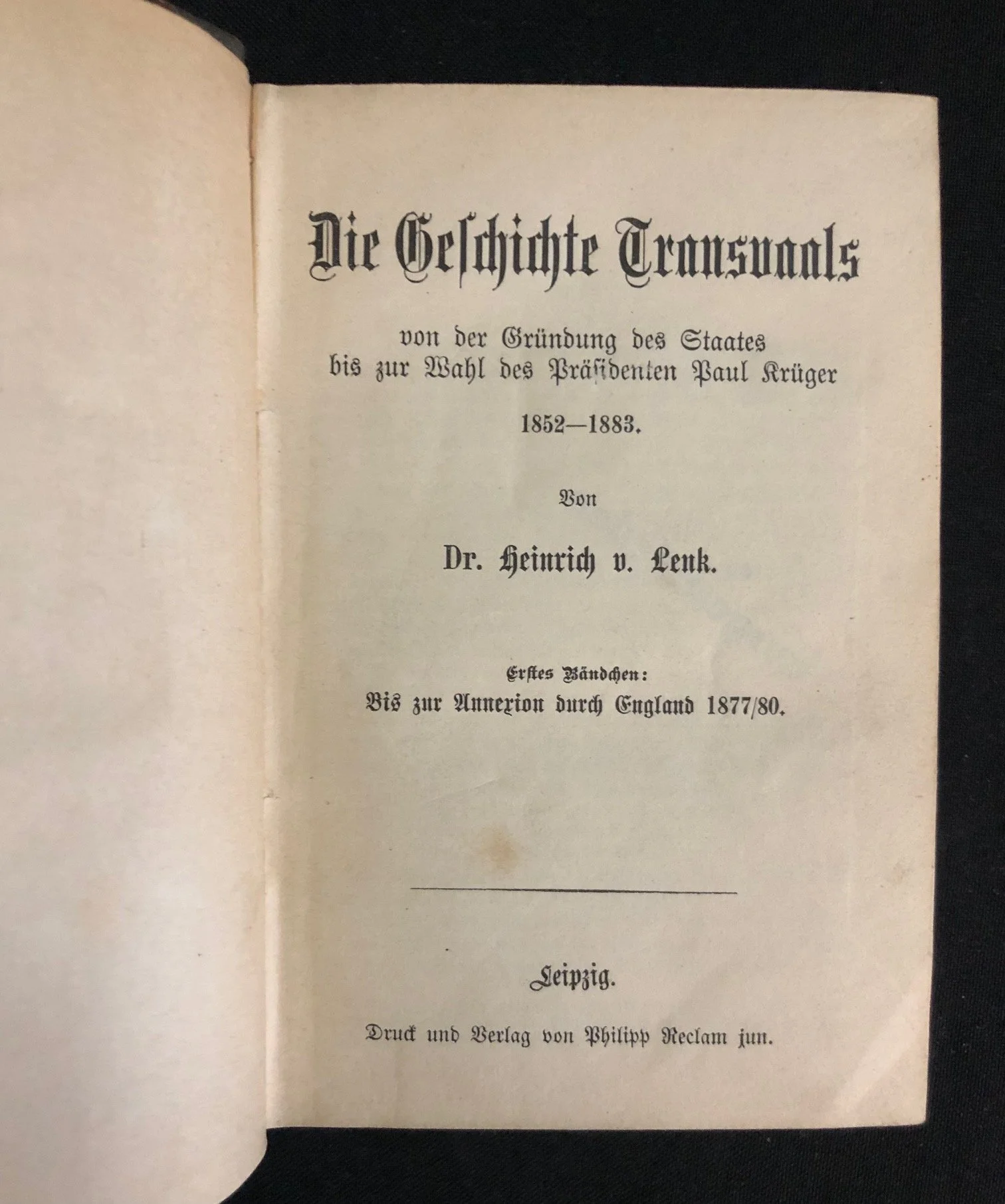
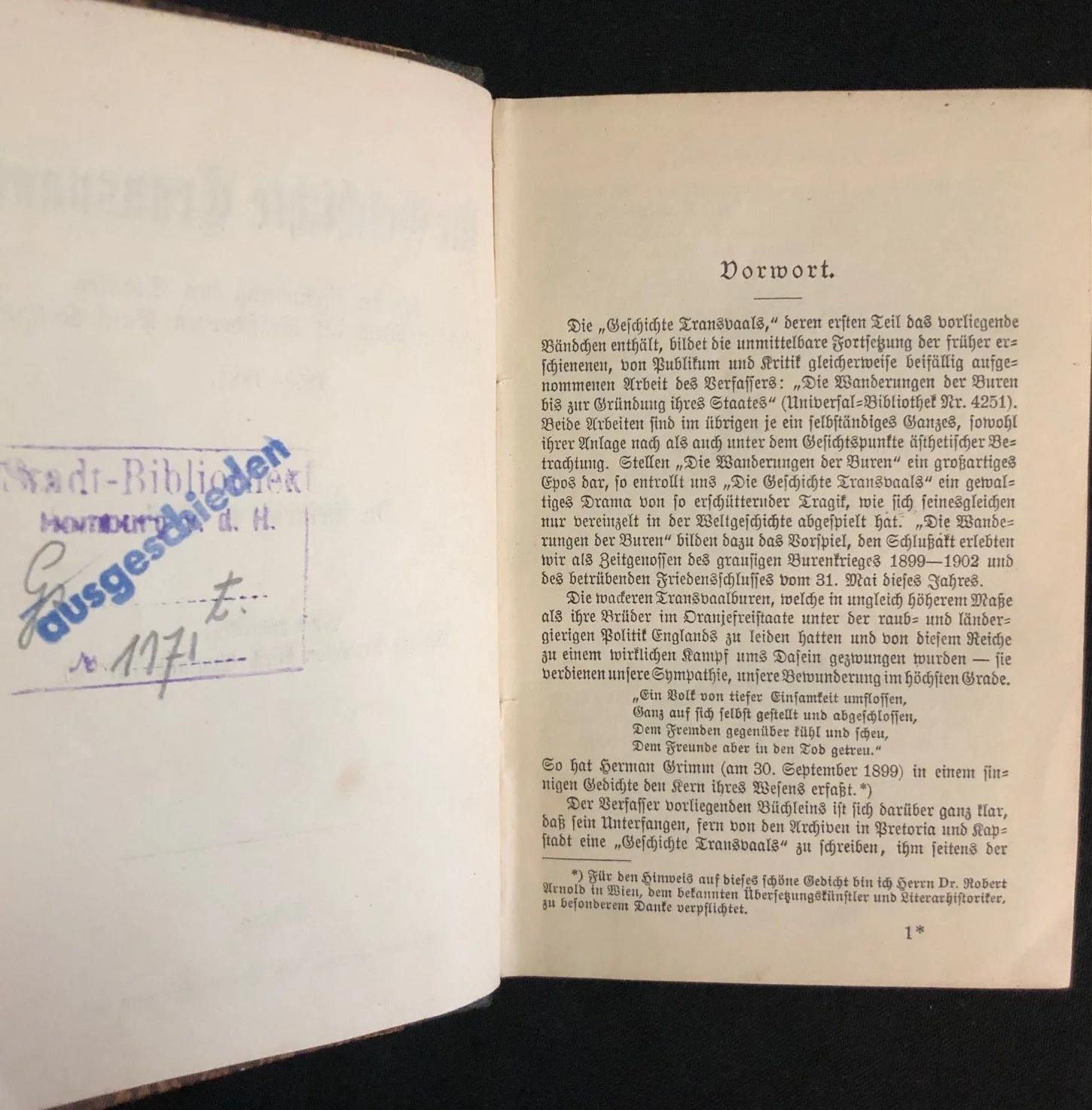
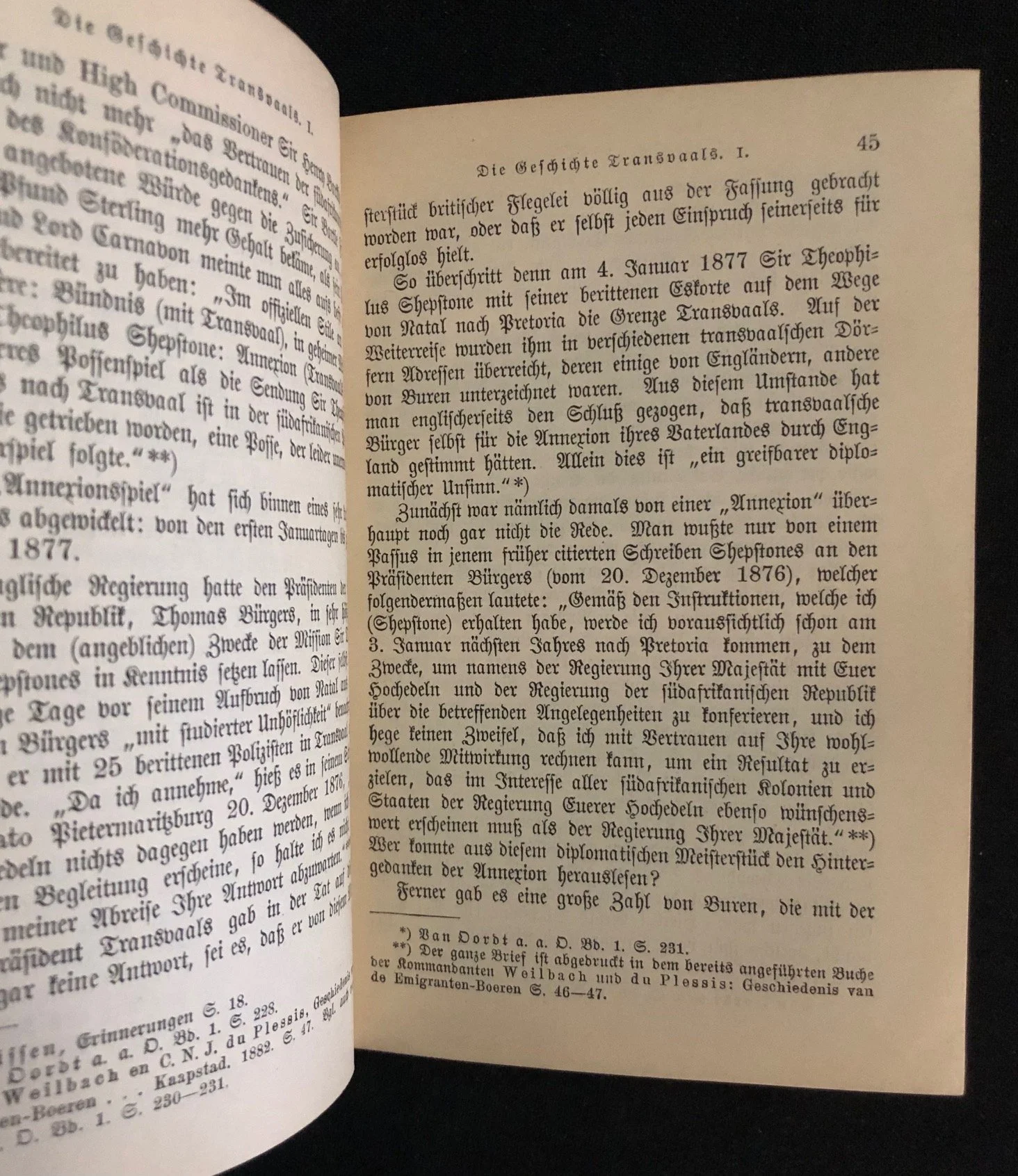
Die Geschichte Transvaals (The History of the Transvaal) by Dr. Heinrich von Lenk. c.1885
Published in Leipzig by the firm Philipp Reclam jun.
The Pro-Boer German Sentiment and the Kaiser’s Shadow
While this volume covers the history of the South African Republic (ZAR) from 1852 up to Paul Kruger’s presidency and the First Boer War, its publication in Germany is the real story. In the late 1890s and early 1900s, public opinion in Germany was fiercely and passionately pro-Boer and deeply anti-British.
This sentiment was famously supercharged by Kaiser Wilhelm II’s "Kruger Telegram" in 1896, where the German Emperor congratulated Paul Kruger on repelling the Jameson Raid without needing to look to friendly European powers for help. This little book was part of a massive wave of popular German literature rushed out to satisfy a public fascinated by the independent-minded, largely Dutch-and-German-descended farmers taking on the might of the British Empire.
Published by the Pioneers of Mass-Market Paperbacks
The publisher noted at the bottom, Philipp Reclam jun. of Leipzig, is one of the most famous names in printing history. In 1867, Reclam launched the Universal-Bibliothek (Universal Library), which fundamentally revolutionized world publishing by creating the first ultra-cheap, mass-produced, pocket-sized paperbacks.
This specific book—noted as the Erstes Bändchen (First Volume) covering the era up to the 1877 British annexation—was deliberately printed in this compact, inexpensive format. It wasn't meant to sit on a wealthy academic's shelf; it was designed to be affordable enough for everyday German citizens, students, and soldiers to carry in their pockets, spreading contemporary South African geopolitical history to the German masses.
The Fraktur Script: A Cultural Time Capsule
The striking blackletter typeface used on the title page (specifically Fraktur) adds another layer of historical context. At the time of publication, the choice of Fraktur was deeply tied to German national identity. It reminds us that, to contemporary European readers, the struggle for the Transvaal was viewed through a heavily romanticized, nationalist lens—seeing the Boers as a kindred Germanic people resisting Anglo-Saxon global expansion.
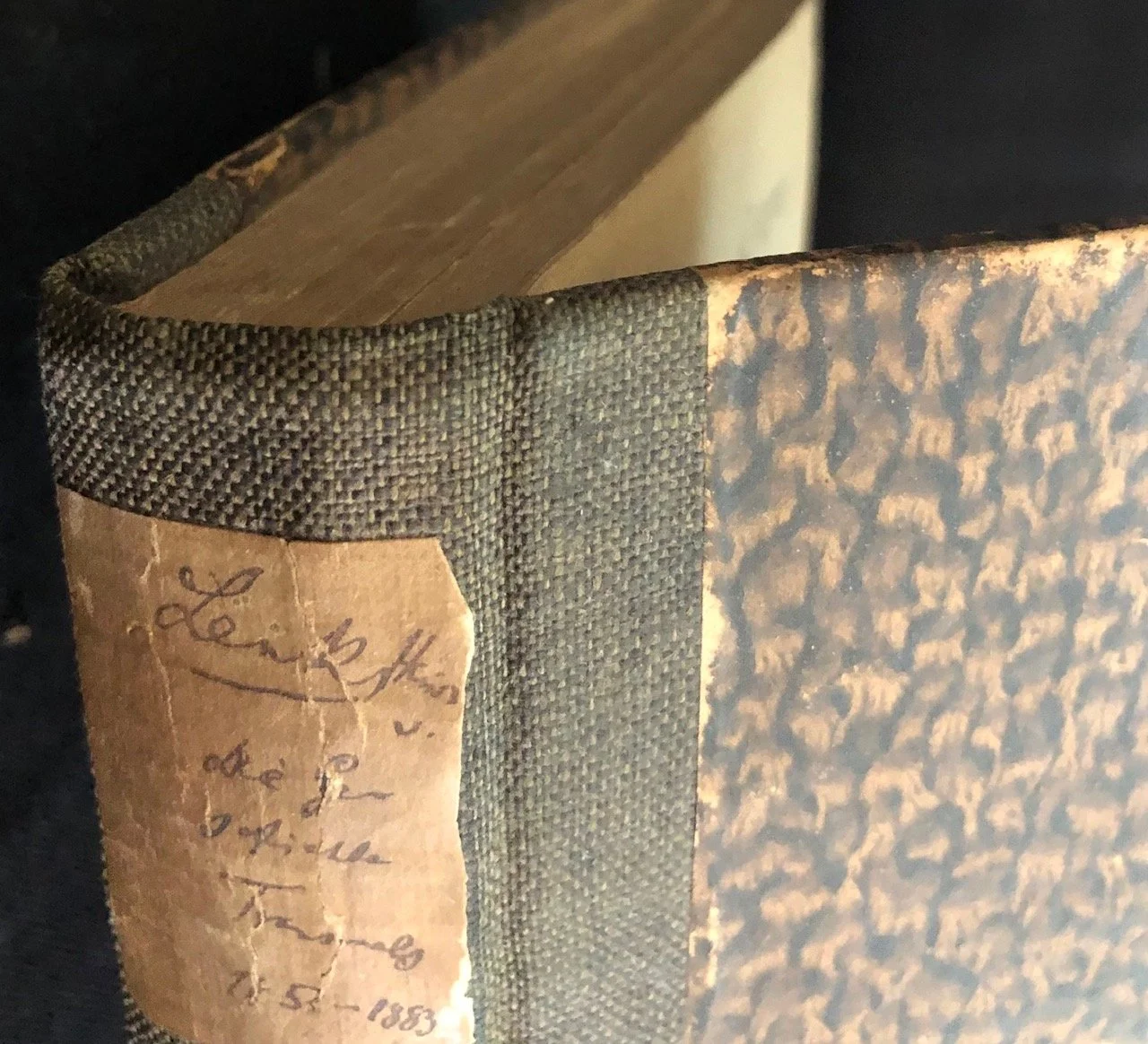
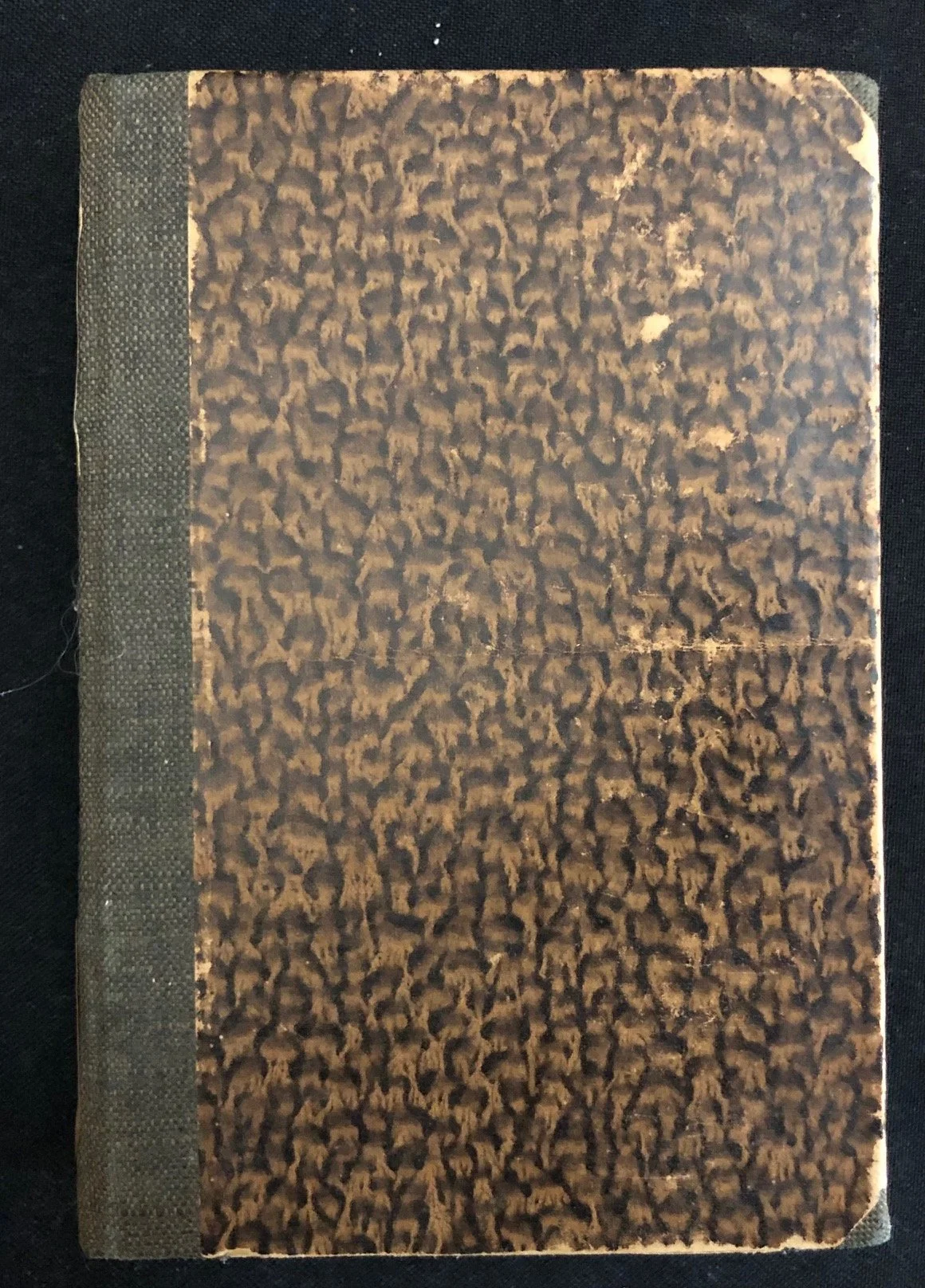
Wear and chipping to boards; 164 pages; index; 2 pages of adverts.
100mm x 140mm x 20mm
R1,000