Letter from General Joubert to President Kruger 1881
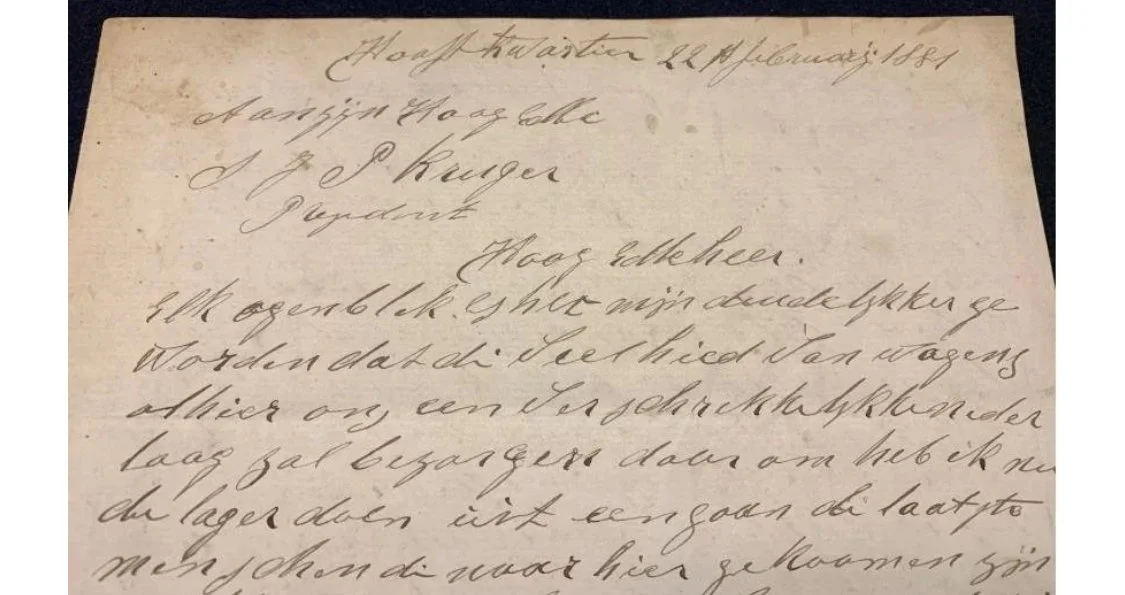
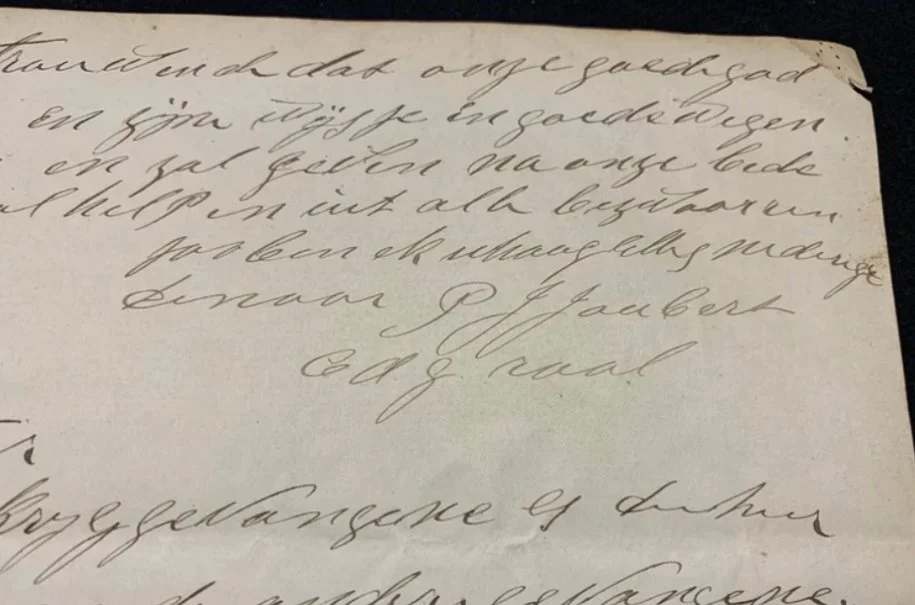
Original letter from General Joubert to President Kruger 1881, two and a half pages.
Dated "Hoofdtkwartier 22 Februarij 1881" (Headquarters, 22 February 1881). This places its composition exactly five days before the Battle of Majuba Hill (27 February 1881)the decisive Boer victory that effectively ended the First Boer War and secured temporary independence for the South African Republic (Transvaal).
Correspondence Between the Boer Triumvirate
The letter captures a direct, private war-time communication between the two primary pillars of the Transvaal resistance:
Written and signed on the final page by Petrus Jacobus (Piet) Joubert in his capacity as Comdt. Genl. (Commandant-General) of the Boer forces.
Addressed at the top to S.J.P. (Paul) Kruger, noted here as Vice President. At this point, Kruger, Joubert, and M.W. Pretorius formed the "Triumvirate" running the insurgent Boer government.
Raw Logistical Strain and Pre-Battle Anxiety
While history often remembers Majuba as a flawless tactical victory for the Boers, Jouberts letter exposes the immense operational stress, supply shortages, and anxiety gripping the Boer headquarters just days before the clash:
Wagon Vulnerability: Joubert expresses deep concern over the massive train of supply wagons ("deelheid van wagens"), fearing they are deeply vulnerable and could bring a terrible disaster or trap upon the camp ("een verschrikkelijkender laag zal bezorger"). He notes he has ordered the laager to move out and dictates strict rules to ensure there are at least 20 to 30 armed men guarding every single wagon.
Exhausted Horses: He writes bluntly about the poor condition of their mounts, describing them as unusable, skinny, and weak ("onbruikbaar mager en zwak"), pleading for better horses to be sent forward.
Manpower Shortages: Joubert explicitly details his tactical vulnerability, stating that if he only had an additional 1,000 men, they could take decisive action; instead, they are structurally constrained and forced to simply wait and see what the British do next ("moet wij afwachten wat er nog koomen zal").
Shuffling Prisoners Behind the Lines
On the concluding page, Joubert coordinates wartime logistics regarding captives. He notes the movement of two prisoners of war ("2 Krijgsgevangene"), identifying individual names including "Schalk Kruger," and outlines orders to have them escorted safely back toward the town of Heidelberg to keep them secure as the front lines intensified.
This letter provides a rare, unpolished look at the sheer uncertainty of command right on the precipice of one of the most famous military upsets of the late 19th century. #30,000
Sold May ‘26