Martial Law Sentences - Boer War (1902)
Cape government blue-book relating to the immediate aftermath of the Second Boer War (1899–1902). This is the 1902 Report of the Royal Commission on Martial Law Sentences, which was commissioned to review the legal cases of individuals convicted under British military law during the conflict.
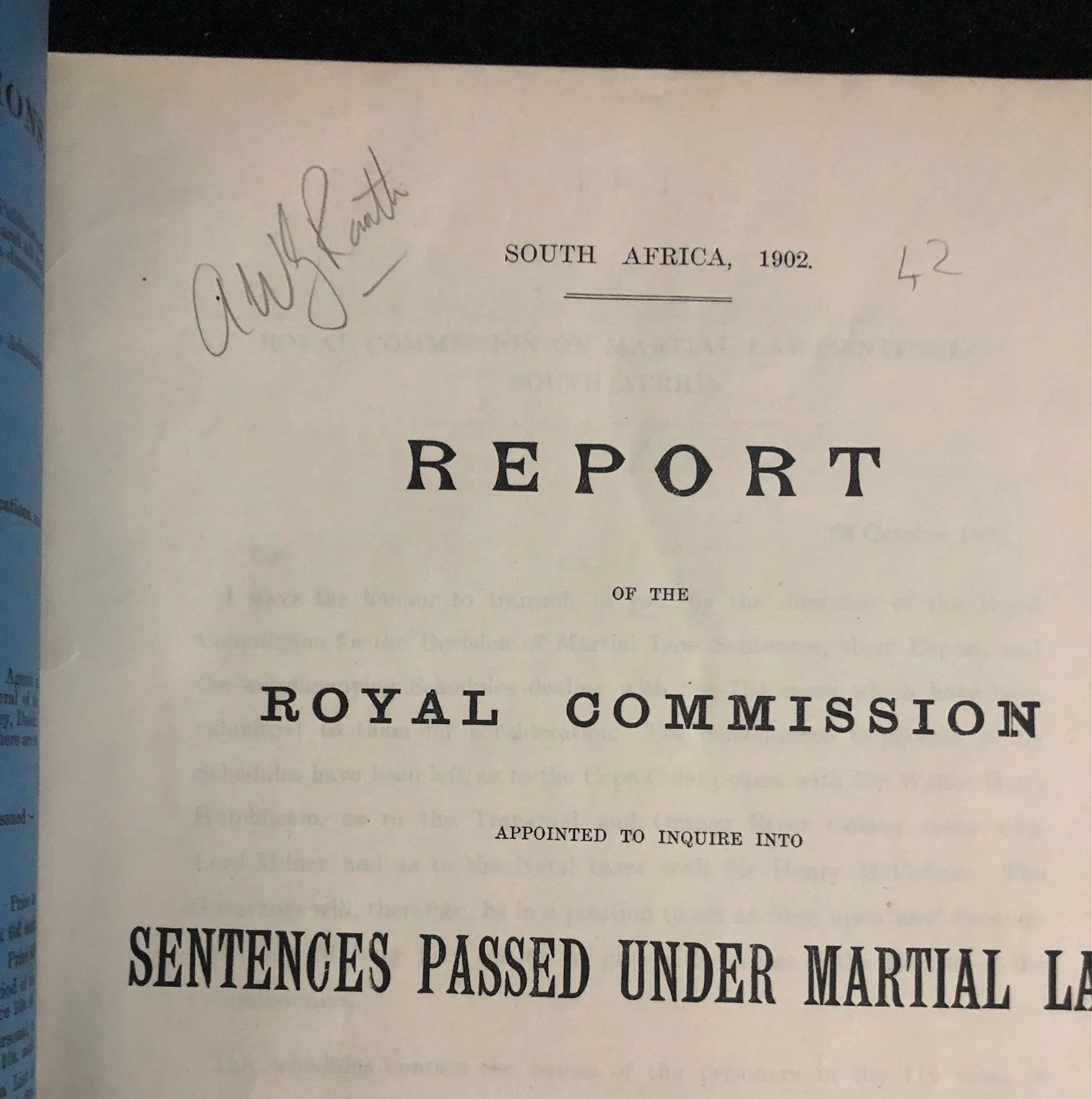
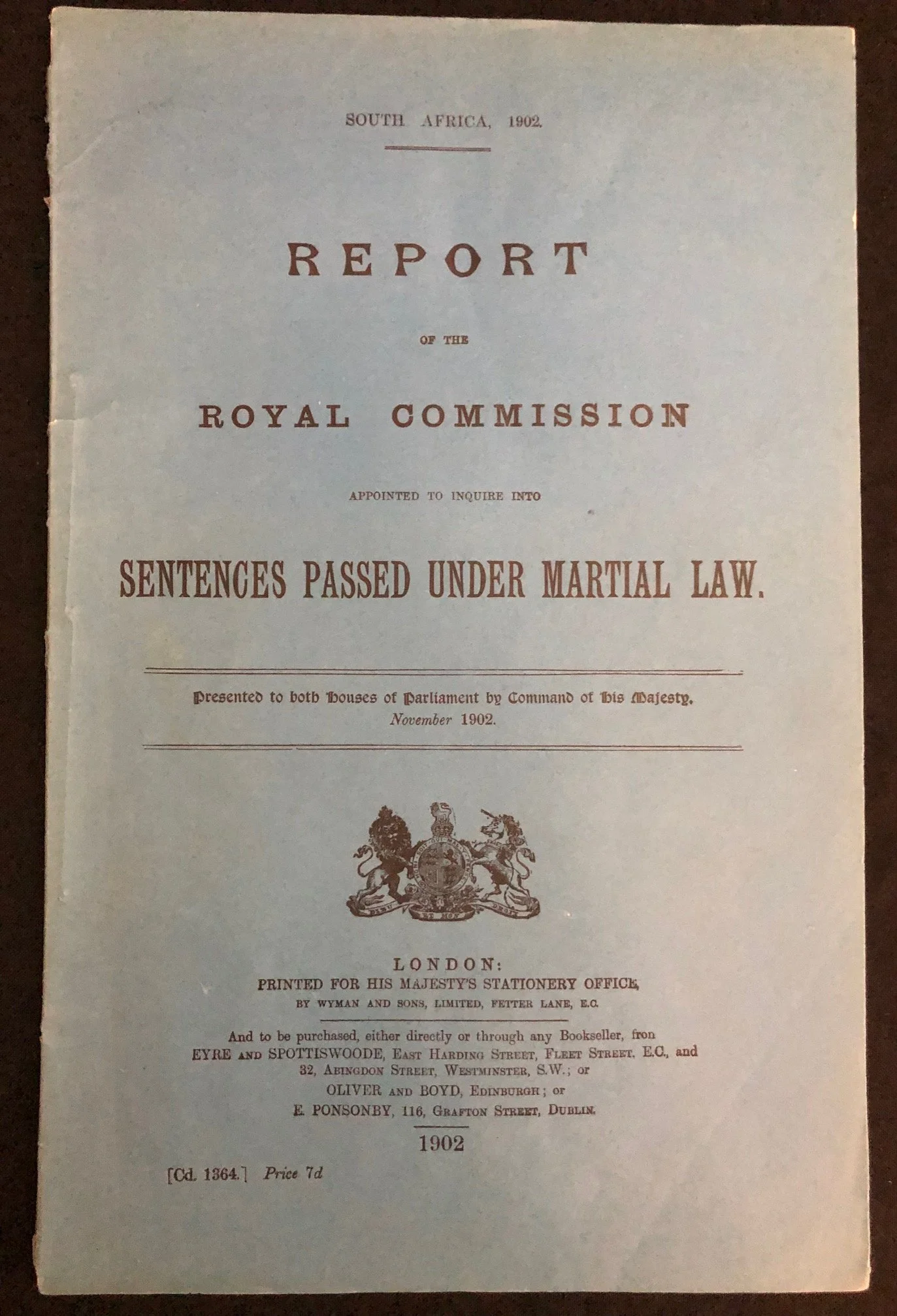
• The cover of the report, printed in London in November 1902. It was "Presented to both Houses of Parliament by Command of His Majesty."
• The title page, includes a handwritten signature, likely an owner's mark or archival notation.
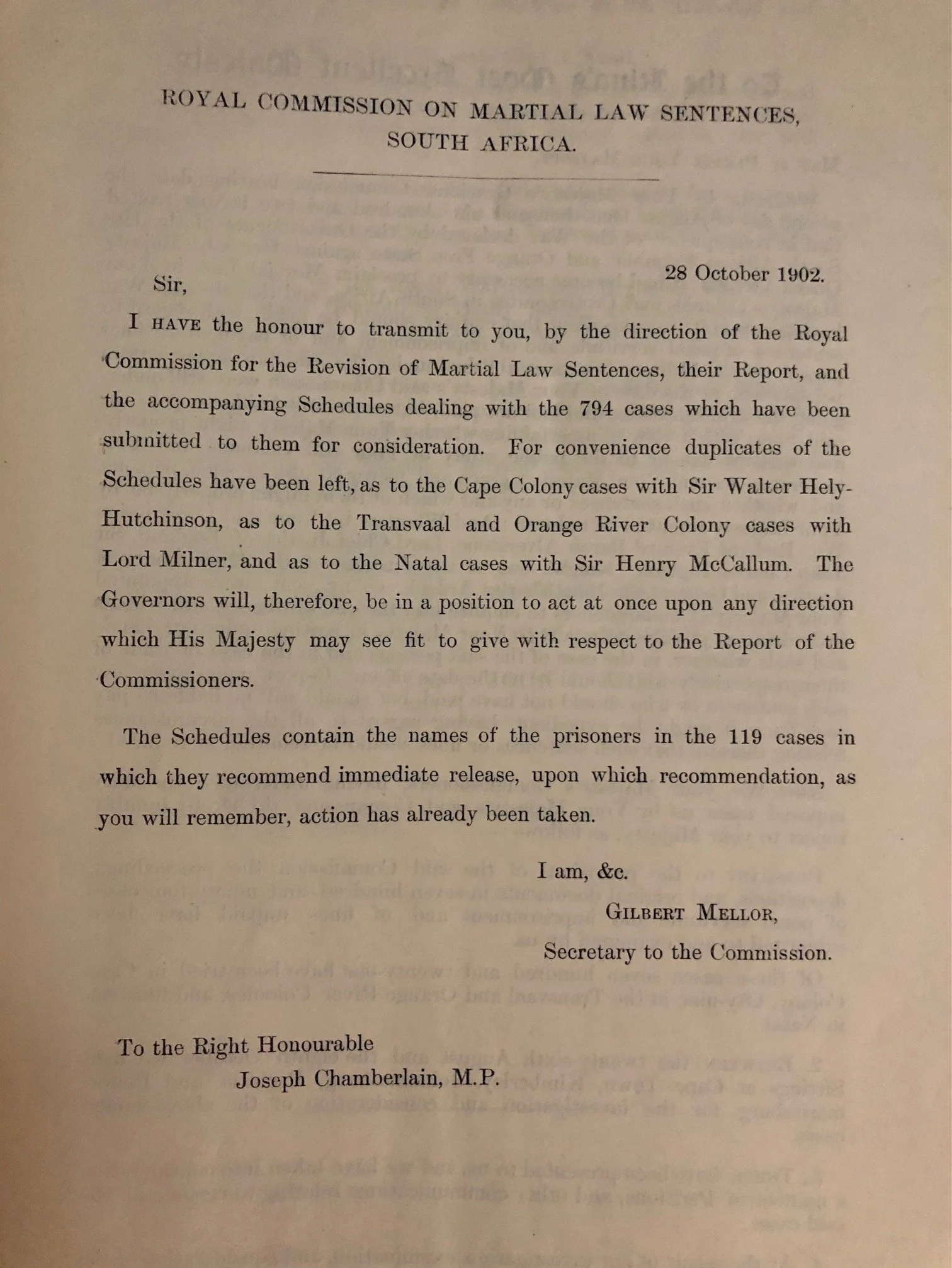
• The formal letter from Gilbert Mellor, Secretary to the Commission, addressed to Joseph Chamberlain, the Secretary of State for the Colonies, notes that the commission reviewed 794 cases and had already recommended the immediate release of 119 prisoners.
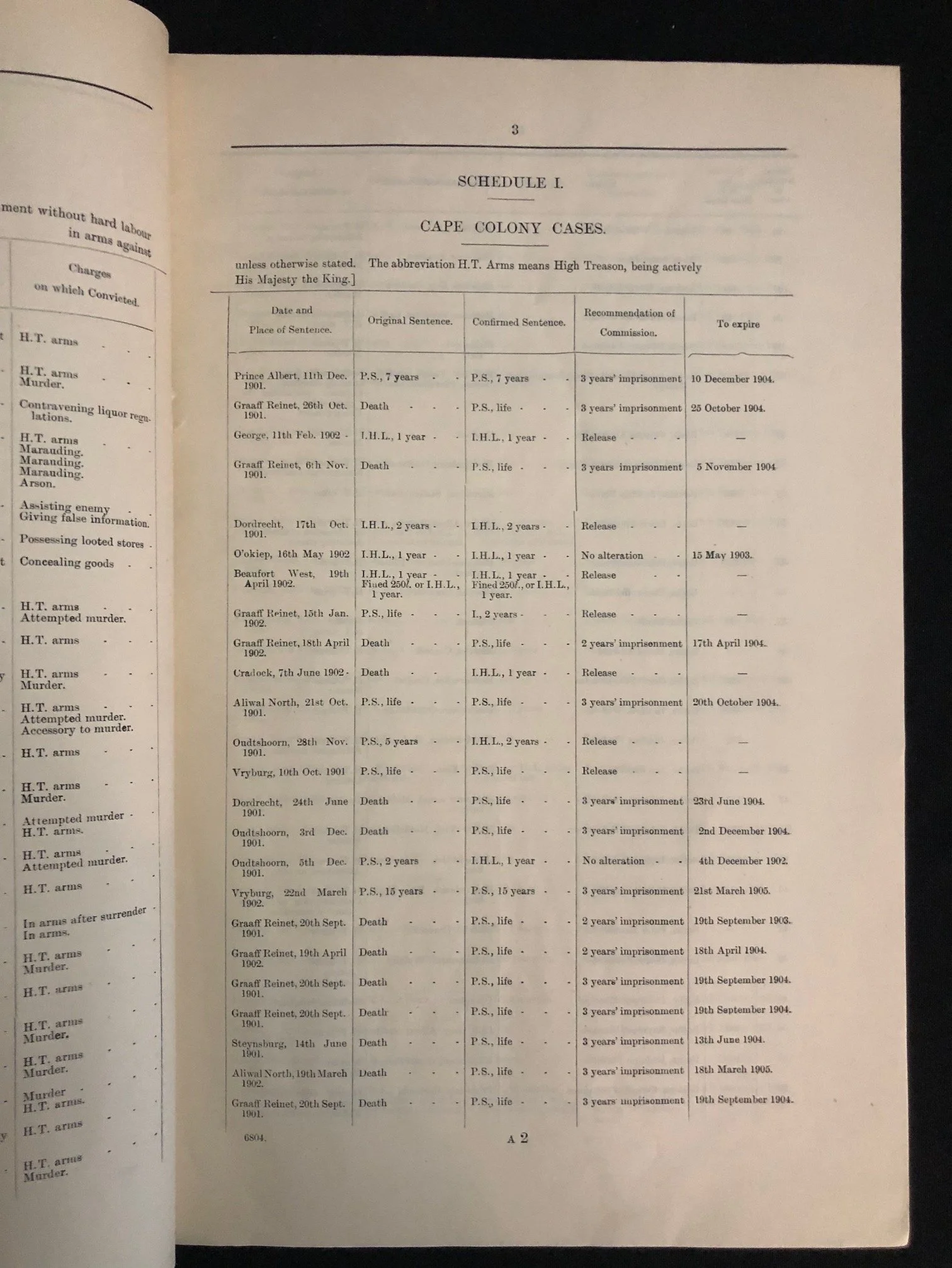
Analysis of the "Cape Colony Cases".
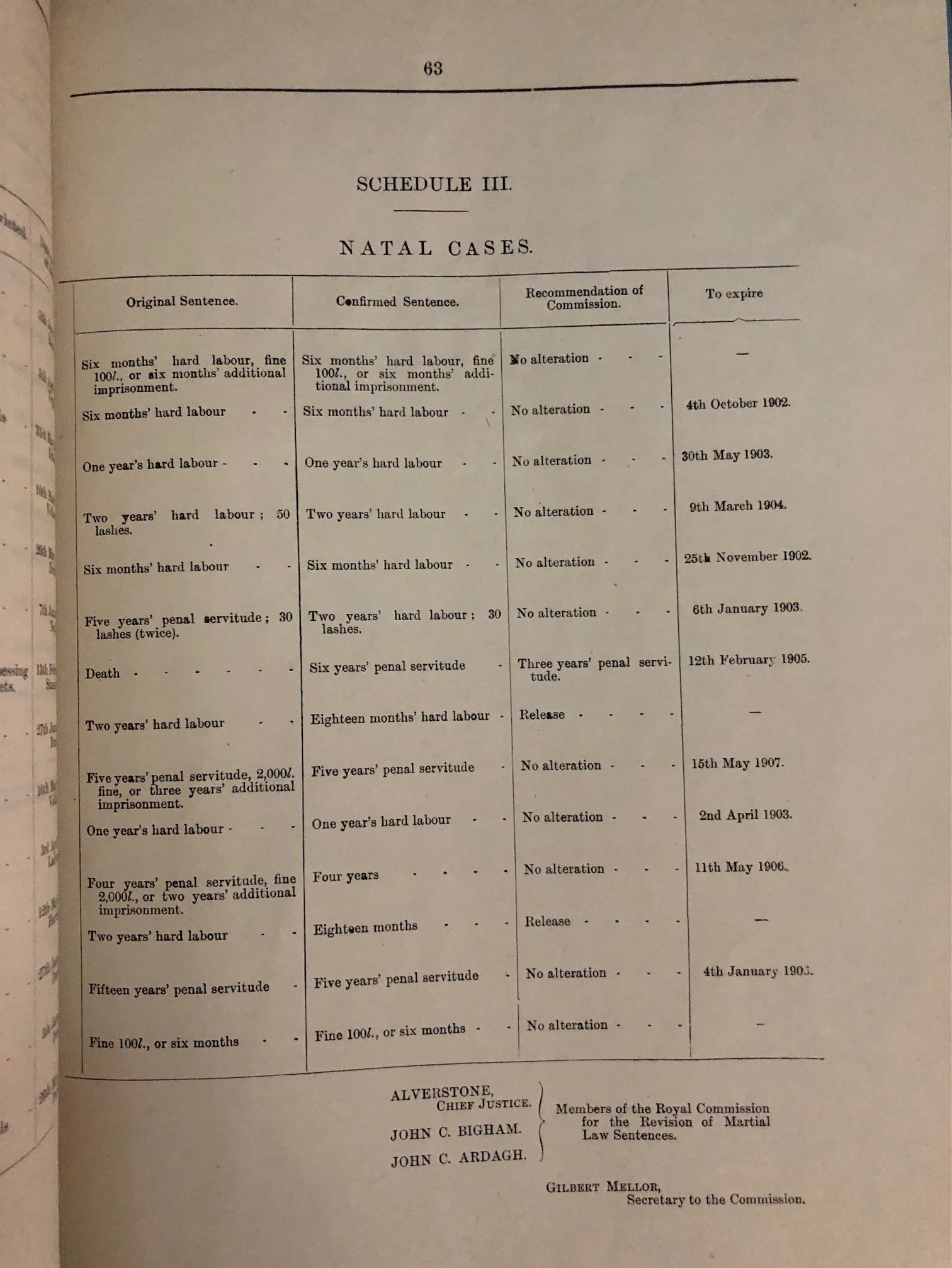
This page provides a detailed schedule of specific legal cases and the Commission's recommendations for clemency or sentence reduction. The data reveals the severity of the judicial climate during the war.
Historical Context: The Cape Rebels
The individuals listed (are from places like Graaff-Reinet, Prince Albert, and Cradock) were typically Cape Rebels—citizens of the British-ruled Cape Colony who joined the Boer forces. Under British law, their participation was considered high treason rather than standard combat.
The publication of this report was a key step in the British effort to stabilize South Africa following the Treaty of Vereeniging, transitioning the region from military rule back to civil administration while attempting to manage the political fallout of the harsh martial law period.
210mm x 330mm
R1,250