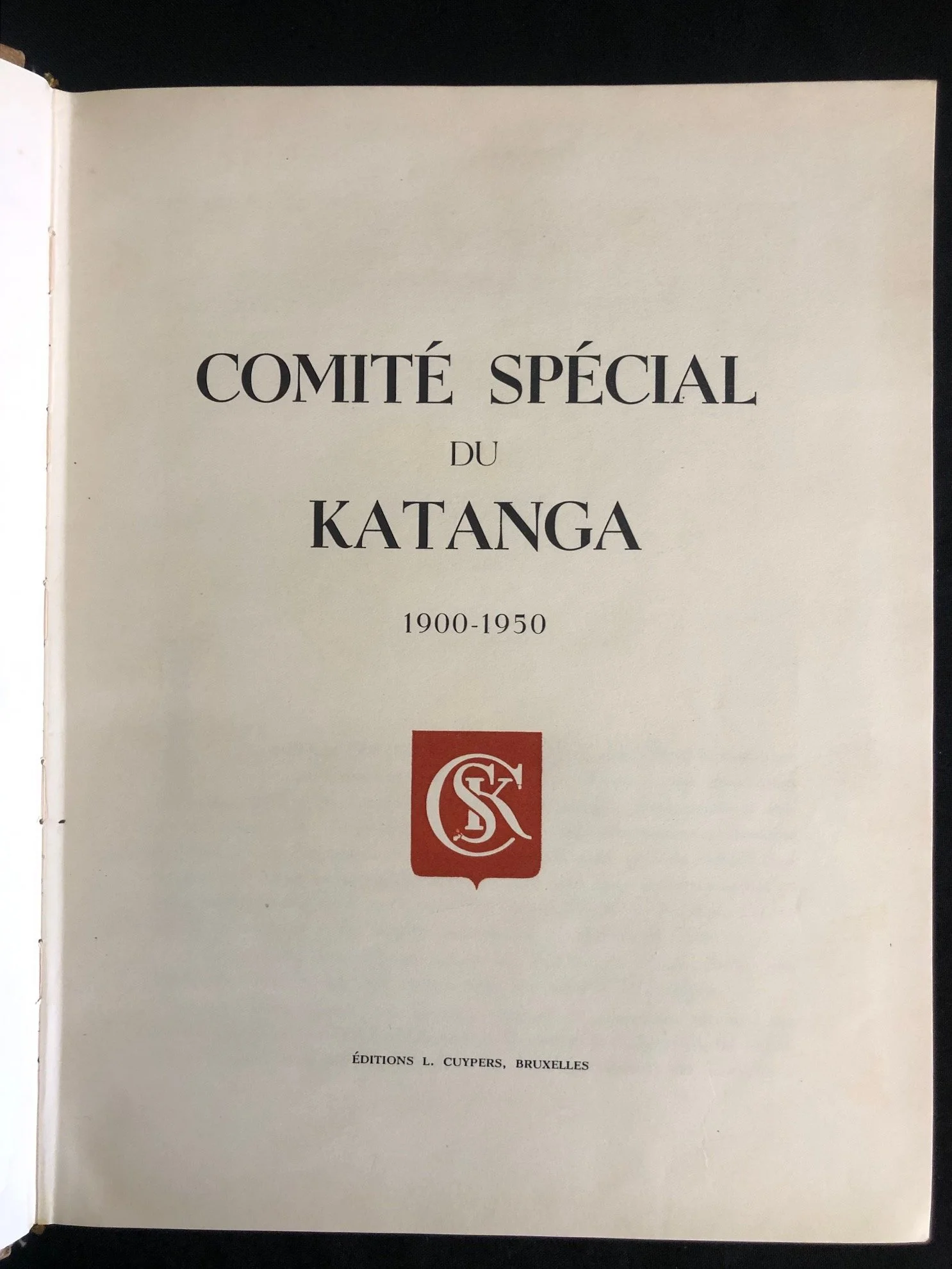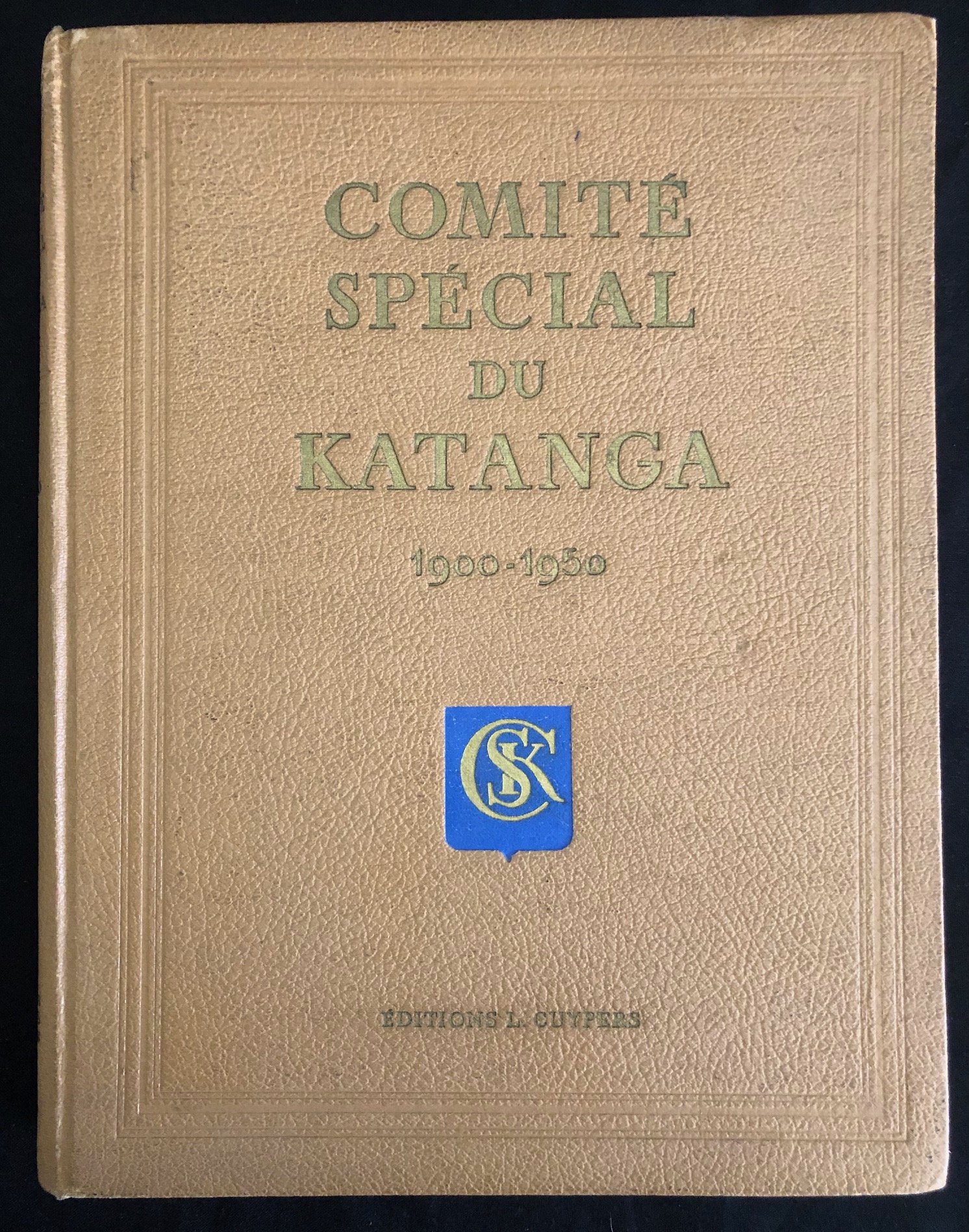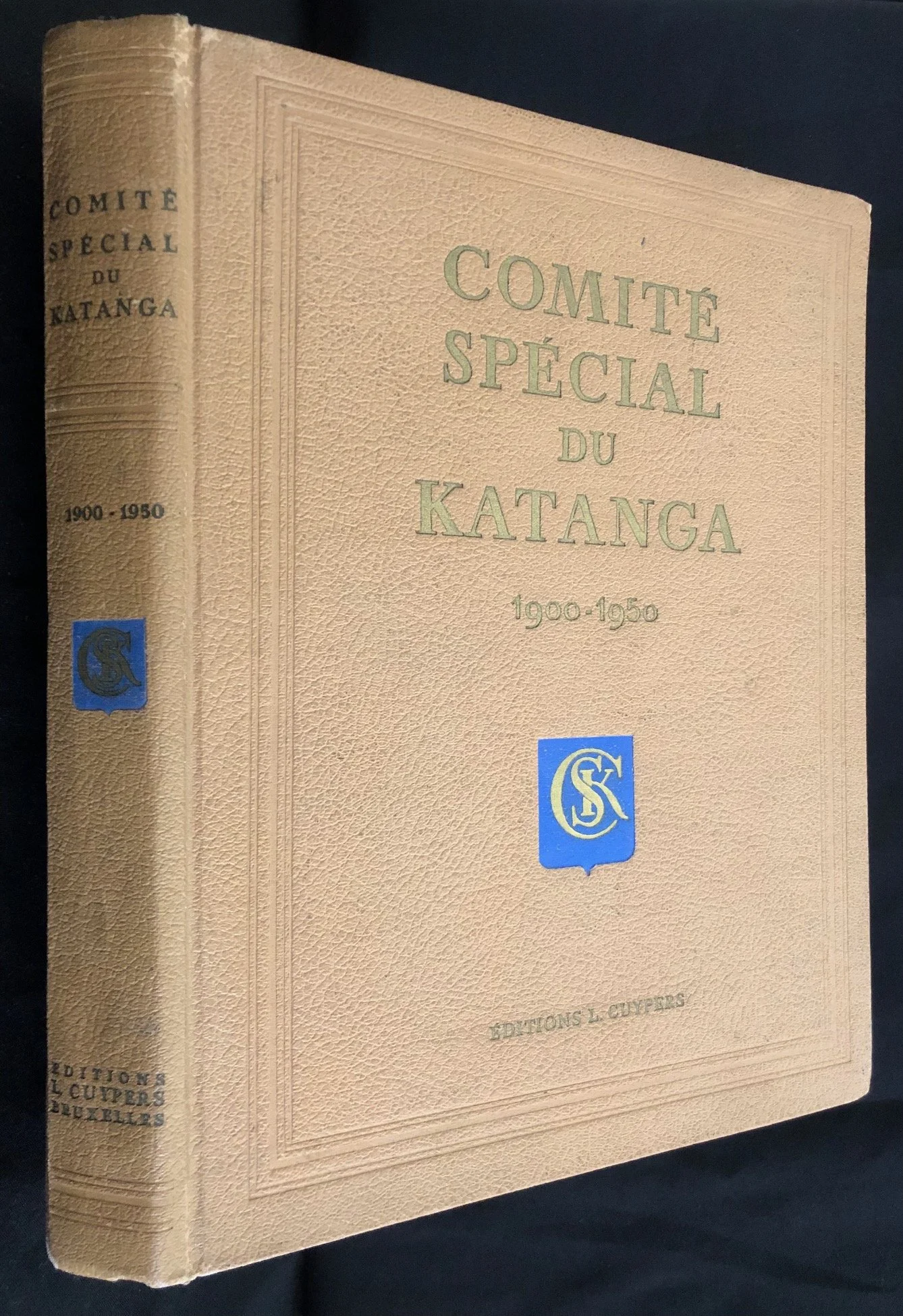
Comité Spécial du Katanga 1900–1950, published by L. Cuypers (c.1950)
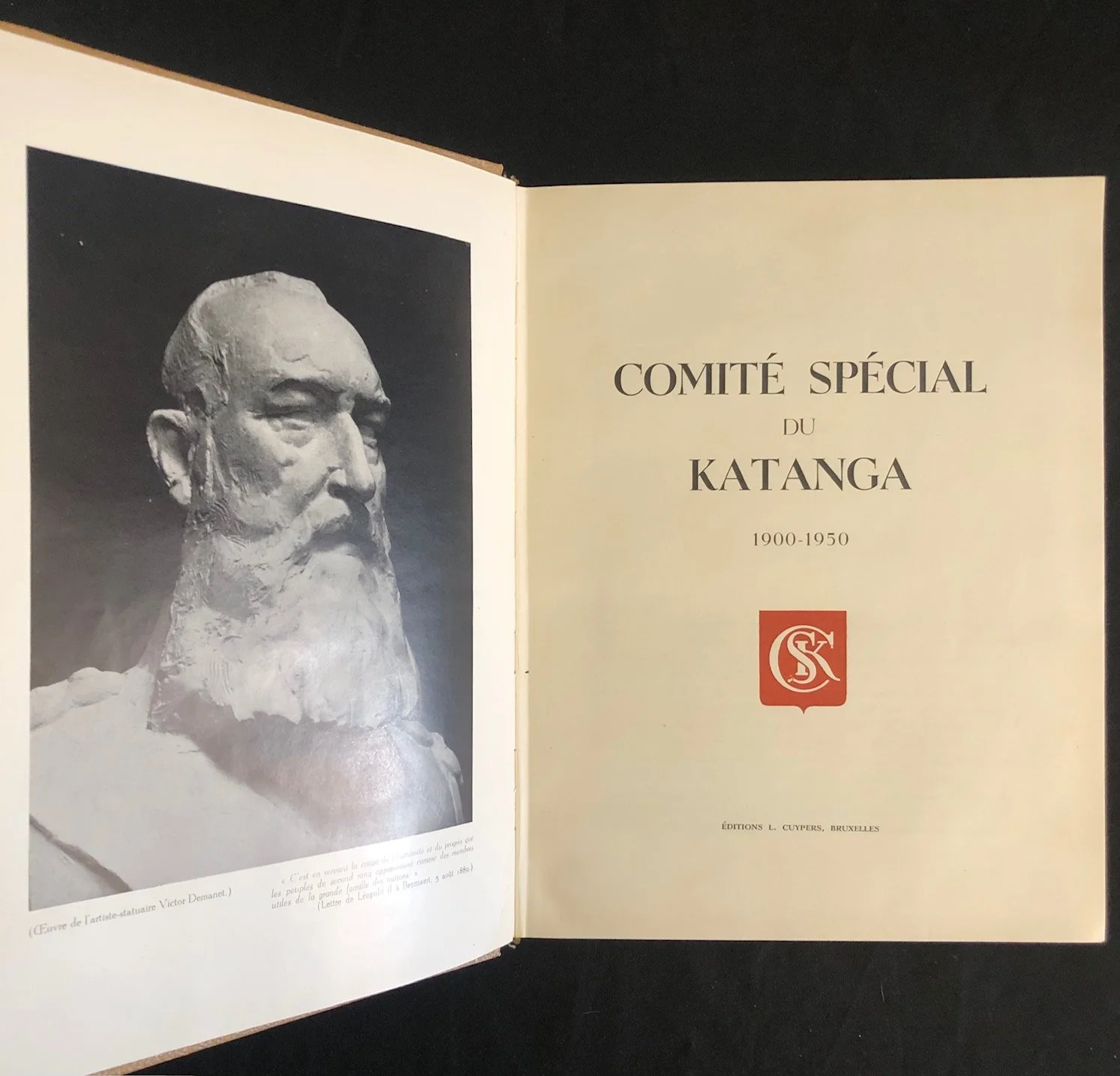
This deluxe, limited-edition volume—Comité Spécial du Katanga (1900–1950), published by L. Cuypers in Brussels—was commissioned to commemorate the golden jubilee of one of the most powerful, quasi-governmental corporate monopolies in African history.
Beyond its typography and grand aesthetic, the history surrounding this book and the Comité Spécial du Katanga (CSK) captures a pivotal chapter in twentieth-century geopolitics and extraction:
A State Within a Non-State
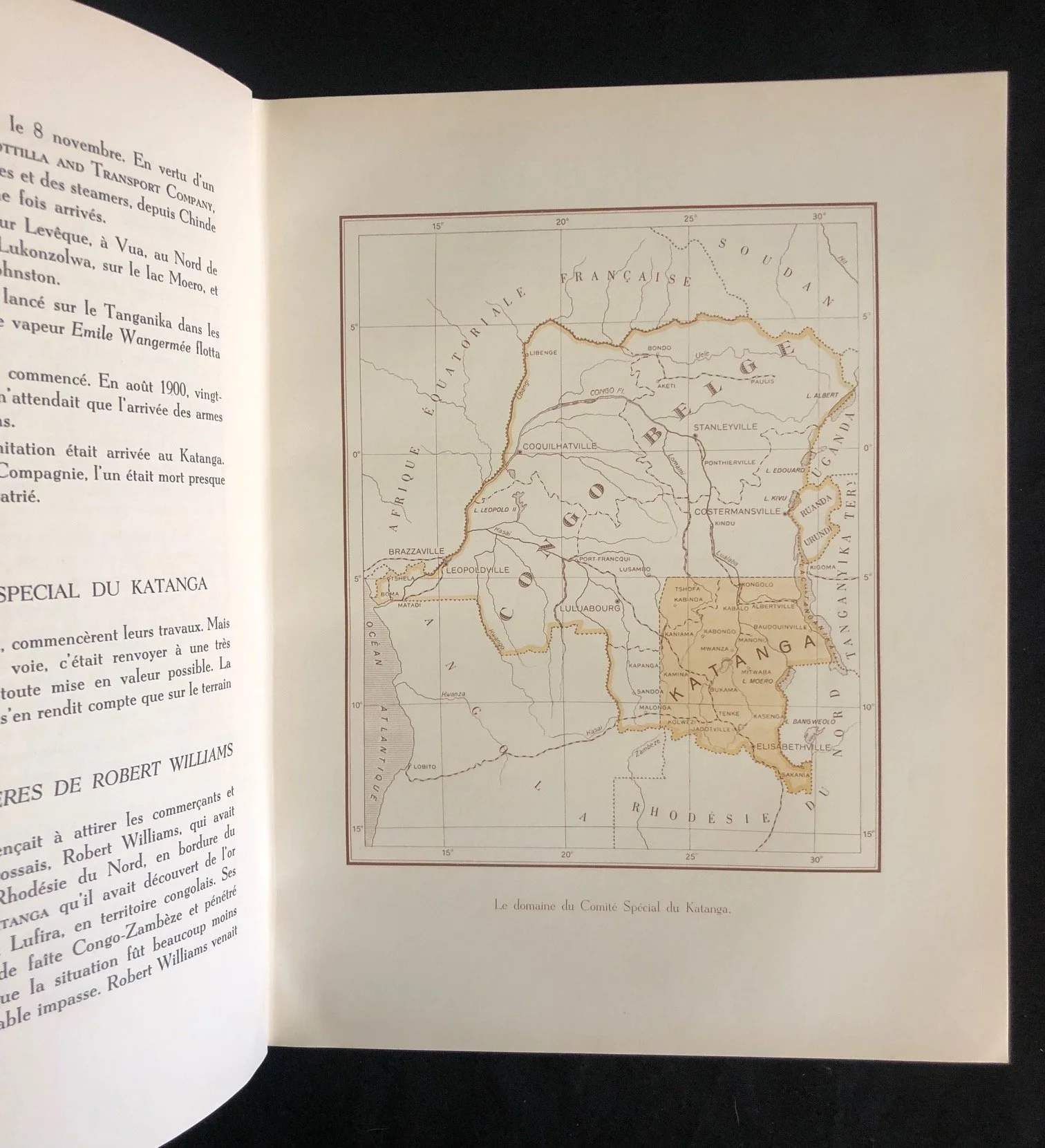
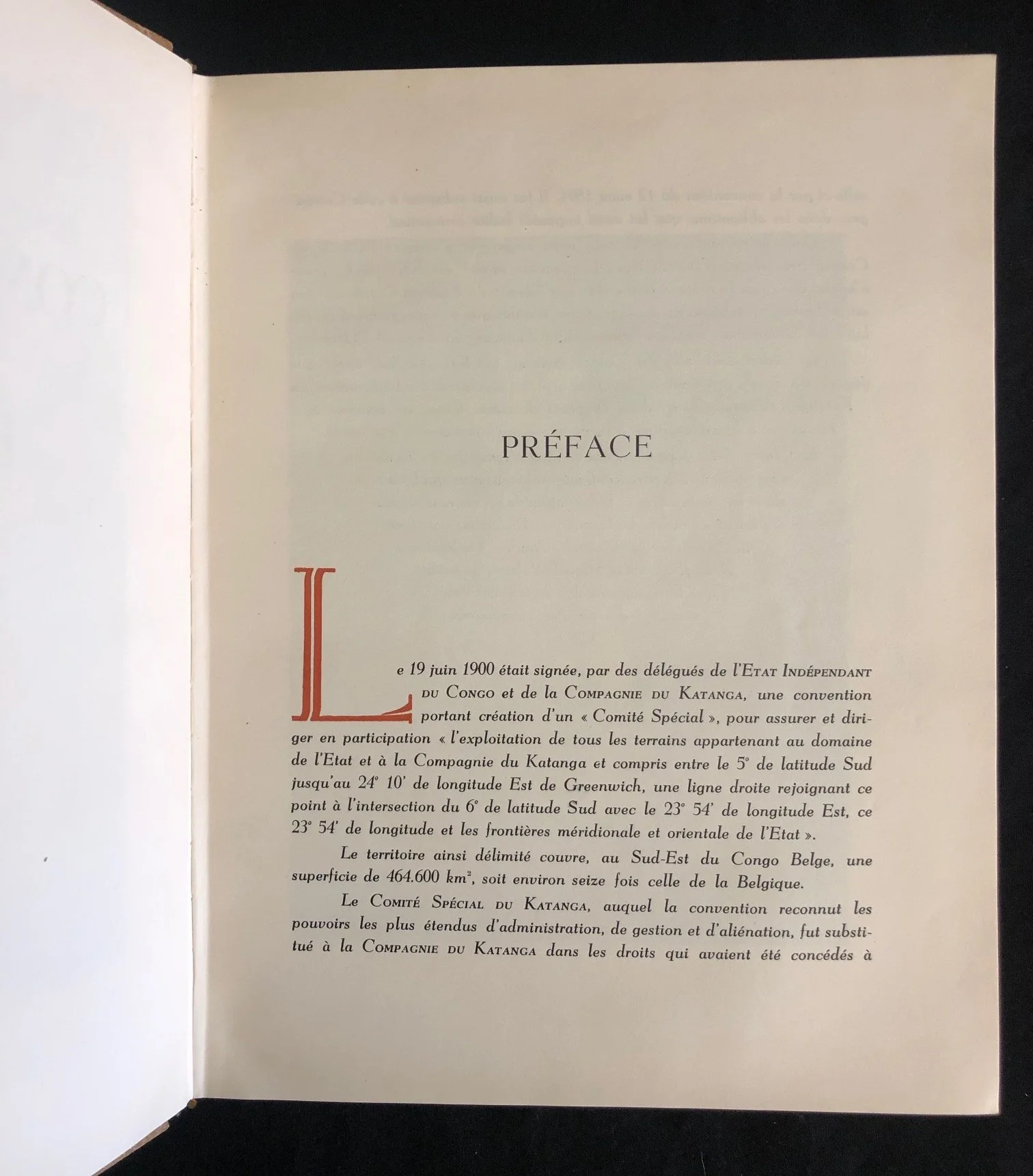
As outlined in the book's preface, the CSK was established on June 19, 1900, via a joint convention between King Leopold II's État Indépendant du Congo (Congo Free State) and the private Compagnie du Katanga.
Vast Sub-Continental Power: The committee was granted absolute, sweeping administrative, judicial, and alienation powers over a staggering 464,600 square kilometers—an area roughly sixteen times larger than the entire nation of Belgium.
The Corporate Sovereign: Rather than functioning as a standard corporation or a traditional colonial civil service, the CSK operated as a semi-autonomous, corporate-run state. It managed its own police, built its own infrastructure, directed its own immigration policies, and held exclusive domain over all land and mineral rights in the mineral-rich Katanga province. Even after the Belgian state took over the Congo in 1908, the CSK retained its distinct, virtually independent corporate fiefdom until the 1930s.
The Birthplace of Global Copper and Uranium Monopolies
The CSK's primary historical legacy was its role as the foundational architect of Katanga's massive mining boom.
In 1906, the CSK co-founded the legendary Union Minière du Haut-Katanga (UMHK) to exploit the region's colossal copper belt deposits.
By the time this 50th-anniversary history was published in 1950, Katanga had become a crucial strategic geopolitical hub. During World War II, the UMHK mines under CSK's wider regional umbrella supplied the high-grade uranium used by the United States' Manhattan Project to build the atomic bombs dropped on Hiroshima and Nagasaki.
Bibliographic Rarity: The Pannekoek Connection
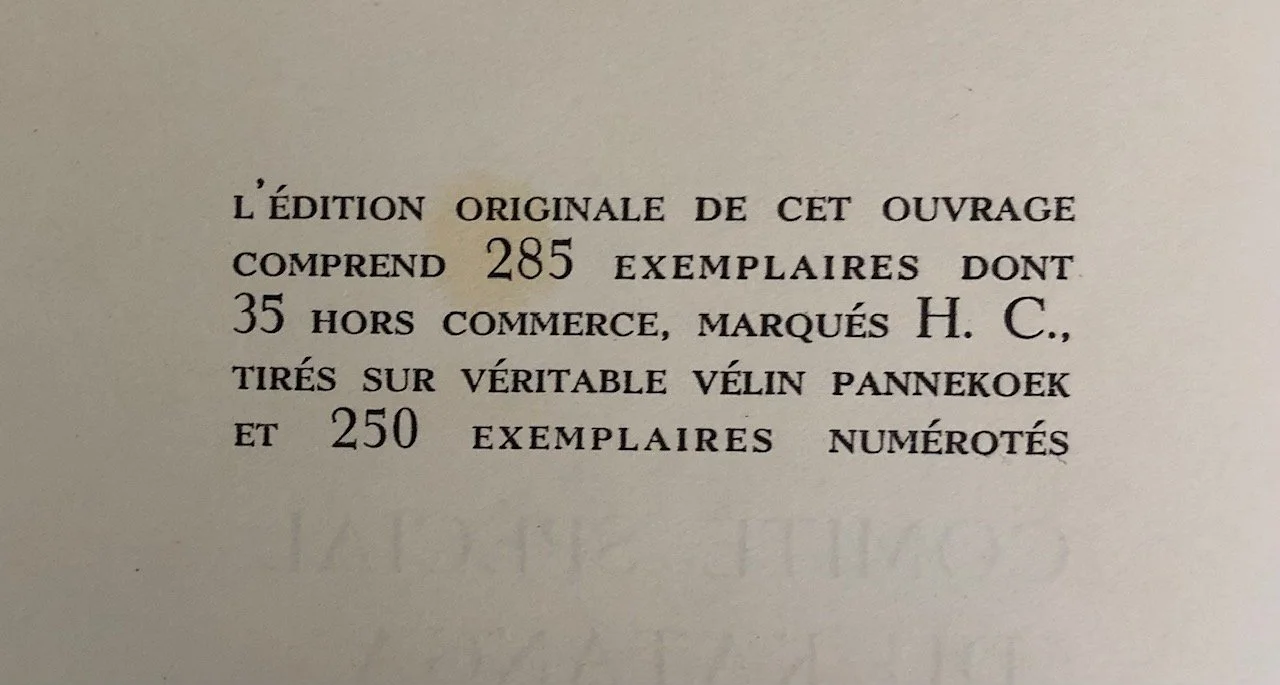
The print run of the original edition (l'édition originale) was limited to 285 copies.
Of these, only 35 Hors Commerce (not for commercial sale) copies and 250 numbered copies were produced.
They were printed on vélin Pannekoek—a premium, highly prized watermarked woven paper manufactured by the historic Pannekoek paper mill in Heelsum, Netherlands. This choice of materials underscores that the volume was never intended for the public; it was created exclusively as a prestigious presentation piece for high-ranking corporate directors, colonial administrators, and elite institutional libraries to celebrate fifty years of undisputed corporate hegemony.
250mm x 320mm x 27mm
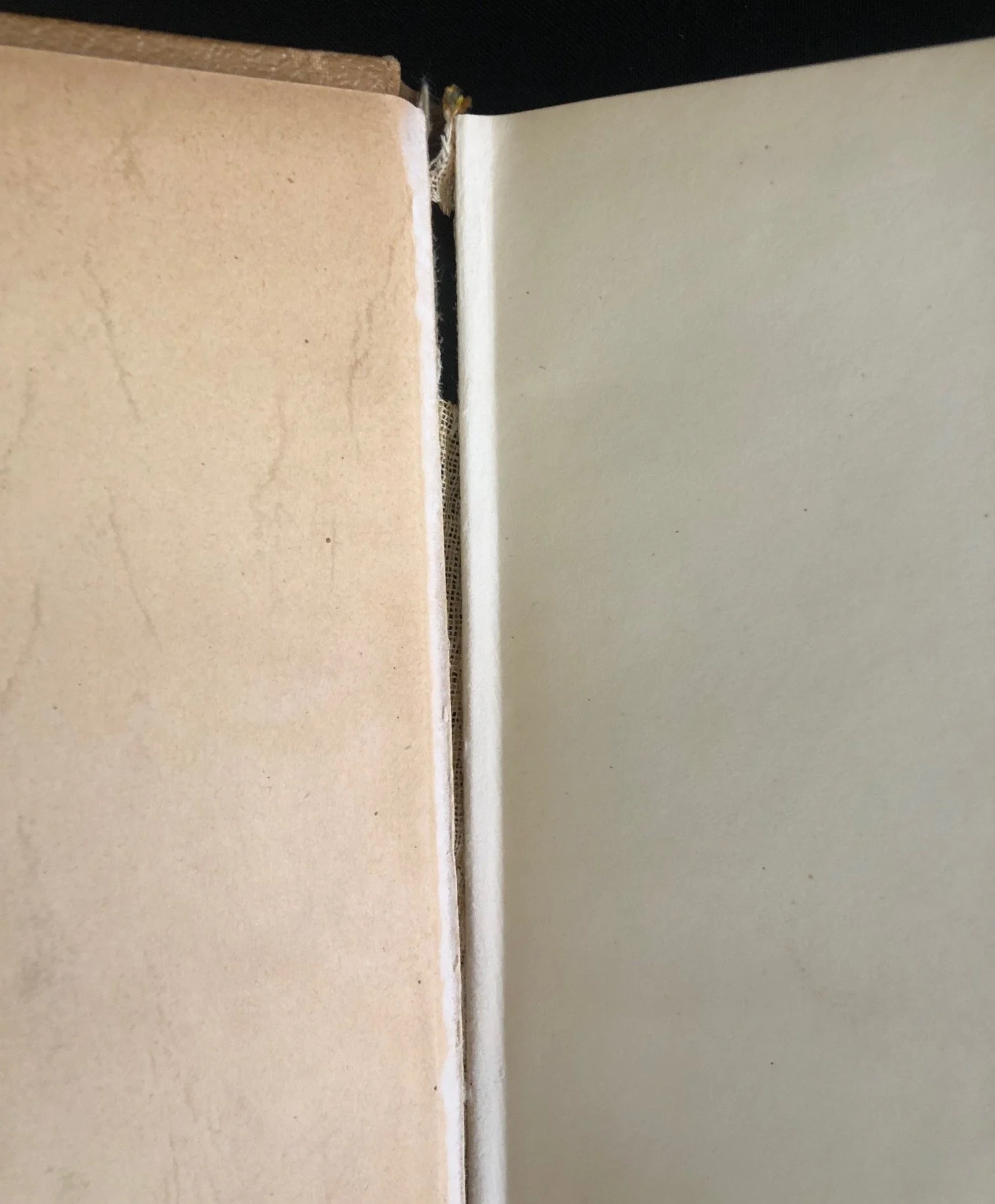
Binding worn; slightly stained; hinge’s breaking.
Sold Sept '26