



"On the Genders of Nouns in the Languages of Southern Africa." By Wilhelm Bleek (1851)
This is an exceptionally significant document in the history of African linguistics; a copy of Wilhelm Bleek’s doctoral dissertation, published in Bonn in 1851.
Its Latin title; De Nominum Generibus Linguarum Africae Australis, Copticae, Semiticarum Aliarumque Sexualium translates roughly to: "On the Genders of Nouns in the Languages of Southern Africa, Coptic, Semitic, and Other Sexual [Gender-based] Languages.
The Spark that Created the Term "Bantu"
While Bleek is famous for later coining and popularizing the term "Bantu" to describe the great family of closely related African languages, this 1851 Latin thesis is the literal foundation of that work.
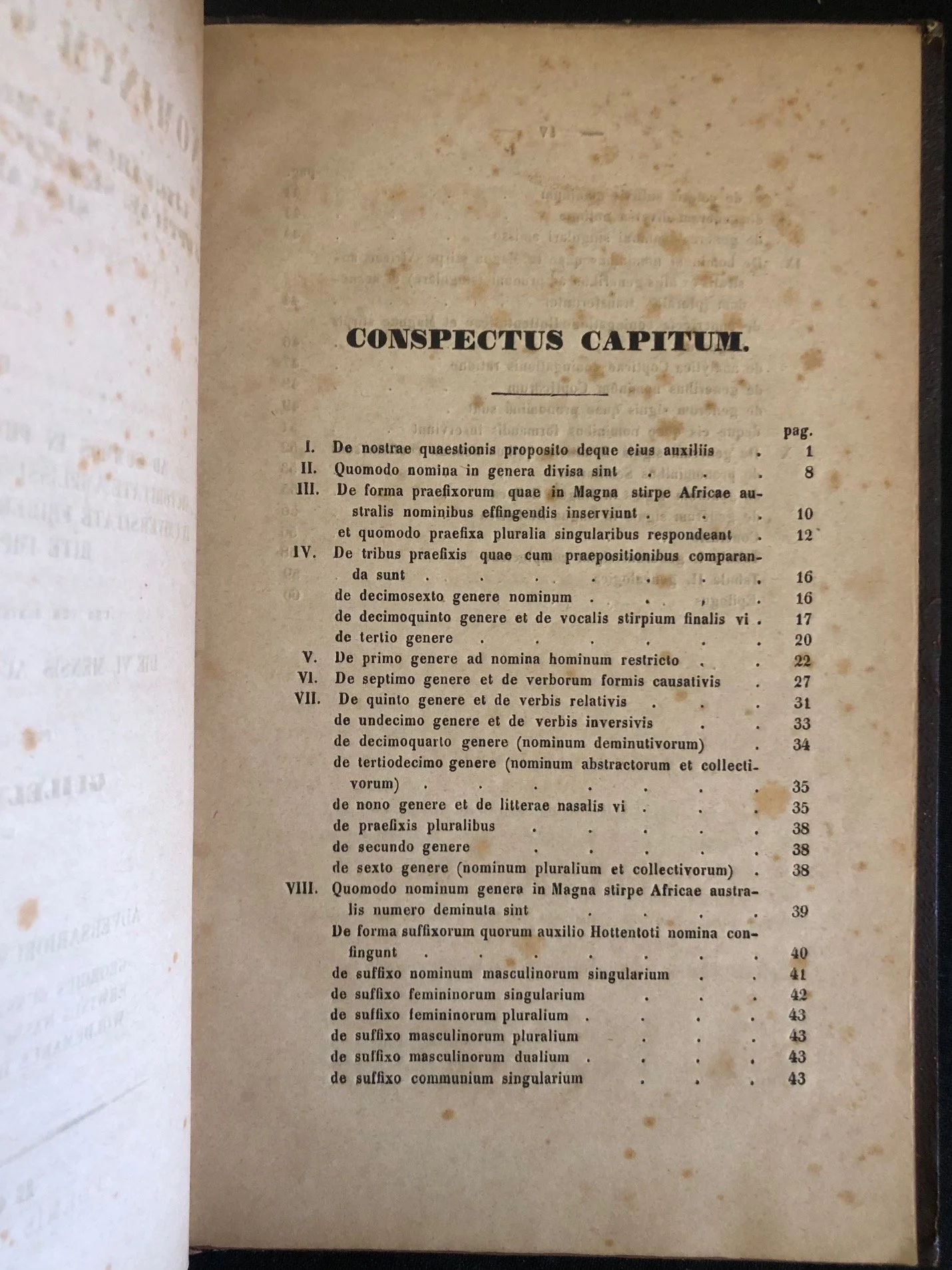
The Conspectus Capitum (Table of Contents) systematically lays out the noun class systems (e.g., de decimoquinto genere / "of the fifteenth class").
Bleek was the first to realize that while European languages determine noun gender biologically (masculine/feminine), Southern African languages classify nouns using an intricate system of prefixes based on semantic categories (human, tool, animal, abstract, etc.).
The Prelude to the Bleek & Lloyd Collection
When Bleek defended this thesis on August 6, 1851 (Die VI. Mensis Augusti Anni MDCCCLI), he had never actually set foot in Africa; he was compiling his theories entirely from existing missionary grammars.
However, this thesis caught the attention of prominent figures, eventually leading him to Natal in 1855 (initially working with Bishop Colenso) and later to Cape Town. This path ultimately led to his monumental work with Lucy Lloyd in recording the |Xam and !Kun Bushman languages and folklore—now a UNESCO memory of the world.
A Highly Rare Academic Ephemera
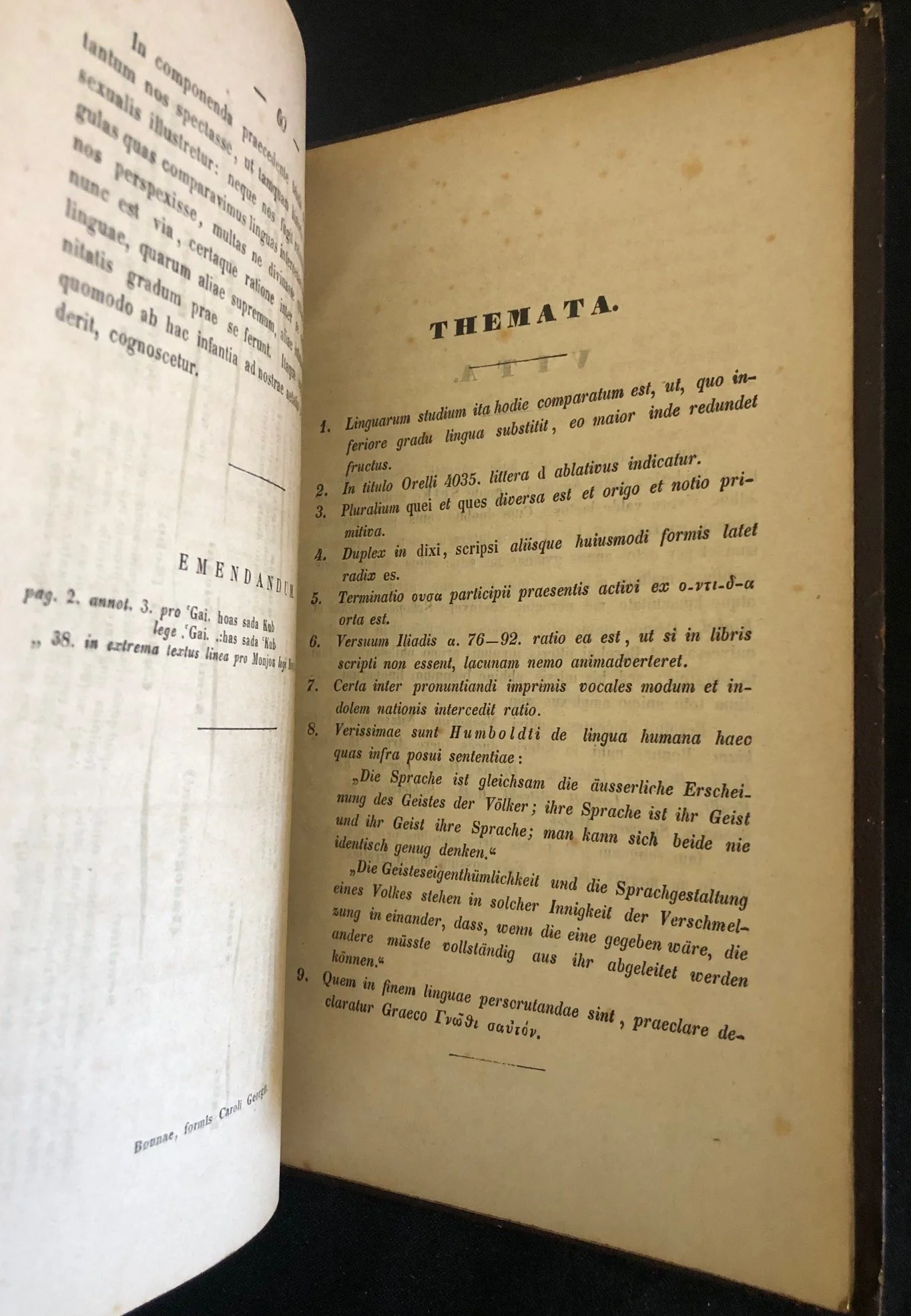
As a doctoral dissertation published Formis Caroli Georgii (printed by Karl Georg) in Bonn, this was not a commercial book meant for a wide public release. It was printed in a very limited run specifically for Bleek's academic defense before the faculty of the University of Bonn. Finding an intact copy with the Themata (the academic propositions he had to publicly defend) still attached at the back is a rare find.
Gilded edge; end papers; title page; 60 pages; + Themata page and Vita page. The book appears to be complete, but I can’t find a collation comparison.
Binding repaired; new spine; corners chipped; some pages torn.
400mm x 300mm
R10,000 Sold Aug '26