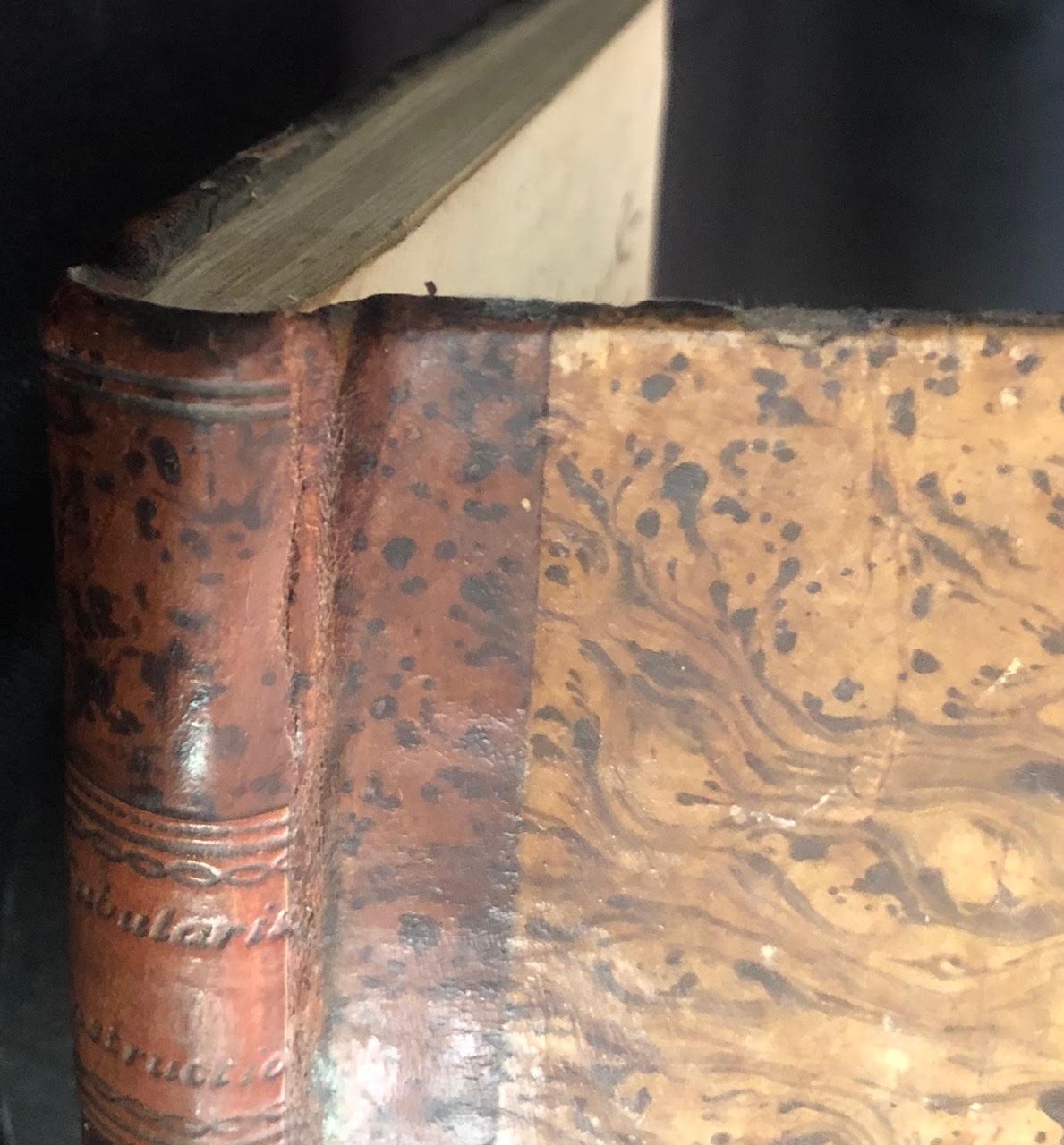
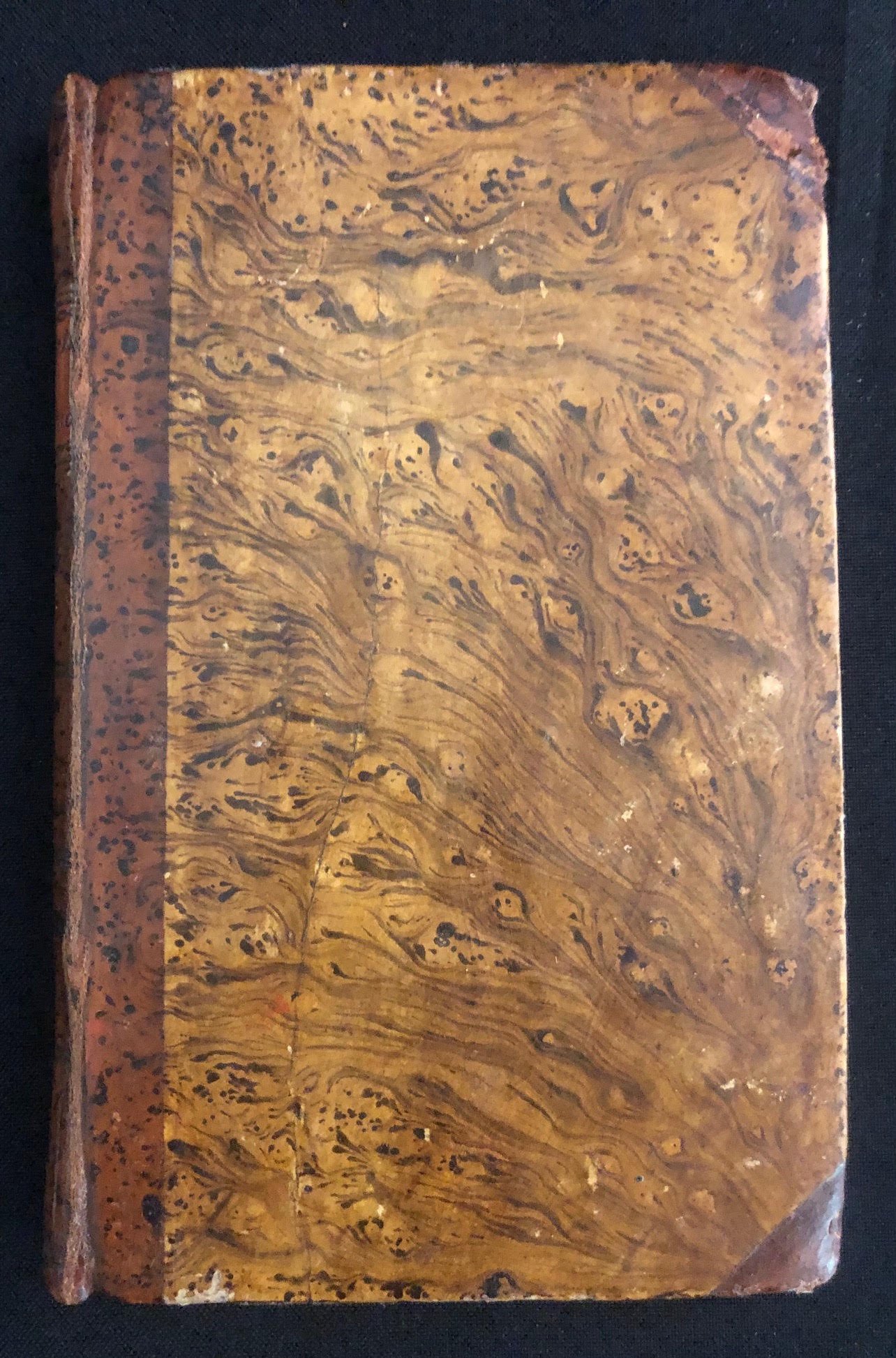
Instructio pro Tabula Regia Judiciaria Transylvanica, printed in 1777.
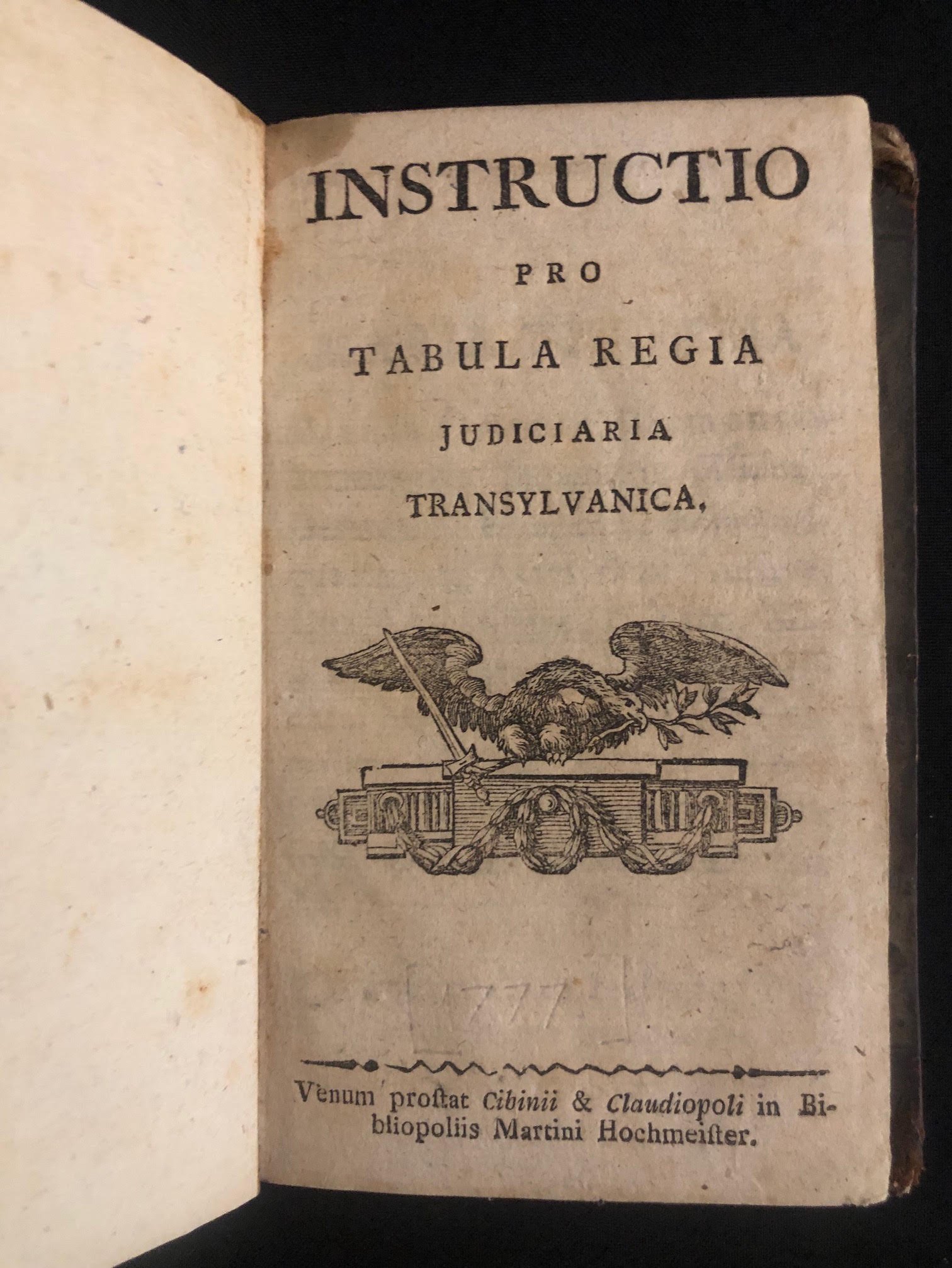
This volume is the Instructio pro Tabula Regia Judiciaria Transylvanica, printed in 1777 and sold in Sibiu (Cibinii) and Cluj-Napoca (Claudiopoli) by the prominent Transylvanian Saxon printer and bookseller Martin Hochmeister.
Beyond its role as a foundational legal manual, its historical value lies in the extraordinary convergence of Enlightenment-era statecraft, regional printing history, and aristocratic Hungarian provenance preserved within its pages.
1. Habsburg Centralization and Maria Theresa’s Legal Reforms
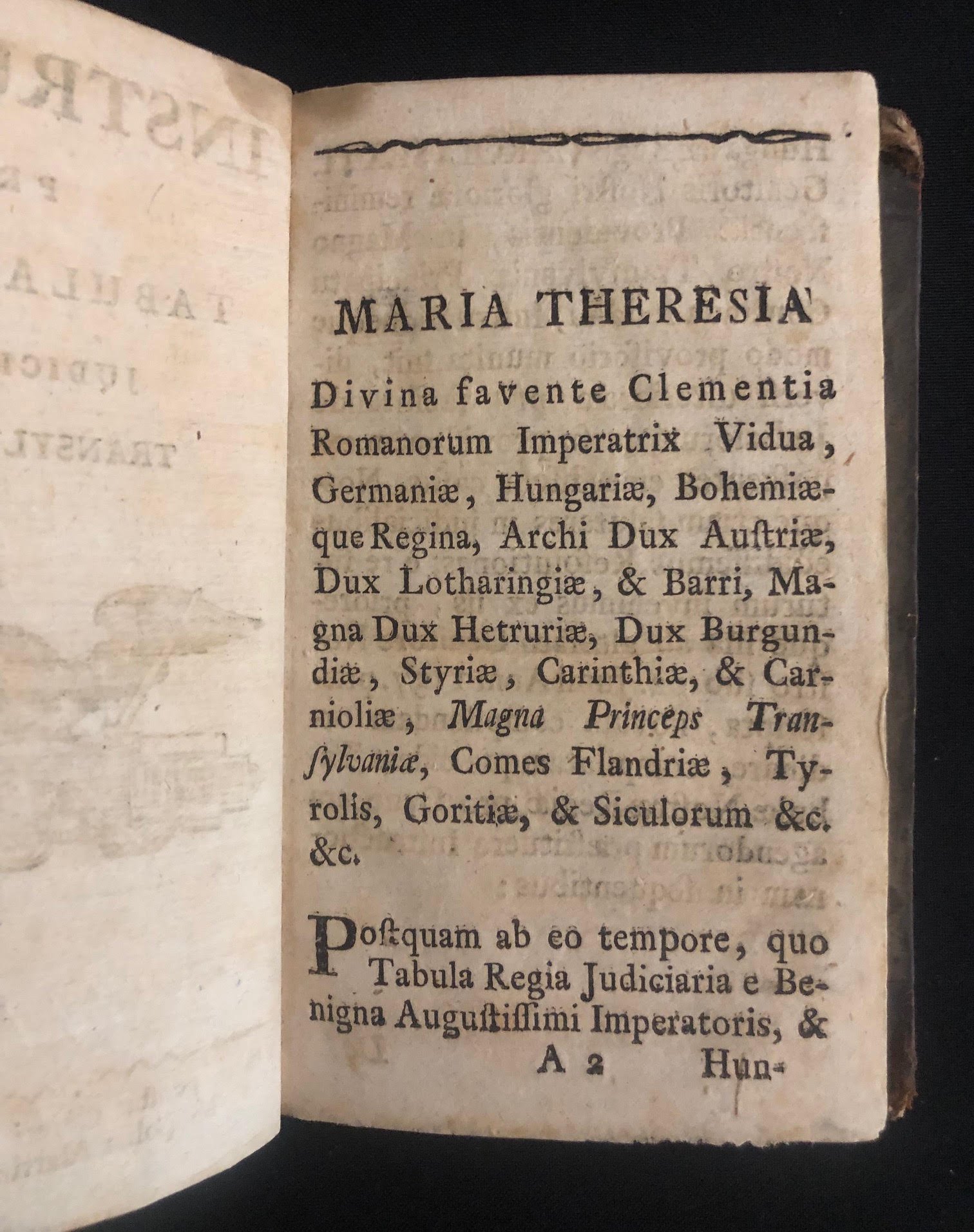
Published during the reign of Empress Maria Theresa (r. 1740–1780), this procedural code governed the Tabula Regia (the Royal Table), which served as the supreme judicial high court of the Grand Principality of Transylvania.
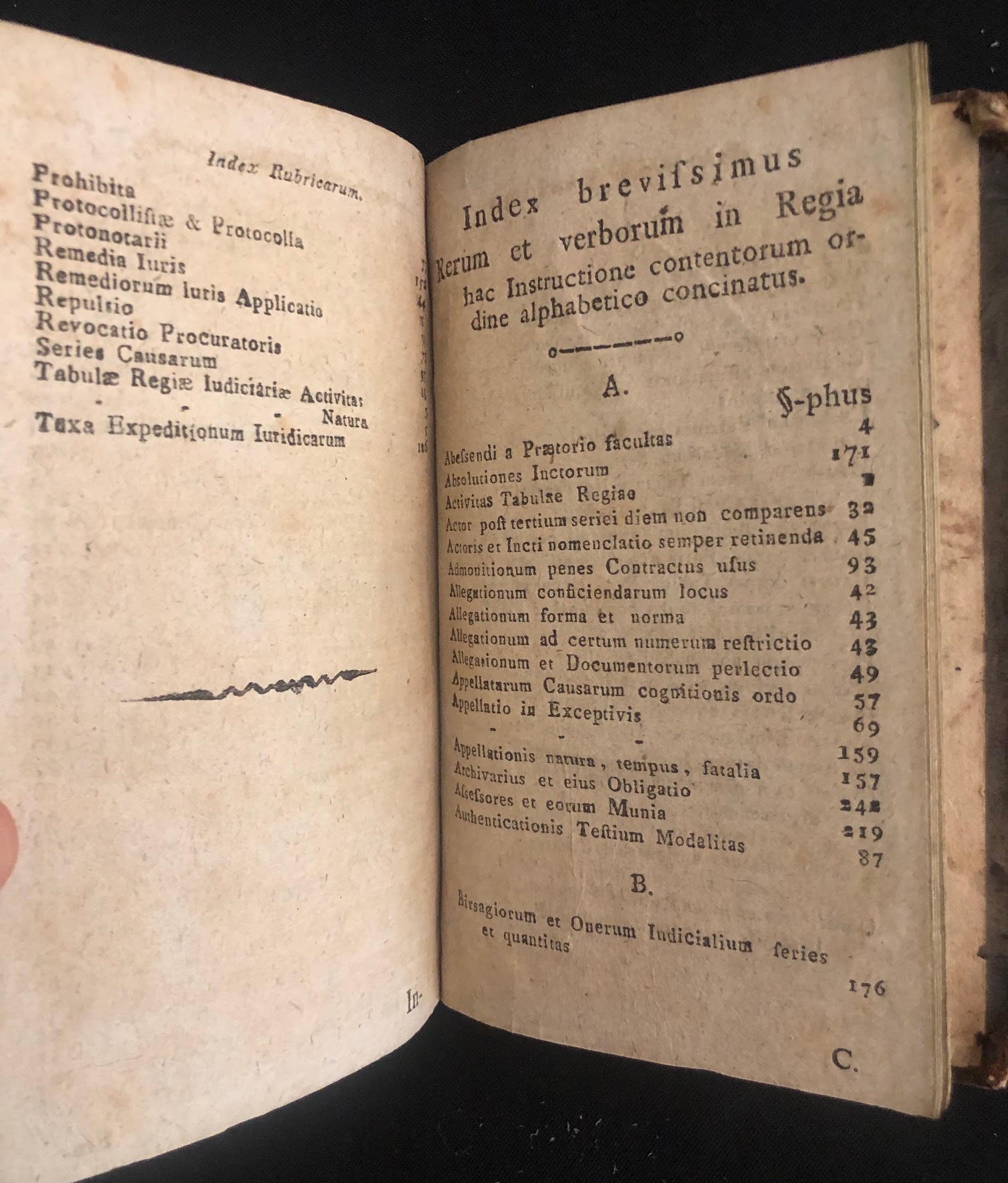
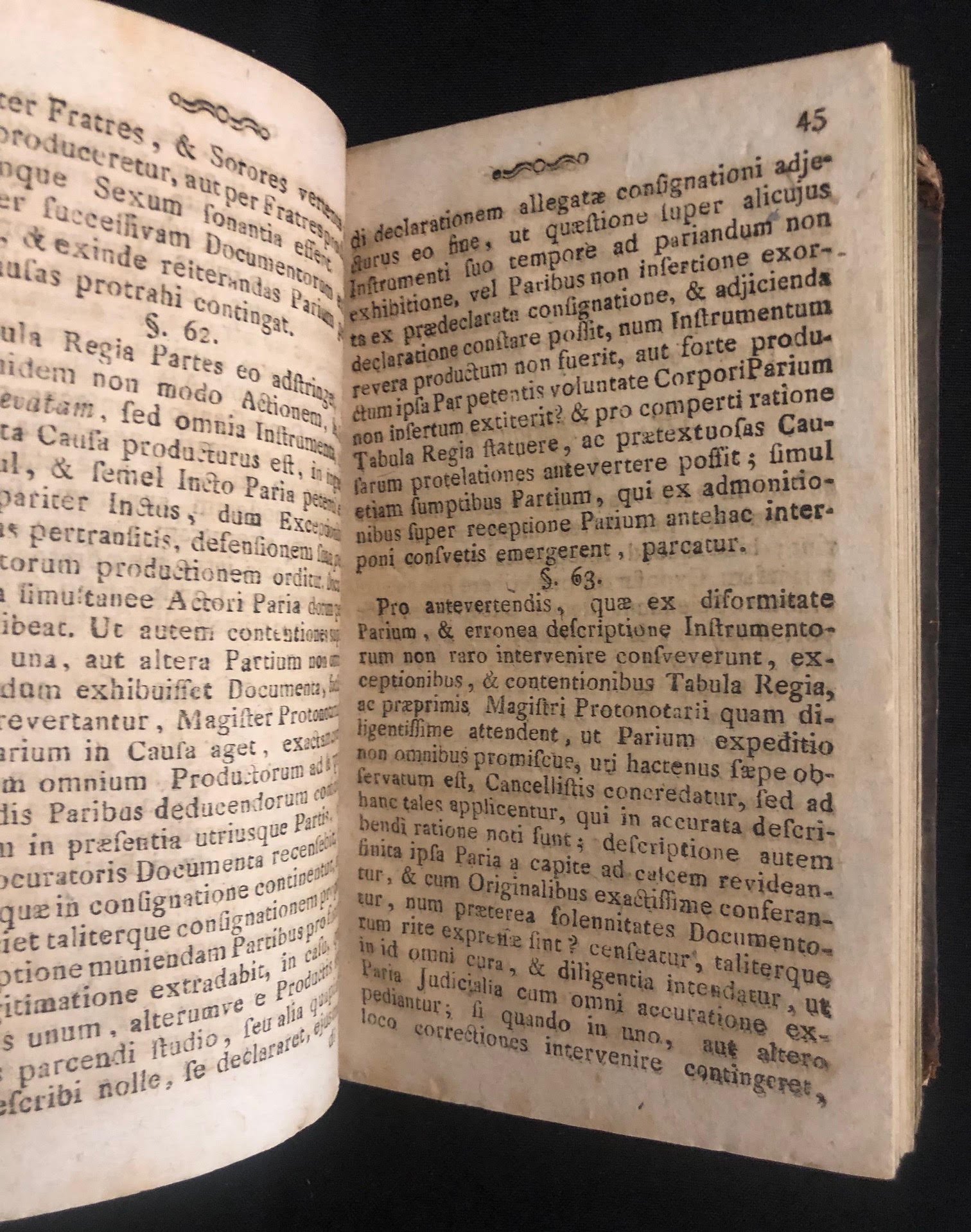
Replacing Customary Law: For centuries, Transylvanian justice had relied heavily on the Tripartitum (1517) and a patchwork of feudal privileges belonging to the Unio Trium Nationum (the Hungarian nobility, the Székelys, and the Transylvanian Saxons). This Instructio standardized court procedures, appellate timelines (Appellationis natura, tempus, fatalia), witness authentication, and legal fees (Taxa Expeditionum Iuridicarum), pulling Transylvania’s semi-autonomous legal apparatus firmly into the structured, bureaucratic orbit of Vienna.
The Imprint: Martin Hochmeister (1740–1789) was the most influential publisher in 18th-century Transylvania. Operating out of Hermannstadt (Sibiu) and Klausenburg (Cluj), he printed the first newspapers in Transylvania and held official privileges to publish government and judicial decrees—a role reflected on the title page by the Habsburg eagle clutching a sword and an olive branch.
2. Extraordinary Aristocratic Provenance: The Szőgyény-Marich Family
The most compelling historical aspect of this specific copy is its unbroken association with one of Hungary’s most powerful legal and political dynasties, documented through both the 18th-century ink inscription and the 19th-century armorial bookplate:
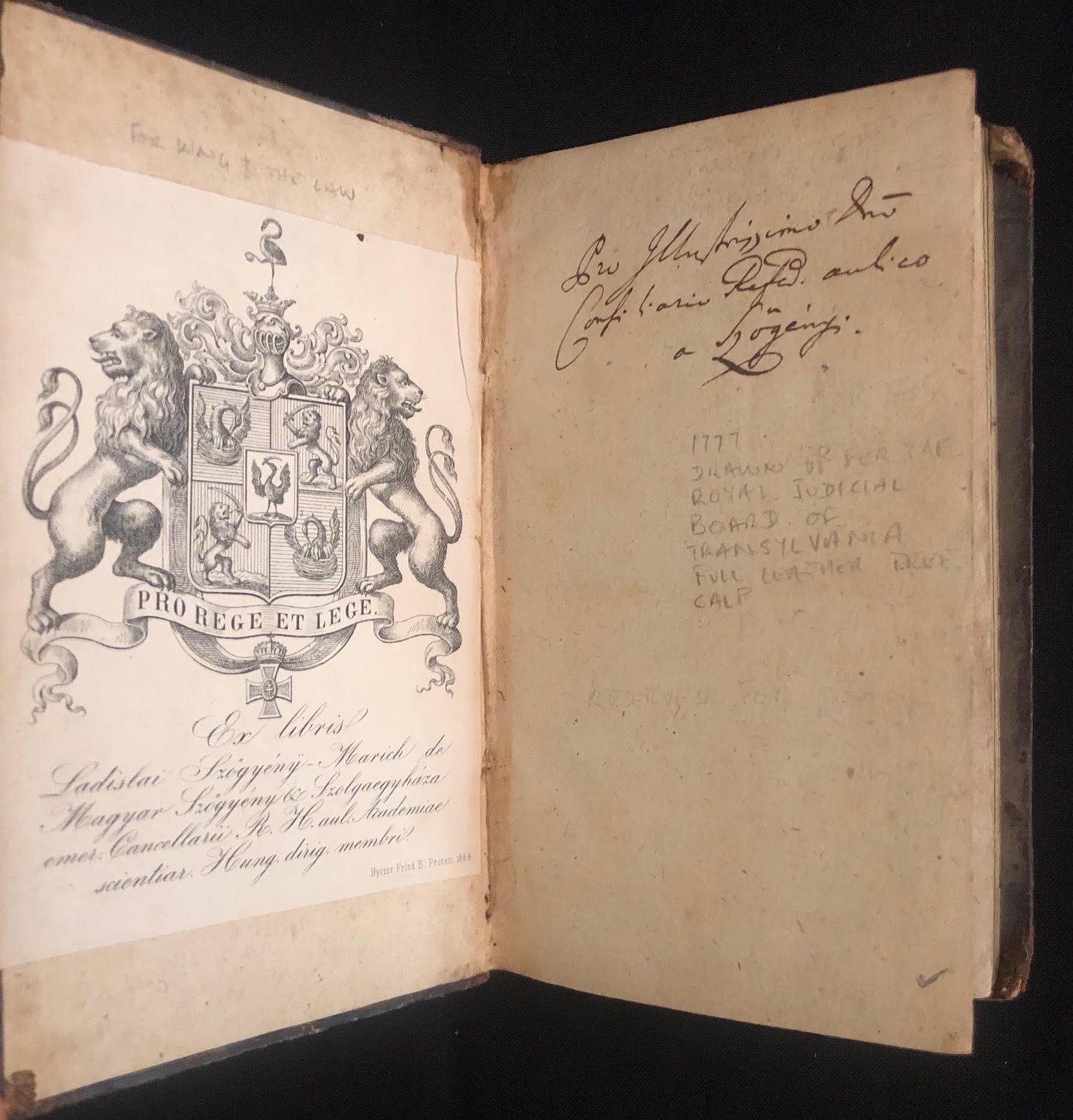
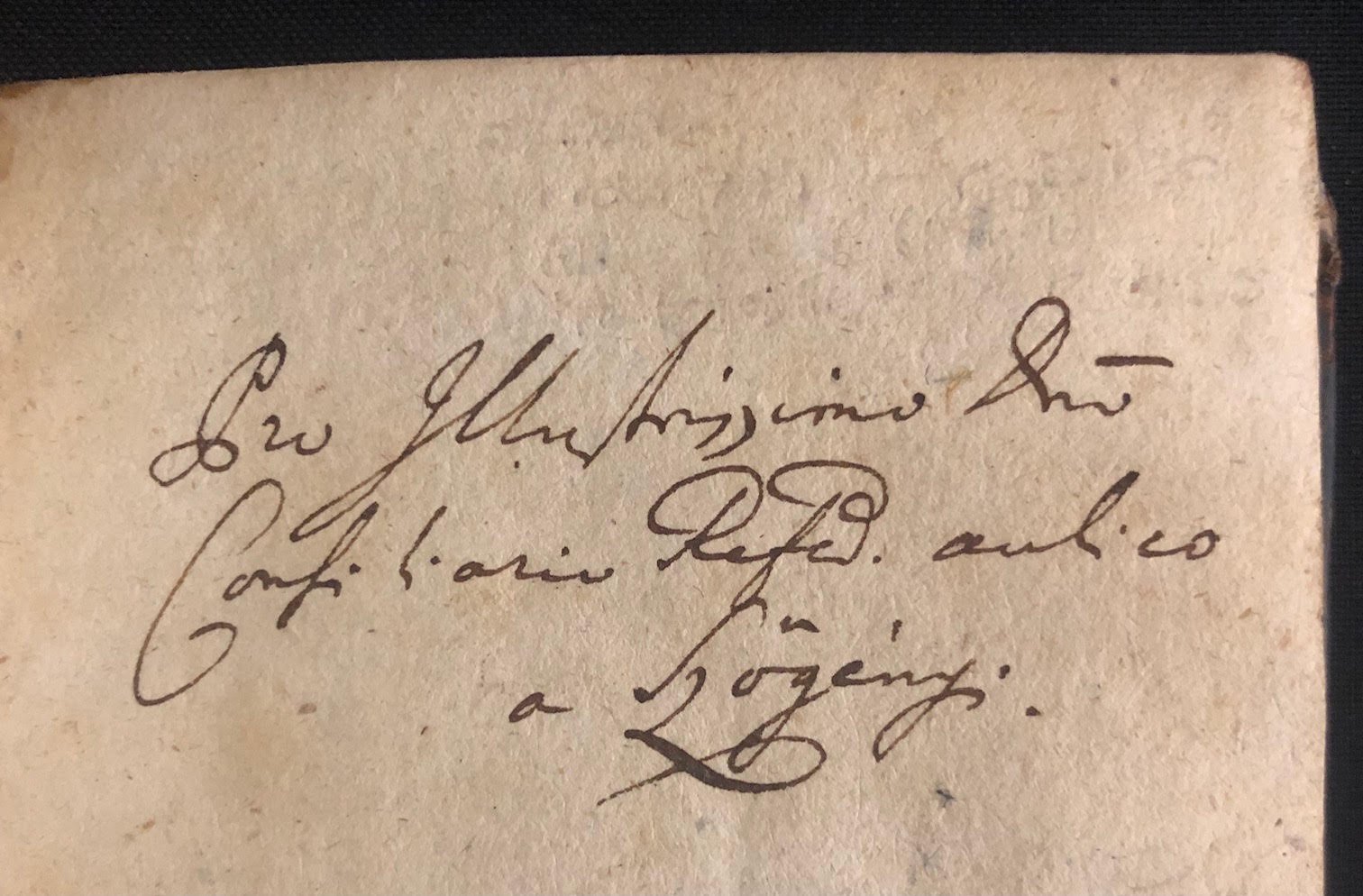
The Contemporary Inscription: On the front flyleaf, an 18th-century hand has inscribed the book to "Illustrissimo D[omi]no Consiliario Ref[eren]d[ario] aulico a Szőgyény" (To the Most Illustrious Lord Court Councillor and Referendary von Szőgyény). This refers to Zsigmond Szőgyény (1735–1800), a high-ranking jurist and Court Councillor (consiliarius aulicus) at the Royal Hungarian Court Chancellery in Vienna, who directly oversaw legal and administrative affairs for the Crown of Saint Stephen.
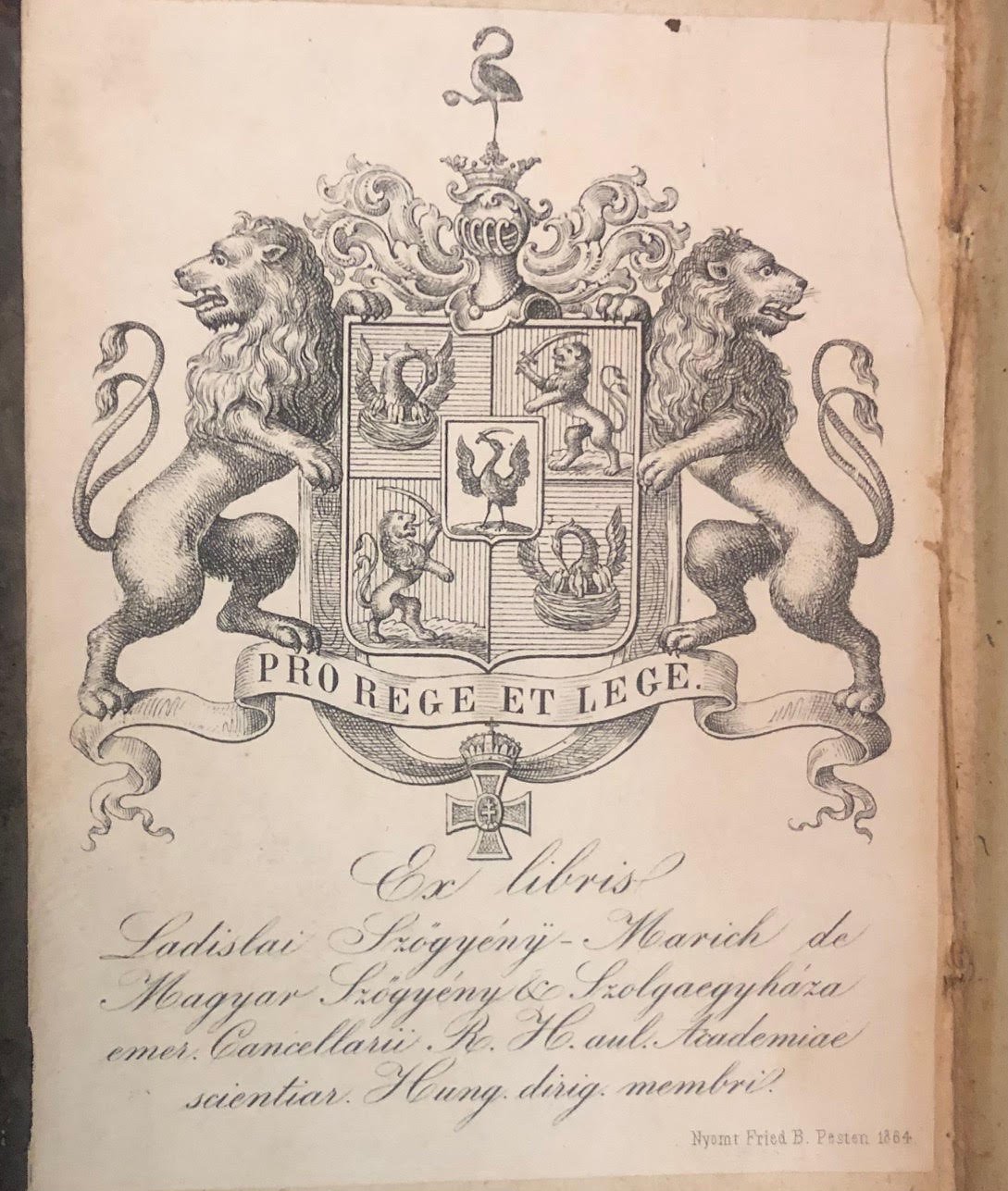
The 1864 Bookplate: Facing it on the pastedown is the large, finely engraved armorial ex-libris (dated 1864, printed by B. Fried in Pest) of his grandson, László Szőgyény-Marich de Magyar-Szőgyén et Szolgaegyháza (1806–1893).
A Career at the Heart of the Empire: László Szőgyény-Marich served as Vice-Chancellor of Hungary, Lord Chief Justice (Országbíró), Speaker of the House of Magnates, and a director of the Hungarian Academy of Sciences (Academiae scientiar. Hung. dirig. membri). Furthermore, his son—László Szőgyény-Marich Jr.—was the Austro-Hungarian Ambassador to Berlin in July 1914, the diplomat who received Kaiser Wilhelm II's infamous "blank cheque" telegram that precipitated the outbreak of World War I.
3. A Working Jurist’s Handbook
Unlike ornate folio law books meant solely for display, this compact octavo was designed for active use on the bench or at the court chancellery. The inclusion of the Index brevissimus Rerum et verborum—an alphabetical quick-reference guide cross-referencing specific paragraphs (§-phus) on topics ranging from court absences (Abessendi a Praetorio facultas) to fines (Birsagiorum... quantitas)—shows how Vienna sought to make judicial administration uniform, predictable, and rapid across the eastern reaches of the empire.
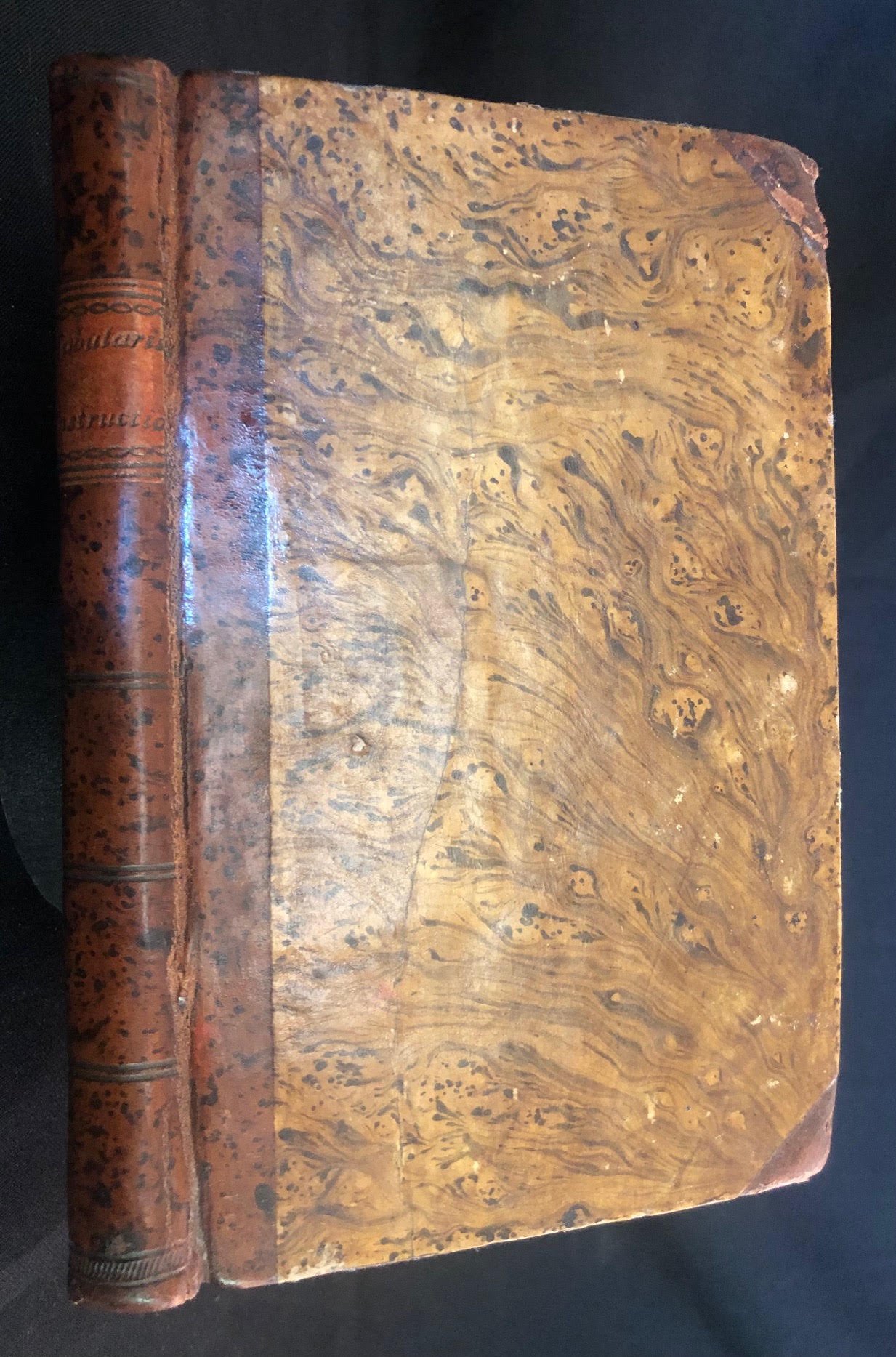
110mm x 170mm x 15mm
Tree calf binding; corners dented; pages age-toned; 180 pages; + index.
R2,000