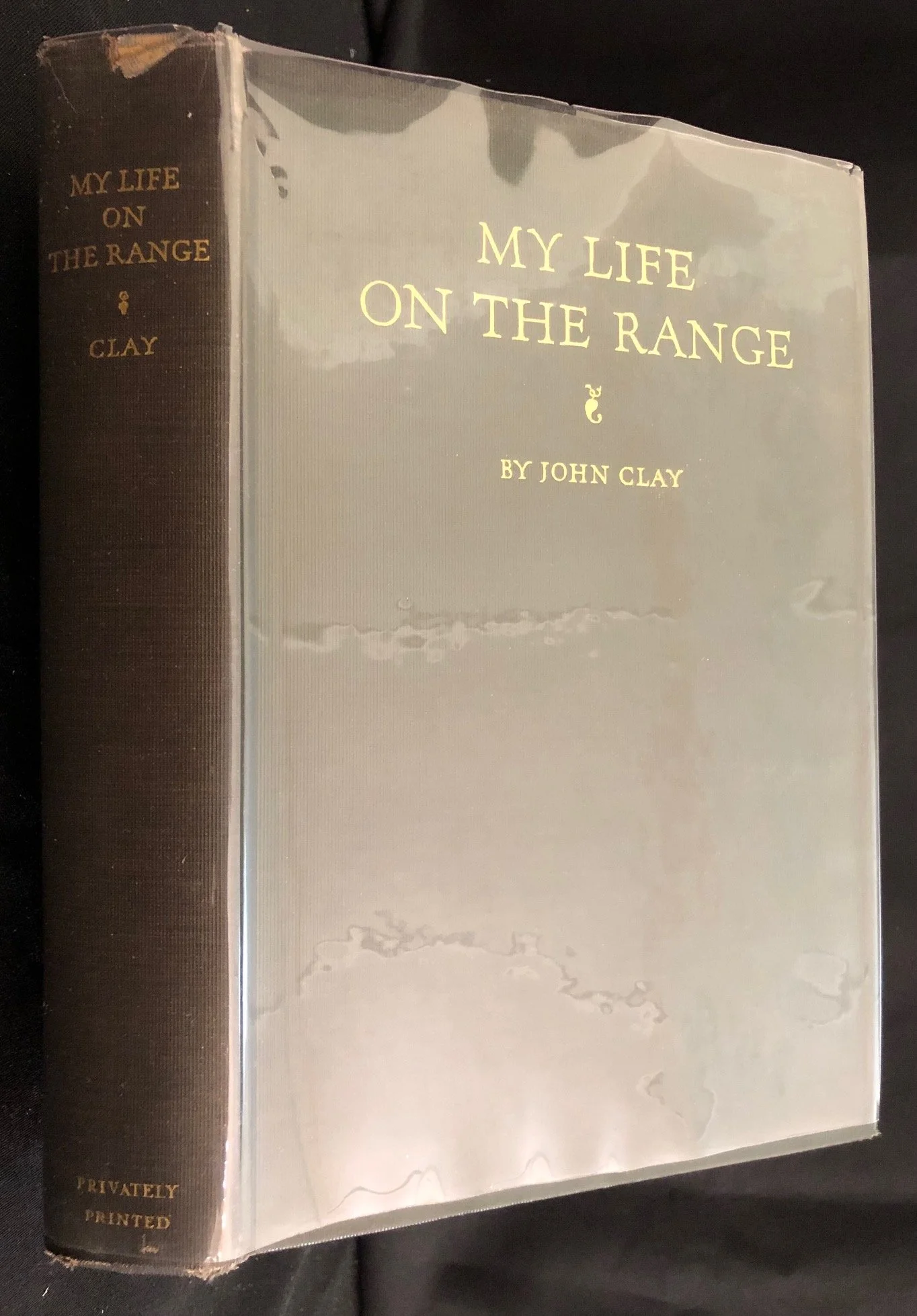
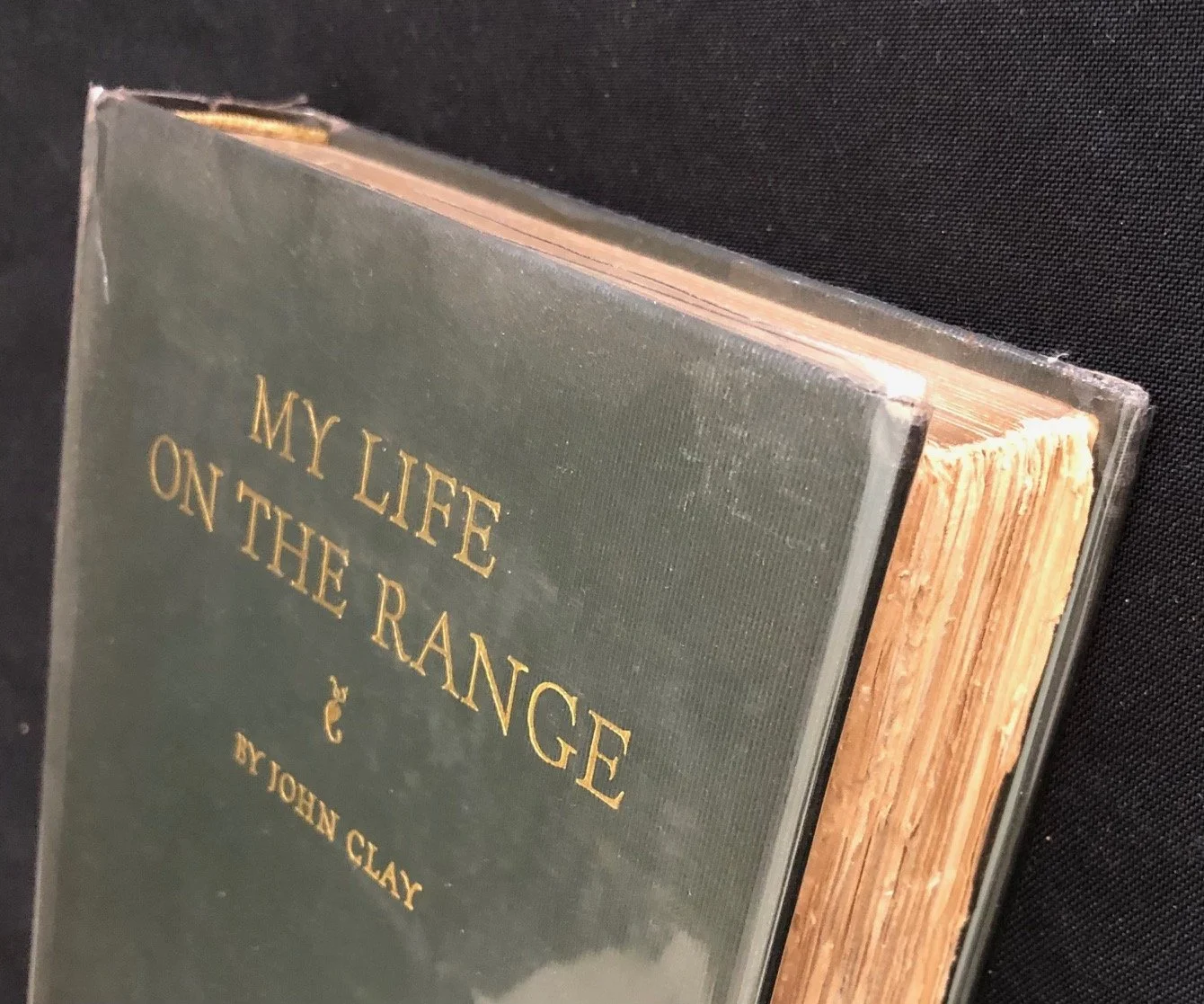
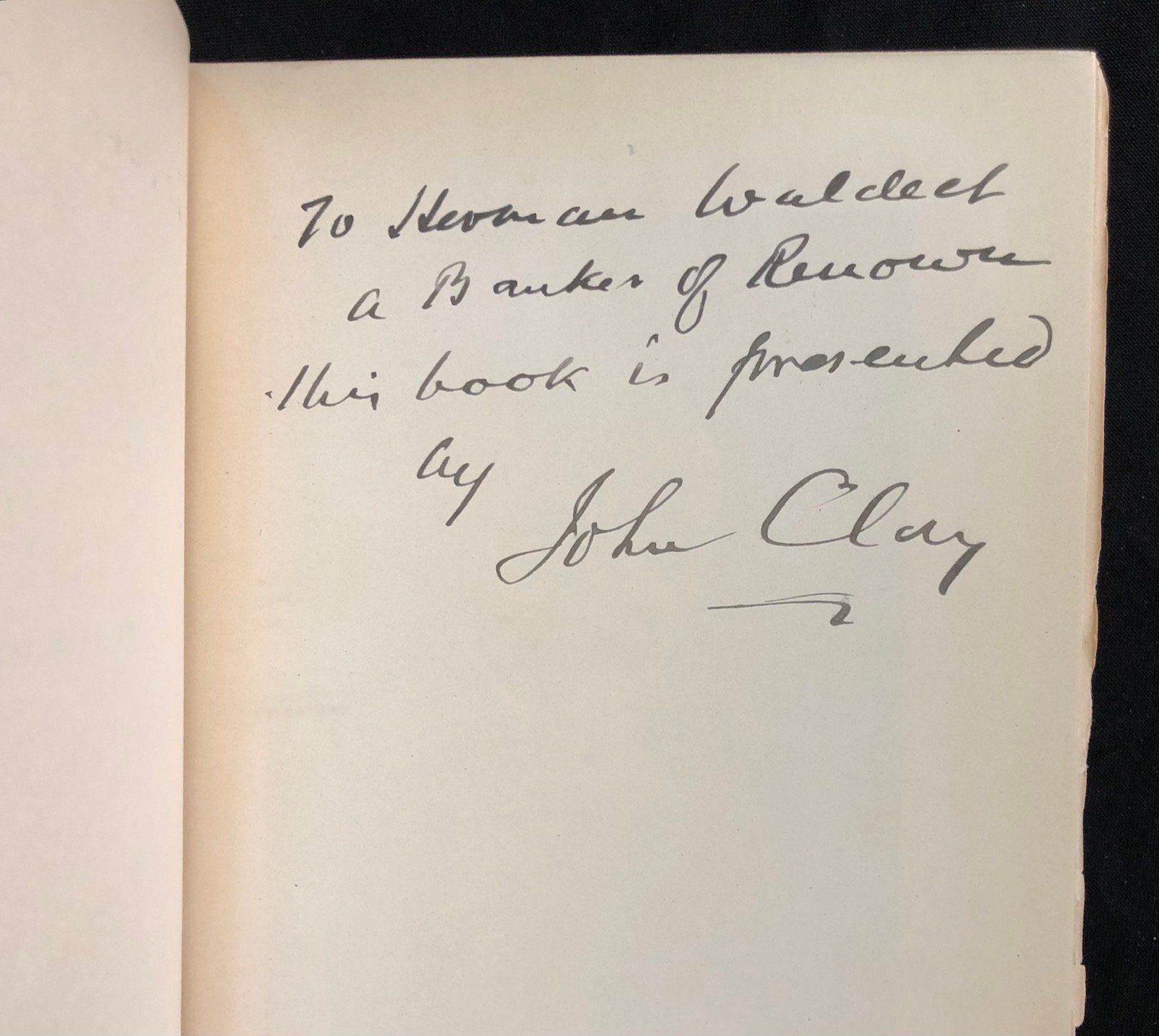
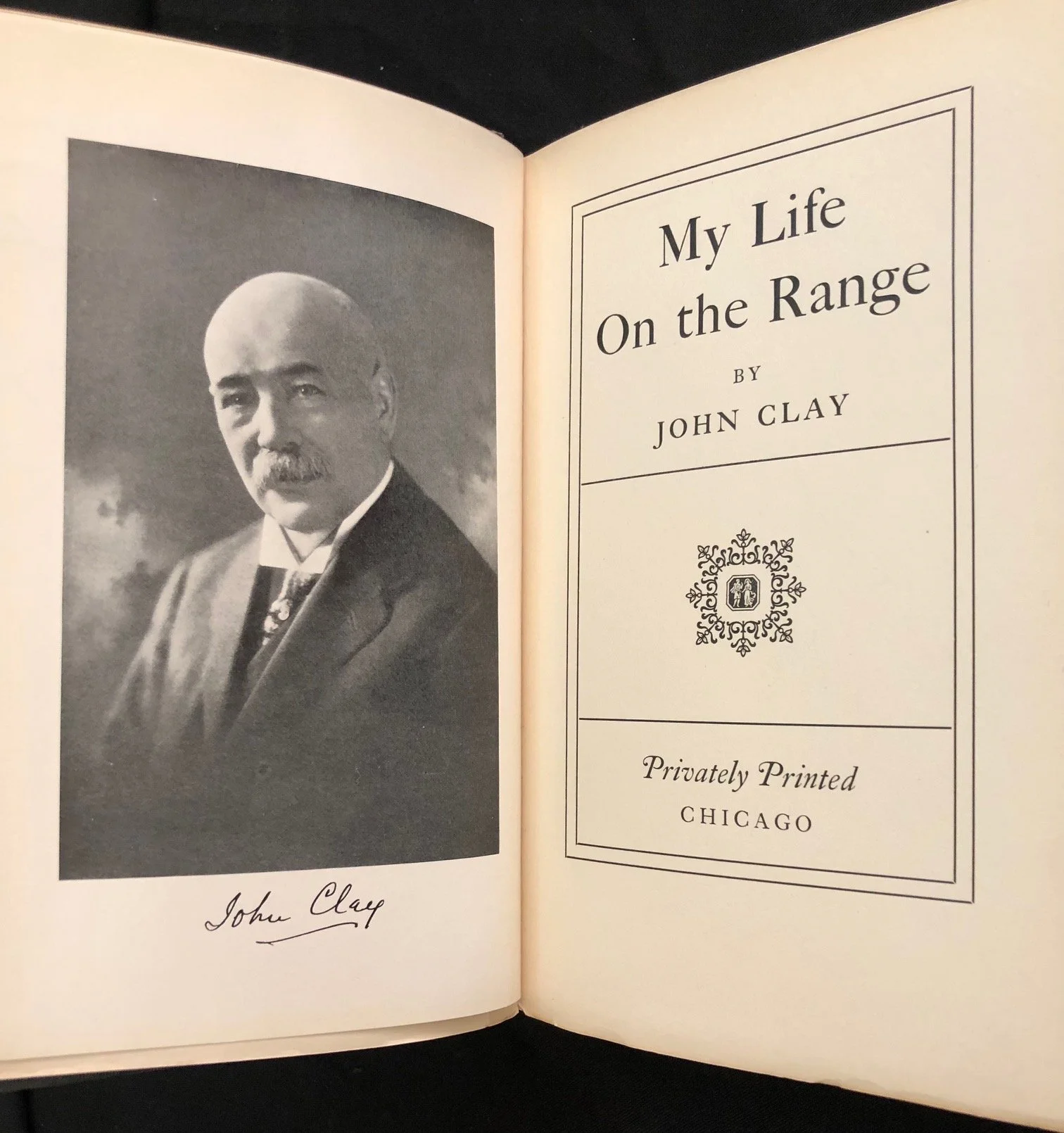
My Life on The Range (as a cowboy) inscribed by the author John Clay (1924)
Privately printed.
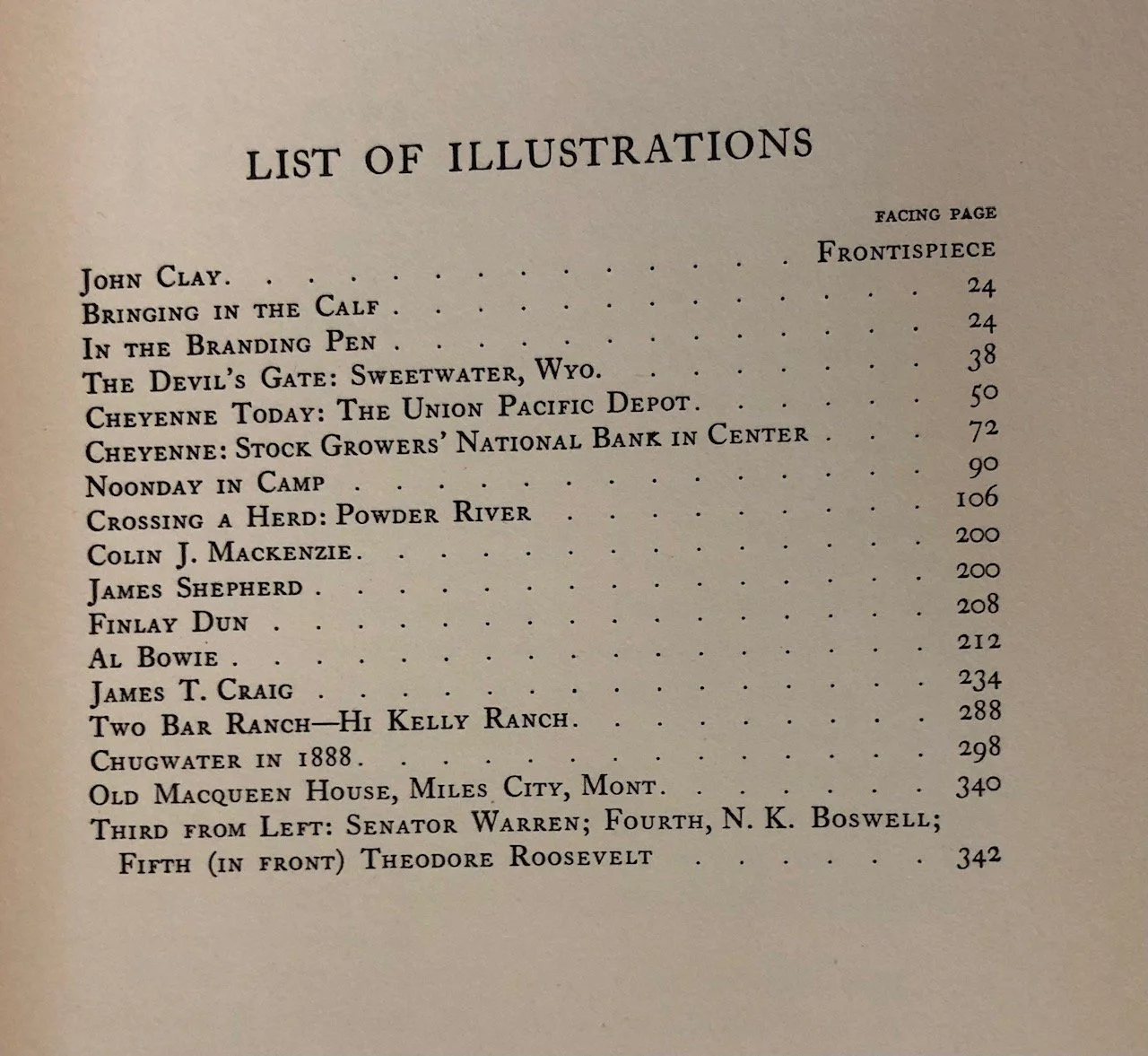
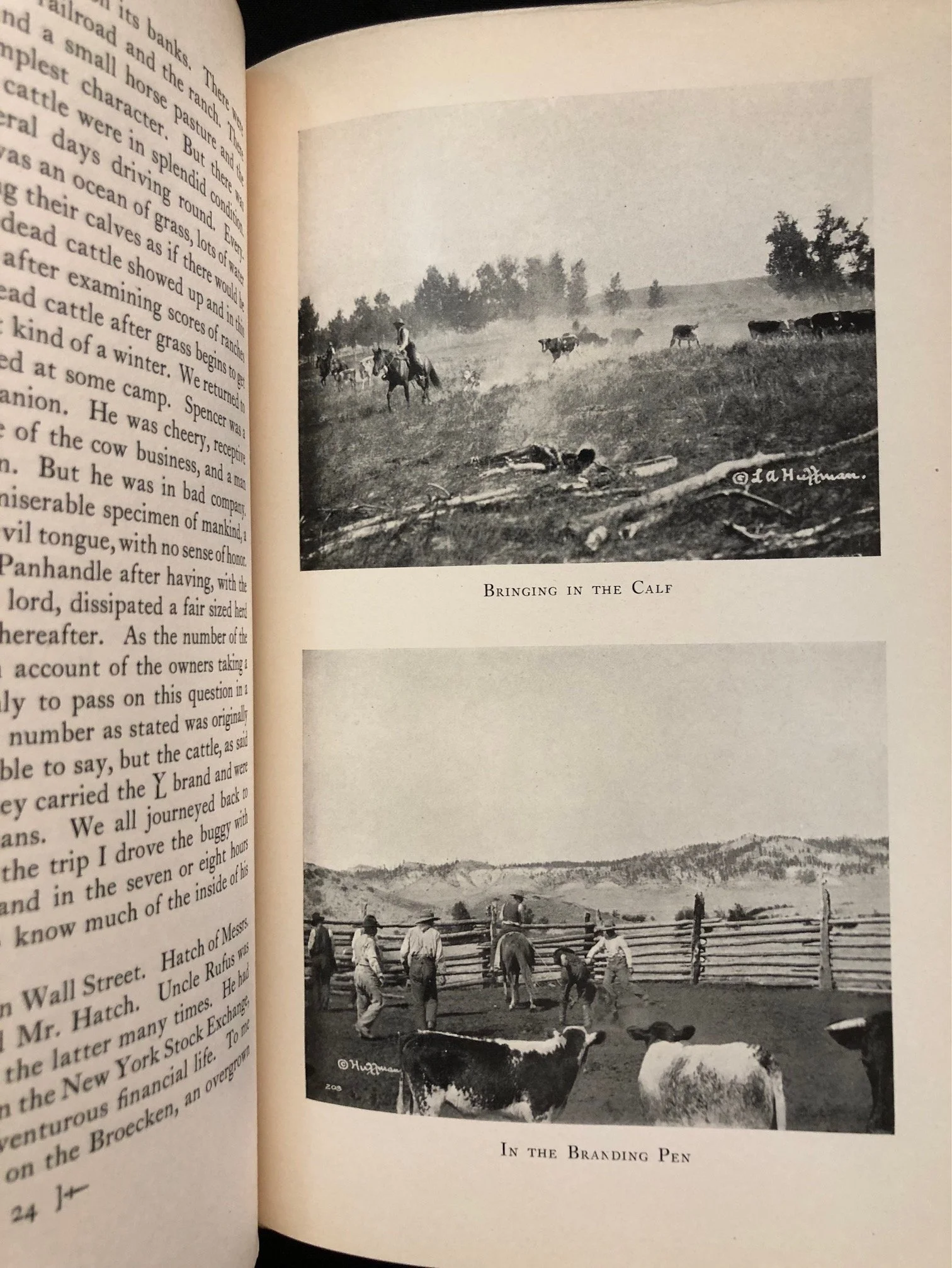
Complete with all illustrations etc.
This book has an interesting association. Herman Waldeck (1863–1961) was an incredibly influential figure in Chicago's financial heyday. He was the longtime Executive Vice President of the Continental Illinois National Bank and Trust Company, which at the time was one of the largest and most powerful financial institutions in the United States.
Because John Clay’s entire business model relied on securing massive lines of credit from Chicago banks to finance livestock operations across the West, Waldeck wasn't just a "banker of renown"—he was exactly the kind of financial titan who pulled the strings behind the scenes of the American cattle industry.
The British "Cattle Baron" Who Ruled the West
John Clay was not a rugged, home-grown cowboy; he was a highly educated Scotsman born near the Scottish Borders. He was sent to America in the late 1870s by Scottish investment syndicates to investigate where their money was going.
During the "Great Beef Bonanza," British and Scottish investors poured millions of pounds into the American West. Clay became the ultimate manager of this foreign capital, eventually founding his own massive livestock commission firm, John Clay & Co., headquartered at the Chicago Stockyards. He oversaw legendary operations like the 71 Quarter Circle ranch and the Swan Land and Cattle Company in Wyoming, controlling millions of acres and hundreds of thousands of head of cattle.
An Insider's View of the Johnson County War
Historically, the most explosive and valuable chapters of this book deal with the Johnson County War of 1892—the infamous, violent conflict between wealthy, established cattle barons (organized under the Wyoming Stock Growers Association) and smaller, local homesteaders and suspected rustlers.
Clay was actually the President of the Wyoming Stock Growers Association when the "Invaders" (a private army of Texas gunmen hired by the barons) marched into Johnson County to execute a hit list of locals. Clay happened to be in Europe when the actual shooting started, which likely saved him from legal ruin or worse. In My Life on the Range, Clay provides an unapologetic, deeply biased, yet incredibly vital insider defense of the big cattlemen's actions, making it an indispensable resource for understanding the ruthless politics of the open range.
The "Big Die-Up" of 1886-1887
Clay's memoir is also famous for capturing the tragic end of the open-range era. He describes in vivid, heartbreaking detail the Winter of 1886–1887 (often called the "Big Die-Up"). A combination of overgrazing, a scorching summer drought, and unprecedented, blinding blizzards wiped out up to 90% of the cattle herds on the northern plains. Clay’s book is one of the best historical records of how this ecological disaster forced the industry to evolve from free-roaming herds into fenced, modern ranching.
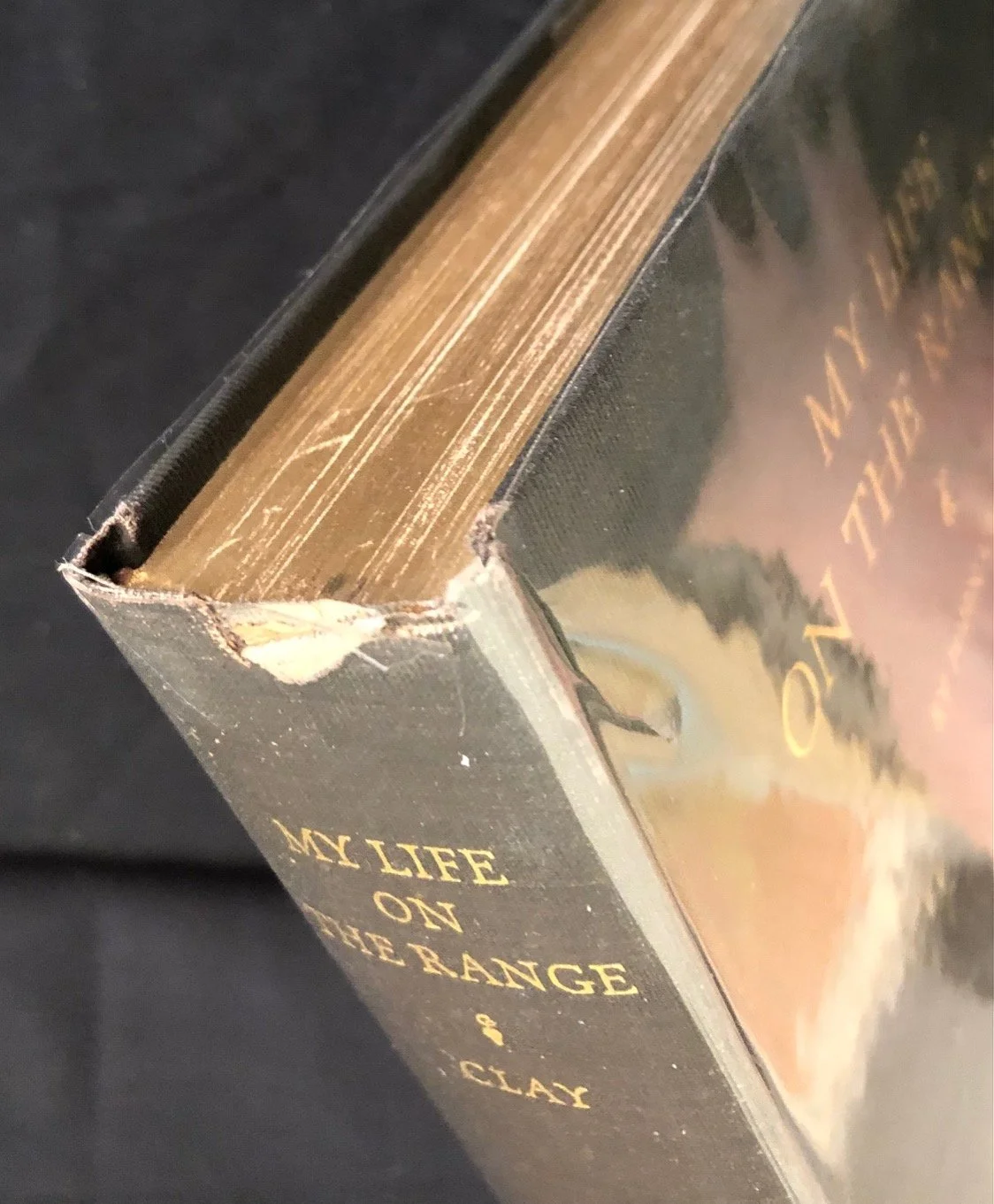
Chipped head and tail of spine.
165mm x 240mm x 40mm
R4,500