Voyage to the Interior of South Africa (German).
By François Le Vaillant 1792
Complete in one volume.
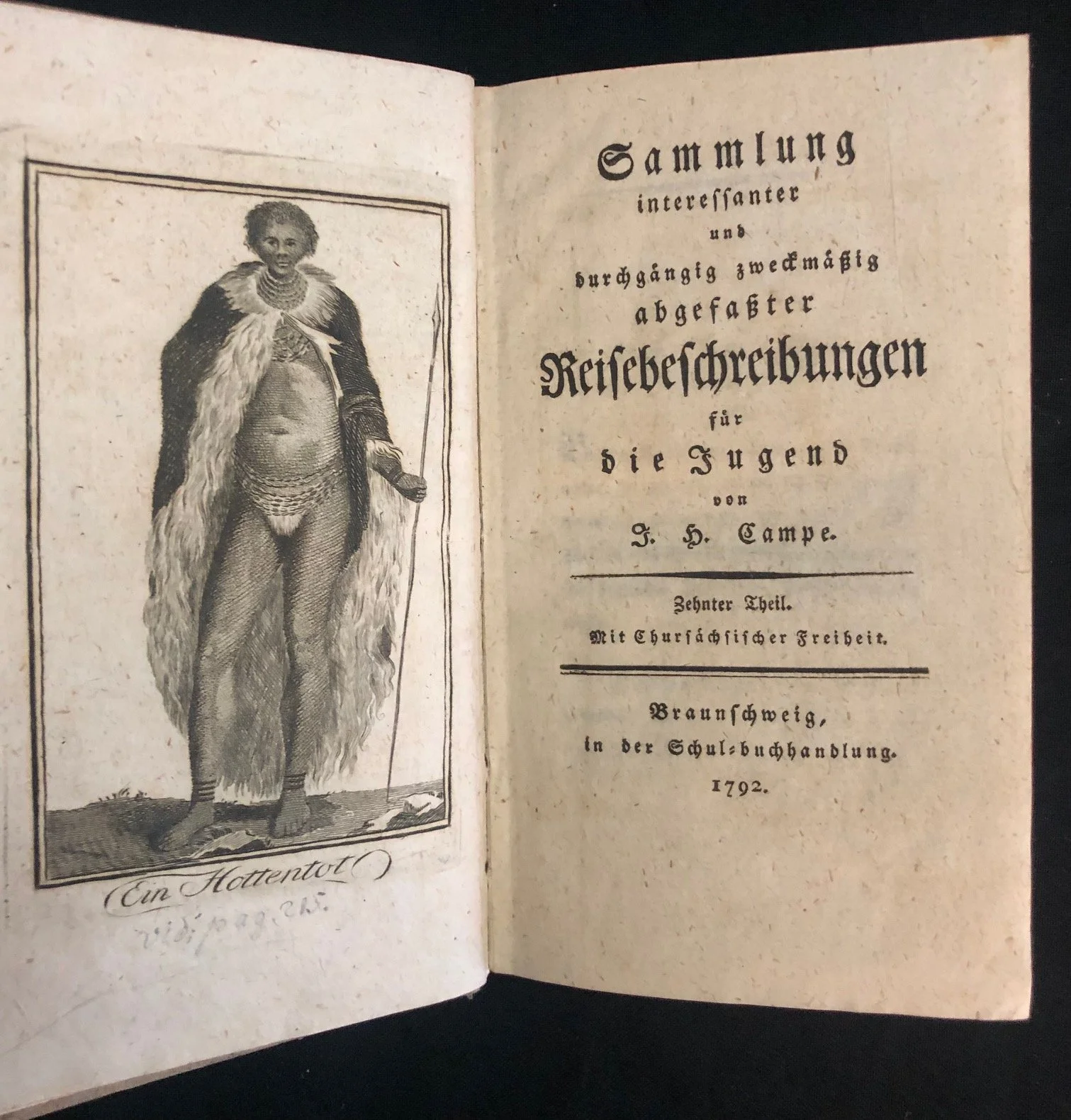
This children’s book relates to early South African travel literature.
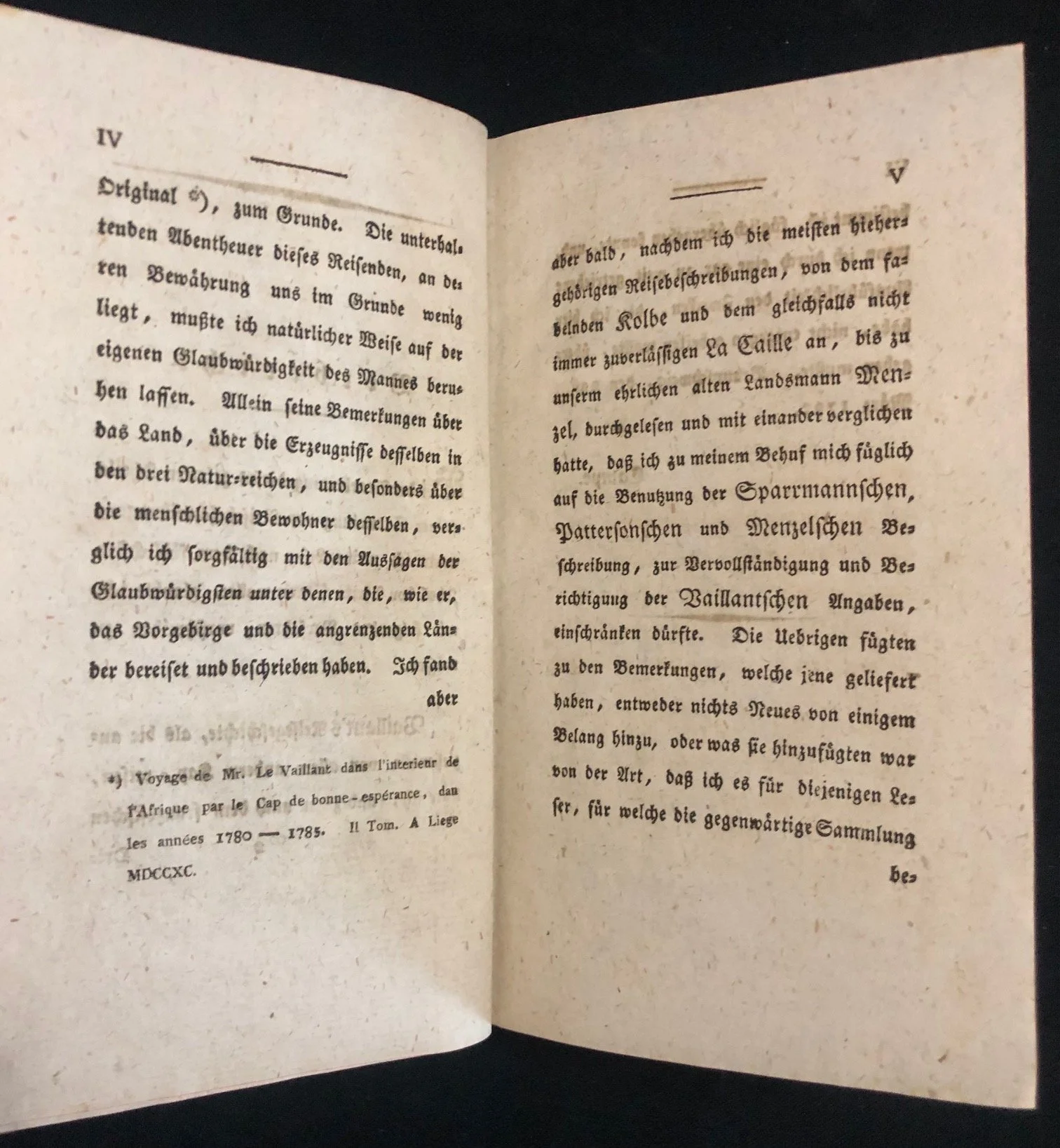
Though published by Joachim Heinrich Campe under his curated series of travelogues for youth, this specific tenth volume ("Zehnter Theil", 1792) is the German adaptation of François Le Vaillant’s seminal Voyage de Monsieur Le Vaillant dans l'intérieur de l'Afrique (originally published in Paris in 1790).
Le Vaillant was an eccentric French naturalist, explorer, and ornithologist who traveled extensively through the Cape of Good Hope, the Karoo, and into the Eastern Cape between 1781 and 1784. His accounts were wildly popular across Europe, introducing international audiences to the landscape, fauna, and indigenous peoples of Southern Africa.
Joachim Heinrich Campe’s Educational Mission (1746–1818), was a leading figure of German Philanthropinismus—an Enlightenment educational movement focused on practical learning, physical health, and cultivating empathy in children.
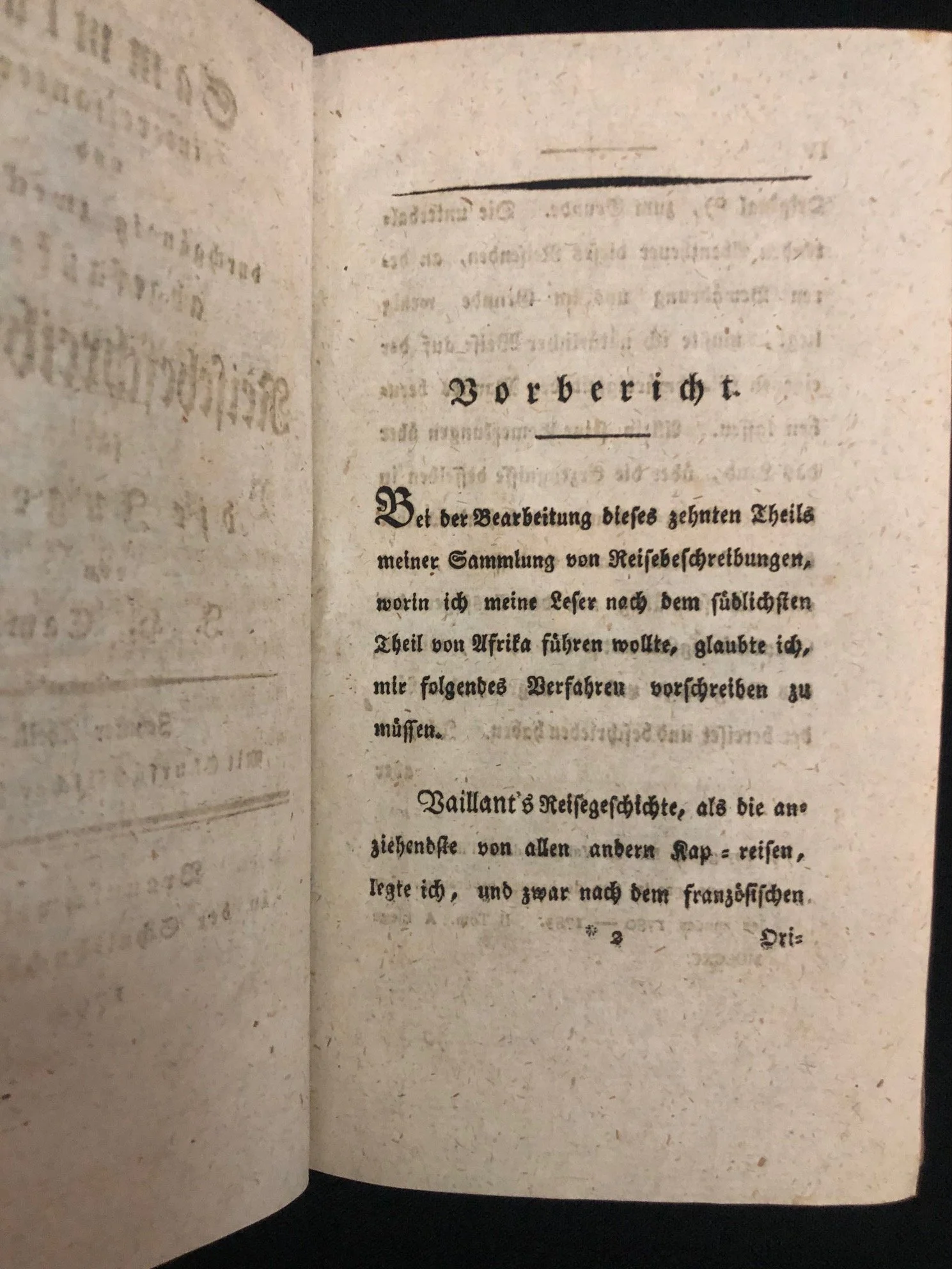
Instead of teaching youth through dry, dogmatic texts, Campe realized that highly edited, exciting travelogues (Reisebeschreibungen) were the perfect vehicle to teach geography, ethnography, and morality. He rewrote adult accounts (like Le Vaillant's) into structured, dialogic narratives tailored specifically for young readers ("für die Jugend").
The copperplate engraving on the frontispiece, captioned "Ein Hottentot" (used by European colonists for the Khoekhoe people), reflects a major philosophical shift of the late 18th century.
Unlike earlier, cruder European depictions that often caricatured indigenous Africans as monstrous or entirely uncivilized, this engraving heavily channels the Enlightenment ideal of the "Noble Savage." Heavily influenced by Le Vaillant's romanticized writings, the subject is depicted with classical, statuesque proportions—reminiscent of Greco-Roman sculpture—holding a spear and draped in a traditional caross (skin cloak). This idealized aesthetic was deliberate, intended by European publishers to evoke a sense of uncorrupted human nature in its primordial state to a youthful European audience.
"Mit Chursächsischer Freiheit" indicates that the book was published with an exclusive printing privilege (essentially an early form of copyright protection and official state sanction) granted by the Electorate of Saxony (Kursachsen). It protected Campe's Schulbuchhandlung (School Bookshop) in Braunschweig from the rampant literary piracy and unauthorized reprints common across the fragmented German states at the time.
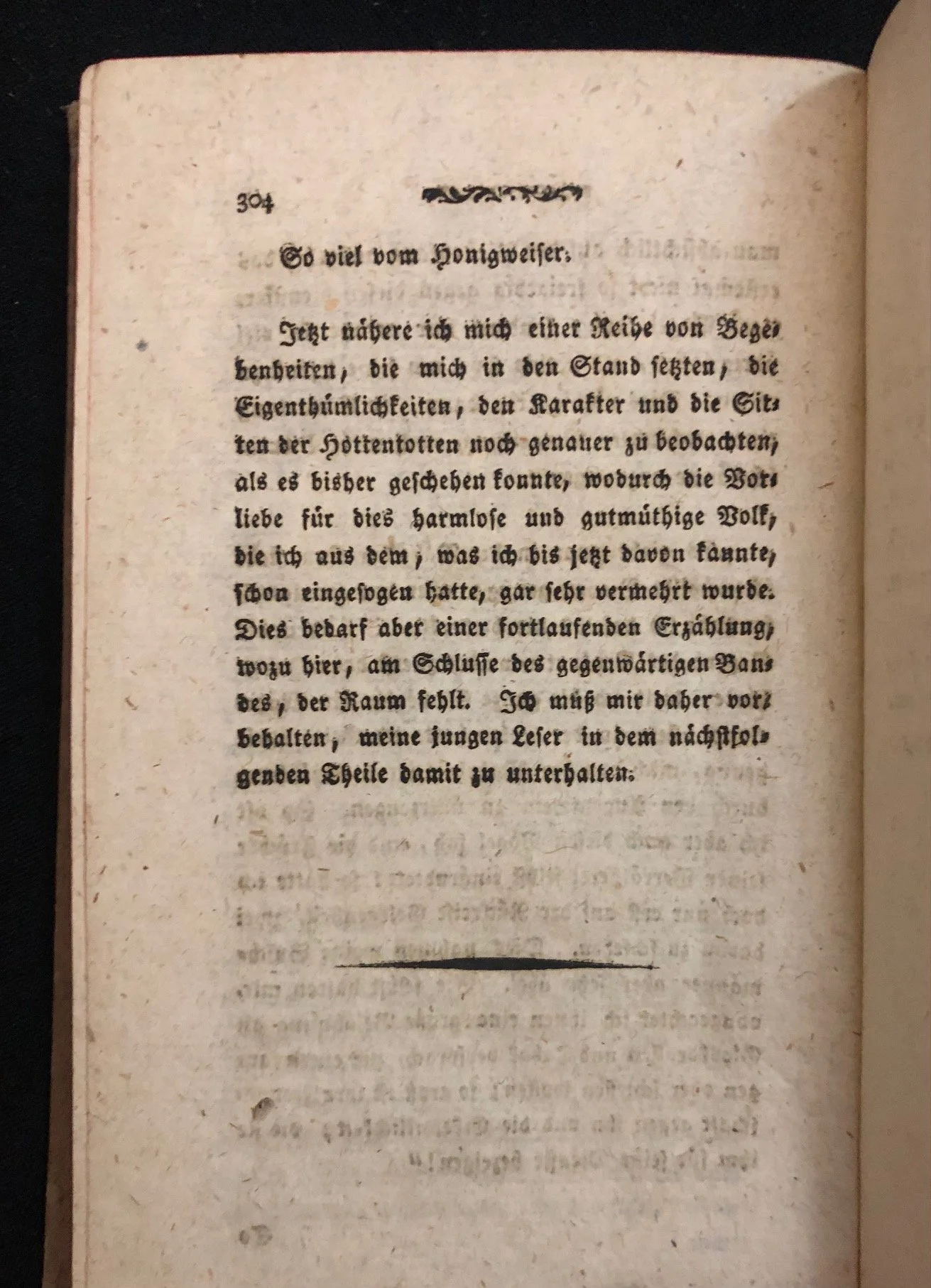
The specific story contained within this volume is complete.
While it shows the tenth volume ("Zehnter Theil") of a much larger, multi-volume library compiled by Joachim Heinrich Campe—which ultimately ran to 12 volumes in its first series—Campe designed each volume to function as a self-contained, abgeschlossen (complete) entity.
Specifically, this tenth volume contains the entirety of Campe's youth adaptation of François Le Vaillant's first expedition ("Le Vaillants Reise in das Innere von Afrika, vom Vorgebirge der guten Hoffnung aus in den Jahren 1780-1785"), making the narrative arc within these specific 304 pages complete in its own right.
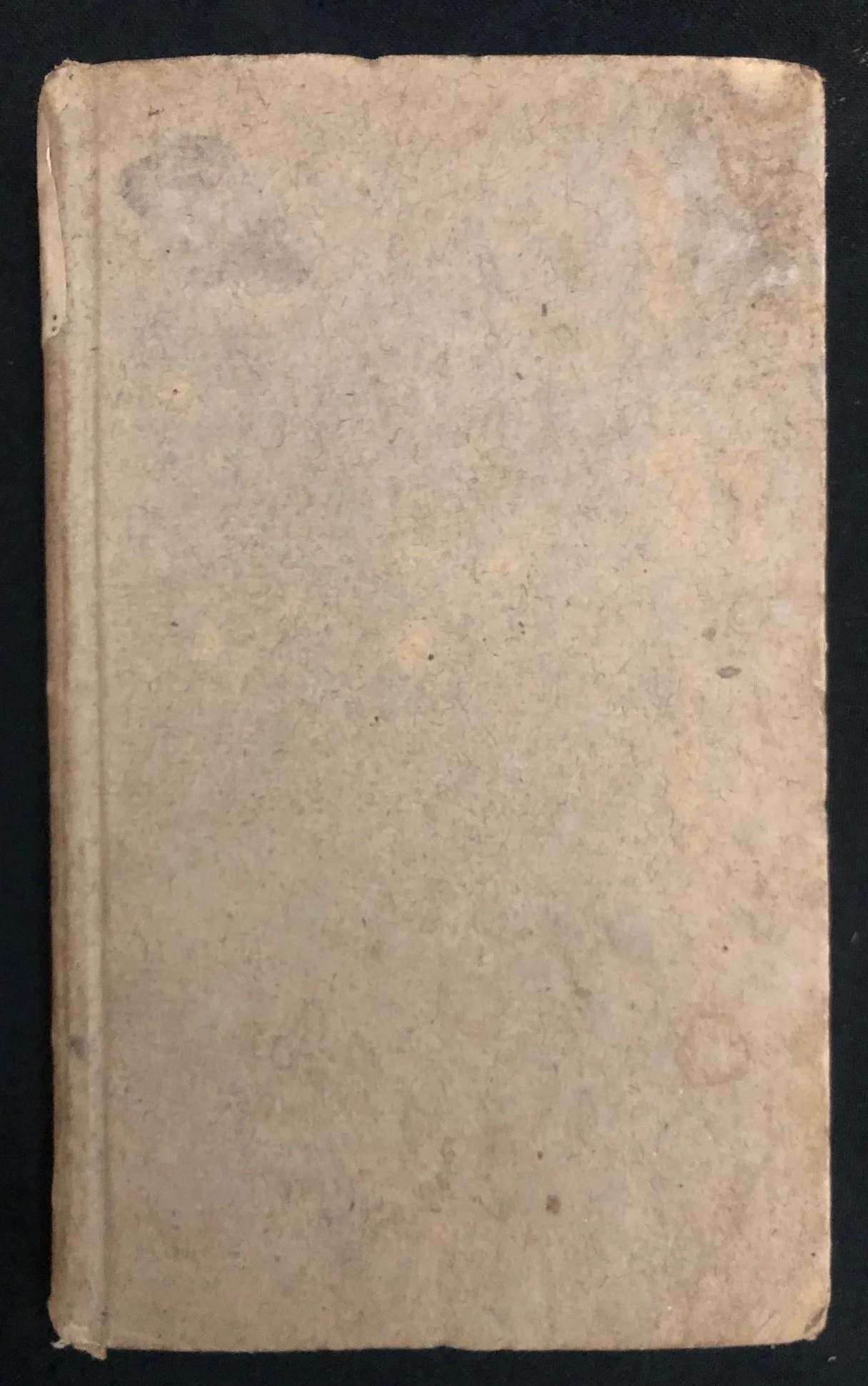
Minor wear to the binding, corners bent.
105mm x 175mm
R1,500