Letter by English Artist Henry Bright
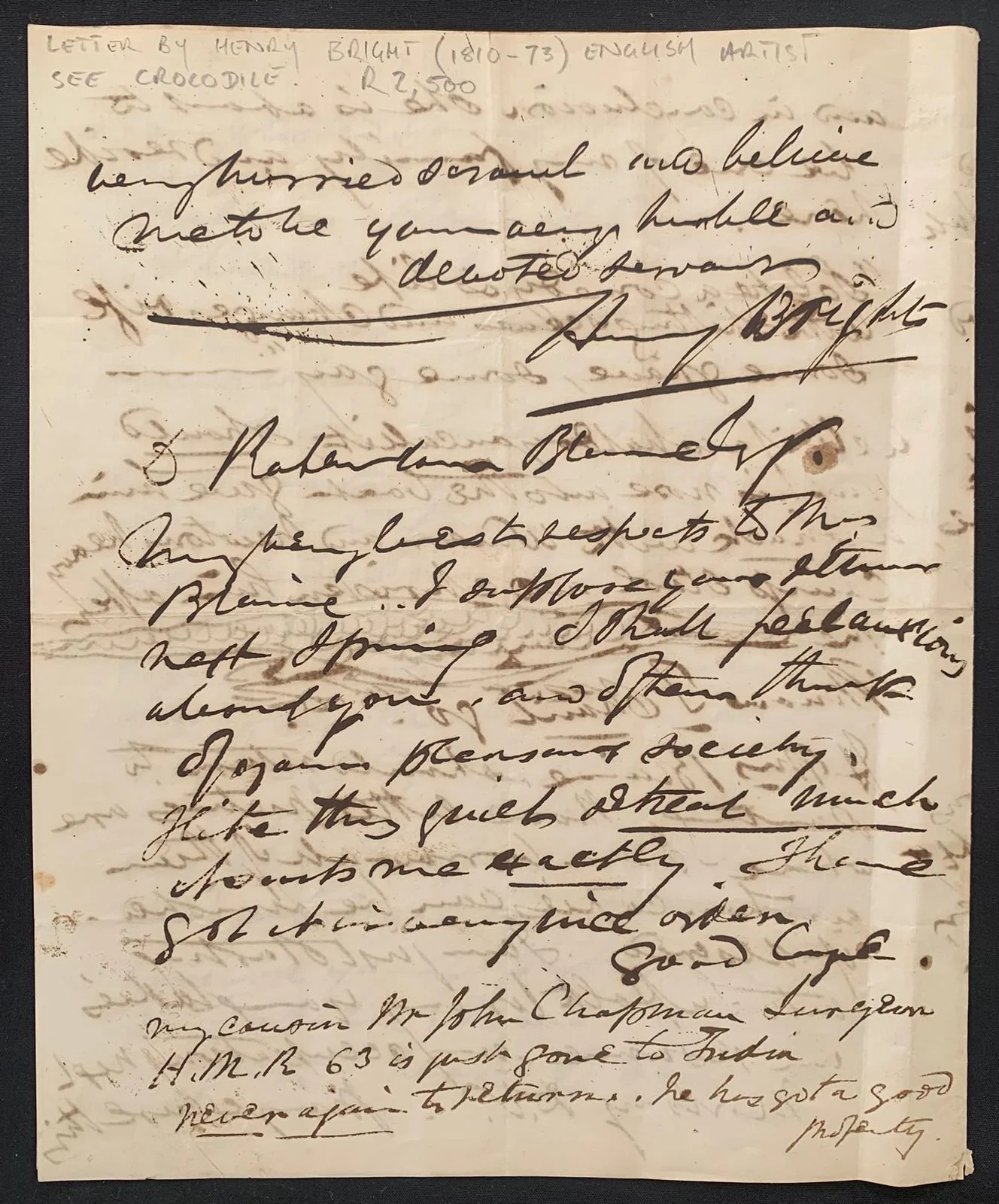
This manuscript is a wonderful piece of 19th-century social and art history. The letter, penned by the English landscape artist Henry Bright (1810–1873)—a notable member of the Norwich School of painters—captures an extraordinary mix of domestic updates, artistic shop-talk, and eyewitness accounts of major geopolitical upheaval.
Eyewitness to the French Revolution of 1848
Bright recounts the dramatic backstory of a young lady he is hiring as a governess for his children. She had been an English resident in Paris during the French Revolution of February 1848 (which overthrew King Louis Philippe).
Bright writes an incredibly vivid, rapid-fire summary of her ordeal:
"English resident in Paris... became frightened, battles under her windows, looked out, street running with blood, Paris quiet, Brother gets his property, tremendous sacrifice!!! Little independence left rushed to England..."
This passage offers a raw, immediate glimpse into how ordinary British expatriates experienced the sudden, violent collapse of the French July Monarchy, fleeing across the Channel with little more than their lives.
A "Whack" with a Winsor & Newton Camp Stool
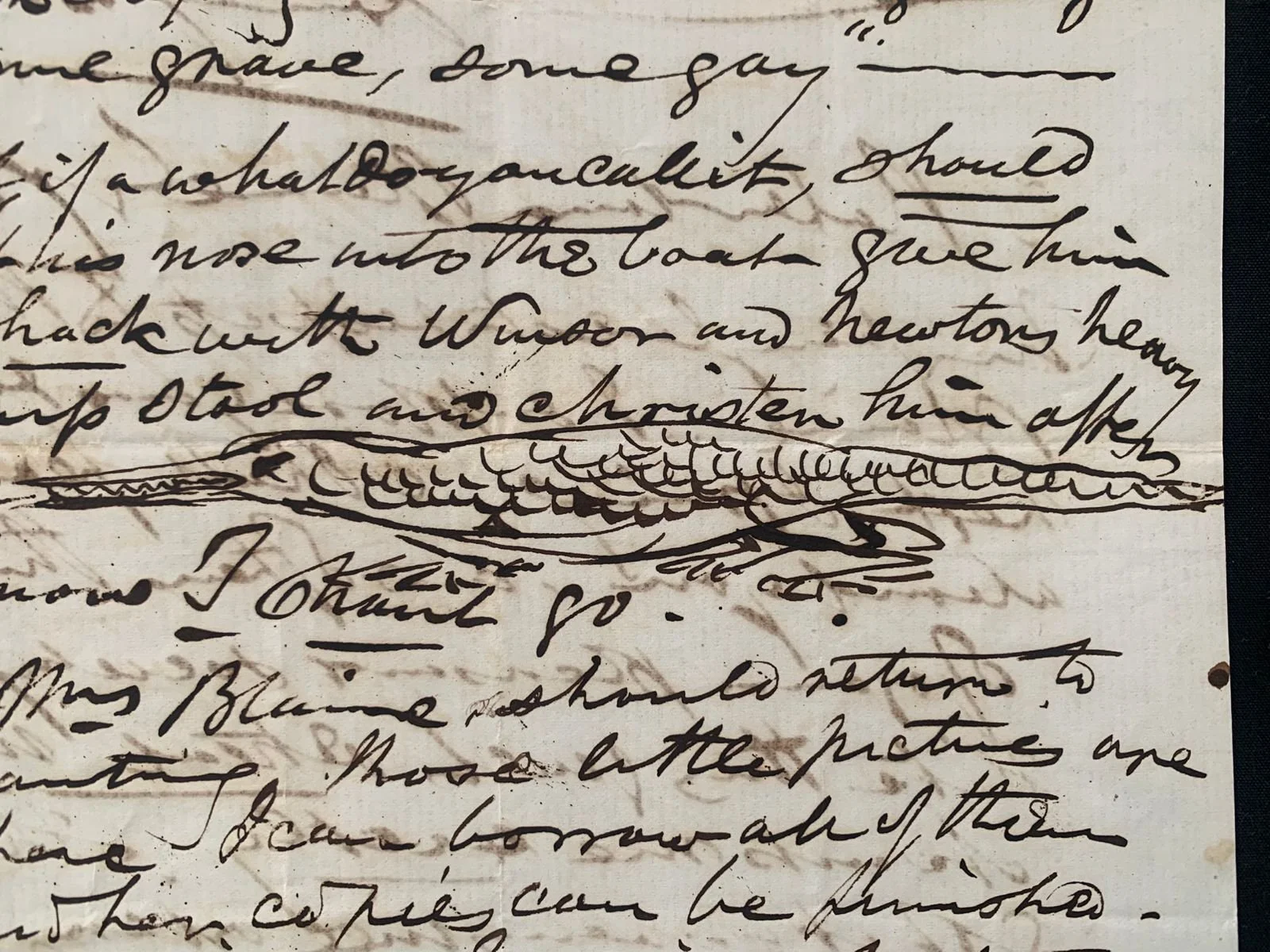
Bright includes a charming ink sketch of a crocodile (referenced by the archival note at the top). The text accompanying the sketch is a humorous, hypothetical scenario about dealing with an intrusive creature while out painting in nature:
"Well, if a what do you call it, should put his nose into the boat give him a whack with Winsor and Newtons heavy Camp Stool and christen him after me..."
What makes this historically delightful is the mention of Winsor & Newton. Founded in 1832, they were the premier artists' colourmen of the Victorian era. Bright wasn't just using their paints; he was using their heavy-duty outdoor gear. This perfectly illustrates the reality of the 19th-century en plein air movement, where landscape artists trekked into remote or wild locations loaded down with specialized commercial painting equipment—which, apparently, doubled as a weapon of self-defense against local wildlife!
3. The Travel Desires to the "Land of Sacred Cats"
At the start of the letter dated "Monday 25th Septr 48" Bright addresses his correspondent, Mr. Blaine, who seems to be planning a trip to Egypt:
"...inform me of your intended tour to the land of 'Sacred Cats' and 'preserved people' [mummies] but seriously do not venture if you find there is any danger..."
This reflects the burgeoning era of Victorian tourism and Egyptology. Following Napoleon's expeditions and the decipherment of the Rosetta Stone, the Near East became a magnetic destination for wealthy British travelers and artists, despite the significant logistics and perceived dangers of travel at the time.
Some offsetting, creases and small tears to the edge.
Note the crocodile.
185mm x 225mm folded.
R2,500