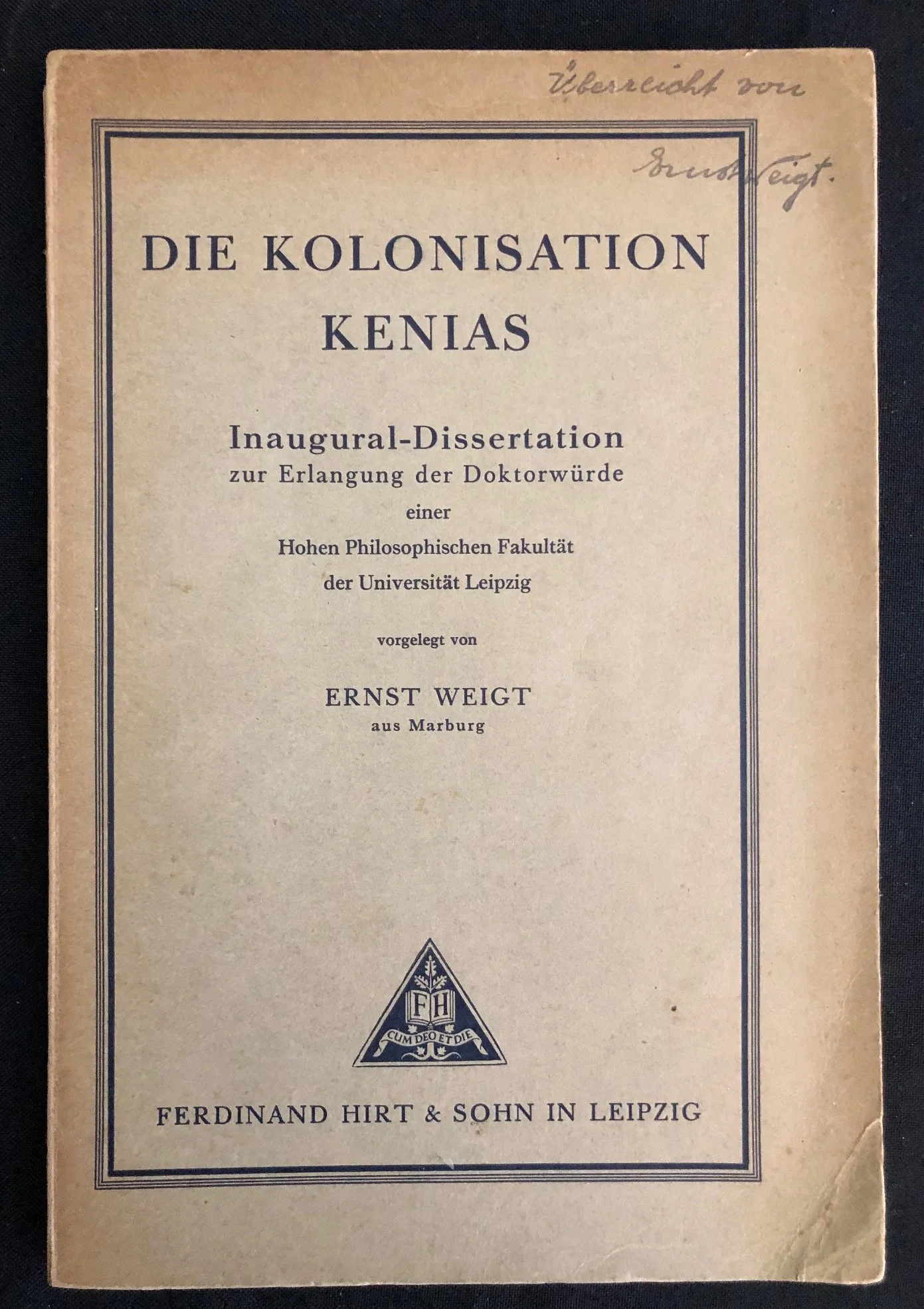
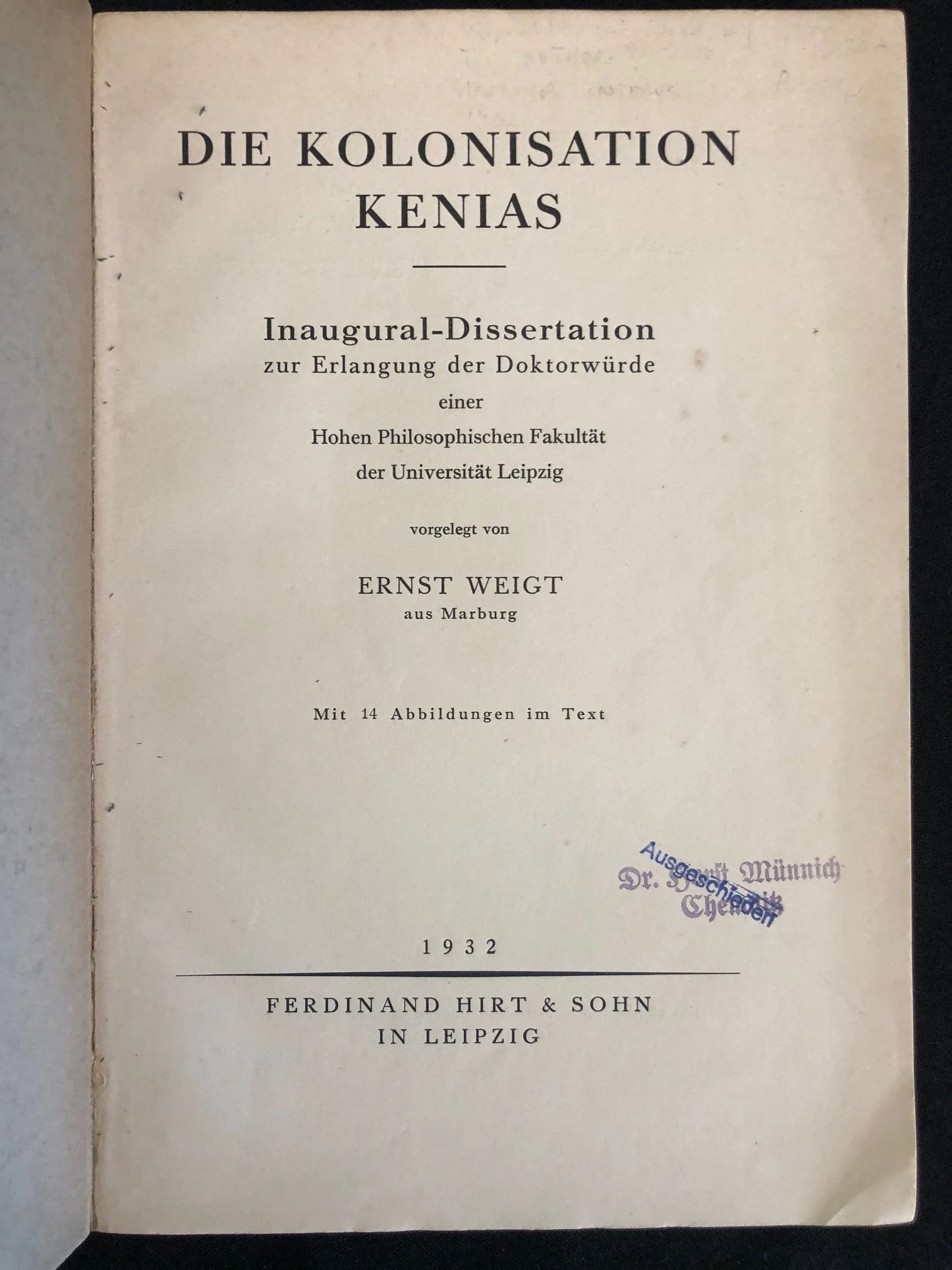
Die Kolonisation Kenias (The Colonisation of Kenya), inscribed (1932)
This is the published version of the doctoral thesis (Inaugural-Dissertation) of Ernst Weigt (1907–1986), titled Die Kolonisation Kenias ("The Colonization of Kenya"), submitted to the University of Leipzig and published in 1932 by the educational publisher Ferdinand Hirt & Sohn.
The Context of Weimar Germany's "Colonial Amnesia" and Longing
When Weigt published this in 1932, Germany had no colonies. Under the Treaty of Versailles (1919) following World War I, Germany was stripped of all its overseas territories—including German East Africa (which bordered Kenya and became Tanganyika under British mandate).
During the Weimar Republic and leading straight into the Nazi era, German geography departments remained deeply obsessed with Africa. Academic works like this were not just detached studies; they were part of a broader, politically charged German discipline called Kolonialgeographie (colonial geography). German academics meticulously studied British and French administrative successes and failures in places like Kenya to keep German colonial expertise alive, quietly anticipating a day when Germany might reclaim an empire in Africa.
A Pioneer in East African Geography
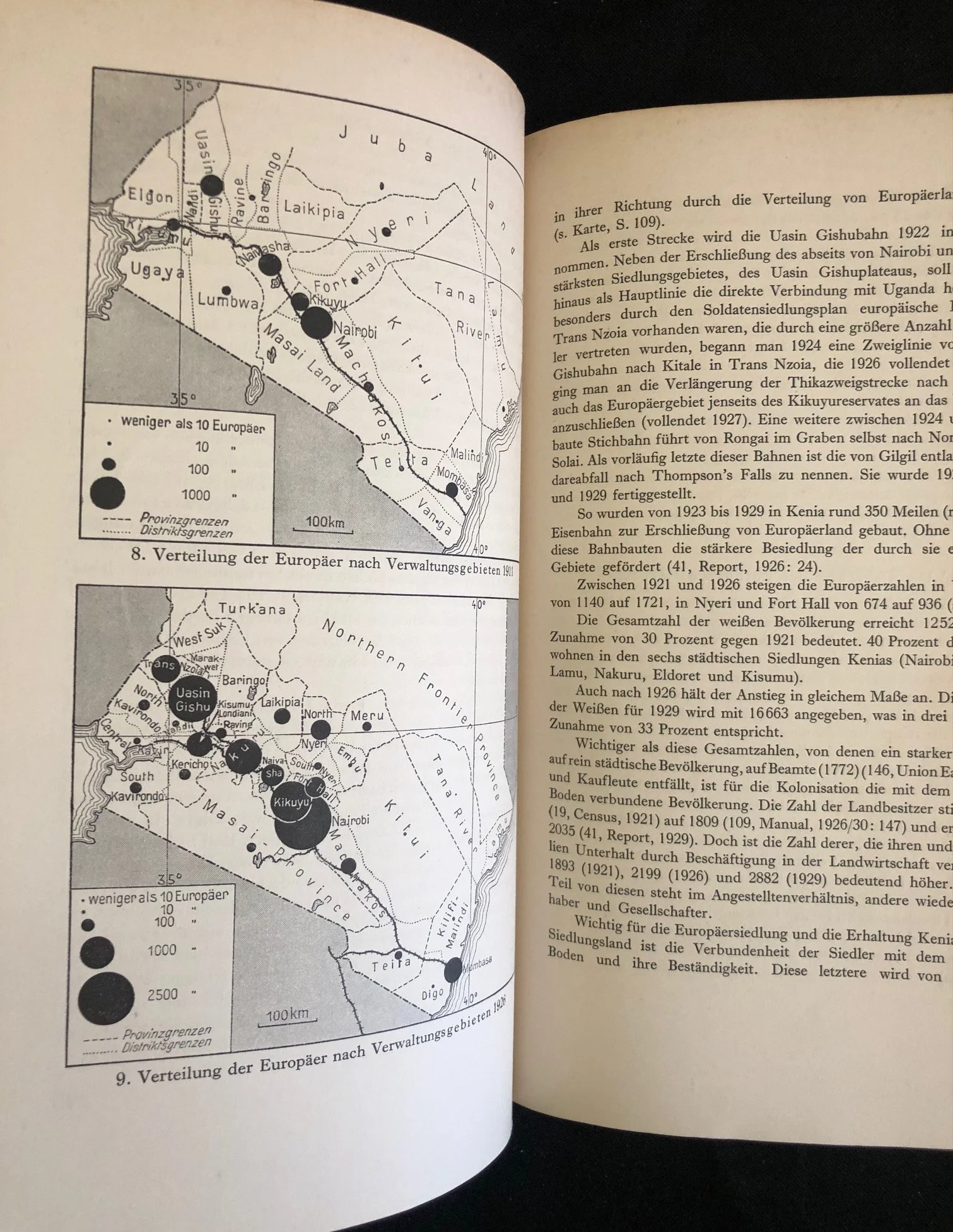
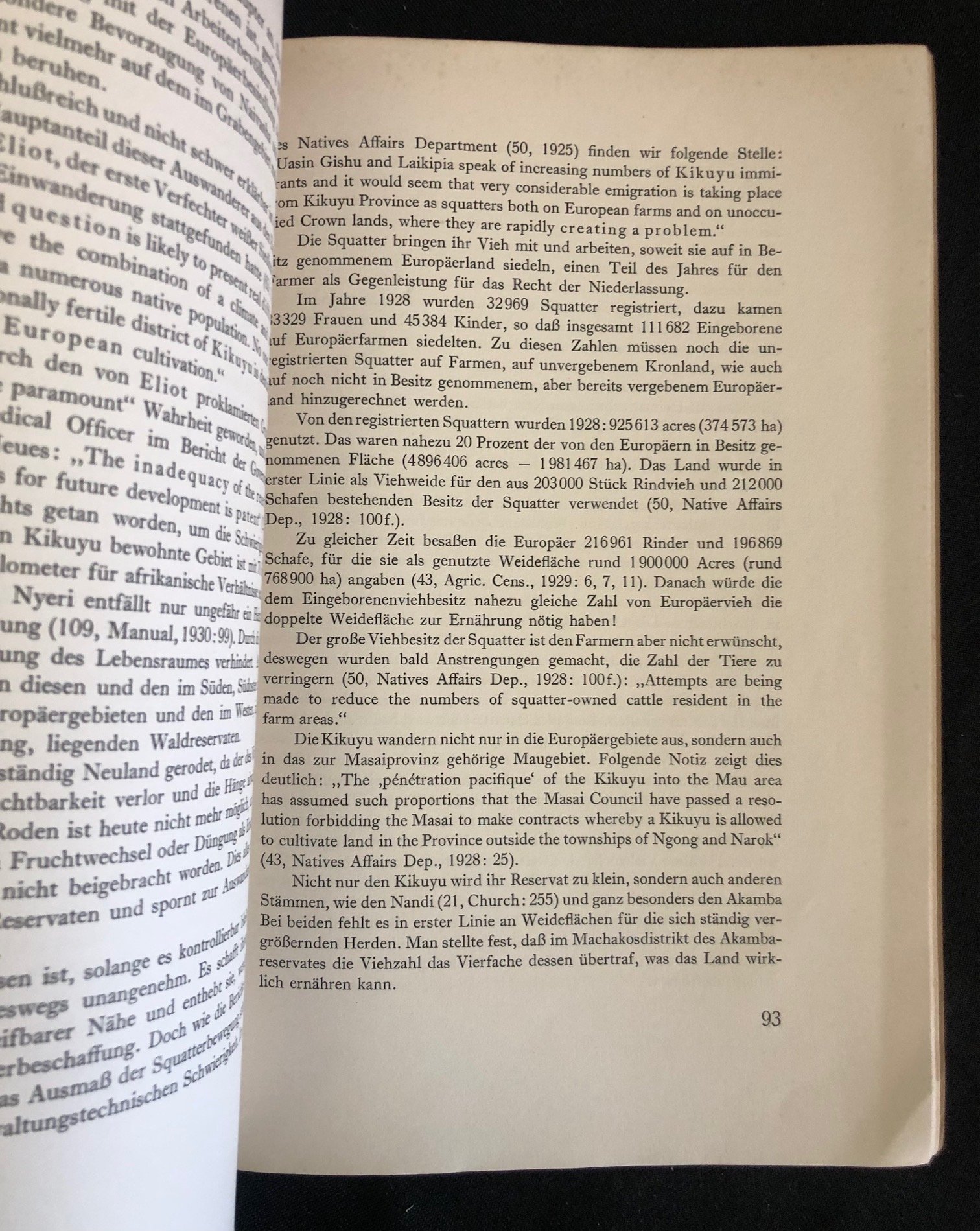
Ernst Weigt went on to become one of Germany’s foremost 20th-century geographers specializing in East Africa. His work in the 1930s laid the foundation for his seminal post-WWII book, Europäer in Ostafrika ("Europeans in East Africa," 1955). For decades, his meticulous data on European settlement patterns, agricultural shifts (like the rise of sisal and coffee), and the environmental impact of white settlement in Kenya and Tanzania were standard reference texts for European geographers.
The Provocative Year: 1932
The publication year, 1932, marks the absolute twilight of the Weimar Republic—just months before Adolf Hitler was appointed Chancellor in January 1933. University life in Leipzig at this time was highly politicized. Intellectual outputs from this exact window sit on a fascinating razor's edge: they utilize the strict, old-school German academic methodology (evident in the formal phrasing on the cover), yet they stand on the precipice of being co-opted by totalitarian expansionist ideology.
Association Copy: The Inscription
See handwritten ink inscription: "Überreicht von [Ernst] Weigt" (Presented by [Ernst] Weigt)
This copy is an association copy—a presentation copy directly inscribed by the author himself to a colleague, mentor, or friend upon its publication.
160mm x 235mm
Binding fragile, some creasing and surface wear.
R750