Wissenschaftliche Ergebnisse in den Deutsch-Ostafricas by Dr. Karl Weule. 1908. R3,500
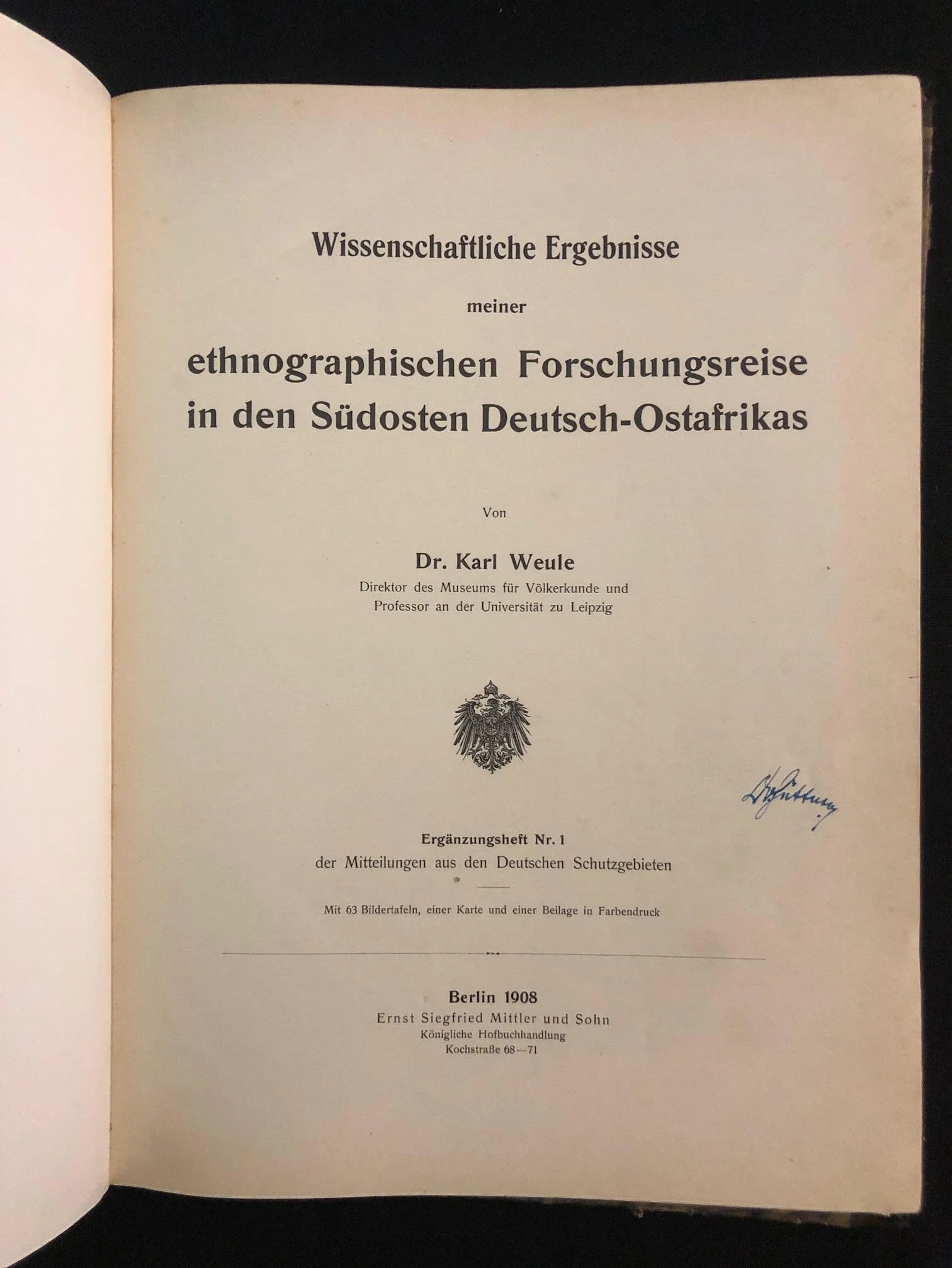
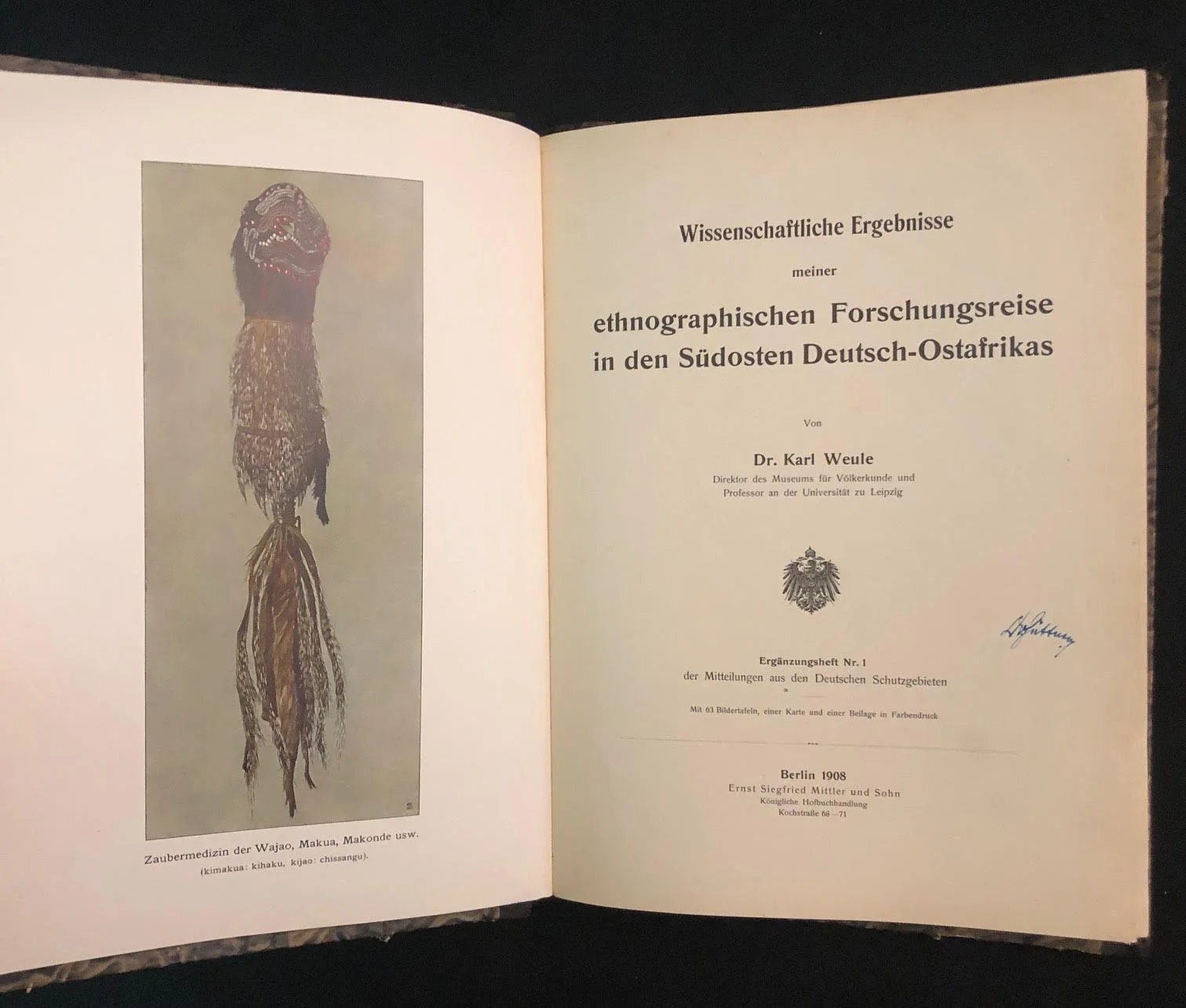
This 1908 volume, Wissenschaftliche Ergebnisse meiner ethnographischen Forschungsreise in den Südosten Deutsch-Ostafrikas by Dr. Karl Weule, is a landmark artifact of German colonial anthropology, early ethnomusicology, and the violent upheaval of the Maji Maji Rebellion.
The Expedition in the Shadow of War (1906)
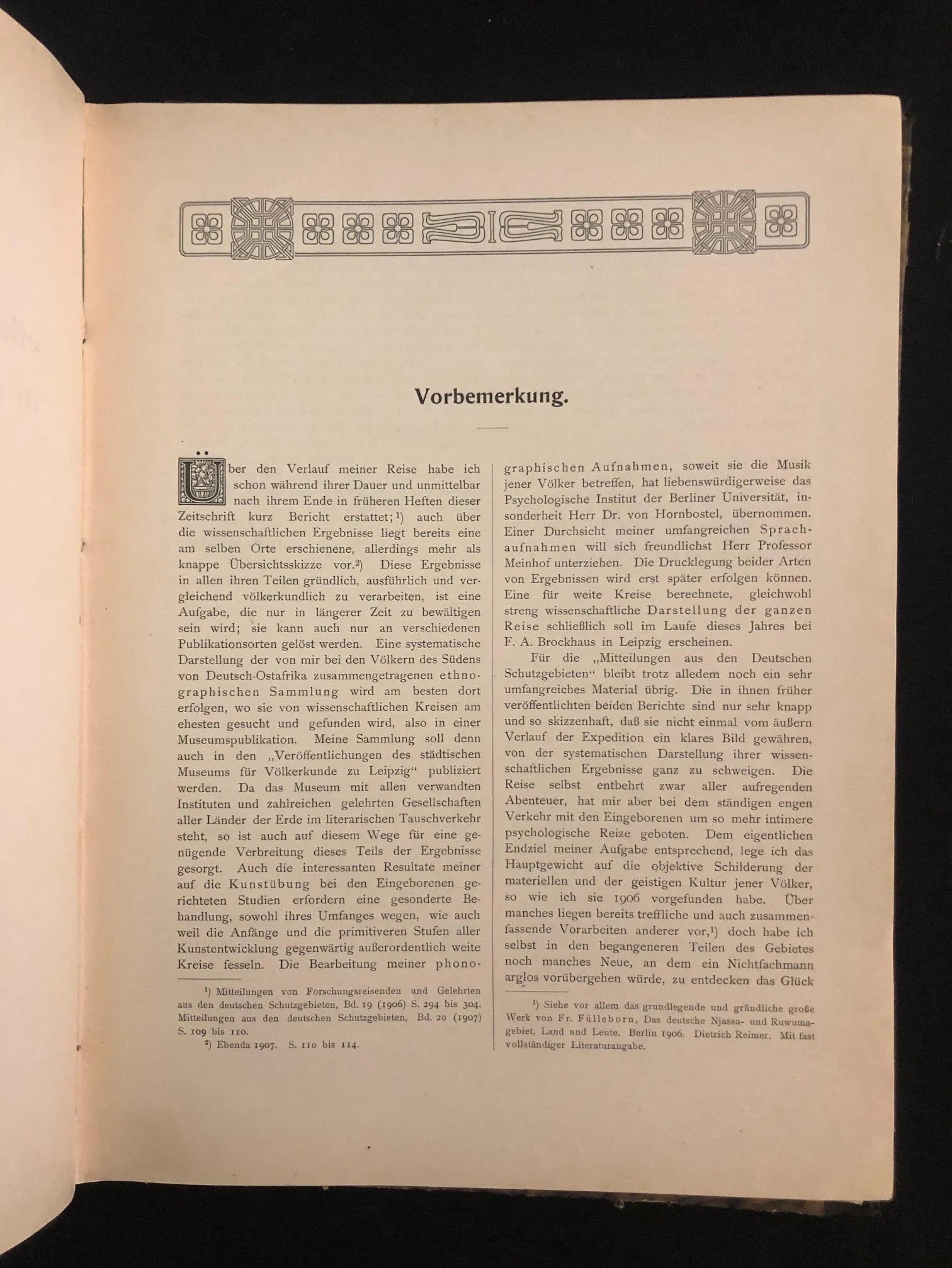
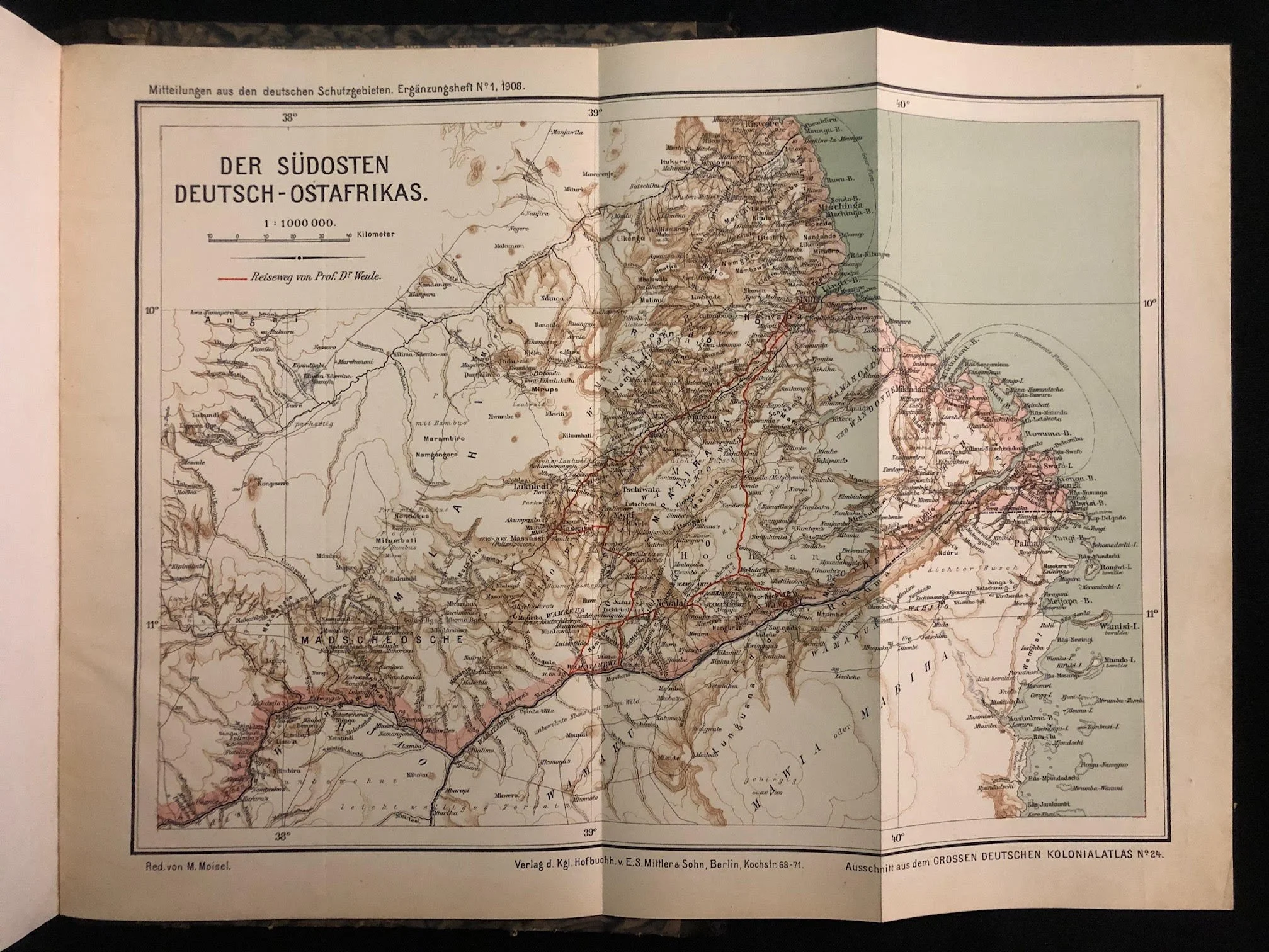
Timing & Conflict: Weule conducted his six-month field expedition to the Makonde Plateau (in what is now southeastern Tanzania) in 1906, immediately following the brutal German suppression of the Maji Maji Rebellion (1905–1907). While the war devastated the region and caused widespread famine, Weule notes in his preface (Vorbemerkung) that his journey lacked "exciting adventures," allowing him instead to focus on the "intimate psychological charms" and material culture of the Makonde, Yao, and Makua peoples.
A Defining Turning Point in Anthropology: Before 1906, German ethnologists largely worked as "armchair" scholars, analyzing artifacts shipped back to museums by soldiers and missionaries. Weule—then Director of the Museum für Völkerkunde in Leipzig—helped pioneer systematic field ethnography, insisting that museum directors needed to observe the social context, manufacturing techniques, and daily life behind the objects they collected.
Pioneering Multimedia & Ethnomusicology
Wax Cylinder Recordings: In the preface, Weule explicitly mentions that the phonographic recordings of indigenous music he captured on Edison wax cylinders were handed over to Erich Moritz von Hornbostel at the Psychological Institute in Berlin. Von Hornbostel is considered one of the founding fathers of modern ethnomusicology (co-creator of the Sachs–Hornbostel instrument classification system), making Weule's expedition a foundational moment in the preservation and academic study of African music.
Linguistic Collaboration: Weule also notes that his extensive linguistic recordings were entrusted to Carl Meinhof, the pioneering scholar of Bantu languages.
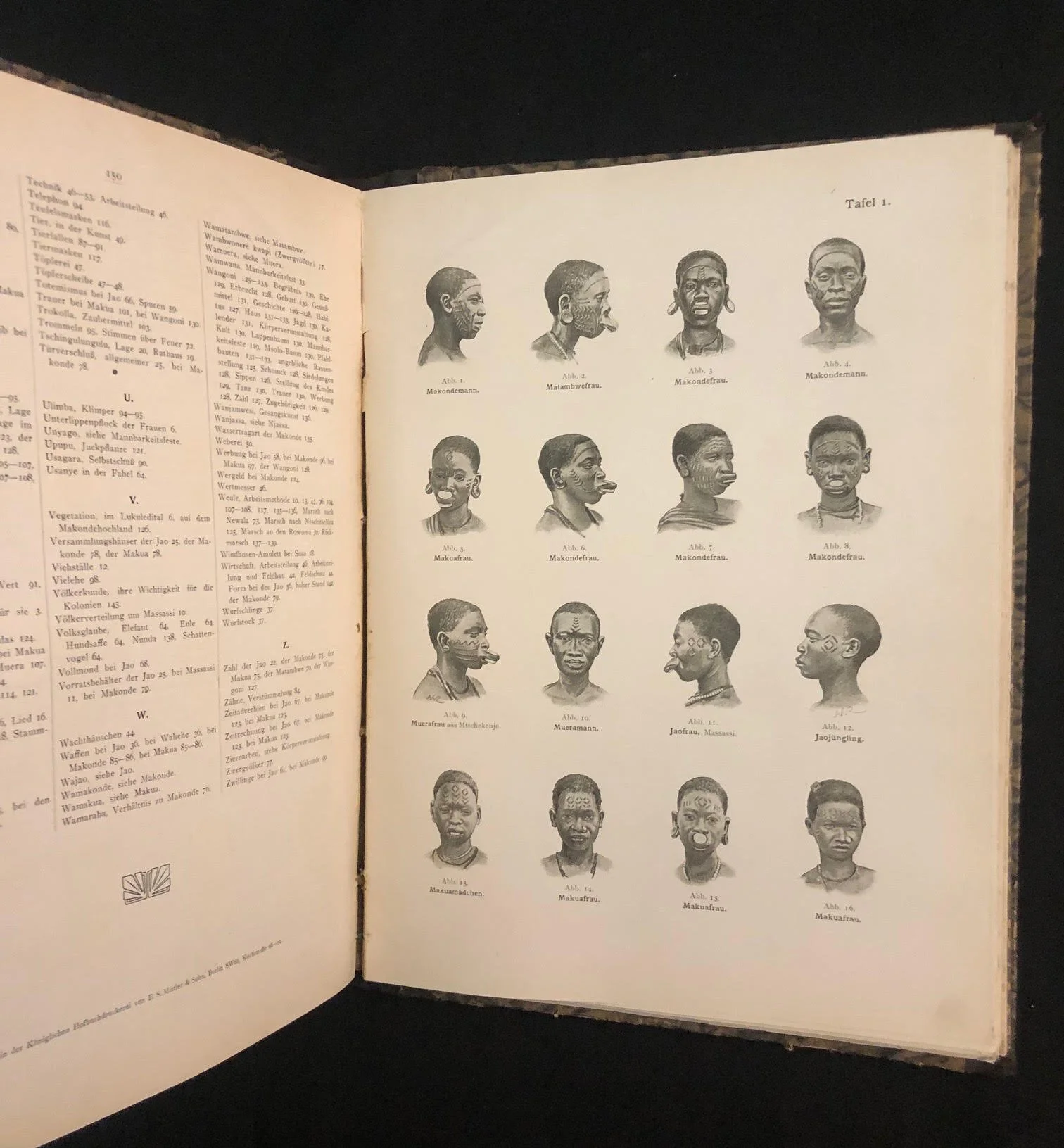
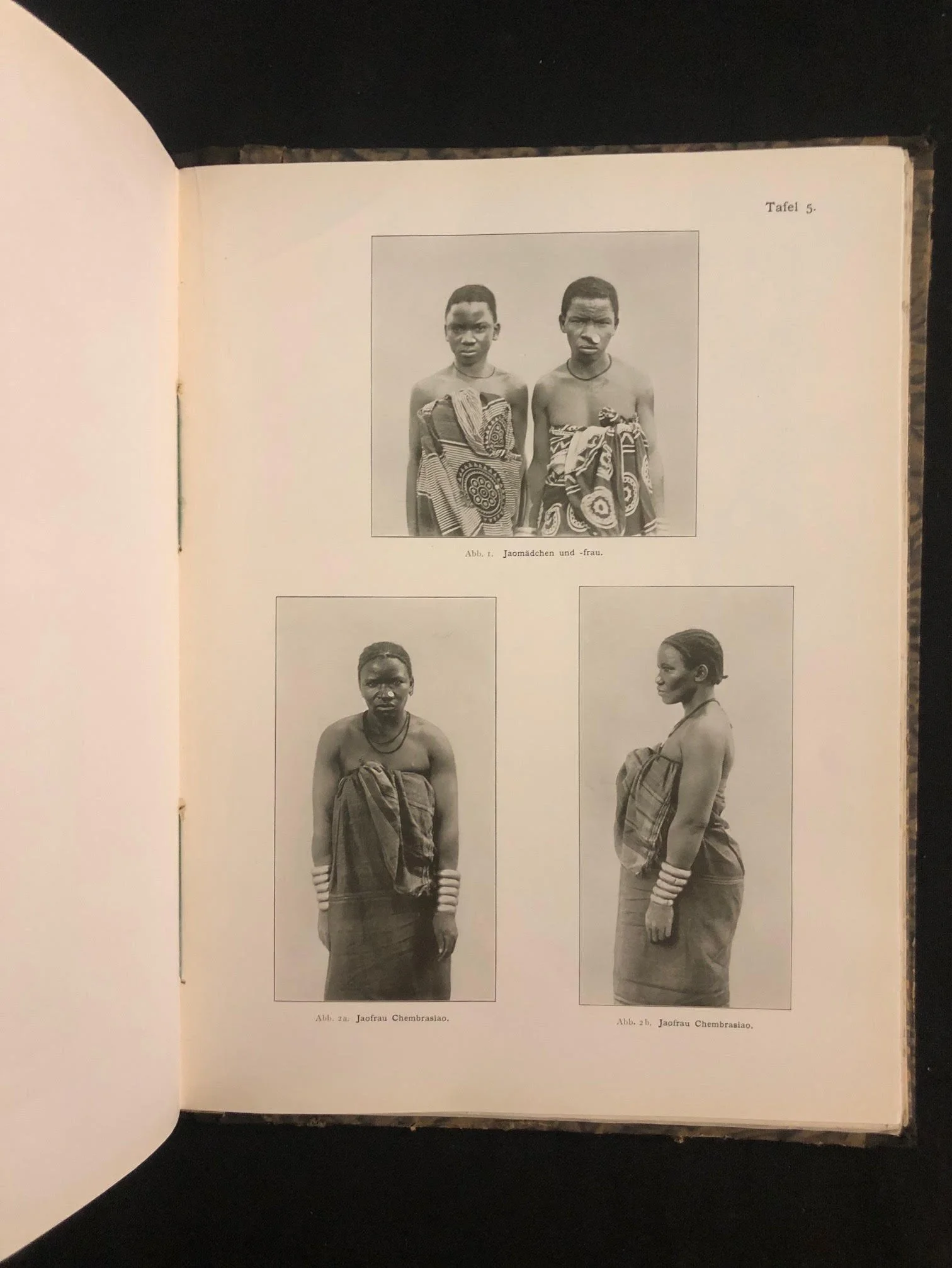
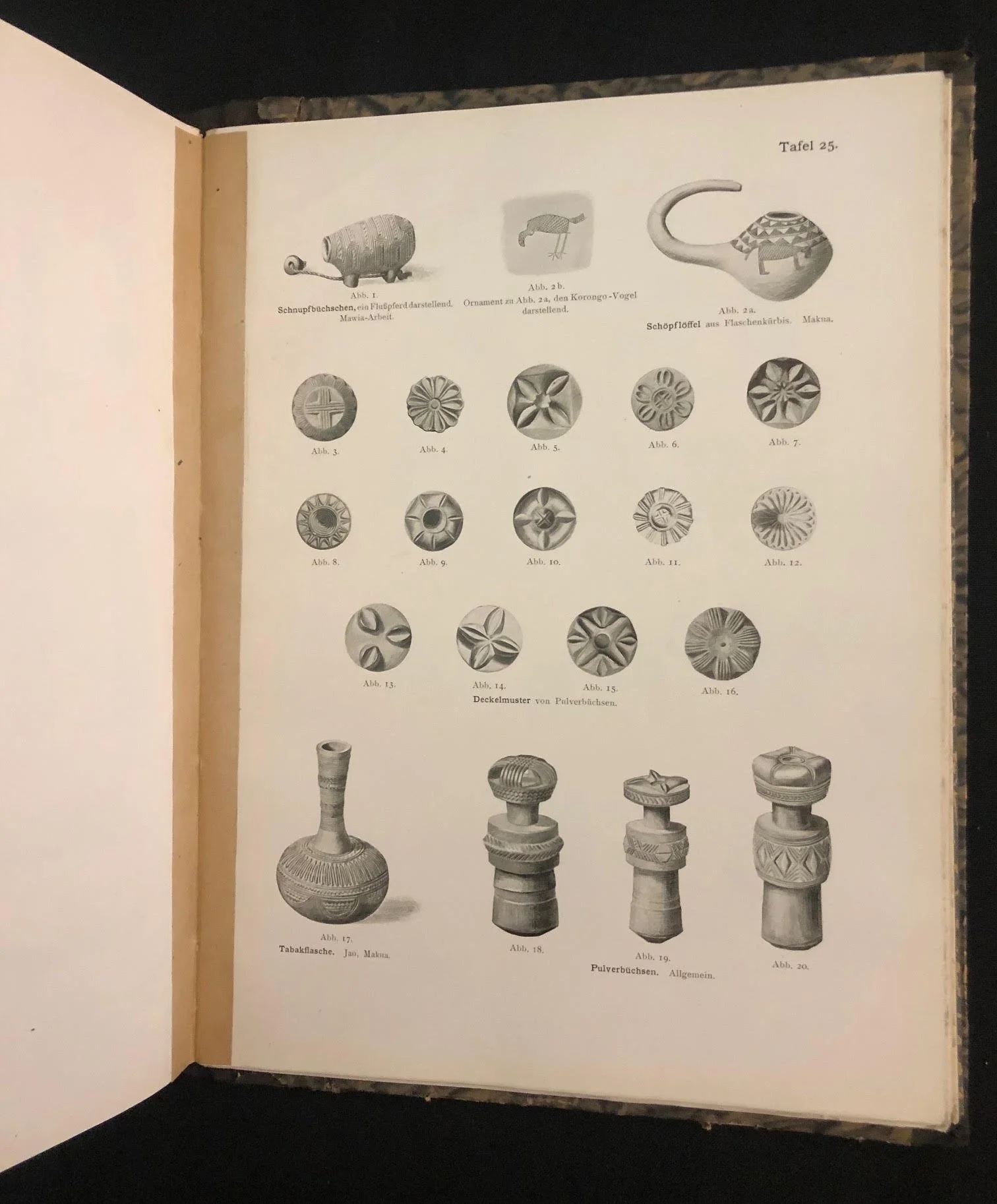
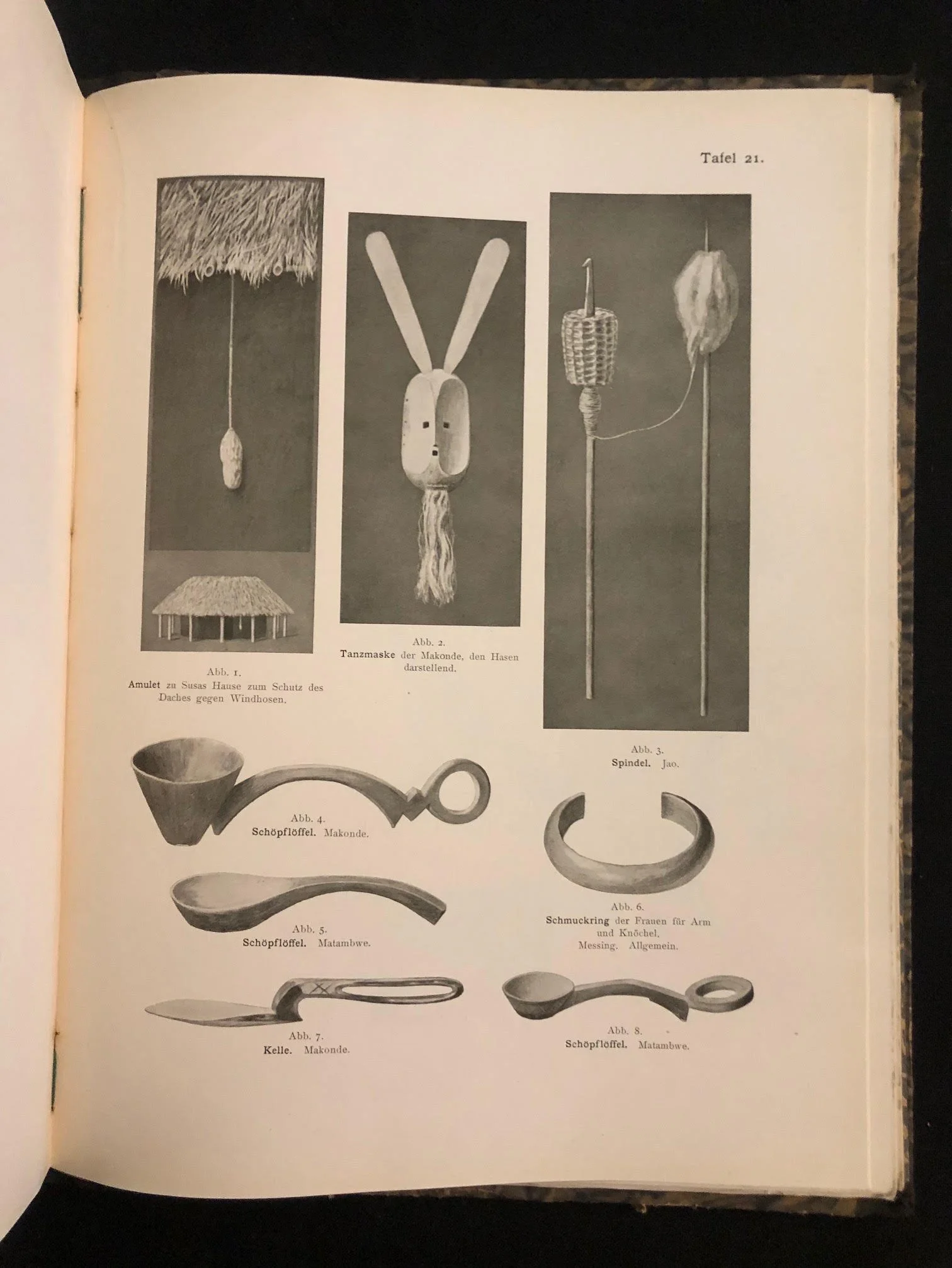
Visual & Material Documentation: Published as Supplement No. 1 (Ergänzungsheft Nr. 1) to the official colonial journal Mitteilungen aus den Deutschen Schutzgebieten, the book is prized for its 63 photographic plates (Bildertafeln) and color frontispiece (Beilage in Farbendruck), which document intricate Makonde woodcarving, lip plugs (ndonya), scarification patterns, and indigenous drawings commissioned directly from local informants—an early experiment in participatory visual anthropology.
Provenance & Bibliographic Notes in This Copy
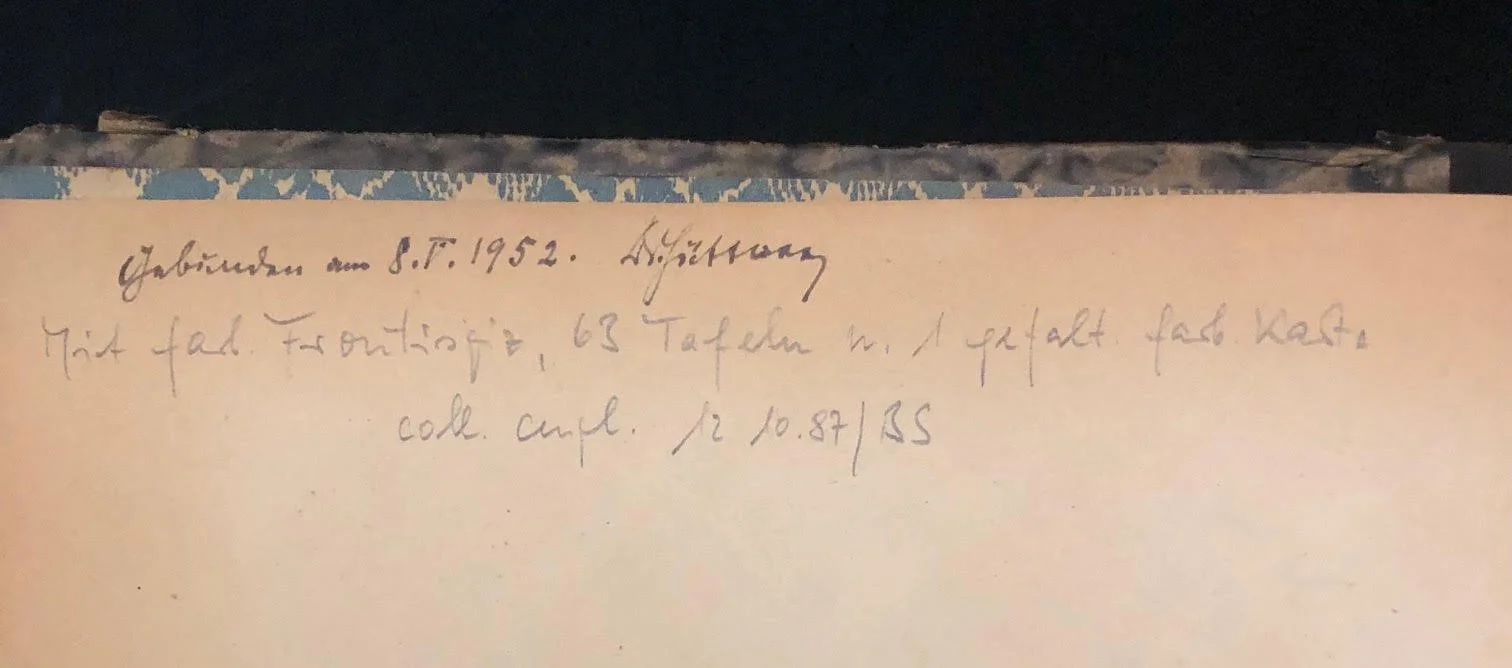
1952 Rebinding & Ownership: The Sütterlin/Kurrent script at the top of the front endpaper reads "Gebunden am 8.5.1952" ("Bound on May 8, 1952"), followed by the owner's signature—which also appears on the title page—reading "Schüttung" (or Schüttrung). Having a German colonial monograph bound in 1952 reflects the post-WWII period when private collectors and scholars in Germany were salvaging and preserving surviving pre-war libraries.
Bookseller's Collation: Below the binding note, a later pencil annotation in German bibliographic shorthand verifies the completeness of the volume: "Mit farb. Frontispiz, 63 Tafeln u. 1 gefalt. farb. Karte / coll. cmpl. 12.10.87 / BS" ("With coloured frontispiece, 63 plates and 1 folded colored map / collated complete, October 12, 1987 / [initials BS]").
250mm x 325mm x 30mm
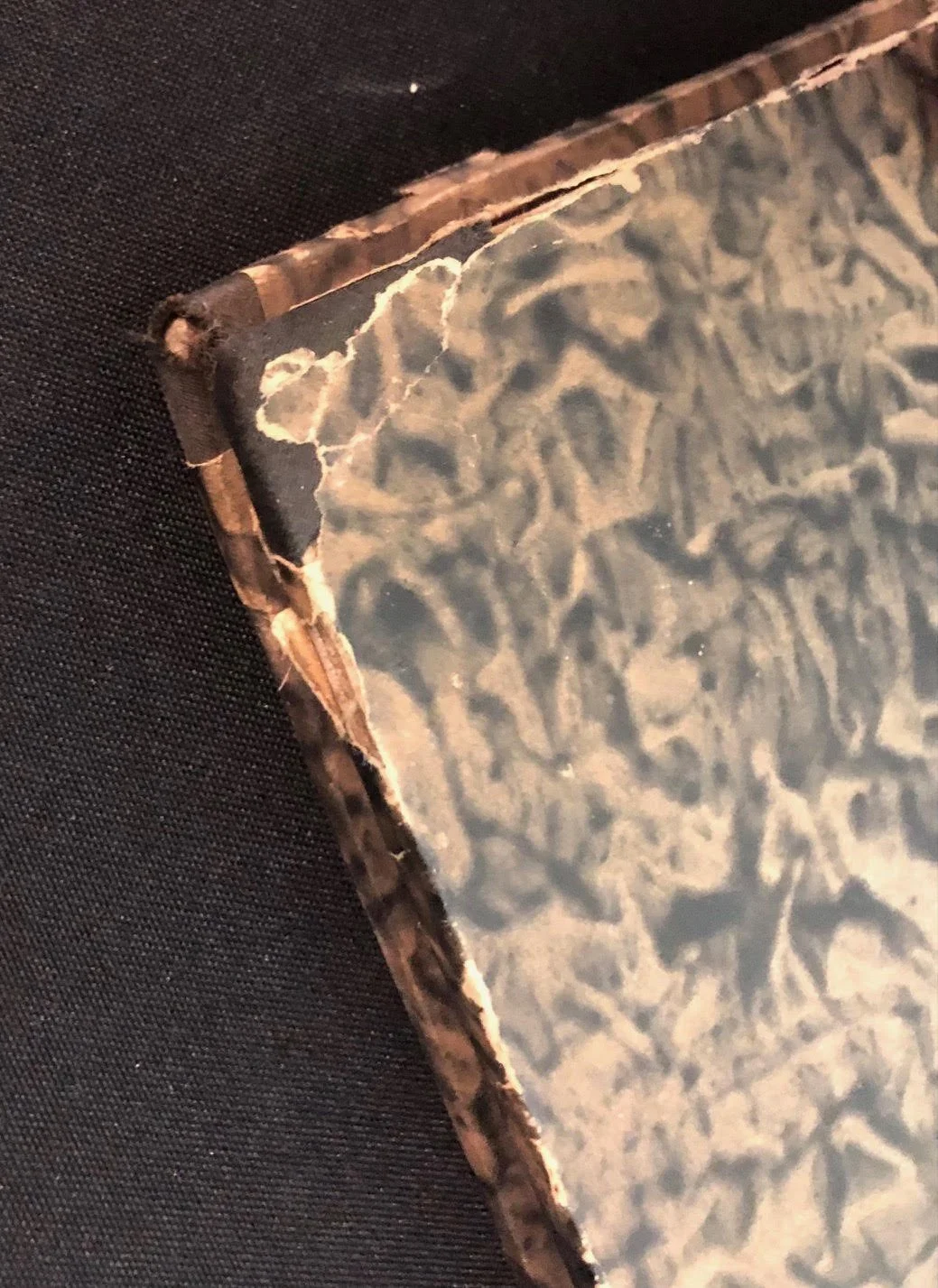
Rebound, edges worn and chipped; text-block beginning to break away from the binding; minor thumbing to the pages. Complete.
R3,500