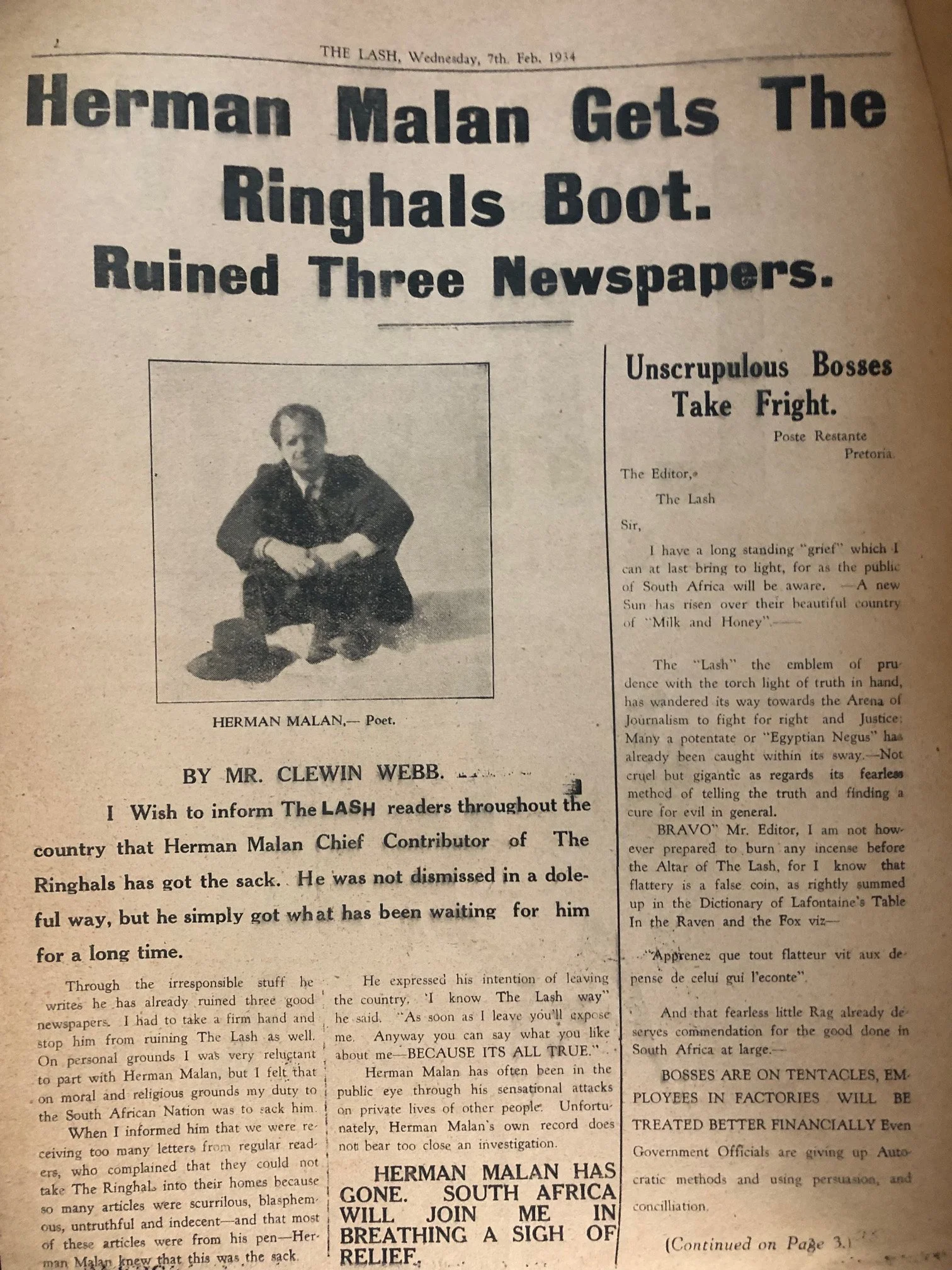
Front-page public denunciation of "Herman Malan." - Herman Charles Bosman (1934)
This newspaper is an extraordinary, explosive artifact from one of the most infamous, dramatic, and colourful eras of South African literary and journalistic history.
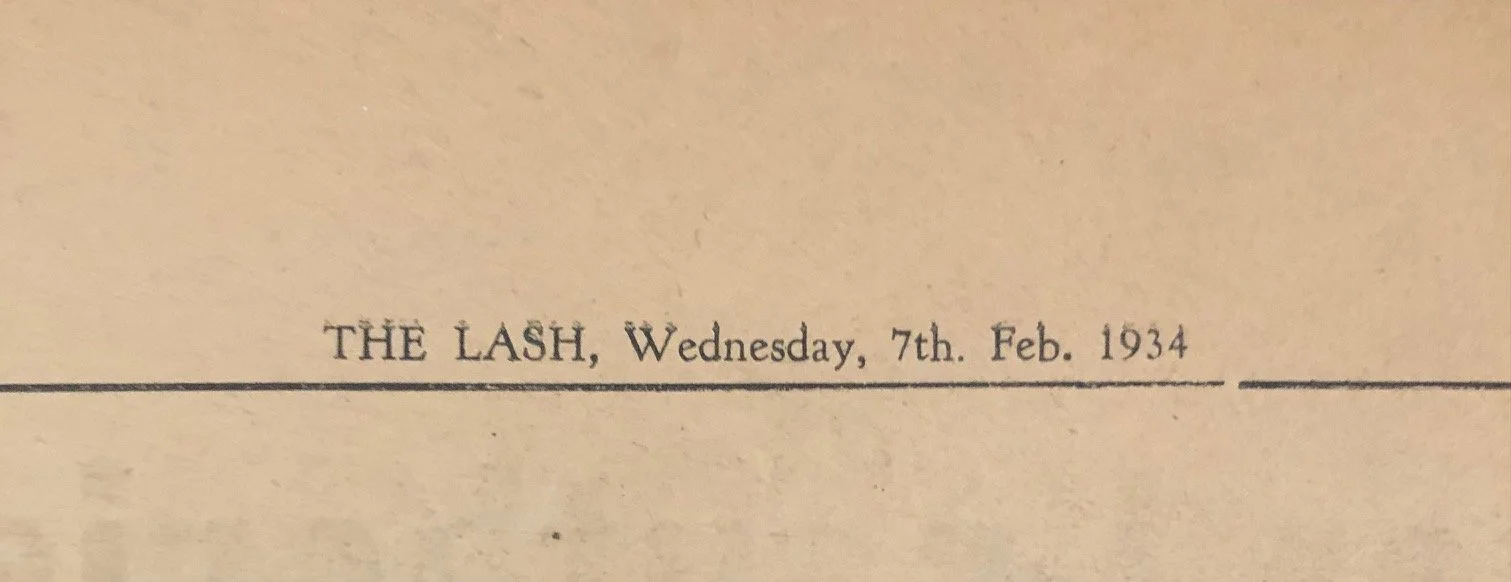
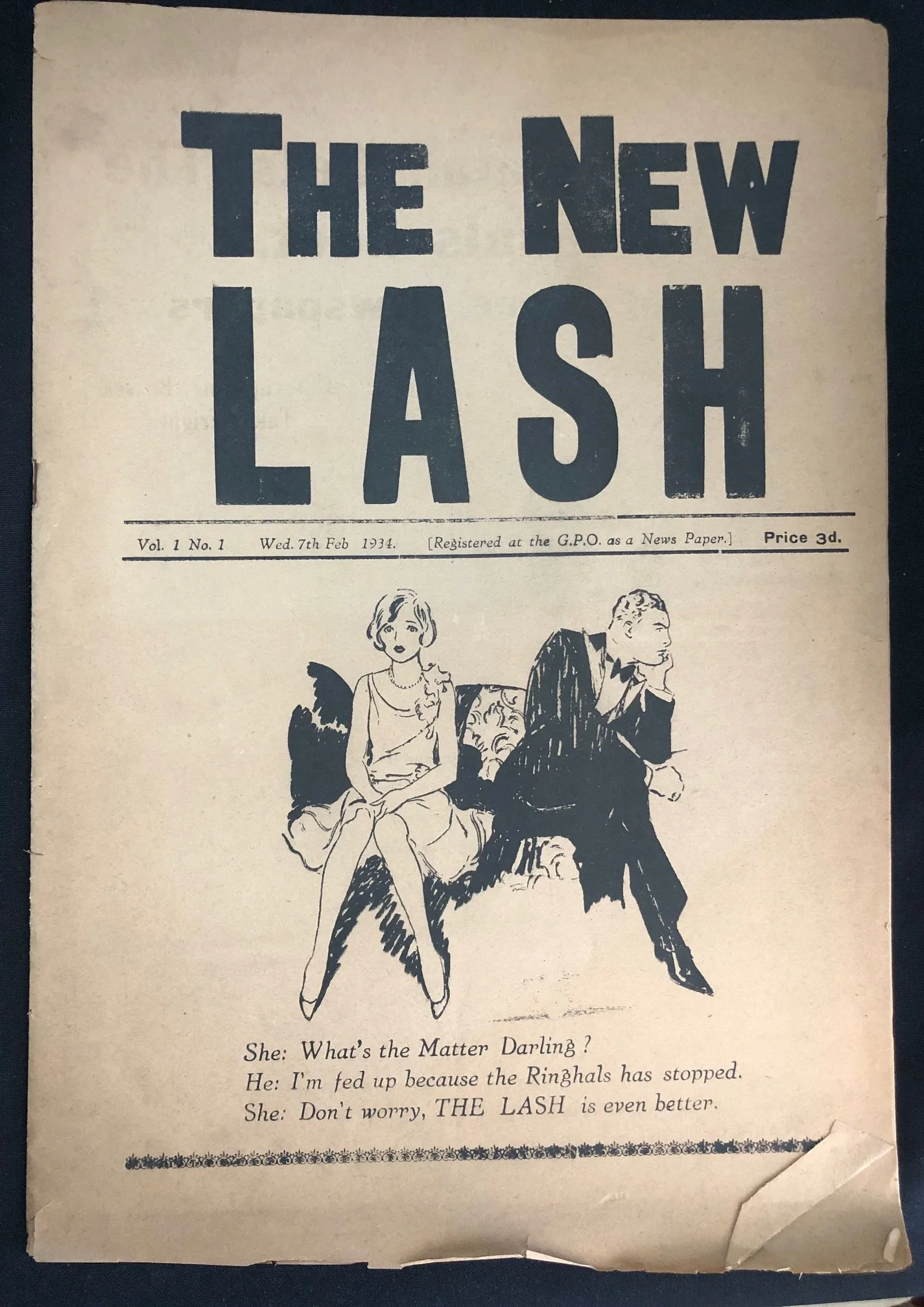
This is the maiden issue of The New Lash, dated Wednesday, 7th February 1934, featuring a brutal, front-page public denunciation of a poet named "Herman Malan."
To understand why this is historically remarkable, you have to look past the sensationalist, muckraking headline and look at who "Herman Malan" actually was, and the chaotic literary war happening behind the scenes.
The True Identity of "Herman Malan"
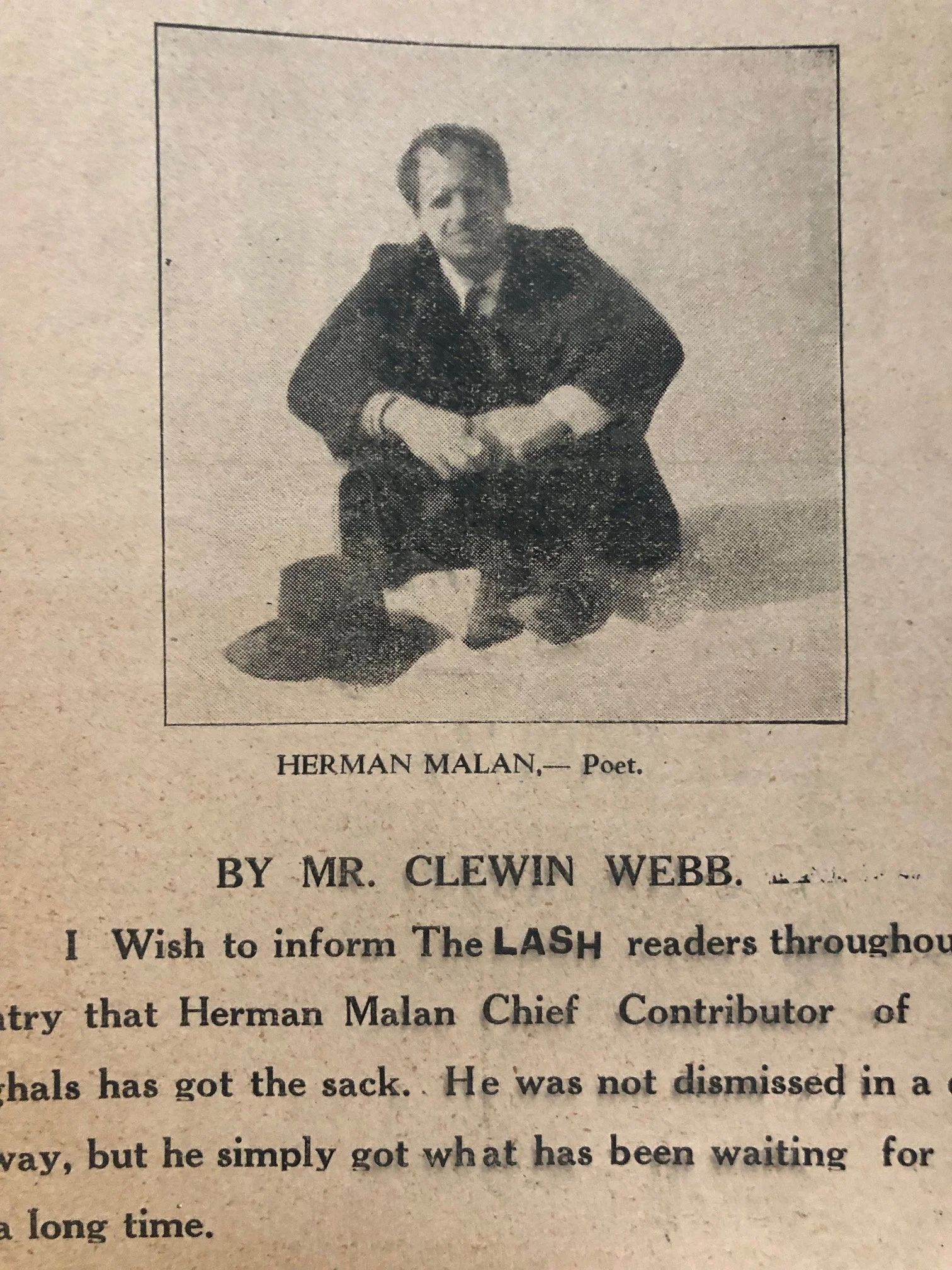
"Herman Malan" was the primary early pseudonym of Herman Charles Bosman—widely regarded today as one of South Africa’s greatest short-story writers and the creator of the iconic backveld raconteur Oom Schalk Lourens.
Just a few years before this 1934 issue was printed, Bosman had been convicted of shooting and killing his stepbrother. He spent four years on death row, doing hard labour inside Pretoria Central Prison (an experience that later inspired his masterpiece Cold Stone Jug). When he was paroled in 1930, he adopted the pen name "Herman Malan" to distance himself from the murder trial and aggressively entered the Johannesburg literary and journalism scene.
The Context: The "Sjambok" Era of Literary Guerrilla Warfare
During the early 1930s, Bosman and his close literary partner, Aegidius Jean Blignaut, ran a series of fiercely independent, highly satirical, and deeply controversial "scandal sheets" and literary journals. These included The Touleier, The Sjambok, and The Ringhals (named after the venom-spitting South African cobra).
They used these platforms for two things:
Publishing high-quality avant-garde South African poetry and fiction.
Launching venomous, scurrilous, and often libellous attacks against the established South African elite, politicians, and the conservative judiciary.
Because of this, their papers were constantly locked in a cycle of defamation lawsuits, police raids, and forced closures.
The Front-Page Fallout
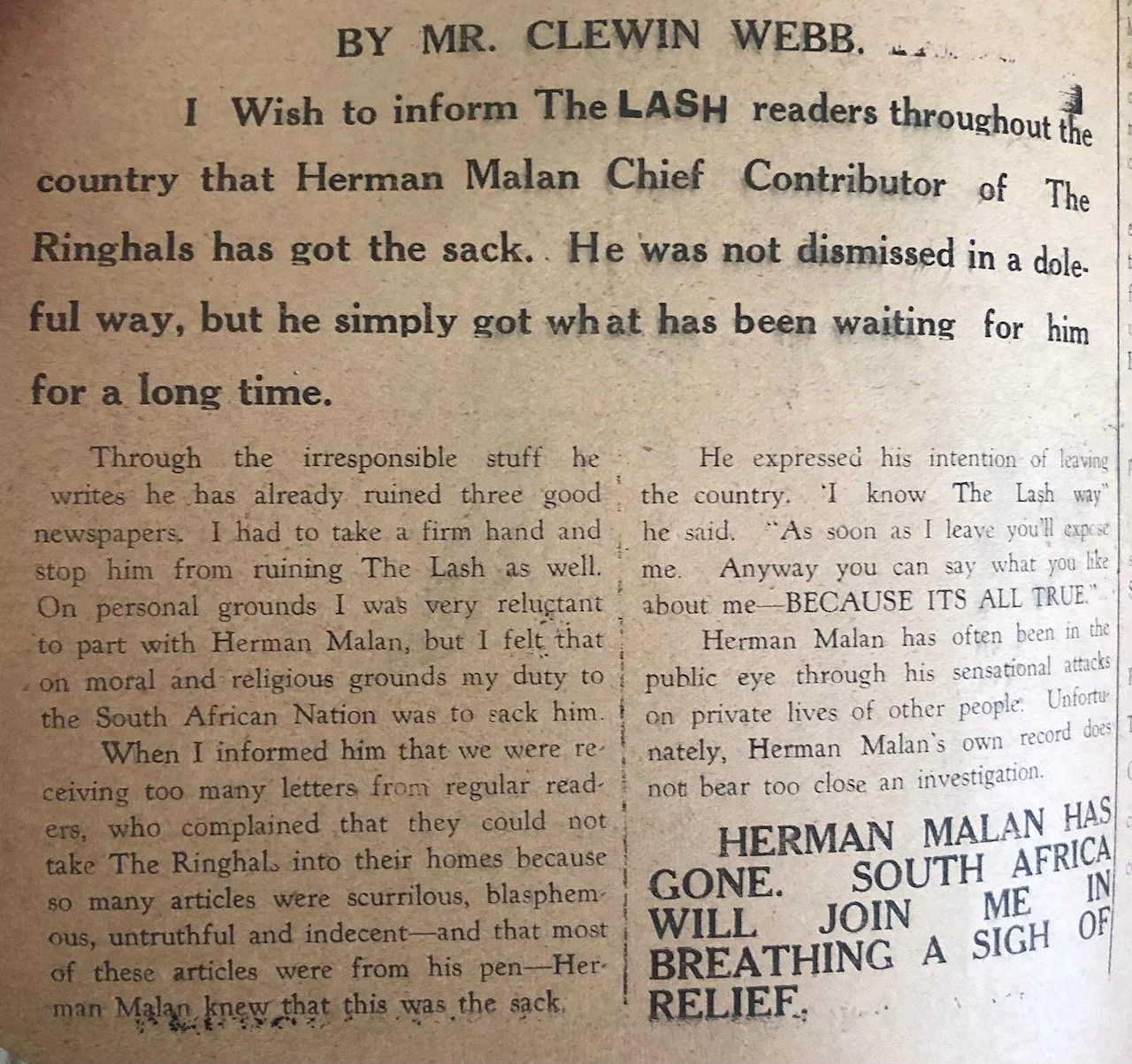
The text in “The New Lash” written by a "Mr. Clewin Webb," screams: "Herman Malan Gets The Ringhals Boot. Ruined Three Newspapers."
Webb claims he had to sack Malan (Bosman) on "moral and religious grounds" because his articles were too "scurrilous, blasphemous, untruthful and indecent," and that families refused to let The Ringhals into their homes.
What makes this publication date—February 7, 1934—so historically poignant is that this exact moment marks the absolute breaking point of Bosman's early South African career. Burned out by the constant court battles, financial ruin, and public mudslinging illustrated right here on the front page, Bosman left South Africa for London in 1934. He spent the next nine years in exile in Europe, which is ironically where he would write the brilliant, nostalgic Marico stories that eventually made him a literary legend (collected in Mafeking Road).
The Satirical Cover
The cover of this inaugural issue perfectly captures the melodramatic, witty, and gossip-fueled tone of the 1930s Joburg press landscape. Using a classic art deco illustration of an angsty upper-class couple, the dialogue reads:
She: What's the matter Darling?
He: I'm fed up because the Ringhals has stopped.
She: Don't worry, THE LASH is even better.
255mm x 355mm
Complete issue; some tears; very fragile; 15 pages.
R12,500