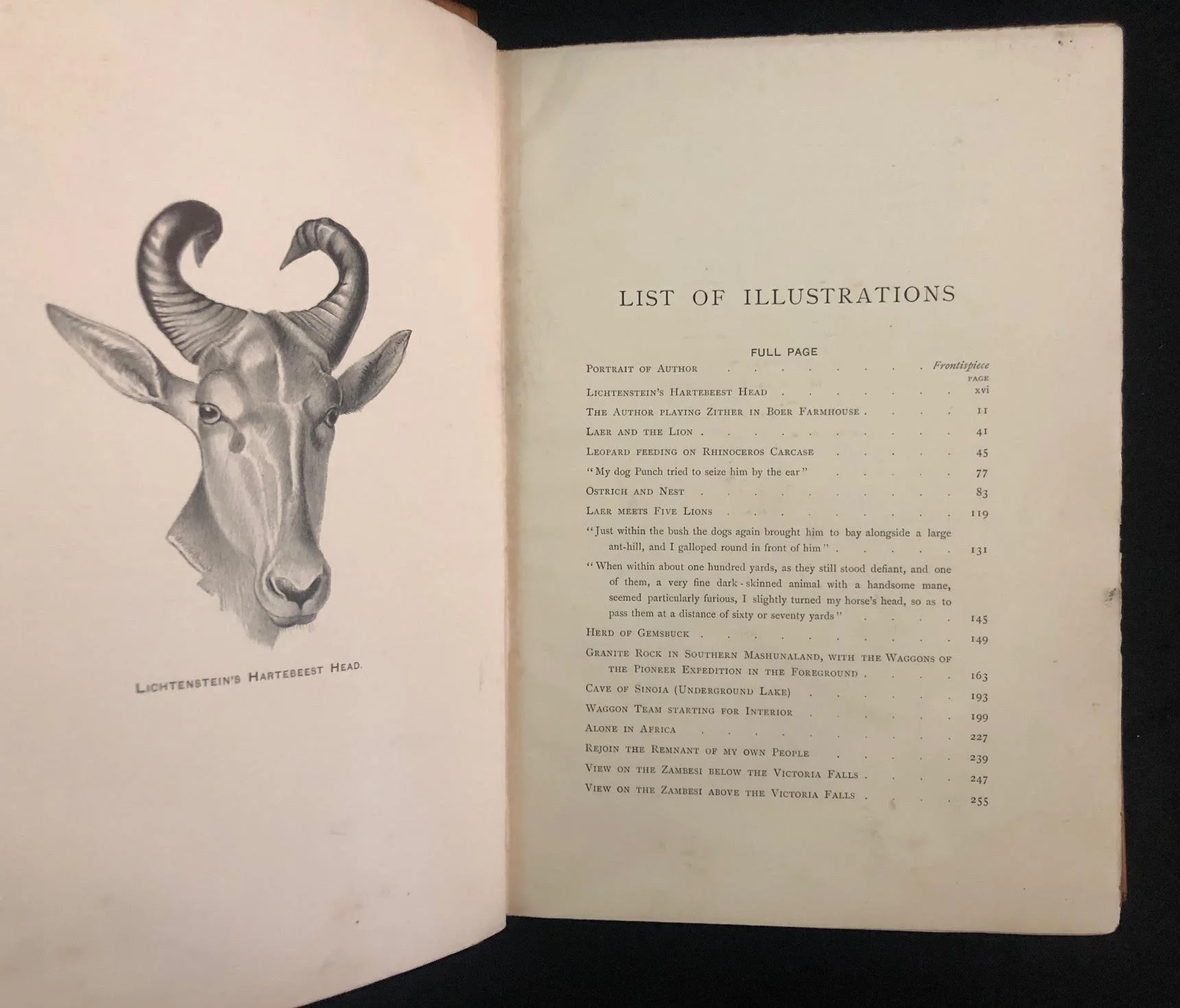
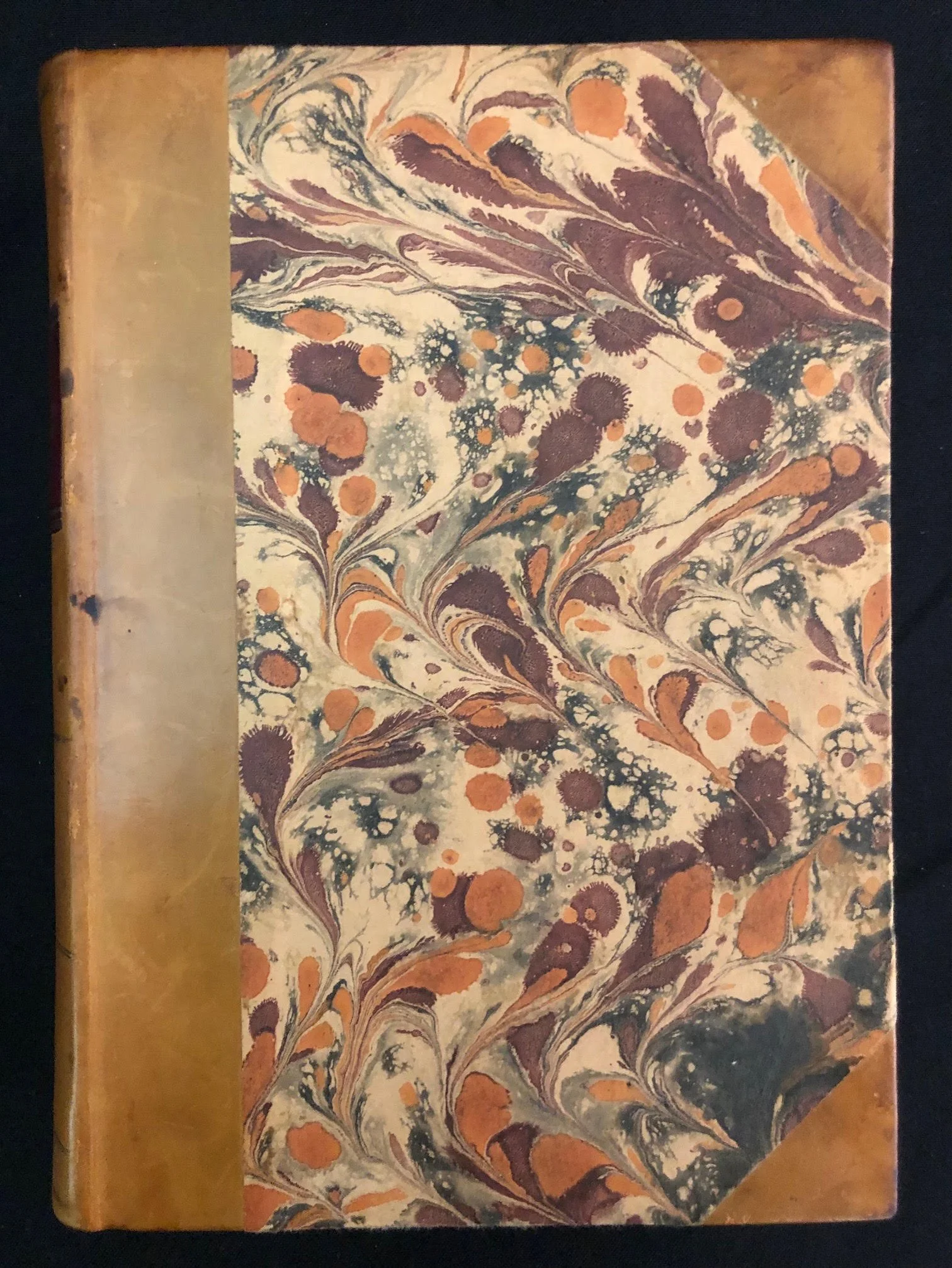
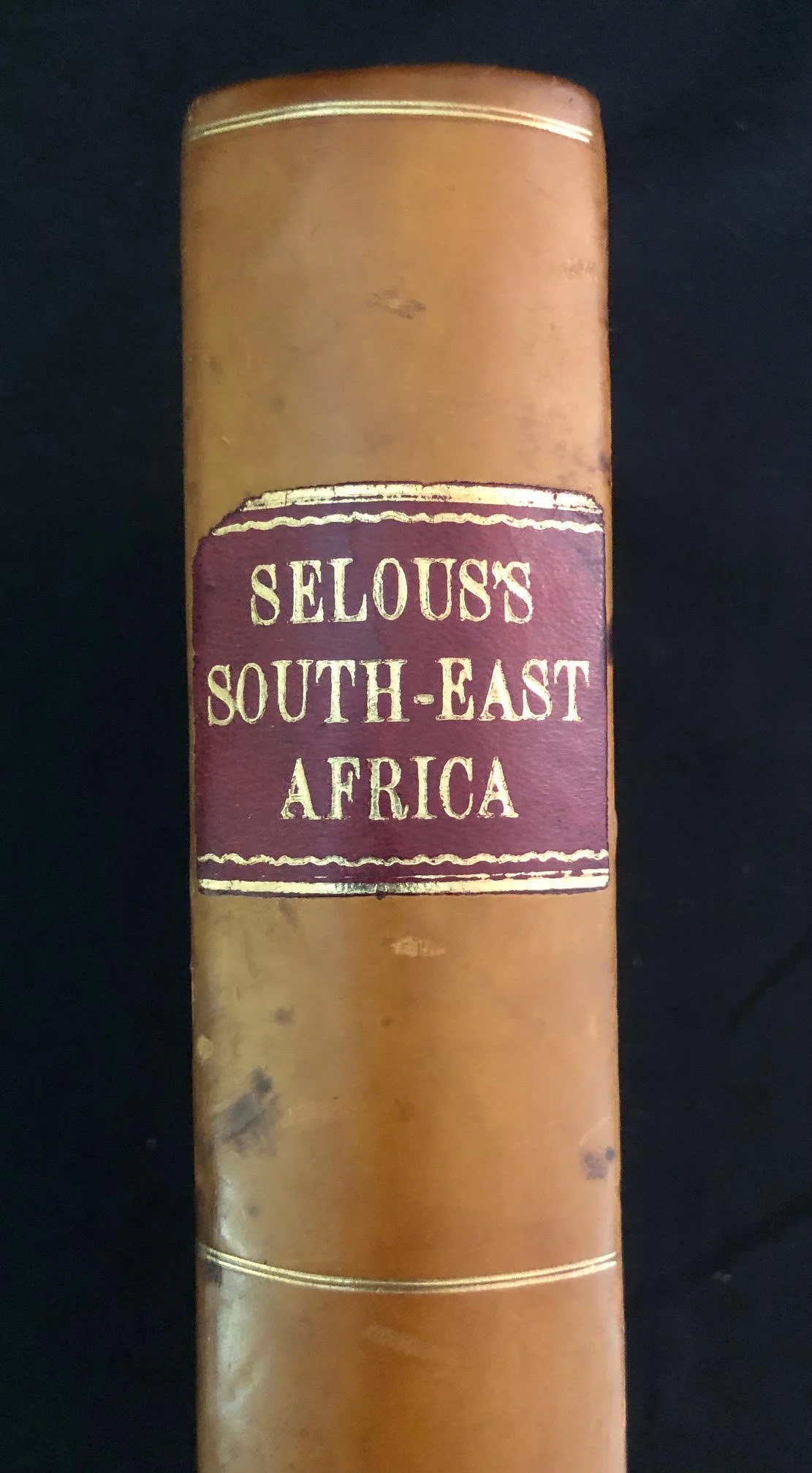
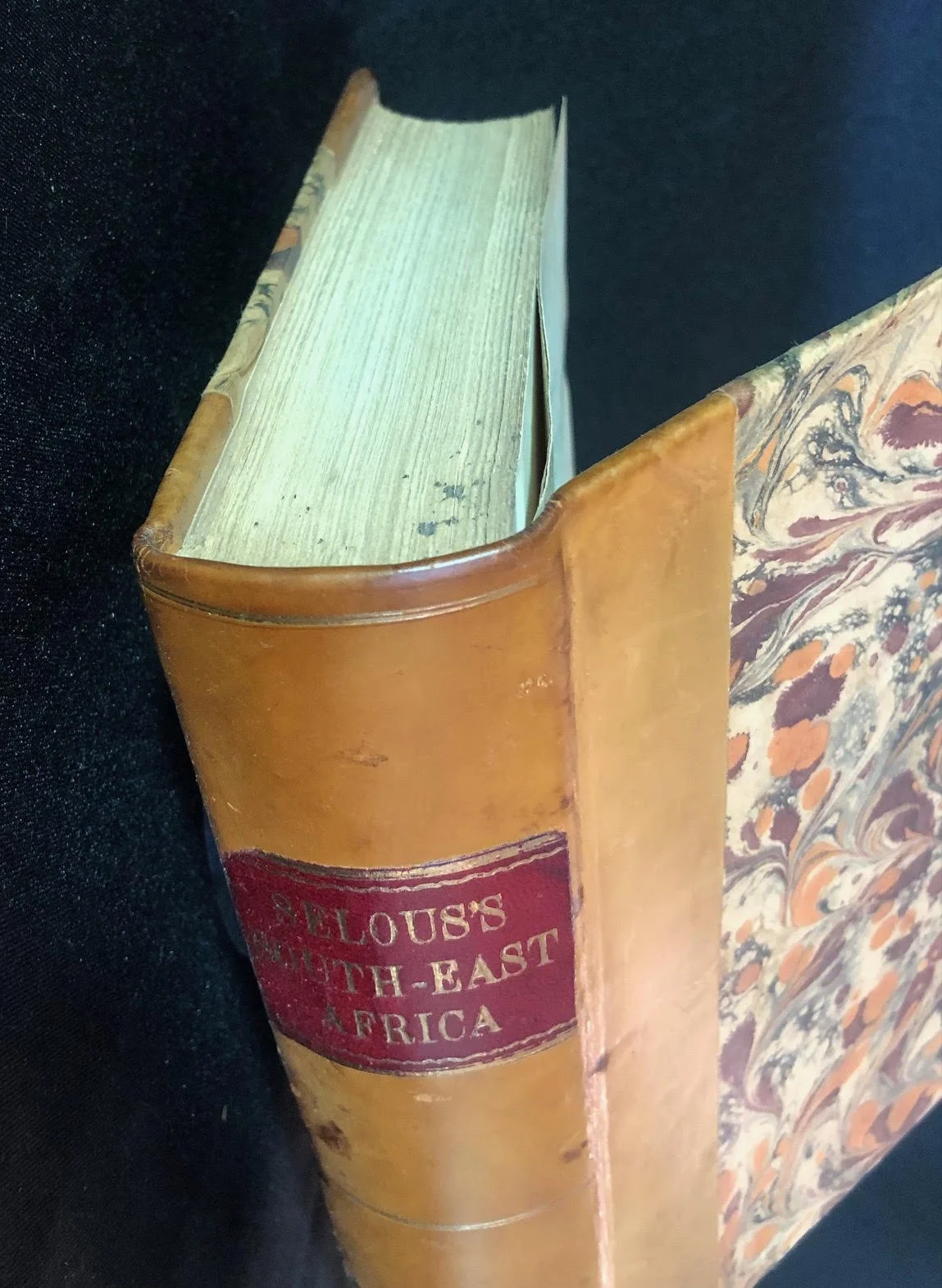
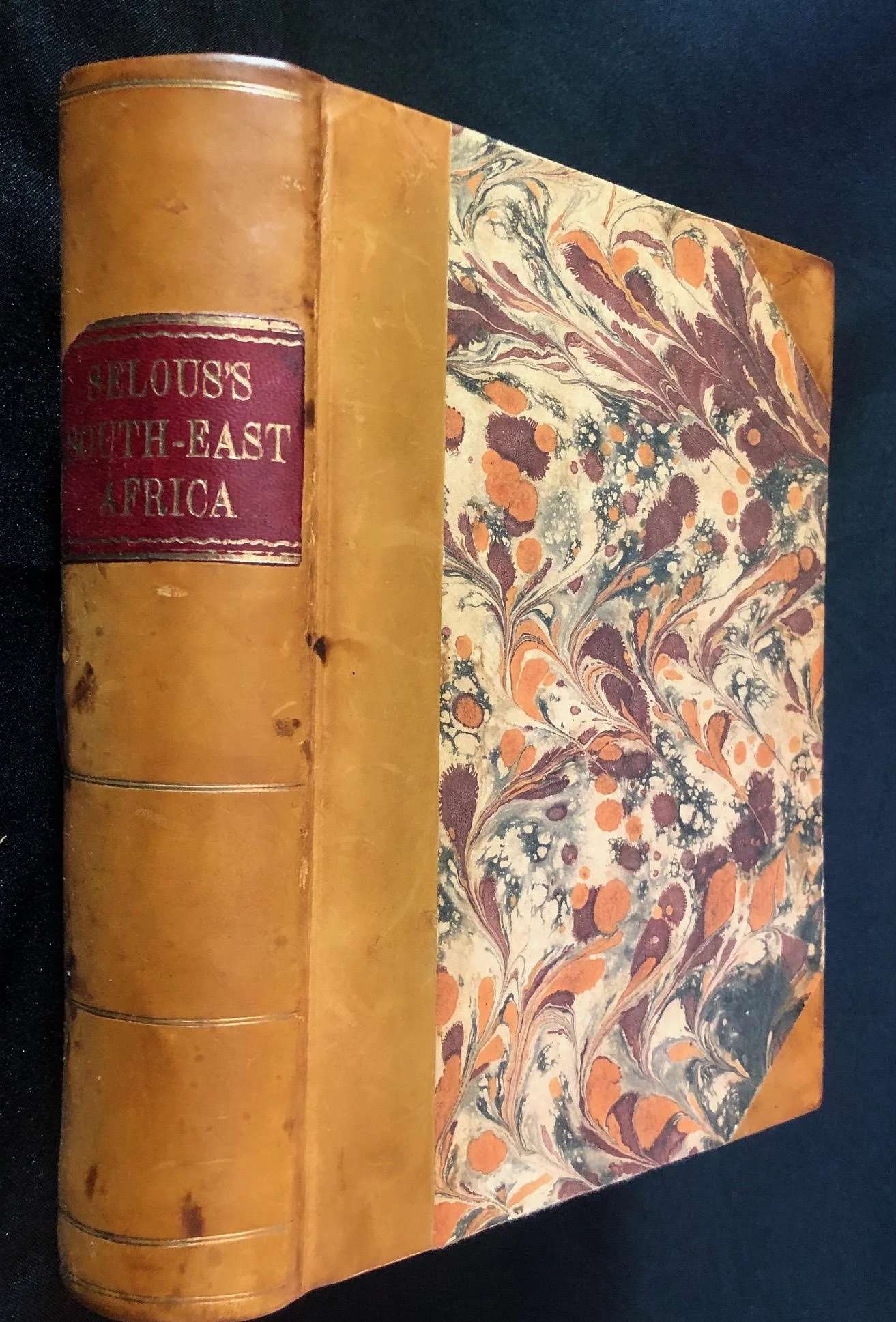
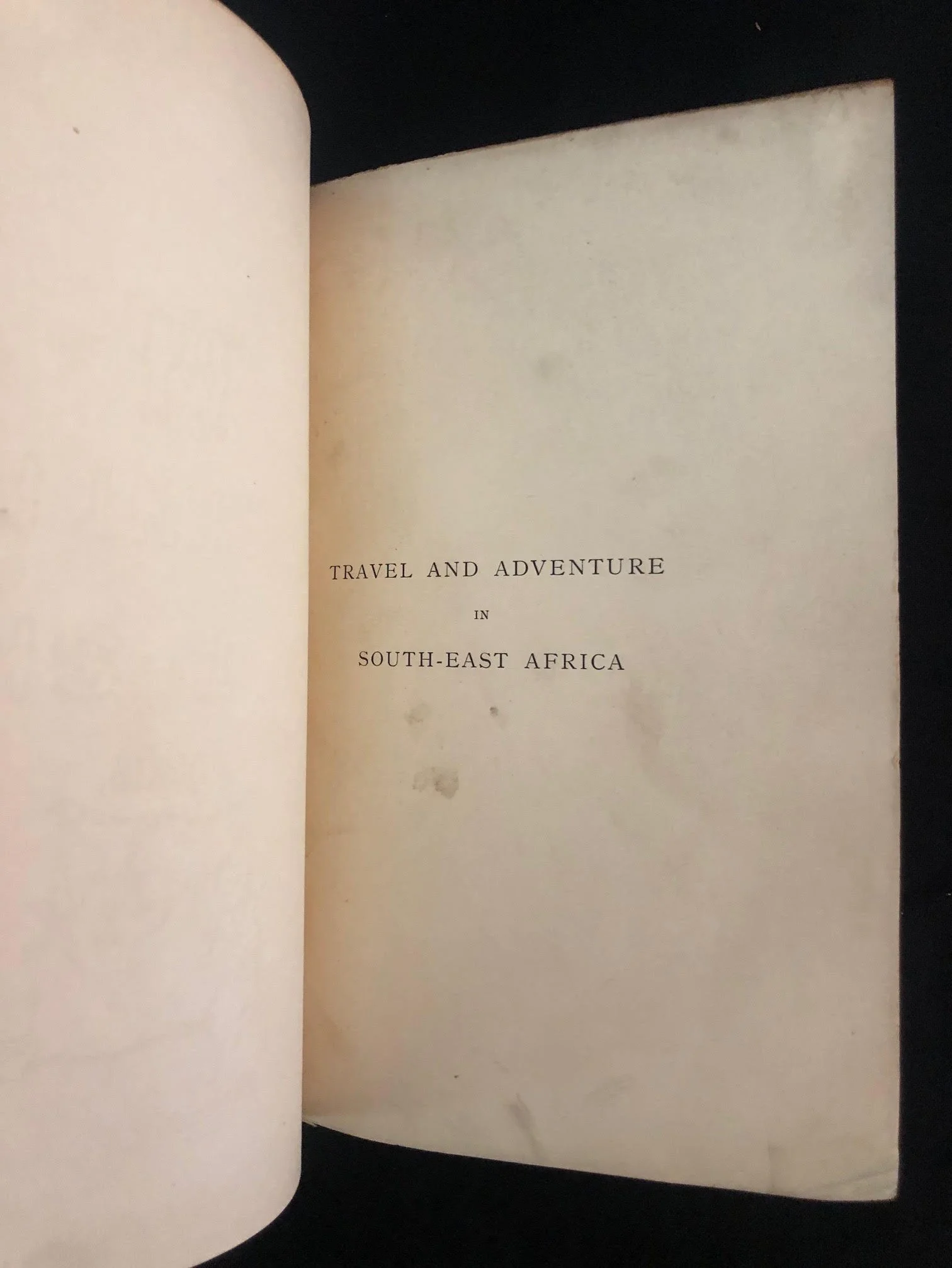
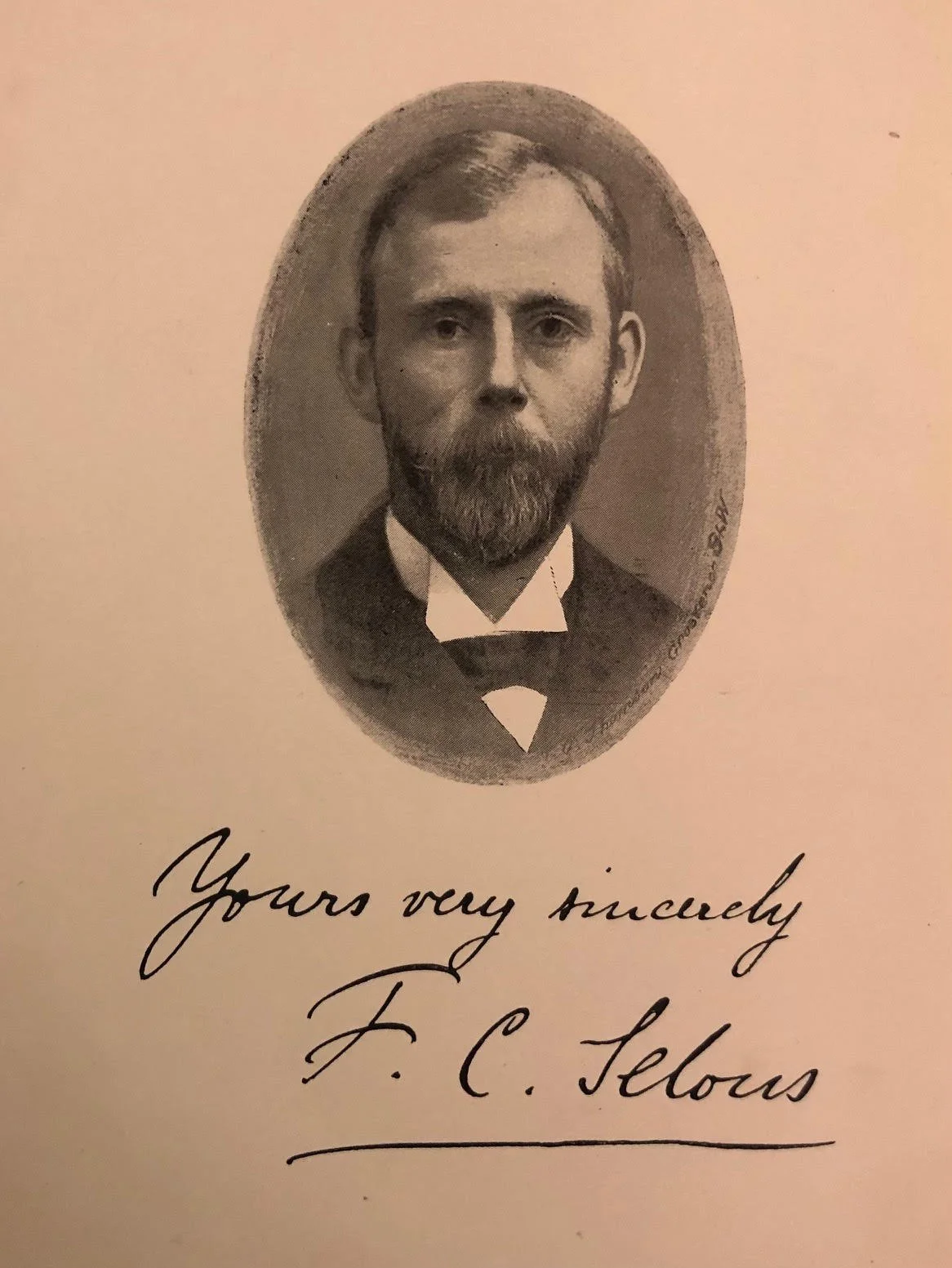
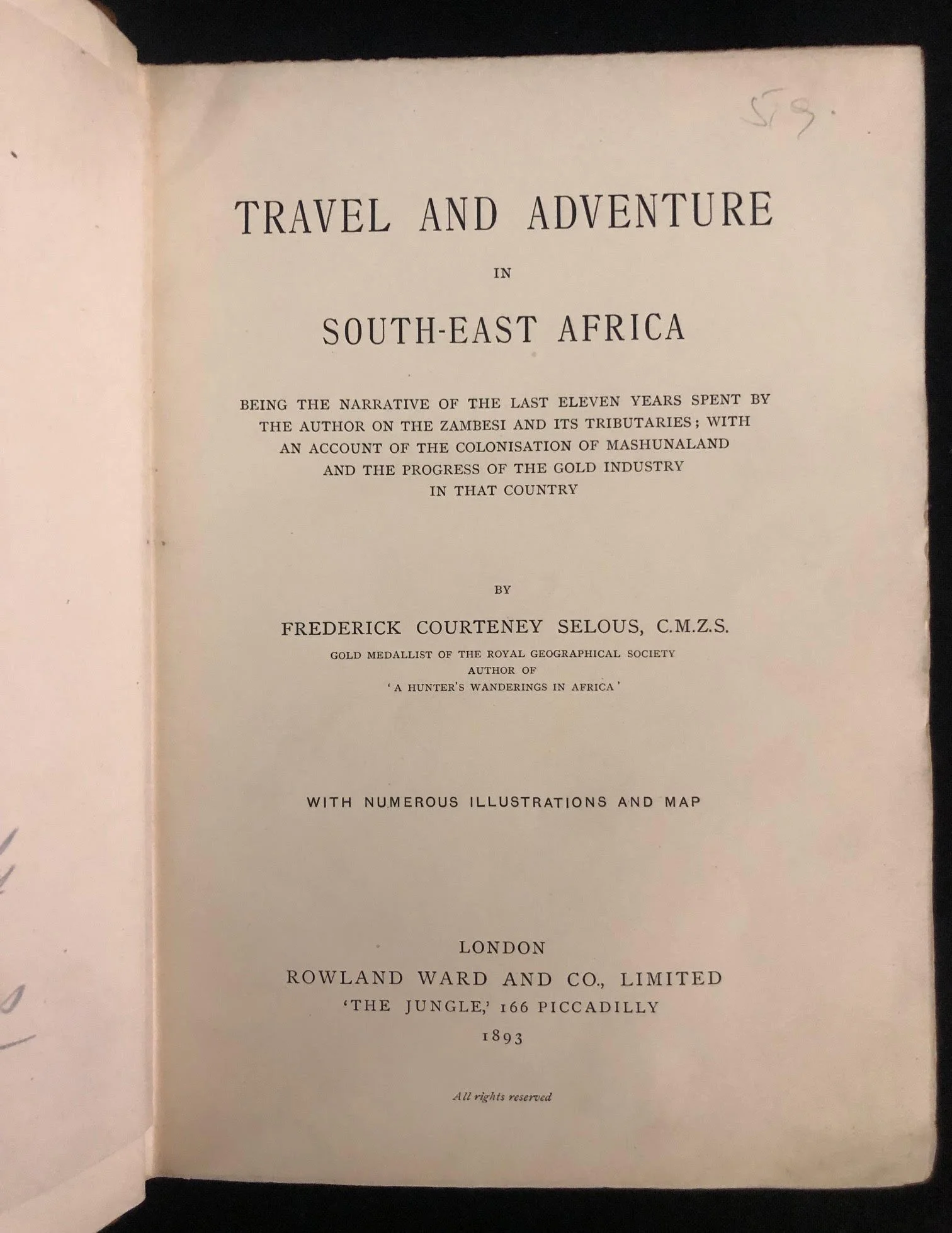
1893 first edition of Travel and Adventure in South-East Africa by Selous
This is the 1893 first edition of Travel and Adventure in South-East Africa by Frederick Courteney Selous, published in London by Rowland Ward and Co., Limited at 'The Jungle,' 166 Piccadilly. Selous himself was killed in action in German East Africa in January 1917 while serving as a 65-year-old captain in the 25th (Frontiersmen) Battalion, Royal Fusiliers.
Beyond that link, several historical details make this specific copy and edition stand out:
Rowland Ward at "The Jungle": The publisher was not a conventional literary house, but the world's premier Victorian taxidermy firm. Rowland Ward's showroom at 166 Piccadilly—nicknamed "The Jungle"—was a London landmark filled with mounted big-game trophies. Selous had spent 1882 to 1887 collecting rare zoological specimens for Ward and the Natural History Museum, and Ward published Selous's narrative to capitalize on both Victorian imperial fascination and the burgeoning big-game trophy market.
Eyewitness to the Pioneer Column (1890): While the first half of the book recounts ivory hunting and specimen collecting along the Zambezi, the latter chapters are a primary historical source for the British South Africa Company's 1890 Pioneer Column. Cecil Rhodes personally hired Selous as chief guide and intelligence officer to cut a 400-mile wagon road—the "Selous Road"—around Matabeleland into Mashonaland, bypassing King Lobengula's impis to establish Fort Salisbury (modern Harare).
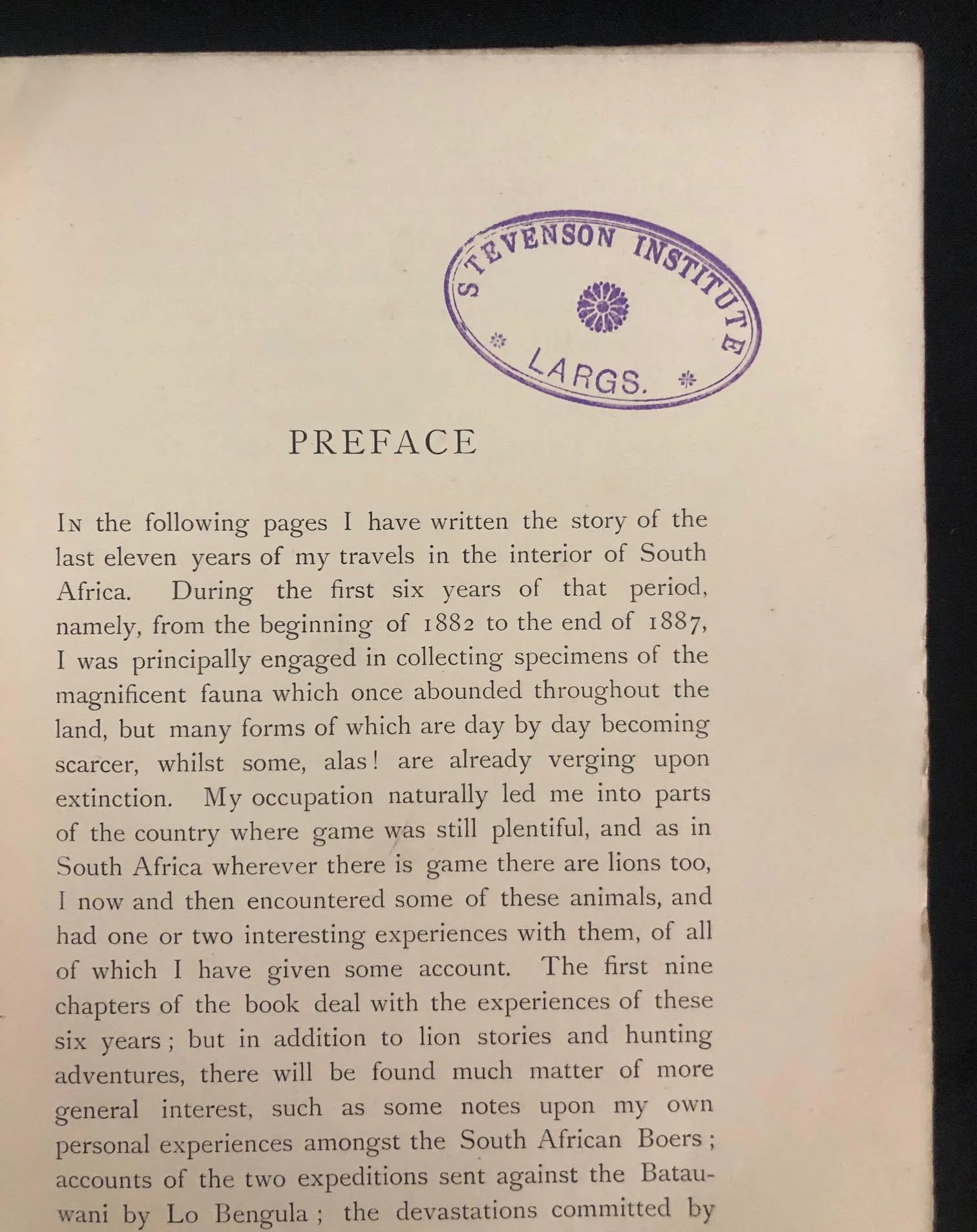
The Stevenson Institute, Largs Provenance: The purple oval library stamp on the Preface leaf belongs to the Stevenson Institute in Largs, Ayrshire, Scotland. Founded in 1890 through a bequest by Scottish ironmaster and philanthropist Robert Stevenson (and opening its doors in 1892, just a year before this book was printed), the Institute served as a workingmen's reading room, library, and recreational club—illustrating how accounts of Southern African frontier expansion were eagerly consumed by industrial-town readers across late-Victorian Britain.
The Real-Life Inspiration for Allan Quatermain: Selous was H. Rider Haggard's direct inspiration for the fictional adventurer Allan Quatermain in King Solomon's Mines (1885). Notice the elegiac tone already creeping into Selous's 1893 Preface, where he laments that the region's wildlife was "day by day becoming scarcer, whilst some, alas! are already verging upon extinction"—a shift in consciousness that later turned Selous into an early wildlife conservationist.
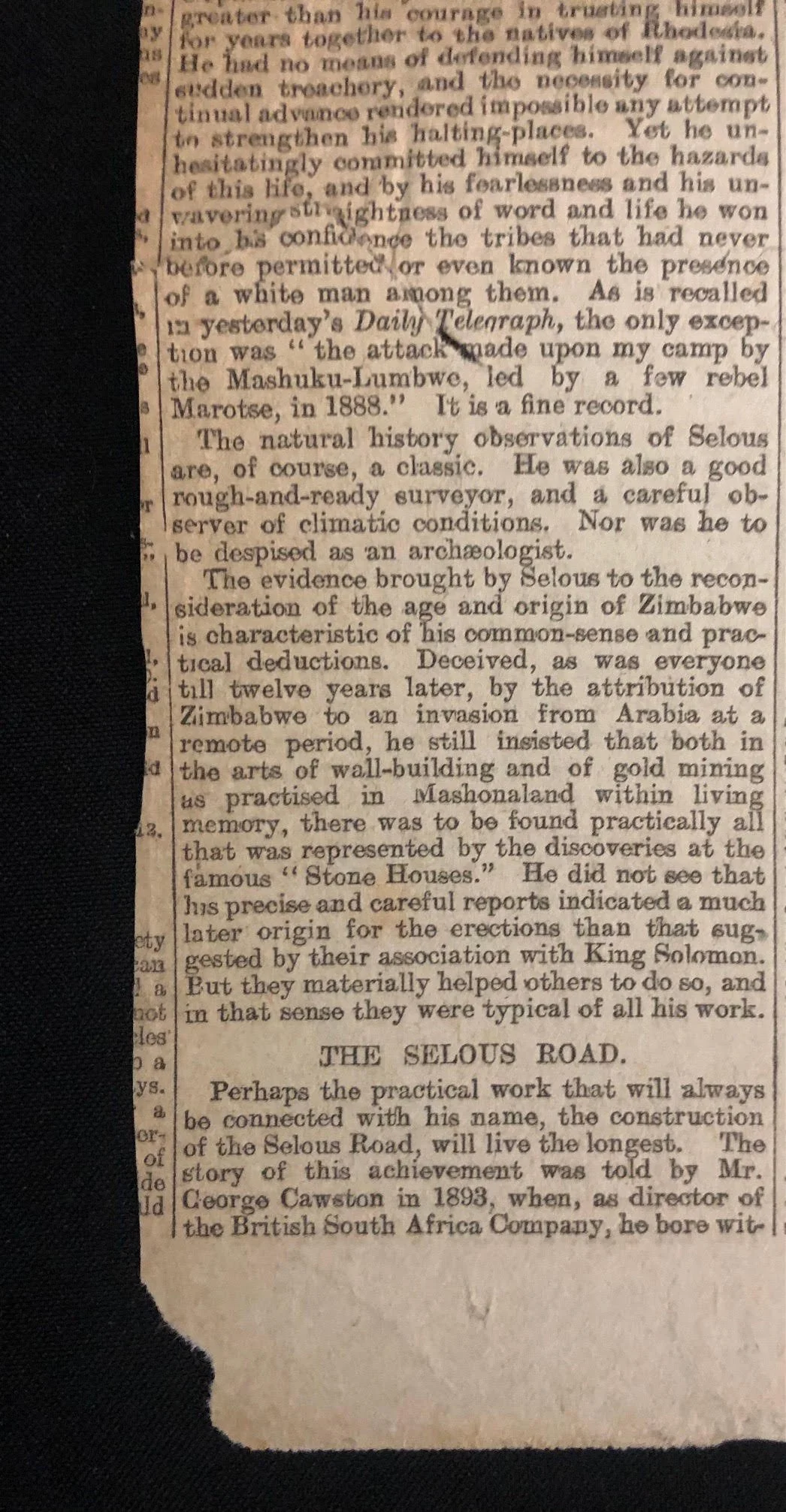
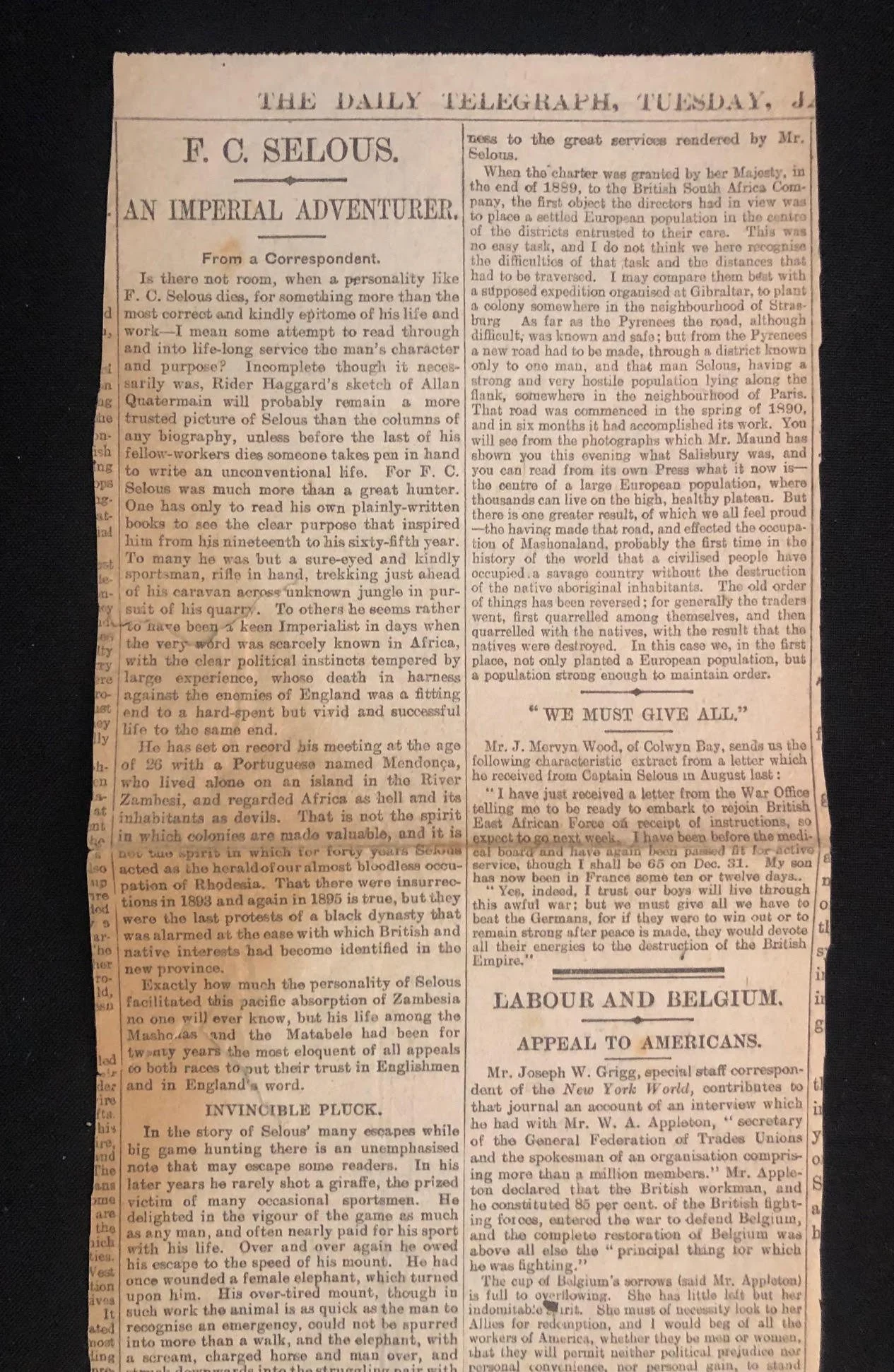
This newspaper clipping is from The Daily Telegraph of Tuesday, January 9, 1917, published just five days after Frederick Courteney Selous was killed in action by a German sniper on January 4, 1917, at Beho-Beho in German East Africa. Notice the phrase "As is recalled in yesterday's Daily Telegraph..."—confirming that this is a follow-up feature essay ("From a Correspondent") published the day after the paper ran its formal obituary on Monday, January 8.
Several details in this clipping give it remarkable historical and bibliographic weight:
Laid-In Ephemera Completing the Circle: If this clipping was tucked inside your 1893 copy of Travel and Adventure in South-East Africa, it is a classic example of a Victorian or Edwardian reader preserving contemporary newsprint inside a relevant volume—linking Selous's 1890 Mashonaland expedition directly to his death in the 1917 East African Campaign.
The Great Zimbabwe Archaeological Debate: The column includes a fascinating discussion of Selous's observations on Great Zimbabwe ("the famous 'Stone Houses'"). In the 1890s, Cecil Rhodes and colonial antiquarians like Theodore Bent promoted the politically convenient myth that Great Zimbabwe had been built by ancient Phoenicians or Sabaeans from Arabia ("King Solomon's Mines") rather than indigenous Africans. By 1905–1906—the "twelve years later" referenced in the article—archaeologists David Randall-MacIver and later Gertrude Caton-Thompson proved its medieval Shona origin. The writer notes that while Selous initially accepted the popular Arabian theory, his own honest field notes documenting contemporary Shona stone-walling and gold-mining techniques inadvertently provided the exact evidence that dismantled the myth.
A Poignant August 1916 Letter on Age and Sacrifice: Under the subheading "WE MUST GIVE ALL," the paper prints a letter sent by Selous in August 1916 to J. Mervyn Wood of Colwyn Bay just before re-embarking for East Africa:
"I have been before the medical board and have again been passed A1 for active service, though I shall be 65 on Dec. 31. My son has now been in France some ten or twelve days..."
Selous turned 65 on New Year's Eve 1916 and was killed four days later. Tragically, his son—Captain Frederick H. B. Selous, MC, of the Royal Flying Corps—was also killed in action exactly one year later to the day, on January 4, 1918, over the Western Front.
George Cawston's "Gibraltar to Strasbourg" Analogy: To explain the sheer scale of cutting the 1890 Selous Road into Mashonaland to a London audience, the article quotes British South Africa Company director George Cawston's 1893 speech comparing it to marching an expedition from Gibraltar across the Pyrenees into hostile territory to plant a colony near Strasbourg—with only one man on earth knowing the terrain ahead.
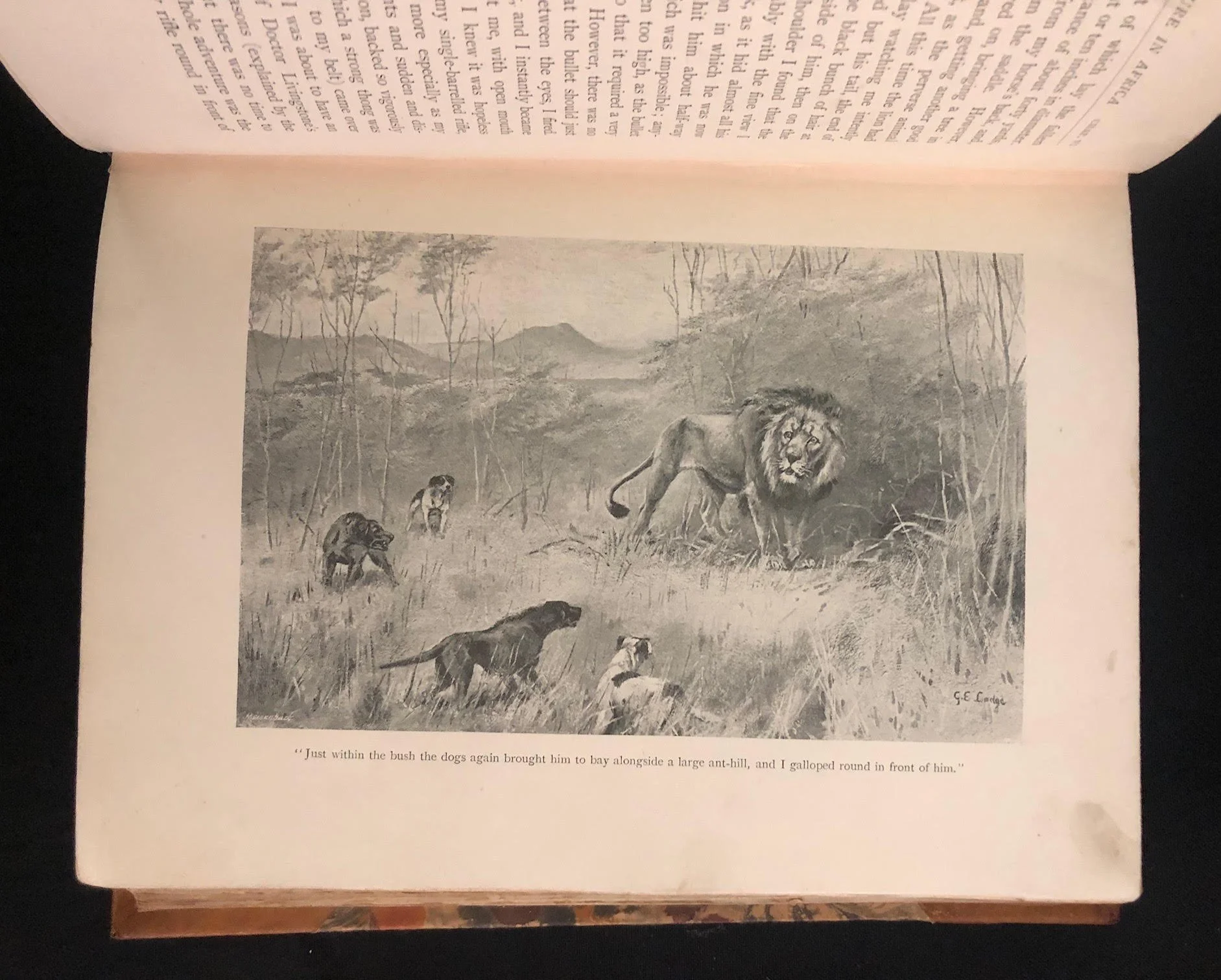
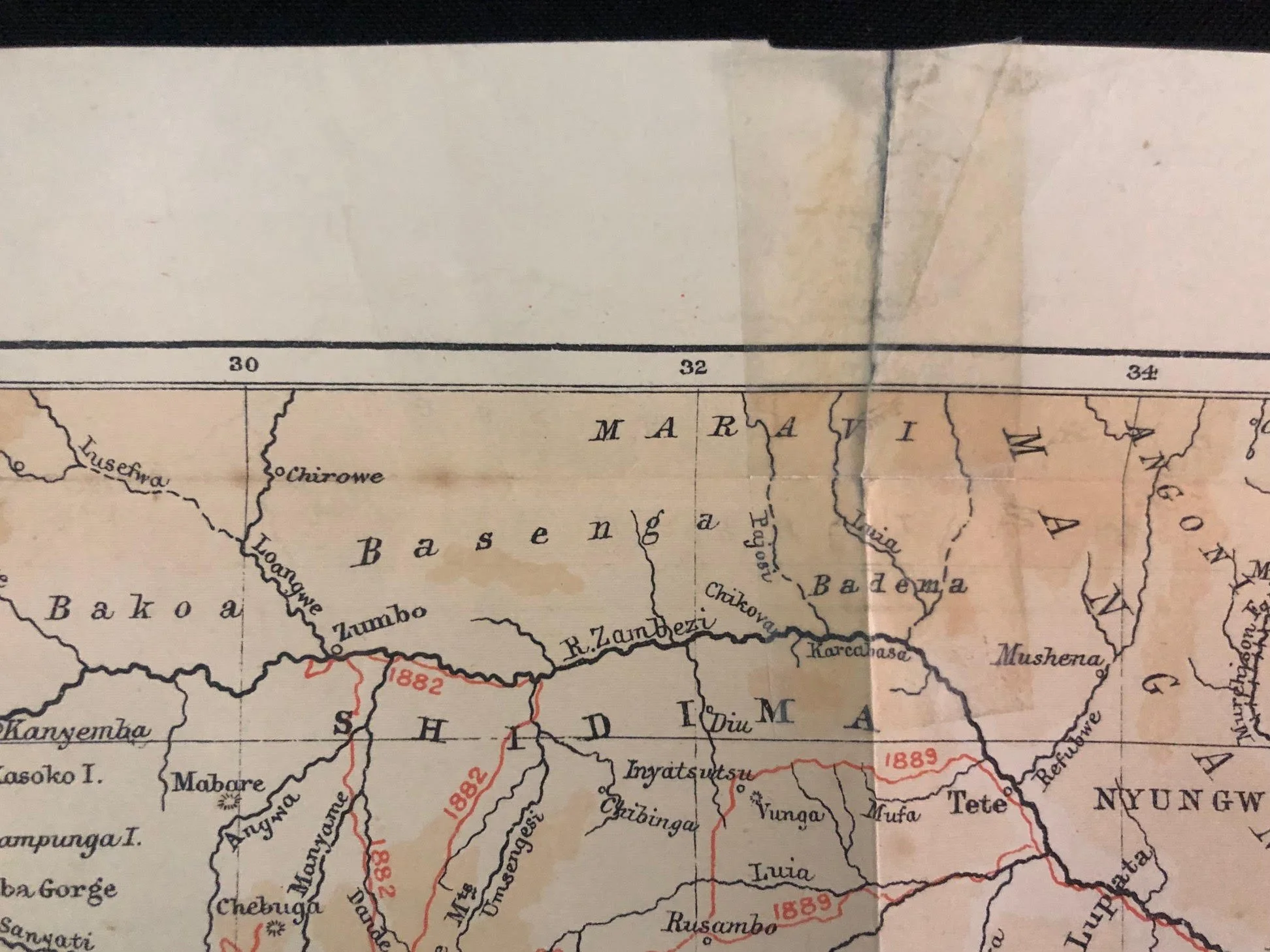
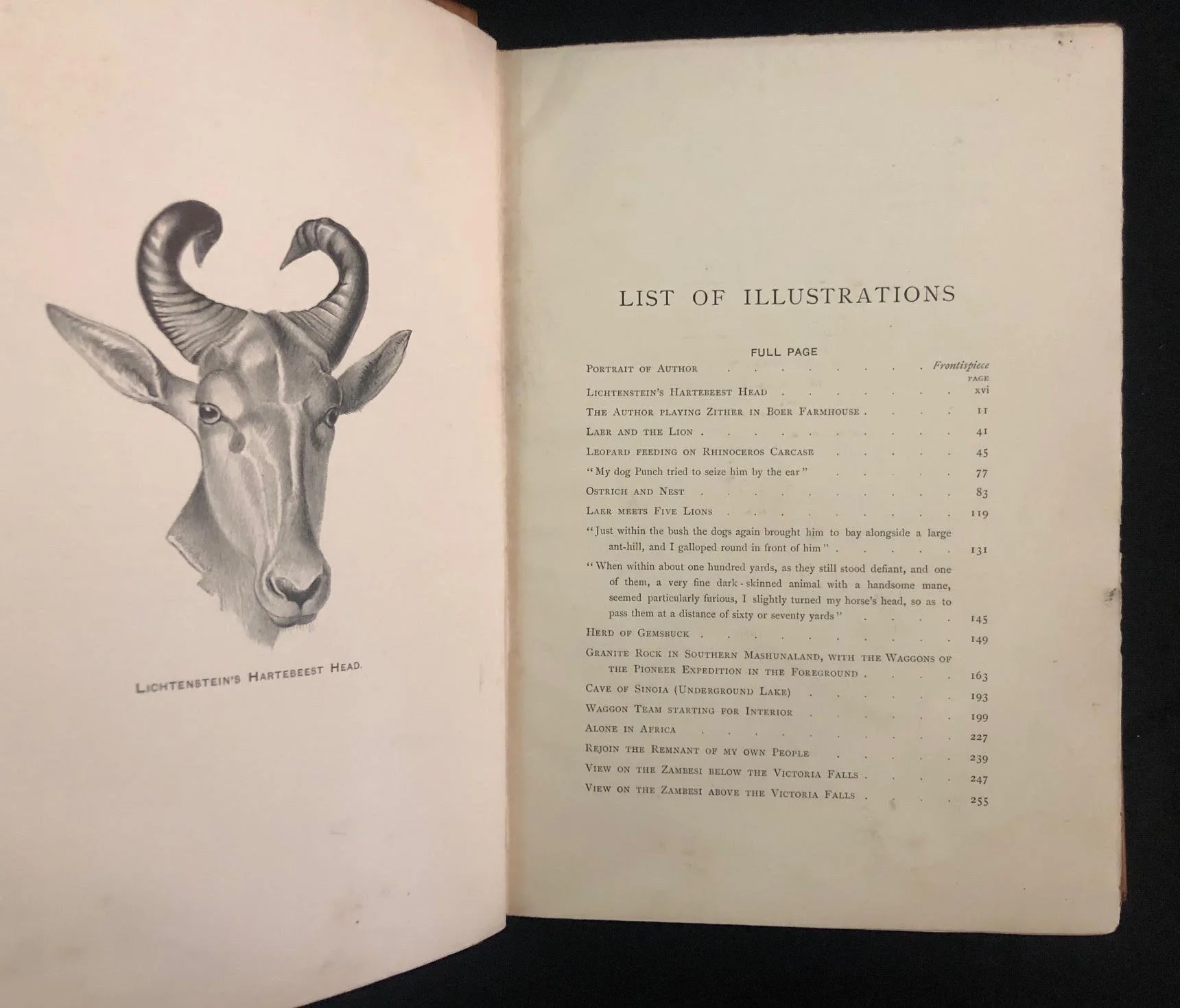
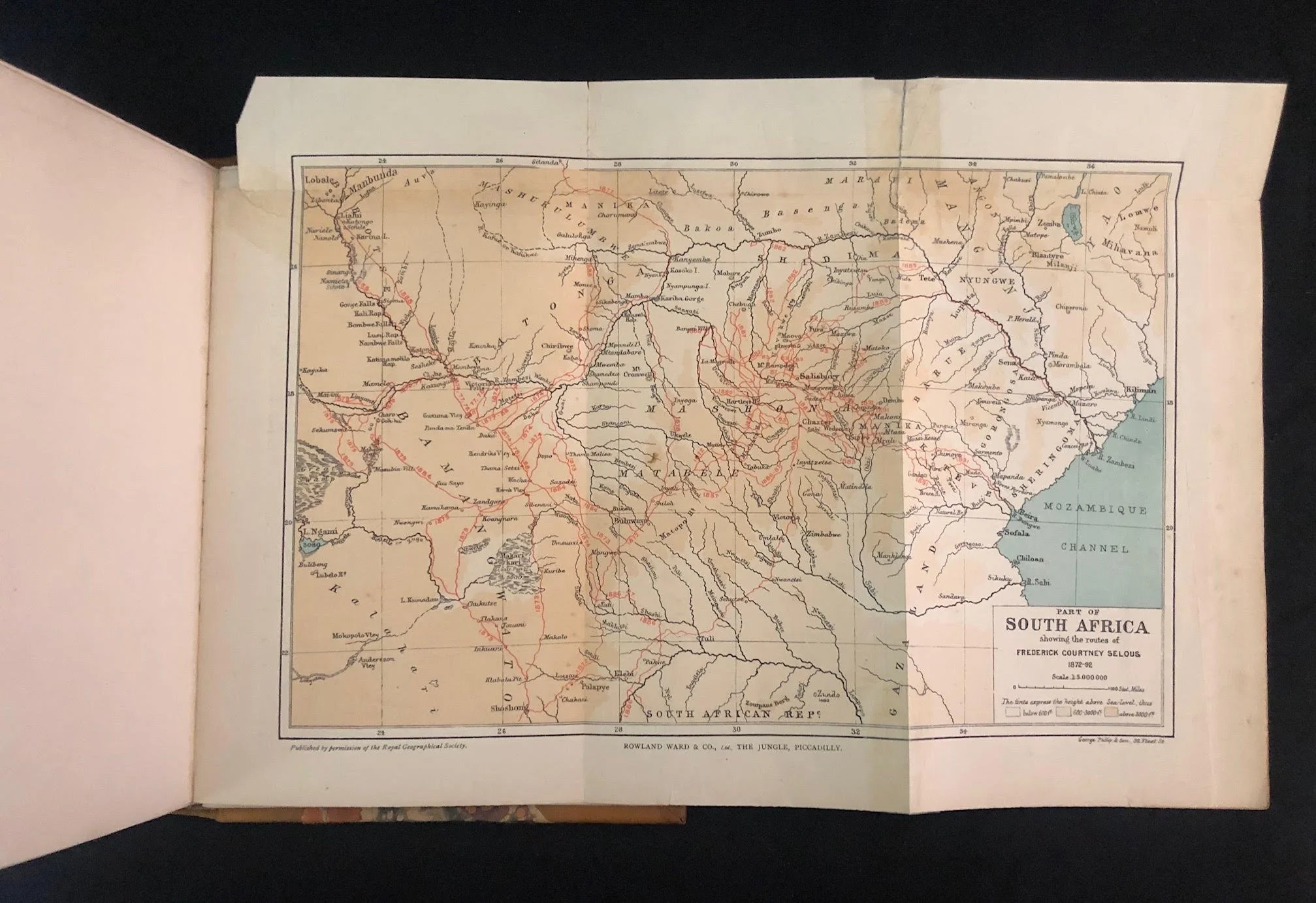
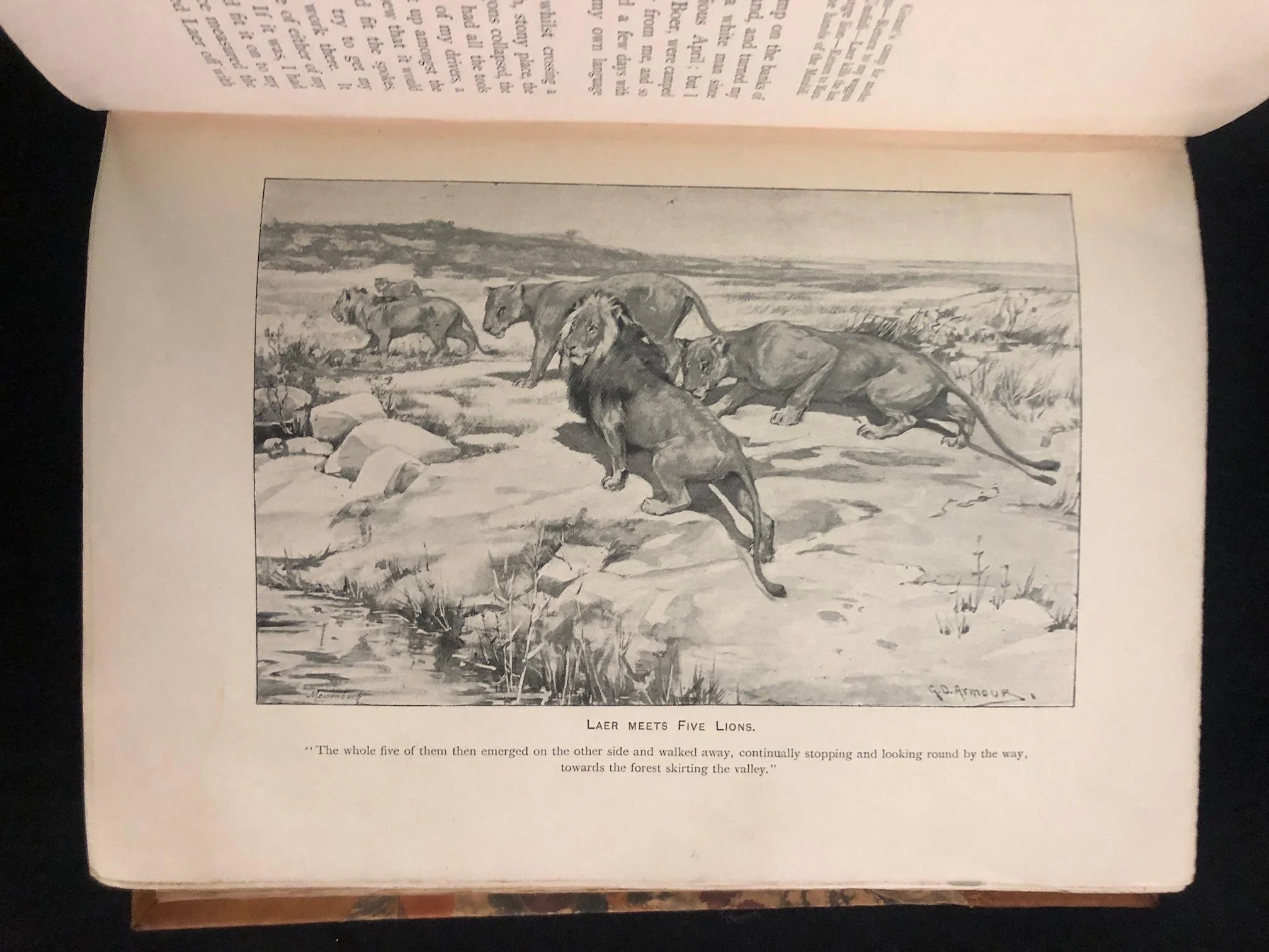
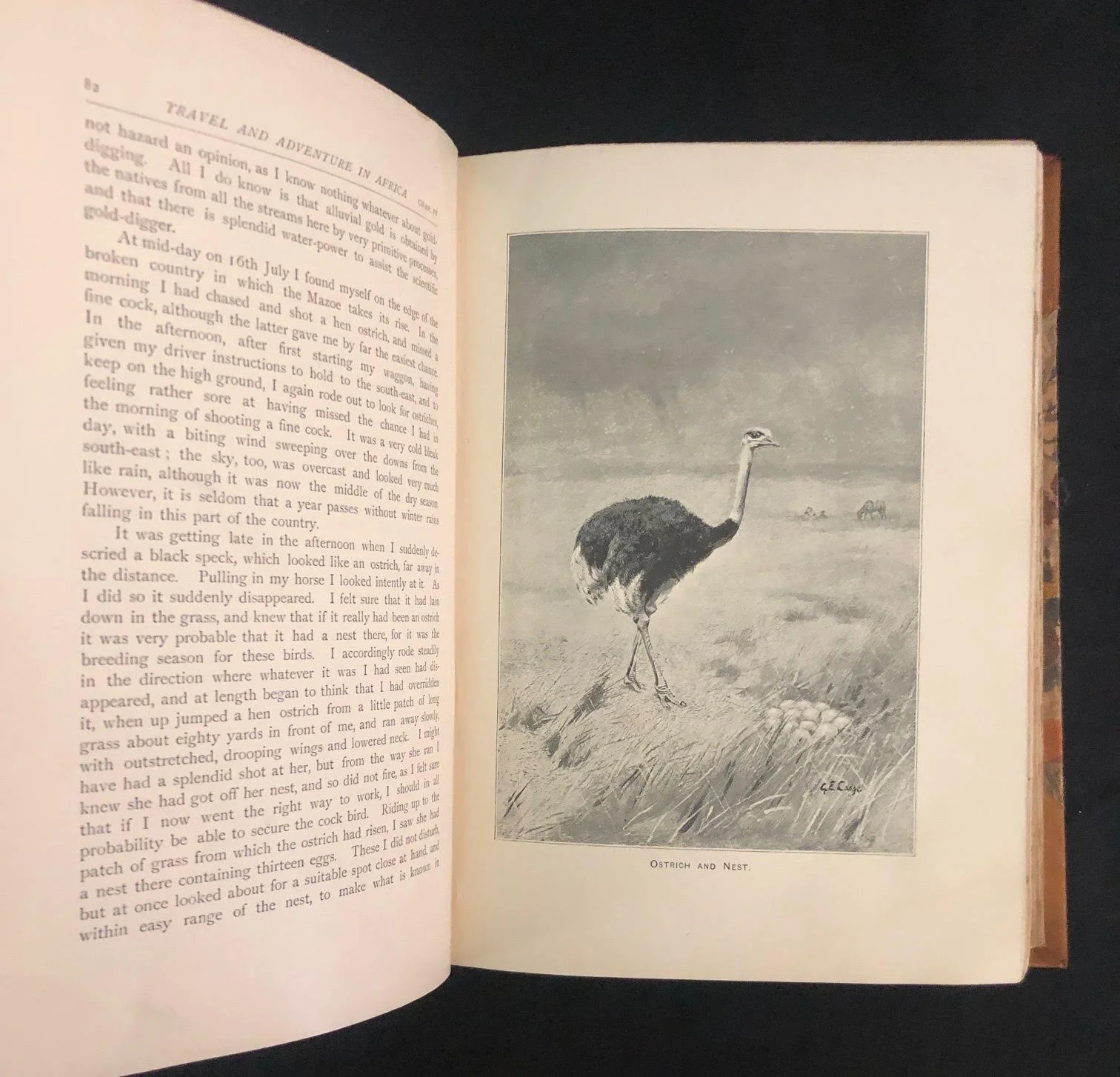
Complete with map, all illustrations, half-title page, there appears to be only 1 library stamp, some thumbing to pages. (The frontis has a printed signature, that is not original).
175mm x 24mm x 45mm.
R10,000