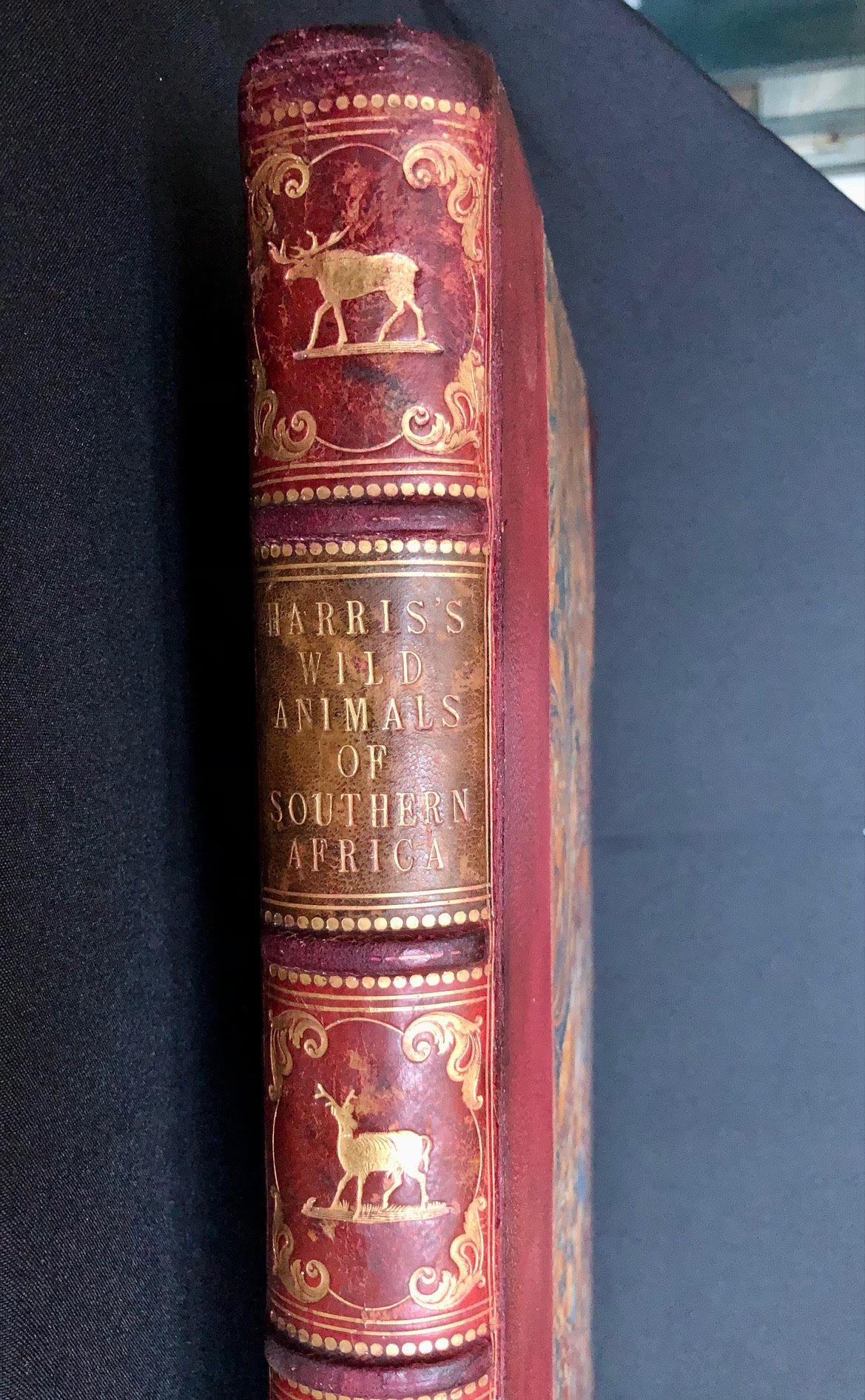
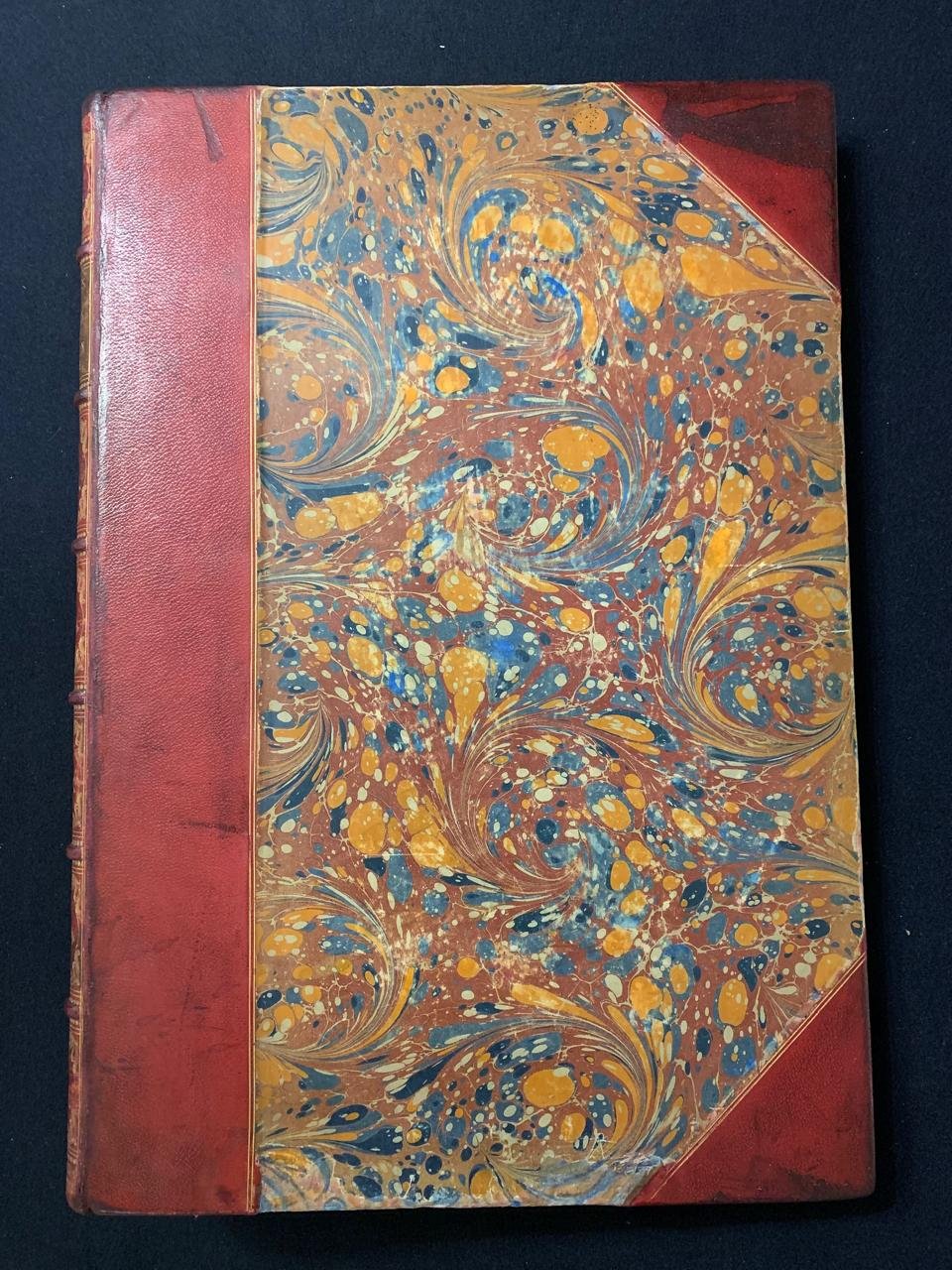
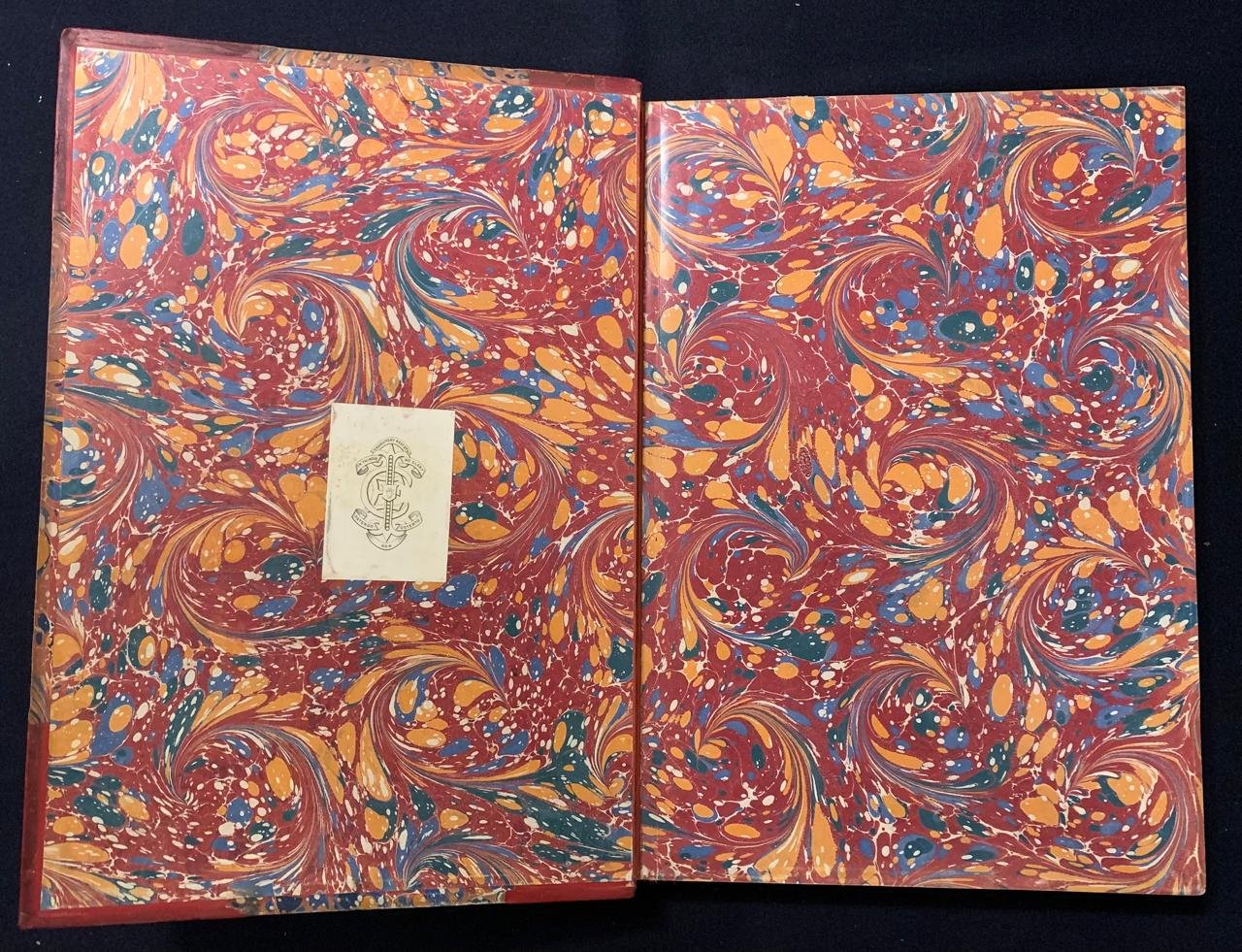
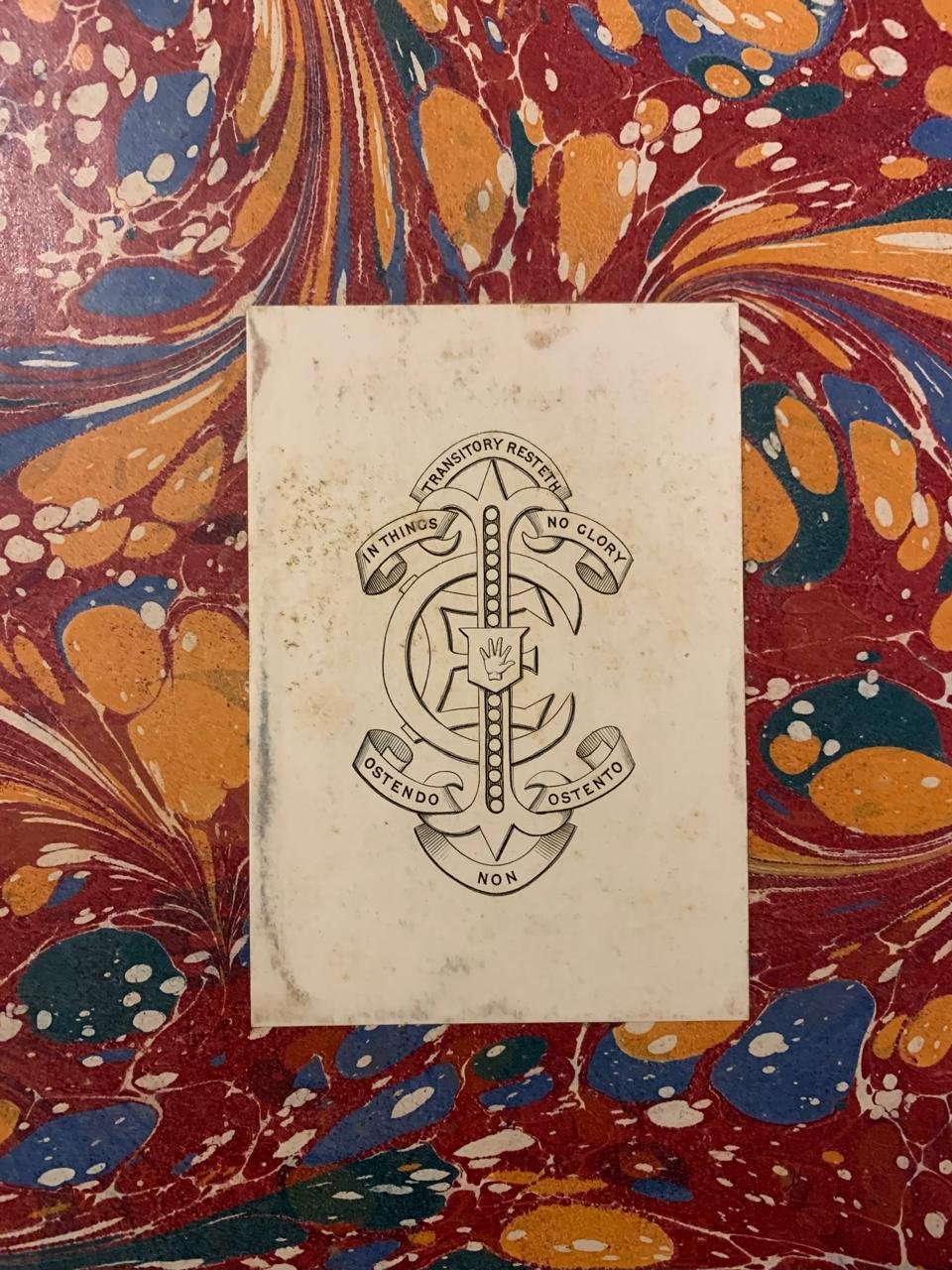
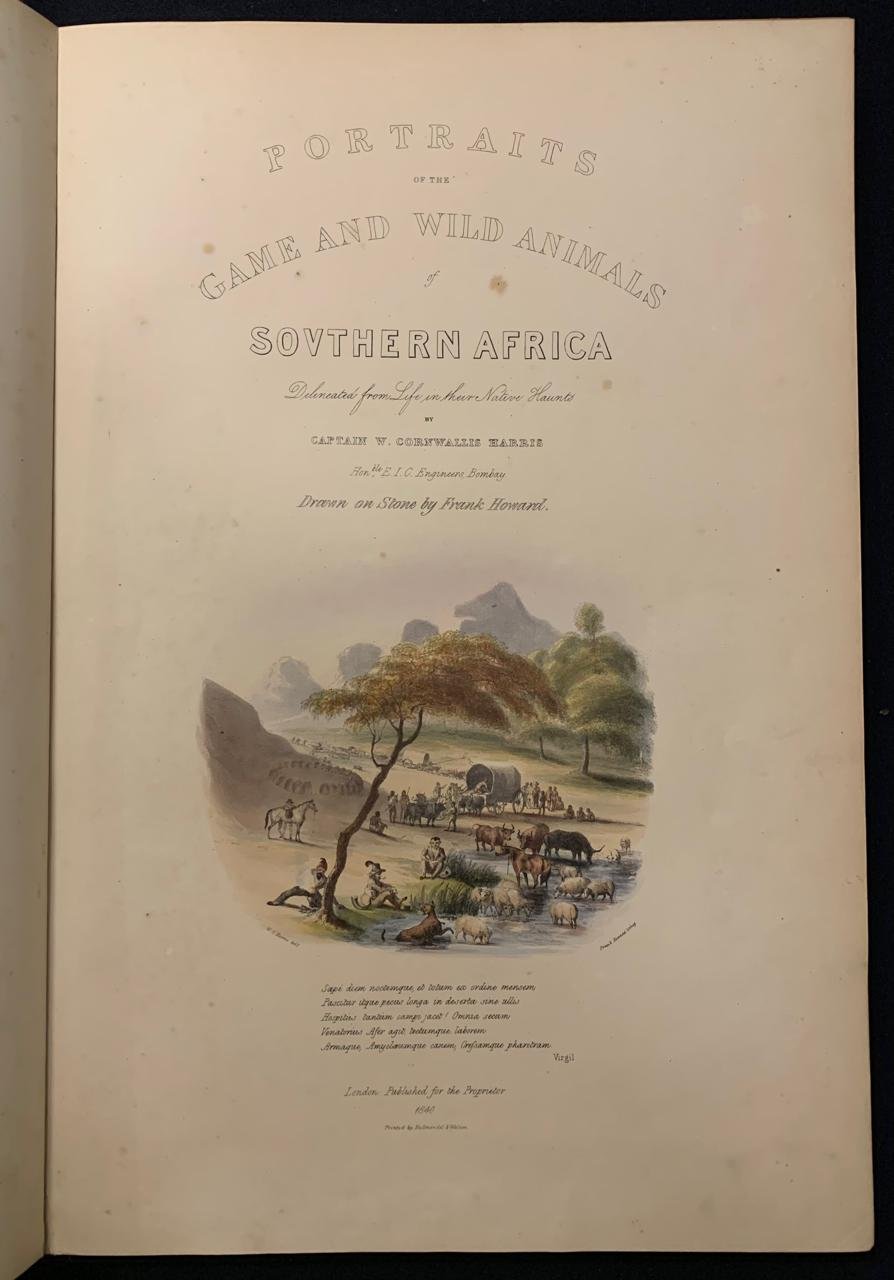
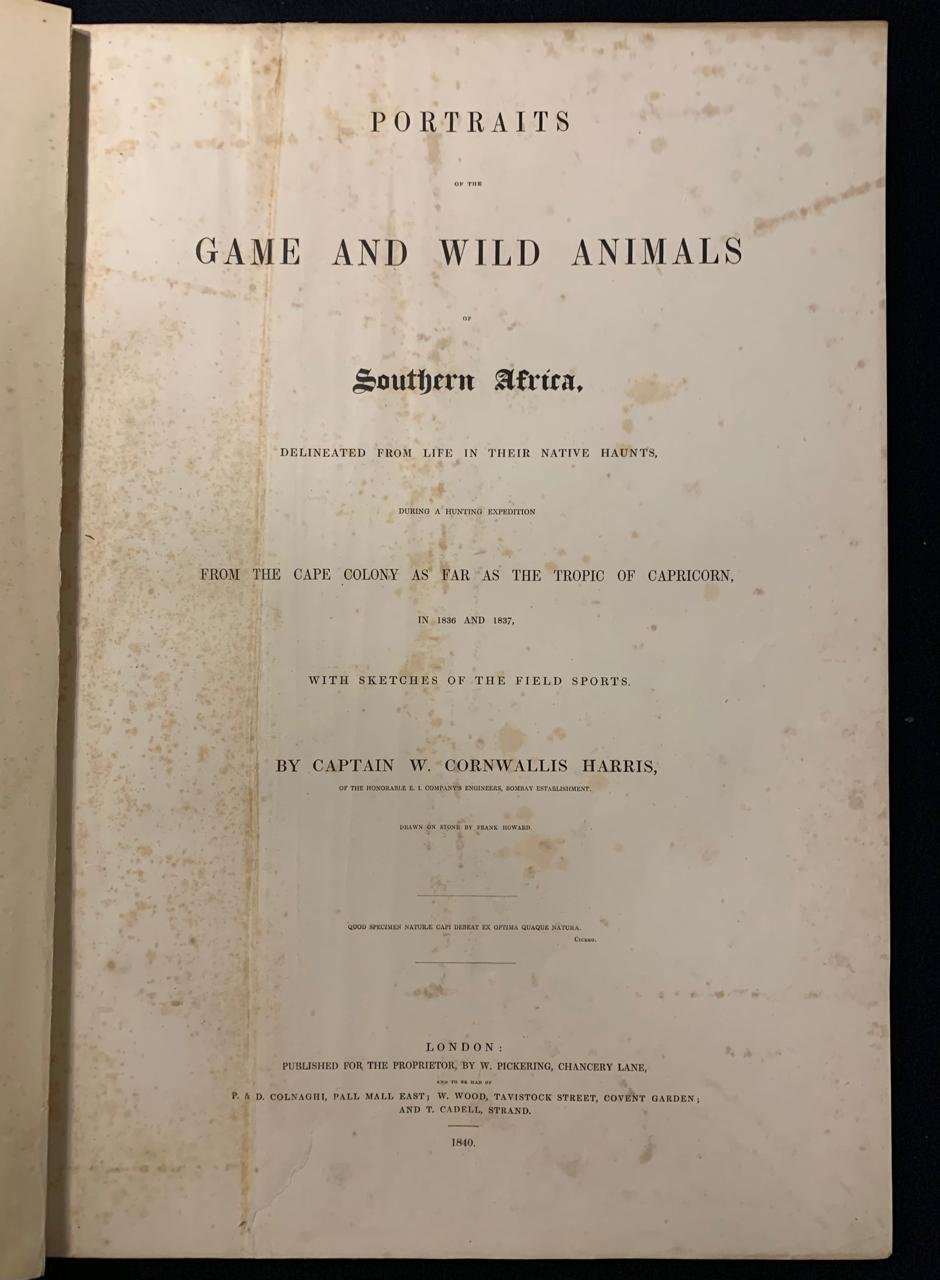
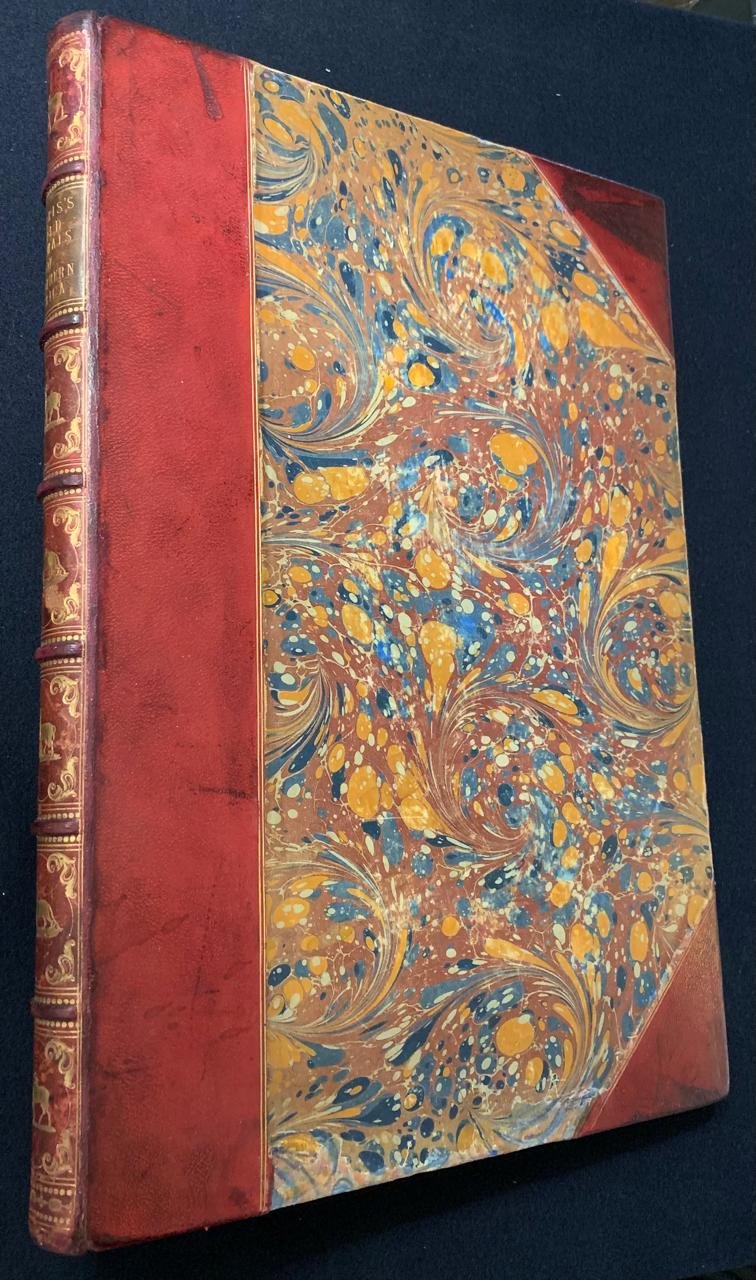
Portraits of the Game and Wild Animals of Southern Africa 1840
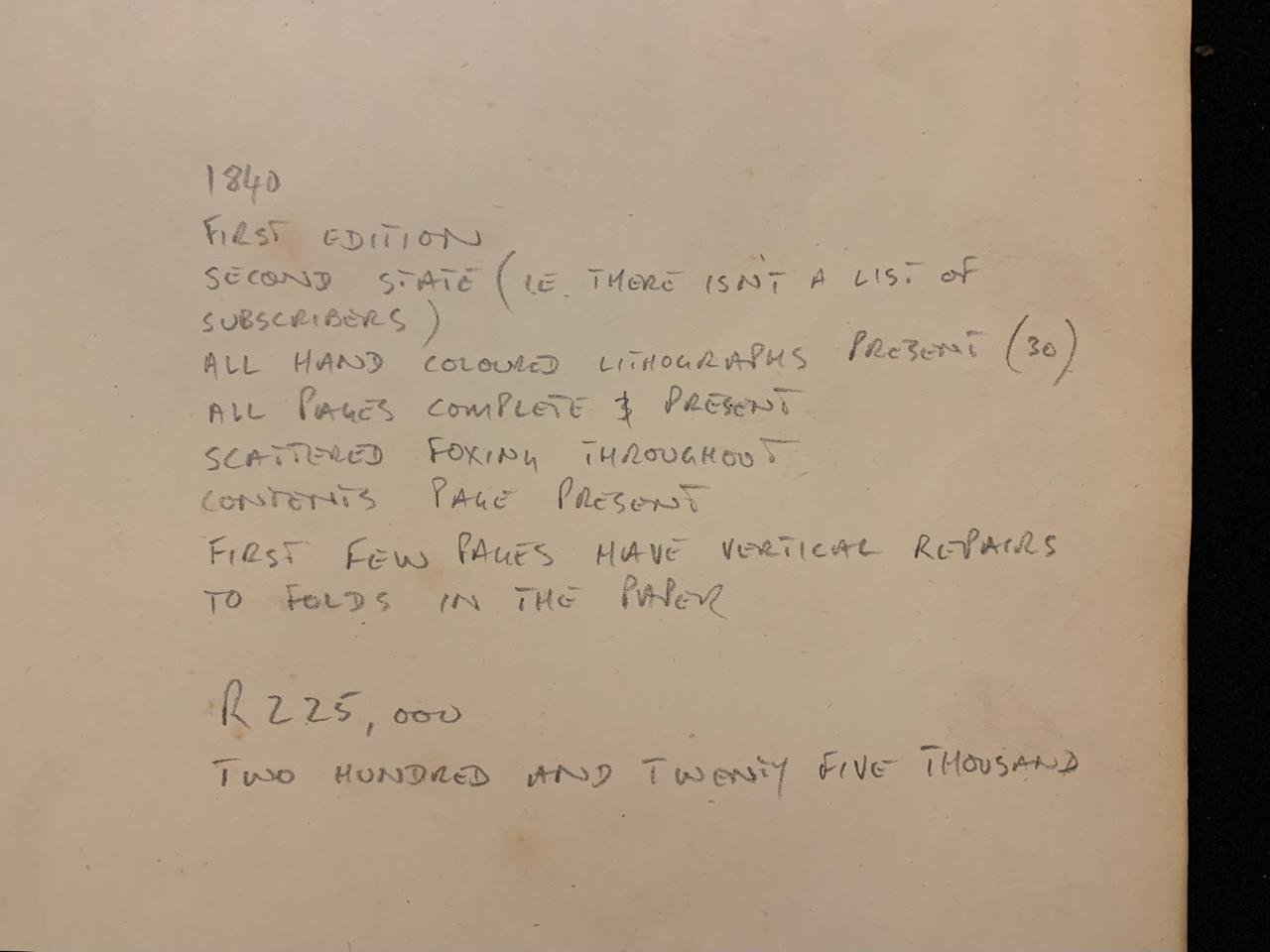
First Edition (not the Subscribers Edition).
By Captain William Cornwallis Harris
Delineated from Life in their Native Haunts, during a Hunting Expedition from the Cape Colony as far as the Tropic of Capricorn, in 1836 and 1837, with Sketches of the Field Sports.
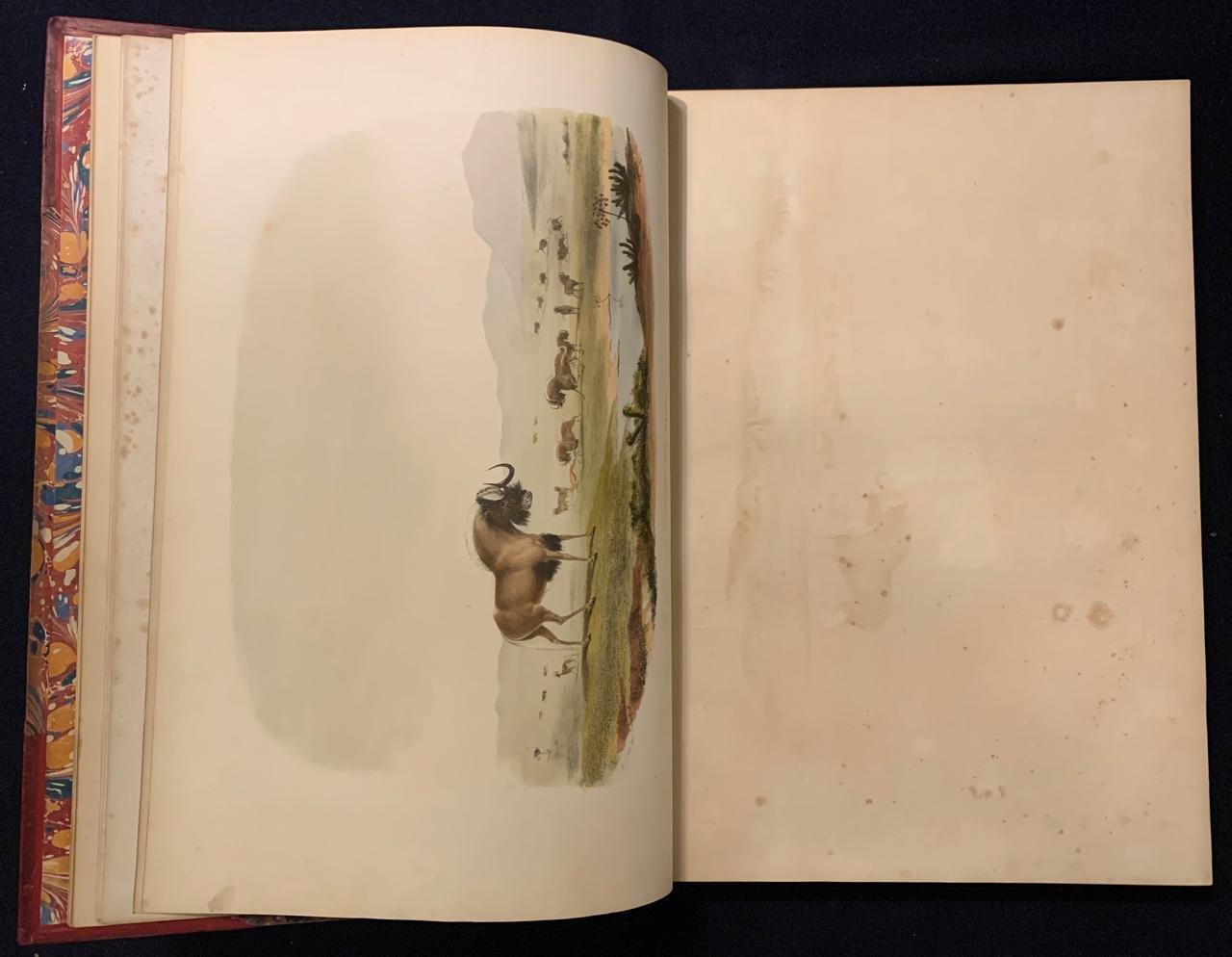
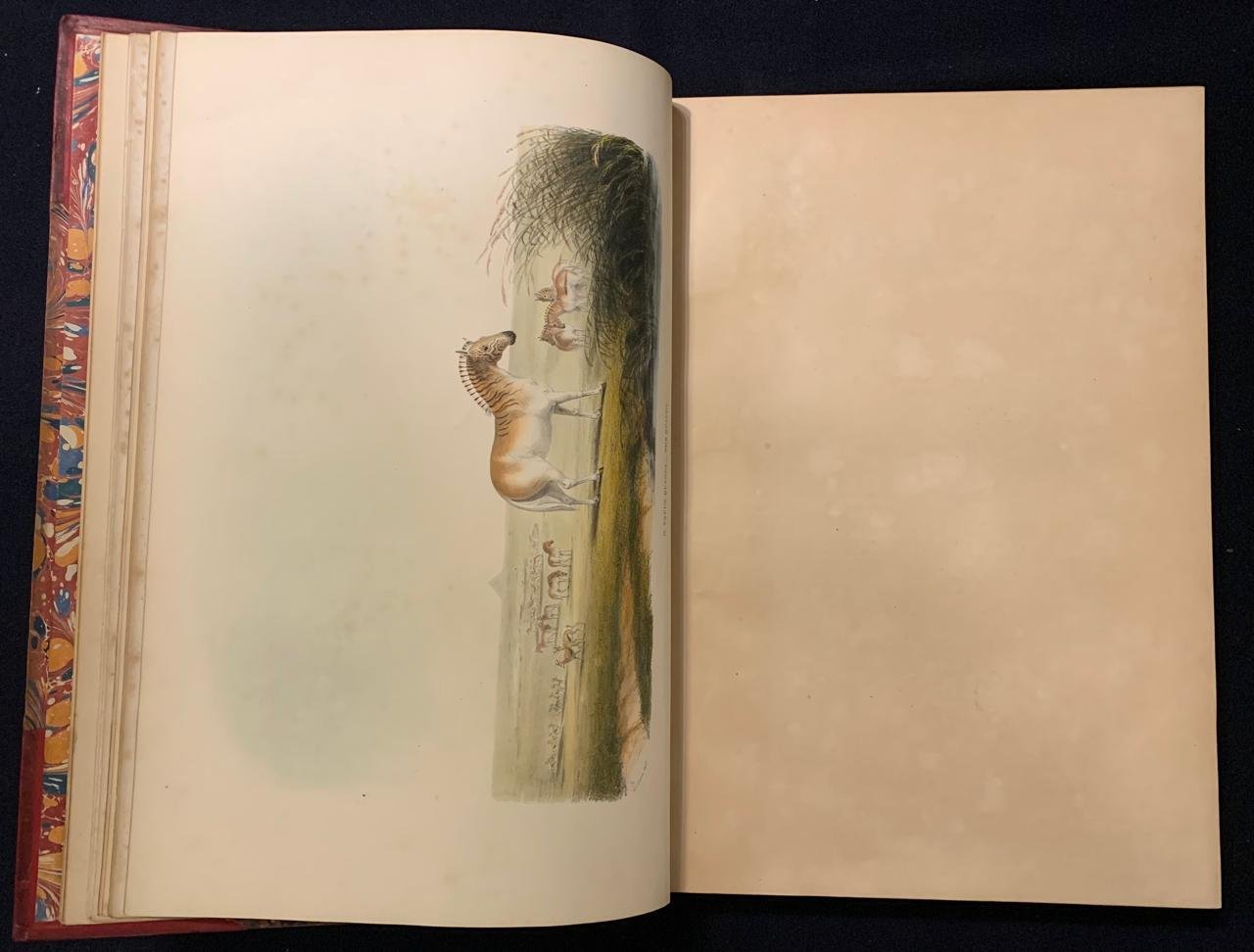
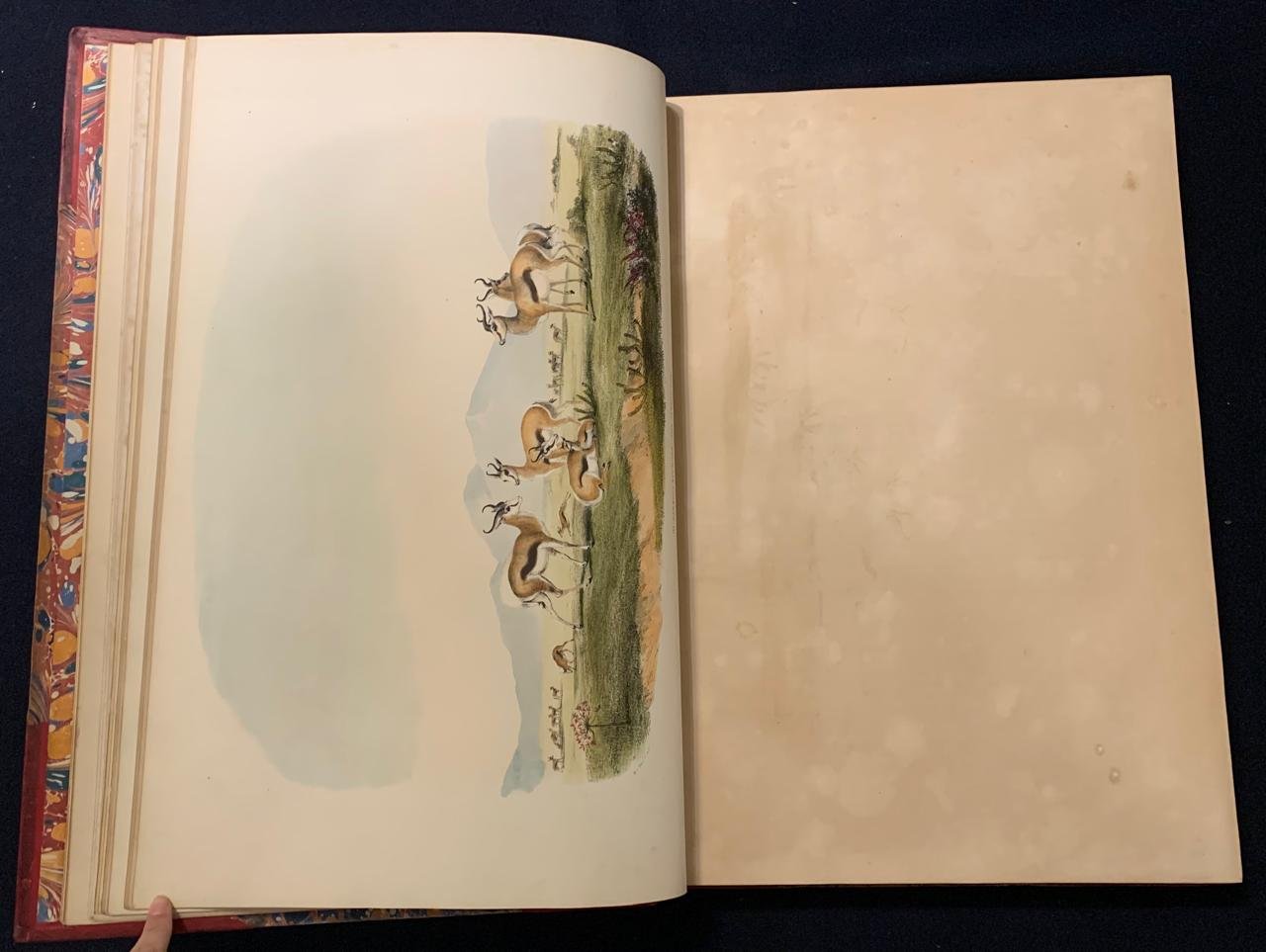
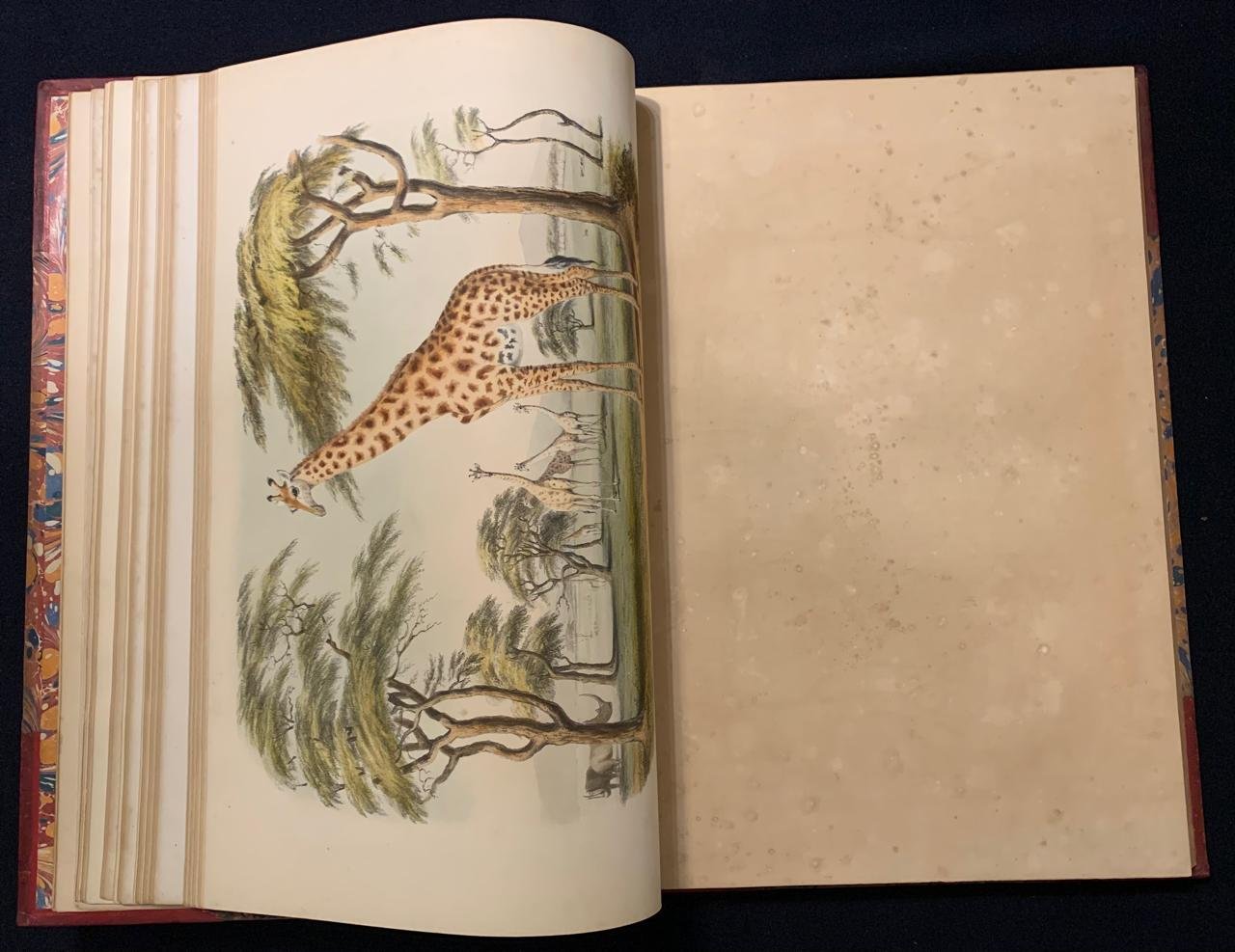
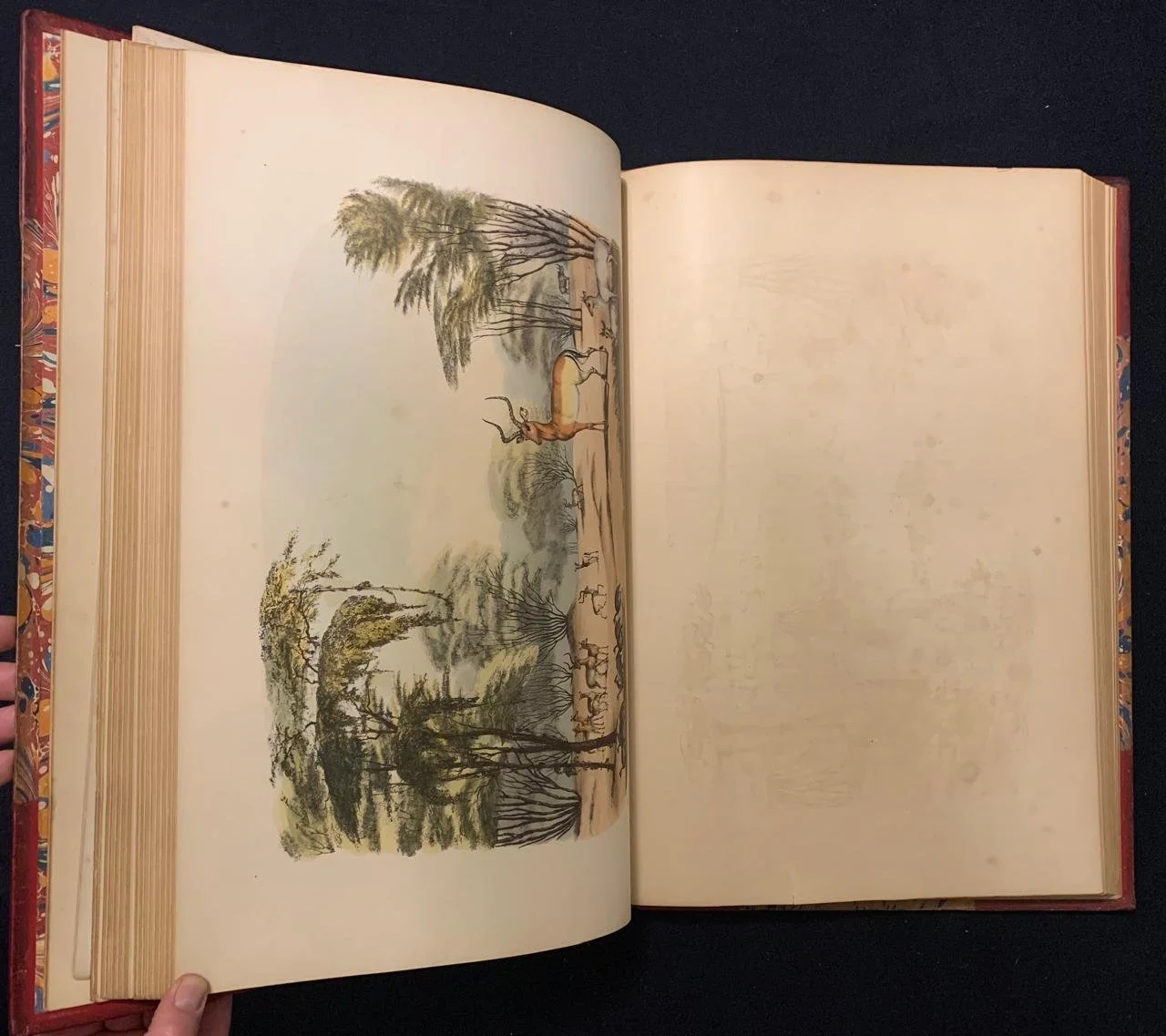
All 30 hand-tinted lithographic plates present.
All pages complete and present.
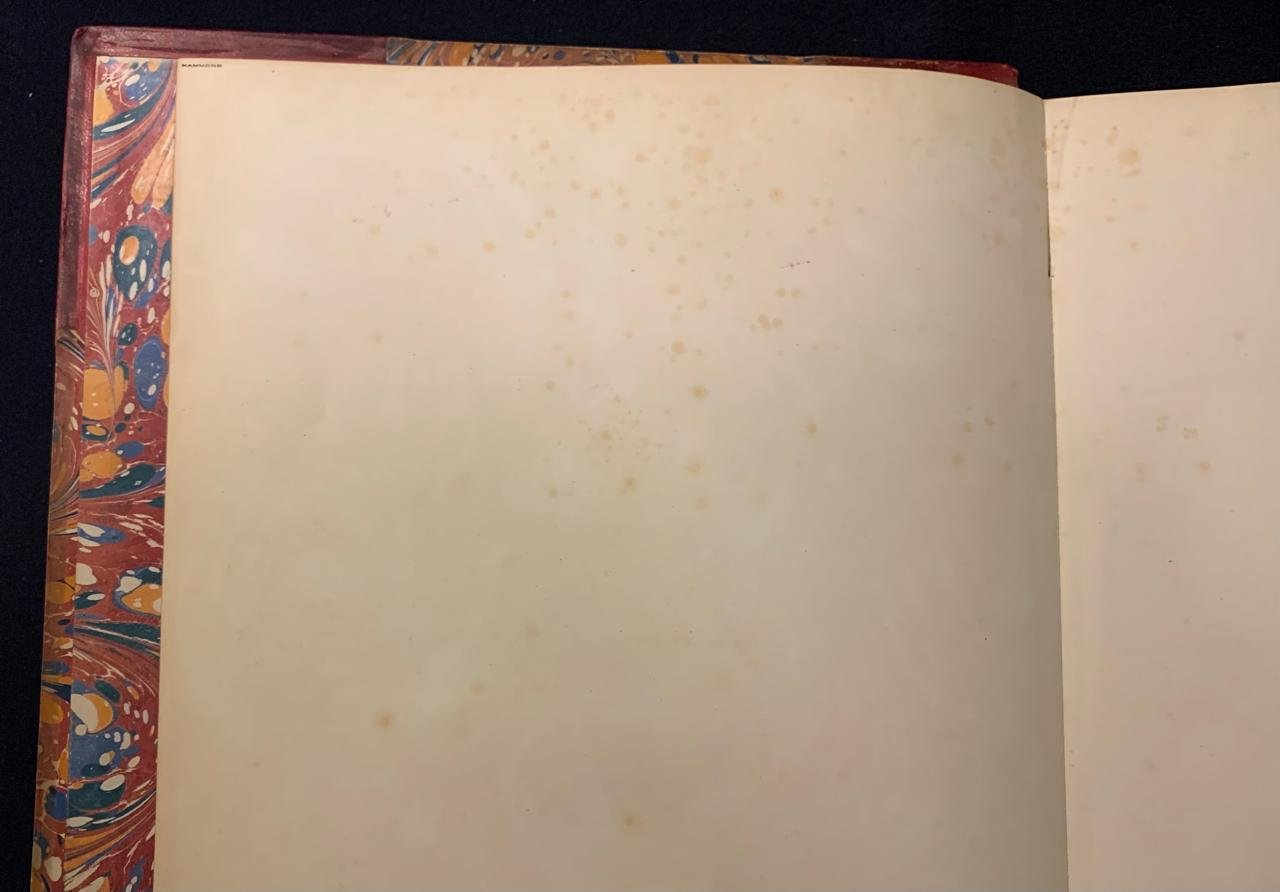
Scattered foxing throughout.
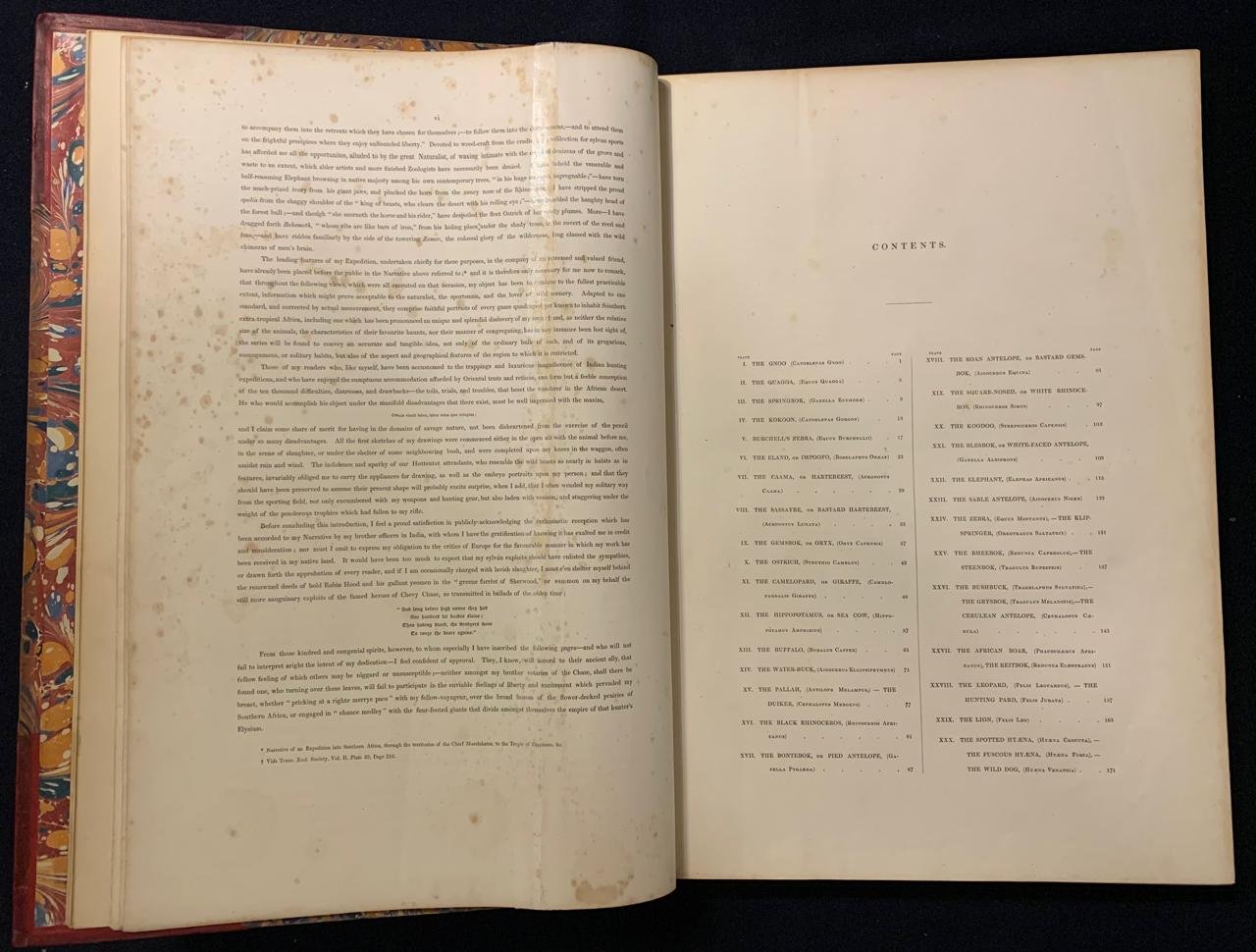
Contents page repaired.
First few pages have vertical repairs to the folds in the paper.
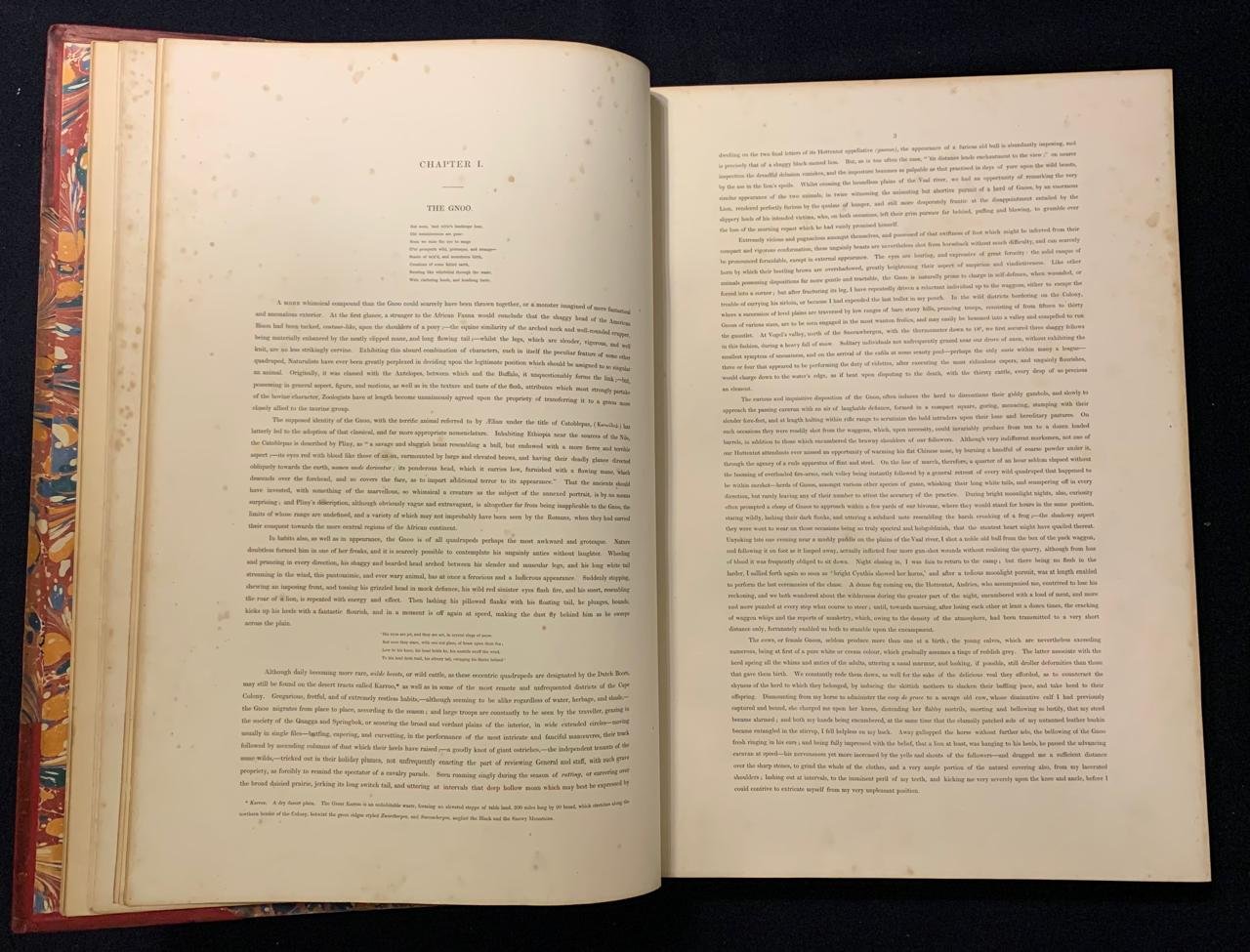
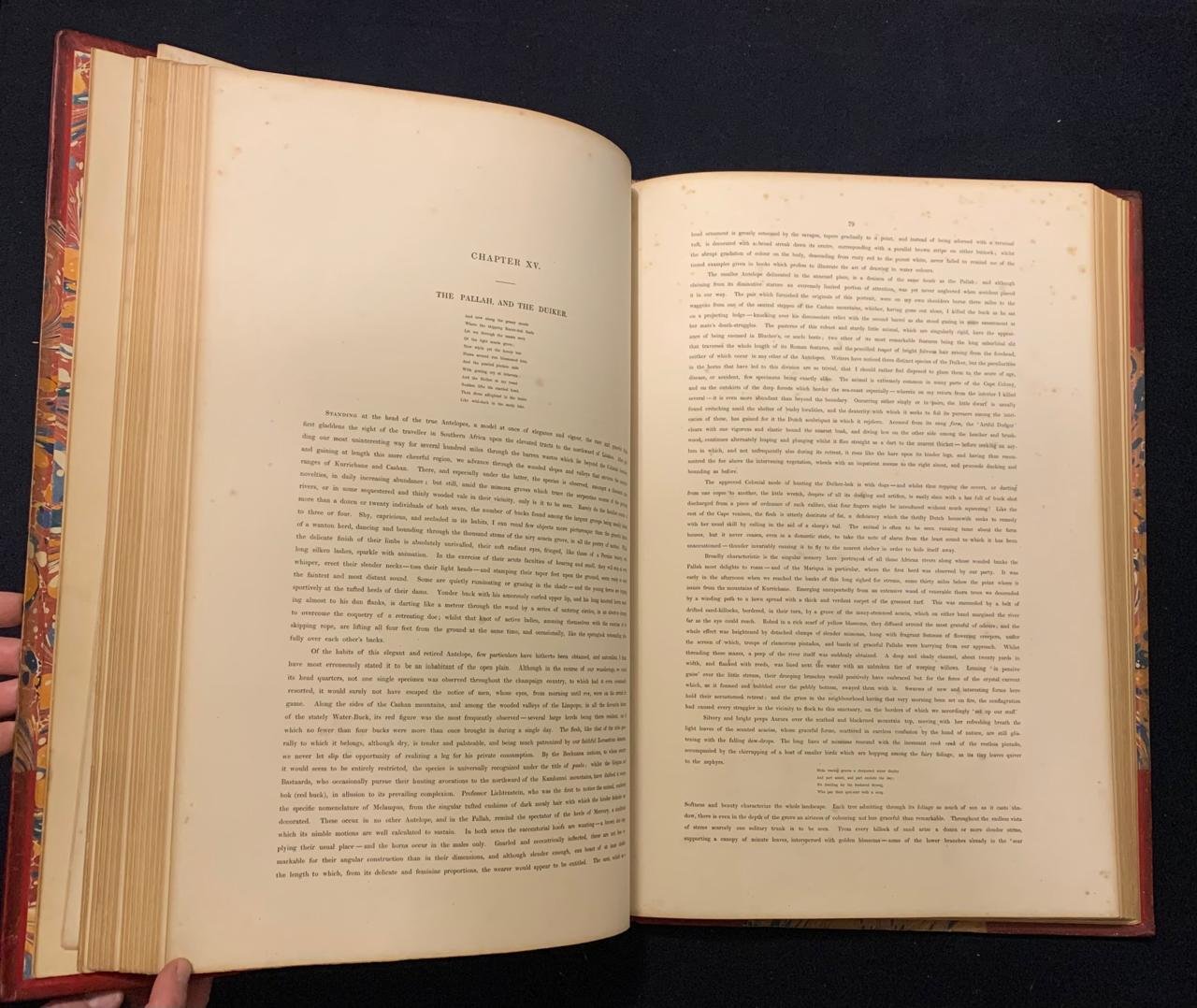
This huge work was considered by Mendelssohn “One of the most important and valuable of the large folio works on South African fauna”. Each chapter has a detailed description of the animal illustrated in the accompanying plate.
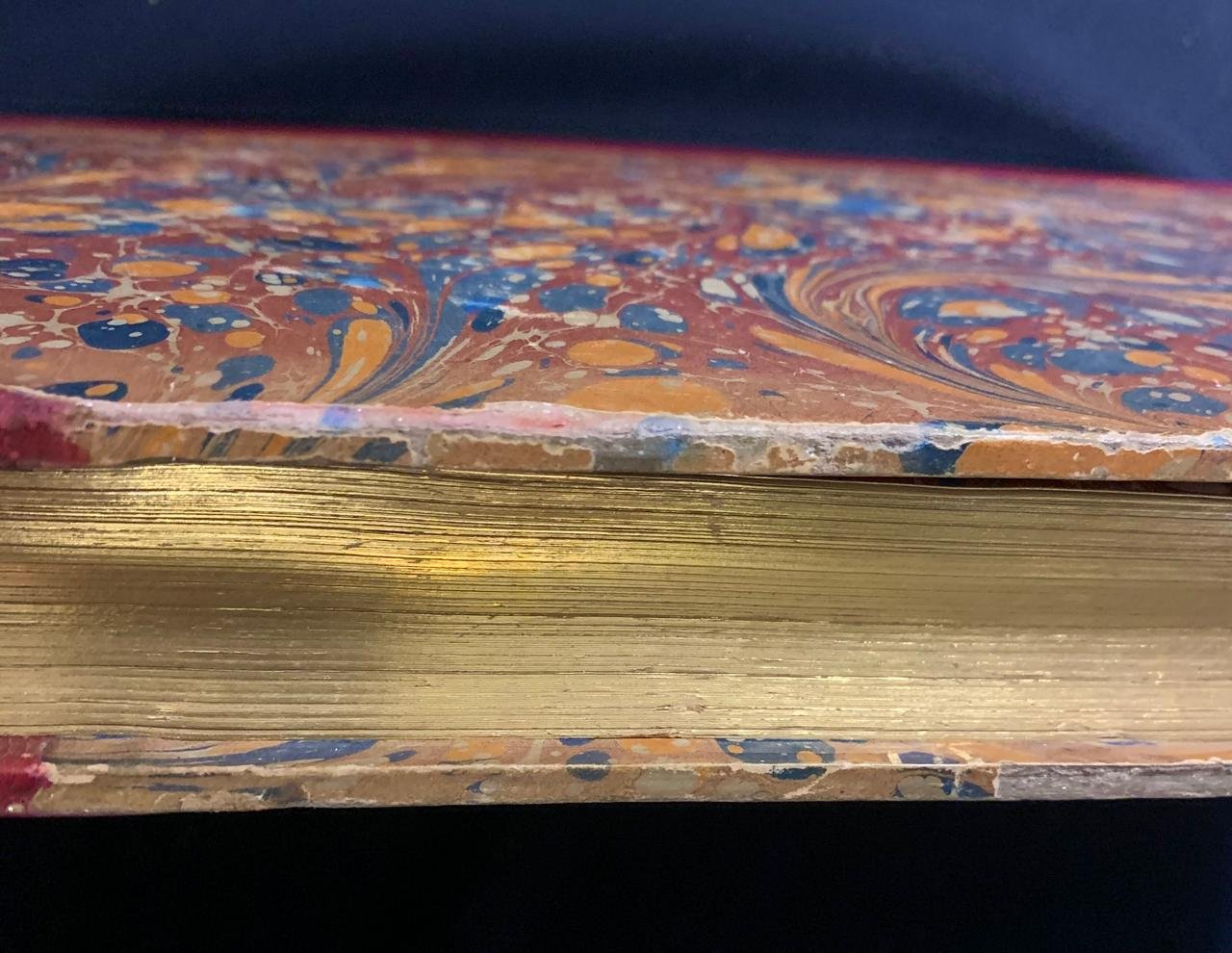
Elephant Folio (555mm by 338mm).
Portraits of the Game and Wild Animals of Southern Africa was published in London in 1840 by William Pickering, this magnificent work is widely considered the first book entirely dedicated to big-game hunting in Africa, bridging the gap between scientific natural history and sporting literature.
This is a 1840 First Edition & First Issue.
There are several key bibliographic and historical points of interest:
The Illustrative Collaboration: The book contains 30 spectacular, large-format hand-coloured lithographed plates. Harris made the original drawings in the field, which were then drawn onto stone by the English artist Frank Howard.
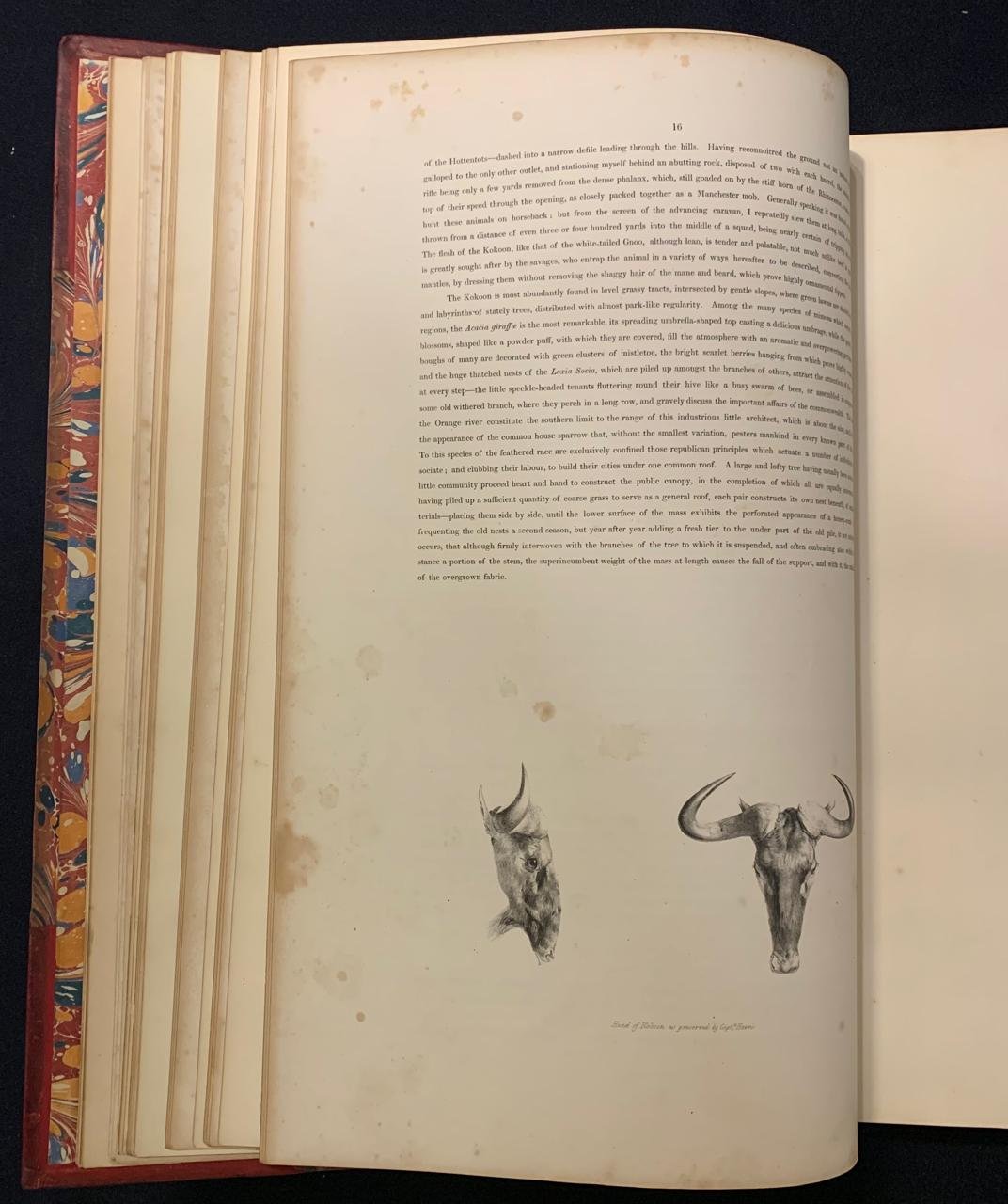
The First Issue Point: In this true first issue, each of the exhaustive chapters on the animal species concludes with fine, uncolored lithographed tail-piece vignettes depicting herds, horns, skins, or skulls. In later issues (such as the 1843 edition), these detailed tail-pieces were completely omitted.
A Visual Record of Extinction: Beyond its beauty, the book is a poignant historical record. It contains some of the finest contemporary portraits of animals that are now entirely extinct, such as the Quagga (a subspecies of zebra) and the Bluebuck (blaauwbok).
The Discovery of the "Harris Buck"
The absolute pinnacle of Harris’s expedition was his discovery of the magnificent Sable Antelope (Hippotragus niger), which for generations afterward was known colloquially as the "Harris buck".
The Encounter: In late 1836, while hunting in the Magaliesberg region (near modern-day Pretoria), Harris was tracking a wounded elephant when he spotted a small herd of striking, coal-black antelopes with white bellies and massive, sweeping, scimitar-like horns. He immediately recognized them as a species entirely unknown to science.
The Chase: After his temperamental flintlock rifle misfired three times, the herd bolted. Undeterred, Harris returned to camp, repaired his firearm, and tracked the herd for three grueling days until he successfully secured a large male specimen.
Scientific Legacy: Harris prepared the specimen and sent it to the British Museum, where it was displayed and scientifically named Aigoceros niger. For nearly a century, early maps, travelogues, and sporting guides referenced the animal simply as the Harrisbuck.
Fascinating Facts About Captain W. Cornwallis Harris
Harris was a larger-than-life Victorian figure whose eccentricities and talents set him apart from the average colonial military officer:
The Convalescent Expedition: Harris was an officer in the Honourable East India Company's Bombay Engineers. In 1836, after suffering a severe bout of "Indian fever" (malaria), he was sent to the Cape Colony to recover. Rather than taking quiet bed rest, he immediately organized a massive, year-long, 1,000-mile safari deep into the uncolonized interior as far as the Tropic of Capricorn.
The Sketchbook in the Cap: Obsessively dedicated to both hunting and art, Harris carried his drawing paper, pencils, and measuring tape rolled up inside his white hunting cap. The moment an animal was shot, he would sprint to the carcass, measure its proportions precisely with a two-foot rule, and sketch it on the spot to ensure absolute anatomical accuracy.
The Pioneer of Wildlife Portraiture: Before Harris, wild animals were typically illustrated by artists who had never seen them alive, resulting in stiff, bizarrely proportioned drawings. Harris insisted on portraying animals "delineated from life in their native haunts," capturing their natural movements and the actual landscapes of the highveld and bushveld.
R180,000