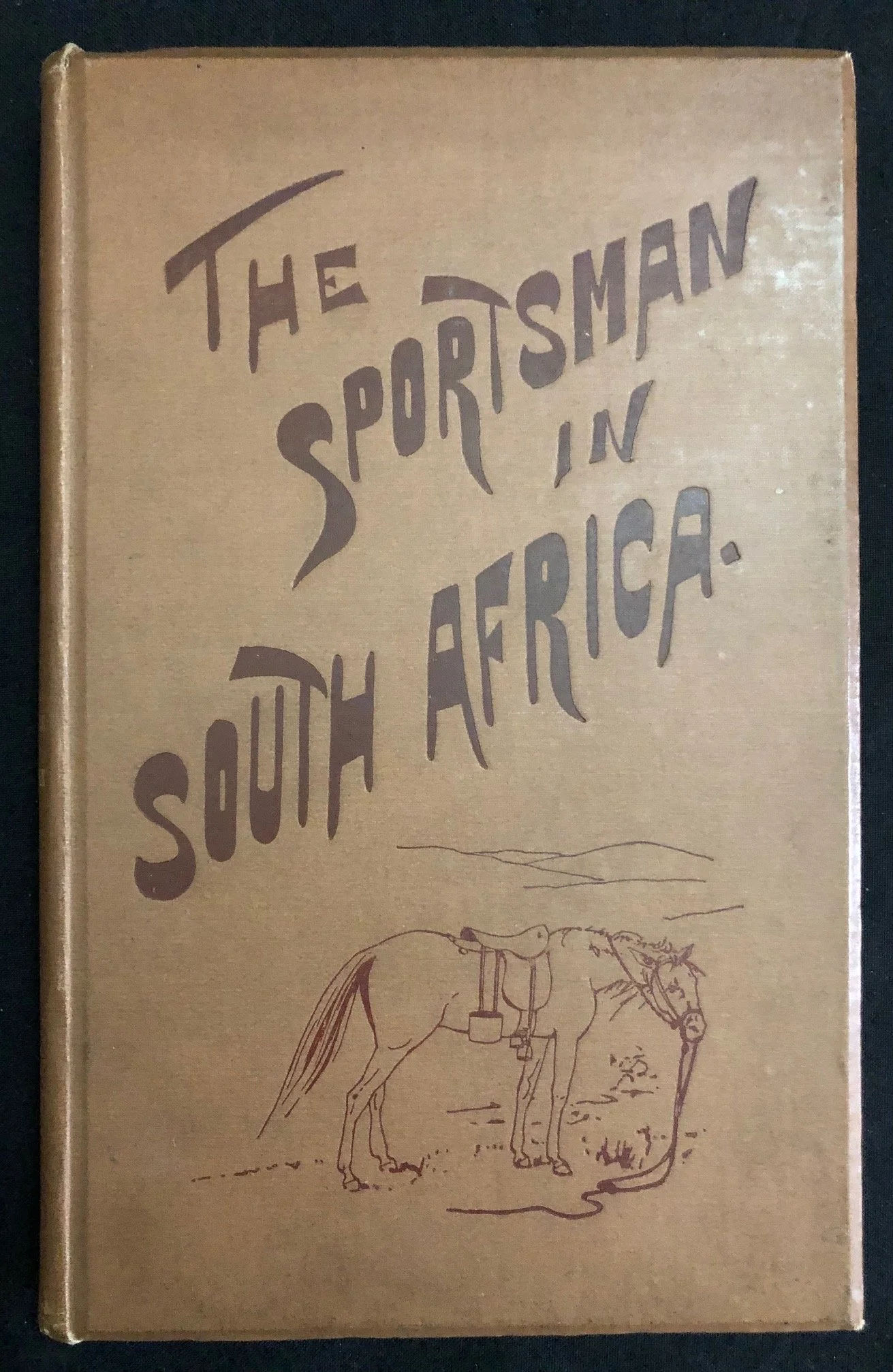
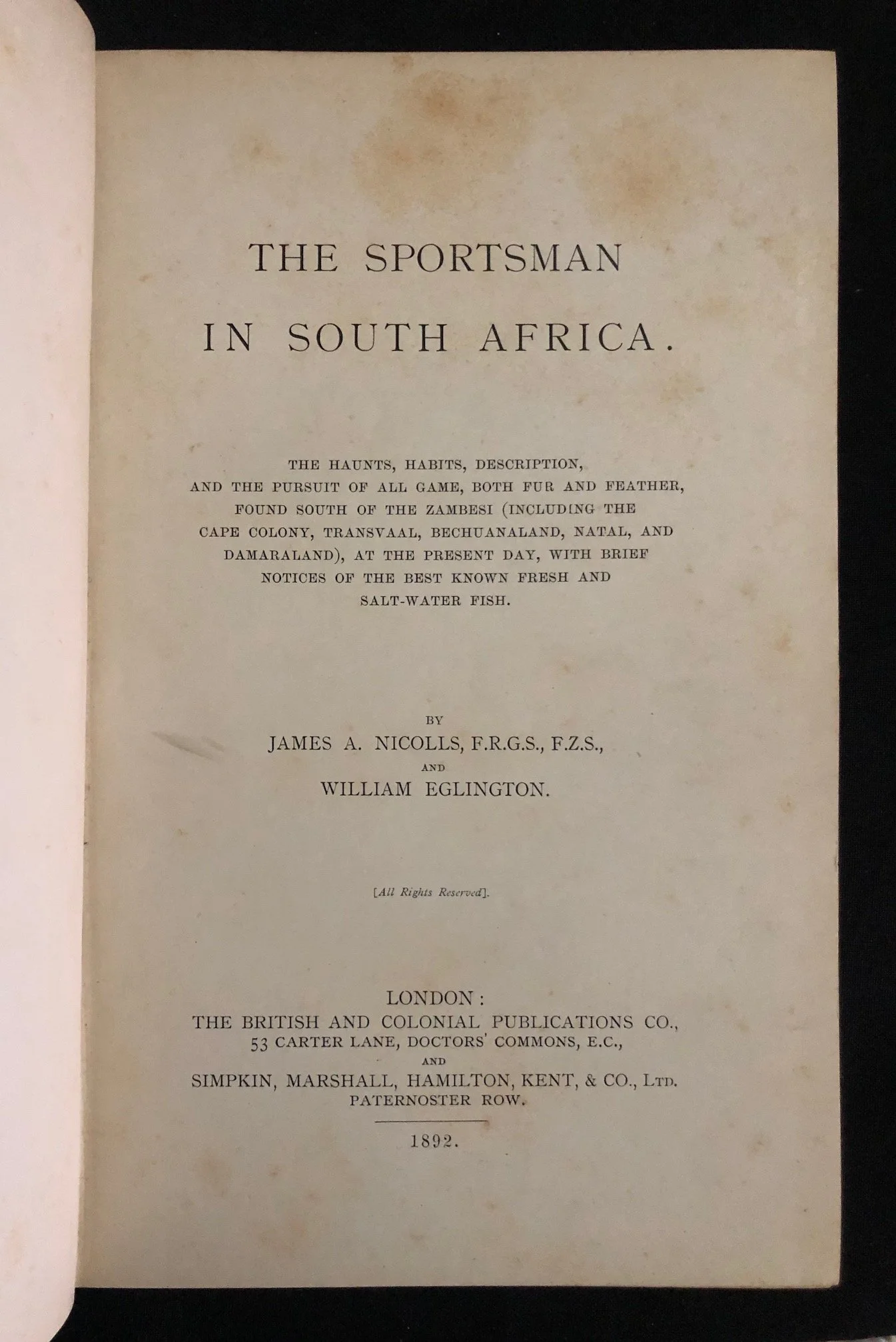
The Sportsman in South Africa by James A. Nicolls and William Eglington (1892)
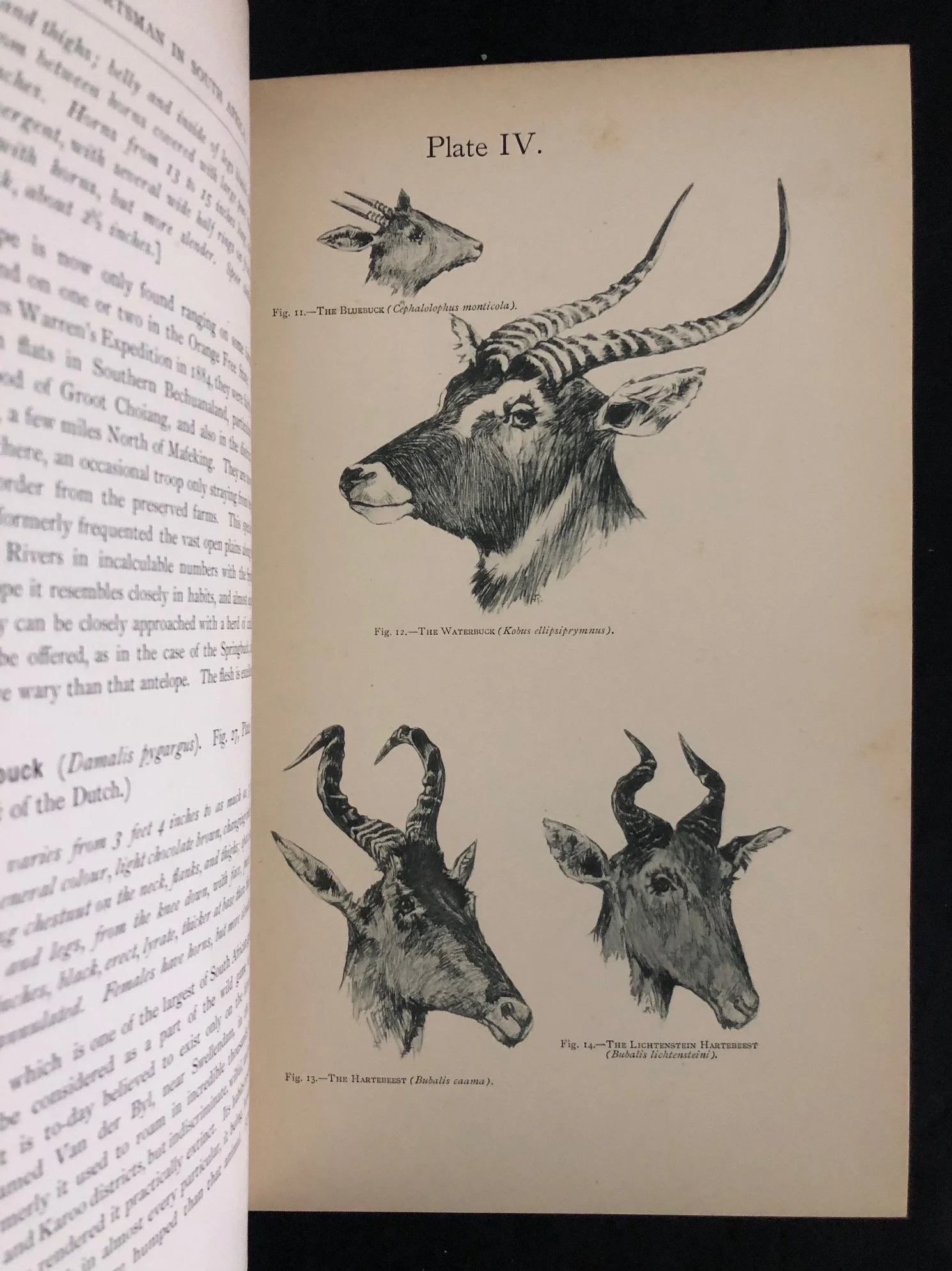
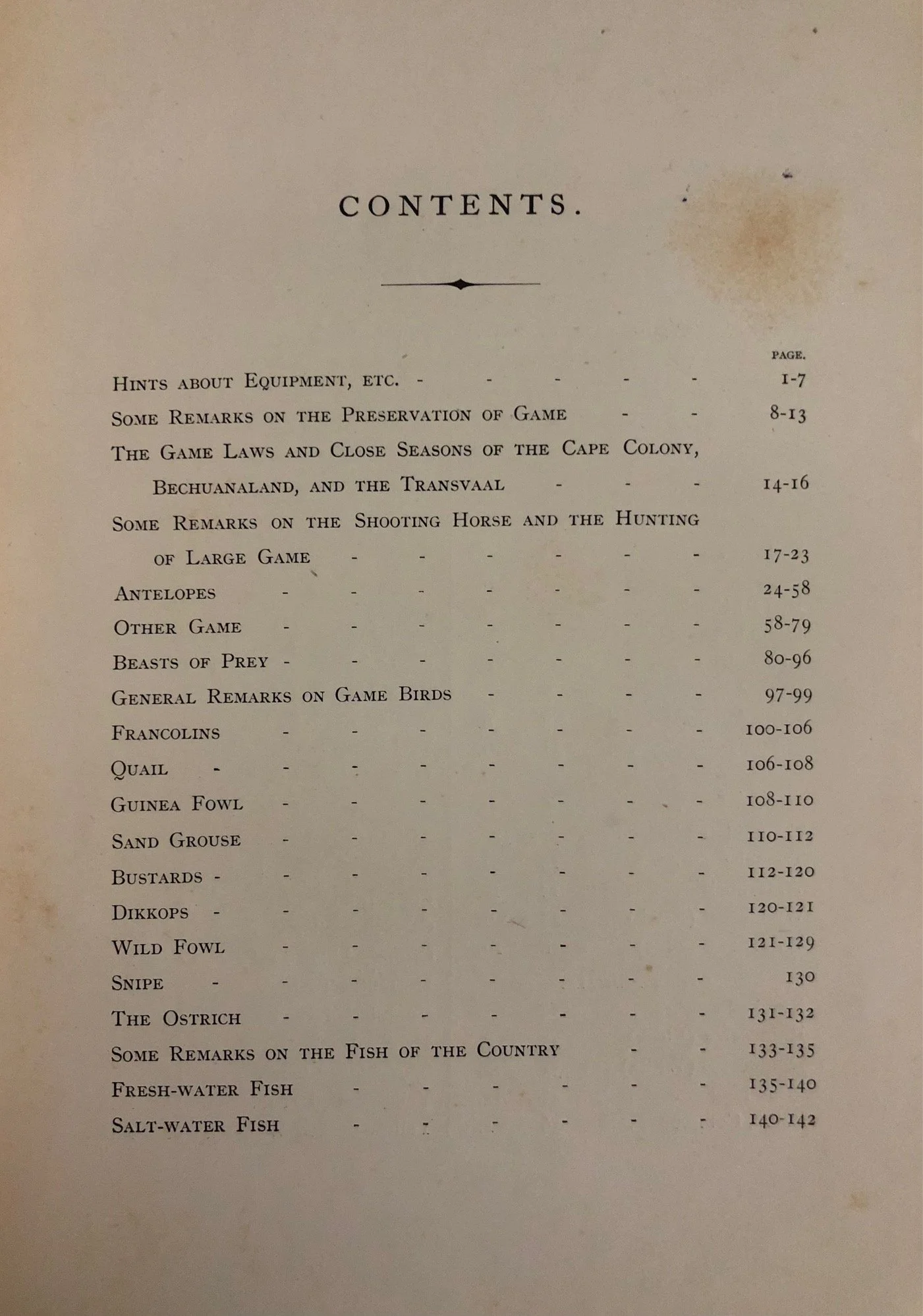
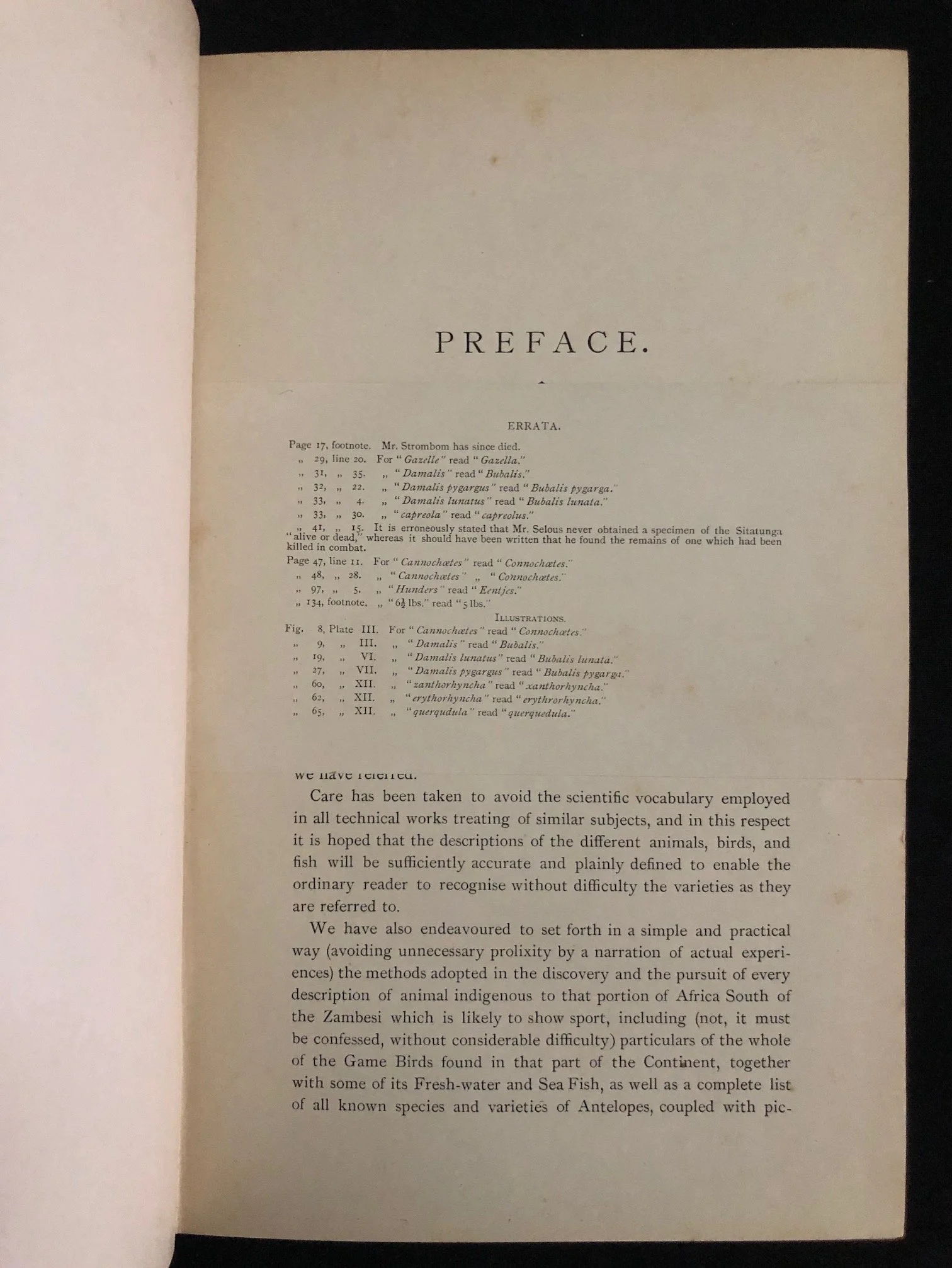
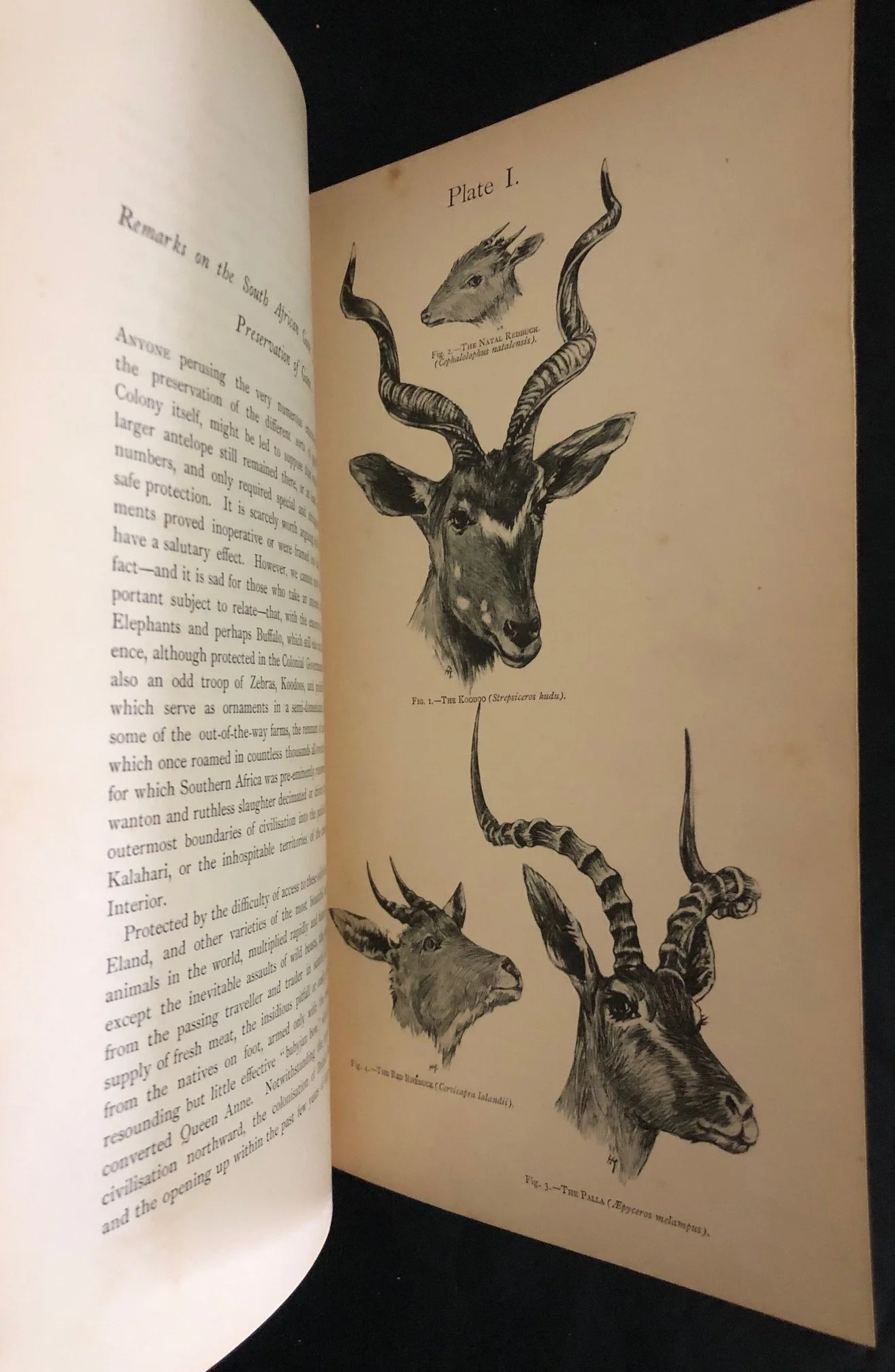
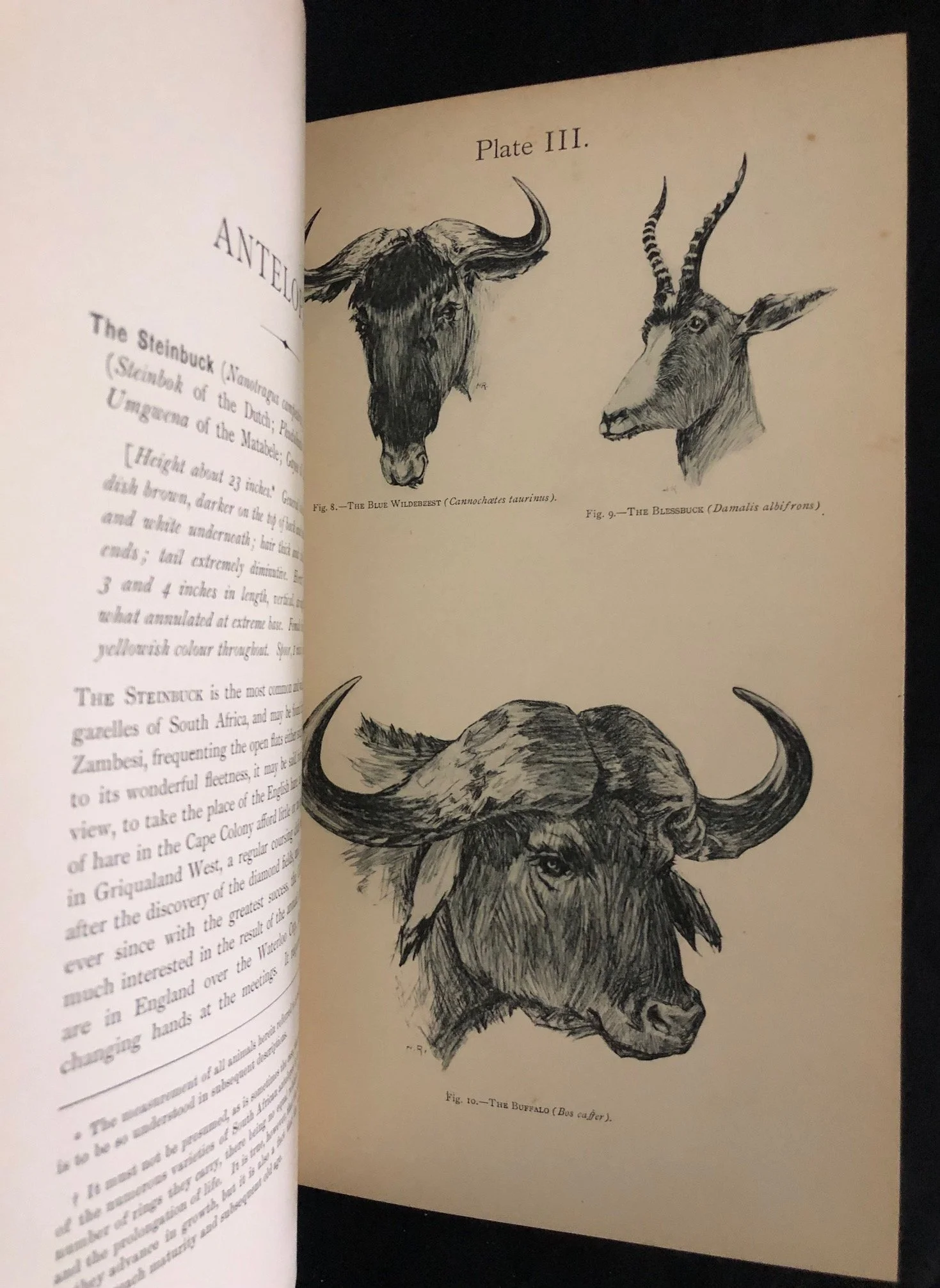
Complete; 12 plates; errata slip; viii; 147 pages; 10 pages of adverts. First edition.
A Turning Point from "Mass Slaughter" to Early Game Management
By the late 19th century, earlier 1800s narratives—like those of Cornwallis Harris or Roualeyn Gordon Cumming—celebrated unrestricted slaughter and vast herds. Nicolls and Eglington wrote at a critical historical pivot point. Extinction and severe decline of species (such as the quagga and bloubok) meant game was rapidly disappearing south of the Zambezi.
This work was among the first field guides designed not just as a narrative of adventure, but as a systematic reference on the distribution, habits, and conservation status of Southern African wildlife to encourage regulated "sportsmanship" over commercial annihilation.
Early Inclusion of Angling and Avifauna
Unlike many Victorian big-game hunting books that focused solely on large mammals (the "fur"), this work was unusually comprehensive for its era:
"Feather": It paid considerable attention to game birds, waterbirds, and raptors.
Fresh and Saltwater Fish: It features one of the earliest published accounts dedicated to sporting fishes in the Cape and Southern African coastal and river waters, long before dedicated angling books became common in the region.
A Snapshot of Late-Victorian Colonial Geography
Published in 1892, the book captures Southern Africa on the eve of massive political upheaval (shortly before the Second Anglo-Boer War). Its scope encompasses Cape Colony, the Transvaal Republic, Natal, Bechuanaland, and Damaraland (German South West Africa), offering a detailed ecological snapshot of regional fauna just as European colonial infrastructure, railways, and mining were drastically altering the landscape.
165mm x 250mm x 20mm
Some slight foxing; wear to binding; edges worn; top and bottom of spine worn.
R4,500