South African Gold Fields: Panoramic Views of Johannesburg (1889)
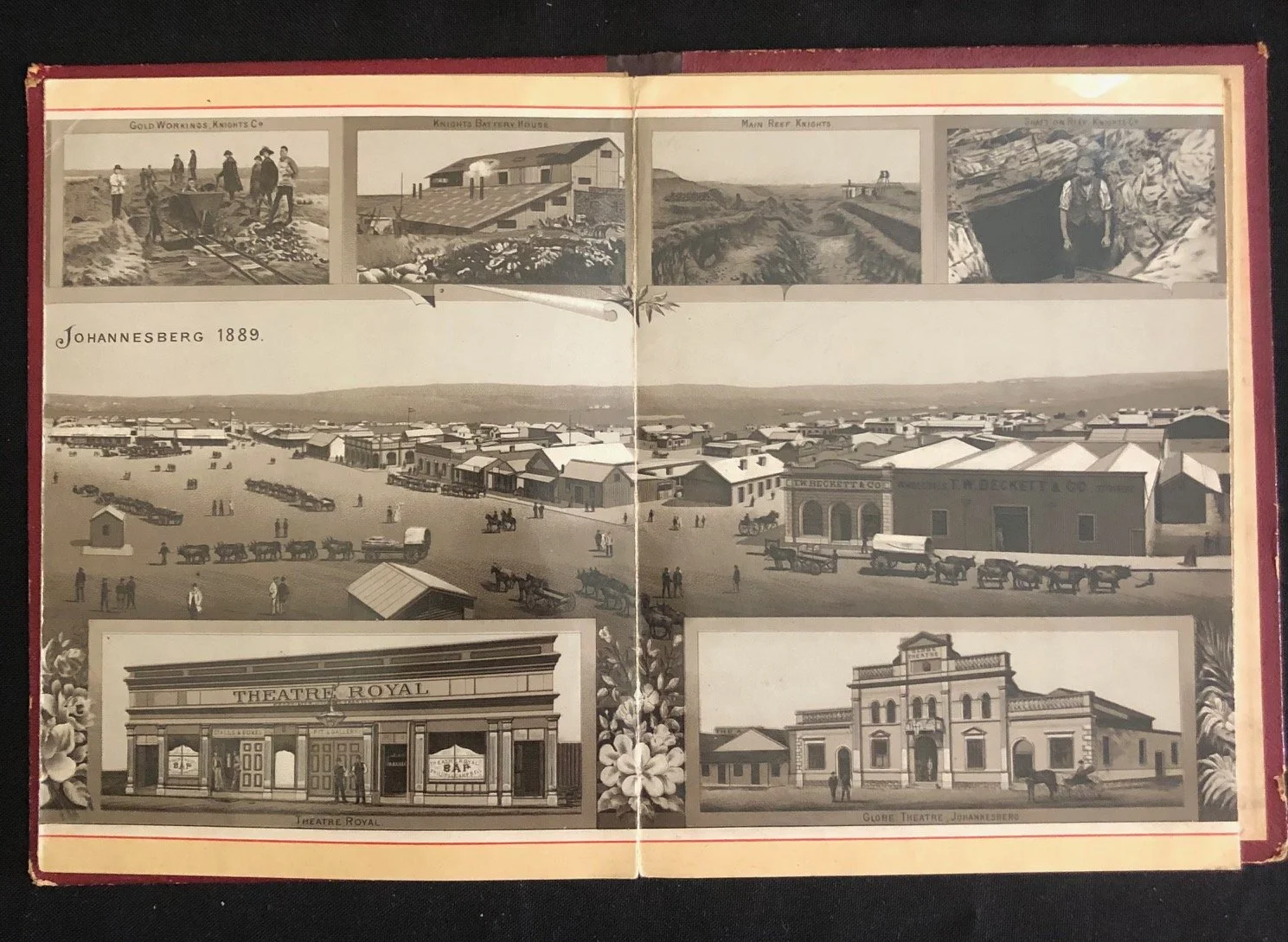
South African Gold Fields: Panoramic and Other Views of Johannesberg (1889), depicts the infancy of the Witwatersrand Gold Rush. Published just three years after George Harrison first stumbled upon the Main Reef leader in 1886, this little book captures a transient frontier landscape right before it transformed into a sprawling industrial metropolis.
The Typographical Error: "Johannesberg"
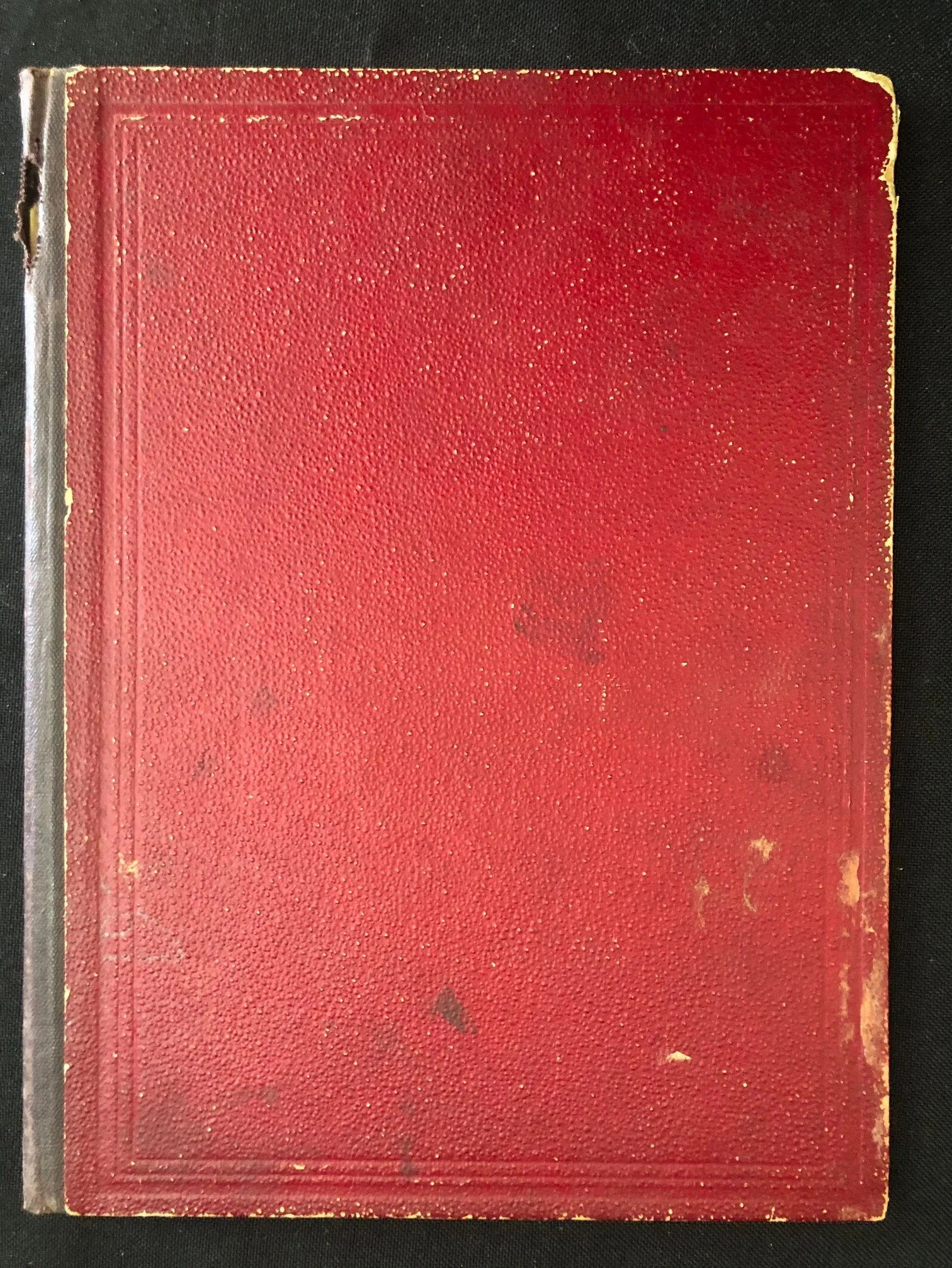
The most glaringly obvious historical quirk is staring right from the front cover: the spelling of "Johannesberg" with an "e" instead of an "u".
Because the town was newly proclaimed in late 1886, its official orthography was still fluid and often mismanaged by international printers.
Early cartographers, foreign journalists, and European publishers frequently default-spelled it using the German/Northern European suffix -berg (meaning mountain or hill, perhaps intuitively associating it with the Witwatersrand ridge), rather than the correct Dutch/Afrikaans -burg (meaning borough or fortified town).
The German Lithographic Connection
The tiny, fine imprint at the very bottom of the cover reads "Manufactured in Germany". This text highlights a fascinating dynamic in late 19th-century colonial printing infrastructure:
During the late 1880s, the fledgling mining camp of Johannesburg had basic letterpress printers for newspapers, but completely lacked the specialized, high-fidelity lithographic technology required to produce complex photographic or panoramic view-books.
To bypass this, early South African publishers and photographers sent their glass plate negatives across the Atlantic to Germany. At the time, Germany (specifically Leipzig and Frankfurt) was the undisputed global capital of fine lithography and high-end bookbinding. The plates were printed there, bound into these beautiful, gilt-stamped pebble-grained cloth covers, and then shipped back to South Africa to be sold as luxury souvenirs to wealthy mining magnates, investors, and tourists.
The Uncredited Eye: D.H. Davies
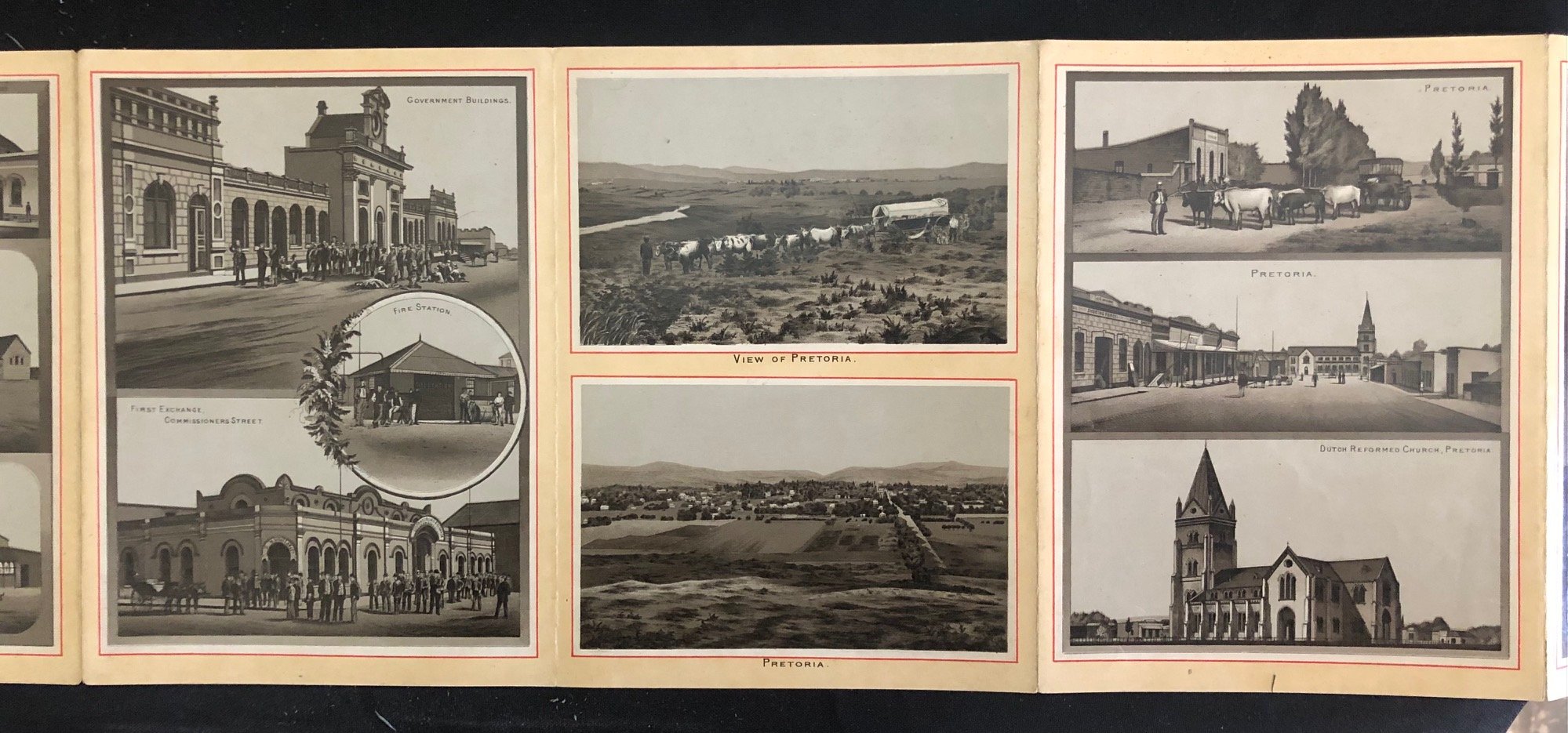
While the cover focuses entirely on the location and the year, the visual contents of this book—typically bound as a folding concertina strip of illustrations—rely almost entirely on the pioneering eye of Denis H. Davies.
Davies was an early photographer who relocated to the Reef from Port Elizabeth, setting up a studio on Pritchard Street. He was one of the very first professionals to systematically document the transformation of the dusty Transvaal veld.
His images inside this book capture a surreal, liminal era: wide, unpaved dirt tracks, teams of outspanned ox-wagons sharing the road with early mule-drawn carriages, and the earliest corrugated iron structures standing right alongside primitive wood-and-thatch mining headgears. Because many copies were handled frequently or separated to frame the individual plates, finding an intact, well-preserved copy of this German-manufactured 1889 printing is an exceptional rarity in the field of Africana.
143mm x 190mm folded
Folded out: Joburg panorama: 1100mm long. The entire length is: 1650mm
Minor wear. These are lithographs made to look like photographs.
R3,500