Poster: The 1932 secessionist crisis
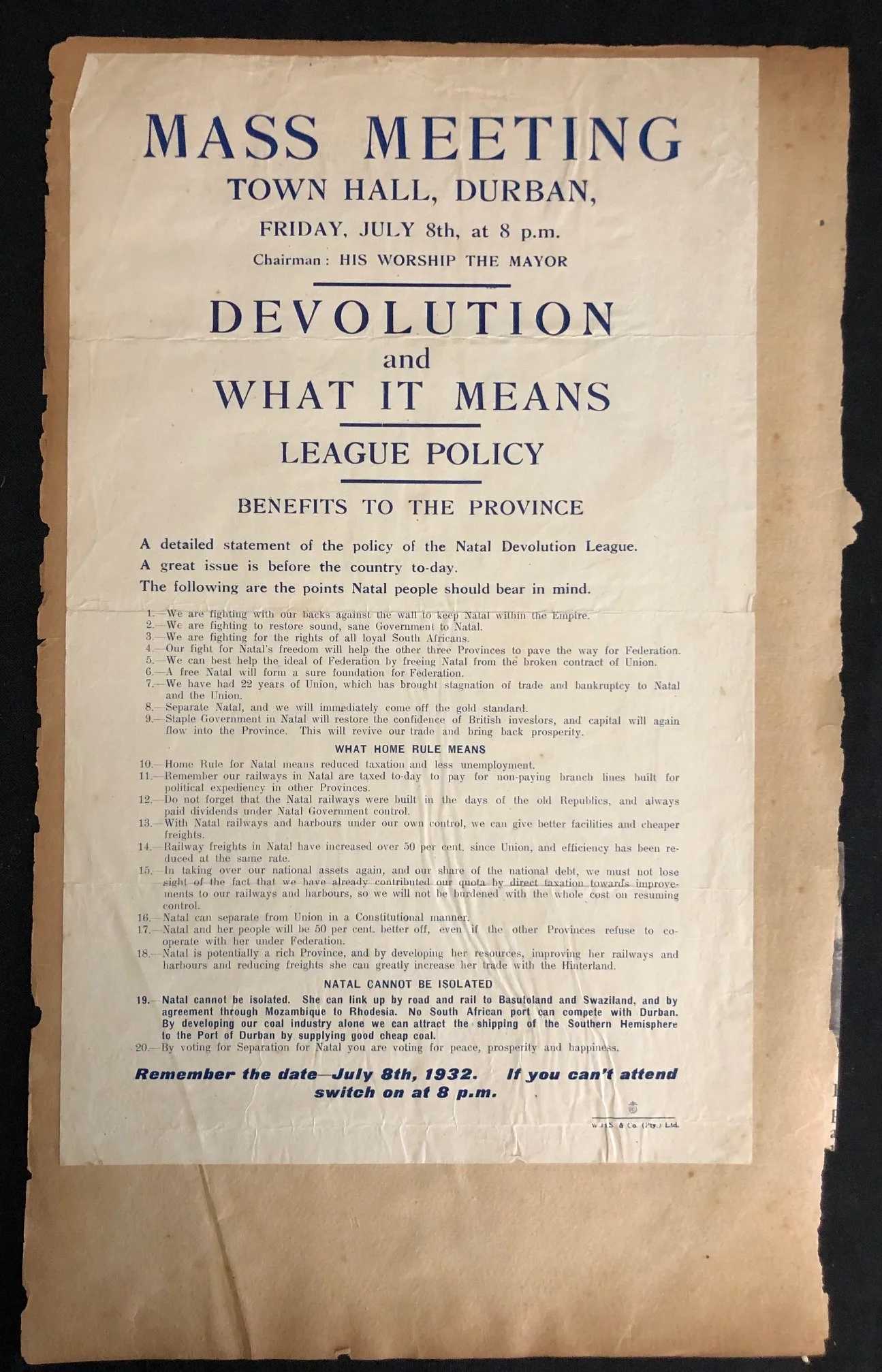
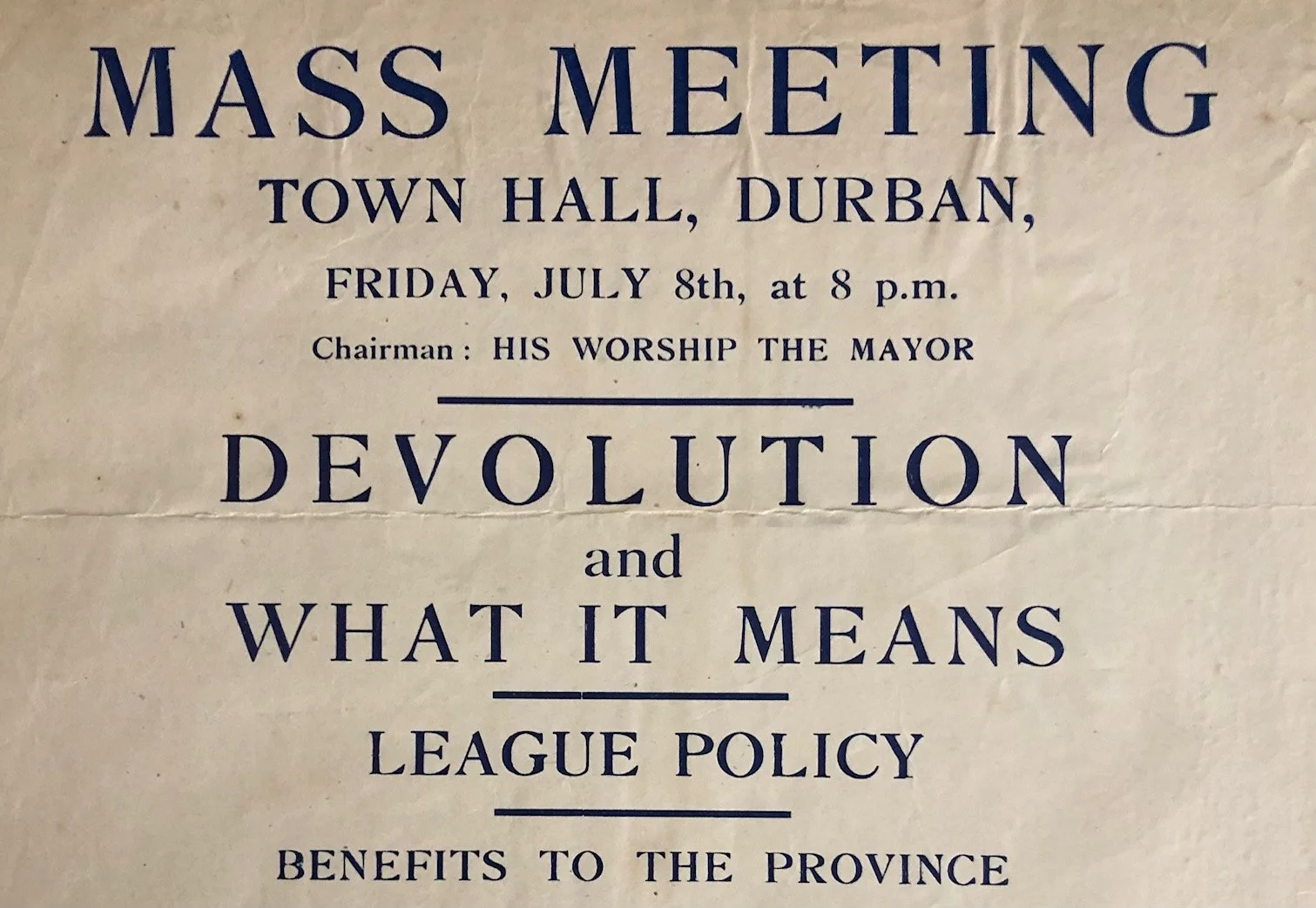
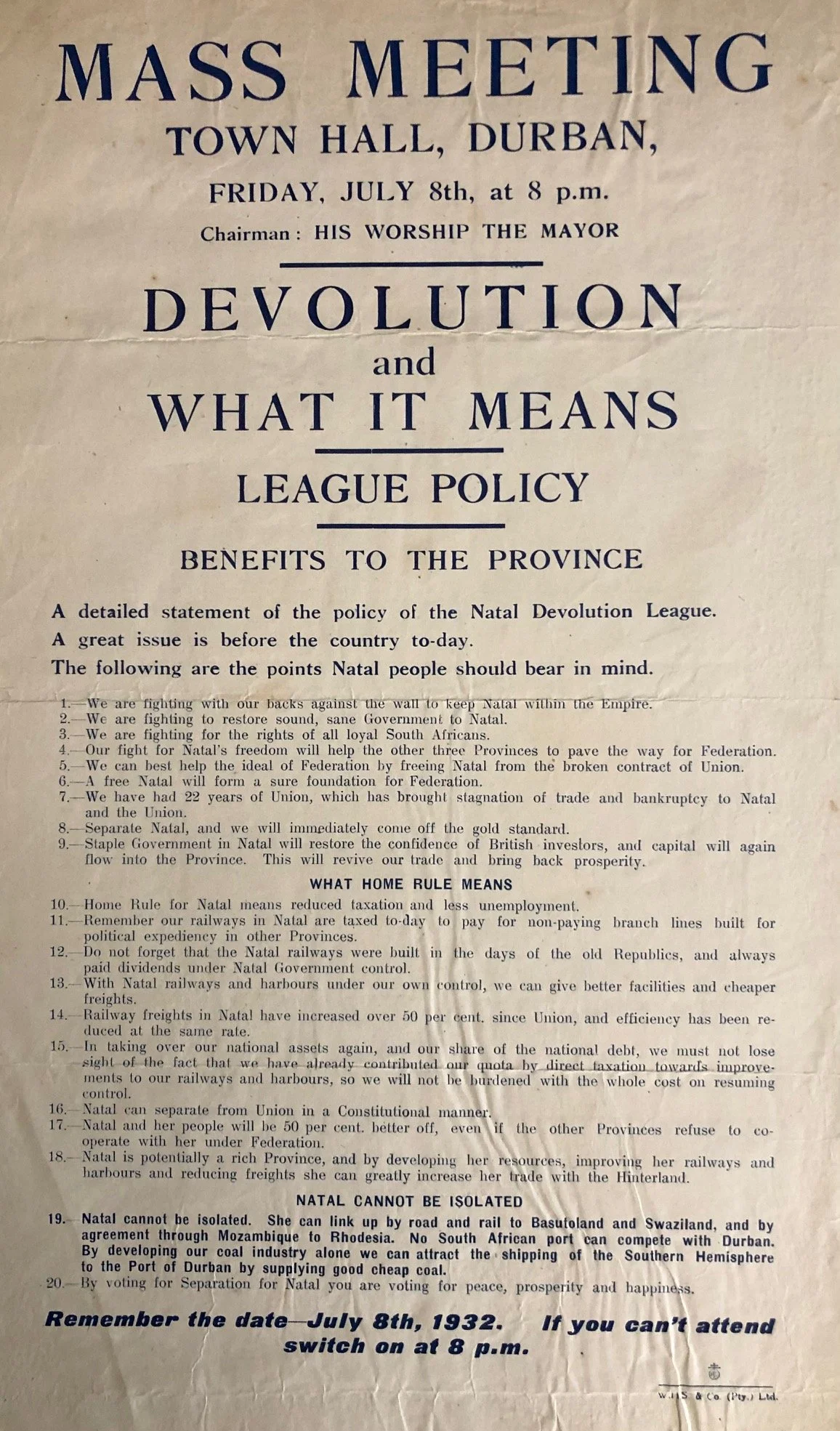
This poster captures a fascinating and often overlooked chapter in South African history: the 1932 secessionist crisis when English-speaking white Natal tried to break away from the Union of South Africa.
The Great Depression and the Gold Standard Crisis
The date on the poster—July 8, 1932—places this meeting at the height of a major economic and political showdown. General J.B.M. Hertzog’s Afrikaner Nationalist government stubbornly refused to take South Africa off the Gold Standard, causing severe economic distress, collapsing trade, and catastrophic financial losses for the port city of Durban.
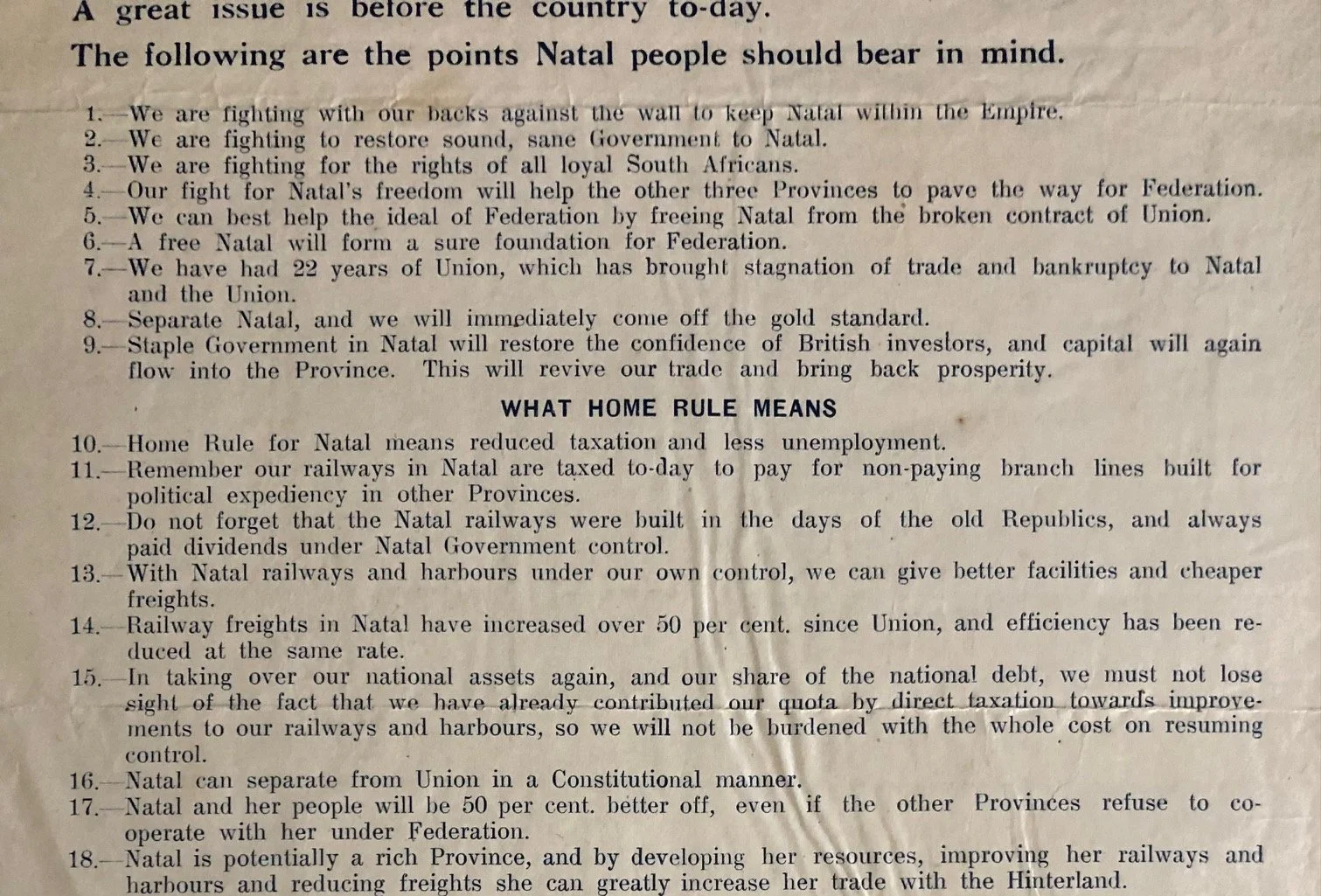
Point 8 on the poster explicitly highlights this grievance: "Separate Natal, and we will immediately come off the gold standard." (Indeed, when South Africa finally abandoned gold months later in December 1932, the economy instantly boomed).
British Empire Loyalty vs. "Republican Afrikanerism"
The Natal Devolution League was born out of a profound sense of cultural alienation. Twenty-two years after the 1910 Act of Union, the overwhelmingly British-descended population of Natal felt subjugated by the rise of Afrikaner nationalism, compulsory bilingualism, and the centralizing policies of Pretoria.
The League used fierce imperial rhetoric (seen in Point 1: "fighting with our backs against the wall to keep Natal within the Empire"), viewing the central government as a "broken contract" and actively demanding "Home Rule" or outright independence as a British Dominion.
Early Multi-Media Mobilization
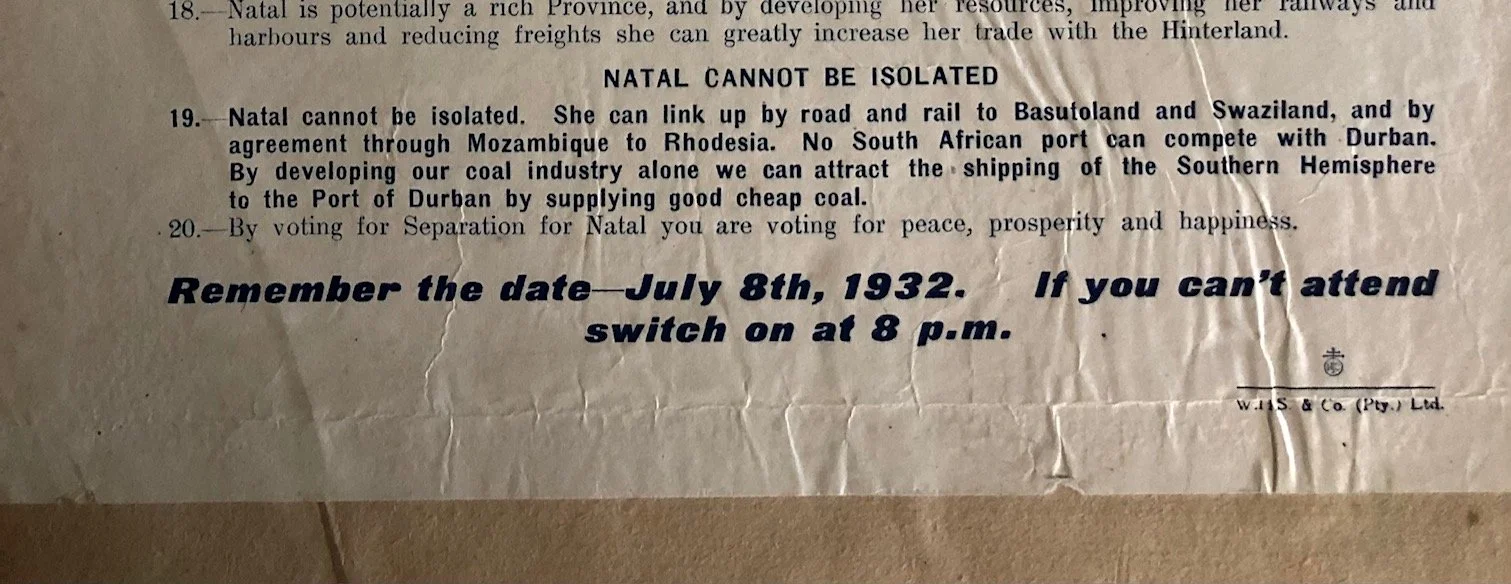
The bottom of the poster contains a very modern instruction for 1932: "If you can't attend switch on at 8 p.m."
This refers to the mass meeting being broadcast live over the radio. In the 1930s, utilizing the regional wireless broadcast network to transmit a highly charged, politically sensitive secessionist rally directly into citizens' living rooms across the province was a cutting-edge use of media mobilization.
The Catalyst for Political Realignment
While the Devolution League's dream of a separate, independent Natal never materialized, their radical agitation fundamentally altered South African politics. The threat of an unstable, breakaway Natal terrified both General Hertzog and the opposition leader, General Jan Smuts. To neutralize this radical English fringe and stabilize the country, Smuts and Hertzog were pushed into a historic coalition, resulting in the "Fusion" of their parties to form the United Party in 1934.
Laid down onto card.
Including the card: 240mm x 380mm
R1,000