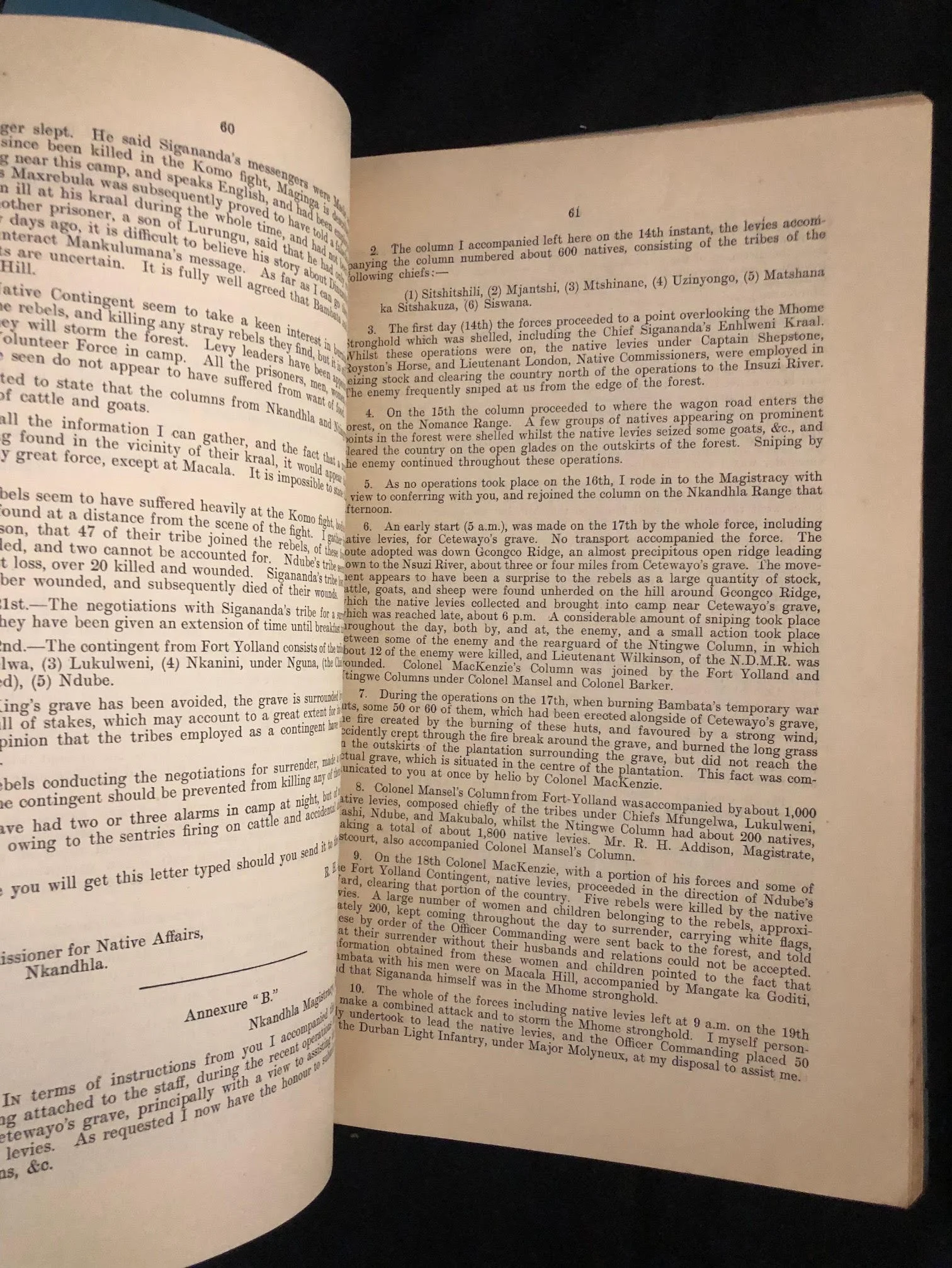
2 x Blue books relating to the 1906 Bhambatha Rebellion. R2,500
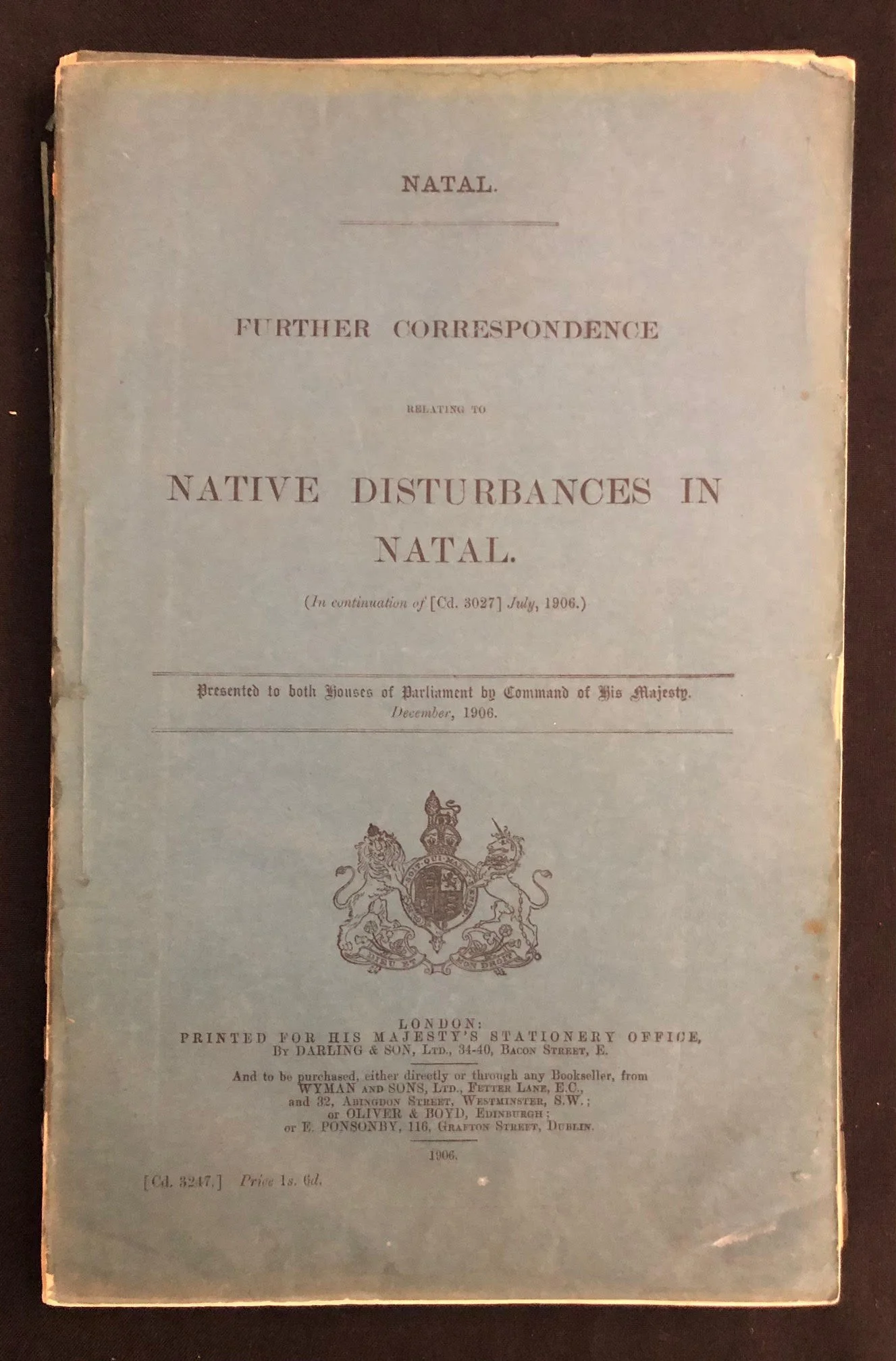
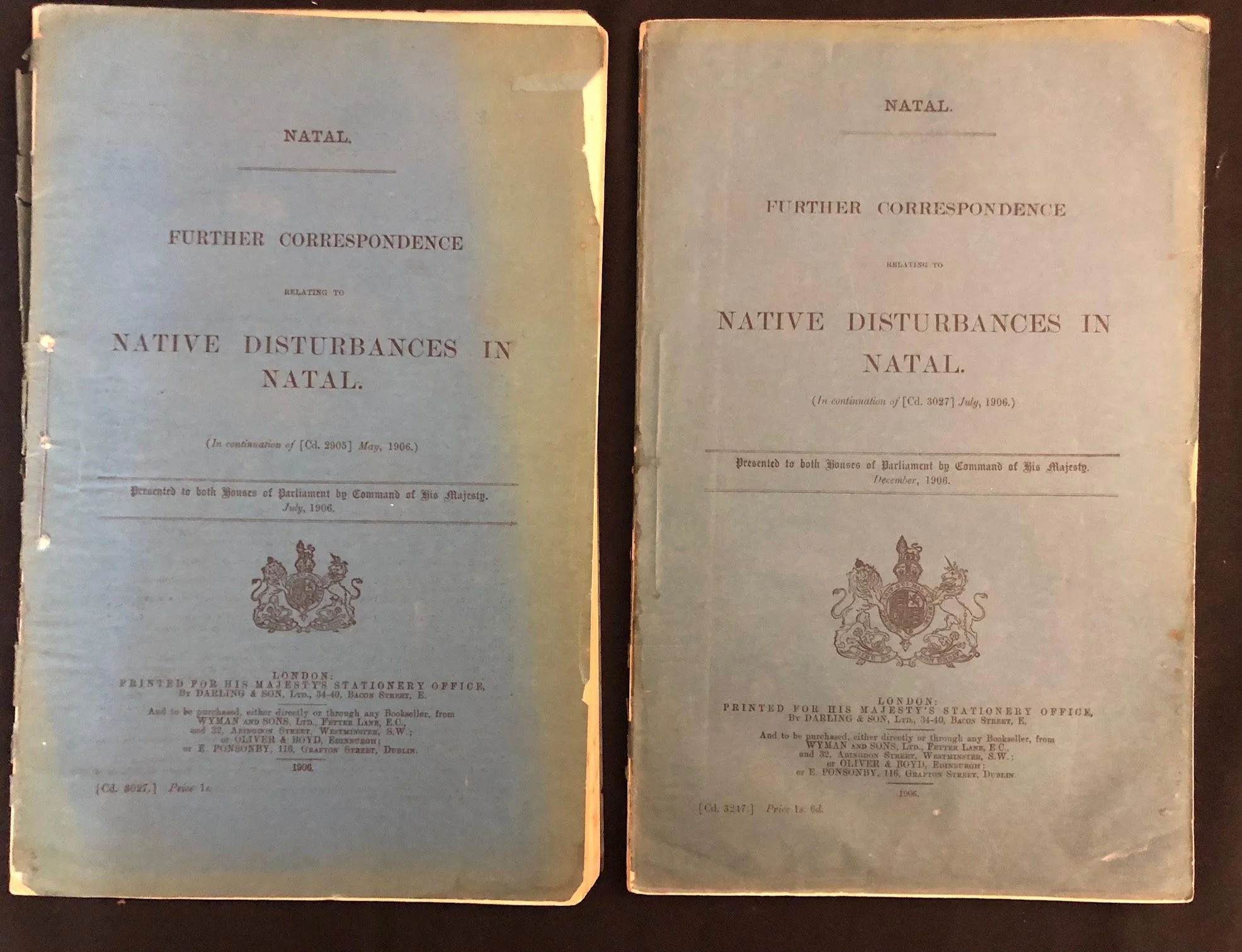
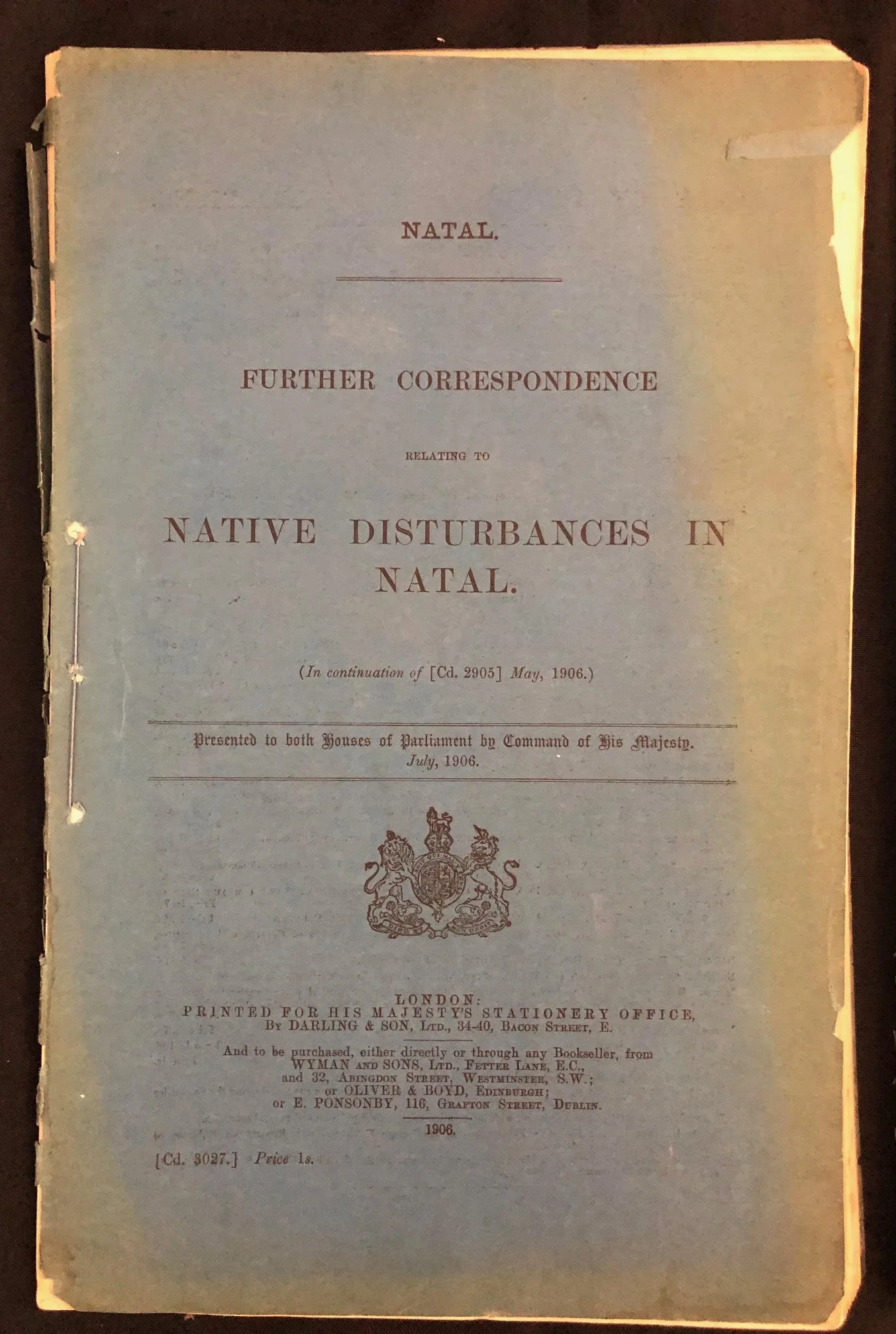
These two volumes are British Parliamentary "Blue Books" (Command Papers Cd. 3027 from July 1906 and Cd. 3247 from December 1906) documenting the British Empire's real-time administrative, military, and moral crisis during the 1906 Bhambatha Rebellion (or Poll Tax Rebellion) in the Colony of Natal.
Beyond being primary sources for one of the last major armed anti-colonial uprisings in South Africa before Union, they capture an extraordinary collision between colonial military brutality and British parliamentary oversight:
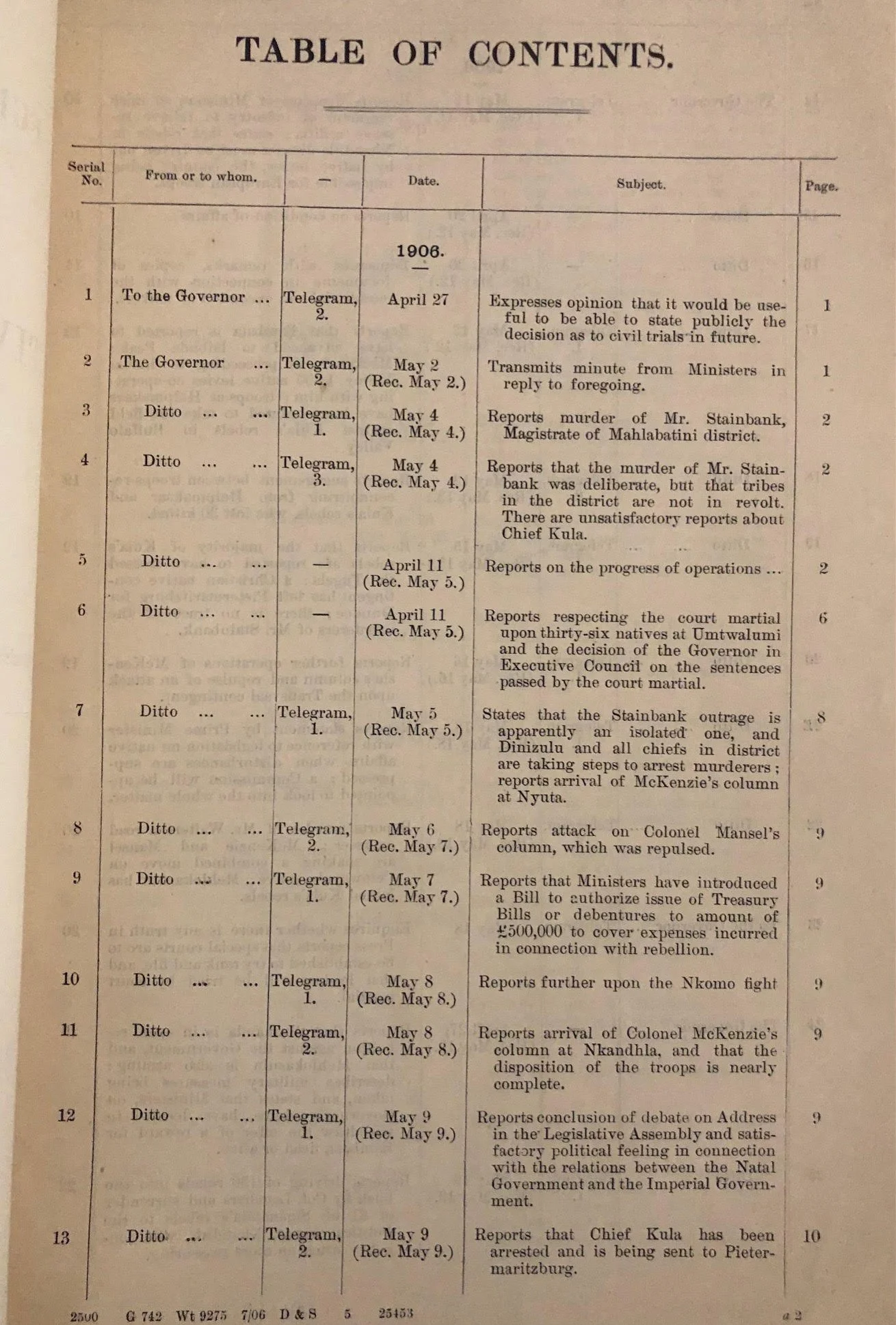
A Colonial Constitutional Crisis in Real Time: The telegrams in the table of contents reflect an acute political clash between the self-governing Colony of Natal and the Imperial Government in London. In early 1906, Natal declared martial law and sentenced twelve Zulu men to death by firing squad. When the British Colonial Secretary (Lord Elgin) ordered a stay of execution pending review, the entire Natal Ministry resigned in protest—forcing London to back down to avoid a constitutional crisis in a white-ruled colony. The May 9 dispatch notes the "satisfactory political feeling" once London yielded control over local trials and martial law to Natal's politicians.
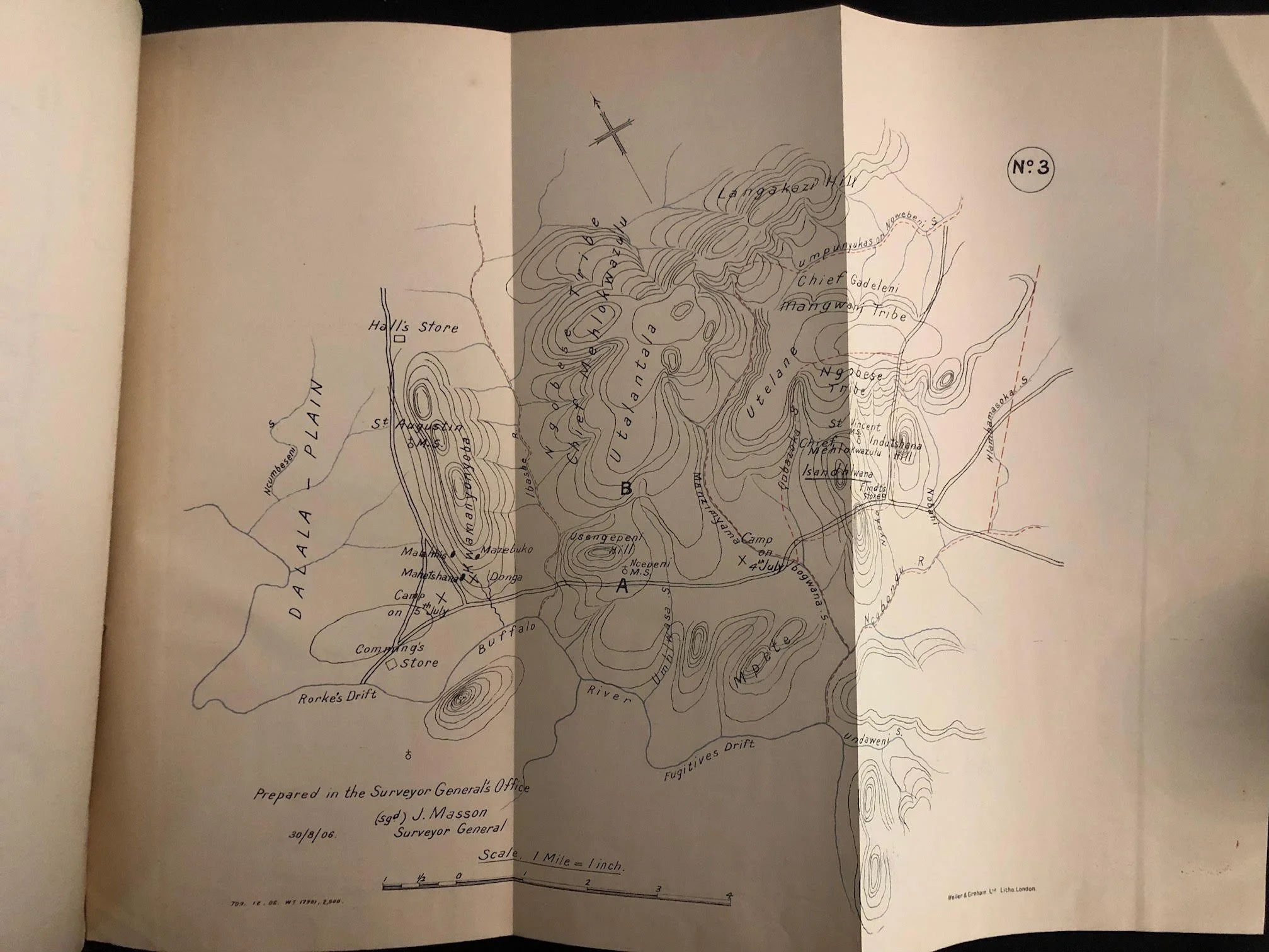
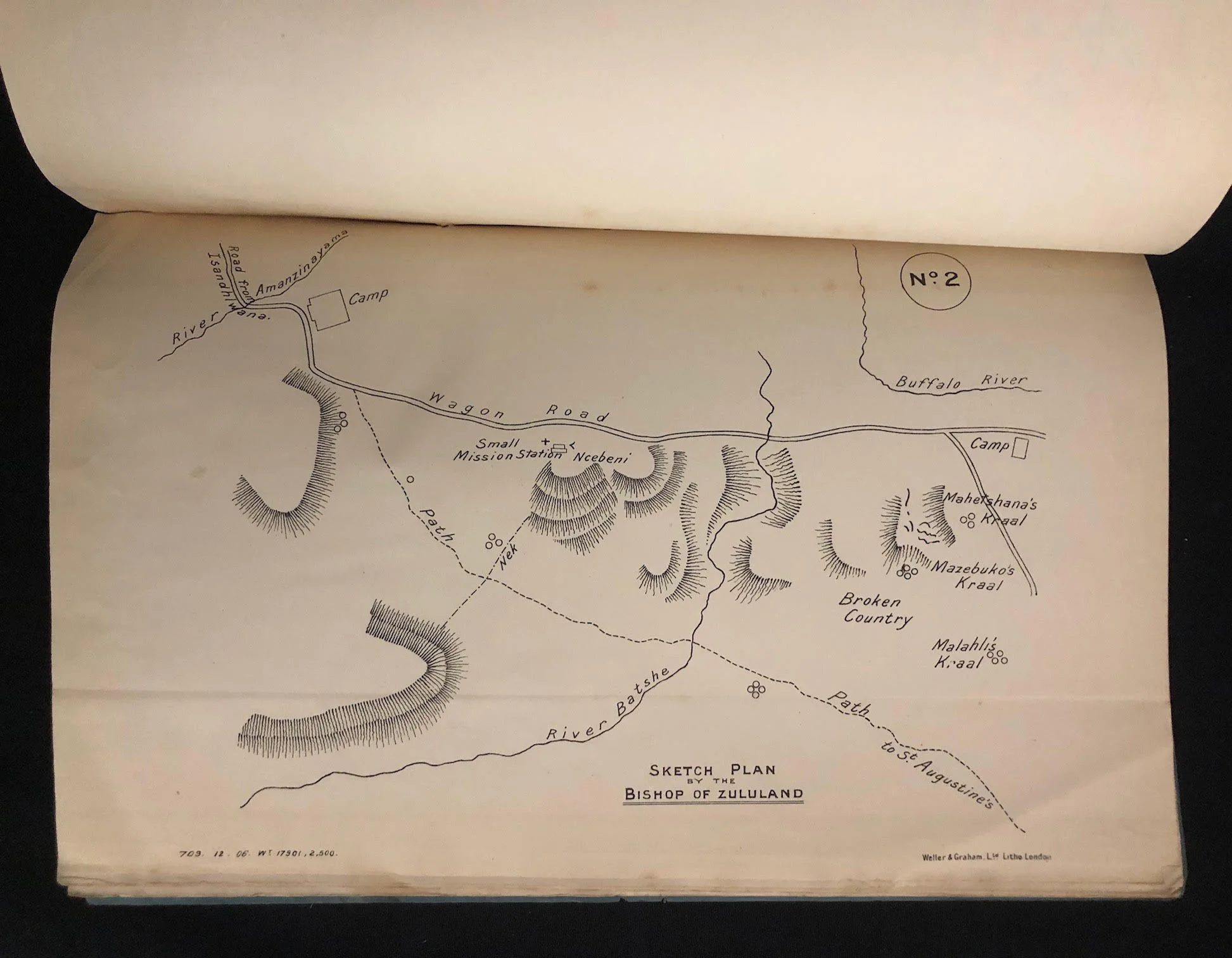
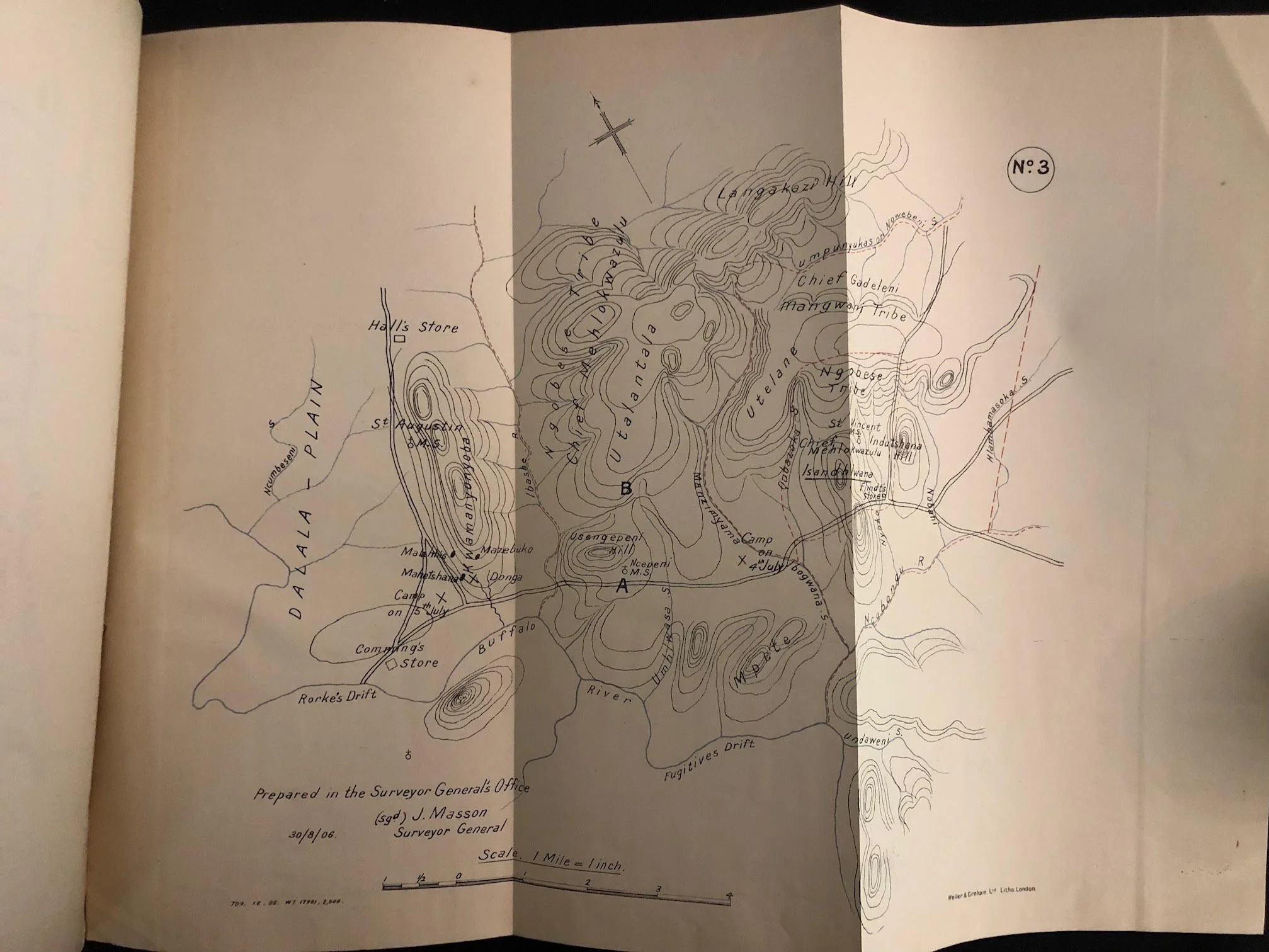
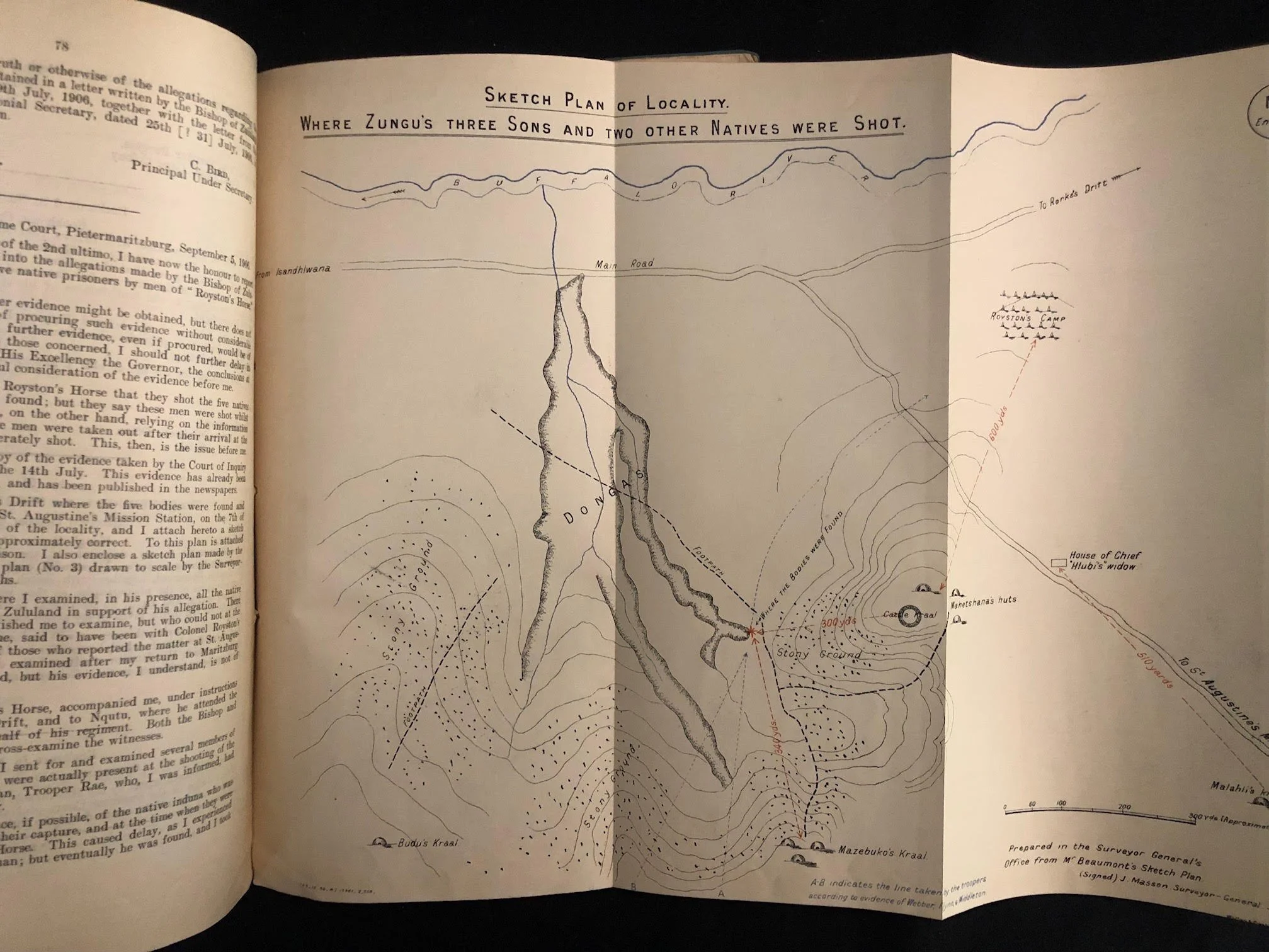
Forensic Evidence of Extrajudicial Executions: The fold-out map ("Sketch Plan of Locality where Zungu's three Sons and two other Natives were Shot") is one of the most compelling pieces of evidence in these papers. Drawn by the Surveyor-General's office in Pietermaritzburg near Rorke's Drift and St. Augustine's Mission Station, it was produced for a formal inquiry triggered by allegations from Wilmot Vyvyan, the Anglican Bishop of Zululand.
The "Royston's Horse" Cover-Up: As the accompanying text on page 78 reveals, the Bishop accused troopers of Royston's Horse (an irregular colonial mounted regiment) of taking five Zulu prisoners out from their camp and executing them in cold blood. Royston's Horse claimed the men were shot while trying to escape. Justice William Henry Beaumont (of the Natal Supreme Court, who later chaired the famous Beaumont Commission on land division) personally traveled to the donga to measure distances—marked in red yards on the map—to test whether the troopers' story of a running escape matched where the bodies fell.
Early Signals of Dinuzulu's Trial: The May 1906 telegrams show Natal authorities initially reassuring London that King Dinuzulu kaCetshwayo was loyal and actively helping arrest suspects following the murder of Magistrate Stainbank at Mahlabatini. Within a year, however, Natal would reverse course, arrest Dinuzulu for high treason, and subject him to a famous show trial where former Cape Prime Minister W.P. Schreiner stepped in to lead his defense.
Surviving in Original Blue Wrappers: Because Blue Books were published as working government papers for MPs at Westminster (priced at 1s. and 1s. 6d. respectively), they were routinely discarded or stripped of their fragile blue paper covers to be bound into heavy, uniform parliamentary folio volumes. Having both consecutive Command Papers intact in their original blue wrappers—complete with the delicate lithographed fold-out map—makes them rare survivors of the paper trail that exposed colonial violence to the British public.
Each vol: 215 mm x 340mm
Wrappers present but detached; minor tears; general wear.
R2,500