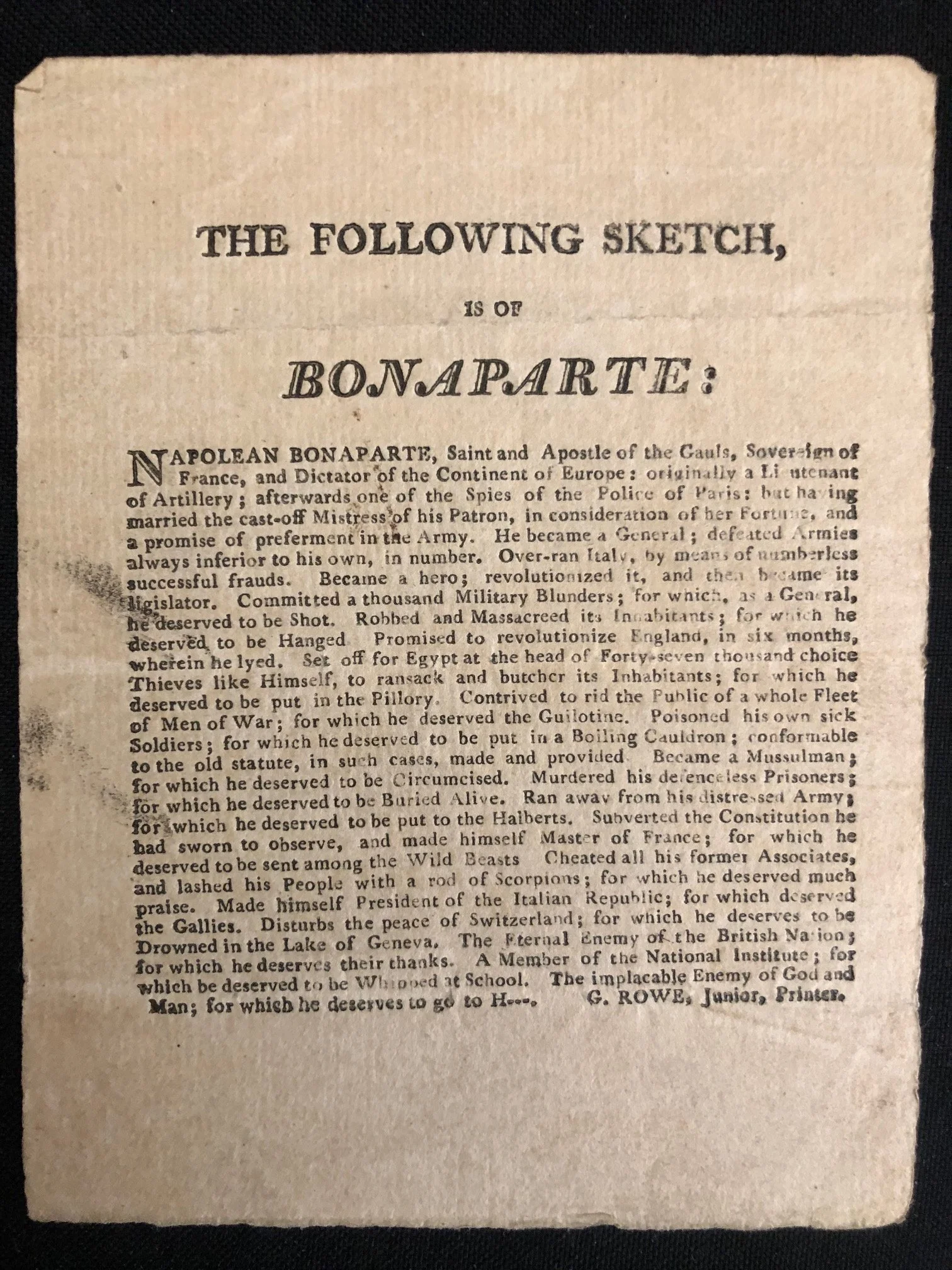
British anti-Napoleonic invasion broadside c.1805
This rare piece of printed ephemera is an example of a British anti-Napoleonic invasion broadside (or handbill) dating to the early 19th century—likely between 1803 and 1805 during the height of the invasion scares across the English Channel.
Psychological Warfare and the British "Invasion Scare"
Following the collapse of the Peace of Amiens in 1803, Napoleon gathered the Armée d'Angleterre on the coast of Boulogne, fully intending to invade Great Britain. In response, the British government, printers, and patriotic societies launched an unprecedented mass-media propaganda campaign. Thousands of cheap broadsides like this one were distributed to pubs, street corners, and village squares to stoke public fear, foster intense nationalism, and encourage British citizens to volunteer for local militias.
A Litany of "Deserved" Punishments
The satirical structure of the text relies on a rhythmic list of Napoleon’s real or exaggerated historical actions, juxtaposed with the bizarre, brutal, or ironic punishments he "deserved" for them. Notable highlights include:
"Set off for Egypt... for which he deserved to be put in the Pillory." (A reference to his 1798 Egyptian Campaign).
"Poisoned his own sick Soldiers; for which he deserved to be put in a Boiling Cauldron." (A widespread British propaganda rumor that Napoleon ordered the poisoning of his own plague-stricken troops at Jaffa).
"Became a Mussulman; for which he deserved to be Circumcised." (Mocking Napoleon's political attempts to appease local Islamic leaders during the Egyptian campaign by presenting himself as a protector of Islam).
"A Member of the National Institute; for which he deserved to be Whipped at School." (A jab at his intellectual pretensions).
The Power of Provincial Printers
The handbill is signed by "G. ROWE, Junior, Printer." During the Napoleonic Wars, London was not the only hub for war propaganda. Regional and provincial printers up and down the coast of Great Britain eagerly copied, altered, and printed popular anti-French texts to sell locally for a halfpenny or penny. The reference to the "implacable Enemy of God and Man" hitting the final line reflects how deeply embedded the caricature of "Boney" as the literal anti-Christ or a sub-human beast had become in the British public psyche.
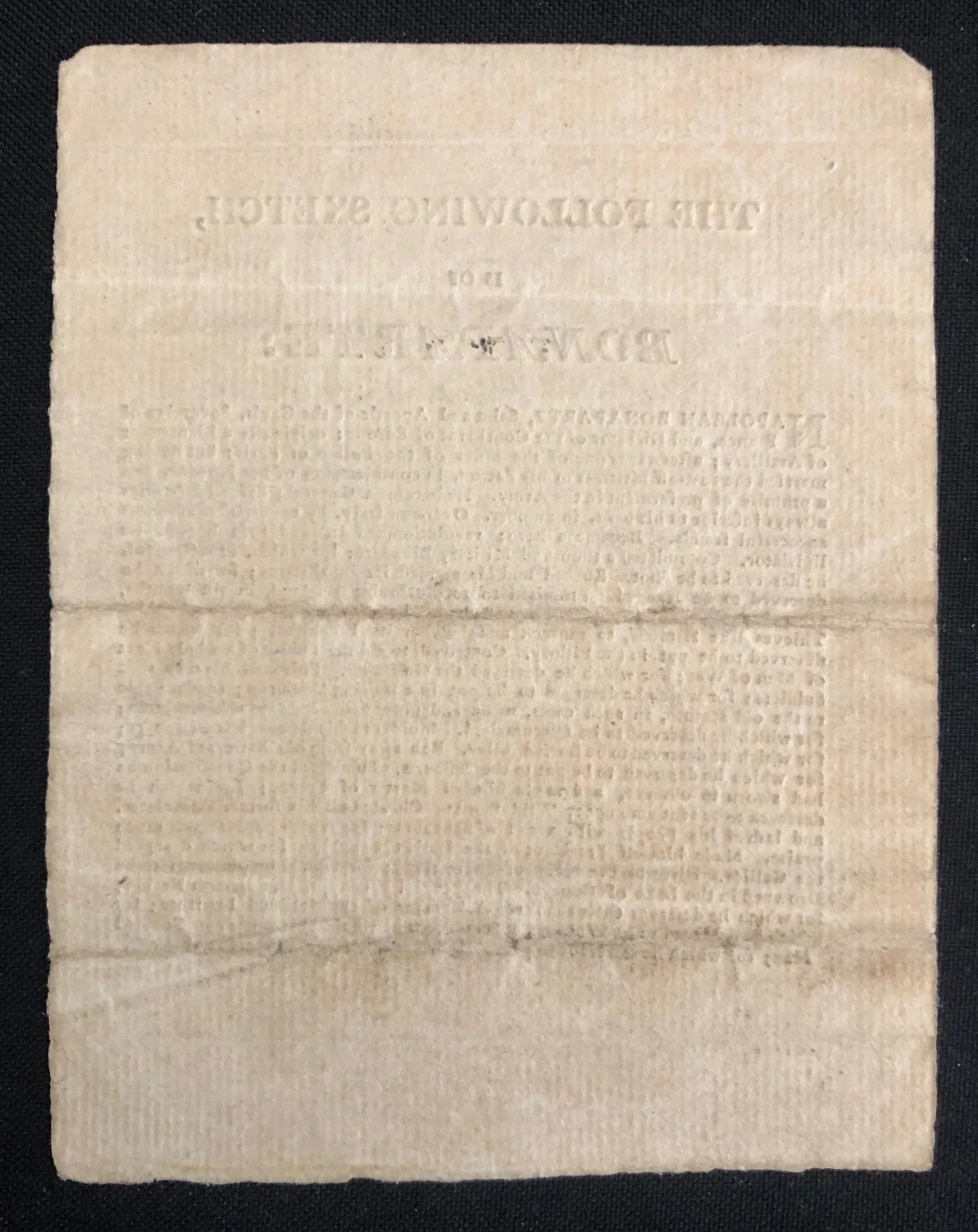
Documents like this were highly ephemeral—printed on cheap, fragile rag paper meant to be read, shared, and ultimately thrown away—making surviving physical examples incredibly scarce.
95mm x 120mm
Folded; stained; surface rubbed.
R2,500