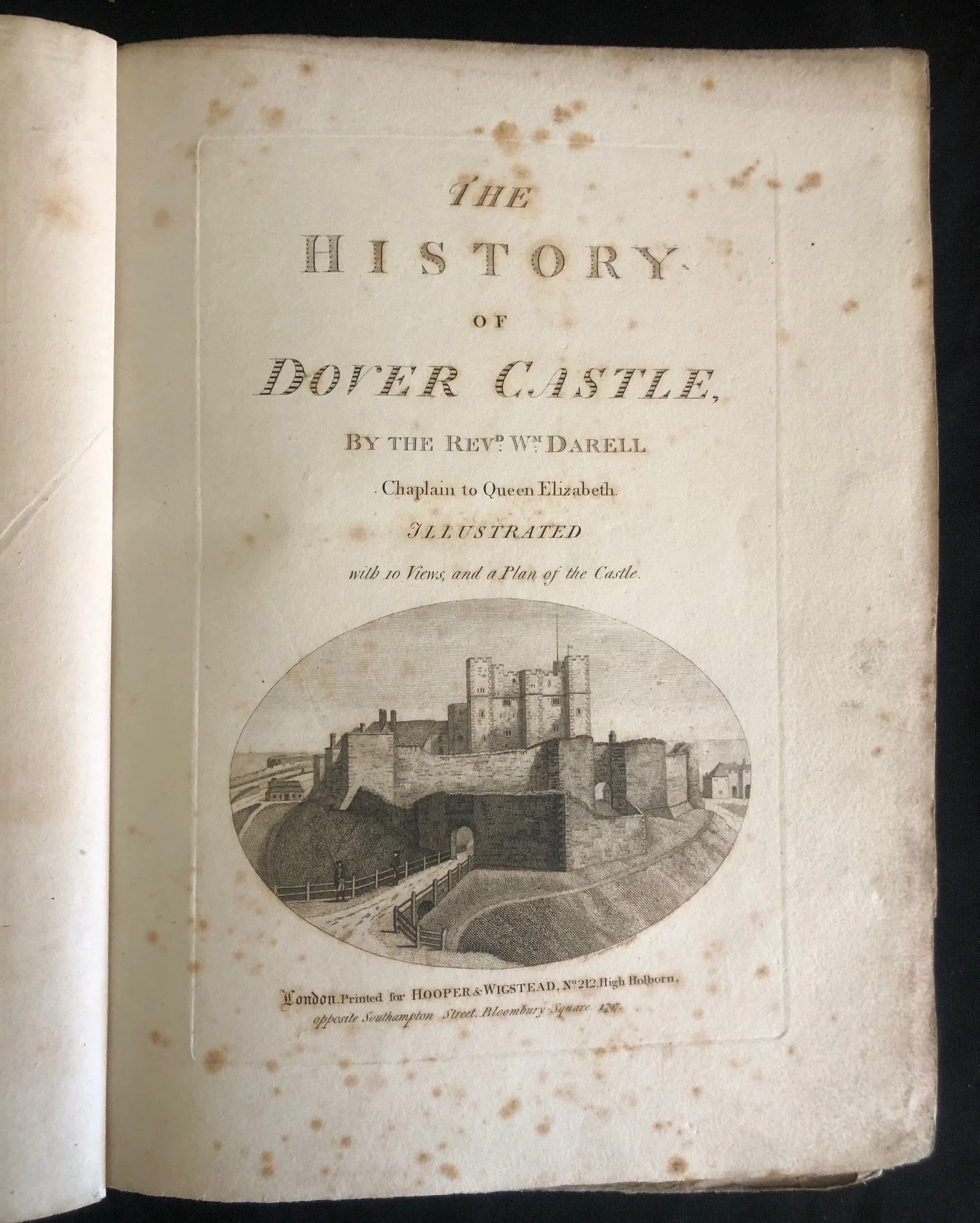
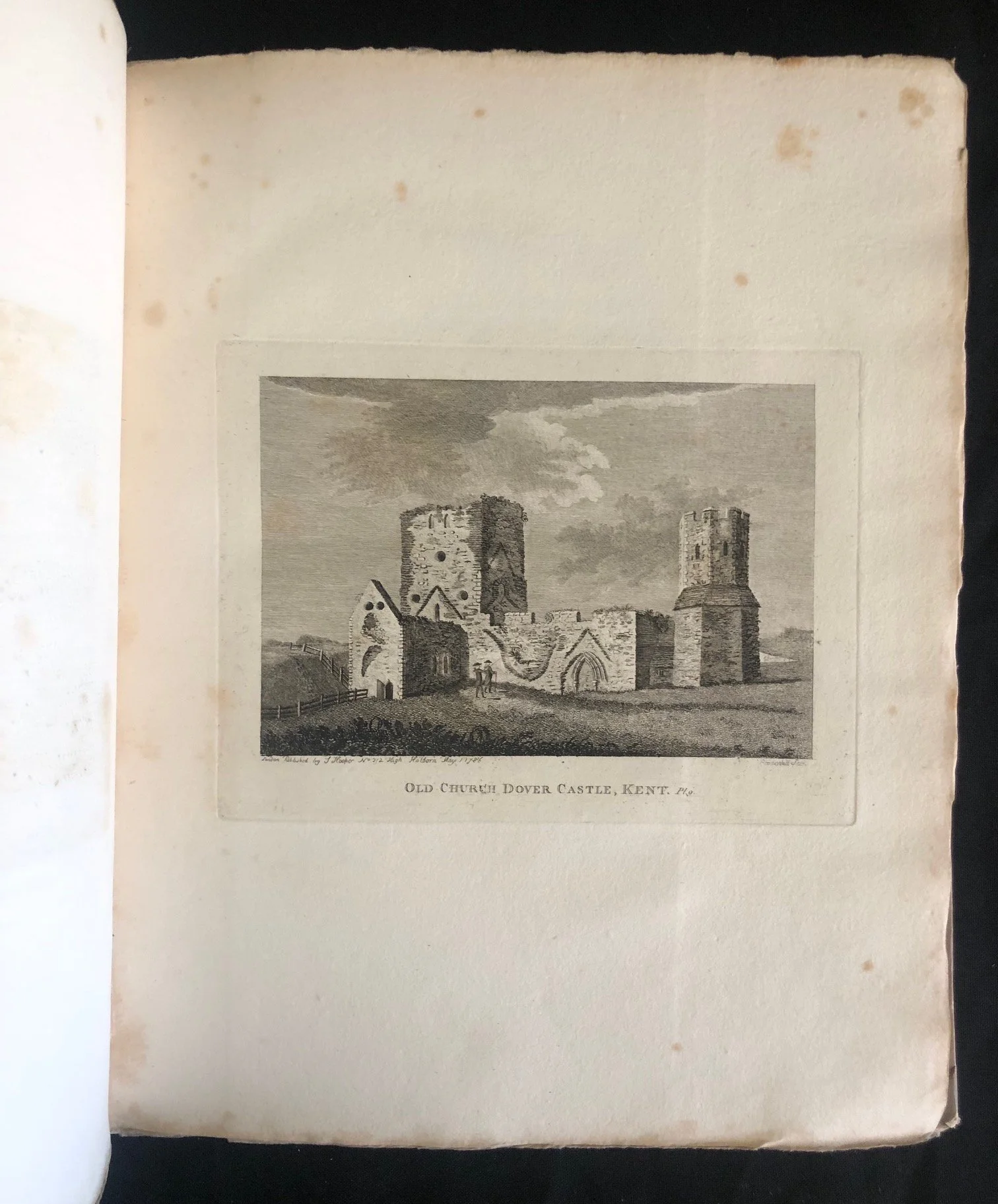
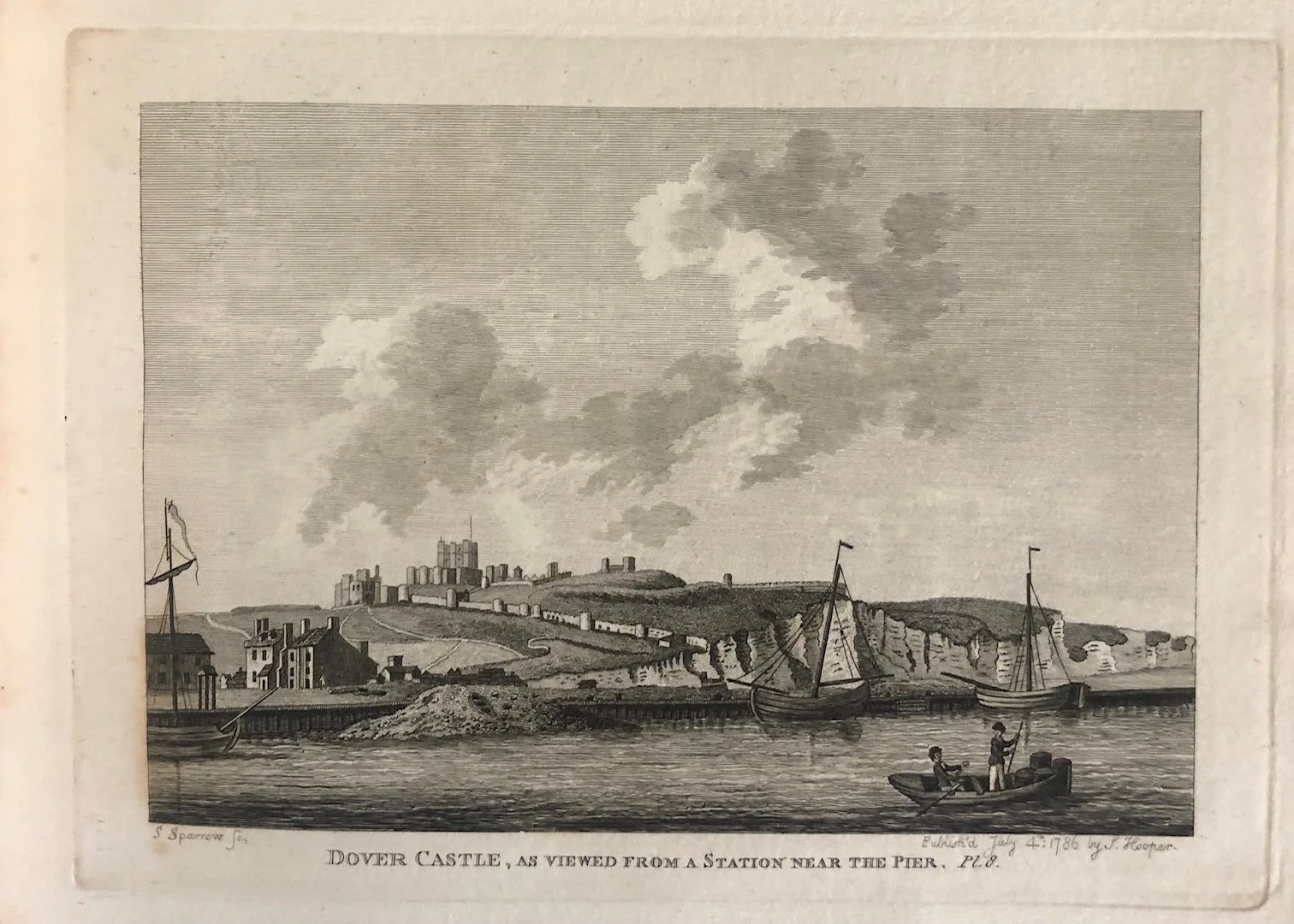
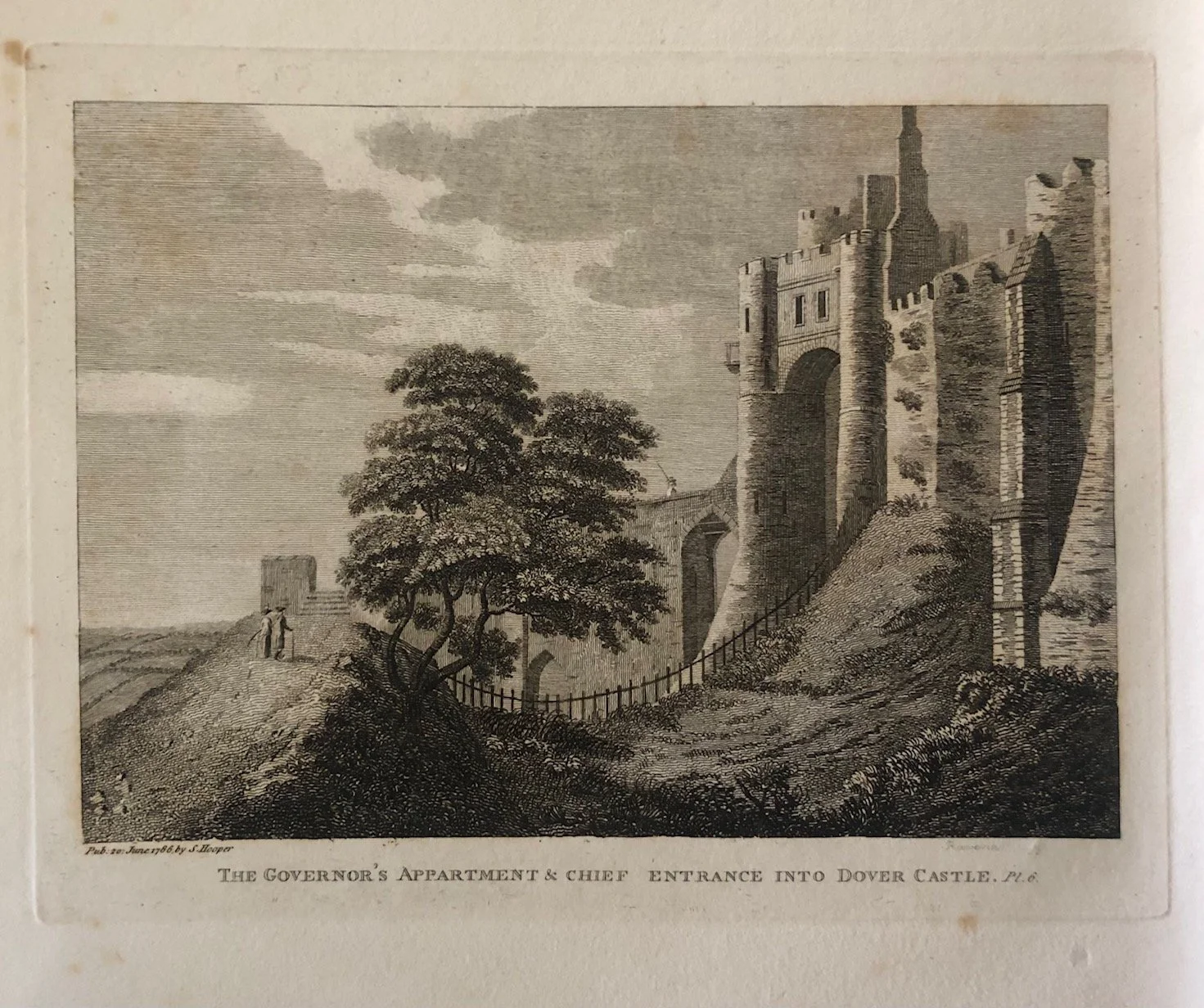
The History of Dover Castle by the Reverend William Darell 1797
Quarto edition.
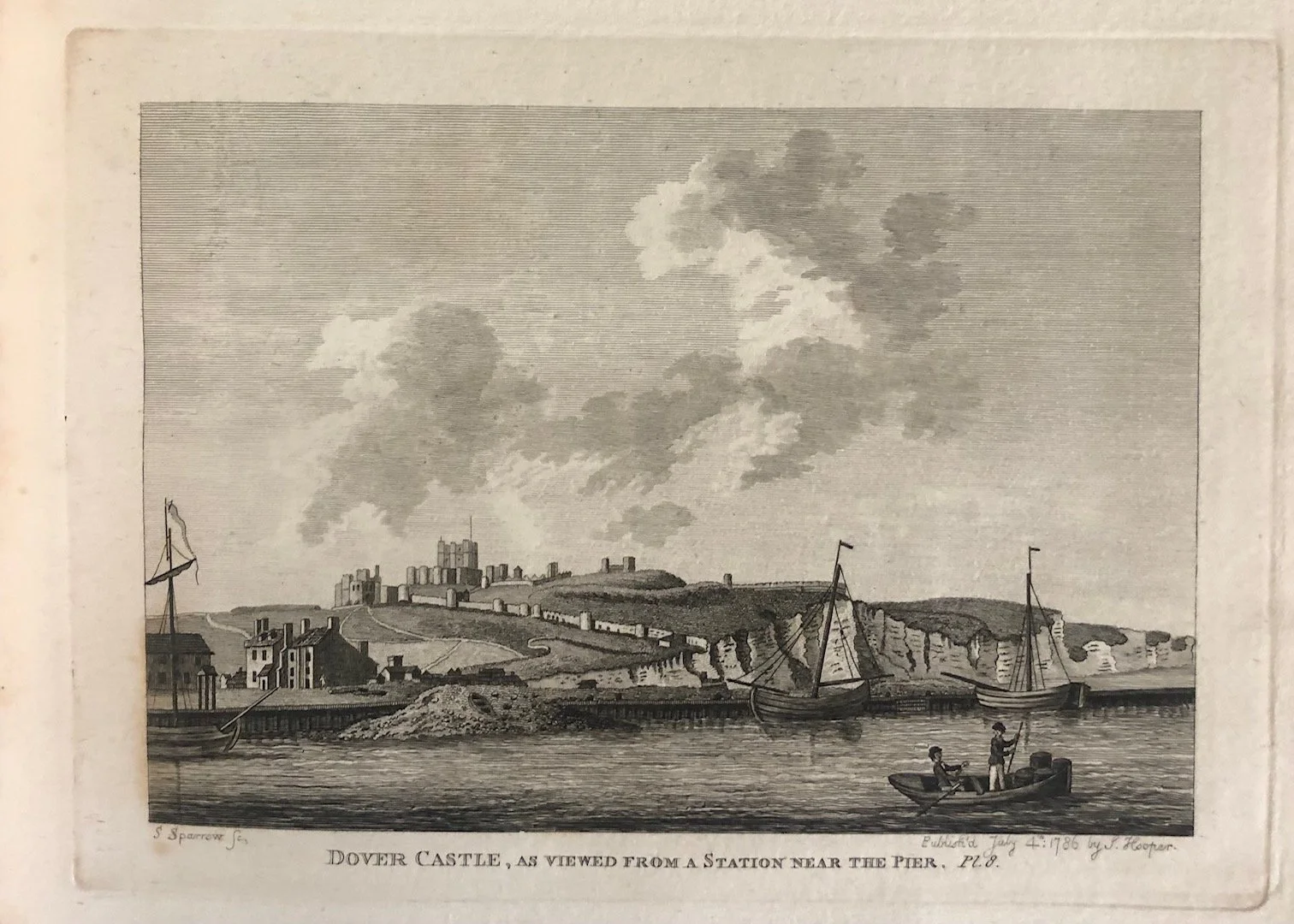
11 copperplate engravings, otherwise I’m unsure it this book is complete. 71 pages. Advert at back included.
The History of Dover Castle by the Reverend William Darell, published in London by Hooper & Wigstead. While this beautifully illustrated quarto edition was printed in 1797, Darell himself wrote the original text back in the 1560s or 1570s during the reign of Queen Elizabeth I, to whom he served as chaplain (as noted on the title page).
Darell wrote the original work in Latin under the title Castra in Campo Cantiano. The manuscript sat largely uncirculated for generations until it was finally translated into English by Alexander Campbell and published for the first time by Samuel Hooper in 1786, before being reissued in the 1797.
The Connection to Francis Grose and Samuel Hooper
The publisher listed at the bottom, Hooper & Wigstead (originally Samuel Hooper), was famous in the late 18th century for pioneering high-quality, commercially successful illustrated antiquarian books.
Samuel Hooper was the primary publisher for Captain Francis Grose, one of England's most famous and eccentric antiquarians. Grose traveled the British Isles sketching medieval ruins for his landmark series, The Antiquities of England and Wales. When Hooper acquired Darell's Elizabethan manuscript on Dover Castle, he published it specifically as a companion volume to complement Grose's massive, wildly popular architectural works, utilizing the same copperplate engraving style seen in the title page vignette.
The Scandalous "Reverend" William Darell
Though the title page presents "The Revd. Wm. Darell" as a pious Elizabethan court chaplain, Darell's actual historical reputation was anything but holy. He was a member of the prominent Darell family of Calehill, Kent, but became notorious for his deeply controversial personal life:
He engaged in a scandalous, highly publicized affair with Lady Margaret Throckmorton (the wife of Sir Richard Bulkeley).
The affair resulted in multiple bitter, public feuds, and Darell was eventually accused of attempting to poison Bulkeley.
He spent years entangled in lawsuits regarding property fraud, debt, and assault, earning him a reputation as one of the most litigious and colorful characters of the Elizabethan clergy.
Despite his chaotic life, his scholarly work on Dover Castle remains one of the earliest dedicated, structural histories of England's "Key to the Kingdom" due to its defensive significance throughout history.
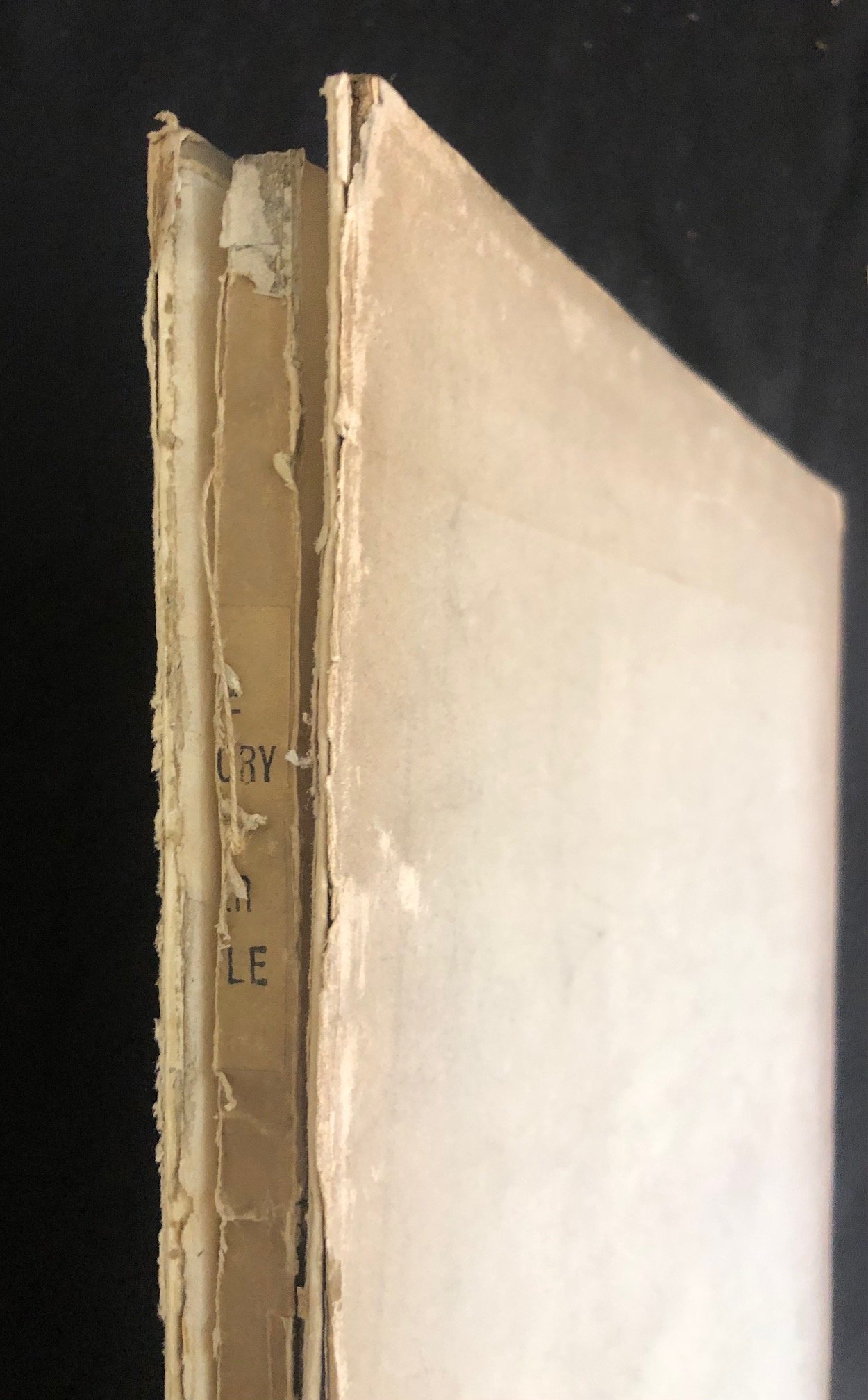
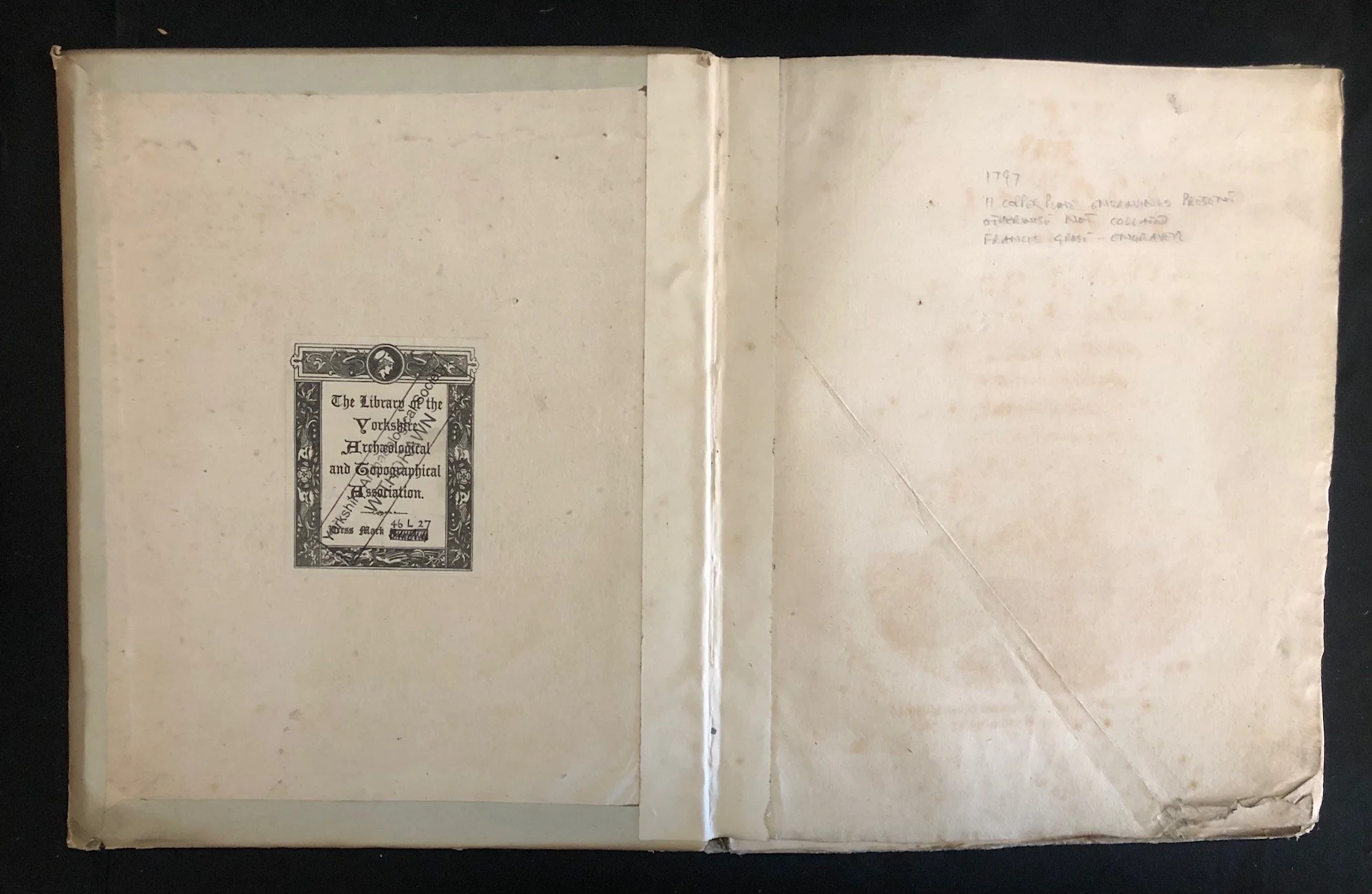
Disbound; both boards detached; amateur repairs; foxed.
250mm x 315mm x 30mm
R2,500