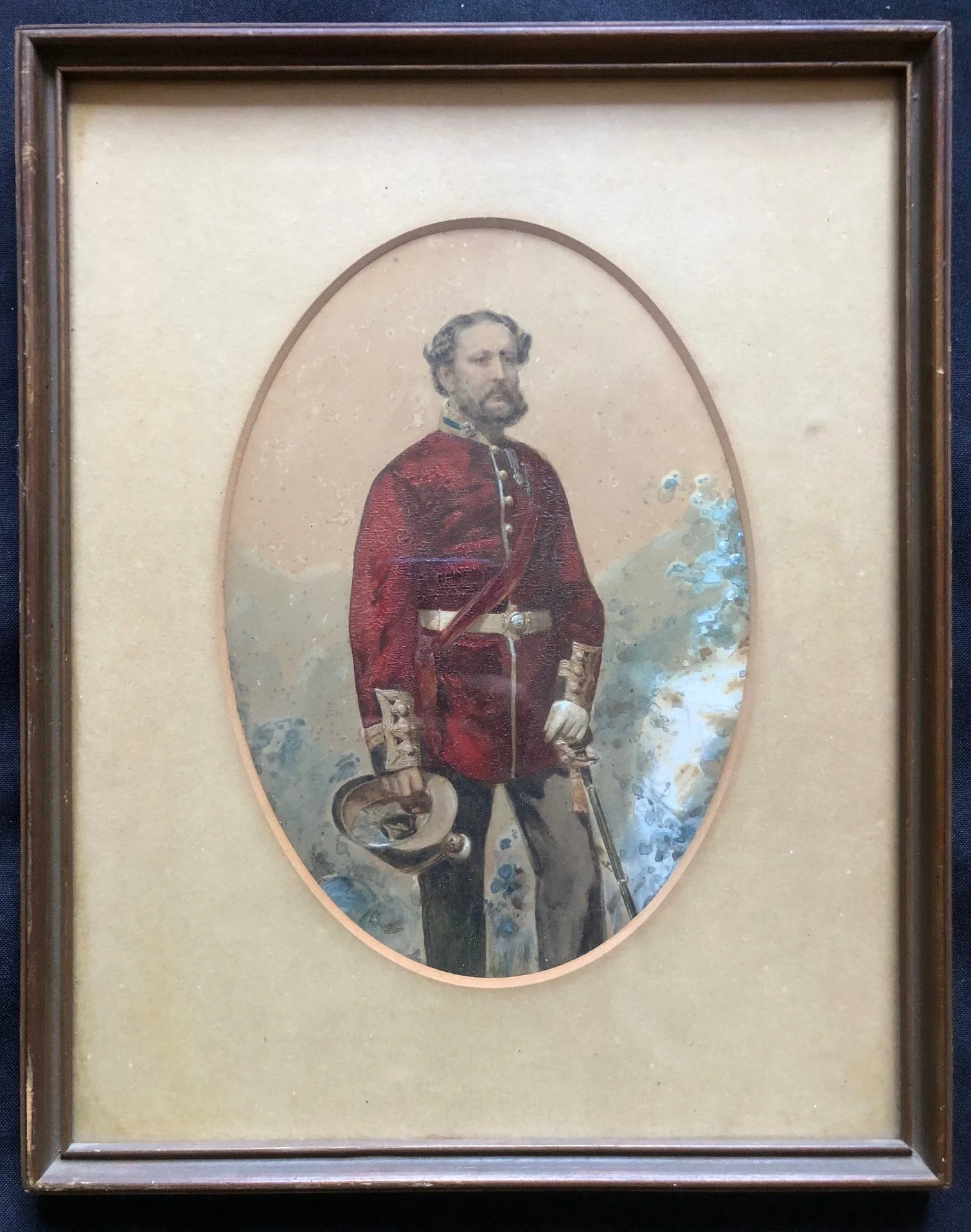
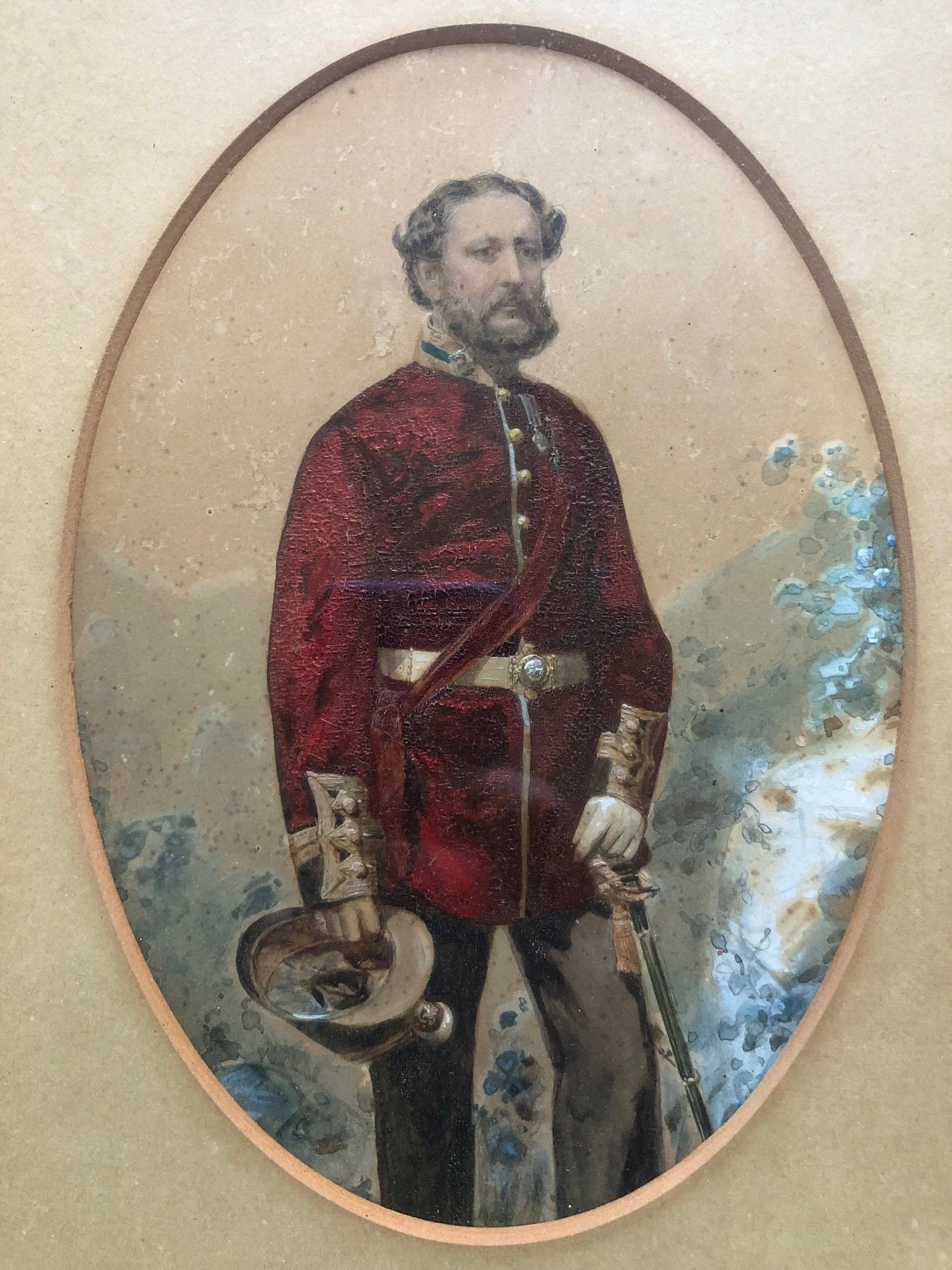
Portrait of Major Edward Henry Edwin Daniell, DSO (c.1895)
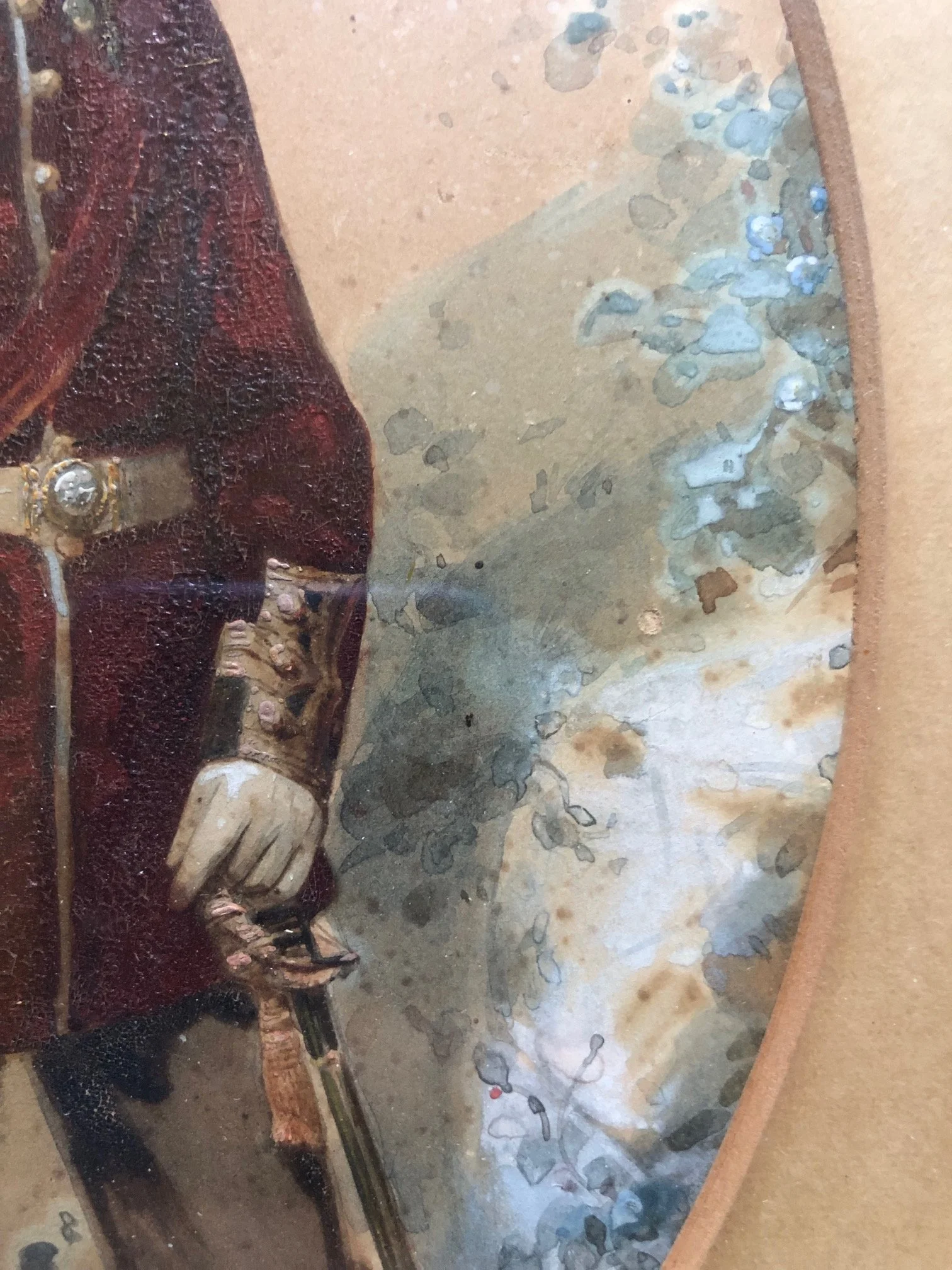
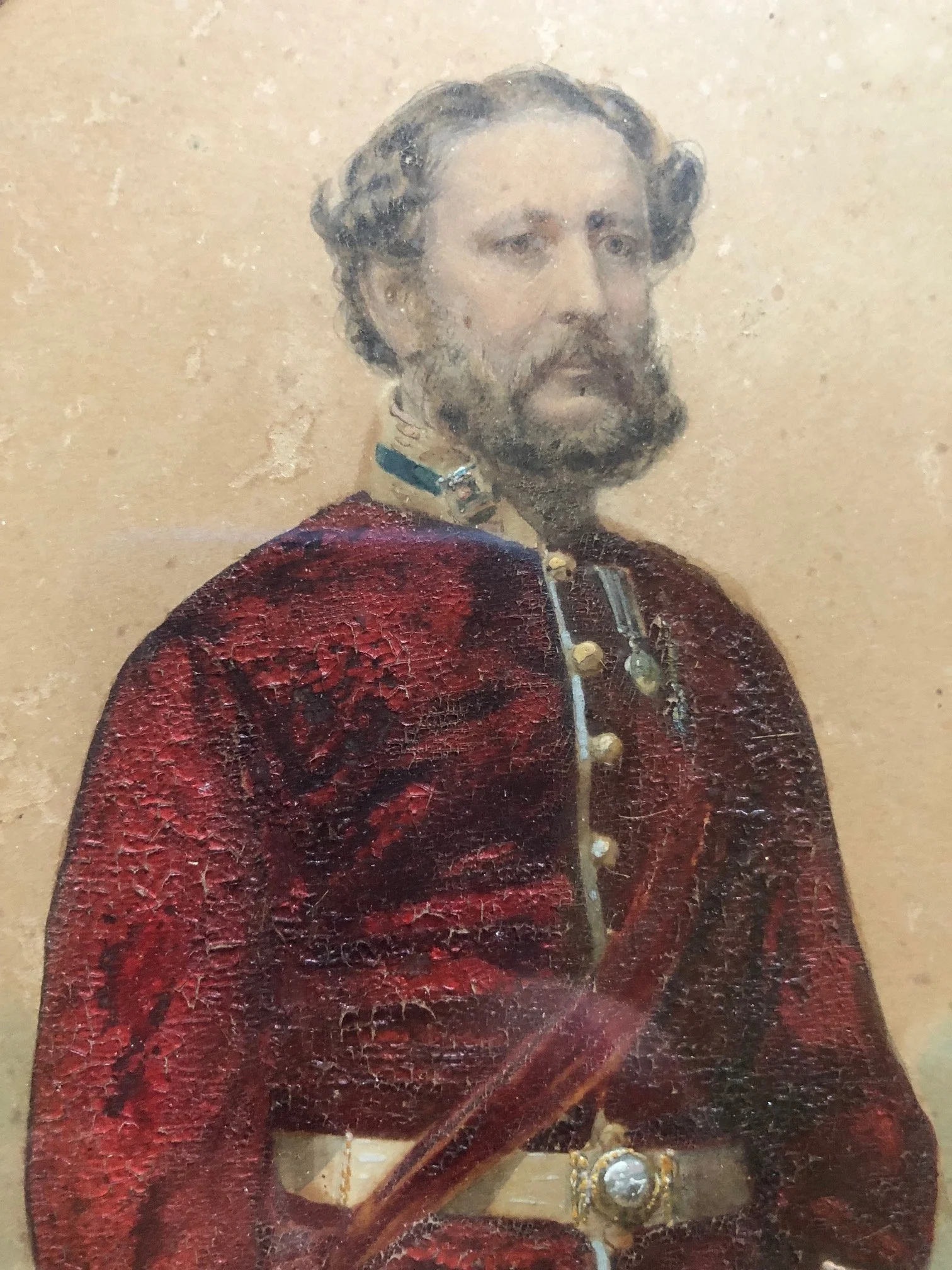
This is a compelling piece of South African and British military history. The portrait itself is a fascinating mixed-media piece—a watercolour over an albumen photograph base—depicting Major Edward Henry Edwin Daniell, DSO, a highly decorated officer of the Royal Irish Regiment.
Daniell’s life offers a striking cross-section of late Victorian imperialism, the Anglo-Boer War, and the tragic opening months of the First World War.
The Anglo-Boer War & "Damant's Horse"
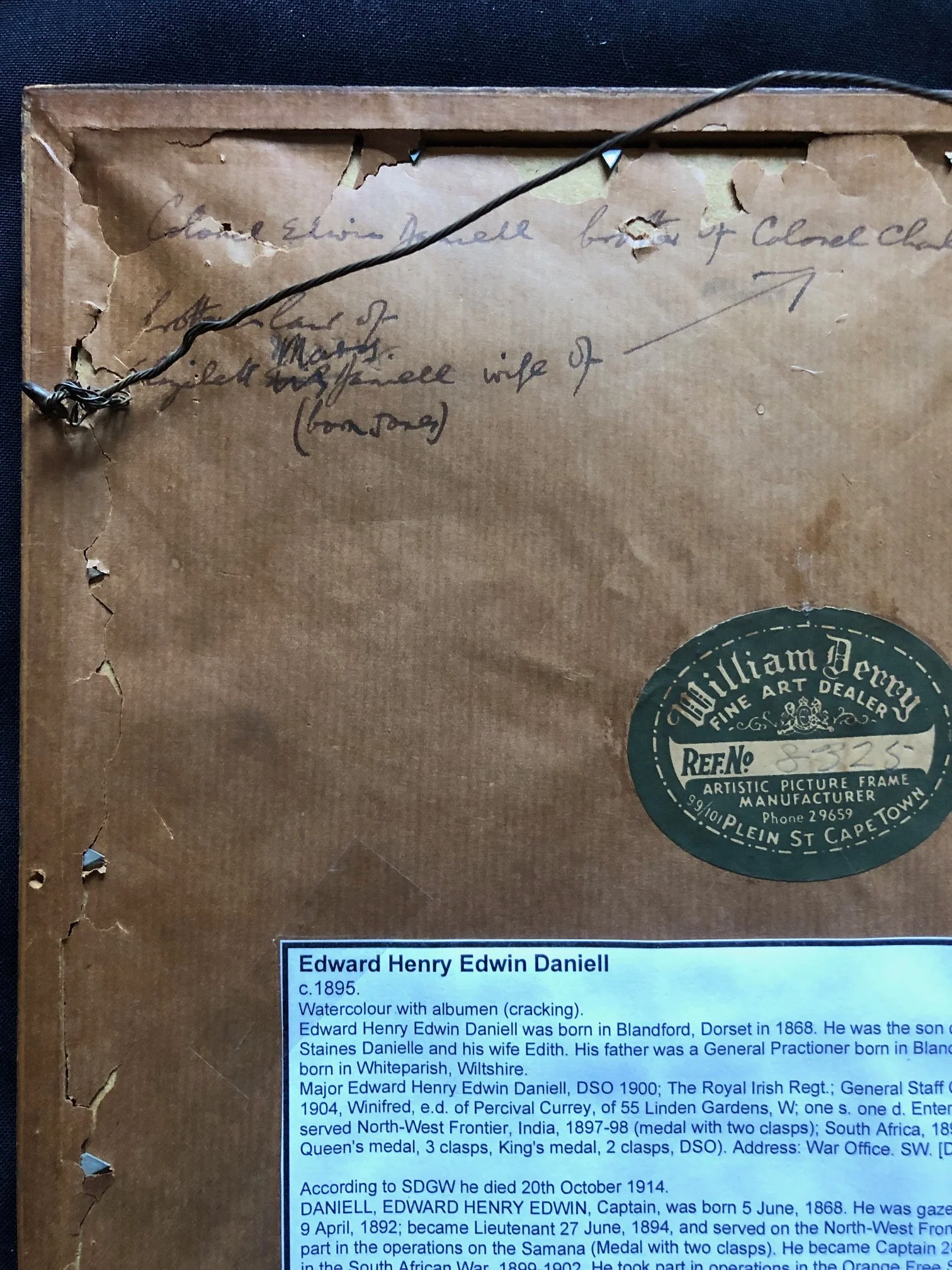
Daniell arrived in South Africa at the outbreak of the Second Anglo-Boer War (1899–1902). While he belonged to the Royal Irish Regiment, the label notes he was later employed with Damant's Horse (formerly known as Rimington's Guides).
The "Tigers": Rimington’s Guides were nicknamed the "Night Cats" or "Tigers" due to the distinctive leopard-skin bands they wore around their slouch hats.
Tactical Role: This was a specialized, highly mobile colonial irregular unit tasked with scouting, intelligence gathering, and countering the guerrilla tactics of the Boer commandos in the Orange Free State and the Transvaal. Serving with them required exceptional horsemanship, local navigation skills, and grit. Daniell's mentions in despatches and his Distinguished Service Order (DSO) in 1901 point to a highly active, dangerous front-line role during these bitter guerrilla phases.
The Currey Family
In 1904, Daniell married Winifred Currey, the daughter of Percival Currey. This isn't just a minor genealogical note; it firmly anchors Daniell into the influential social and architectural fabric of the late 19th-century Cape Colony.
Percival Currey was a prominent Cape Town architect, closely associated with the elite of the colony and involved in early colonial estate management and design.
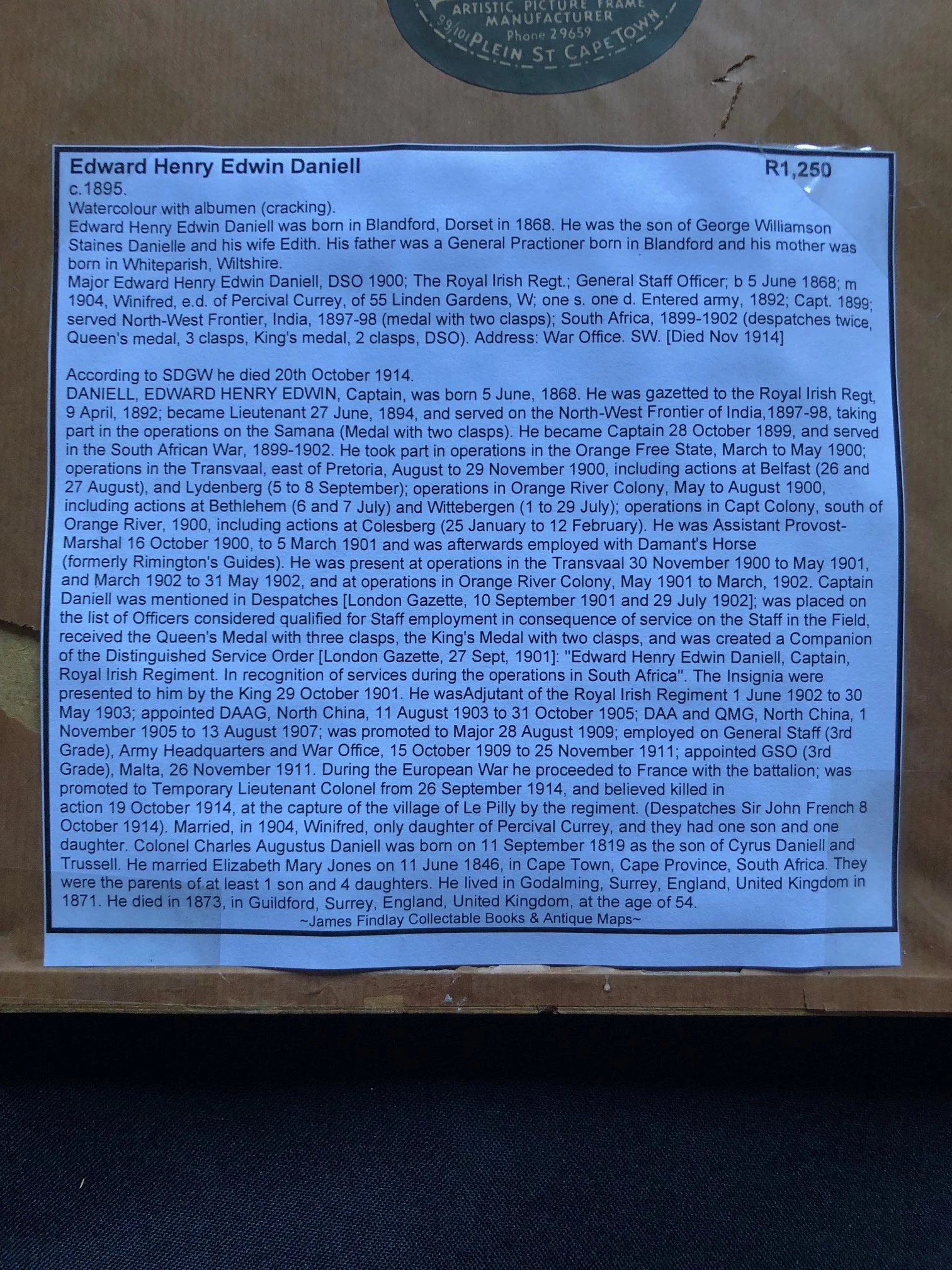
The framing sticker at the top of the backing—from an artistic picture frame manufacturer at 99/101 Plein Street, Cape Town—suggests that this portrait likely remained with the Currey/Daniell family connections in the Cape for generations before making its way into the antiquarian trade.
The Tragedy at Le Pilly (First World War)
Daniell’s story meets a sudden, tragic end in the opening months of World War I. Promoted to Temporary Lieutenant-Colonel, he went to France with the 2nd Battalion, Royal Irish Regiment.
In October 1914, during the "Race to the Sea," his battalion was ordered to capture and hold the village of Le Pilly near Lille, France, to secure a ridge line.
The Last Stand: On October 19, 1914, the battalion found themselves dangerously isolated, outflanked, and cut off by overwhelming German forces. They put up a fierce defense but were completely surrounded.
The Aftermath: The battalion was virtually annihilated. Hundreds of men were killed or wounded, and the rest were taken prisoner. Daniell was initially reported missing, but it was later confirmed that he was killed in action during this desperate defense. Because of the chaos of the early mobile phase of the war, his body was never recovered or identified. Today, he is commemorated on the Le Touret Memorial in France.
The Artistic Medium: Watercolour over Albumen
The construction of this portrait is highly characteristic of the late 1800s. Turning an albumen print (a silver photographic print made using egg whites) into a painted miniature was a premium service. It allowed families to have the literal accuracy of a photograph combined with the rich, prestigious colour of a painted military portrait—an ideal keepsake for an officer's family before he shipped off to far-flung corners of the Empire.
Size of frame: 255mm x 320mm
R1,250