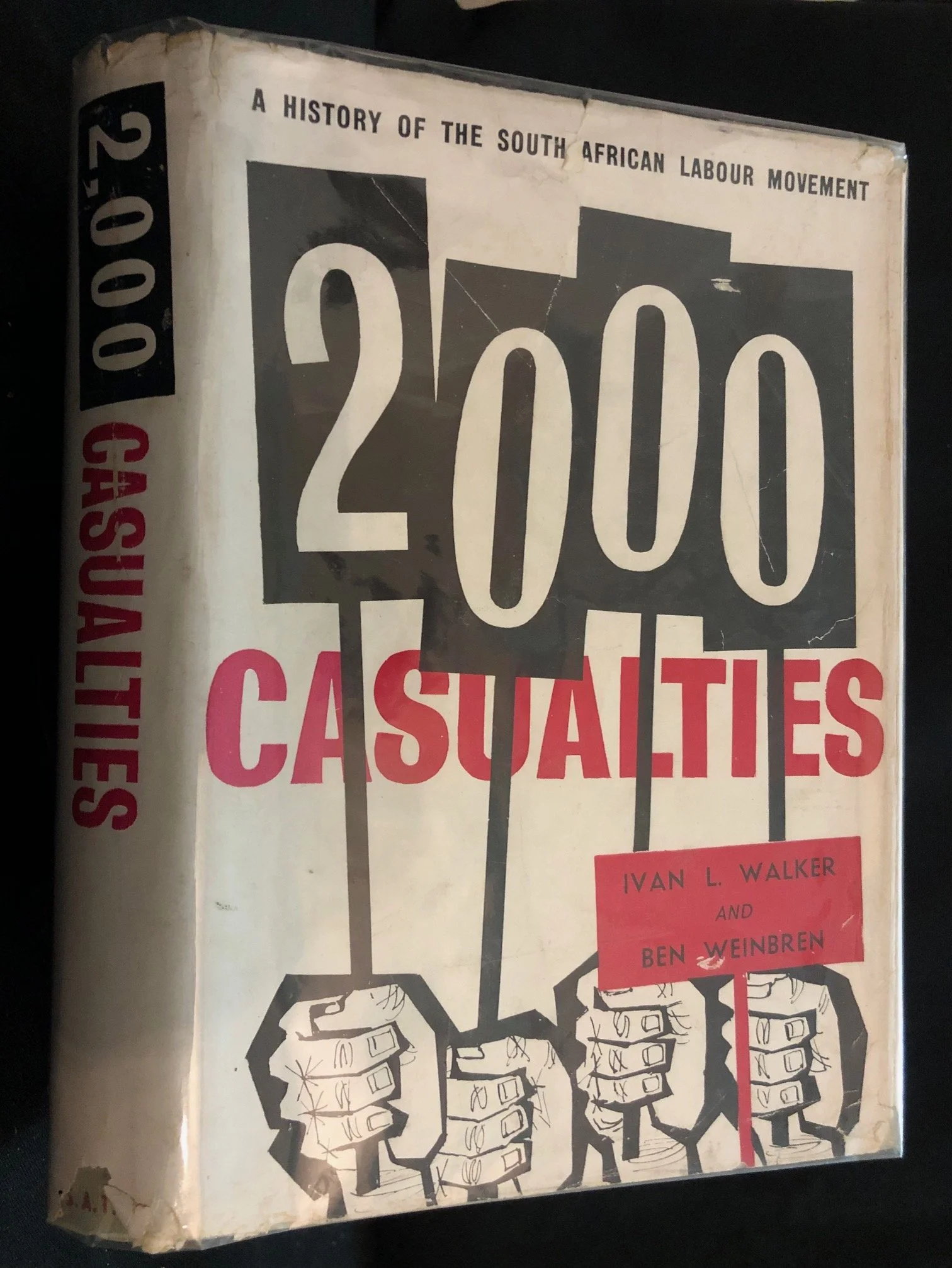
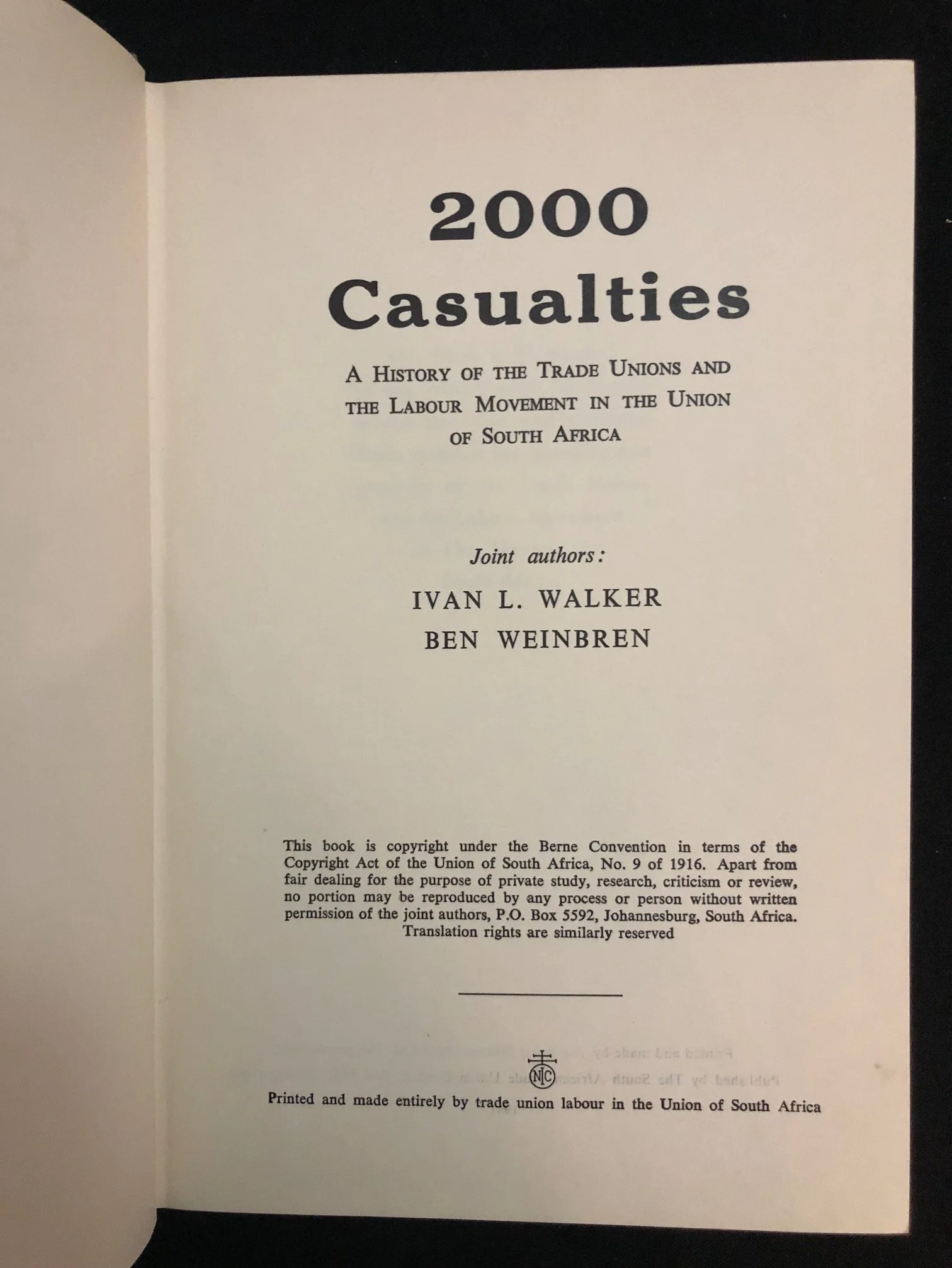
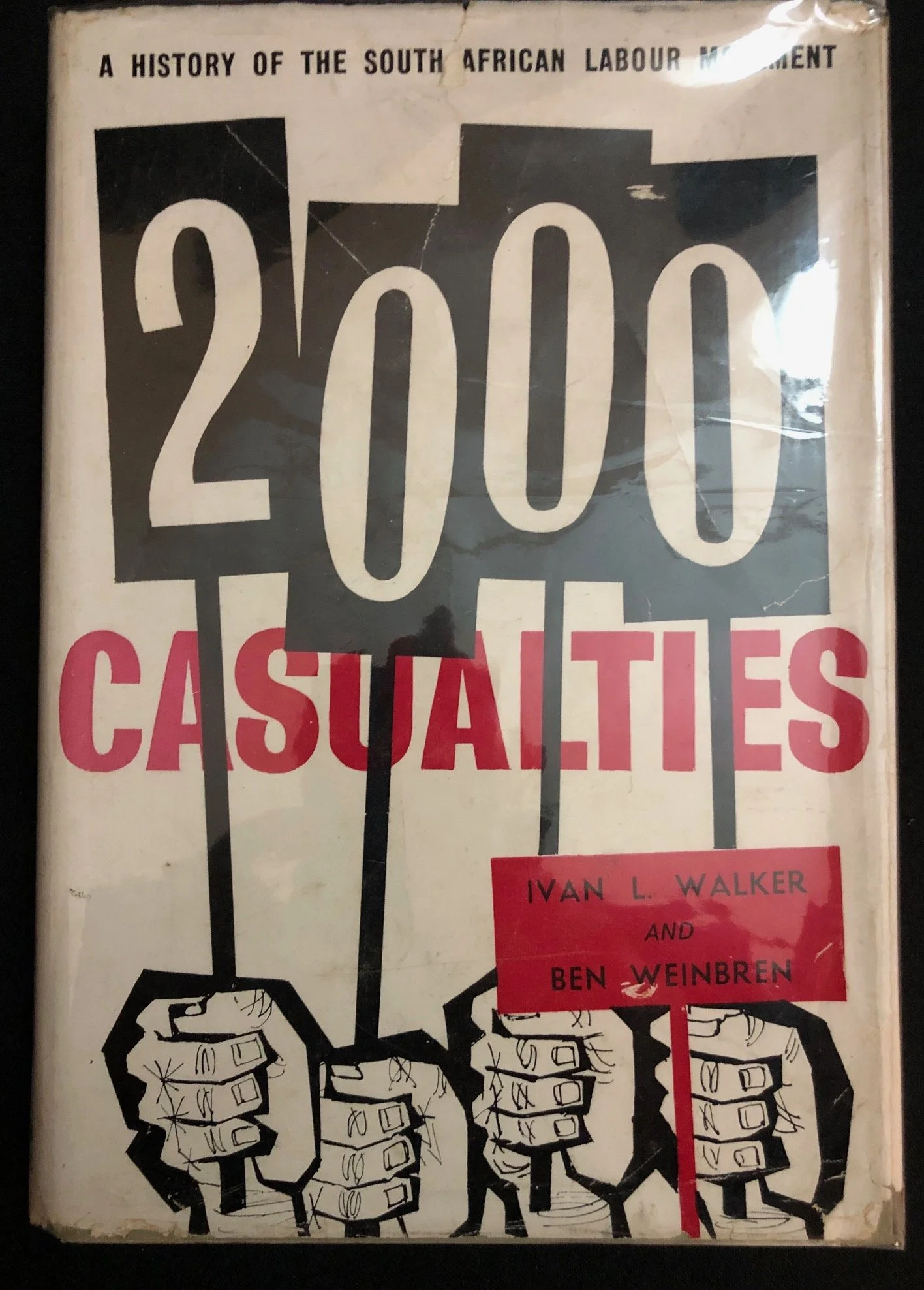
2000 Casualties: A History of the Trade Unions in South Africa, co-authored by Ivan L. Walker and Ben Weinbren (1961)
Published by the South African Trade Union Council (SATUC).
The Title's Reference: The 1922 Rand Revolt
The book begins with the 1922 Rand Revolt (the Witwatersrand miners' strike). What began as a strike by white miners against wage cuts and the relaxation of the color bar escalated into an armed insurrection against the Chamber of Mines and Jan Smuts' government. Smuts deployed state military forces, artillery, and bomber aircraft against the striking commandos.
"Printed and made entirely by Trade Union Labour in the Union of South Africa."
During this era, the labor movement took solidarity incredibly seriously. For a definitive history of trade unionism to be considered authentic, it could not be produced via standard commercial, non-union printing houses. The inclusion of the NIC print union logo certifies that every step of this book's physical creation—from typesetting and printing to binding—was executed by unionized workers under fair conditions, making the physical object itself an artifact of the movement it documents.
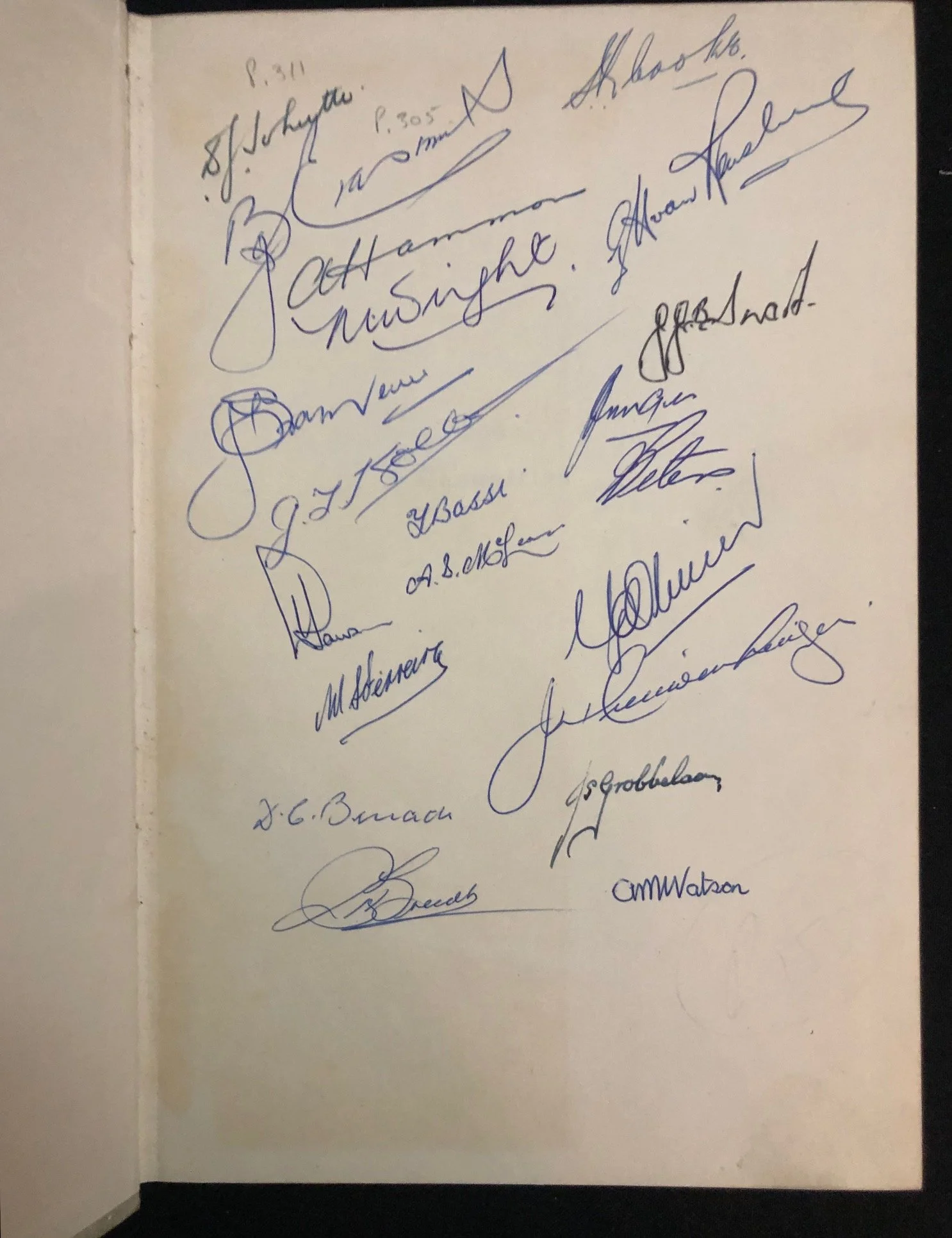
Multi-signed endpaper; The page reads like a Who's Who of South African trade unionism, socialist activism, and labor organizing from the mid-20th century.
A few notable details and signatures visible on this page include:
The Authors: Ivan L. Walker's distinct signature is visible in the upper right quadrant ("Iv. L. Walker"). Walker was a foundational figure in the typographical unions and later became the Secretary for Labour. Ben Weinbren's bold signature ("B. Weinbren") anchors the lower left. Weinbren was a prominent left-wing activist, head of the Native Public Utility Transport Corporation workers' union, and heavily involved in organizing non-racial and black trade unions in the 1920s and 30s.
Copies with single association signatures from this period are uncommon, but a multi-signed "registry" page like this likely indicates it was passed around at a specific historic union conference, a SATUC executive meeting, or a publication launch dinner in 1961 where the veterans of the movement gathered to commemorate their history.
Evaluating the signatures on the endpaper reveals a fascinating, dense group of mid-20th-century South African labor leaders and trade unionists. Because this book was published in 1961 by the South African Trade Union Council (SATUC), this page serves as an exceptional register of the council’s leadership and affiliated delegates from that specific era.
I speculate that some of the signatures might be:
J. S. Grobbelaar ("J. S. Grobbelaar"): Clearly written in the lower right quadrant. James S. Grobbelaar was a major official within the South African trade union structures, later serving as the highly influential General Secretary of the Trade Union Council of South Africa (TUCSA, which evolved from SATUC).
A. B. McLean ("A. B. McClean / A. B. McLean"): Located just below the center-left. McClean was an active official within the union federations, representing technical or motor-industry employees during the post-war consolidation of SATUC.
L. Bassi ("L. Bassi"): Just above McClean's signature.
C. M. Watson ("C. M. Watson"): Written very cleanly and clearly in the bottom right corner.
D. C. Benade ("D. C. Benade"): Written in a smaller hand in the lower-left area, just above Ben Weinbren's signature. Benade was prominent in the transport and tramway workers' unions.
Dust jacket worn, chipped and creased. Some wear and staining to the book.
170mm x 240mm x 40mm
R800