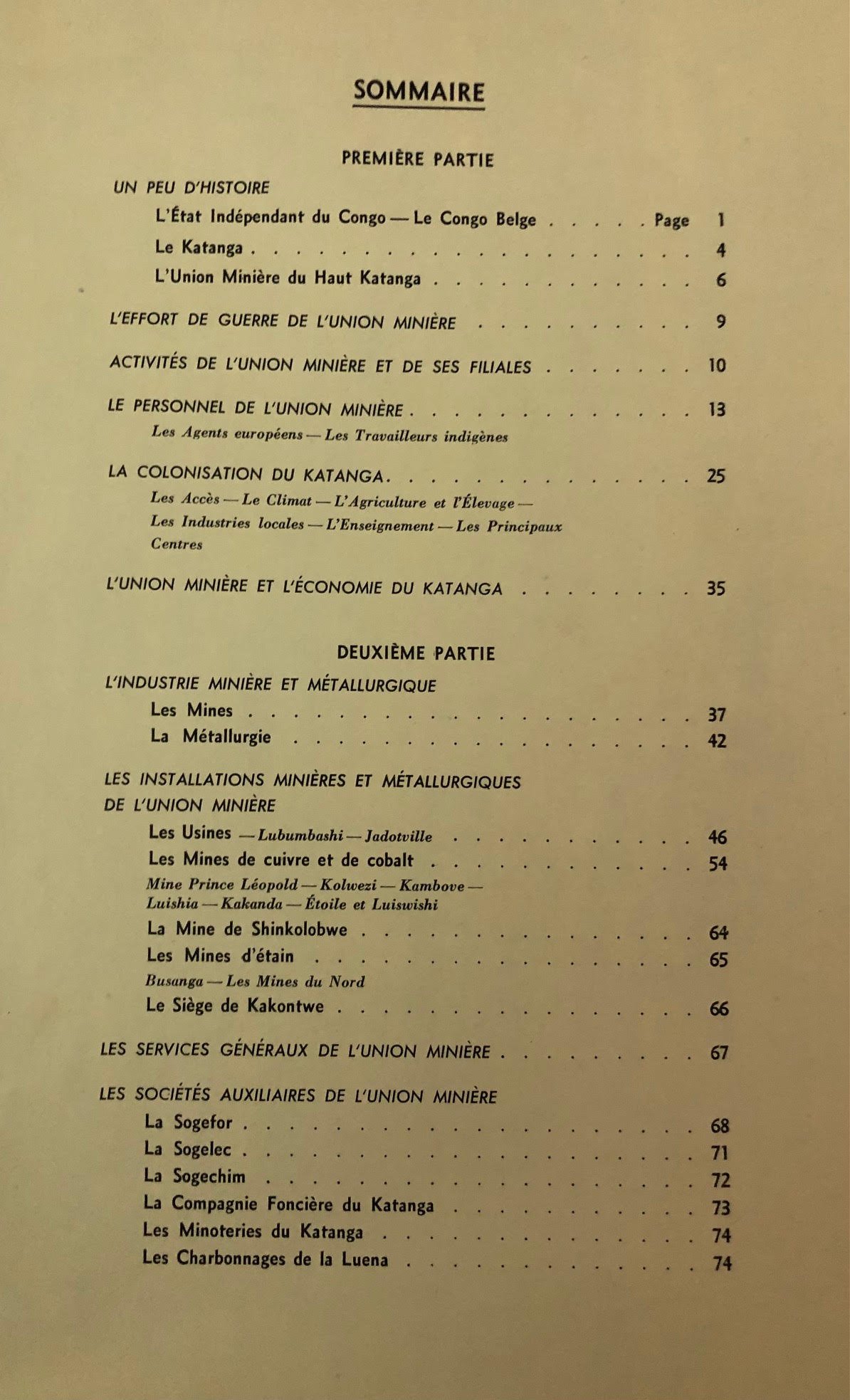
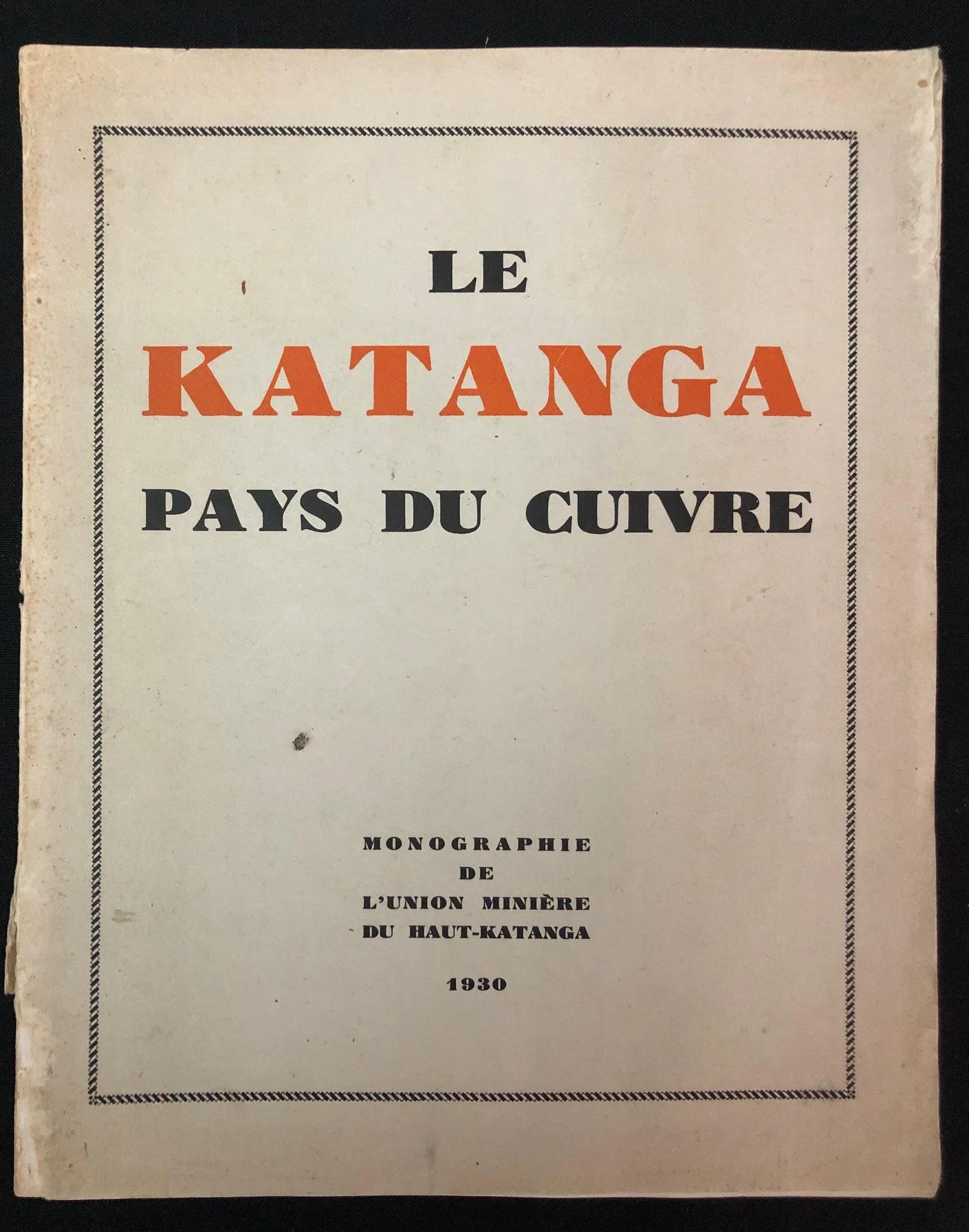
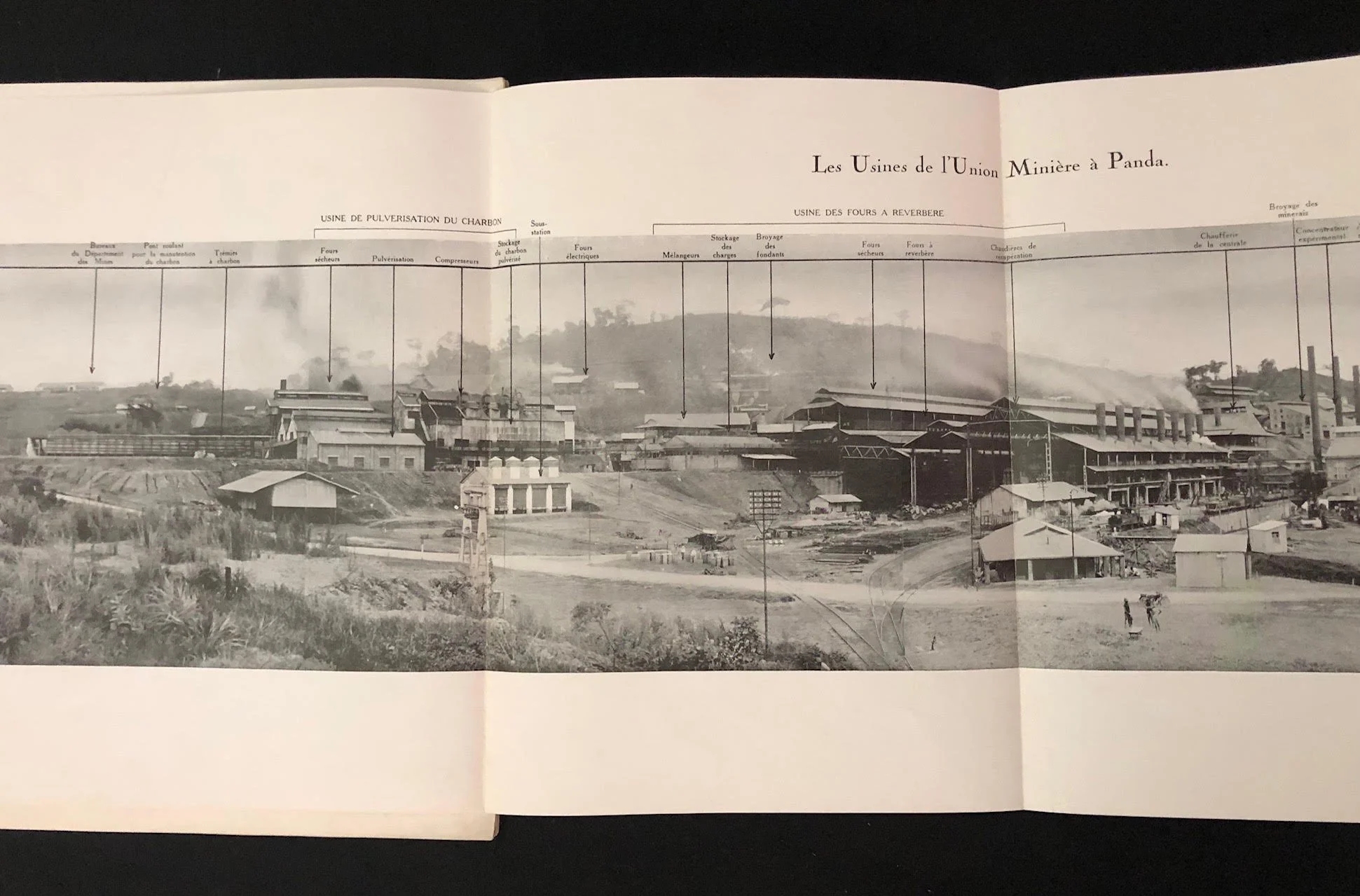
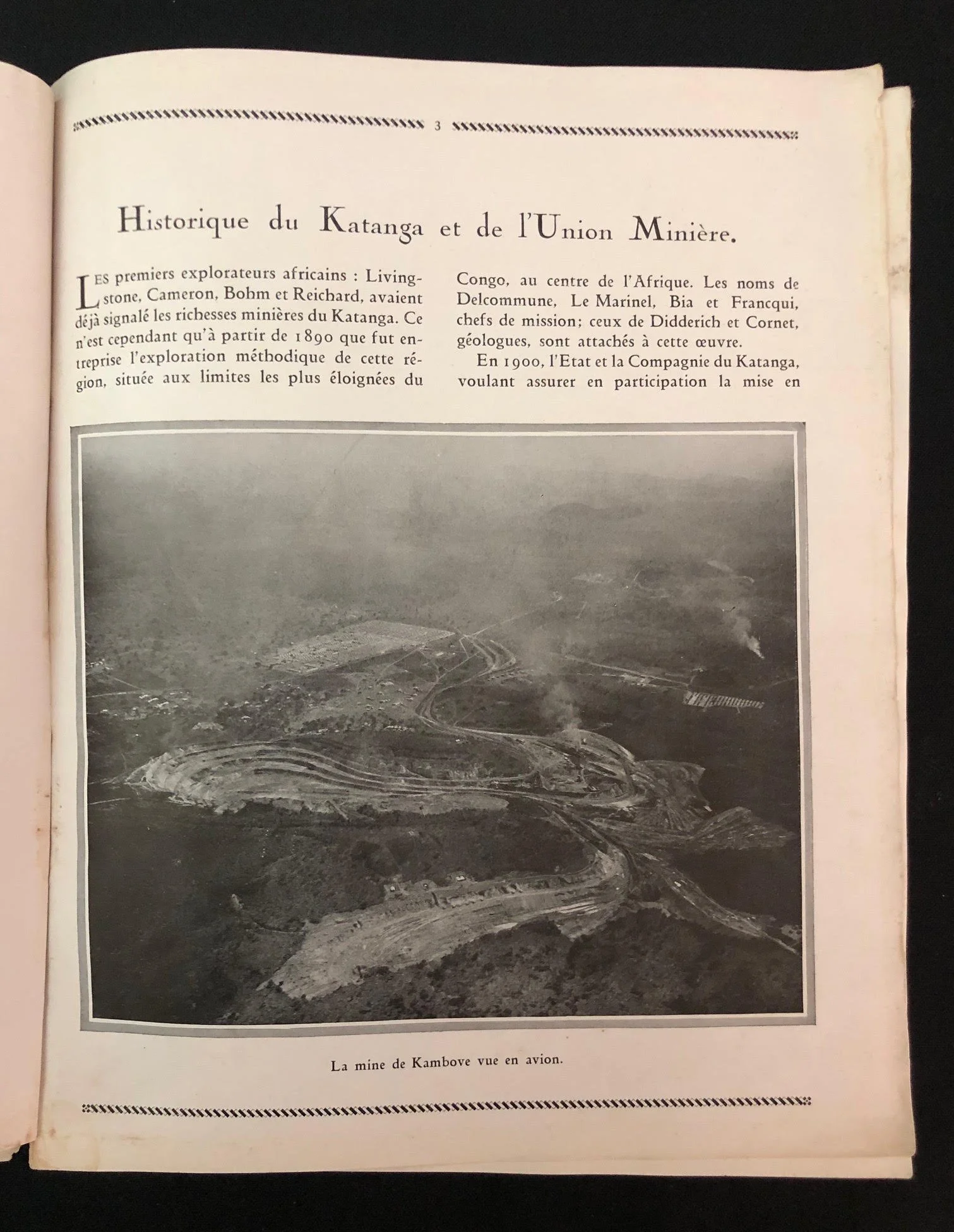
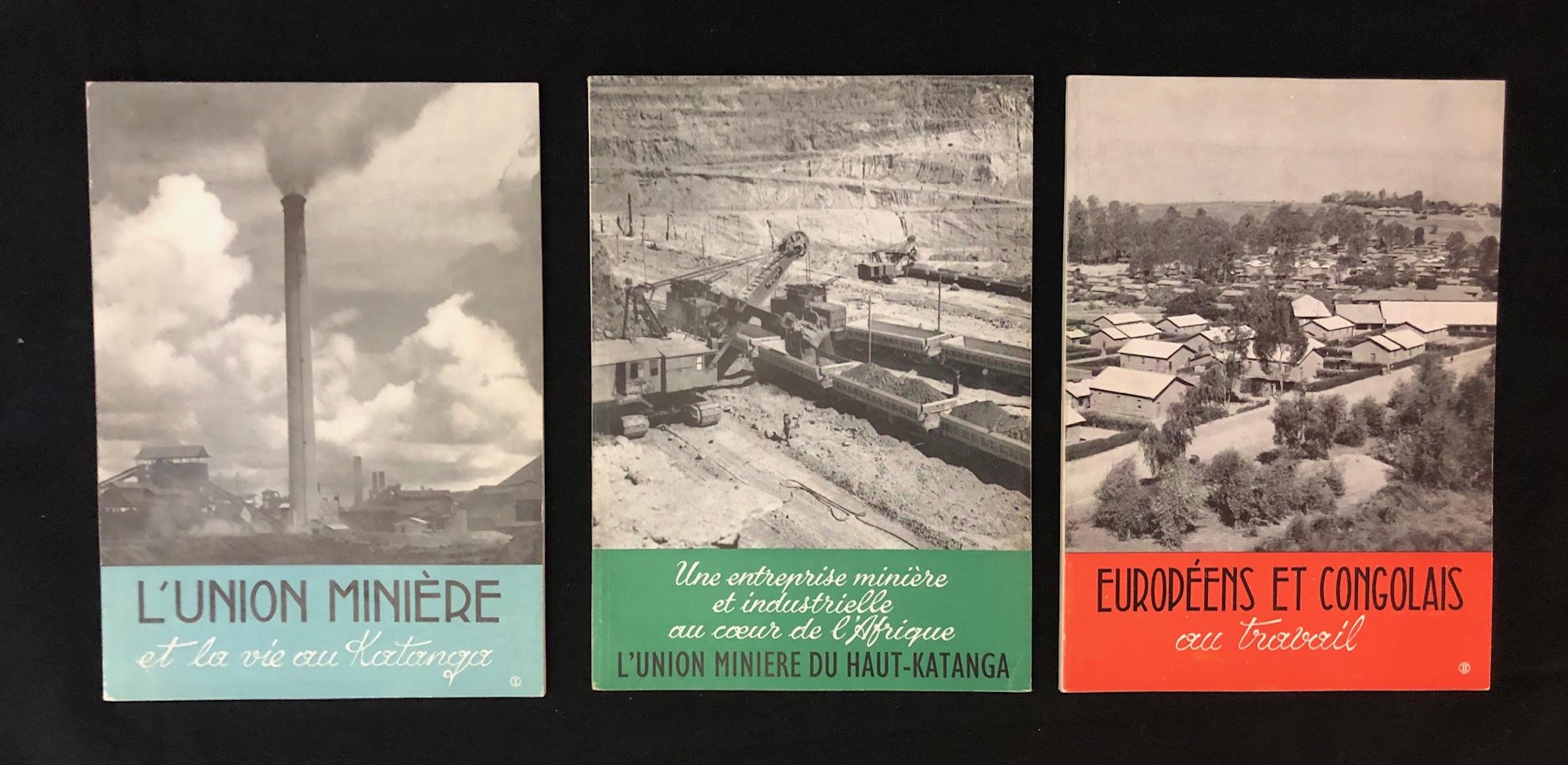
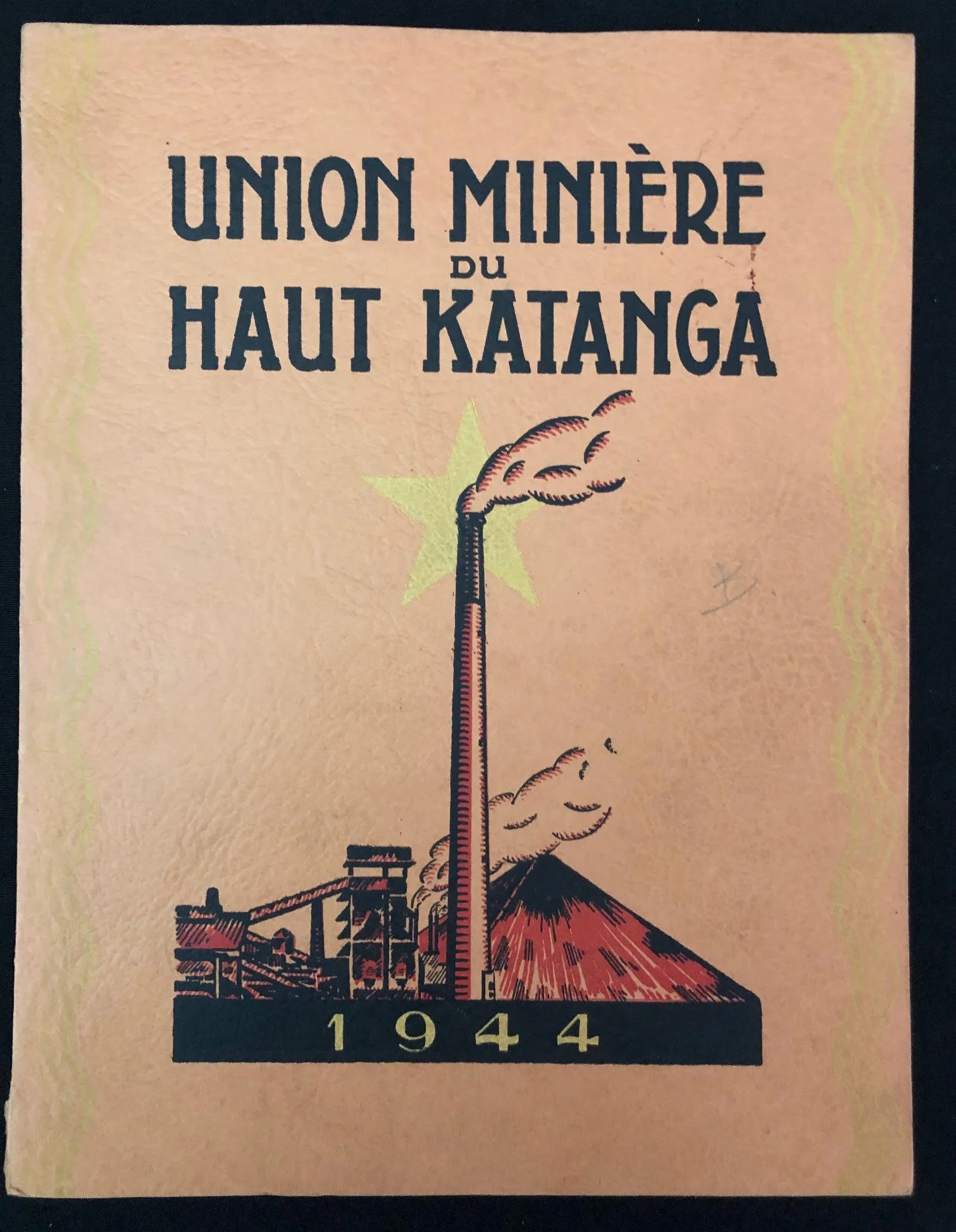
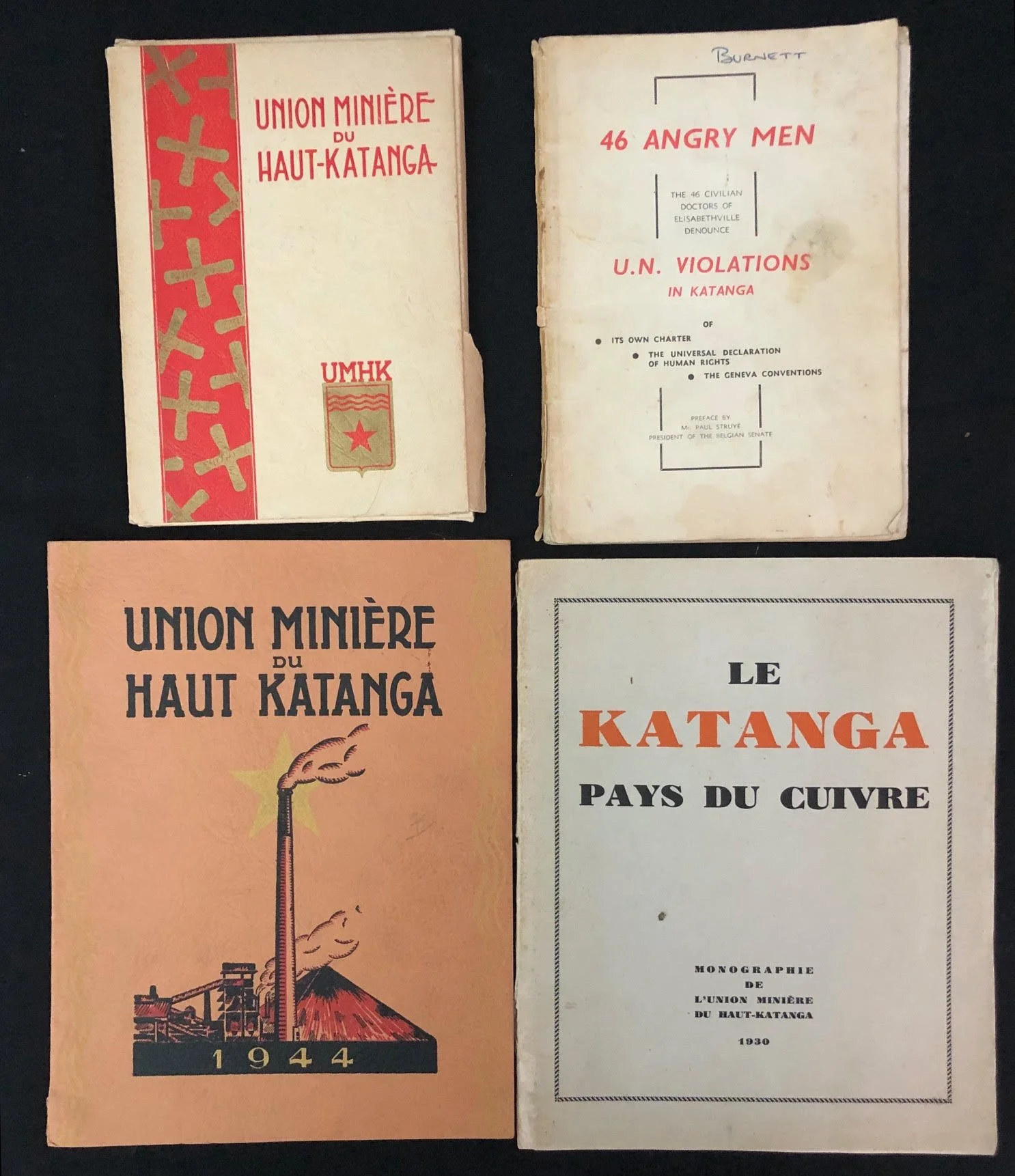
A collection of 4 pamphlets dealing with Katanga (DRC)
This collection of corporate monographs and political pamphlets documents one of the most volatile and strategically critical mining empires of the 20th century: Union Minière du Haut-Katanga (UMHK) and the Katanga Secession Crisis (1960–1963).
The Secret Fuel of the Manhattan Project
The 1944 UMHK monograph (Monographie 1944) comes from a period when the company’s operations were under strict Allied military intelligence secrecy.
The Shinkolobwe Mine: Located in Katanga, UMHK’s Shinkolobwe mine contained the richest uranium deposit ever discovered on Earth, yielding ore at concentrations exceeding 65% (compared to typical global averages below 1%).
Building the Atomic Bomb: In 1940, UMHK’s director Edgar Sengier secretly shipped nearly 1,200 tons of Katangan uranium ore to a warehouse in Staten Island, New York. In 1942, the U.S. Army purchased this stockpile for the Manhattan Project. The uranium used to fuel the Hiroshima and Nagasaki atomic bombs came directly from UMHK’s Katanga operations.
Corporate Paternalism and Propaganda (1930s–1950s)
The French-language monographs (Le Katanga Pays du Cuivre, L'Union Minière et la vie au Katanga, Européens et Congolais au travail) showcase UMHK's self-fashioned image as a model colonial enterprise.
The "State Within a State": At its height, UMHK controlled tens of thousands of square kilometers in southern Congo, operating its own hydroelectric dams, railway lines, schools, hospitals, and company towns (such as Élisabethville, now Lubumbashi).
Industrial Paternalism: Through extensive promotional literature, the consortium marketed its policy of "stabilization"—providing workers with housing and medical care to build a disciplined industrial workforce while maintaining strict Belgian colonial authority.
The Katanga Secession & Cold War Flashpoint (1960–1963)
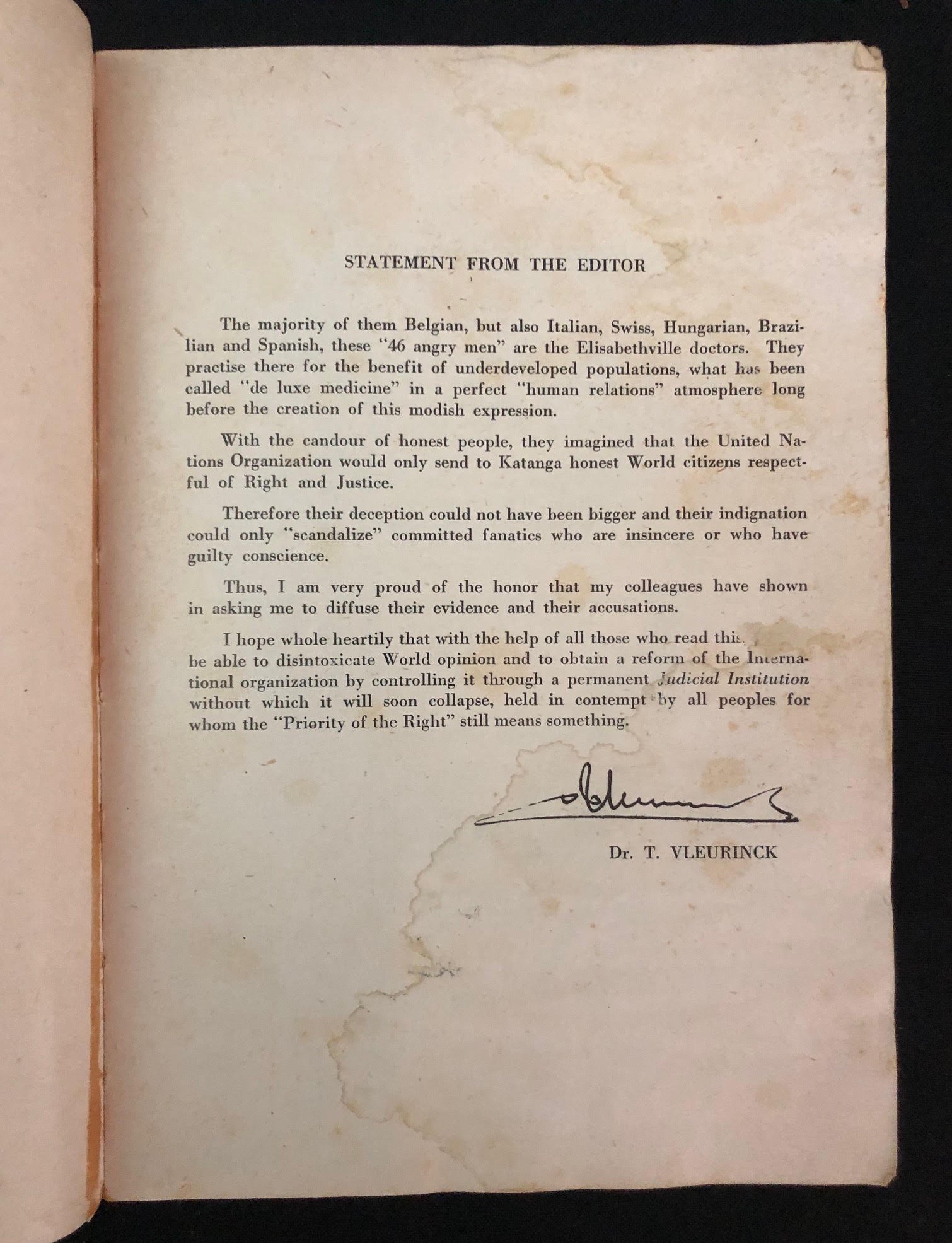
The 1962 pamphlet 46 Angry Men: The 46 Civilian Doctors of Elisabethville Denounce U.N.O. Violations in Katanga marks a bitter diplomatic chapter following Congolese independence.
Secession & Cold War Friction: In July 1960, days after the Republic of the Congo gained independence, Moïse Tshombe declared Katanga an independent state, covertly backed by Belgian corporate interests and UMHK to retain control over the mineral wealth.
UN Military Intervention: The United Nations launched Operation Grand Slam (ONUC) to forcibly reintegrate Katanga into the Congo—marking the first time in history UN peacekeepers engaged in full offensive combat operations.
The Medical Protest: 46 Angry Men was authored by Belgian and foreign doctors practicing in Élisabethville who accused UN forces of shelling civilian hospitals, violating the Geneva Conventions, and exceeding their peacekeeping mandate during the fighting. The pamphlet was widely circulated globally by right-wing and anti-UN groups (including American Opinion Reprints) to turn Western public opinion against UN intervention in Africa.
Various sizes, the largest one is 225 × 280
All are used and worn.
R2,000