"Voyage aux Mines de Diamants …." (Voyage to the Diamond Mines in South Africa) from Le Tour du Monde (1872)
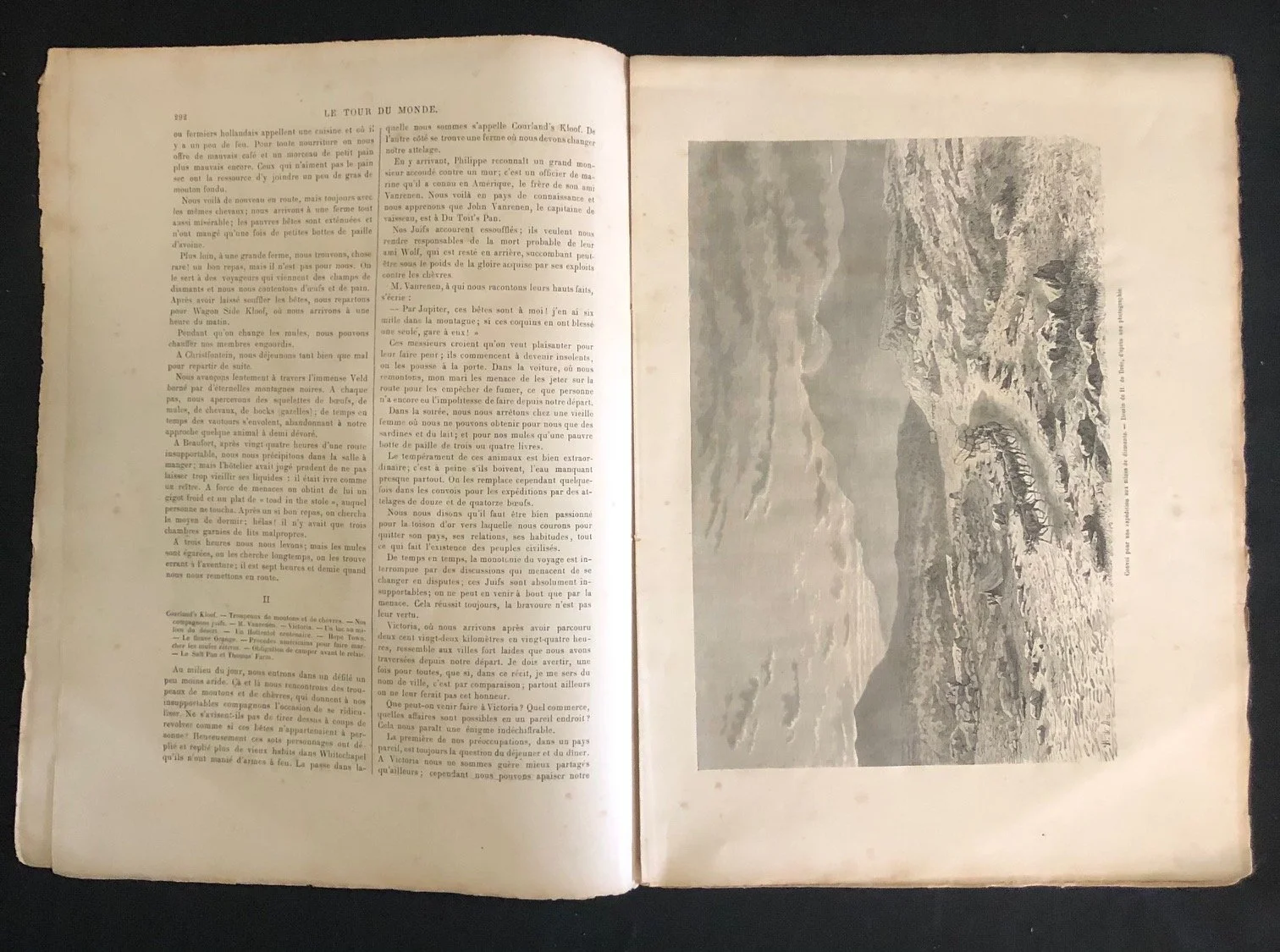
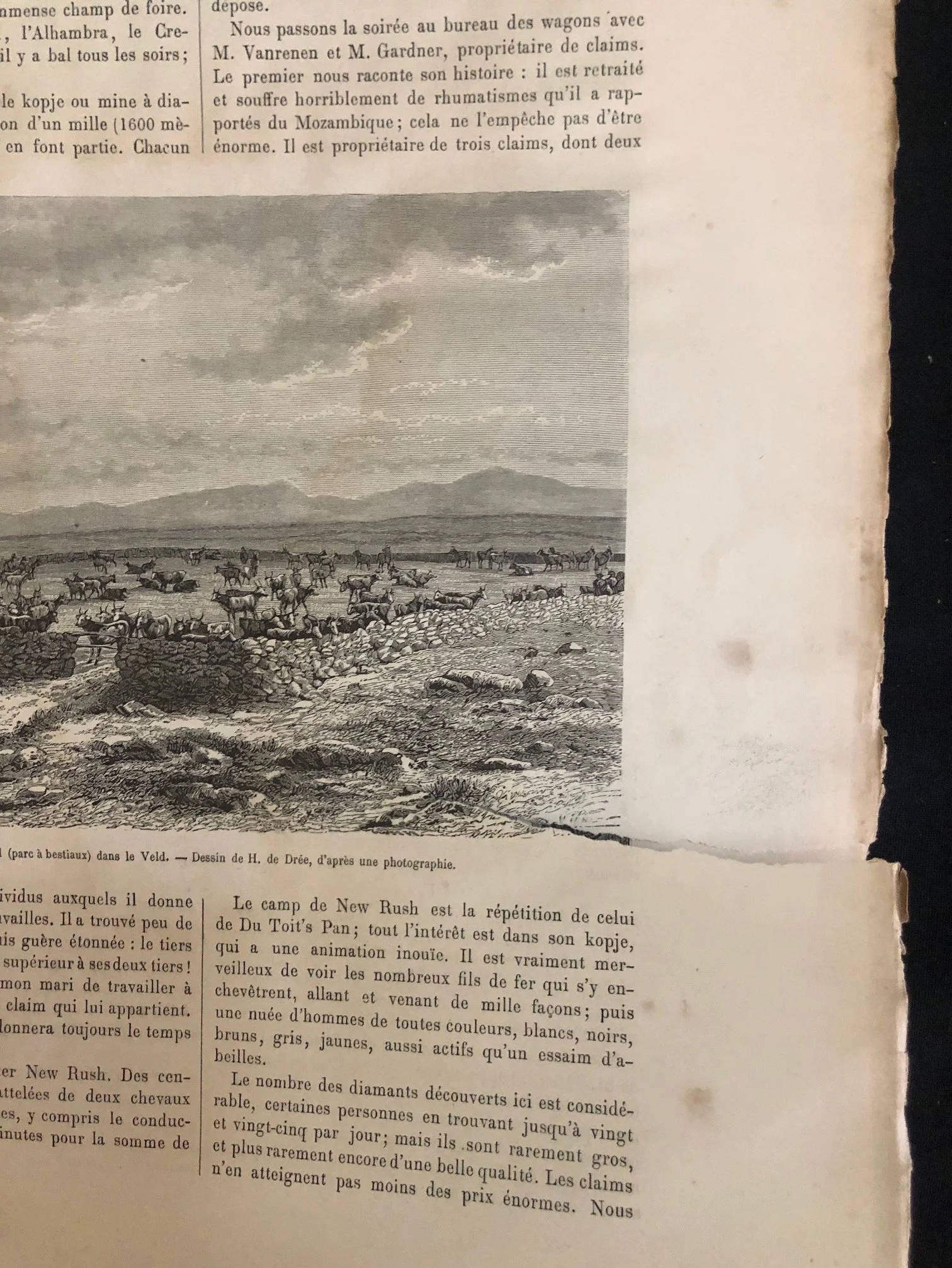
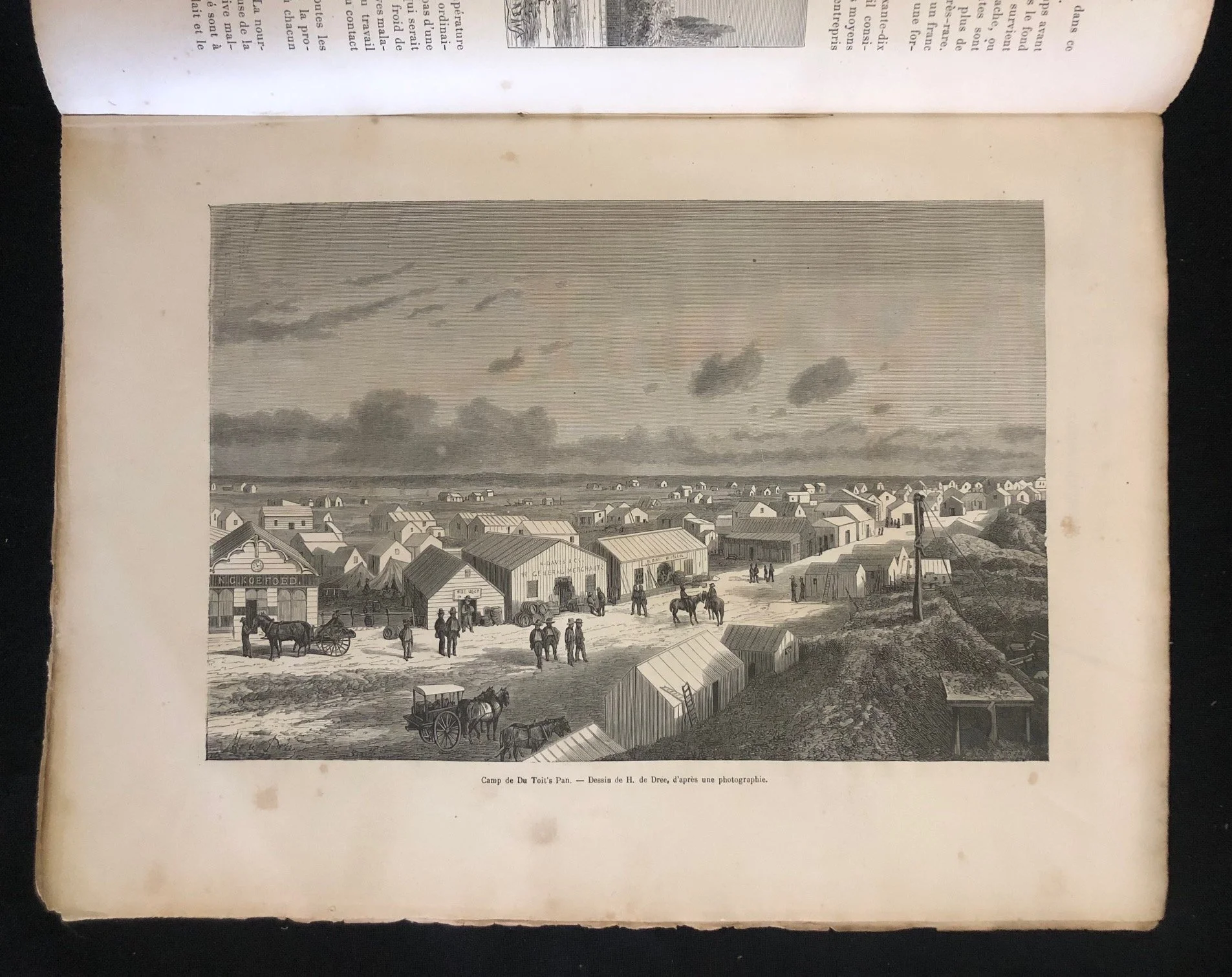
This is a complete article from page 289 to 336; with 47 pages in total; and 25 woodblock prints and 1 map.
By Madame P. (Possibly Madame P. MacPatrickson)
These pages come from Le Tour du Monde, a famous 19th-century French travel journal edited by Édouard Charton. This specific account, titled "Voyage aux Mines de Diamants dans le Sud de l'Afrique" (Voyage to the Diamond Mines in South Africa), was written by a woman identifying herself only as Madame P.
Historically, this text is a remarkable primary source. It captures South Africa at an absolute turning point in its history: the transition from a quiet, agrarian colony to the industrial, diamond-fueled economic powerhouse of the late 19th century.
A Rare Female Perspective on the Early Diamond Rush
The title page explicitly notes the author is Madame P., who arrived in Cape Town on June 17, 1872. This places her trip right at the explosive beginning of the New Rush (Kimberley). While thousands of men rushed to Griqualand West to find their fortunes, accounts from women—especially foreign women traveling with their husbands—are incredibly rare. Her perspective provides a unique, highly descriptive look at the social domesticity, terrible smells, and chaotic travel arrangements of the era.
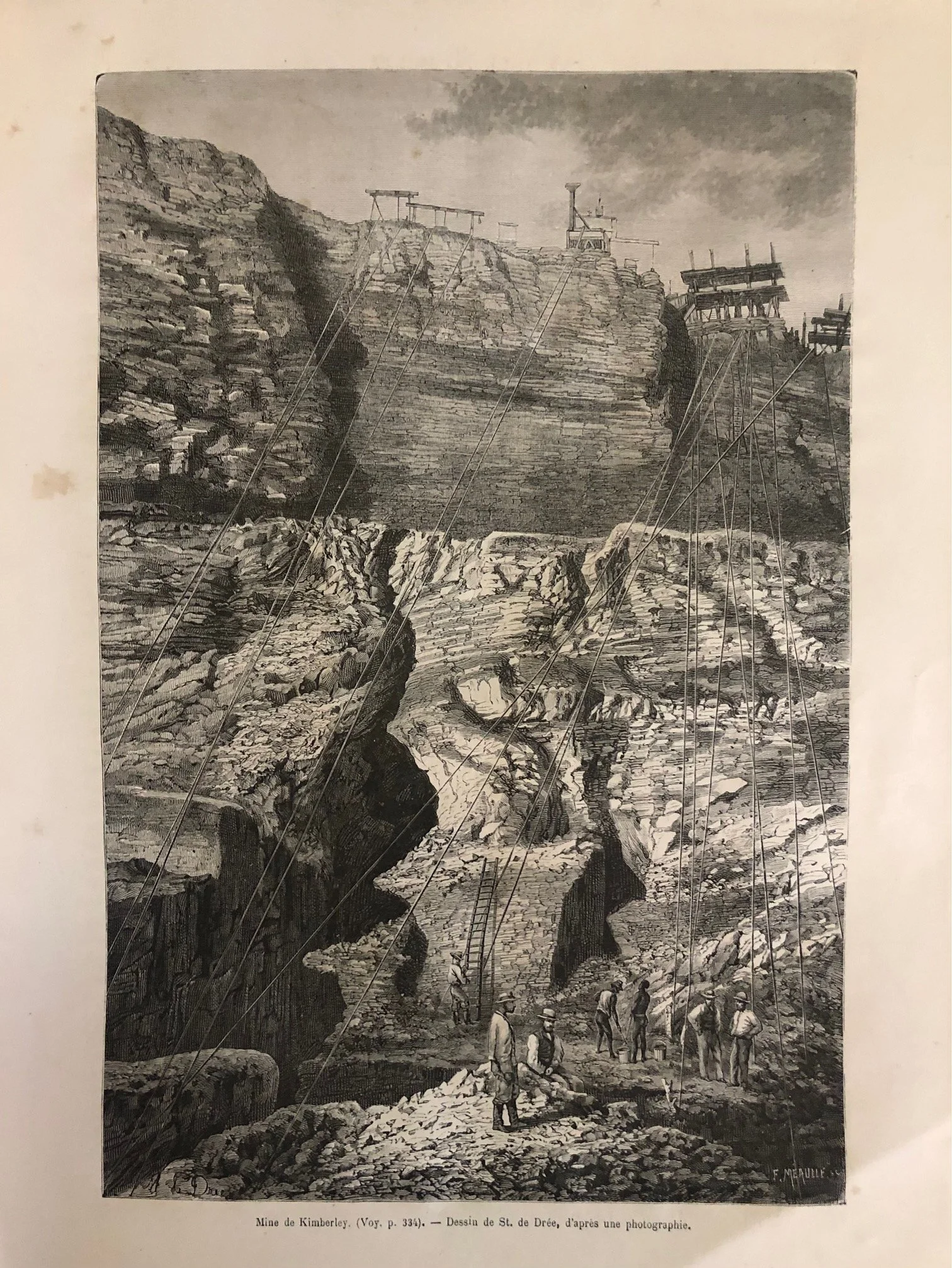
The Great Kimberley Mine Before the "Big Hole" Was Big
The engraving shows the Kimberley Mine in its infancy, circa 1872–1877.
Notice the labyrinth of aerial ropeways and cables stretching down into the chasm.
At this specific point in history, individual miners (or small syndicates) still worked tiny, separate rectangular "claims" right next to each other. Because they were digging down at different speeds, the mine became a terrifying honeycomb of high earthen roadways and deep pits.
Within a few years of this engraving being made, these roadways collapsed entirely, forcing the chaotic open-pit mining that eventually created the famous, single massive crater known as the "Big Hole."
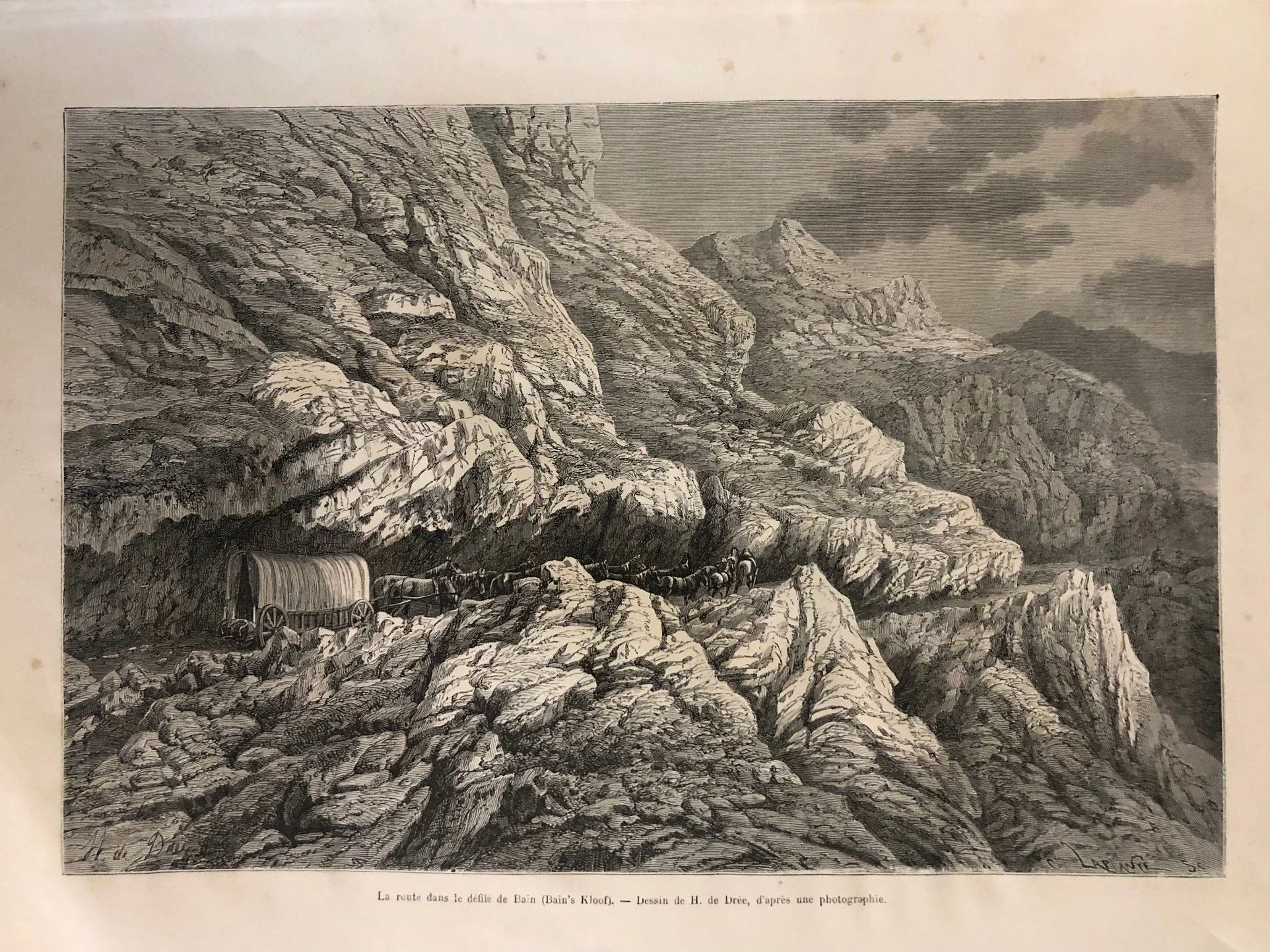
Andrew Geddes Bain’s Engineering Marvel
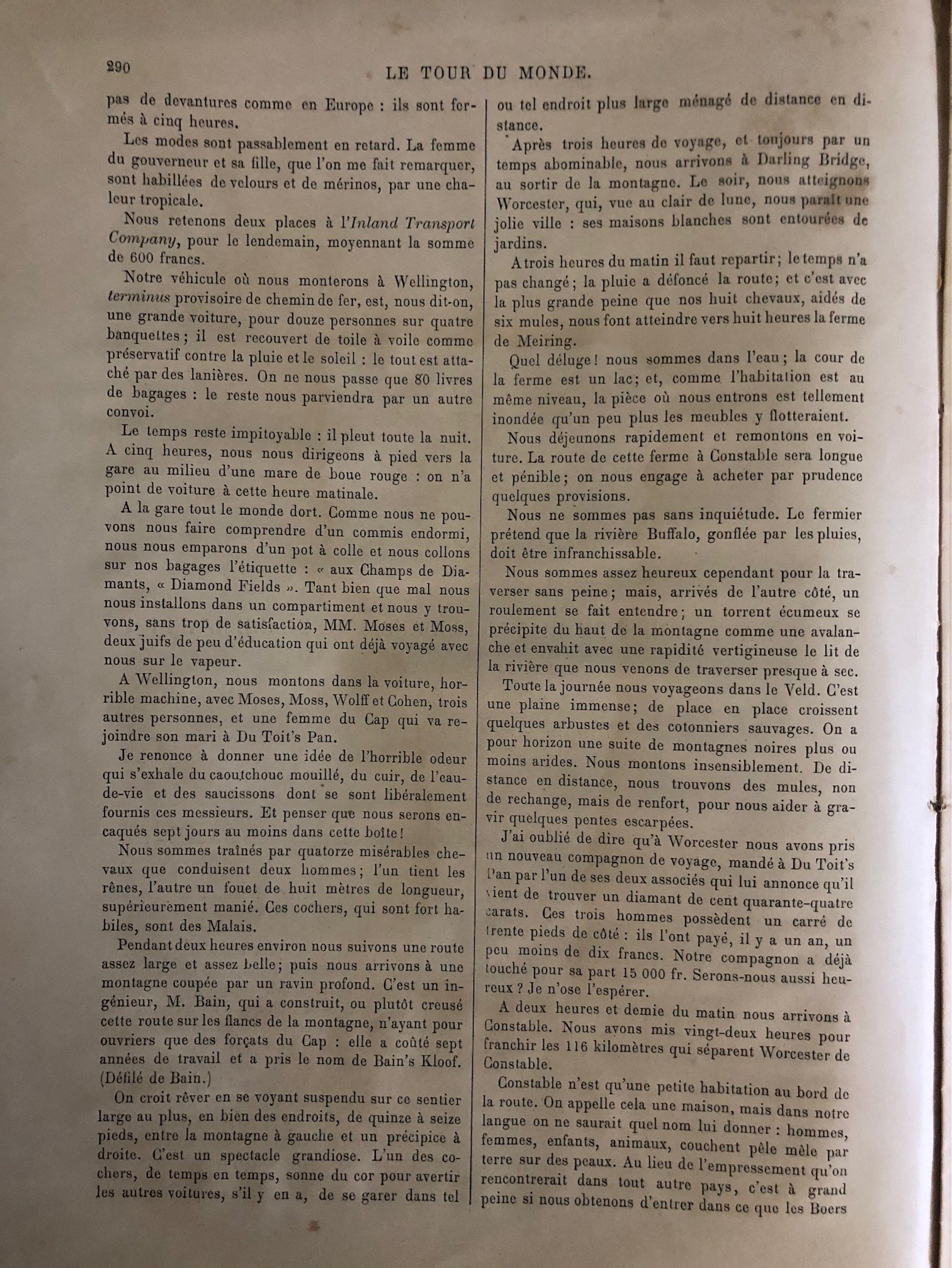
On the text page and accompanying engraving Madame P. describes traveling through Bain's Kloof Pass (Défilé de Bain).
She explicitly mentions the engineer, M. Bain, noting that it took seven years of labor using convict forces (forçats du Cap) to hack the road out of the mountain face.
This pass had only been opened roughly two decades prior (1853). For a traveler in 1872 heading north to the diamond fields, Bain's Kloof was a vital, terrifying, and awe-inspiring engineering marvel that opened up the interior of the Western Cape. Her text describes the wagon hanging over a 15-to-16-foot precipice while the driver sounds a horn to warn oncoming traffic.
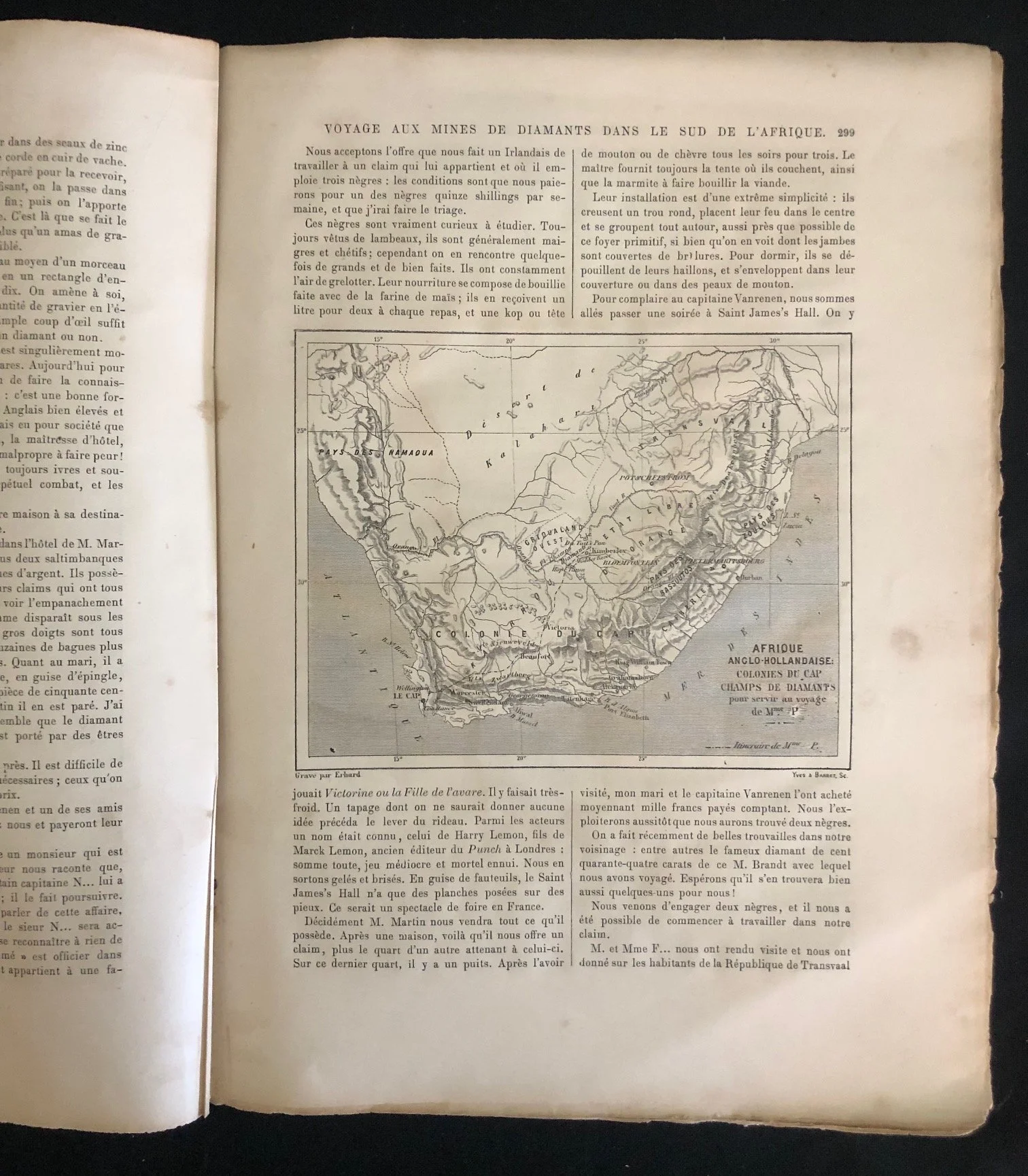
A Snapshot of Cartographic Confusion
The map featured is an excellent window into late-19th-century European geography. It labels the region broadly as Afrique Anglo-Hollandaise (Anglo-Dutch Africa) and meticulously traces Madame P.'s route from Cape Town up to the Champs de Diamants (Diamond Fields) in Griqualand West. The map captures a highly contested territory just before the British officially annexed the diamond fields, highlighting the shifting, unstable borders between the Cape Colony, the Boer Republics, and independent indigenous territories.
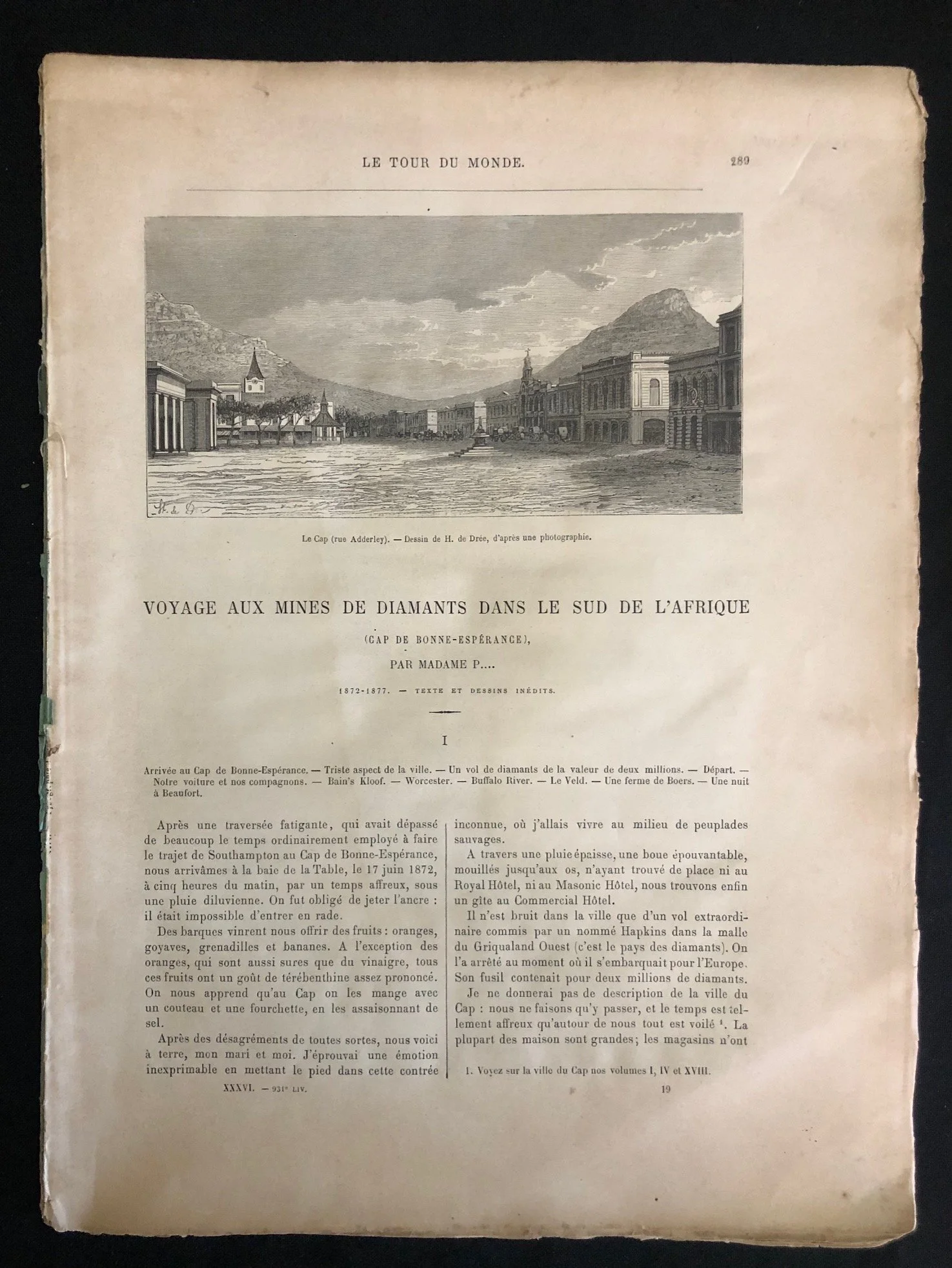
The Raw Realities of Travel: Adderley Street to the Veld
The engraving shows a pristine, orderly Adderley Street (rue Adderley) in Cape Town with Table Mountain in the background. However, the text immediately contrasts this beauty with the grim reality of the journey inland. Madame P. complains bitterly about the relentless rain, the mud, the horrific smell of wet rubber, leather, and cheap sausages inside the Inland Transport Company carriage, and the "miserable" teams of 14 horses and mules required to pull them across the flooded rivers of the Karoo.
It is a vivid testament to how grueling it was to reach Kimberley before the railway line was fully extended.
Page 295 torn but without loss; mellowed; some thumb marks; edge discolouration etc.
235mm x 325mm
R3,500