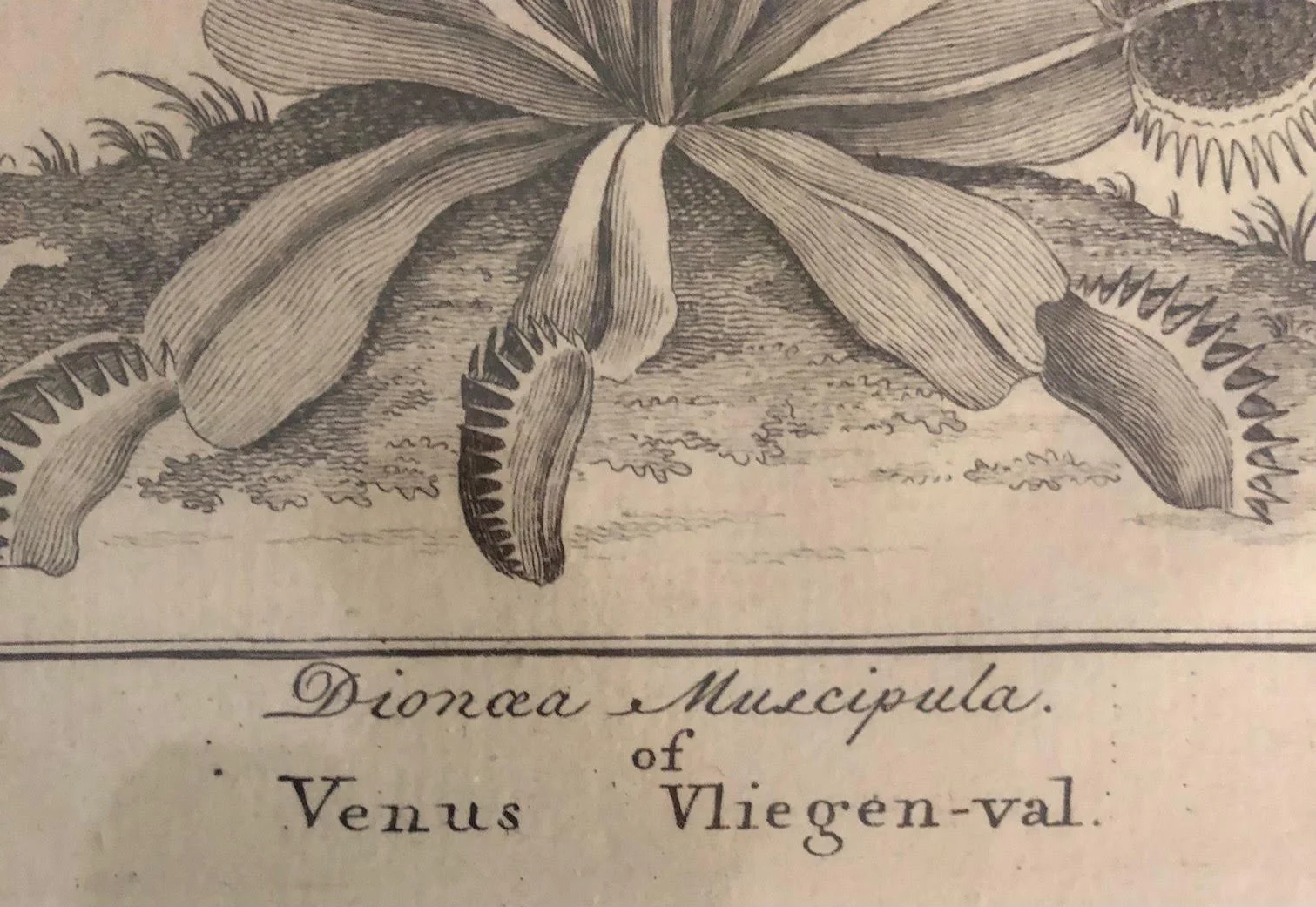
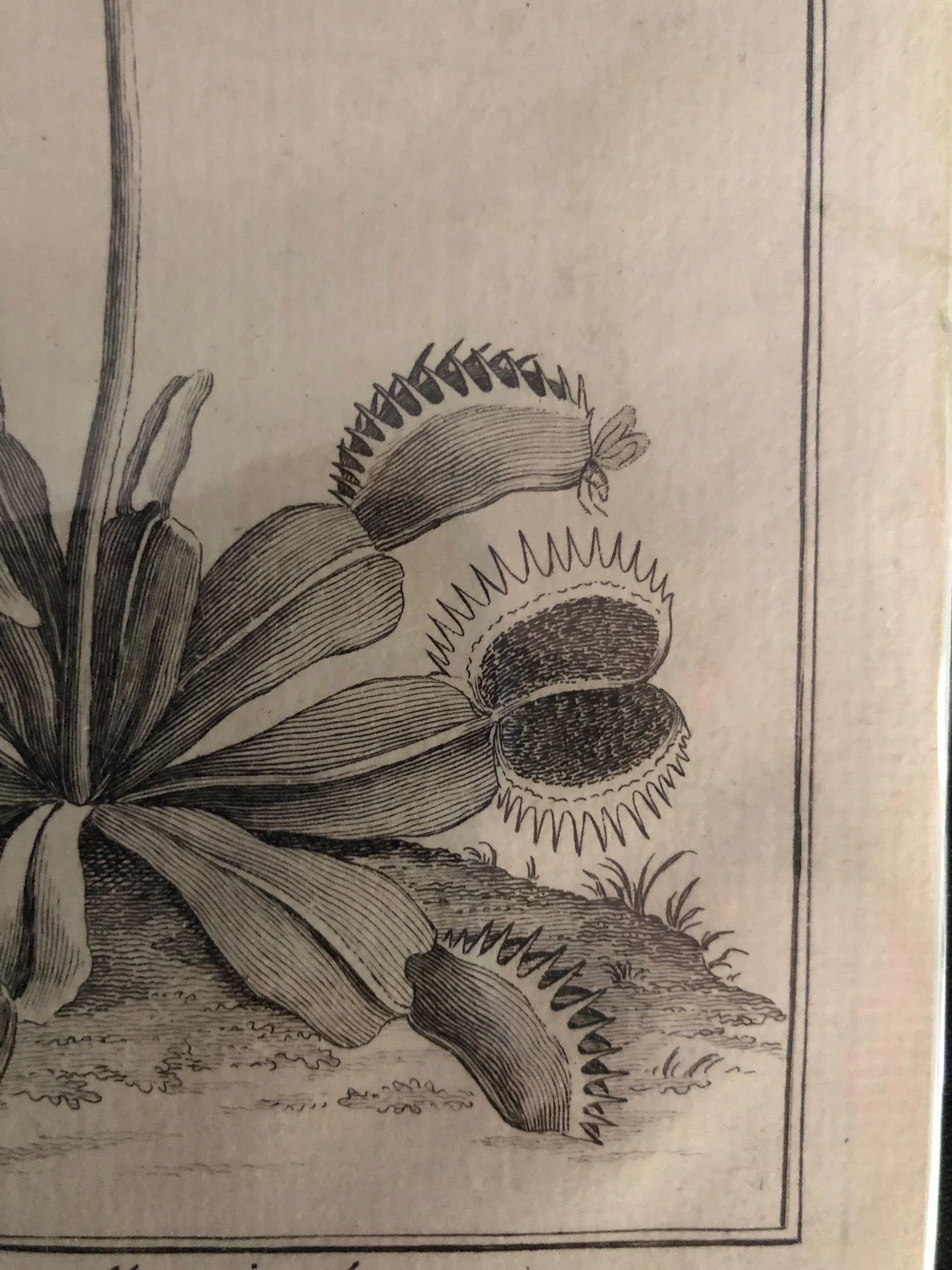
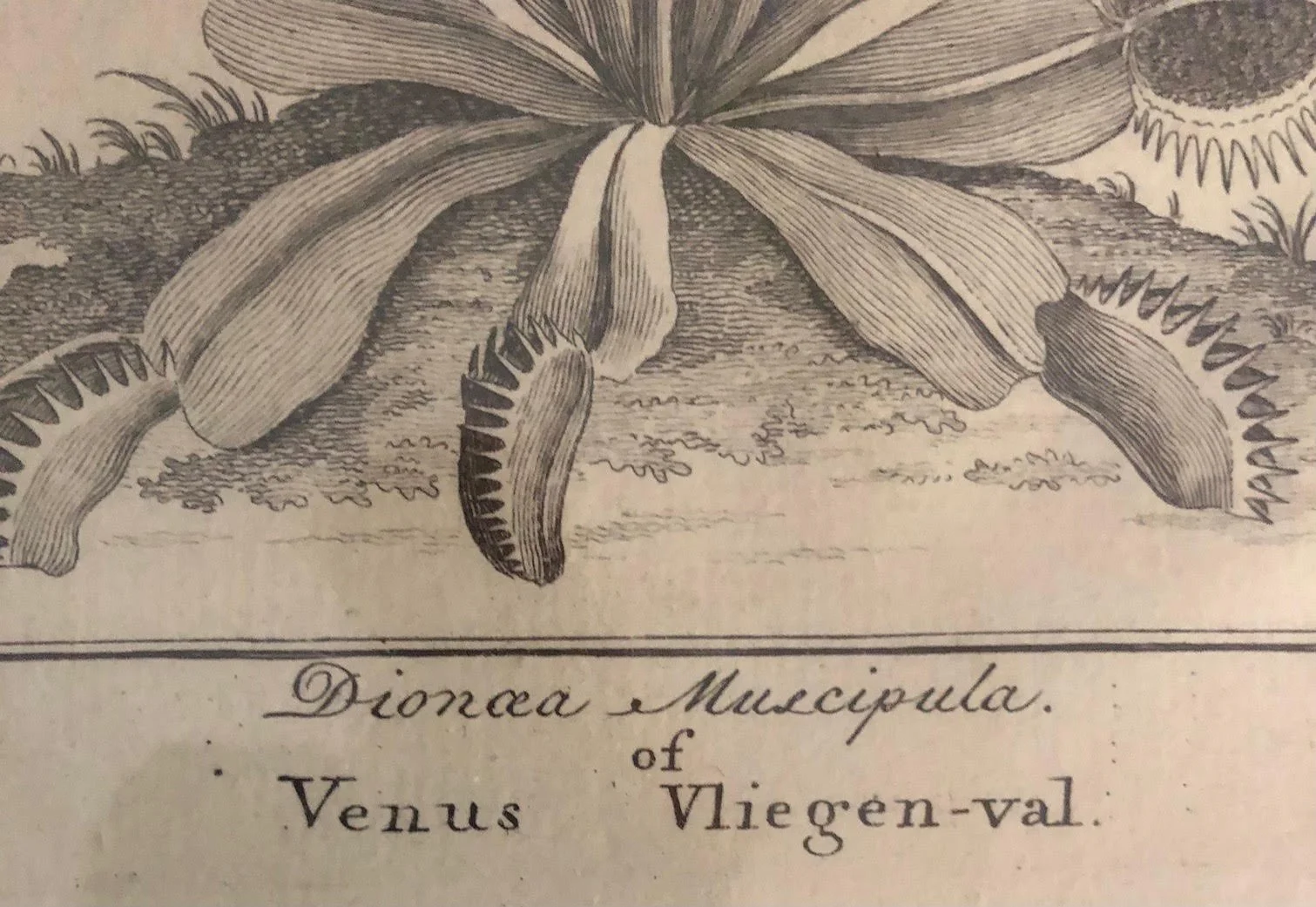
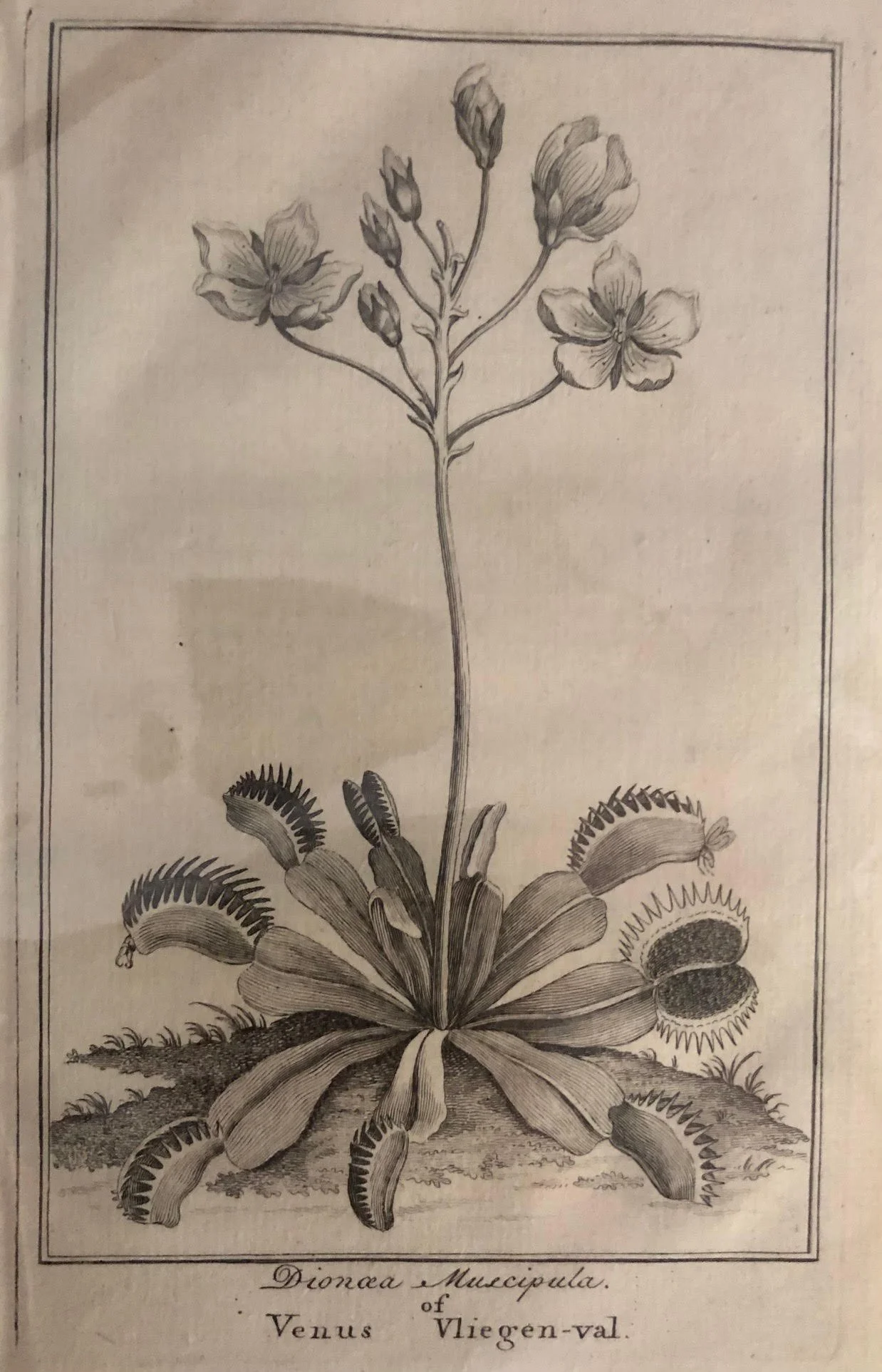
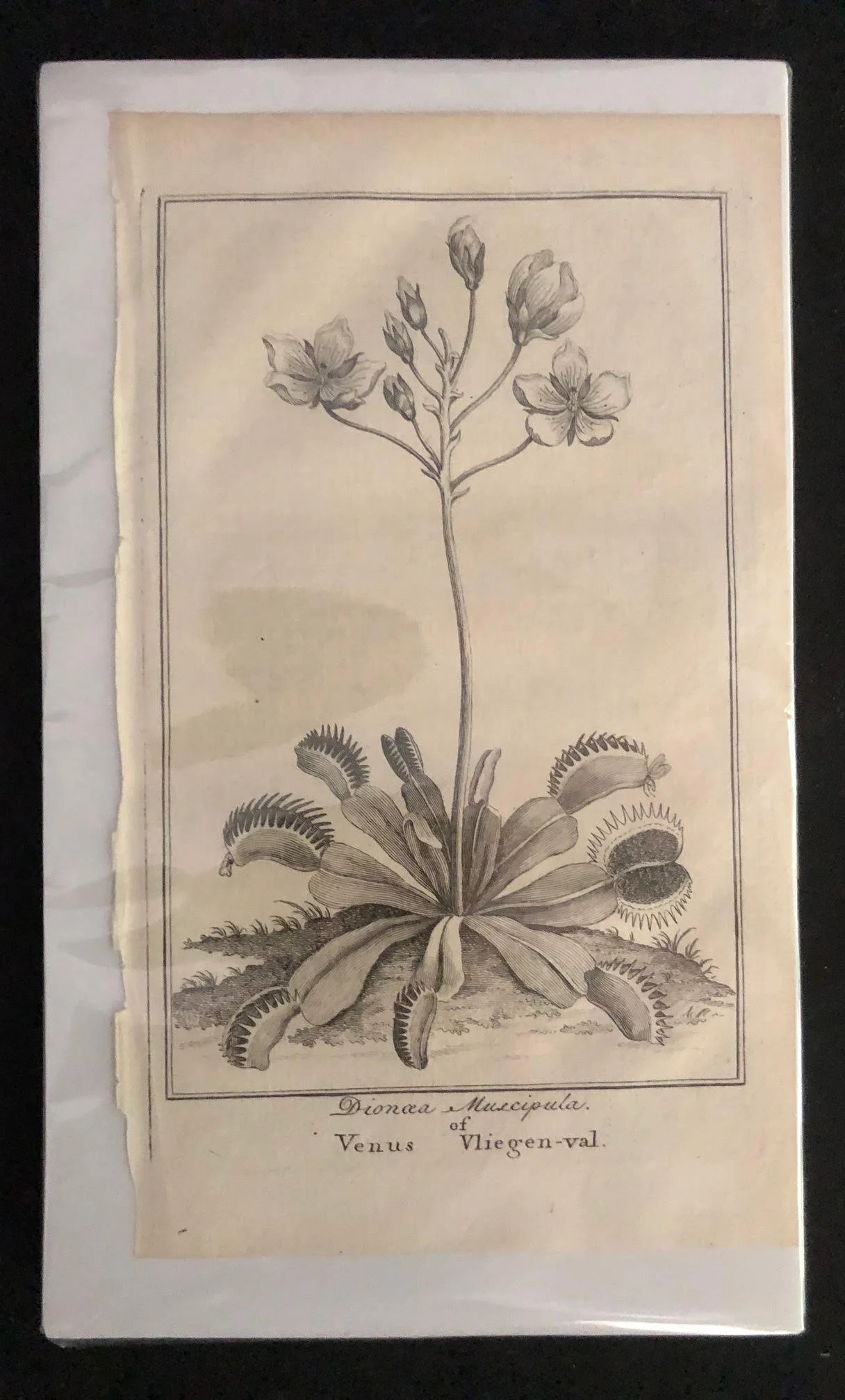
Copperplate engraving of a Venus Flytrap. 1770
This print is an 18th-century Dutch translation engraving derived directly from James Roberts’ famous 1770 plate, commissioned by the British naturalist John Ellis. Ellis published the first formal botanical description and scientific illustration of the Venus Flytrap in his 1770 treatise, Directions for Bringing Over Seeds and Plants from the East-Indies… To Which is Added, The Figure and Botanical Description of a new Sensitive Plant, called Dionaea Muscipula. The Dutch quickly published translated editions of Ellis's pioneering work, re-engraving Roberts' original artwork with Dutch nomenclature (Vliegen-val).
2. The Plant That Terrified Carl Linnaeus & Sparked Scientific Feuds
When John Ellis sent a specimen and an impression of this exact illustration to Carl Linnaeus (the father of modern taxonomy) in 1768–1769, Linnaeus refused to believe the plant was genuinely carnivorous:
The "Accidental Death" Theory: Linnaeus argued that God would not allow a plant to intentionally murder living creatures. He insisted the trap closed only by accident when an insect crawled across it, and that once the insect stopped moving, the plant would release it unharmed.
Ellis's Vindication: Ellis explicitly highlighted the trigger hairs on the lobes (visible along the inner margins in this print) and argued that the plant was actively capturing, trapping, and digesting insects for nourishment. Ellis proved correct, marking a major turning point in plant physiology.
105mm x 165mm (The size of the double line border).
Edge of page torn, not affecting the engraving.
R1,200