"East India Post Card" (The "Delhi-to-Ludhiana" Route) 1892
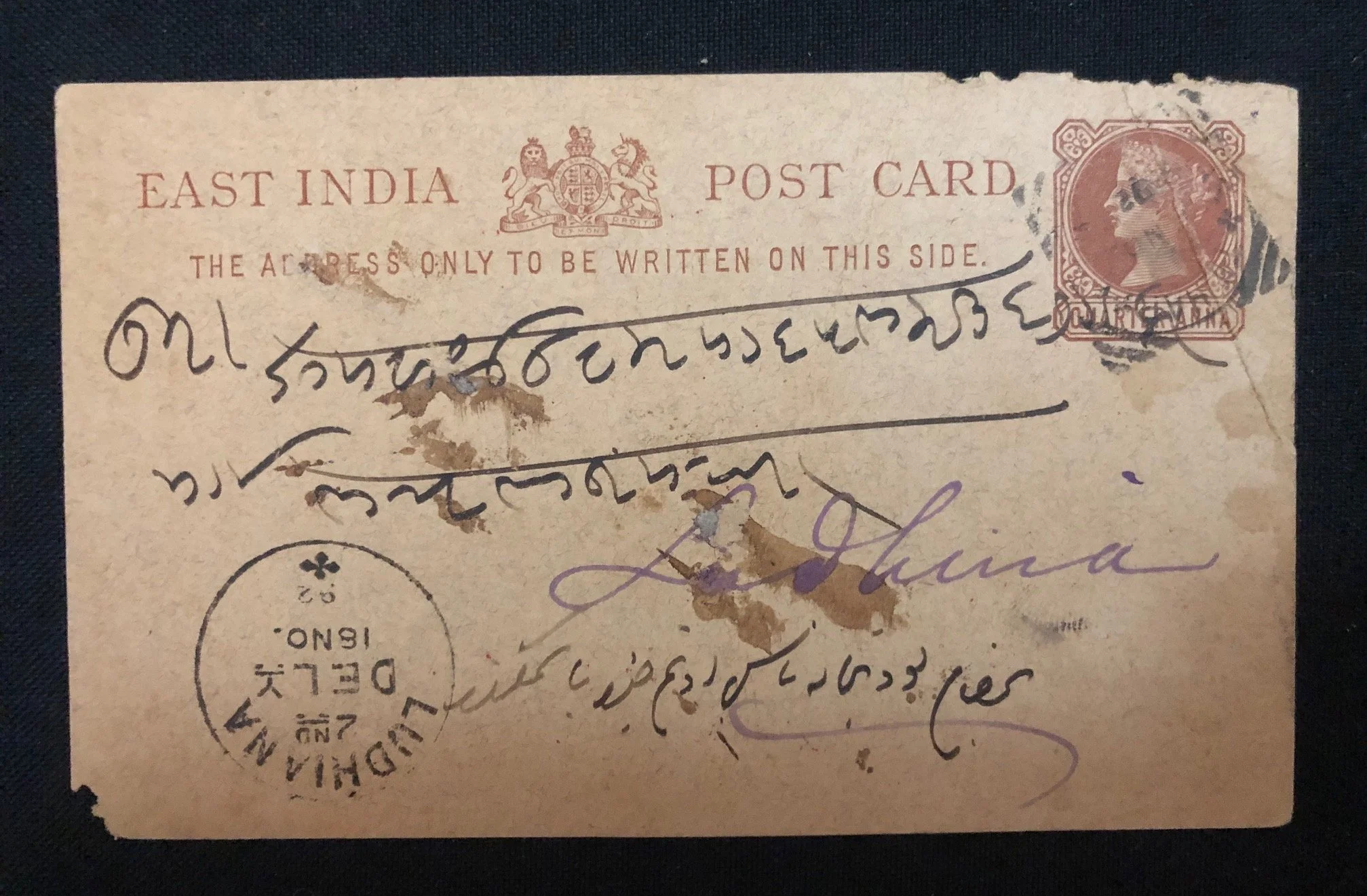
This is a fascinating artifact of colonial-era postal history. What makes this specific "East India Post Card" remarkable isn't just its age, but what it reveals about the complex intersection of global trade, early philatelic marketing, and the multi-linguistic reality of 19th-century British India.
The Postmark Timeline (The "Delhi-to-Ludhiana" Route)
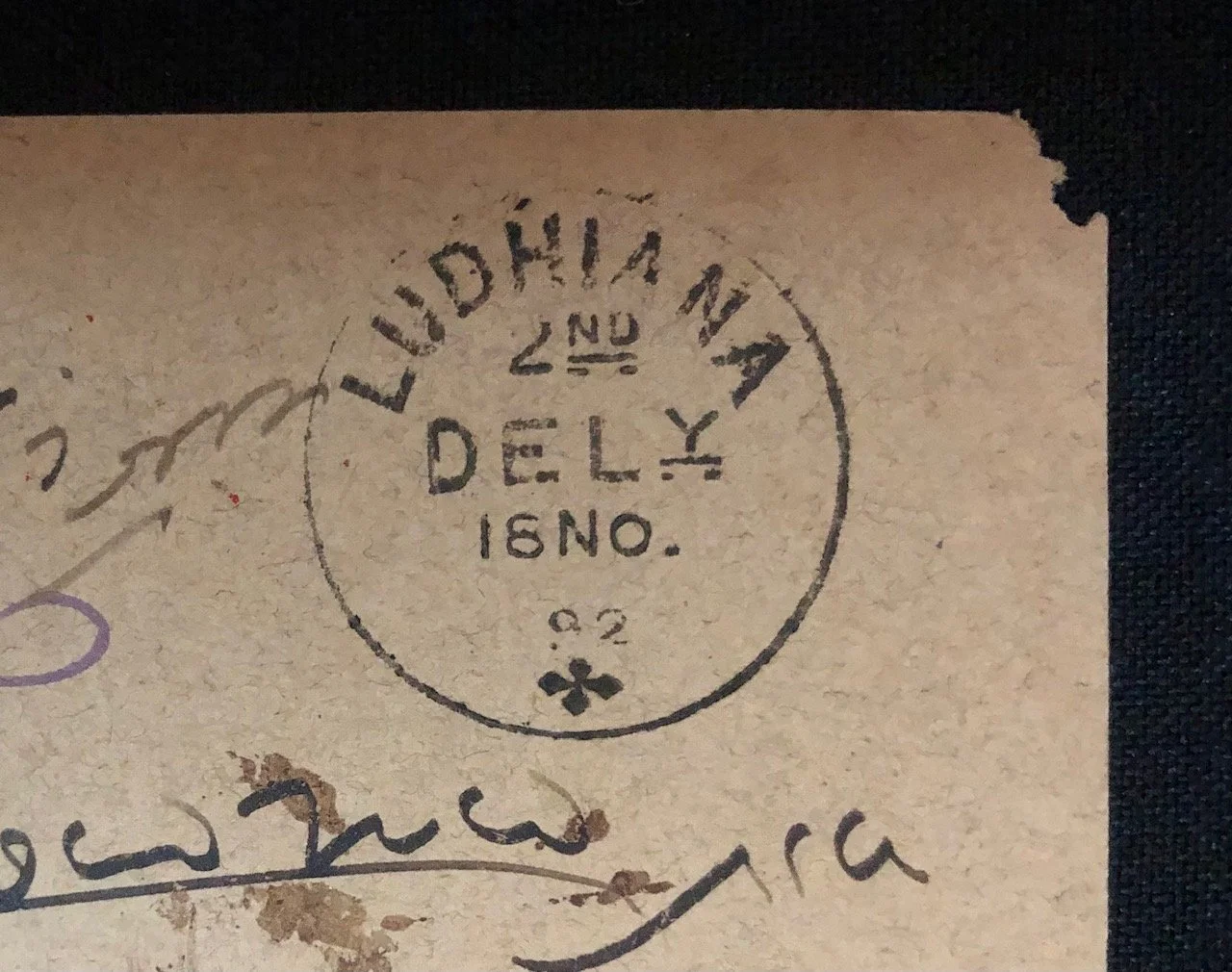
The circular postmark traces a rapid transit route through the Punjab region in late 1892.
The top of the stamp shows 16 NO. 92 (November 16, 1892) next to DELHI. The bottom curve shows it arrived in LUDHIANA just one day later, on 17 NO.
At this time, the British Raj had heavily invested in the expansion of the North Western Railway. A next-day delivery between Delhi and Ludhiana (a distance of roughly 300 km) highlights just how efficient the Indian Postal Service's rail-mail network had become by the late 19th century.
A Linguistic Crossroads
The front showcases a striking mix of the cultures operating under the Raj:
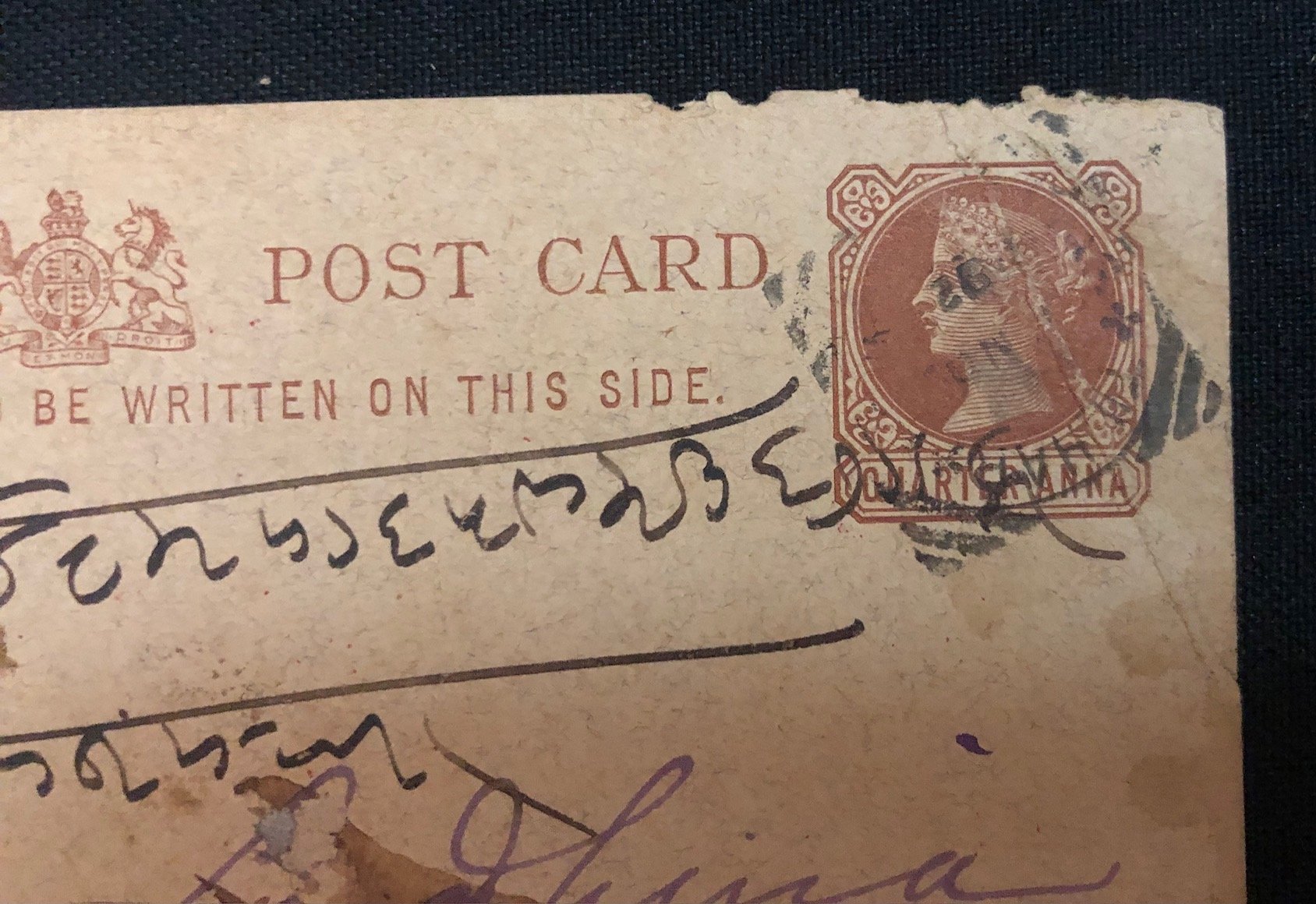
The Official British Imprint: The pre-printed text features the British Royal Coat of Arms and a "Quarter Anna" stamp depicting a young Queen Victoria.
The Indigenous Scripts: The card features multiple handwriting styles. The main address is written in a sweeping, stylized regional script (likely a variant of Mahajani or a north-Indian mercantile script frequently used by traders). Meanwhile, at the bottom right, there is a distinct line of elegant Urdu/Persian Nastaliq script, and a later annotation in purple ink using Western cursive.
Early Philatelic "Spam" and the Imperial Stamp Co.
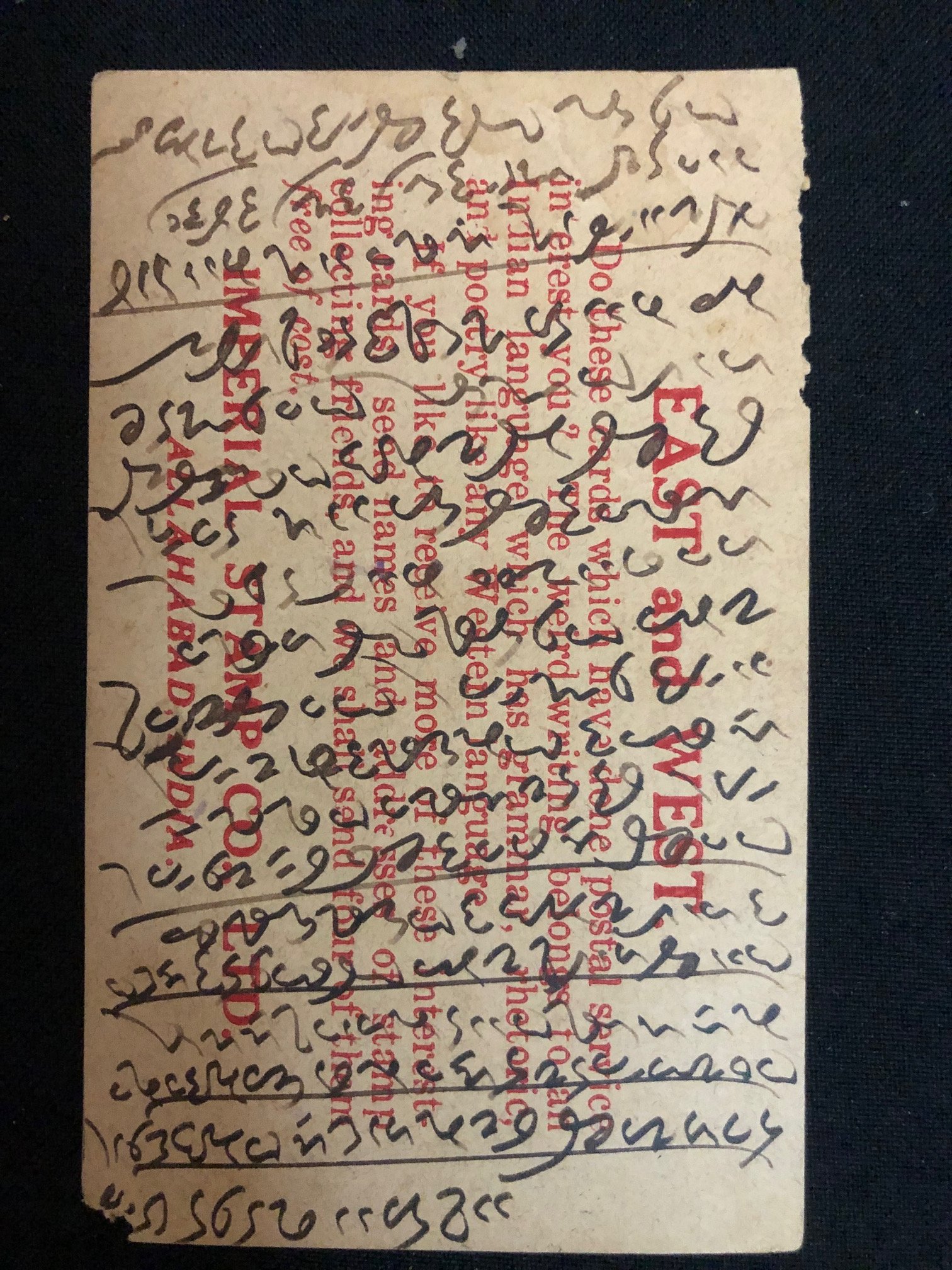
The reverse side reveals a brilliant, early example of direct-mail marketing aimed at global stamp collectors. Underneath the handwritten message, there is a red, pre-printed advertisement from the "Imperial Stamp Co., Allahabad, India" titled "EAST AND WEST."
The advertisement reads like a 19th-century version of a promotional email:
"Do these cards which have done postal service interest you? The weird writing belongs to an Indian language which has grammar, rhetoric and poetry like any Western language. If you would like to receive more of these interesting cards, send names and addresses of stamp collecting friends, and we shall send them to them free of cost."
The Imperial Stamp Company was capitalizing on the late-Victorian "Philatelic Boom." By describing the local script as "weird writing" but quickly defending its artistic merit ("has grammar, rhetoric and poetry"), the company was exoticizing the item to appeal to Western collectors' desires for "Oriental curiosities."
They were effectively distributing used postal stationery as collectibles, using a viral marketing tactic—asking recipients to refer friends in exchange for free items.
The Quarter-Anna Revolution
The pre-printed stamp is for "Quarter Anna." Introduced originally in 1879, the quarter-anna postcard was one of the cheapest postal rates in the world at the time. It completely revolutionized communication in India, allowing ordinary citizens, small-scale merchants, and eventually businesses like the Imperial Stamp Co. to send messages across vast distances for a fraction of a day's wages.
120mm x 80mm
Chips to the edges.
R1,000