Avril Herber’s Conversations. (1979). Signed and numbered. R1,000
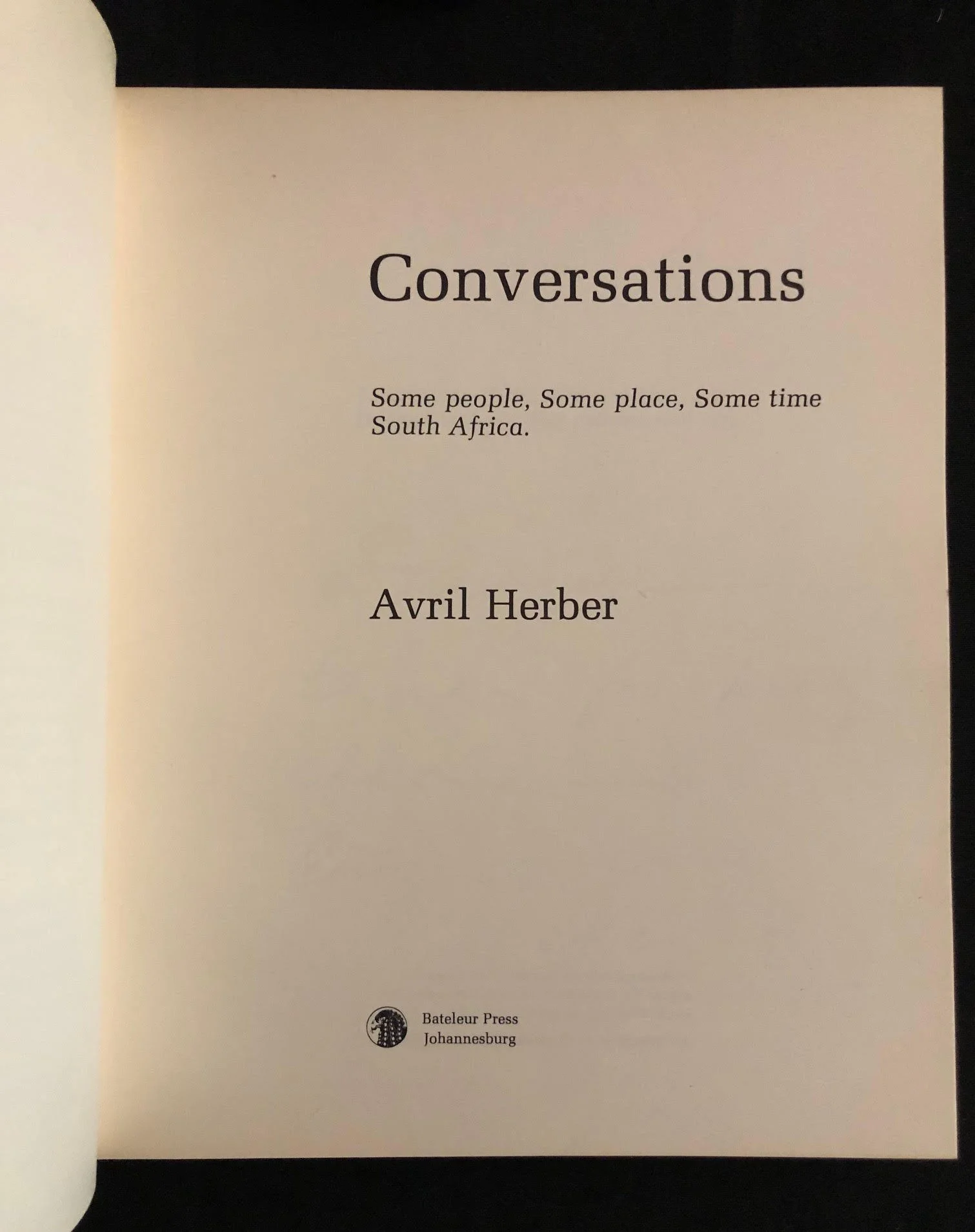
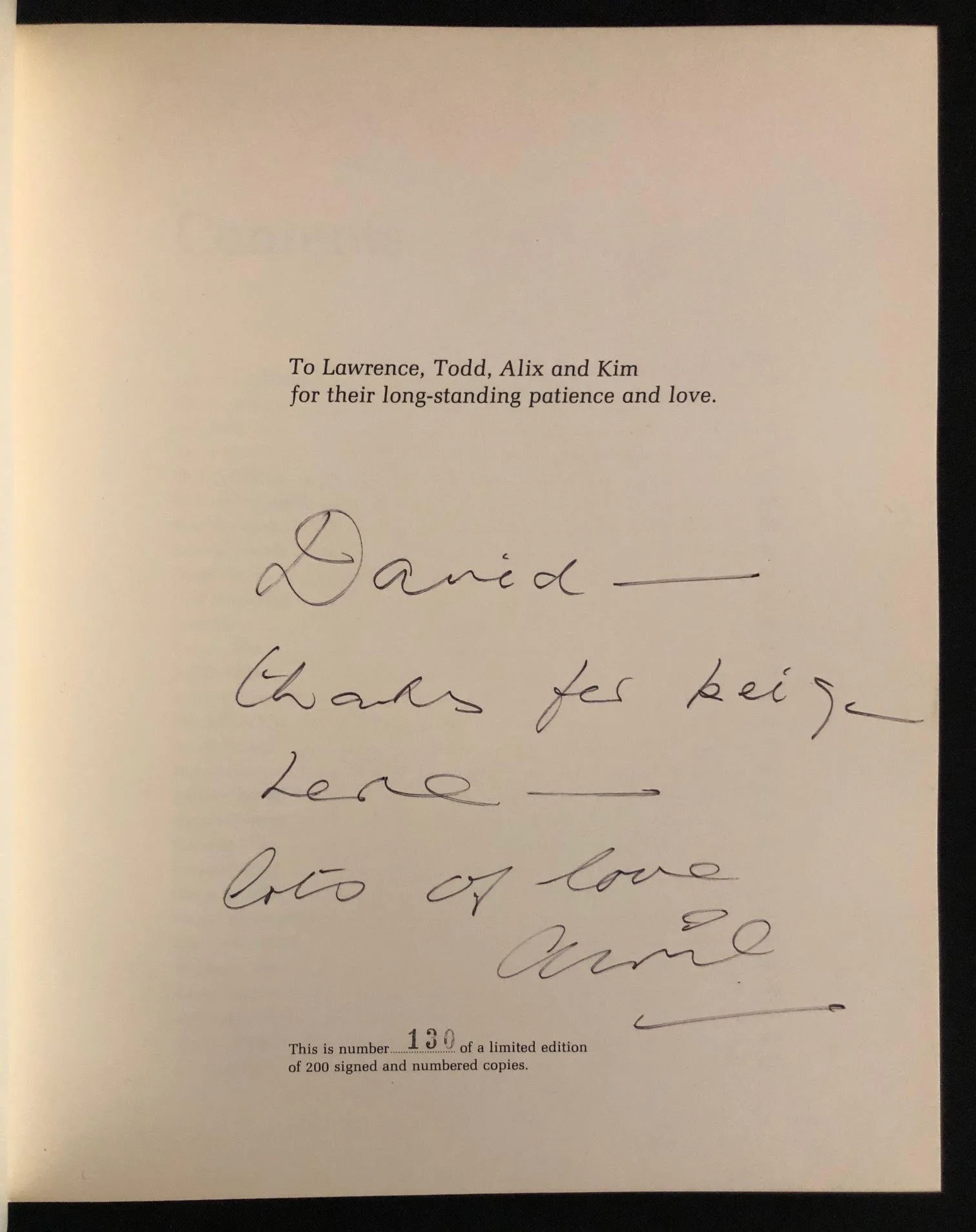
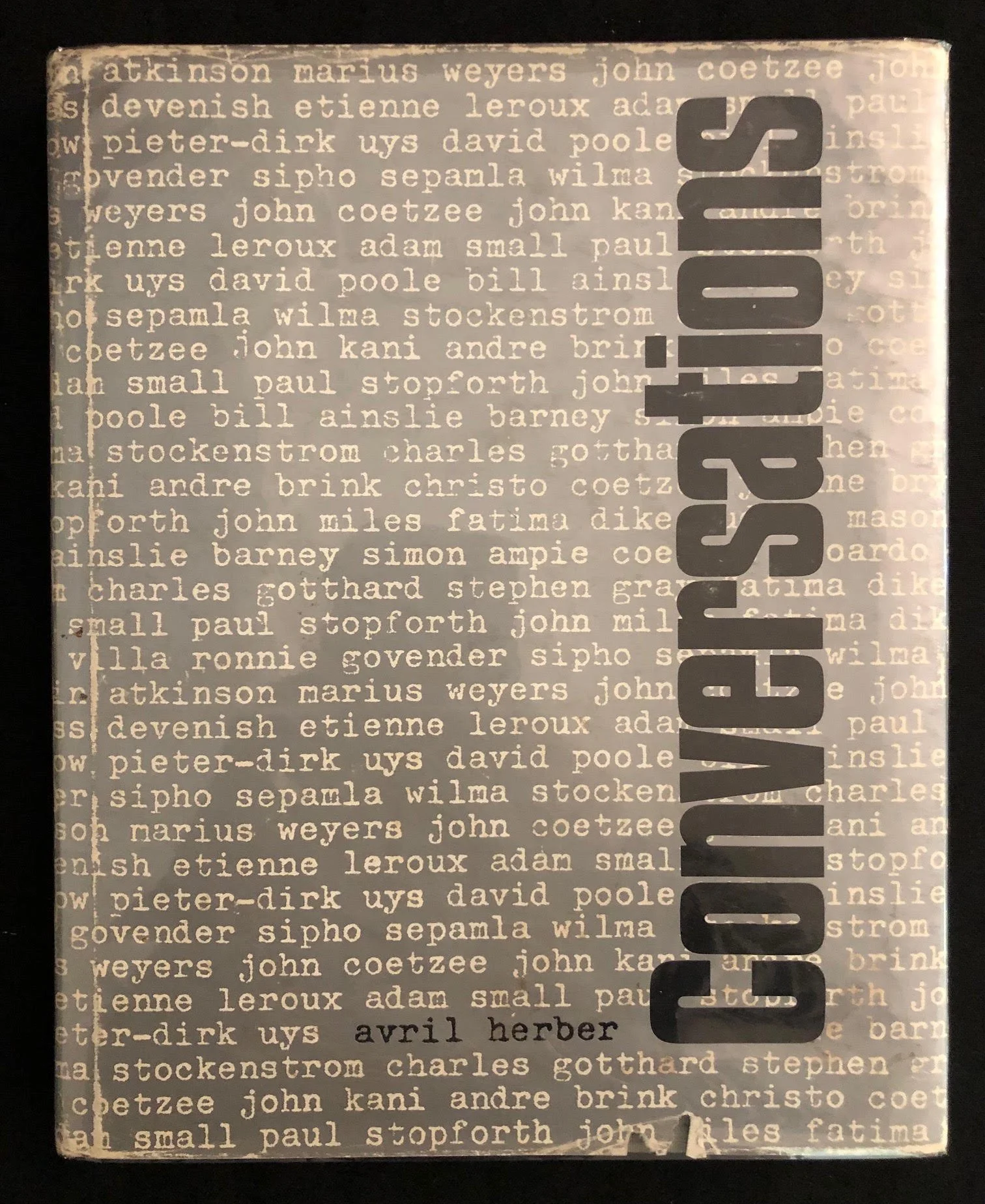
This is probably an association copy of Avril Herber’s Conversations: Some People, Some Place, Some Time South Africa (1979)—number 130 of a limited edition of 200 signed and numbered copies.
1. The possible association: Inscribed to "David" (possibly David Poole)
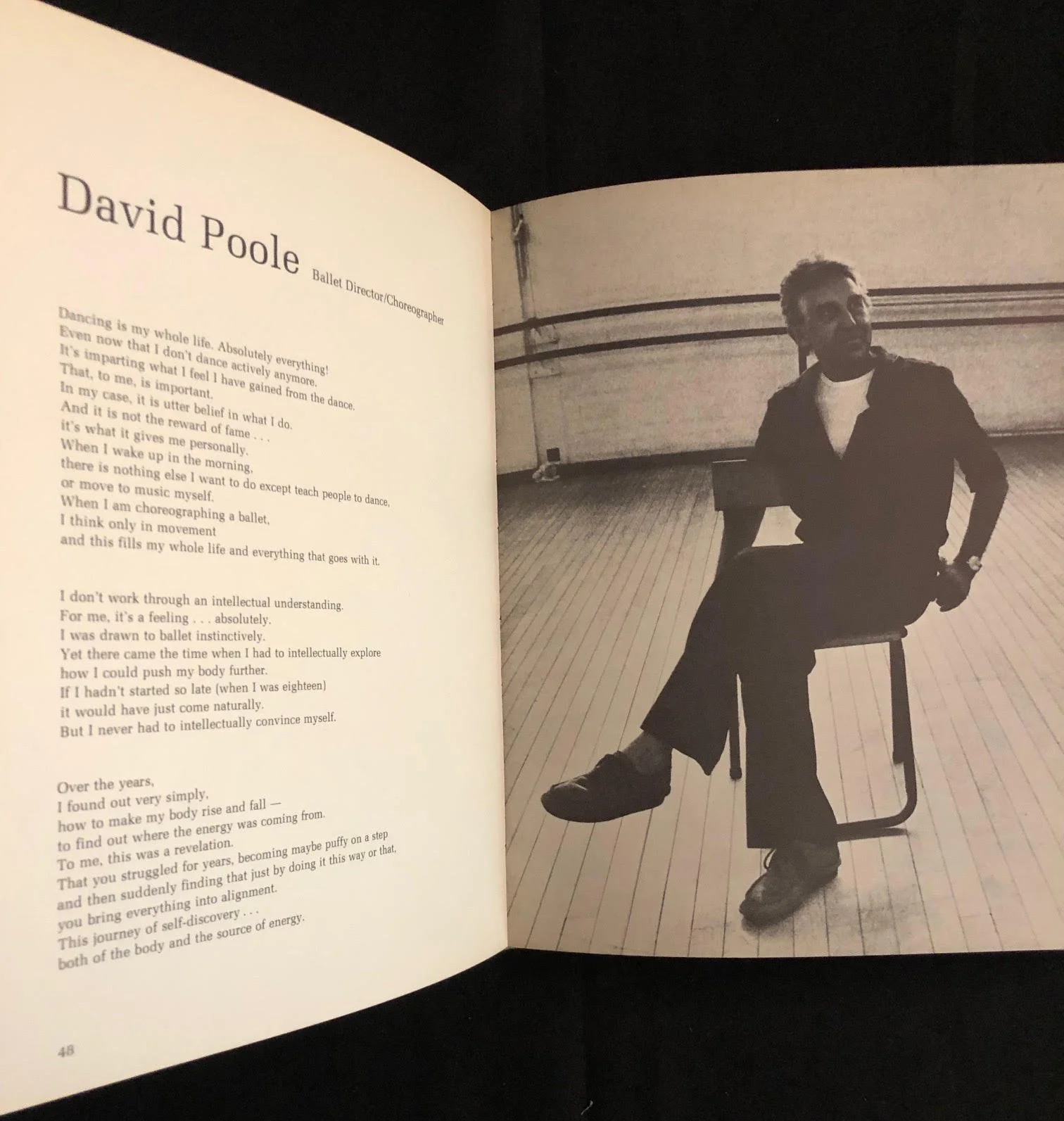
The handwritten inscription on the limitation page reads: "David — Thanks for being here — Lots of love, Avril". Given that one of the book's featured subjects is David Poole (1925–1991)—whose portrait and interview appear on pages 48–49—this copy was almost certainly presented to Poole himself, making it a prime contributor's association copy.
A Trailblazer Under Apartheid: Born in Cape Town in 1925 to a family of mixed race, Poole faced direct discrimination under South Africa's racial laws, prompting him to move to London in 1947 to train and dance with the Sadler's Wells (later Royal) Ballet, where he originated major roles for choreographers like John Cranko and Kenneth MacMillan.
Transforming South African Dance: Returning to South Africa in 1959, Poole became the artistic director of CAPAB Ballet and principal of the UCT Ballet School. Quietly defying the era's rigid segregation, he kept UCT's training open to students across all communities, worked extensively with the Coloured community's Eoan Group, and taught ballet in Cape Town's townships long before the end of apartheid.
2. The Publisher: Bateleur Press (1974–1982)
The book carries the imprint of Bateleur Press, Johannesburg, one of the most important independent anti-censorship presses in South African literary history.
Founded by Literary Giants: Bateleur Press was established in 1974 by poet Patrick Cullinan (who also wrote the introduction to this volume) and Lionel Abrahams—the celebrated Johannesburg poet, critic, and protégé of Herman Charles Bosman.
A Home for Dissident Voices: Alongside presses like Ravan and Ad. Donker, Bateleur Press provided a vital platform for South African writers and artists—including Barney Simon, Mtutuzeli Matshoba, and Christopher Hope—whose work was either ignored by commercial publishers or actively targeted by the Publications Control Board.
3. A Rare Snapshot of 1970s South African Culture—and an Early J.M. Coetzee Interview
Published in 1979, just three years after the Soweto Uprising, Herber’s book captured 27 leading creative figures at a moment of profound political and artistic reckoning.
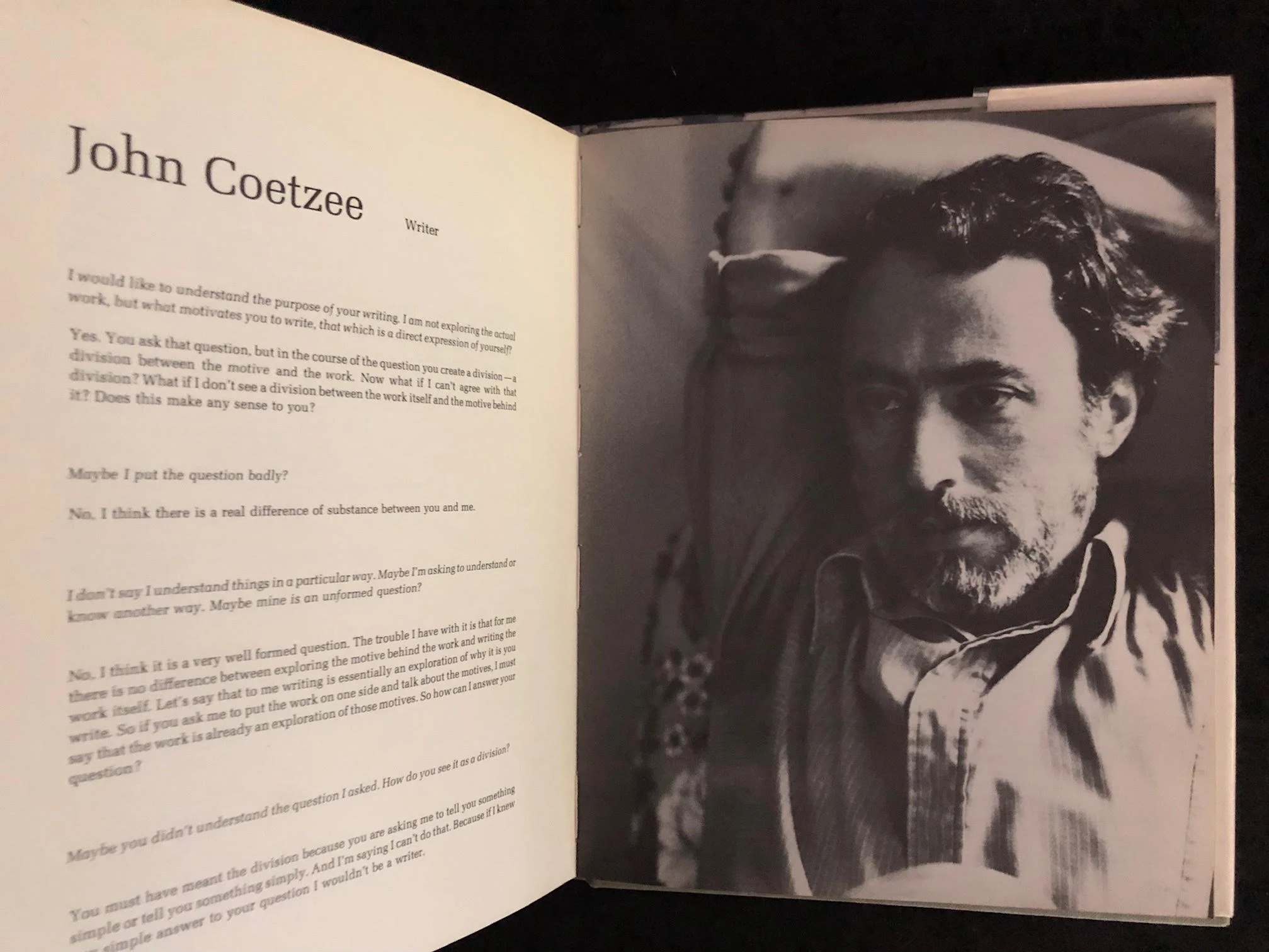
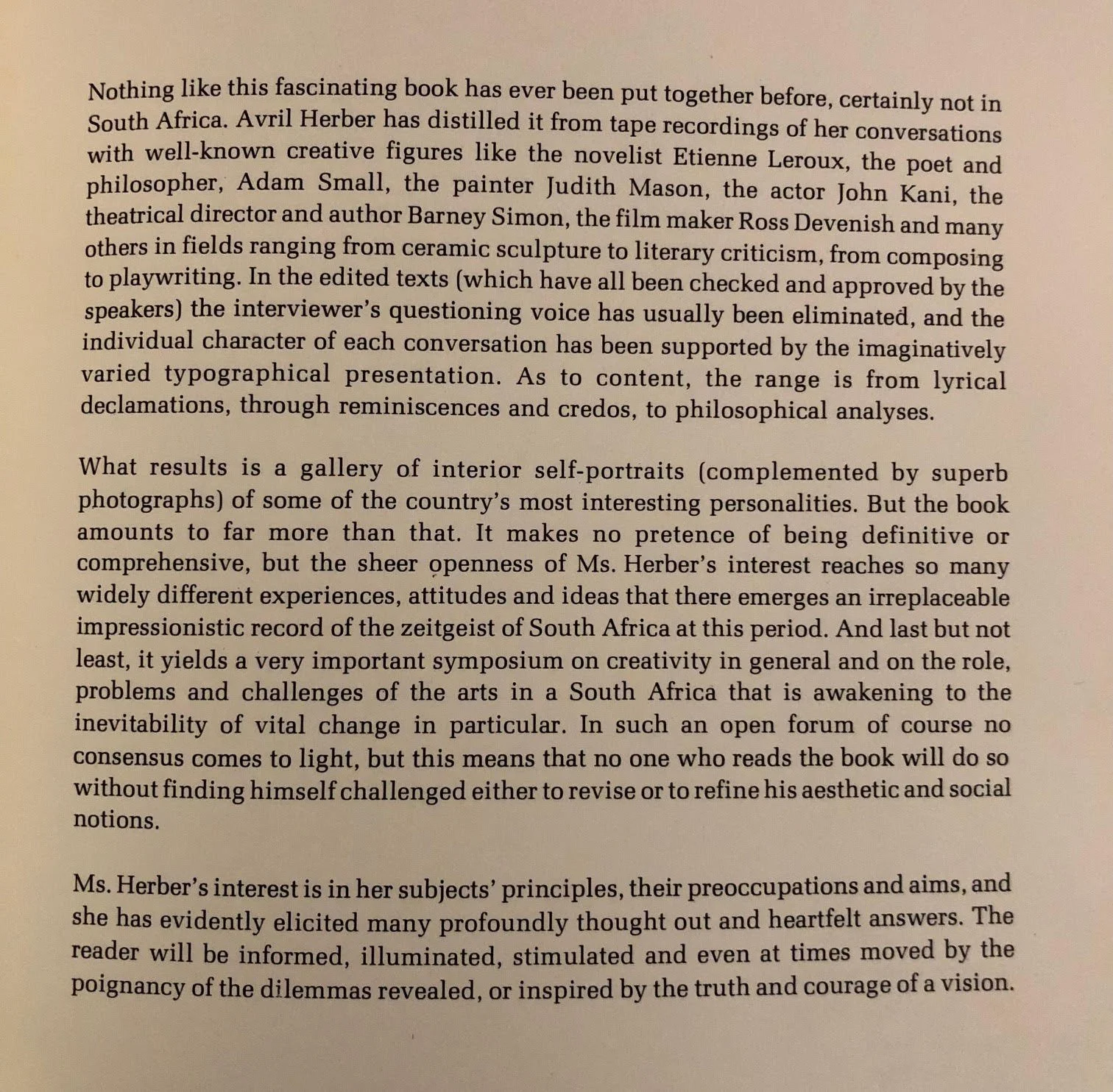
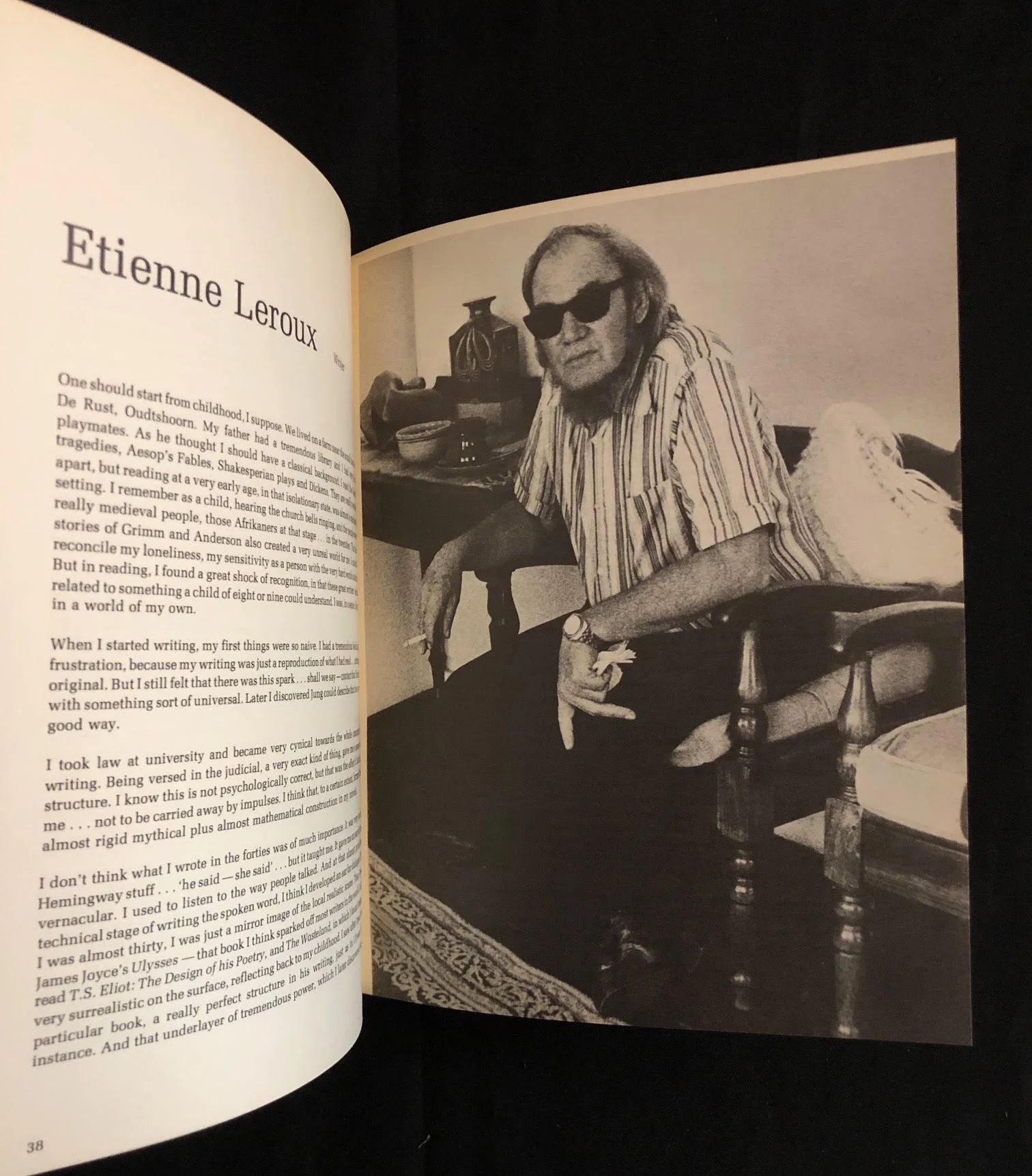
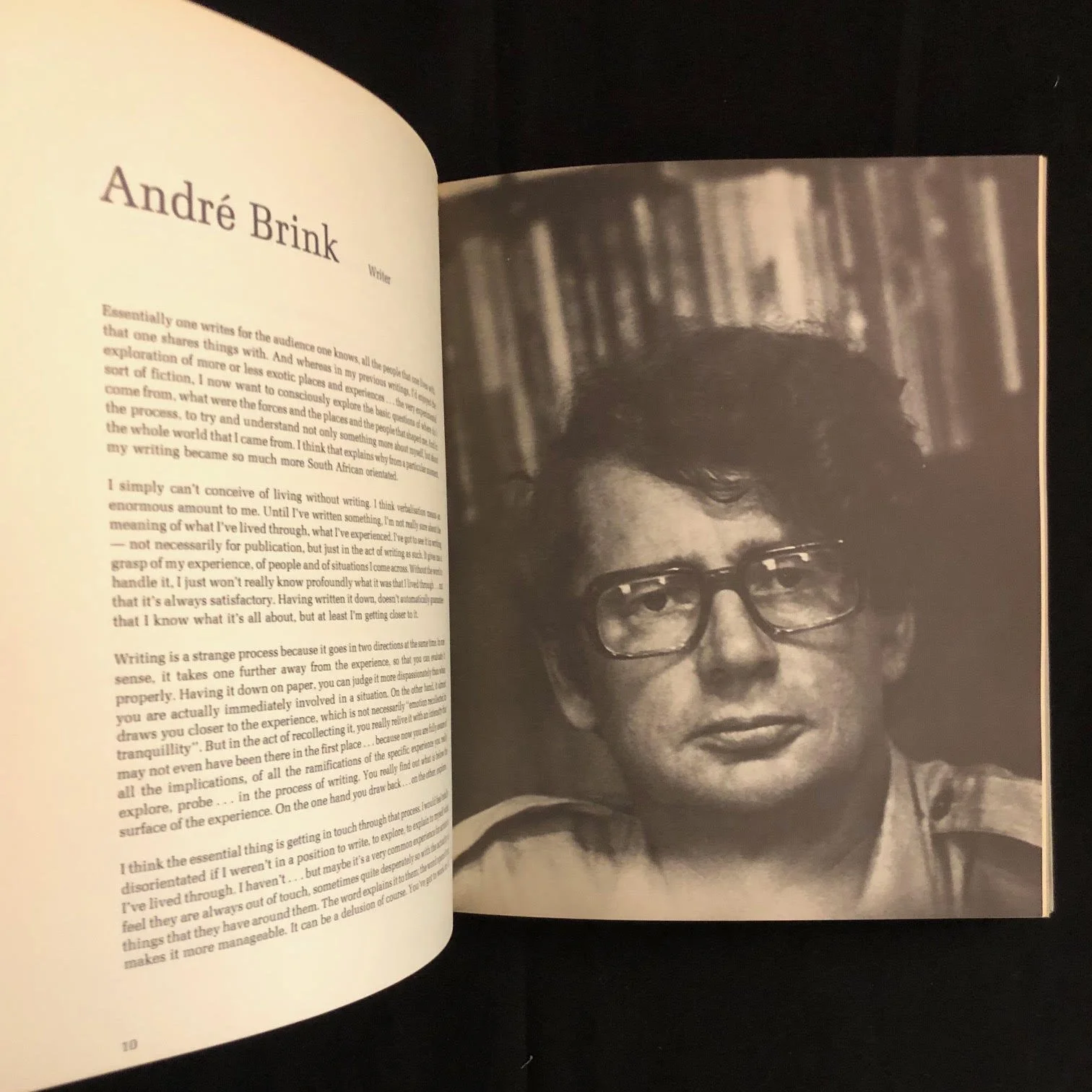
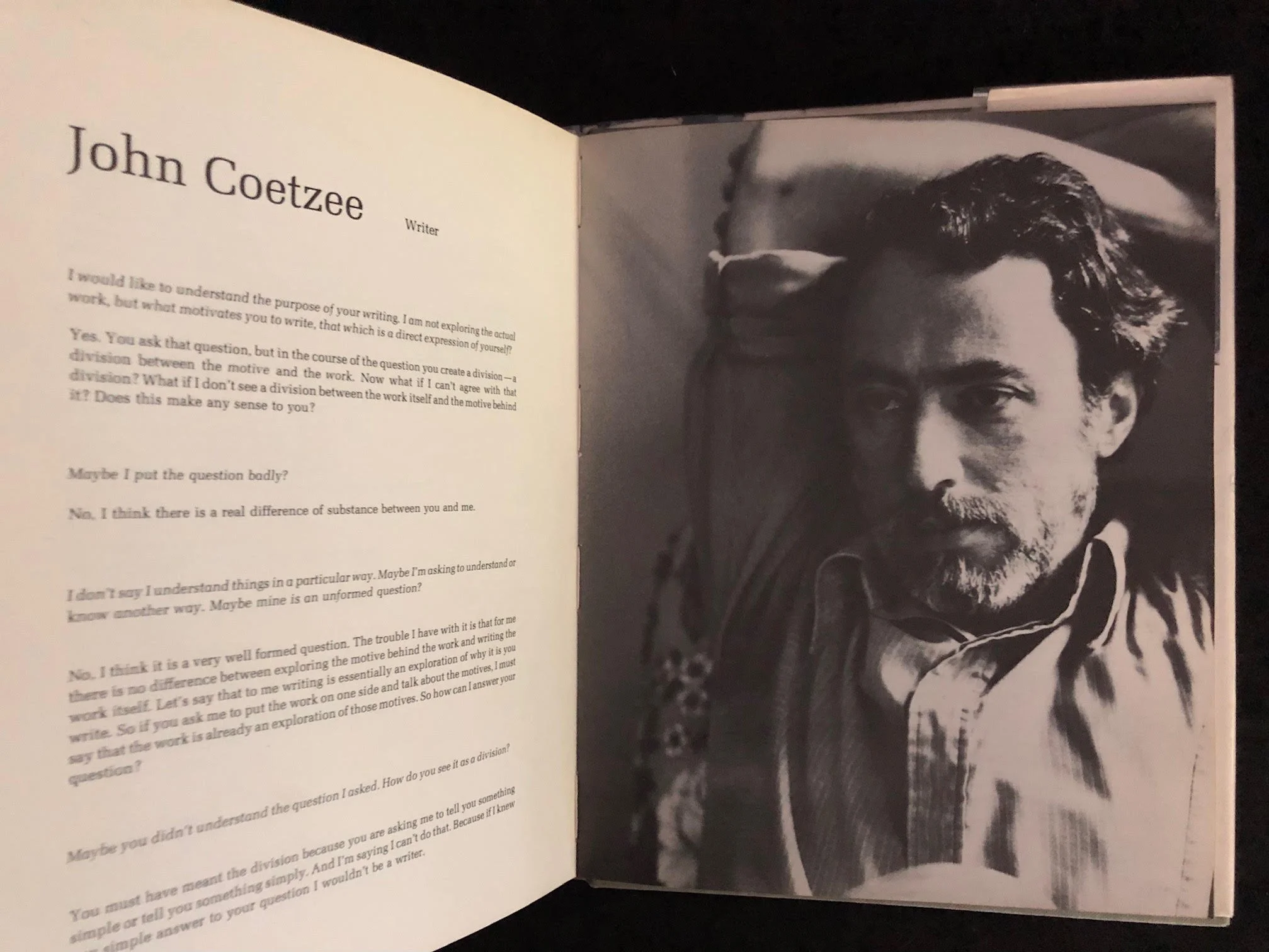
Early J.M. Coetzee: Among the contributors is a young John Coetzee (J.M. Coetzee)—long before his Booker Prizes or the 2003 Nobel Prize, when he had only published Dusklands (1974) and In the Heart of the Country (1977). Herber’s interview with him is cited in major bibliographies as one of the earliest published interviews with the notoriously private author.
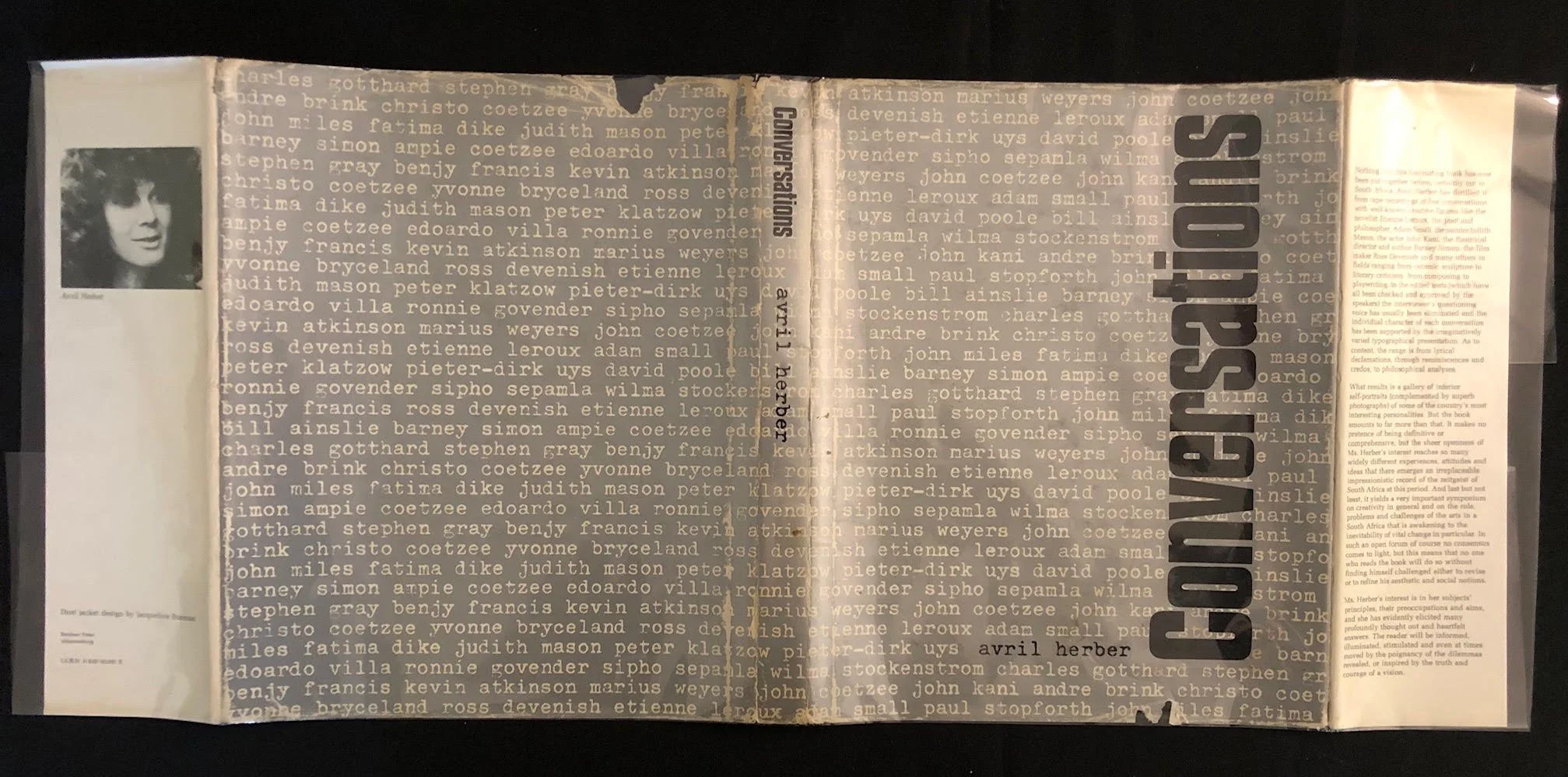
Experimental Typography: As the dust-jacket blurb notes, Herber stripped out her own questions and used varied, poetic typography to give each interview the cadence of an interior monologue—turning oral history into a modernist visual artifact.
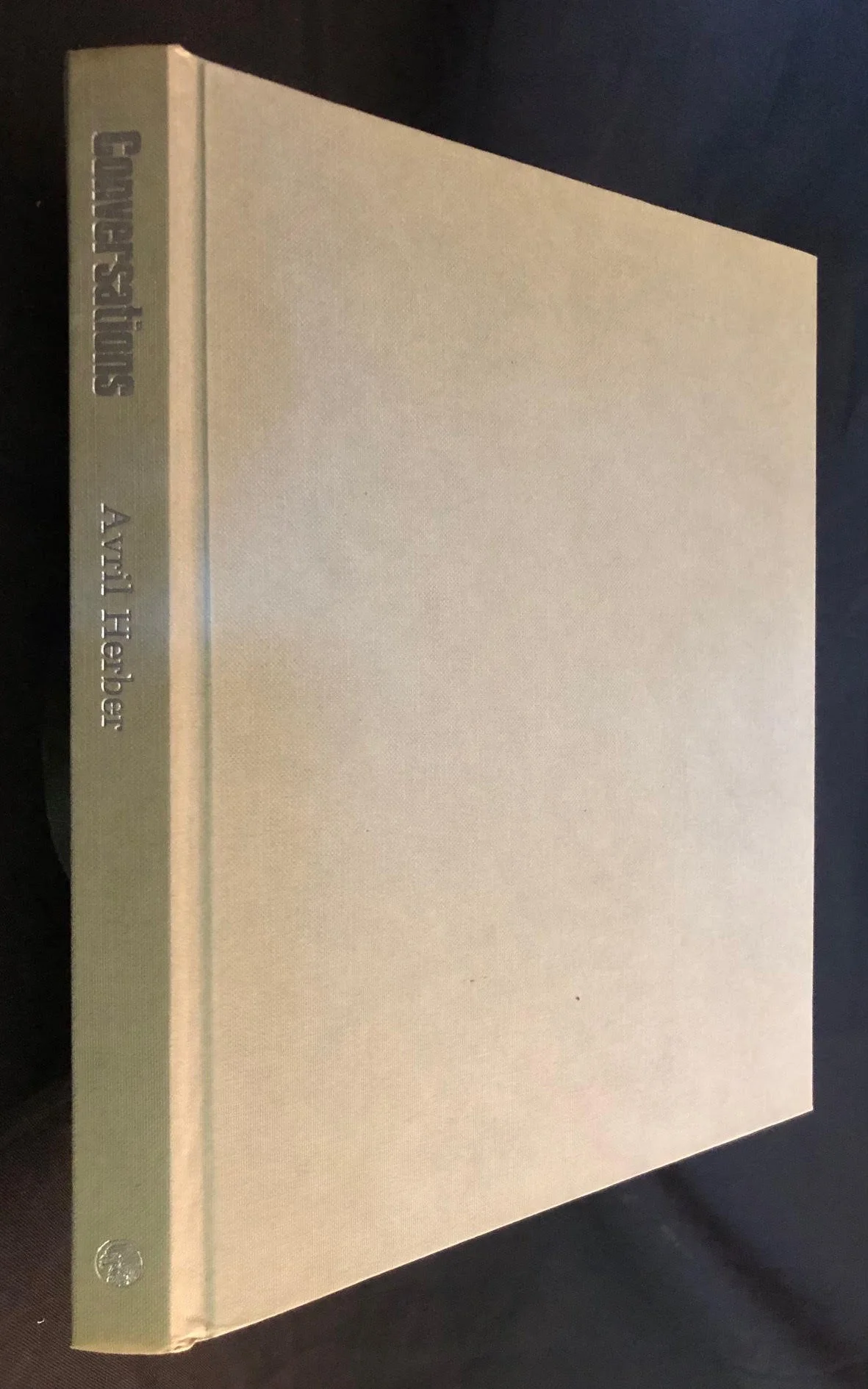
220mm x 270mm
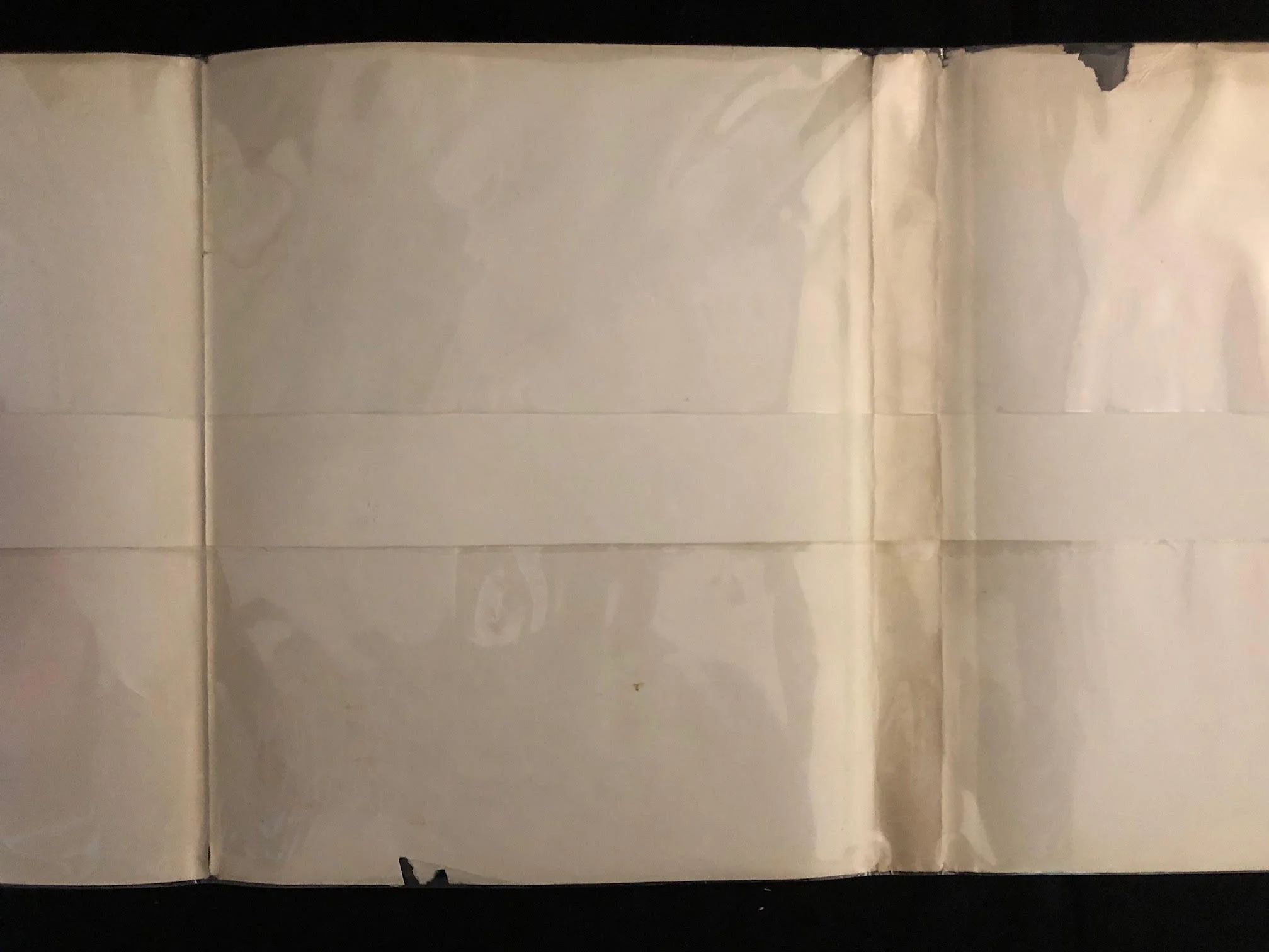
The dust jacket is chipped, torn and stained; the end papers are very slightly discoloured.
R1,000