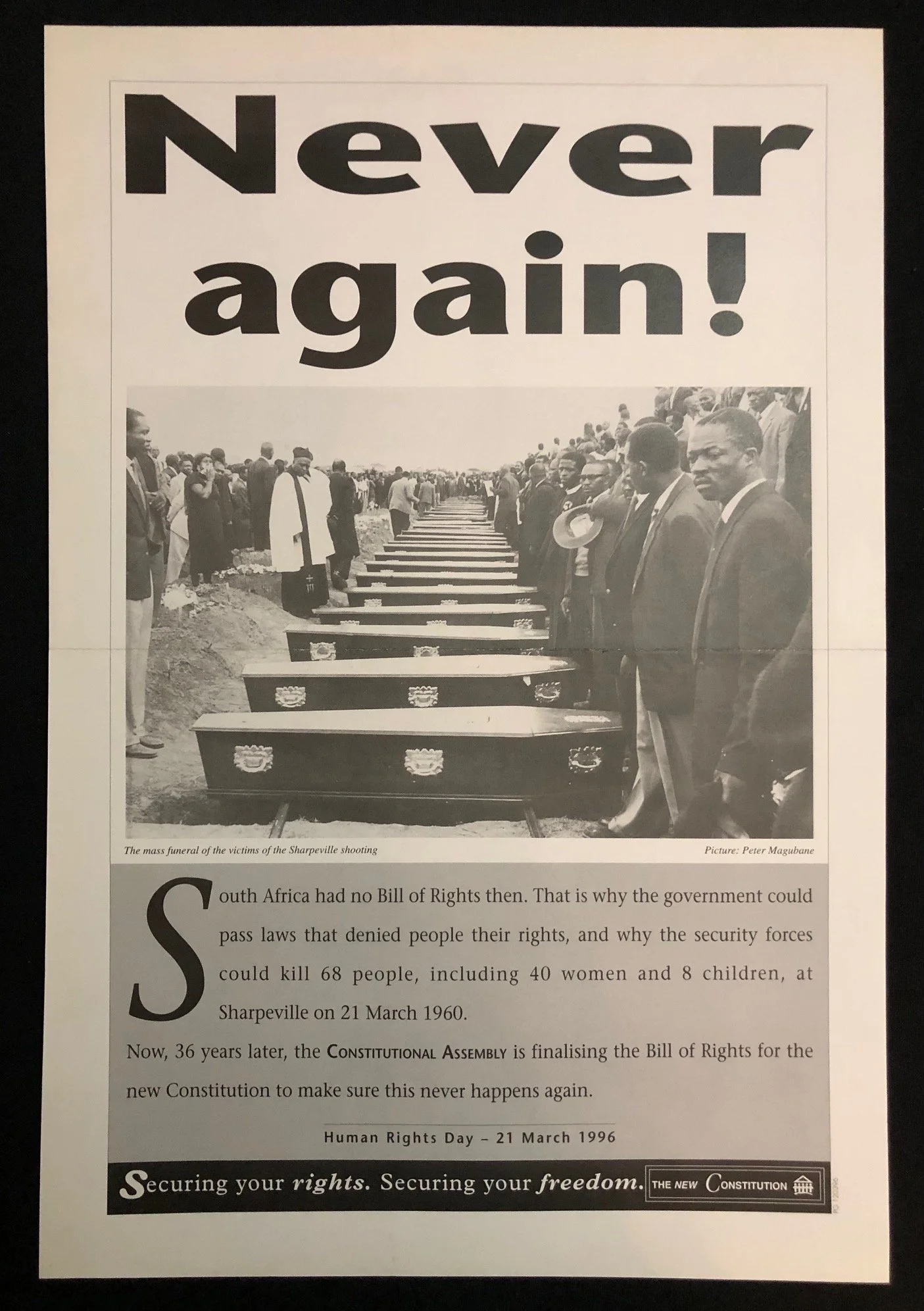
Sharpville Mass Funeral by Peter Magubane Poster (1996)
The poster is a powerful piece of political and legal ephemera from South Africa’s democratic transition. It bridges one of the darkest days of the apartheid era with the birth of the country's modern constitutional democracy.
The Photographer’s Courage: Peter Magubane
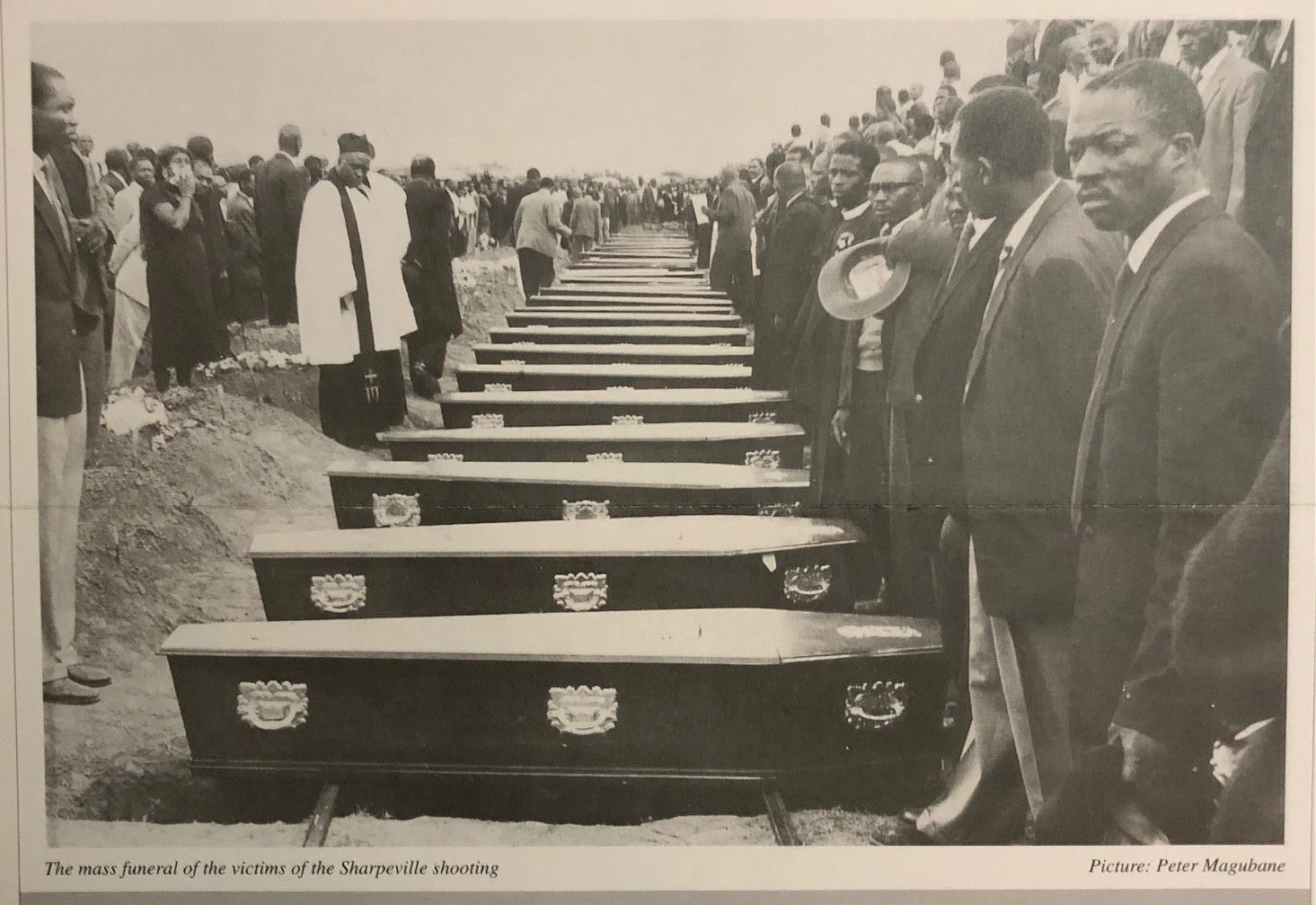
The stark photograph featured in the center of the poster was captured by Peter Magubane, one of South Africa’s most iconic and courageous photojournalists. Documenting the Sharpeville mass funeral in 1960 was incredibly dangerous. Magubane’s career was defined by his determination to expose the brutalities of apartheid to the world, which made him a constant target for the state. Over his lifetime, he was arrested multiple times, spent 586 days in solitary confinement, and was given a five-year banning order that legally prohibited him from working as a photographer or even holding a camera.
A Crucial Propaganda Pivot for the New State
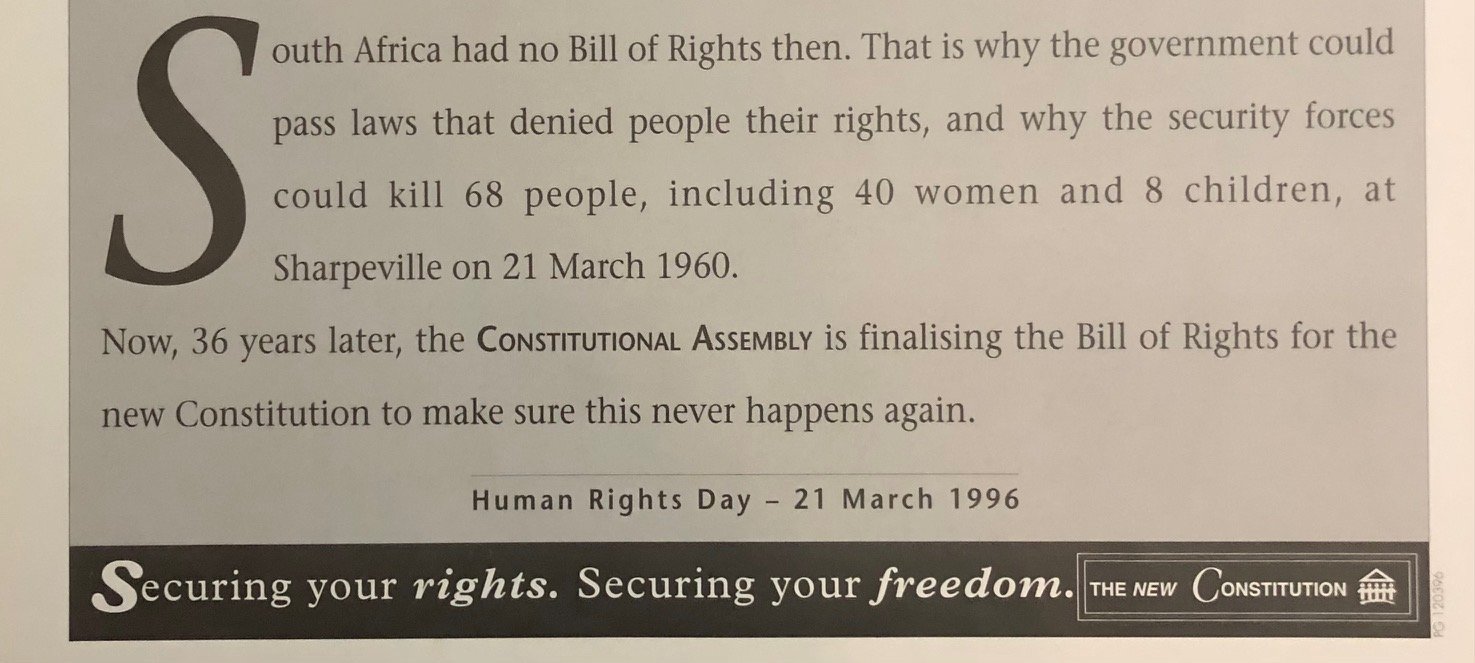
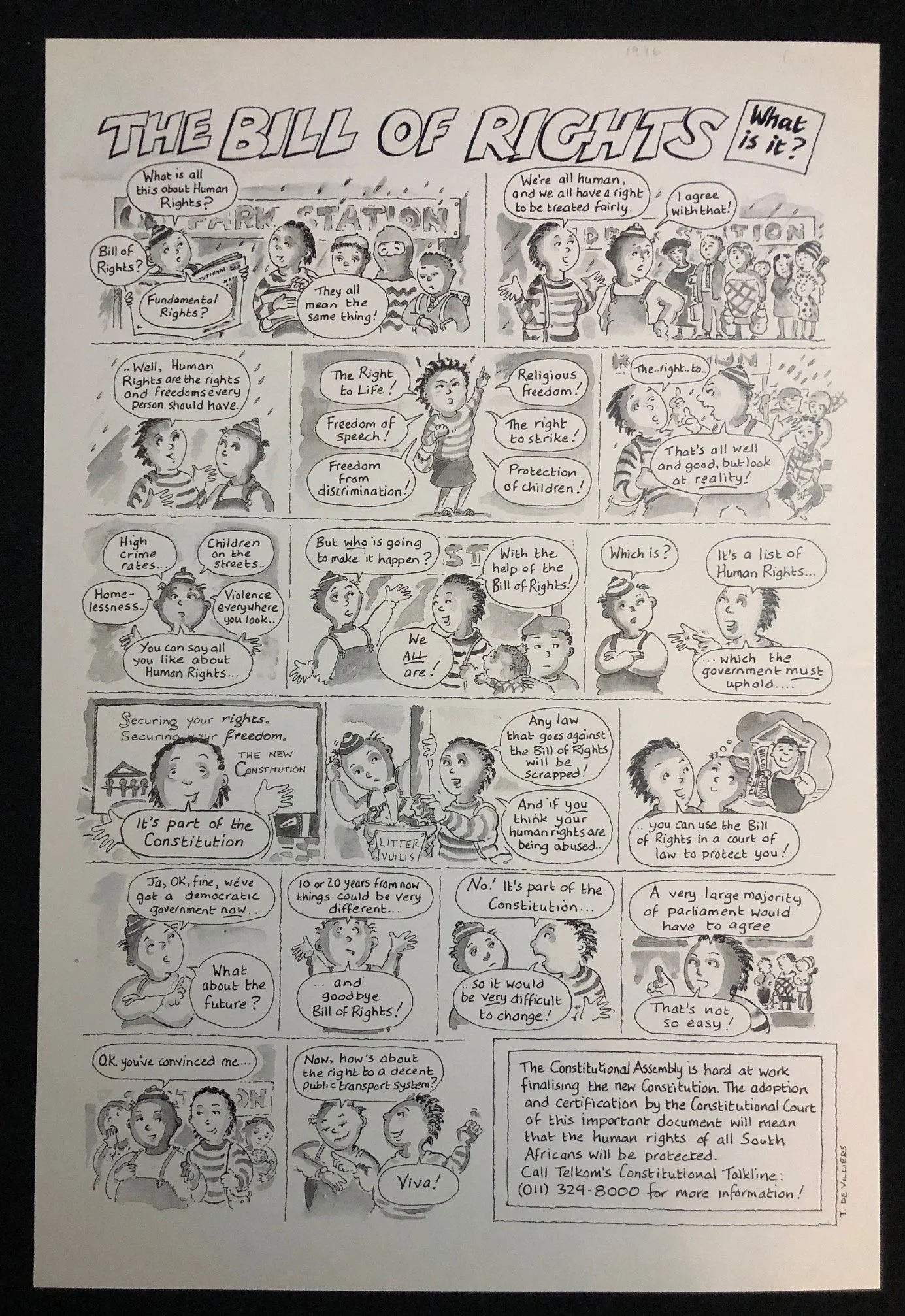
This poster was published by the Constitutional Assembly in March 1996 during a high-stakes, nation-wide public awareness campaign. South Africa was operating under an interim constitution at the time, and the assembly was under immense pressure to finalize the permanent Constitution by May 1996. The poster served a dual purpose: it educated citizens on why a Bill of Rights was necessary, and it used a raw, collective historical trauma to build national consensus and legitimacy around the new legal framework.
The Symbolism of March 21
The date 21 March carries a profound double meaning in South African history:
March 21, 1960: The Sharpeville Massacre occurred when apartheid police opened fire on a crowd protesting the humiliating "pass laws," killing 69 people.
March 21, 1996: Exactly 36 years later, the state celebrated its newly designated Human Rights Day by distributing this exact material to demonstrate how far the country had come, transforming a day of state-sanctioned violence into a celebration of codified human rights.
The Genesis of "Chapter 2"
The text at the bottom highlights the finalization of the Bill of Rights. When the final Constitution was officially signed into law by Nelson Mandela later in December 1996, this Bill of Rights became Chapter 2 of the Constitution. Today, it is widely regarded by legal scholars as one of the most progressive and comprehensive frameworks for human rights in the world, explicitly safeguarding socio-economic rights alongside civil liberties.
275mm x 410mm
Very slight wear.
R1,000