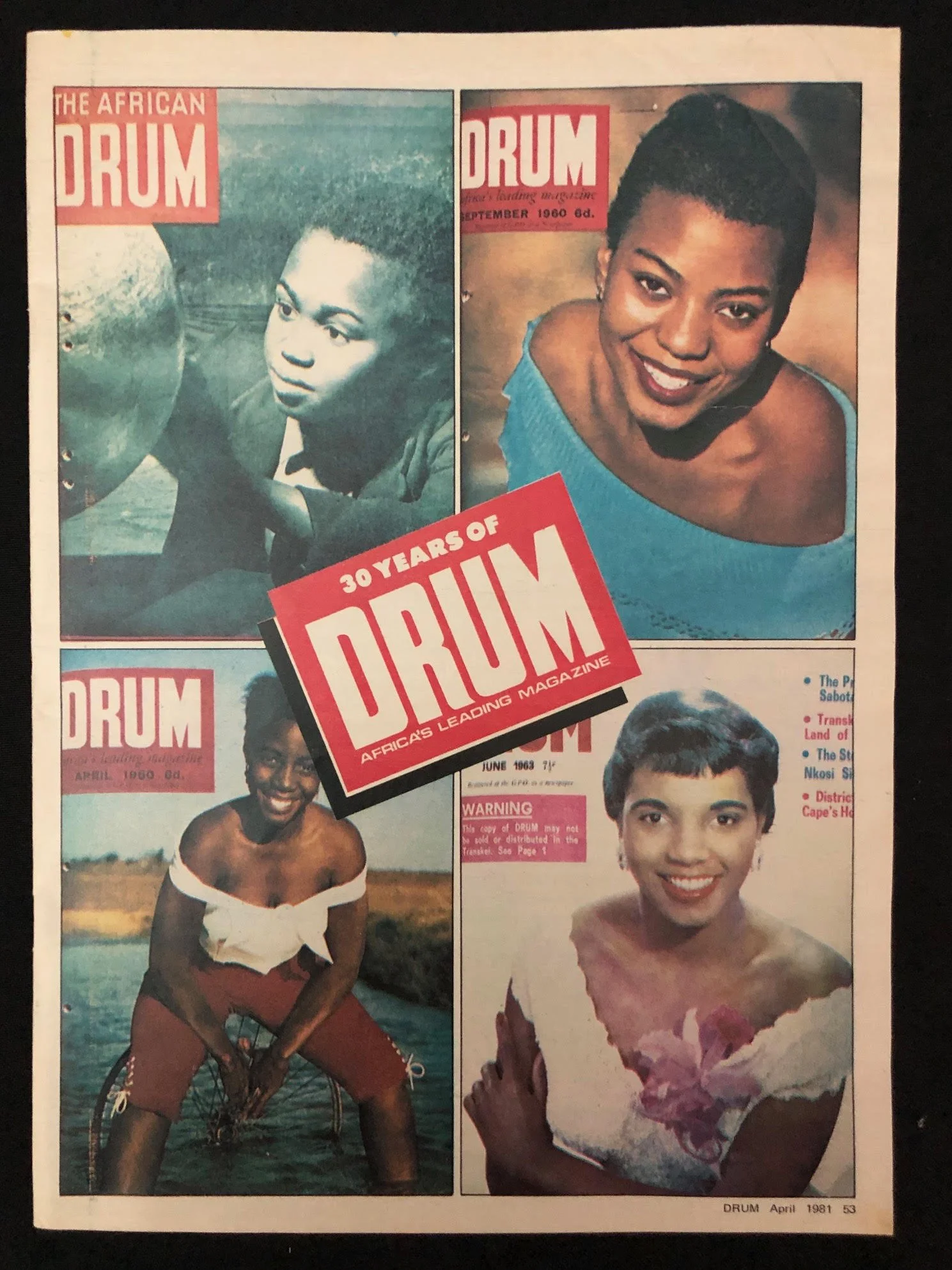
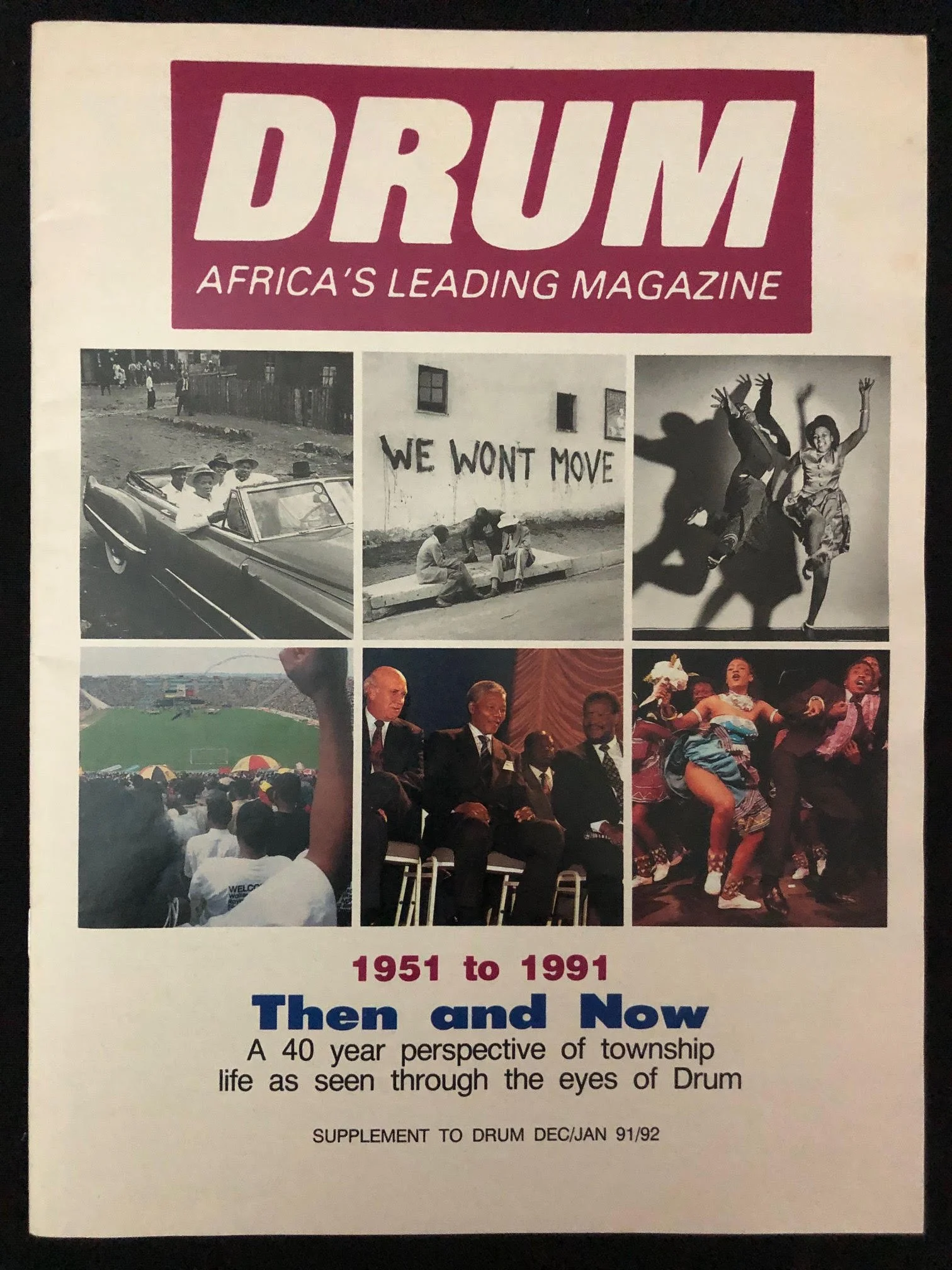
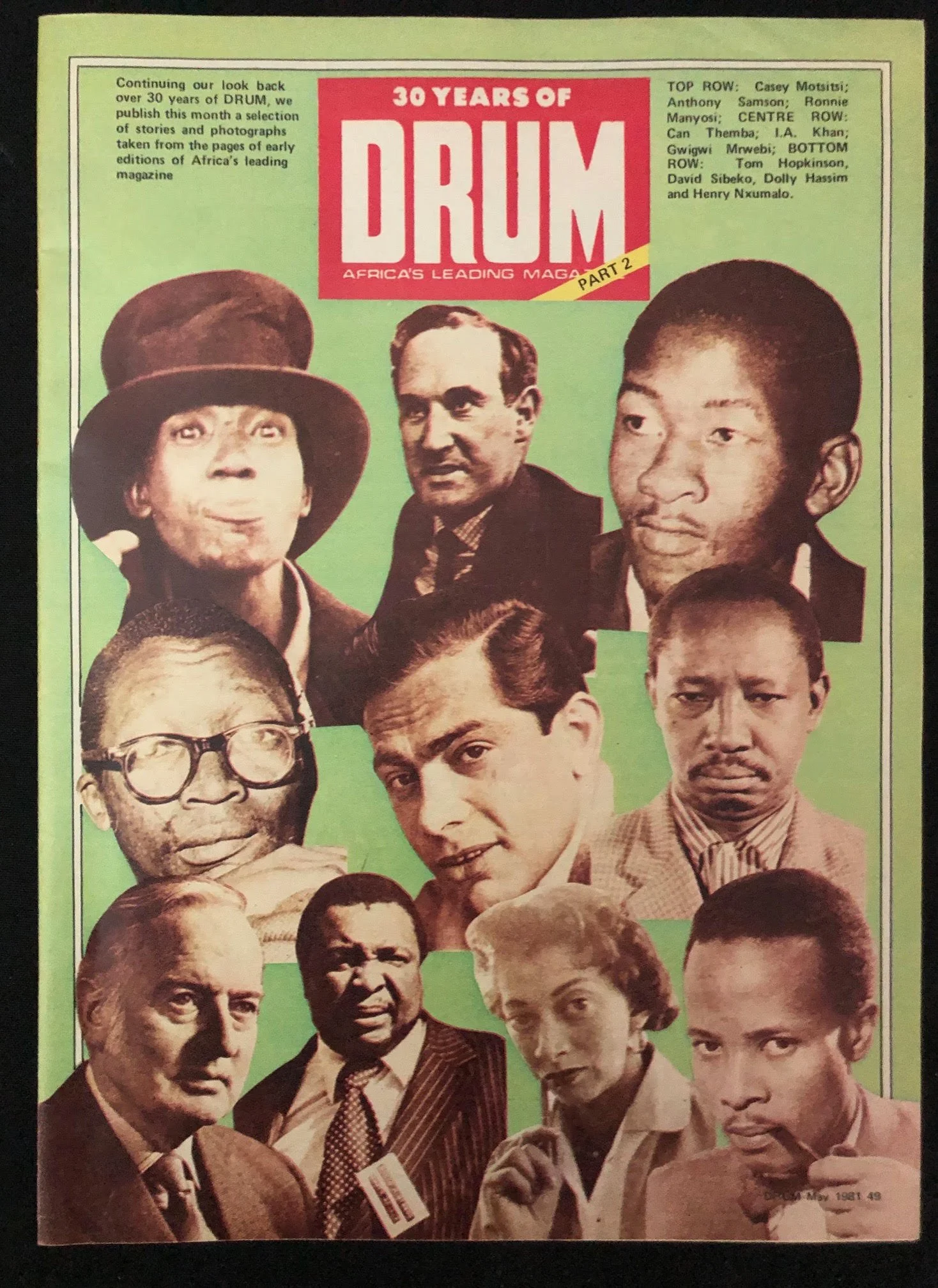
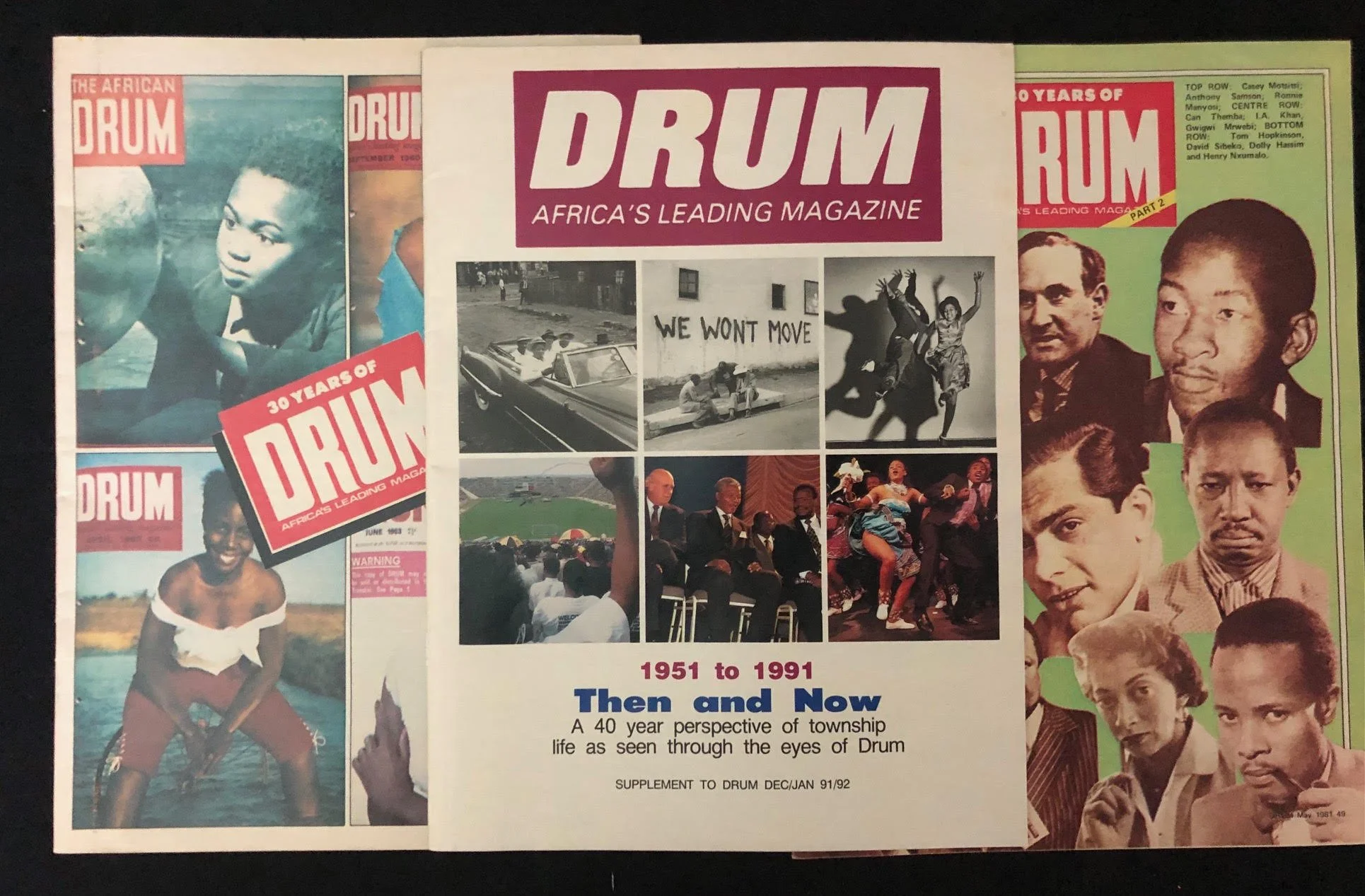
Three DRUM Magazines (Retrospectives)
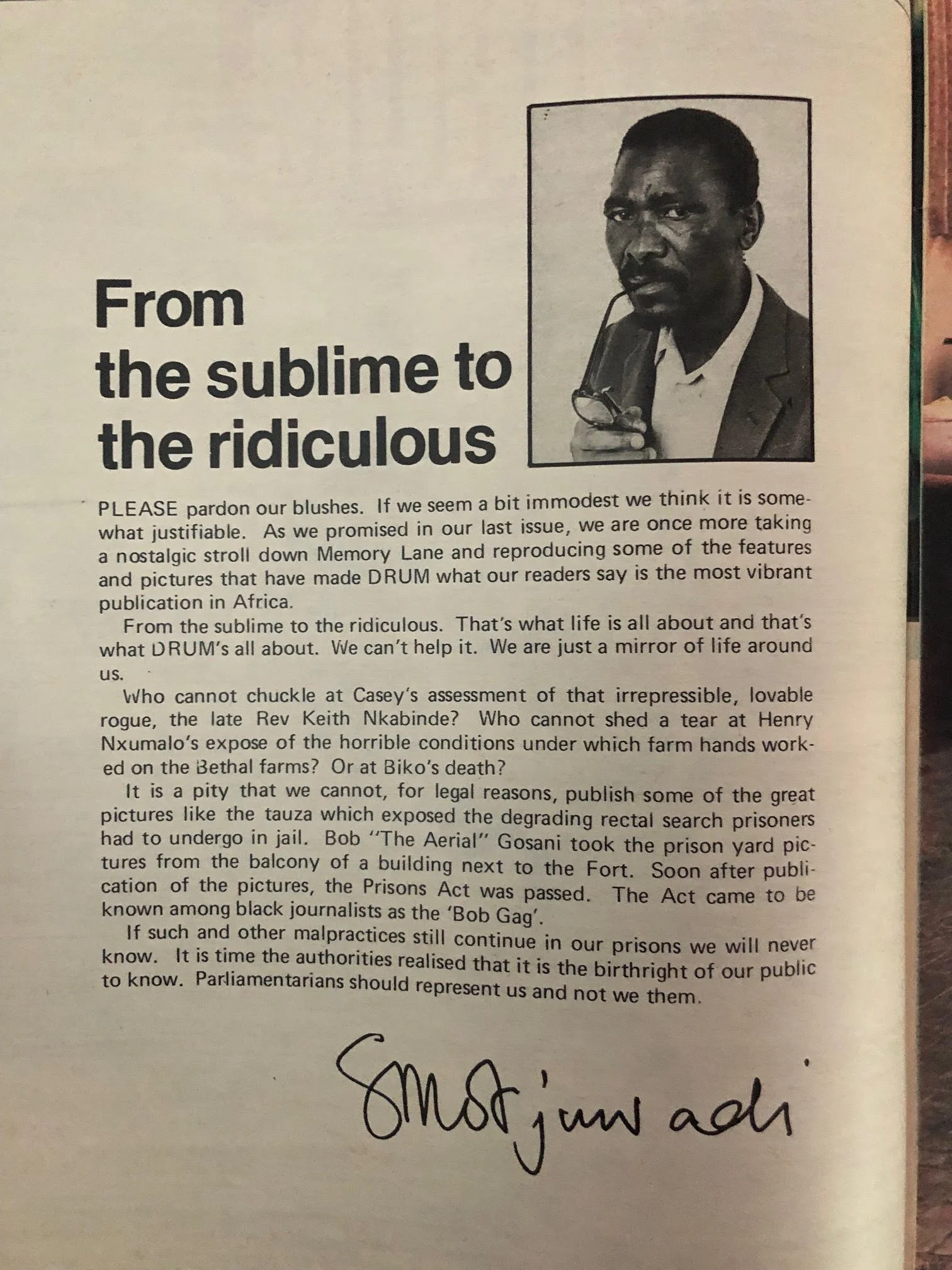
DRUM Magazine, the single most influential cultural and investigative publication in 20th-century South African history.
1. The Pivot from Colonial Paternalism to Township Reality (1951)
Failed Origins: Founded in 1951 in Cape Town by Robert Crisp as The African Drum, the magazine originally focused on pastoral tribal folklore, traditional music, and rural life curated by white editors. It was a commercial flop—urban Black South Africans found it patronizing.
The Sophiatown Transformation: Entrepreneur Jim Bailey took over, moved operations to Johannesburg, brought in Anthony Sampson as editor, and hired young Black writers like Henry Nxumalo, Can Themba, Casey Motsitsi, and Bloke Modisane. The magazine dropped "The African" from its title, embraced jazz, urban style, investigative journalism, and political subversion, and sales exploded across the continent.
2. Pioneering Undercover Investigative Journalism: Henry Nxumalo ("Mr. Drum")
Henry Nxumalo (bottom right on the 30-year retrospective board) pioneered brave undercover investigative reporting in South Africa.
Bethal Farm Exposé (1952): Nxumalo got hired as a laborer on potato farms in Bethal to document the brutal abuse, forced labour, and slave-like conditions suffered by Black workers. His exposé sent shockwaves globally and forced legal shifts in farm labor contracts.
Inside Pretoria Local Prison: He deliberately got arrested for a pass law violation to spend time inside Pretoria Local Prison, writing a harrowing firsthand account of the dehumanizing treatment, beatings, and strip-searches of Black inmates.
3. The Golden Era of Sophiatown & The "Drum Boys"
During the 1950s, DRUM served as the heartbeat of the Sophiatown Renaissance:
Writers developed a distinct literary voice—a sharp, witty blend of American hard-boiled noir English, Tsotsitaal (township slang), and jazz rhythms.
DRUM was also famous for its iconic cover stars and photojournalism, capturing legendary figures like Miriam Makeba, Dolly Rathebe, Hugh Masekela, and Nelson Mandela in his boxing days long before his imprisonment.
4. Eyewitness to History: "We Won't Move" (1955)
The middle-top photograph on the 40-year retrospective supplement ("WE WONT MOVE") captures one of the most poignant moments in South African urban history.
It records the mass resistance to the forced removals of Sophiatown under the Western Areas Removal Scheme. Despite the defiant resistance painted on township walls, the apartheid state forcibly moved over 60,000 residents to Meadowlands (Soweto) and bulldozed Sophiatown to build a white suburb named Triomf. DRUM photojournalists like Peter Magubane and Jürgen Schadeberg risked immediate arrest to preserve these images for history.
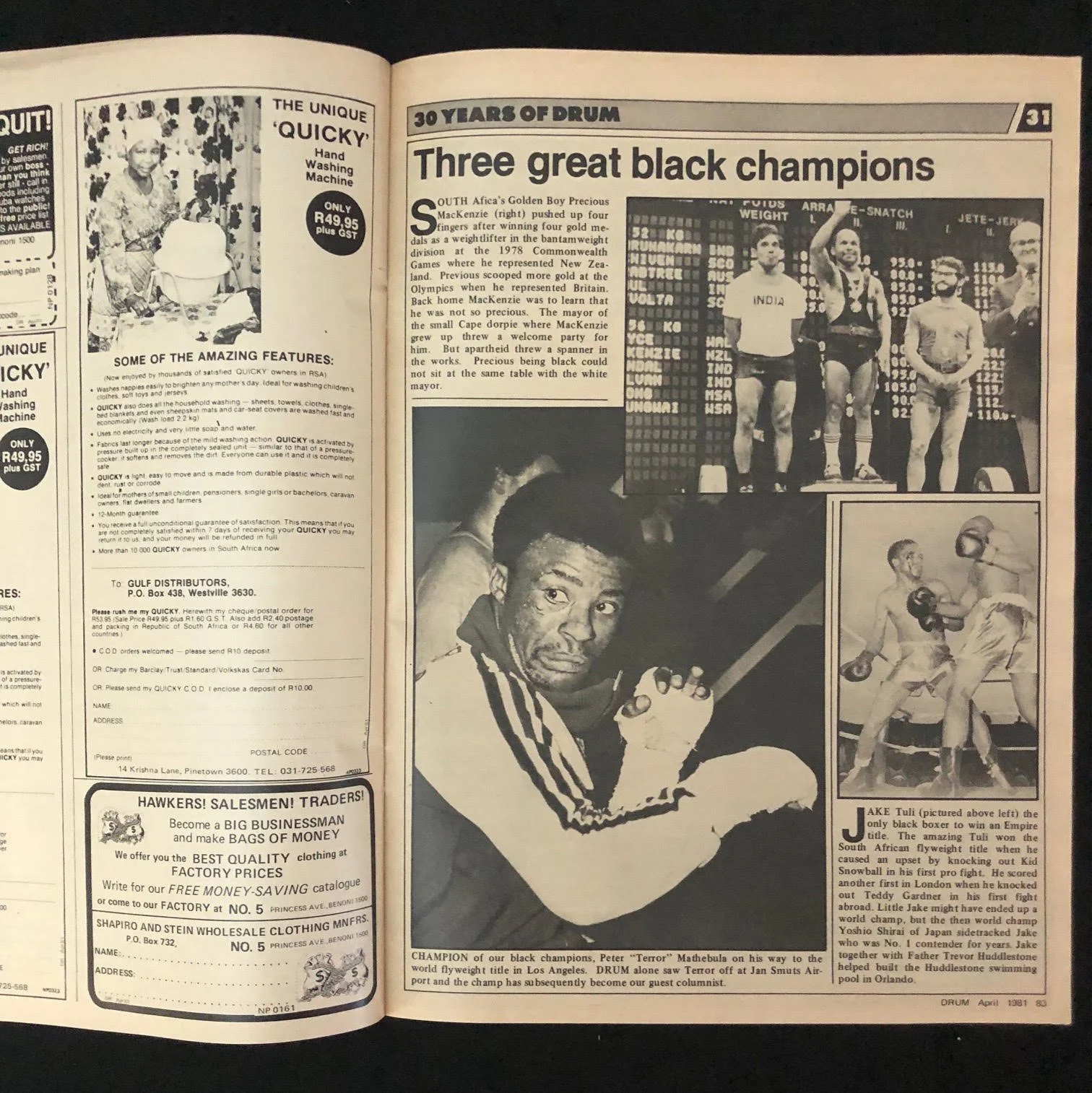
3 Drum magazines: April 1981; May 1981; Supplement to Drum Dec / Jan 1991 - 92
Moderate amount of use; slight wear.
R1,250