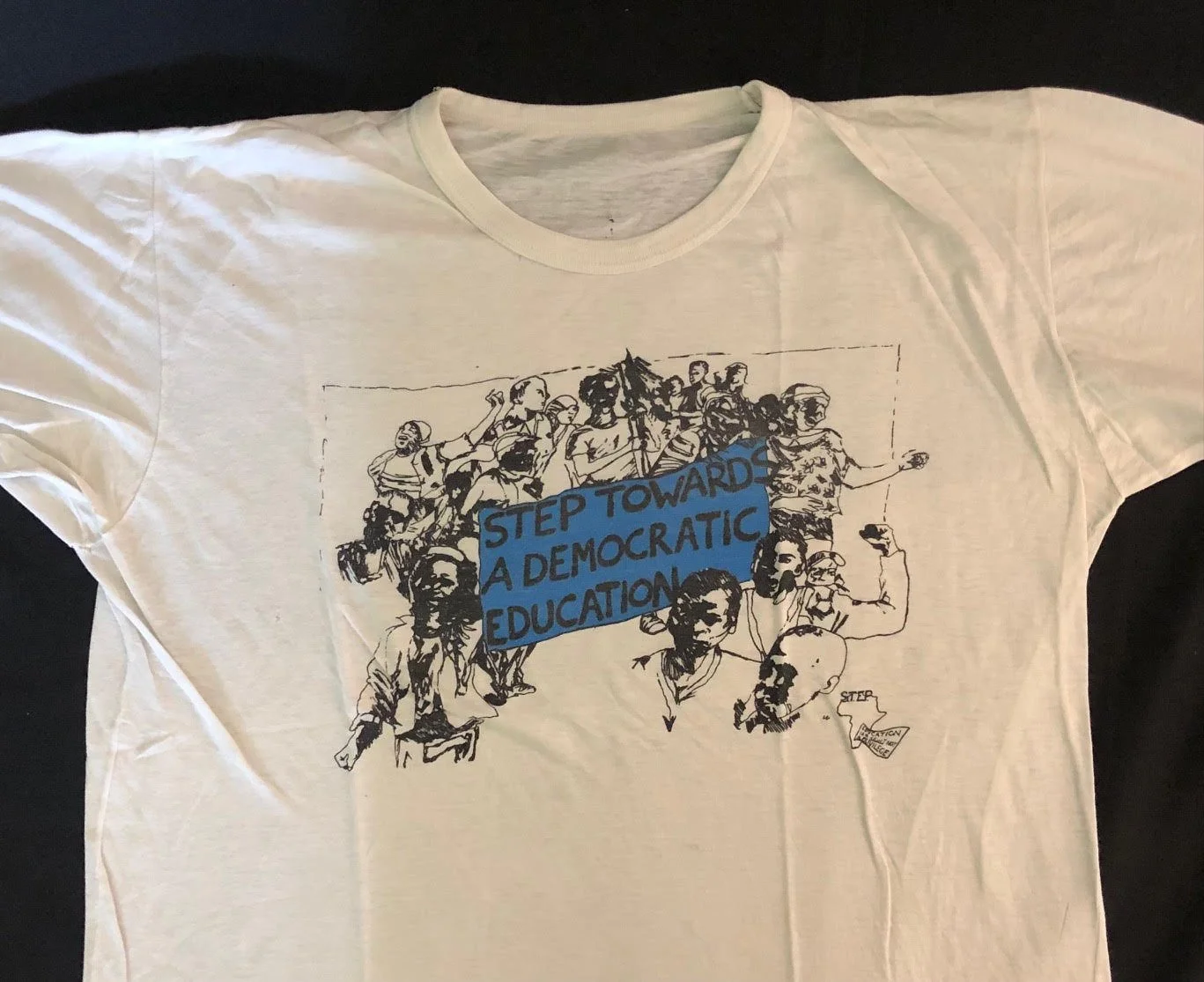
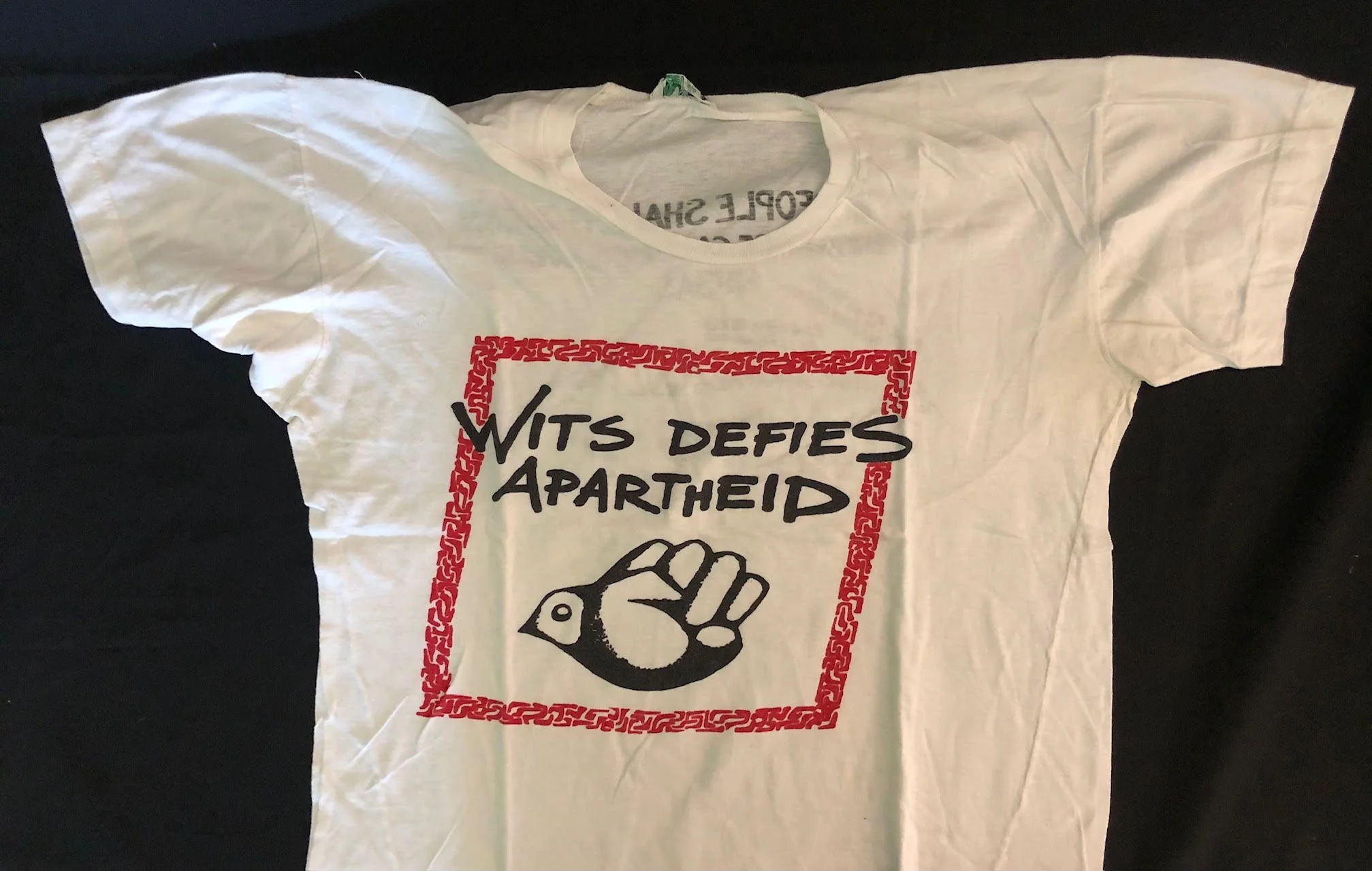
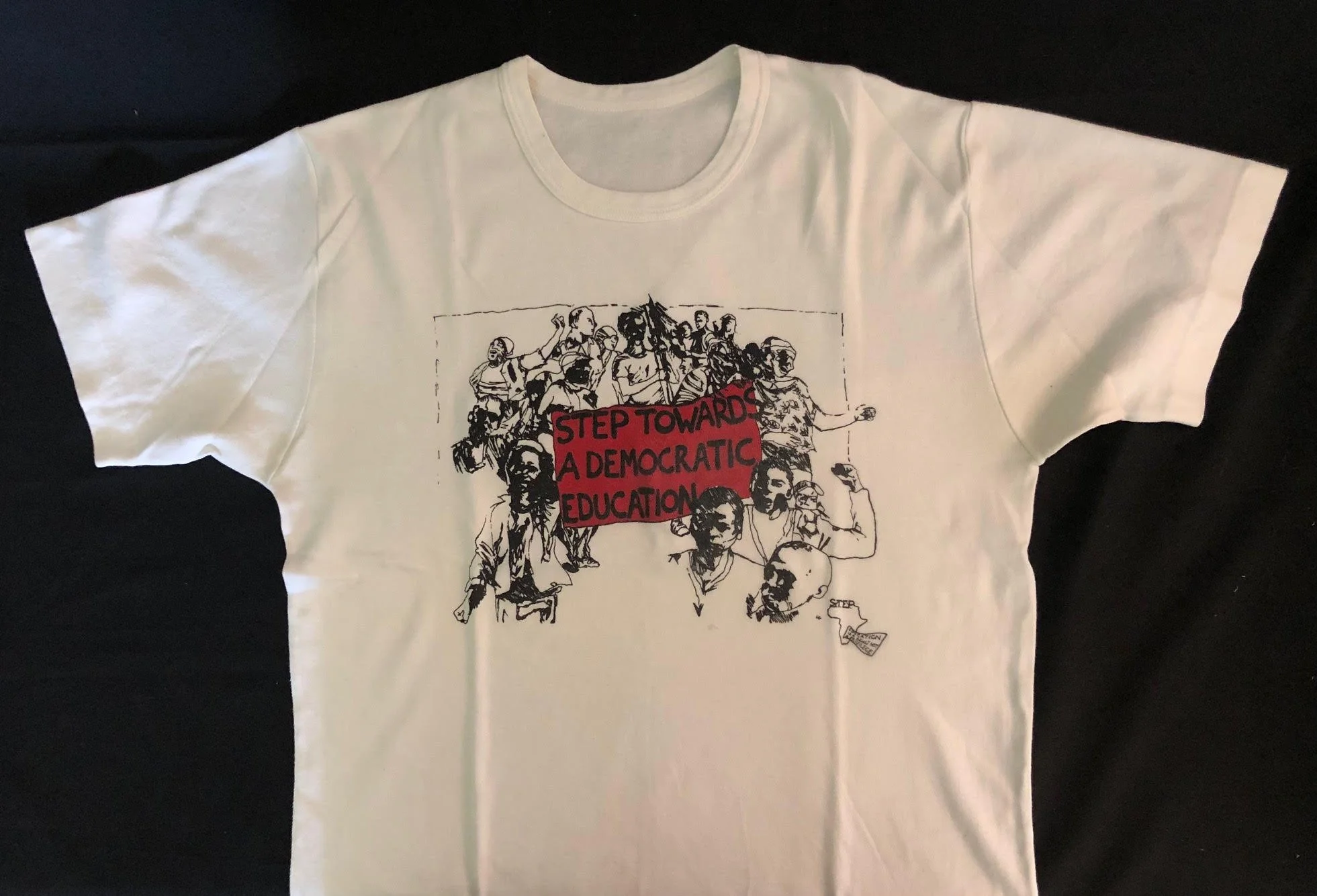
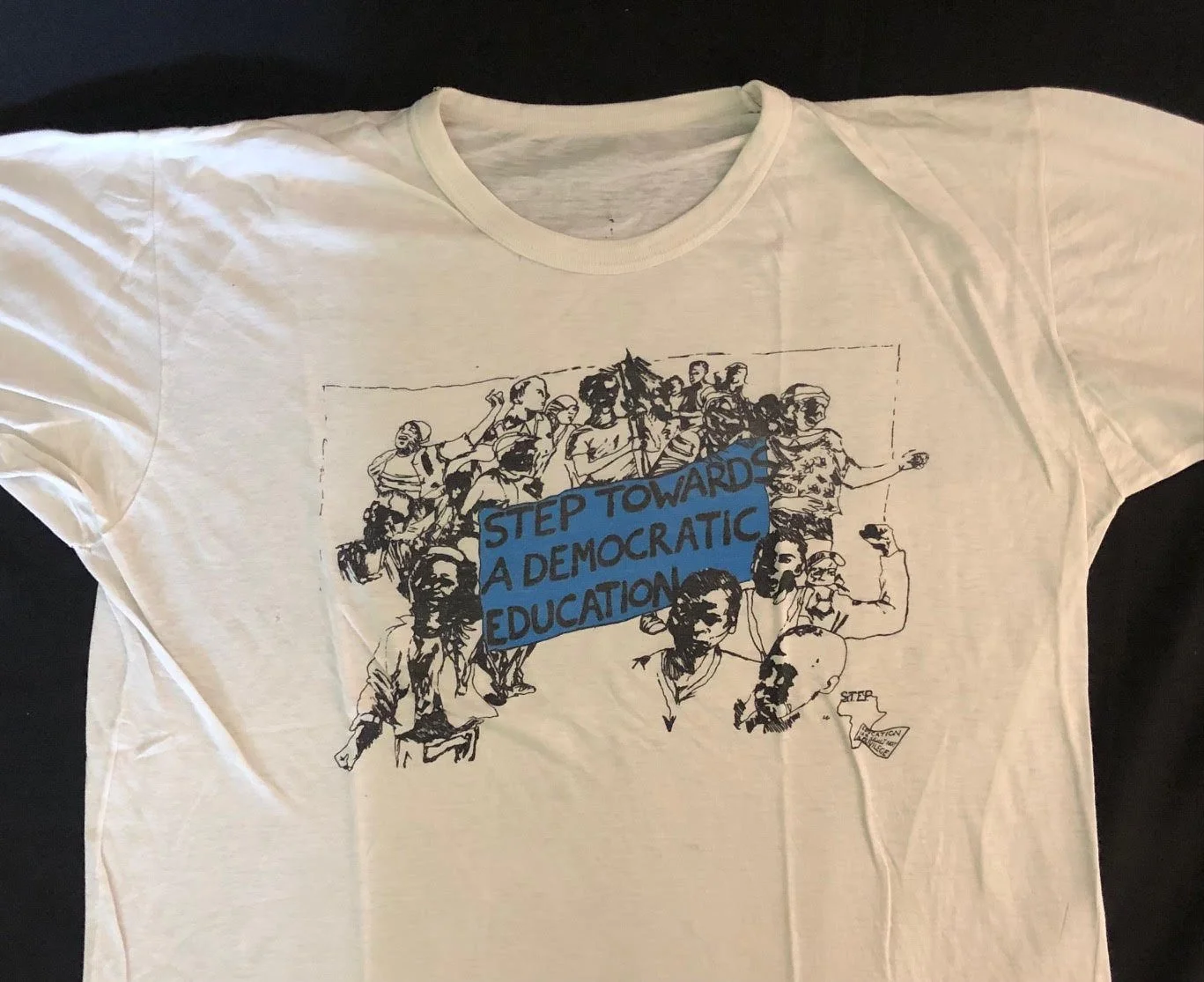
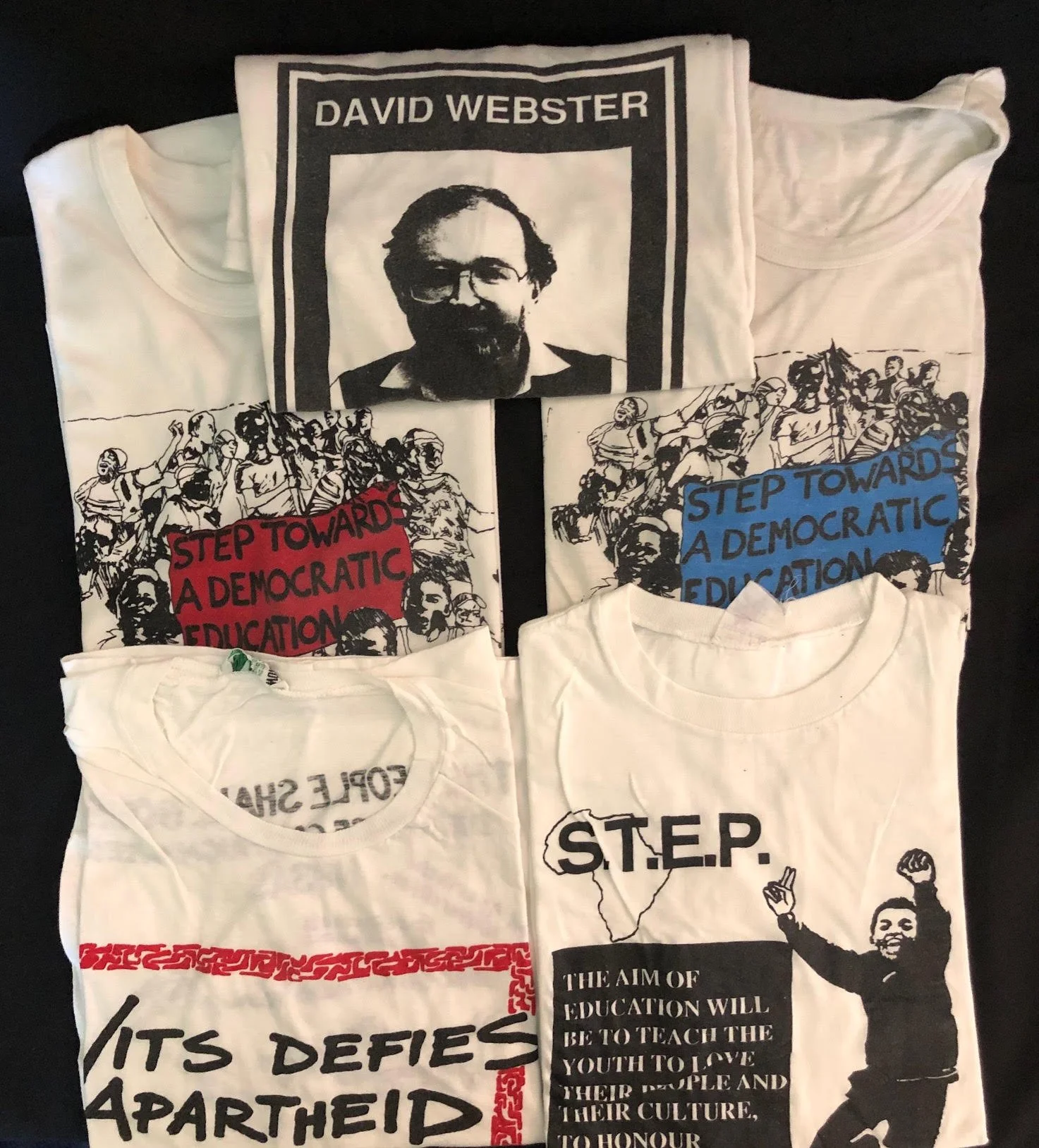
5 anti-apartheid T-shirts from student resistance movement.
This remarkable group of late-1980s anti-apartheid T-shirts comes straight out of the student resistance movement centered at the University of the Witwatersrand (Wits) in Johannesburg during the final, most repressive years of the State of Emergency (1985–1990). In an era when political meetings, pamphlets, and posters were routinely banned or seized by the Security Branch, screen-printed T-shirts served as mobile, wearable broadsheets that were much harder for police to confiscate off people's backs—and many were printed clandestinely at workshops like the Screen Training Project (STP) in Johannesburg.
Here is the specific historical context behind each shirt in the group:
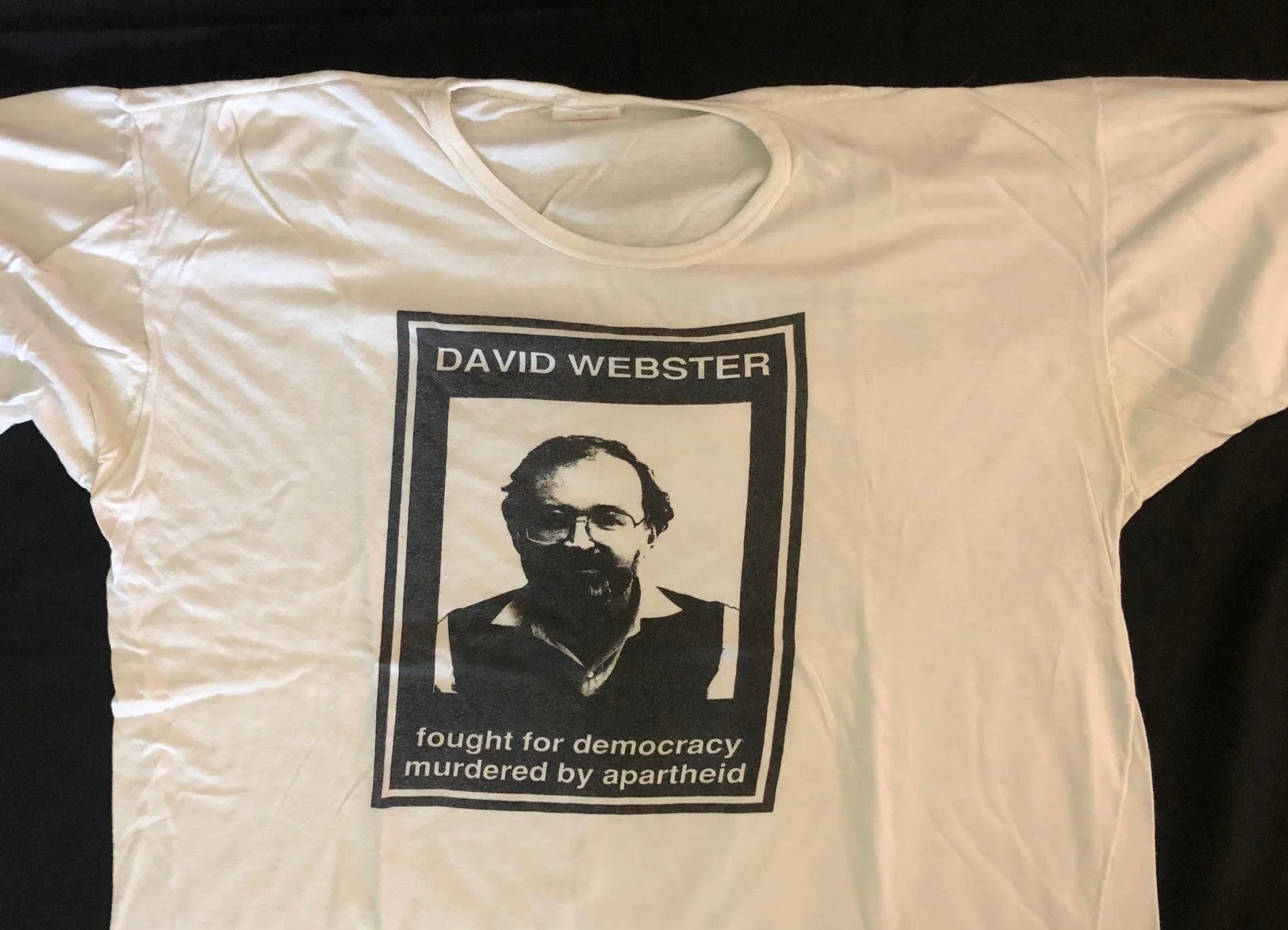
1. David Webster Memorial T-Shirt (1989)
The Assassination: Dr. David Webster was a senior social anthropology lecturer at Wits, a founding member of the Detainees' Parents Support Committee (DPSC), and a tireless investigator into state-sponsored death squads. On May 1, 1989, he was gunned down outside his home in Troyeville, Johannesburg, by Ferdi Barnard, an operative of the covert South African Defence Force unit known as the Civil Cooperation Bureau (CCB).
The Design: Printed immediately after his murder for his massive memorial service and funeral at St. Mary's Cathedral in Johannesburg, this shirt turns his portrait into an iconic, high-contrast woodcut-style memorial frame. Wearing it in public was an act of open defiance against the state's claim that "unknown assailants" were responsible, explicitly naming the crime: "murdered by apartheid."
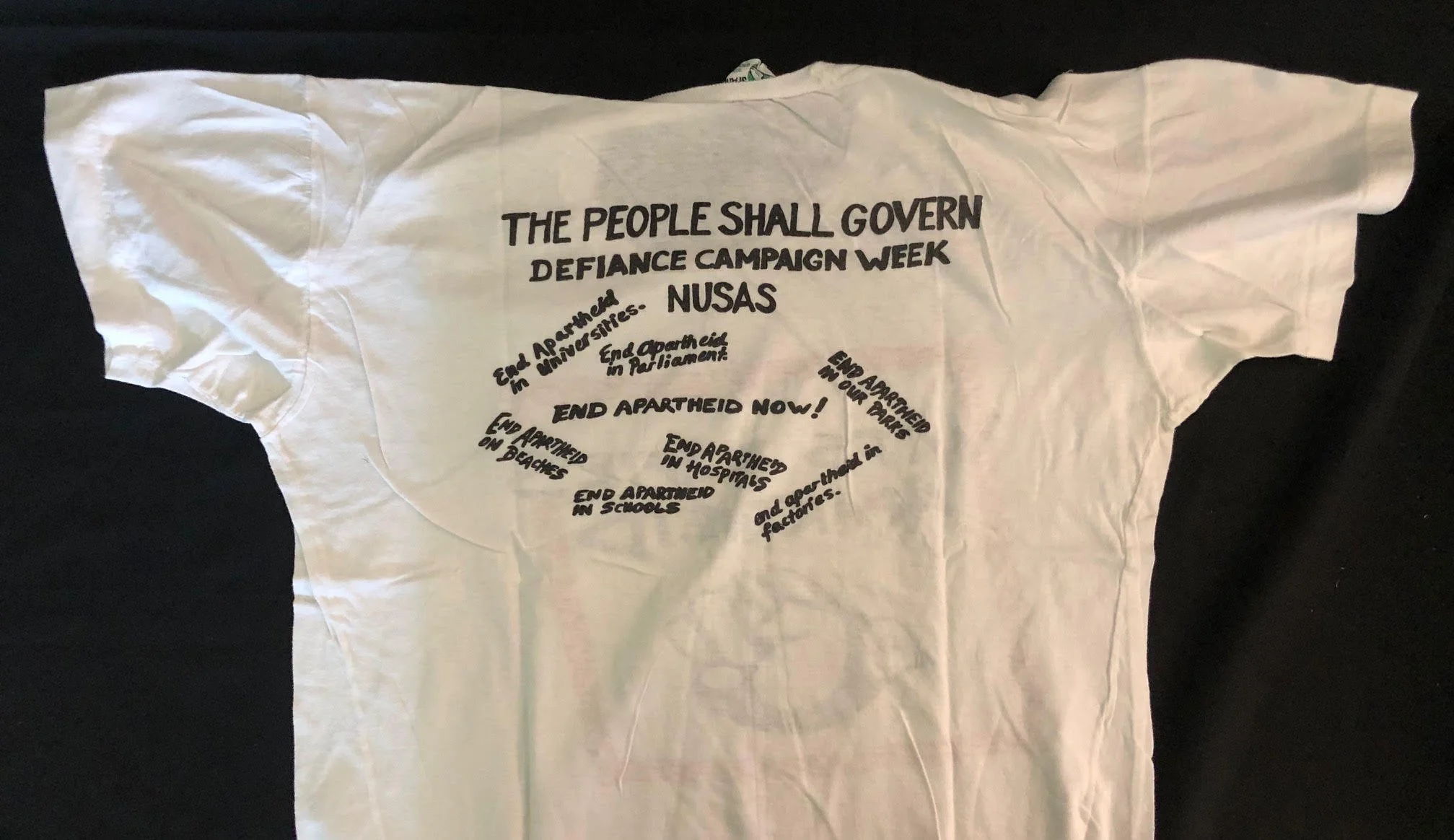
2. "Wits Defies Apartheid" & "The People Shall Govern / Defiance Campaign Week — NUSAS" (1989)
The 1989 Defiance Campaign: These two images show the front and back of the same shirt, produced by NUSAS (National Union of South African Students) for the Mass Democratic Movement's (MDM) Defiance Campaign in August–September 1989. Inspired by the 1952 Defiance Campaign, the 1989 movement saw activists deliberately violate petty and grand apartheid laws—marching onto "whites-only" beaches in Durban and Cape Town, presenting black patients at segregated hospitals, and declaring unbanned organizations open.
The Visuals: The front combines the dove of peace with a clenched resistance fist—a classic South African anti-apartheid graphic motif—framed in a red border. The back quotes the opening line of the 1955 Freedom Charter ("THE PEOPLE SHALL GOVERN") alongside specific campaign targets: "End Apartheid in Universities," "on Beaches," "in Hospitals," "in Schools," "in Parliament," "in our Parks," and "in factories." Within months of this campaign, F.W. de Klerk unbanned the ANC, PAC, and SACP in February 1990.
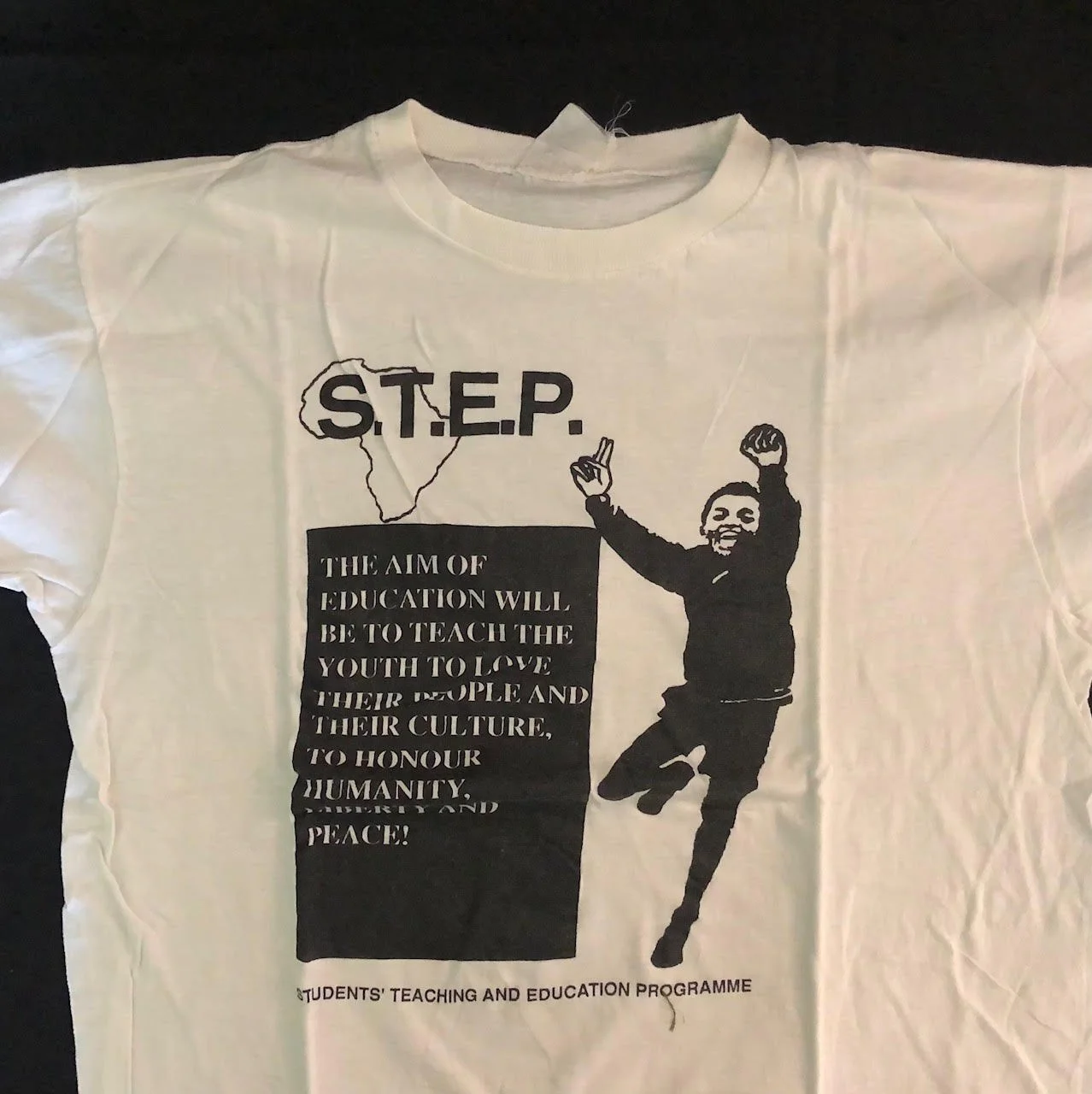
3. S.T.E.P. — Students' Teaching and Education Programme (Late 1980s)
The Organization: S.T.E.P. was a student-run initiative (operating primarily out of Wits and UCT) that provided free weekend and evening tutoring, winter schools, and alternative curricula to black high school students crippled by Bantu Education and ongoing school boycotts.
The Freedom Charter Quote: The black block on the first S.T.E.P. shirt quotes directly from the Freedom Charter's education clause ("The Doors of Learning and of Culture Shall be Opened!"): "The aim of education will be to teach the youth to love their people and their culture, to honour humanity, liberty and peace!"
The Second S.T.E.P. Design ("STEP TOWARDS A DEMOCRATIC EDUCATION"): Featuring dynamic protest crowd artwork in black with a red banner—the signature two-color palette of 1980s South African resistance printmaking—this shirt aligned student tutoring directly with the National Education Crisis Committee (NECC) slogan "People's Education for People's Power," rejecting state-controlled schooling in favor of democratic, non-racial education.
Together, these garments capture a pivotal 12-month window around 1989 when university campuses, civic organizations, and underground screen-printing collectives merged into the final mass push that broke the back of the apartheid state.
Various sizes.
All are used t-shirts.
R3,500