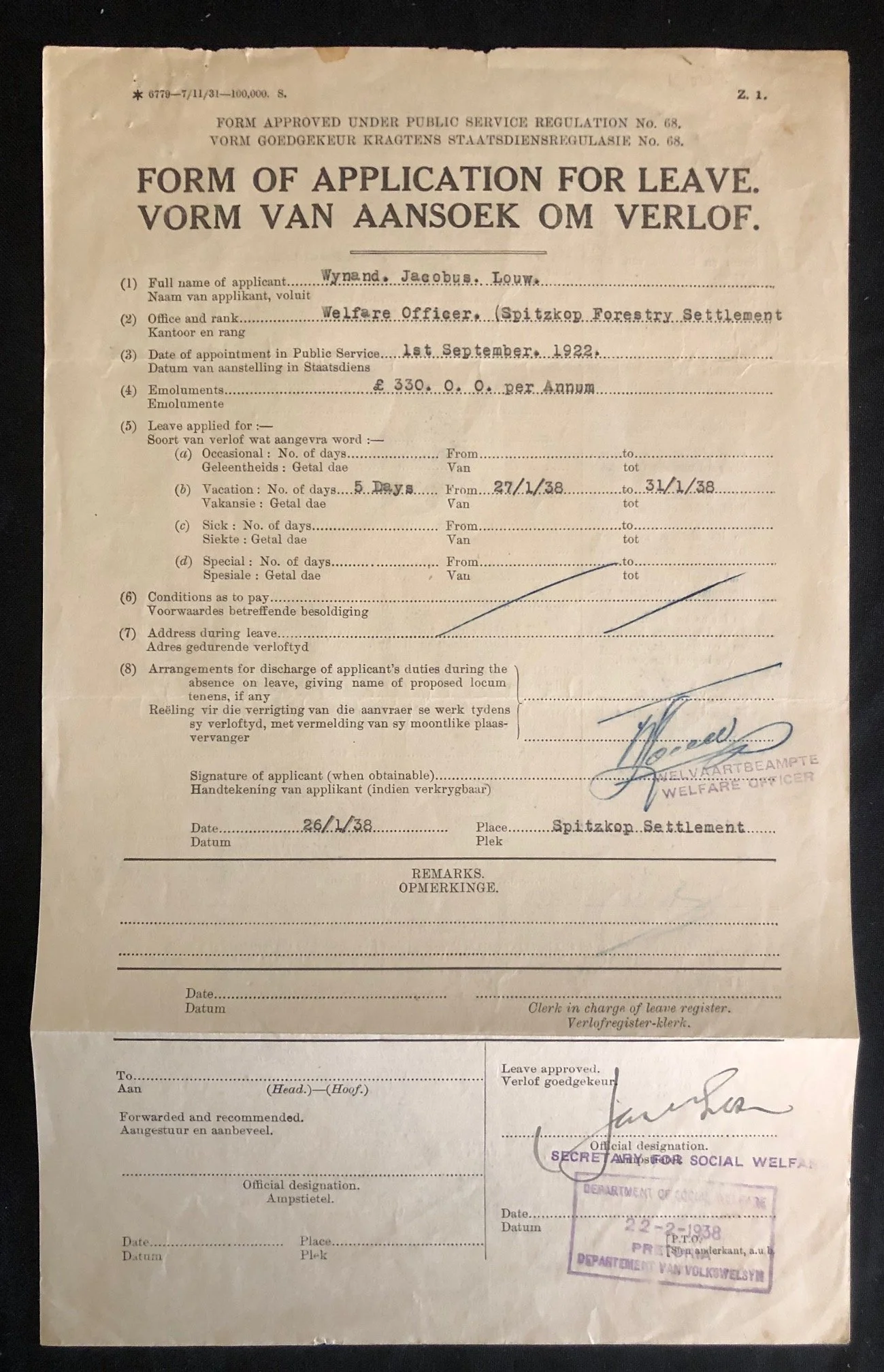
The "Poor White Problem". (Spitzkop Forestry Settlement near Sabie/Graskop) 1938
This 1938 document is an artifact of one of the most significant socio-economic intervention programs in 20th-century South African history: the state's aggressive campaign to solve the "Poor White Problem" (Armblankevraagstuk).
The Fight Against the "Poor White Problem"
By the early 1930s, devastating droughts and the global Great Depression had pushed over 300,000 white South Africans—primarily rural Afrikaners displaced from farms—into extreme poverty. Following the landmark Carnegie Commission of Investigation in 1932, the Hertzog government shifted from treating this as a temporary crisis to a structural emergency.
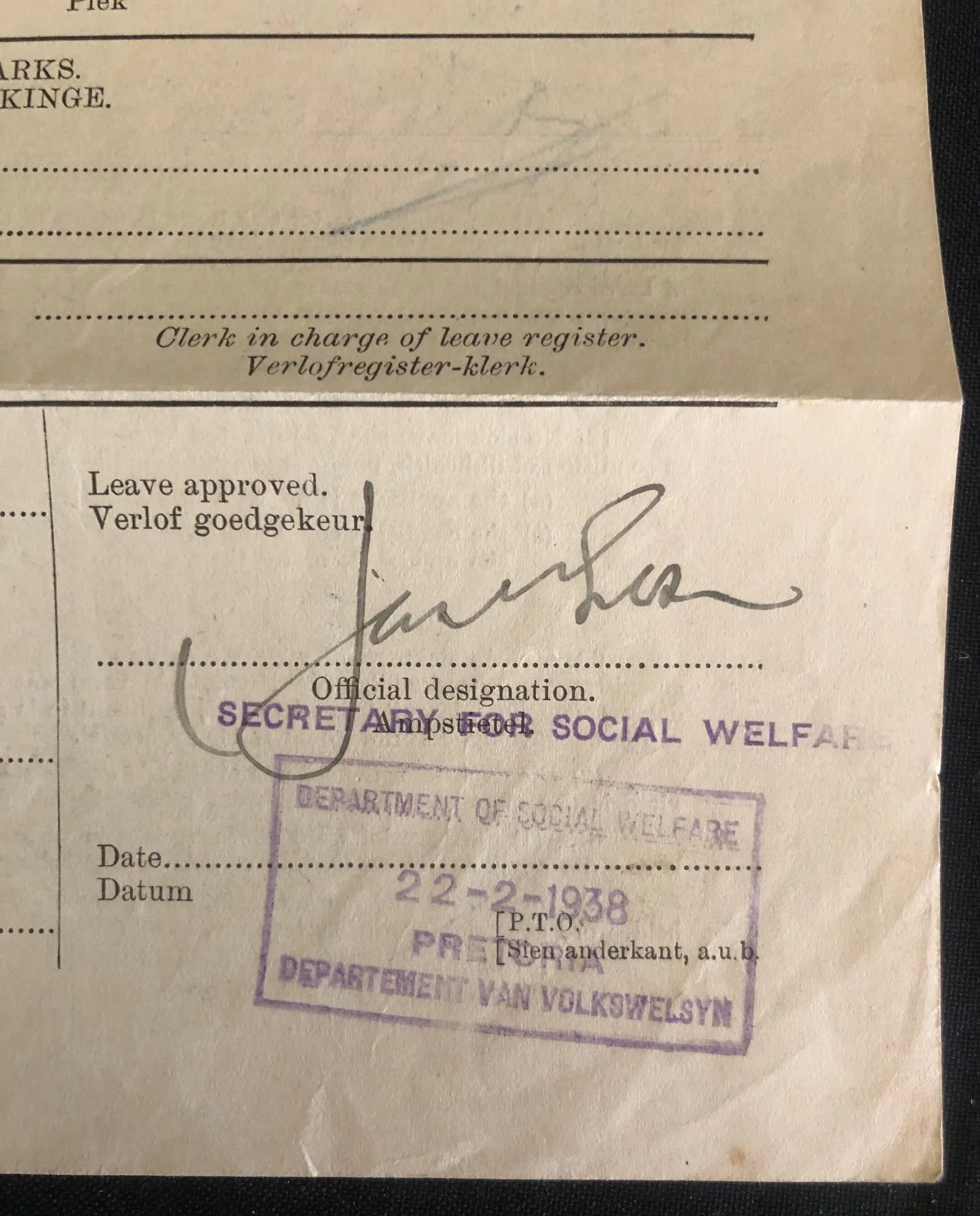
To manage this, the state created the Department of Social Welfare in 1937—just months before this form was signed in Pretoria in February 1938.
Forestry Settlements as Social Engineering
Rather than hand out cash doles, the government established heavily regulated, state-run agricultural and forestry settlements, such as the Spitzkop Forestry Settlement near Sabie/Graskop.
Destitute families were relocated to these remote camps, where the men were given hard, manual labor—planting the massive pine plantations that still dominate the Mpumalanga escarpment today—in exchange for a subsidized daily wage, free medical care, schooling, and a basic cottage.
The Role of the "Welfare Officer"
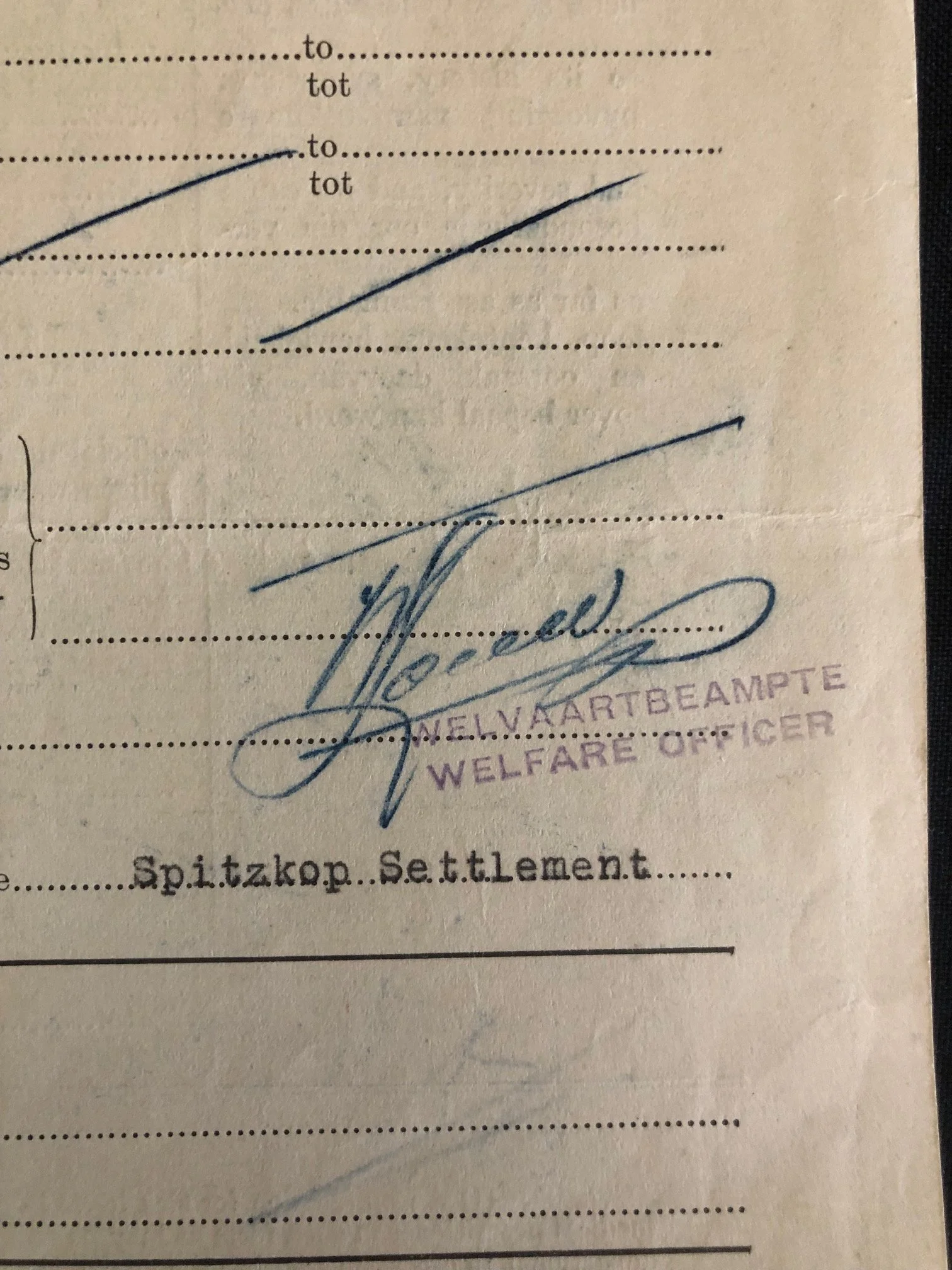
The applicant, Wynand Jacobus Louw, was a Welfare Officer at Spitzkop. Officers like Louw were essentially the frontline social engineers of the state. Because these settlements were strictly regimented to instill "respectability," work ethic, and social upliftment, Welfare Officers did far more than handle admin—they monitored the moral behavior, hygiene, and domestic life of the families under their charge.
A Nation in Transition: Bureaucratic Bilingualism
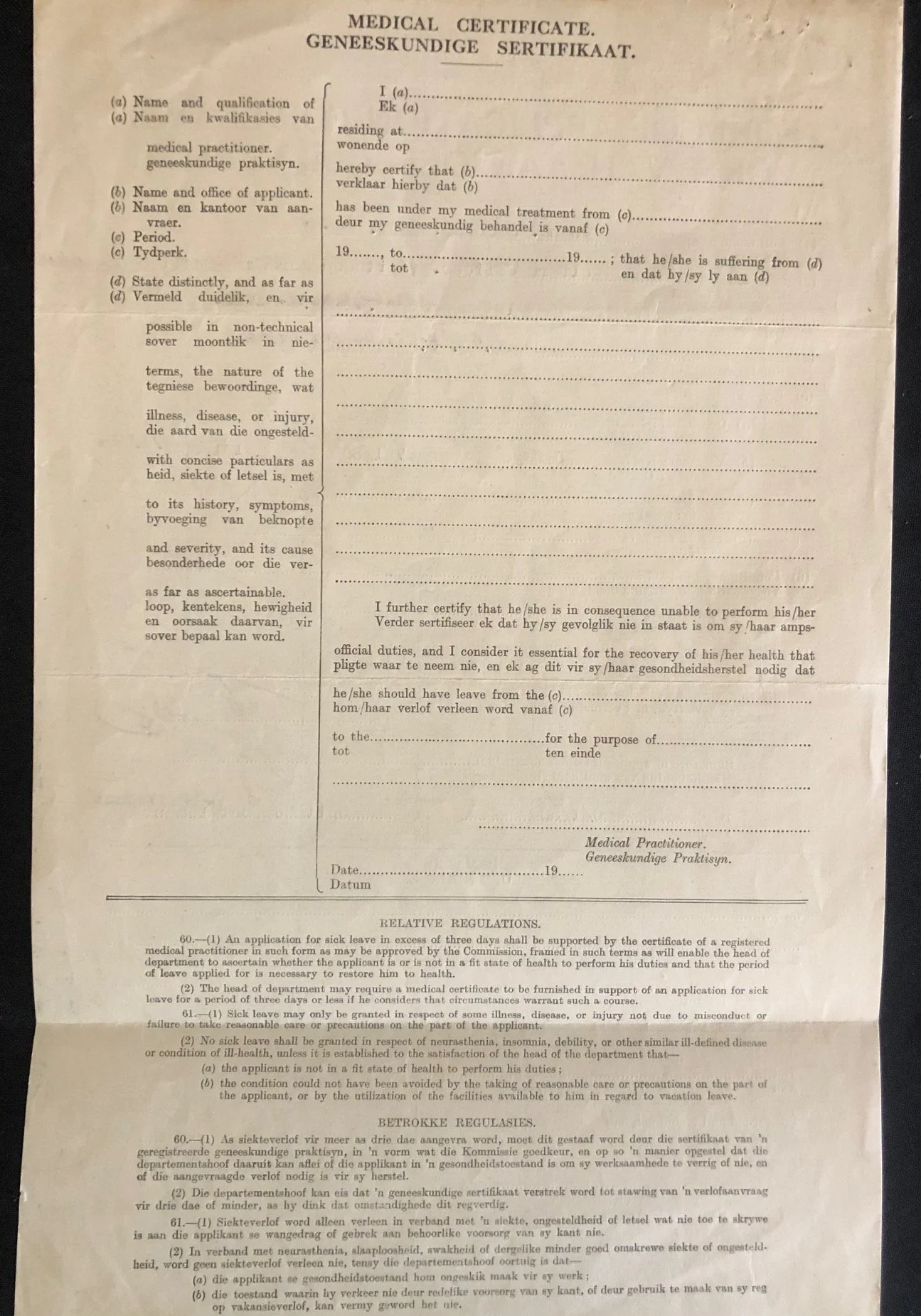
The form highlights the strict institutional bilingualism of the era (English and Afrikaans), a byproduct of the 1934 "Fusion" government that attempted to balance British and Afrikaner political interests. Additionally, it lists Louw's annual salary as £330, a very respectable public service income at a time when the laborers he managed were earning just a few shillings a day.
205mm x 330mm
Minor wear.
R800