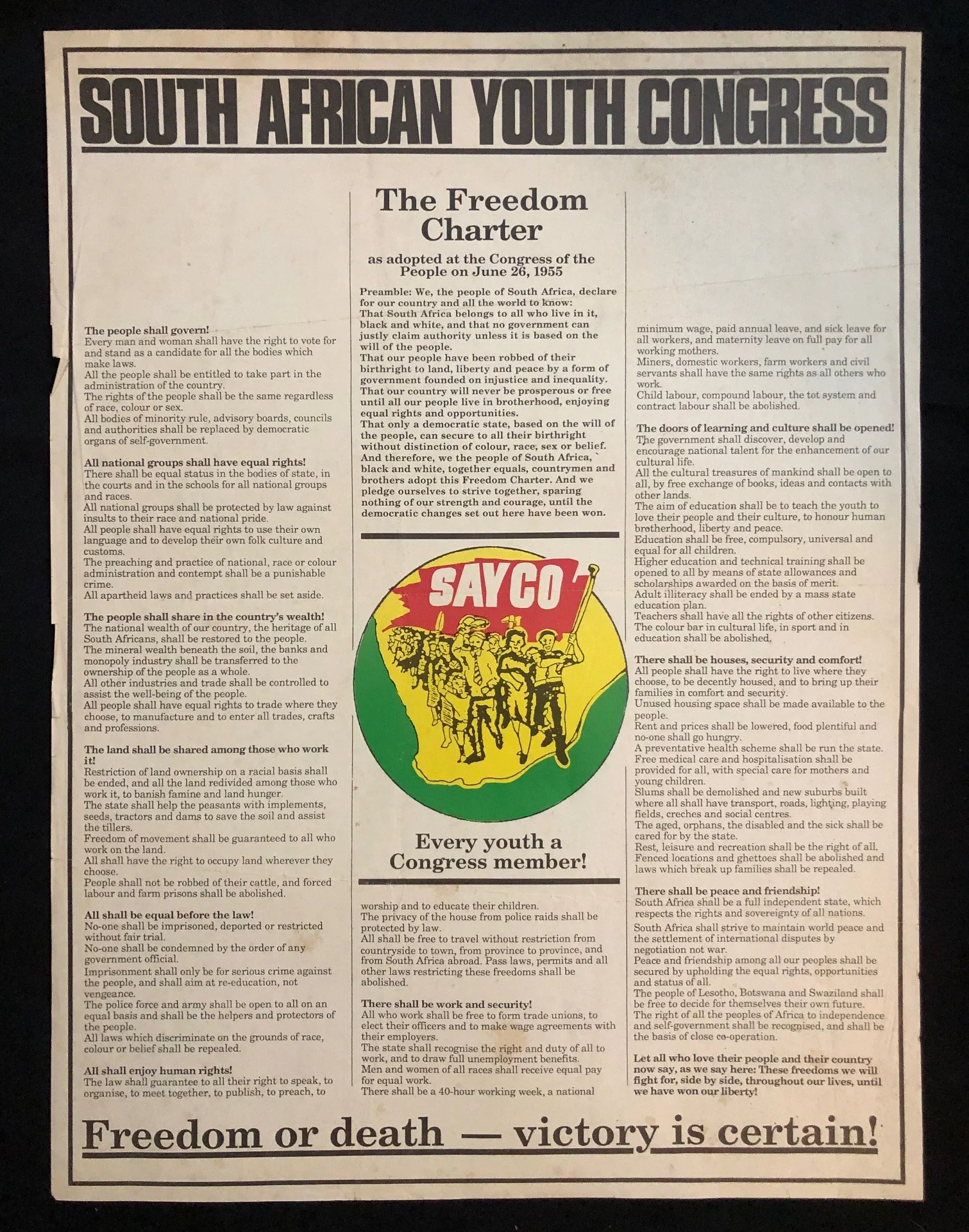
Banned Poster: Freedom Charter Issued by the South African Youth Congress (SAYCO) c.1989
To be caught in the possession of a poster like this might have resulted in a 5 year jail sentence. Very rare to find originals of these posters.
This poster represents an incredibly intense, high-stakes chapter in South African liberation history. Issued by the South African Youth Congress (SAYCO), it reproduces the full text of the 1955 Freedom Charter, but the poster itself dates to the late 1980s (roughly 1987–1989).
A Masterclass in Underground Survival
The historic paradox of this poster lies in the headline and the logo. SAYCO was launched clandestinely in Cape Town in March 1987 at the absolute height of the nationwide State of Emergency.
Because the African National Congress (ANC) and its youth league were banned, SAYCO was formed as an underground, militant affiliate of the United Democratic Front (UDF) to channel the revolutionary energy of the townships. Almost its entire leadership group—including its first president, Peter Mokaba—was constantly on the run, operating out of safehouses, or being detained without trial.
For an organization operating under such extreme state surveillance to design, layout, illegally print, and widely distribute large, high-density informational posters like this was an immense logistical feat of underground resistance.
Weapons of Mass Education: Popularizing a "Banned" Vision
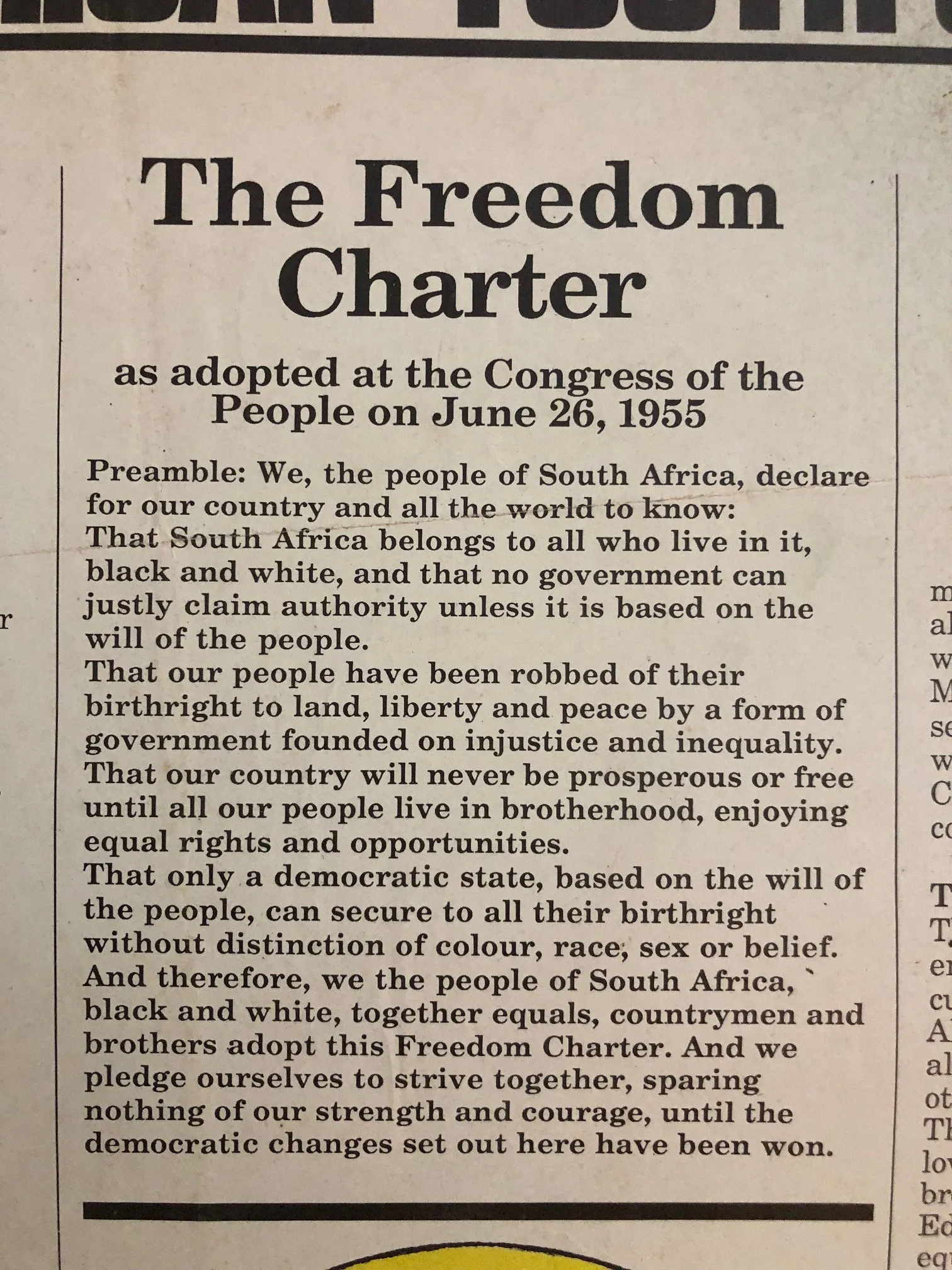
By the late 1980s, the apartheid state had spent over three decades suppressing the Freedom Charter (originally adopted at Kliptown in 1955). Possession of the Charter had frequently been used by police as treasonous evidence to jail activists.
By printing the text in full, flanked by the uncompromising slogan "Freedom or death — victory is certain!", SAYCO was engaged in radical political education. A massive generation of township youth—often referred to as the "Young Lions"—had grown up with interrupted schooling due to school boycotts and political upheaval. Posters like this served as portable textbooks, ensuring that the foundational political vision of a non-racial, democratic South Africa was physically pasted onto township walls and deeply understood by the youth who were fighting on the front lines.
The SAYCO Emblem: Graphic Resistance
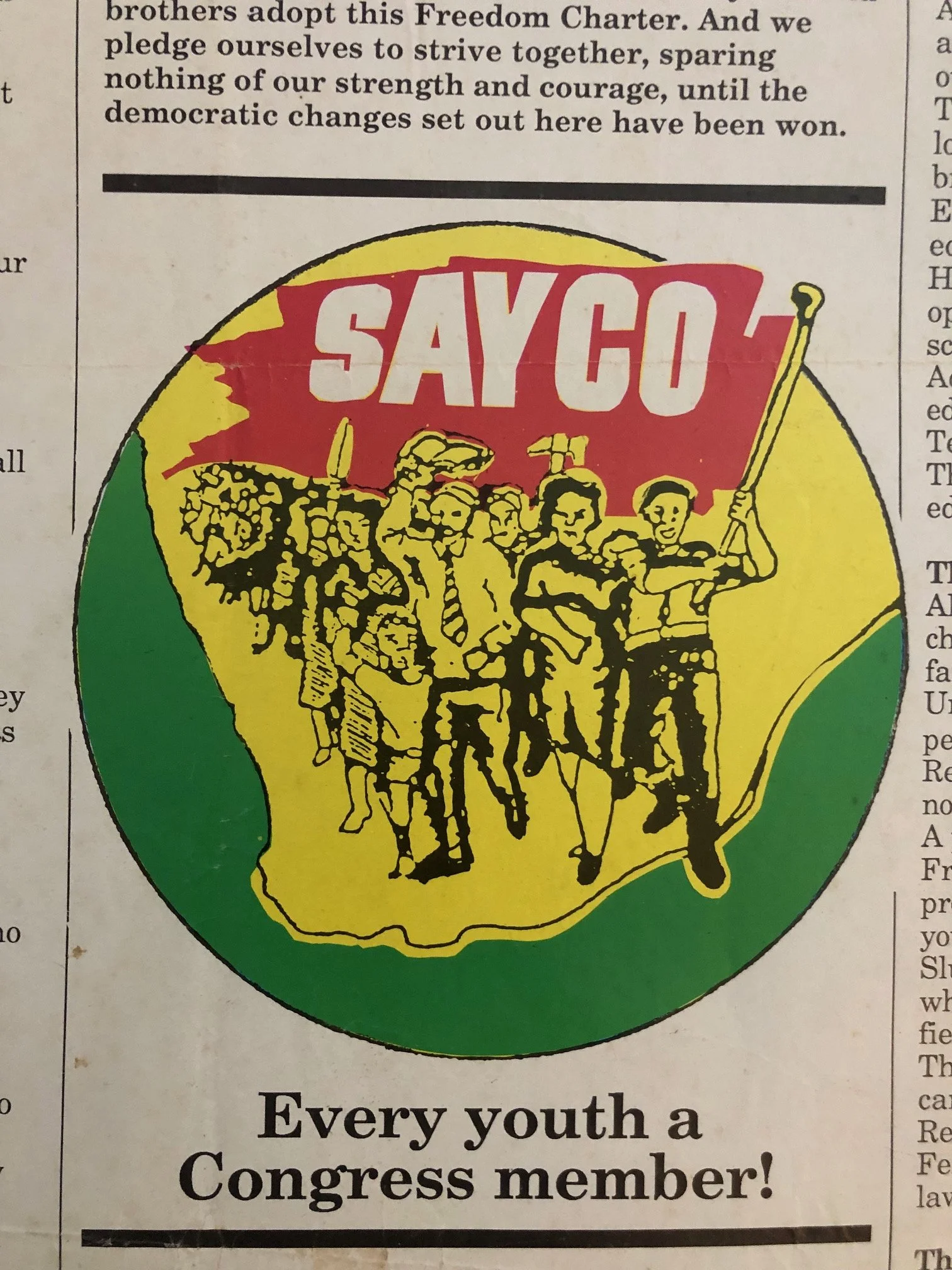
The circular graphic in the center is a classic example of late-apartheid protest art. It features a diverse group of youth marching forward under a banner. Notably, the figure in the front left is explicitly depicted carrying a large flag, a visual nod to the banned black-green-and-gold flag of the ANC.
Because displaying the actual ANC flag could result in immediate arrest and years in prison, liberation graphic designers routinely used stylized drawings of flags, raised fists, and crowds on posters and t-shirts to evoke the banned liberation movement without giving the security police an easy legal excuse to seize the material.
The Bridge to the Re-birth of the ANCYL
This poster marks the final, explosive push that broke the back of the apartheid regime's grip on the internal resistance. SAYCO’s membership swelled into the hundreds of thousands, making it the largest component of the UDF.
When the ANC was finally unbanned in February 1990, SAYCO didn't just disappear; it provided the ready-made, highly disciplined, and battle-tested organizational infrastructure that allowed the ANC Youth League (ANCYL) to instantly re-establish itself as a massive political force inside the country. This piece of ephemera is a direct monument to that transitional bridge.
Fold marks, creases, minor tears, stains.
425mm x 565mm
R6,500