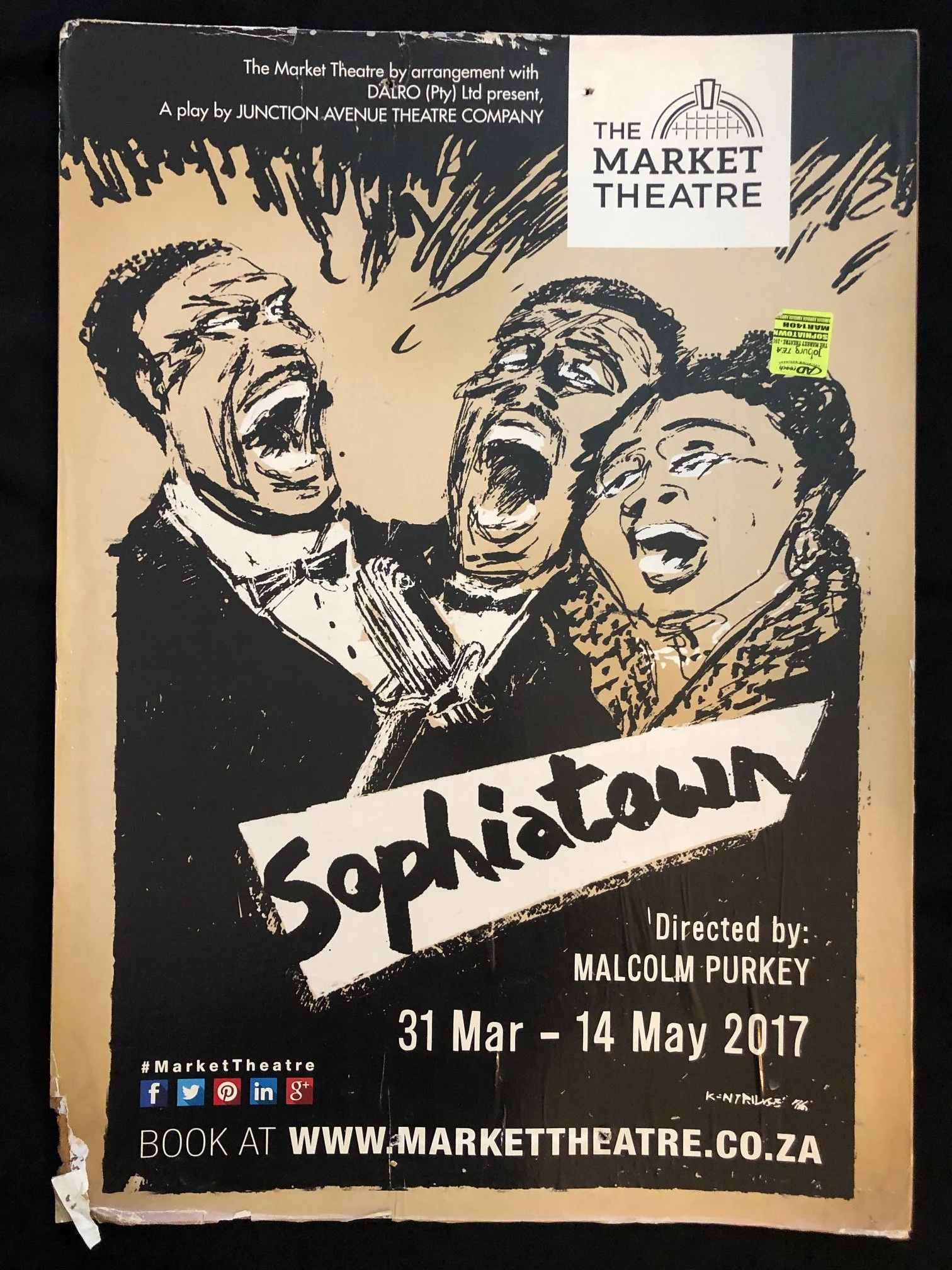
Sophiatown (Revival 2017) designed by William Kentridge in 1986
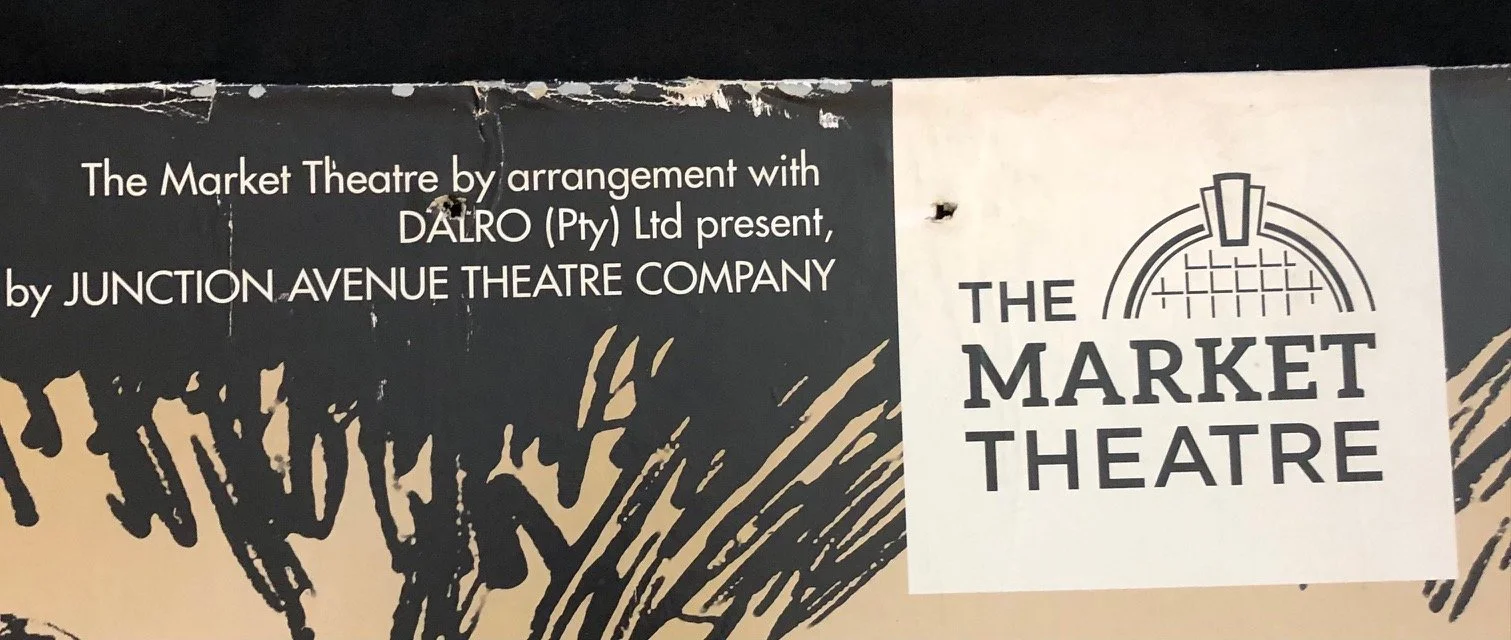
Theatre poster advertising the 2017 revival of Sophiatown at The Market Theatre.
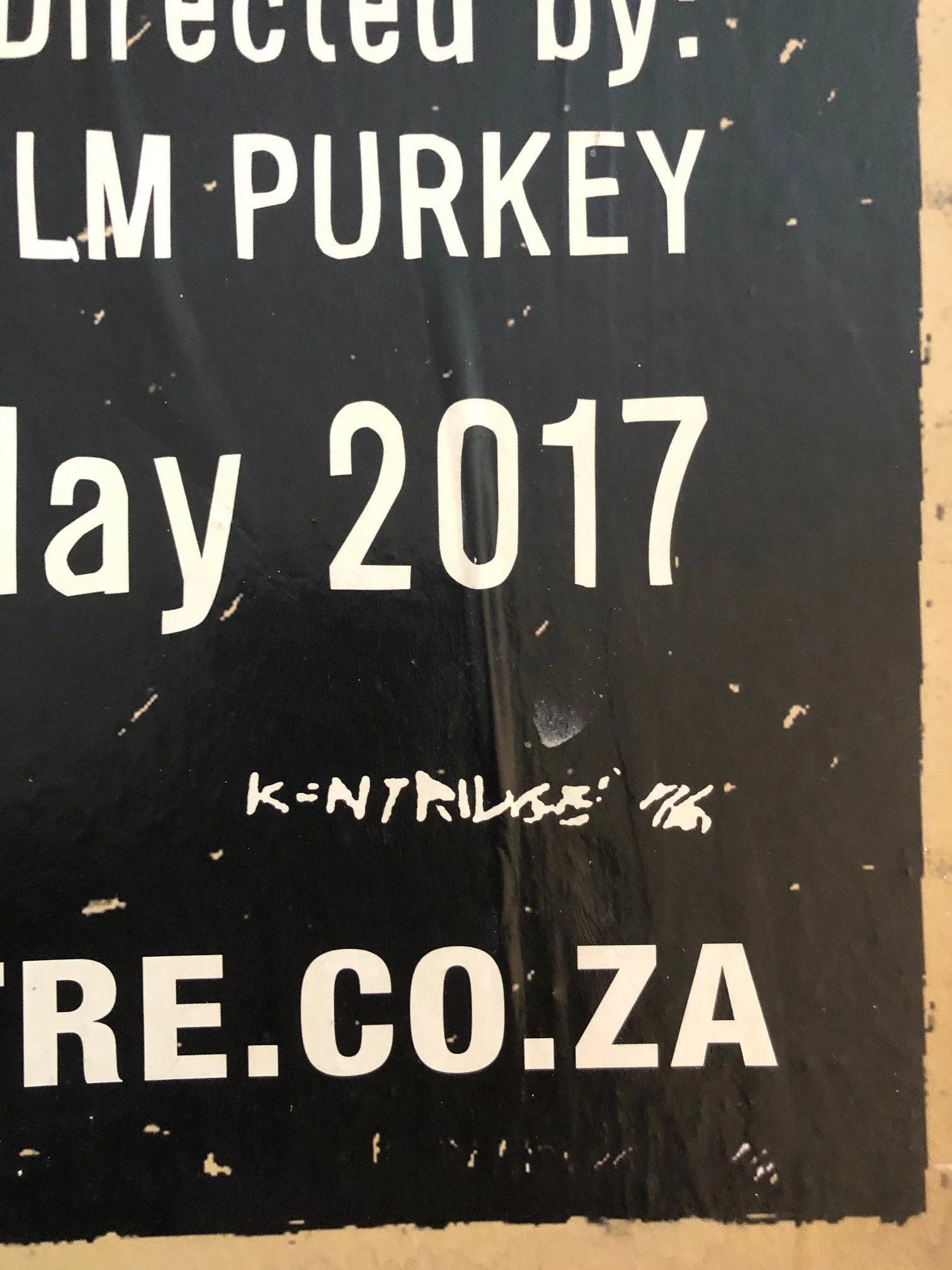
The poster reuses the original design by William Kentridge from 1986 (see signature "KENTRIDGE '86").
In 1986, William Kentridge was not yet the globally revered titan of contemporary art he is today. He was heavily embedded in the alternative, highly politicized theatre and printmaking scenes of Johannesburg. Kentridge was a founding member of the Junction Avenue Theatre Company (the workshop collective that created Sophiatown), working alongside director Malcolm Purkey.
Kentridge’s signature linocut and charcoal aesthetic—characterized by raw, expressive, urgent black lines—perfectly captured the energy, defiance, and heartbreak of the production. The fact that the Market Theatre reused his exact 1986 original poster design for the 2017 revival demonstrates how foundational this specific image remains to the visual identity of South African protest theatre.
Sophiatown: A Play Born Under the State of Emergency
The year Kentridge drew this image—1986—was one of the darkest and most volatile years in South Africa’s history. The apartheid government had declared a brutal nationwide State of Emergency. Freedom of expression was heavily suppressed, political organizations were banned, and the military occupied townships.
In this climate of severe censorship, Sophiatown premiered at the Market Theatre in February 1986. Because the Market Theatre operated as an independent, non-racial venue (safeguarded partly by its location in the old citrus market), it became a vital crucible for interracial collaboration. Putting a play about the destruction of an integrated, vibrant black cultural hub on stage in 1986 was a radical act of political resistance.
A Eulogy for a Destroyed Renaissance
The play itself tells the story of Sophiatown, a freehold township west of Johannesburg that was a legendary melting pot of jazz, politics, literature, and gangsterism in the 1940s and 50s. It was a place where black South Africans could actually own land, creating a legendary cultural renaissance that the apartheid state viewed as a direct threat.
Under the Group Areas Act, the regime began forcefully removing Sophiatown’s 65,000 residents in 1955, bulldozing the neighborhood to the ground, and building a white suburb over its ashes named, with cruel irony, Triomf (Triumph). Kentridge’s artwork captures the exuberant, musical spirit of the town’s residents, shouting/singing into a microphone, refusing to let the memory of their community be erased by state machinery.
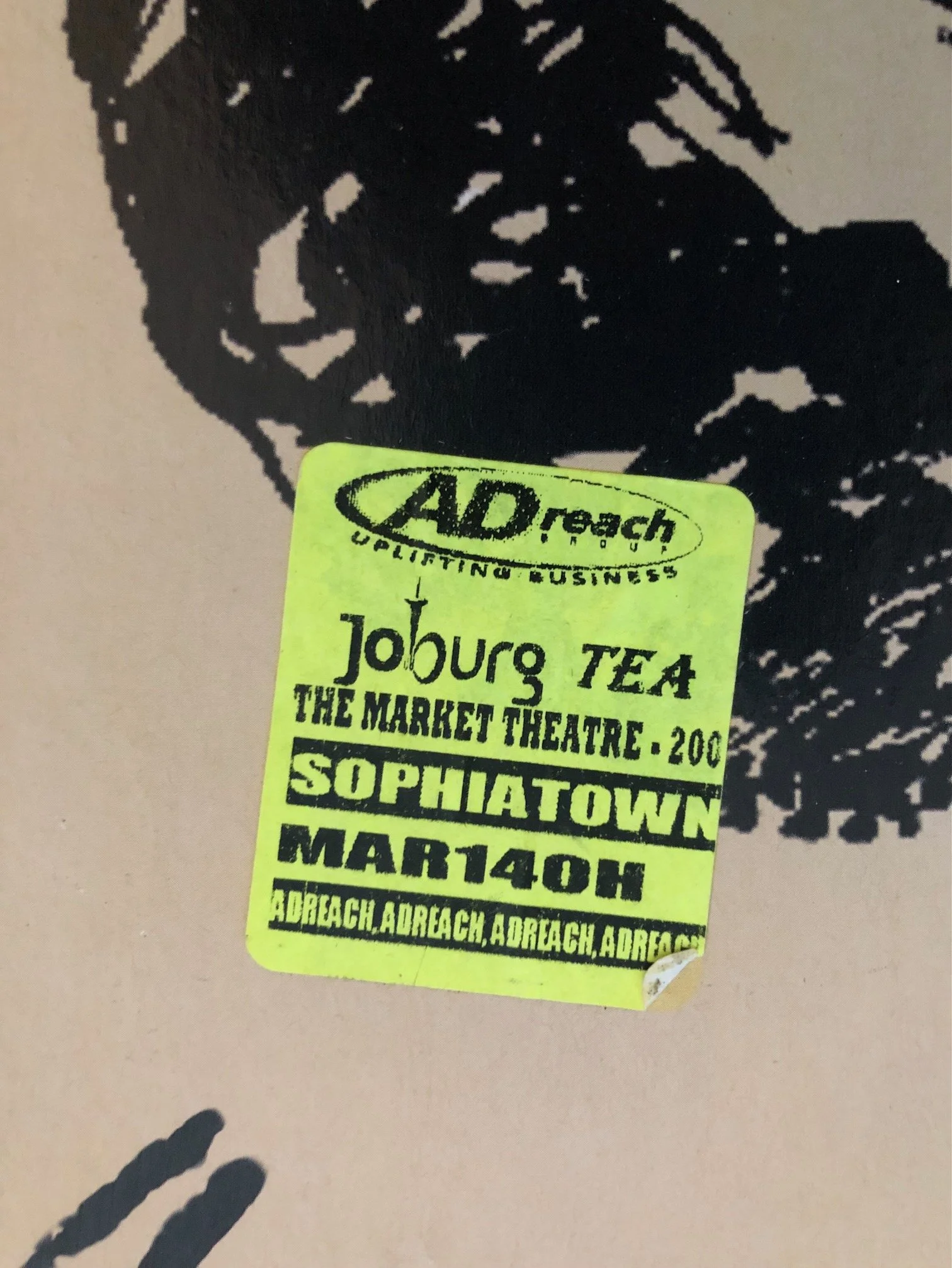
The green and yellow ticket stub affixed to the top right of the poster adds a beautiful layer of provenance. It shows this particular poster wasn't just pulled from a pristine archive; it was a working piece of publicity that witnessed a real performance during the 2017 run. Re-staging Sophiatown decades later serves as a reminder of how the music, defiance, and collaborative art created during the darkest days of the 1980s continue to educate and resonate with post-apartheid generations.
Laid down onto masonite. Chipped, creased, some rain marks.
600mm x 840mm
Sold June '26