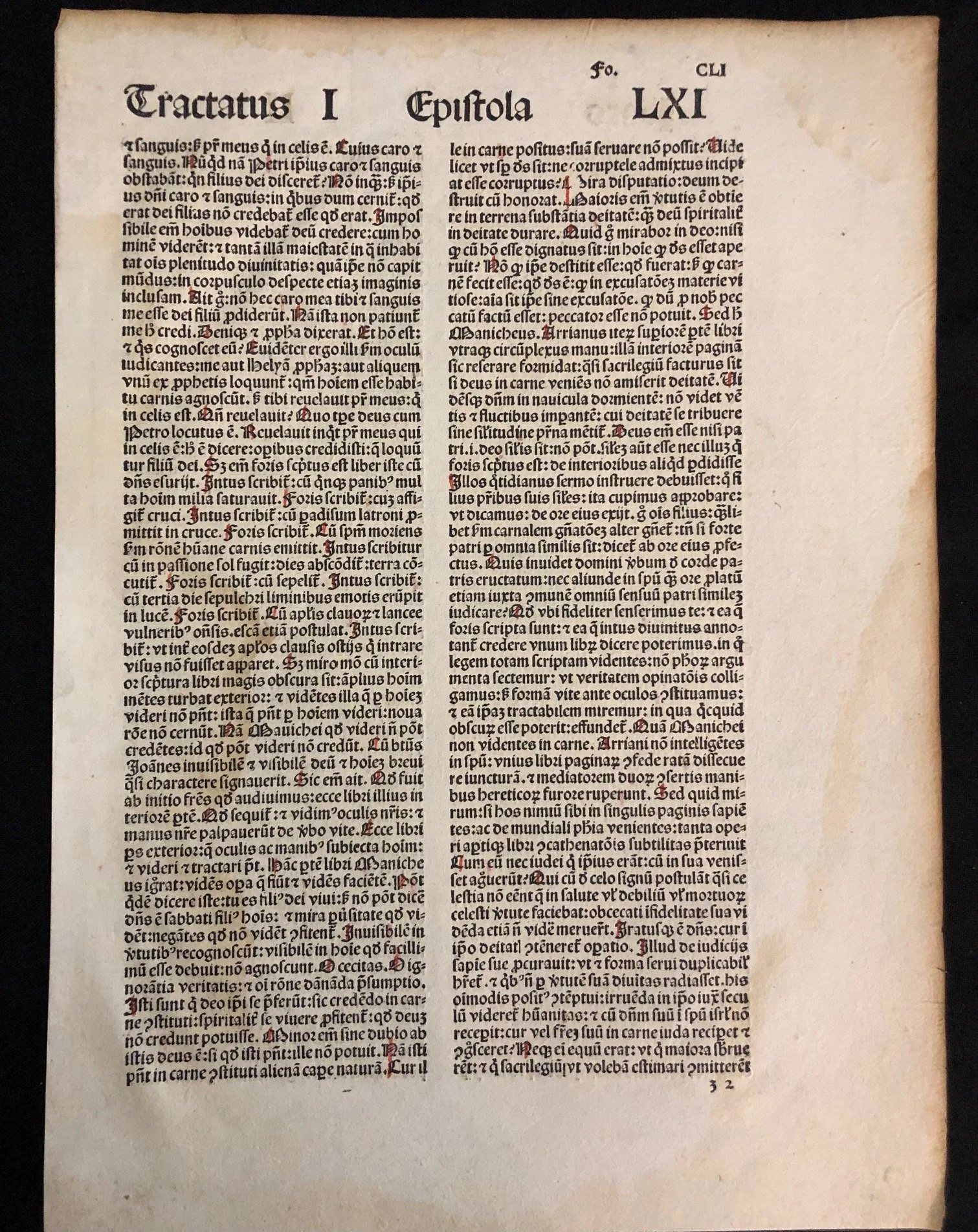
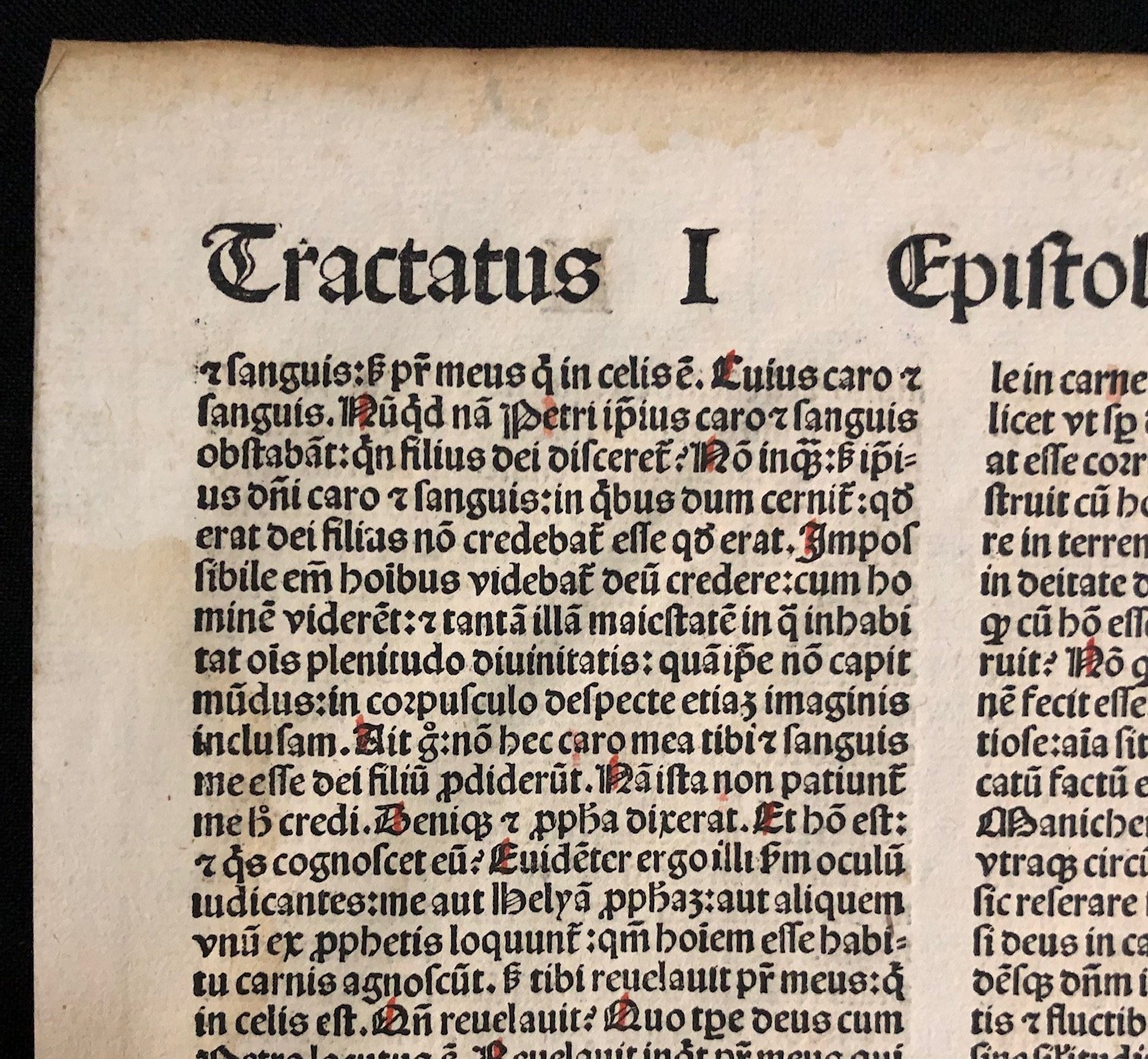
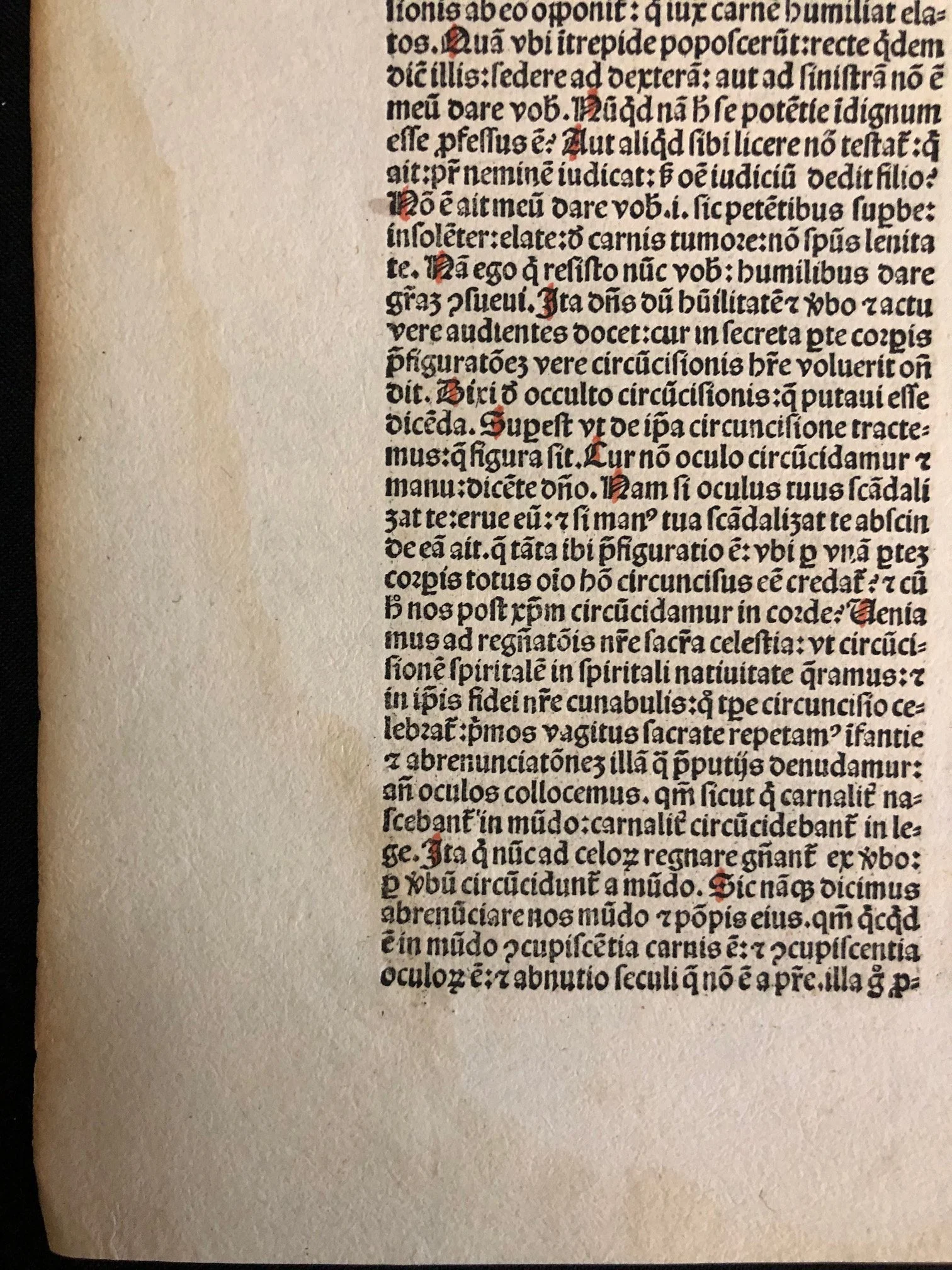
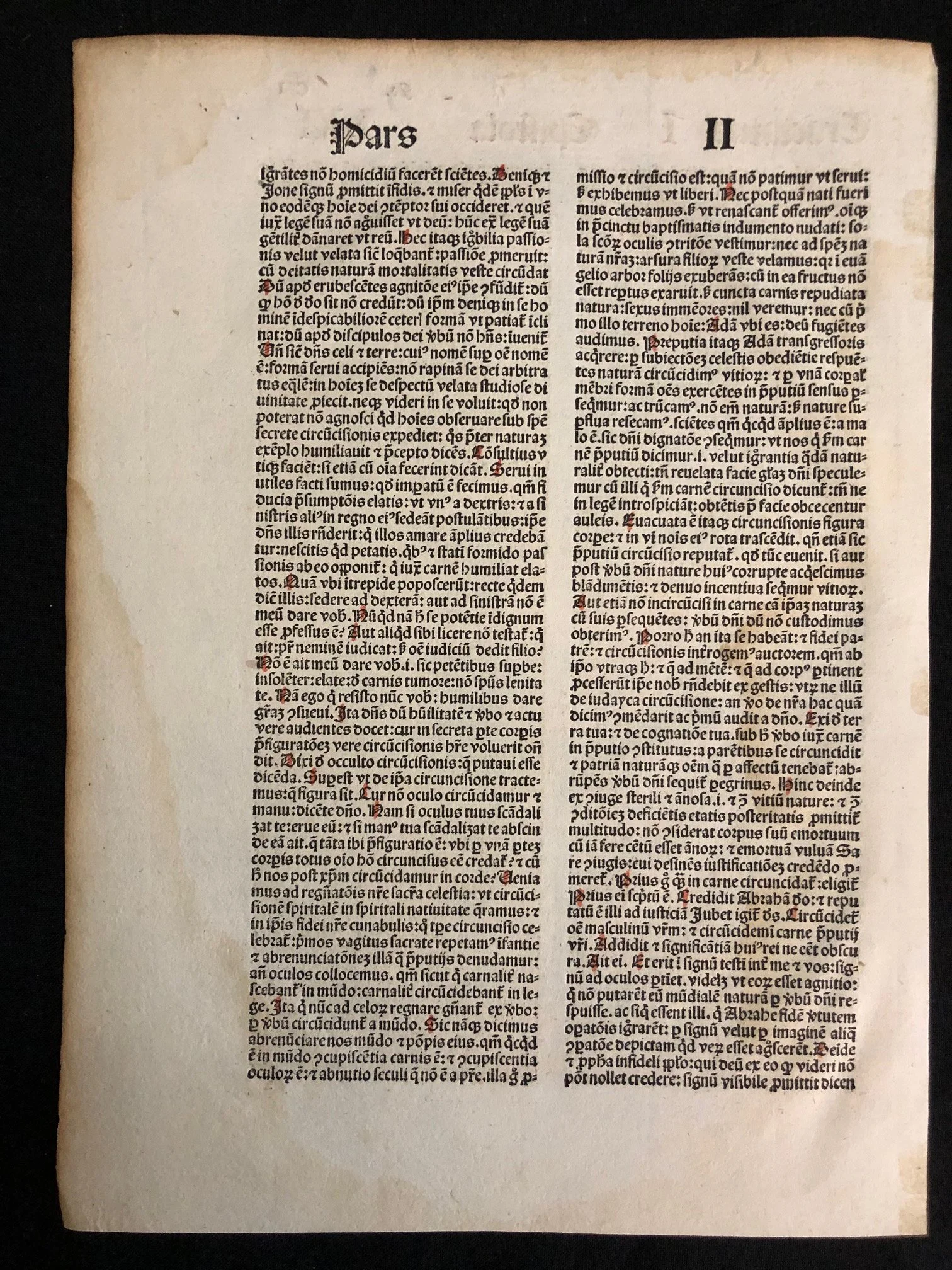
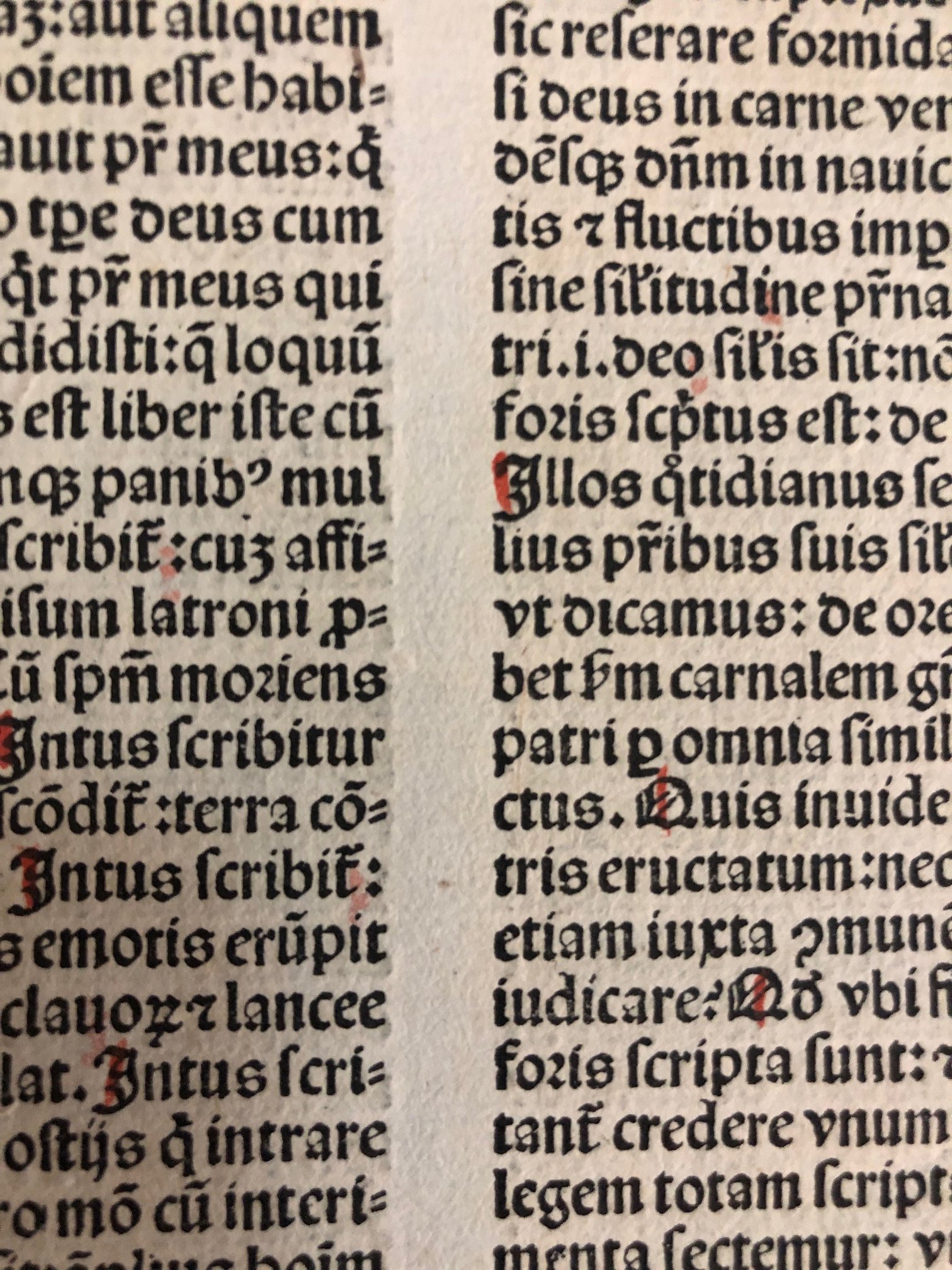
Incunabula leaf from St. Augustine or St. Jerome (15th/16th Century)
This leaf appears to be an example of late 15th-century or early 16th-century incunabula or post-incunabula printing. Based on the typography and layout, it likely originates from a major European printing center such as Basel, Venice, or Nuremberg.
The text is part of a theological work or a collection of sermons/treatises. "Pars" and "II" indicate this is the second part of a specific section. The text discusses "circumcisio" (circumcision) and references biblical figures like Adam and Abraham. "Tractatus I Epistola LXI" (Treatise I, Epistle 61) and folio numbering "fo. CLI" (Folio 151). The text references the Manicheans ("Manichei") and the Gospel of John ("Joanes"). Features hand-painted or printed red paraph marks (pilcrows) and initial strokes throughout the text to guide the reader.
This leaf likely comes from a collected edition of works by a Church Father or a scholastic theologian, such as St. Augustine or St. Jerome. The mention of "Epistola LXI" and the specific theological defense against the Manicheans strongly suggests it is part of a commentary on the New Testament or a collection of Epistles.
Some water stains.
217mm x 300mm
R2,000