Enquiry into the Nature of the Human Soul
Wherein the Immateriality of the Soul Is Evinced from the Principles of Reason and Philosophy.
by Andrew Baxter
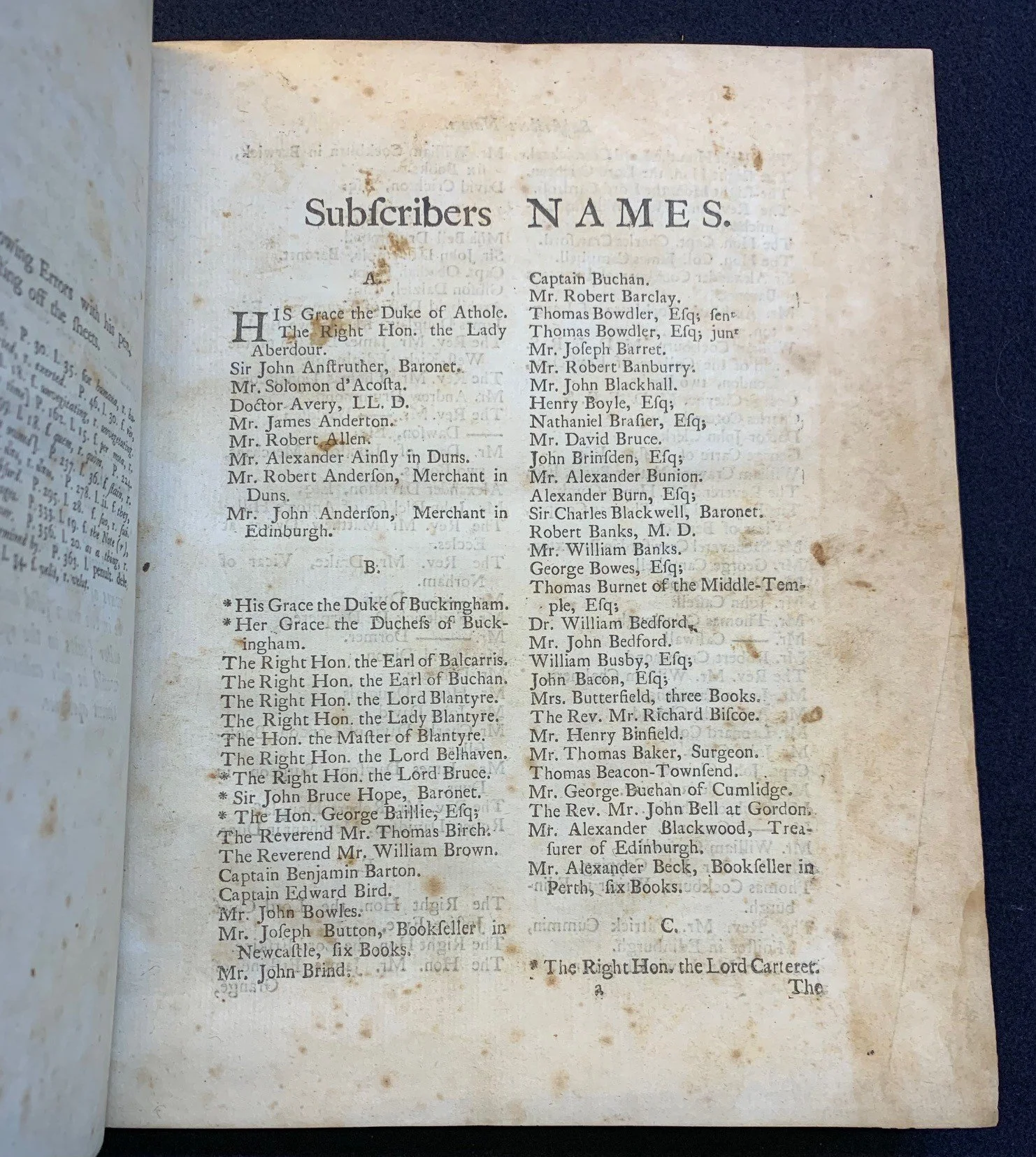
First Edition (1733)
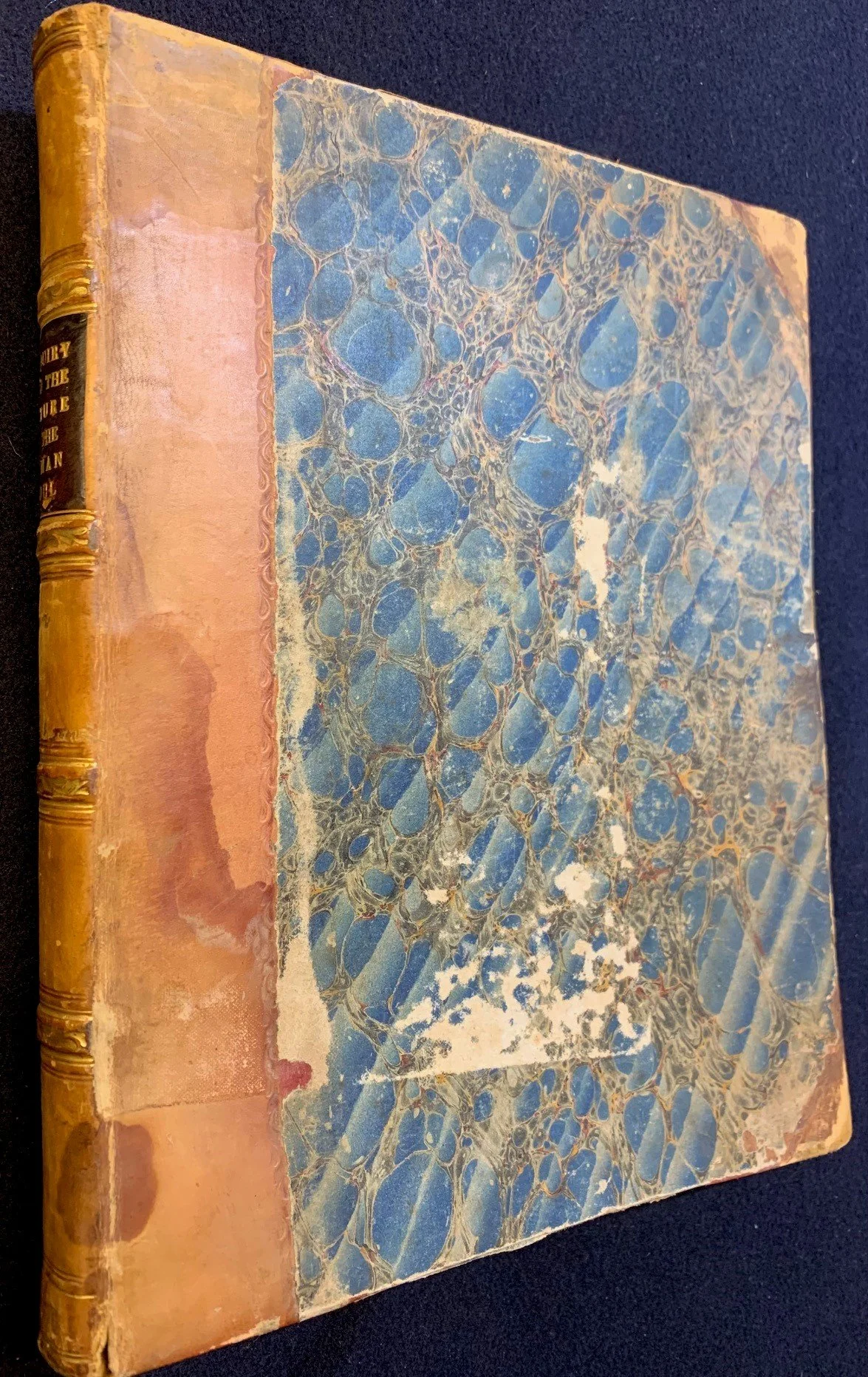
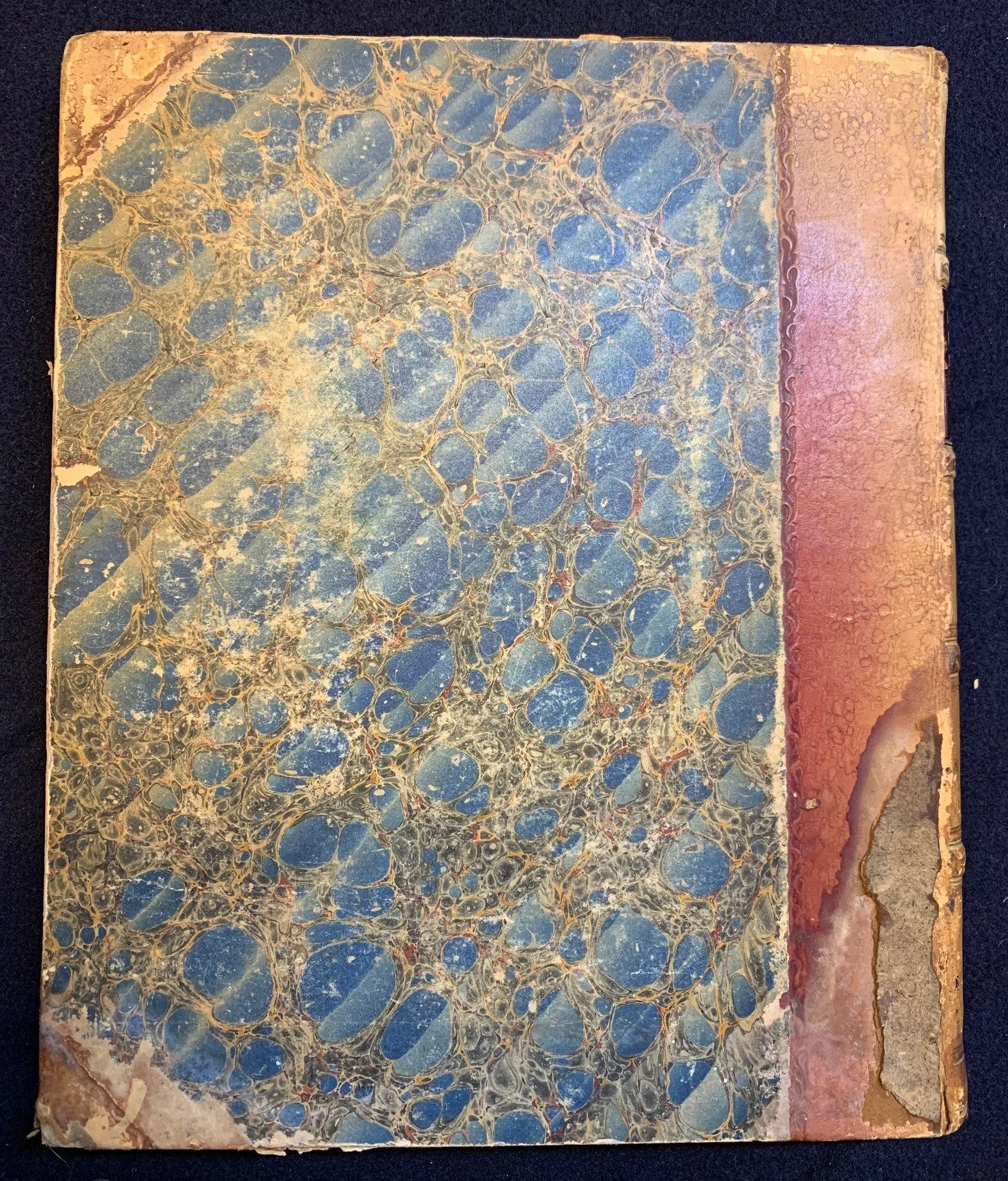
Rebound in the 19th century. Lacking endpapers.
Andrew Baxter (1686/1687, Aberdeen – 23 April 1750, Whittingehame, East Lothian) was a Scottish metaphysician.
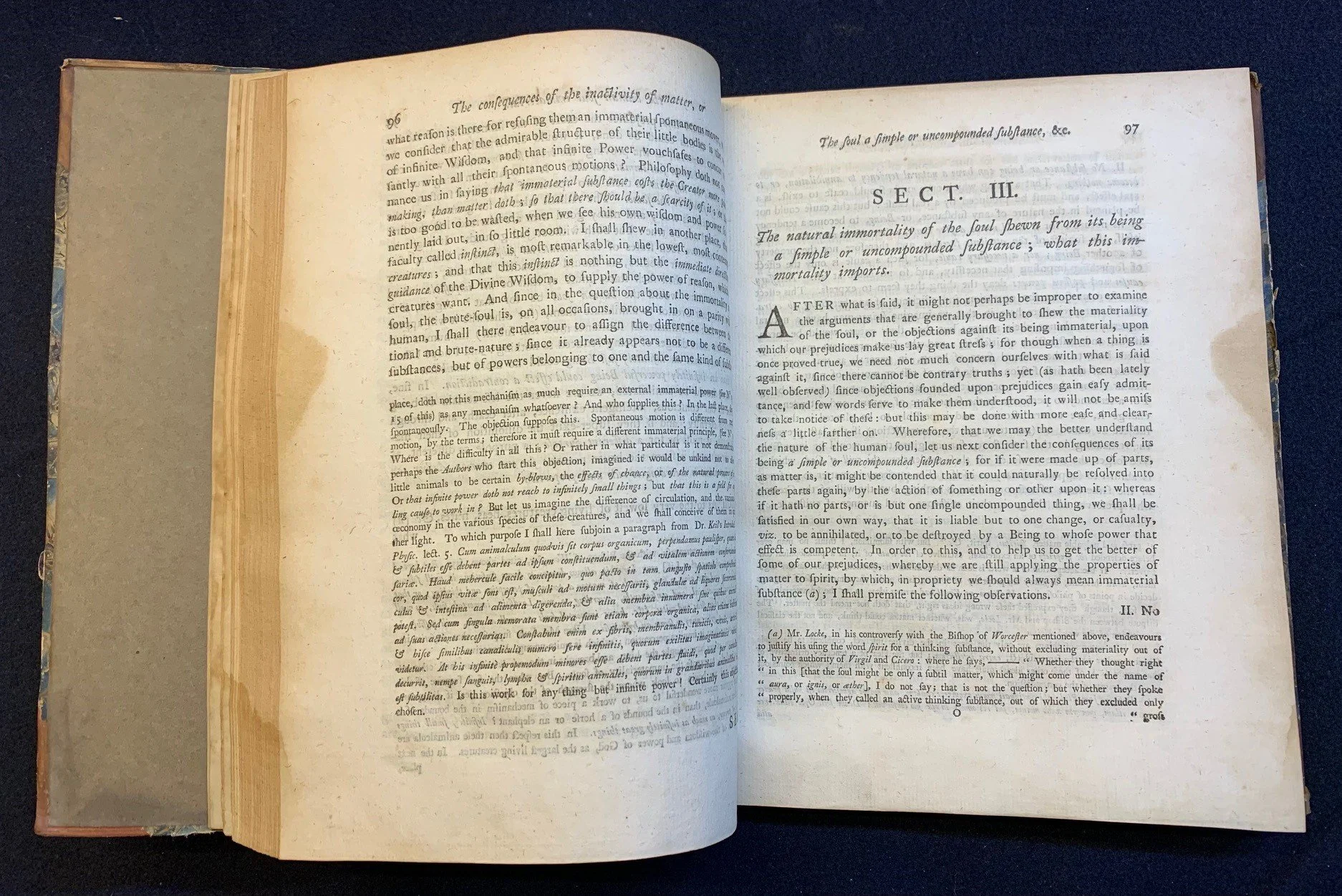
An Enquiry into the Nature of the Human Soul is a philosophical and scientific work first published in 1733 (with an enlarged second edition in 1737 and a third in 1745). Here, Baxter, argues that all matter is inherently inactive, and that the soul and an omnipotent divine spirit are the animating principles of all life. In making this argument, Baxter is rejecting the beliefs of more atheistic and materialist thinkers such as Hobbes and Spinoza, as well as the immaterialist philosopher and clergyman George Berkeley, who believed that existence is not in the physical body, but in the capability of being perceived.
Beyond the contribution made here to the ongoing 18th century arguments over the nature and existence of the soul, the book contains an influential chapter called An Essay on the Phenomenon of Dreaming. Baxter writes about how people, places and objects we have never seen before may seem familiar to us in a dream, and we seem to have a kind of knowledge in sleep that we lack in real life.
Samuel Taylor Coleridge (among others) was deeply impressed by this chapter, later commenting that "I should not wonder if I found that Andrew [Baxter] had thought more on the subject of Dreams than any other of our Psychologists, Scotch or English." But not everyone was so enchanted with Baxter's Inquiry. It was, for instance, criticized by no one less than Benjamin Franklin who, in a letter, pointed out Baxter's lack of understanding in mechanics.
2055mm x 245mm
R25,000